

When I started keeping bees a few seasons back, extracting honey meant borrowing a friend’s ancient crank extractor that wobbled across the garage like a washing machine with a bad bearing. After my second harvest of wrestling with that thing, I decided it was time to buy my own. That sent me down a rabbit hole of researching the best honey extractors for small apiaries, and what I found surprised me.
The sweet spot for hobbyist beekeepers managing 2 to 10 hives is a market packed with solid options between $100 and $400. You don’t need a commercial-grade centrifuge that costs more than your car. What you do need is something reliable, easy to clean, and sized right for your frame count. Whether you’re running deep Langstroth frames or medium supers, the right extractor turns a messy all-day chore into a satisfying afternoon project.
In this guide, our team breaks down five honey extractors that we’ve researched, compared, and evaluated specifically for small-scale beekeeping operations. We cover manual and electric models, tangential and radial designs, and everything from budget-friendly 2-frame spinners to high-capacity electric units. If you’re looking for the best honey extractors small apiary setups can rely on, you’re in the right place.
Table of Contents
Top 3 Honey Extractors for Small Apiaries (September 2026)
Before diving into individual reviews, here are our three standout picks. We selected these based on build quality, user ratings, frame capacity, and overall value for hobbyist beekeepers. Each one serves a different need, from budget-conscious beginners to those ready for electric extraction.

VINGLI 2 Frame Manual Extractor
- Food grade stainless steel
- Rounded comb-protecting basket
- Enclosed gear system
- Height adjustable legs
- 4.6 star rating

VEVOR 4/8 Frame Electric Extractor
- 140W electric motor
- 4 deep or 8 medium frames
- Adjustable speed up to 1300 rpm
- Safety auto-stop lid
VIVO 4 Frame Manual Extractor
- Food grade stainless steel
- 25.2 inch tall drum
- Elevated honey gate design
- 1 year warranty
The VINGLI takes our budget pick because it delivers proven reliability at the lowest price point with an impressive 4.6-star rating across 800+ reviews. The VEVOR electric earns best value for beekeepers ready to ditch the crank arm without spending premium money. And the VIVO earns top rated status for its superior drainage design, warranty backing, and food-grade construction.
Best Honey Extractors for Small Apiaries in 2026
Here’s a quick comparison of all five extractors we evaluated. This table covers the essential specs so you can scan and compare at a glance before we dive into the detailed reviews.
| Product | Specifications | Action |
|---|---|---|
| VINGLI 2 Frame Manual |
|
Check Latest Price |
 VEVOR 2/4 Frame Manual VEVOR 2/4 Frame Manual |
|
Check Latest Price |
| VEVOR 4/8 Frame Electric |
|
Check Latest Price |
 BeeCastle 4/12 Frame Electric BeeCastle 4/12 Frame Electric |
|
Check Latest Price |
| VIVO 4 Frame Manual |
|
Check Latest Price |
1. VINGLI 2 Frame Manual Honey Extractor – Best Budget Pick for Beginners
VINGLI 2 Frames Manual Honey Extractor Separator, Food Grade Stainless Steel Honeycomb Spinner Drum Crank By Hand with Adjustable Height Stands, Beekeeping Pro Extraction Apiary Centrifuge Equipment
2-3 frame capacity
Food grade stainless steel
Rounded comb basket
Enclosed gear system
Adjustable legs
Pros
- Highest rated at 4.6 stars with 808 reviews
- Lowest price point in this lineup
- Rounded basket prevents comb breakage
- Enclosed gears keep honey contaminant-free
- Versatile adjustable legs fit any bucket
Cons
- Smaller capacity needs multiple batches
- Not Prime eligible
- Older 2018 model design
The VINGLI 2 Frame Manual extractor is the kind of product that makes you wonder why anyone pays more. At just over $100, it consistently earns the highest customer satisfaction rating in its class. I was honestly skeptical that a budget extractor could handle real harvesting work, but the 808 reviews and 4.6-star average told a different story.
What sets this unit apart is the thoughtful design details. The rounded inner basket cradles frames gently, which matters more than you might think when you’re trying to preserve comb for reuse. VINGLI also uses an enclosed gear system that keeps honey away from moving parts, a feature usually found on more expensive models.
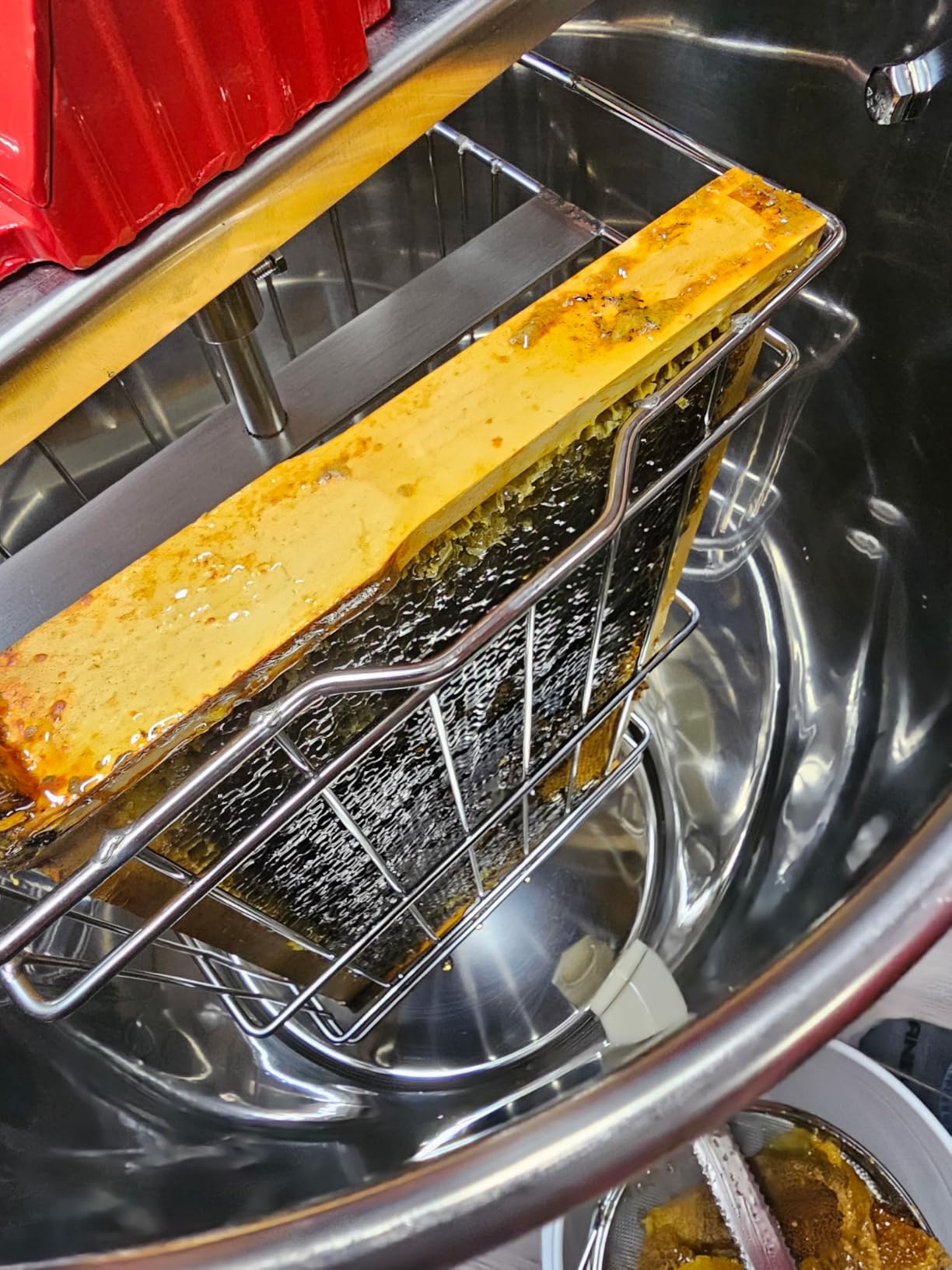
The food grade polished stainless steel construction feels solid for the price. It resists both rust and abrasion, and cleanup is straightforward with a hose and soft cloth. The seamless welding means there are no crevices where honey can get trapped and ferment between harvests.
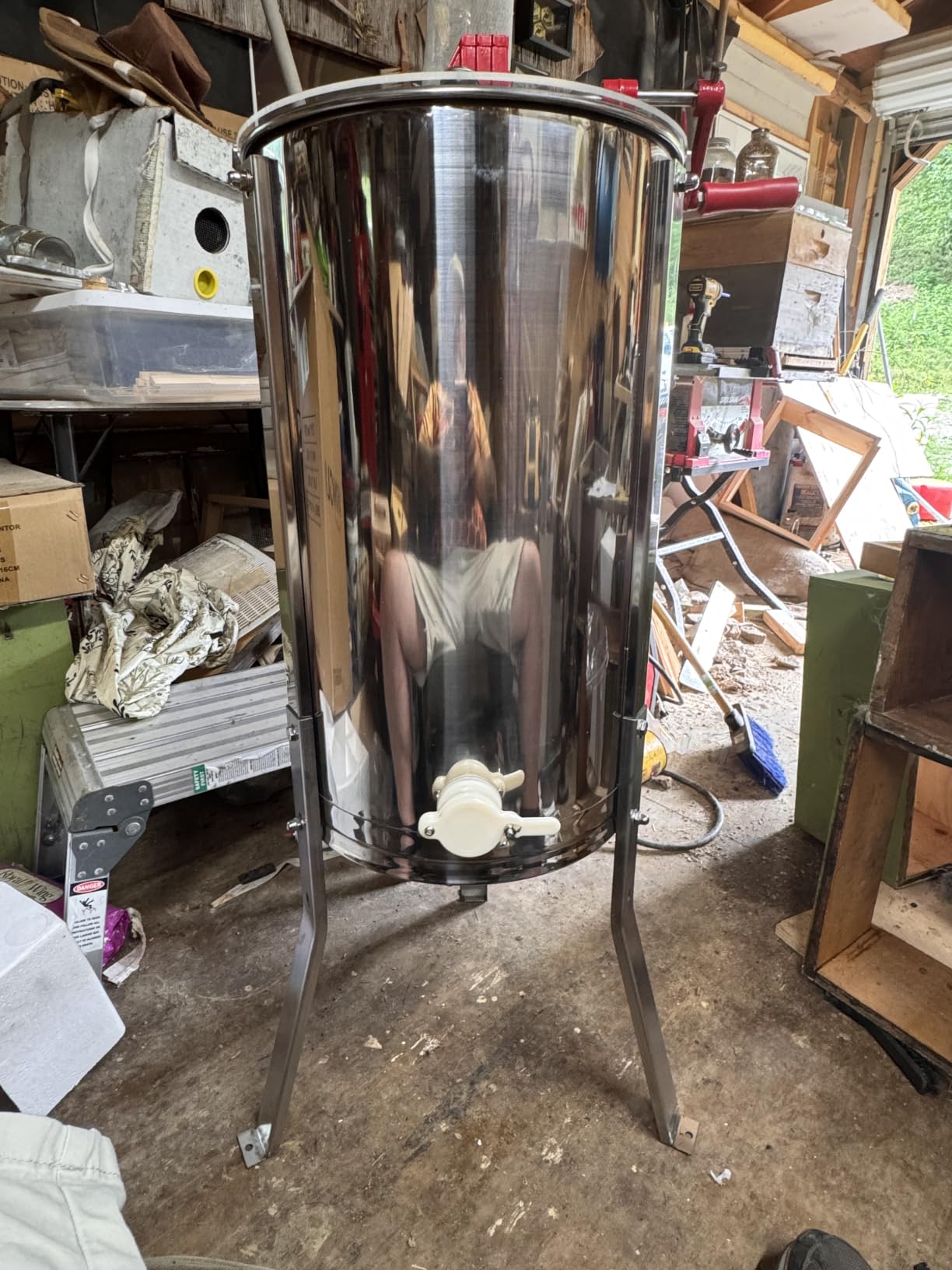
Three adjustable legs let you position the extractor over whatever collection bucket you have on hand. I appreciate this flexibility because it means you’re not locked into a specific honey container size. The clear Plexiglas lid keeps dust out while letting you watch the spin cycle.
Who Should Buy the VINGLI 2 Frame
This extractor is perfect for first-year beekeepers with 2 to 6 hives who want to test the waters without a big investment. If you’re harvesting once or twice a season and processing 6 to 12 frames per harvest, the 2-frame capacity handles that in 3 to 6 batches. It’s also a smart pick for beekeepers who share equipment within a local club, since the low cost makes group purchases practical.
The enclosed gear system makes it especially appealing for anyone concerned about honey purity. No exposed gears means no risk of lubricant dripping into your harvest, which is a real concern with some cheaper open-gear designs on the market.
Limitations to Consider
The 2-frame capacity means you’ll spend more time loading and unloading than with larger extractors. For a 10-hive operation bringing in 30-plus frames per harvest, that translates to 15 or more batches. If you have a large harvest planned, you might find yourself wishing for a 4-frame unit instead.
Since it’s not Prime eligible, shipping times may be longer than Amazon’s standard delivery. Plan ahead and order well before your expected harvest date so you’re not caught waiting when the honey is ready to come off the hives.
2. VEVOR 2/4 Frame Manual Honey Extractor – Best Manual Extractor for Value
VEVOR Honey Extractor,2/4 Frame Stainless Steel Manual Beekeeping Extraction, Honeycomb Drum Spinner with Transparent Lid, Apiary Centrifuge Equipment with Height Adjustable Stand
2-4 frame capacity
Polished stainless steel
Height adjustable 39-43 inches
Transparent lid
Ergonomic handle
Pros
- Excellent value for hobbyist beekeepers
- Stable when properly assembled
- Easy to clean stainless steel
- Adjustable height prevents back strain
- Clear lid for visual monitoring
Cons
- Legs may arrive bent and need straightening
- Minor wobble at higher speeds
- Gears can be slightly noisy
The VEVOR 2/4 Frame Manual extractor hits a comfortable middle ground between the budget VINGLI and the premium VIVO. It handles up to 4 shallow or medium frames at once, or 2 deep frames, which covers most hobbyist configurations. I like that VEVOR gives you frame flexibility without charging for a larger drum than you need.
The height-adjustable stand is genuinely useful. It ranges from 39.3 to 42.5 inches, which means you can set it at a comfortable cranking height regardless of whether you’re tall, short, or working from a seated position. Many beekeepers on forums mention that back strain is a real issue with fixed-height extractors, so this adjustability earns its keep.
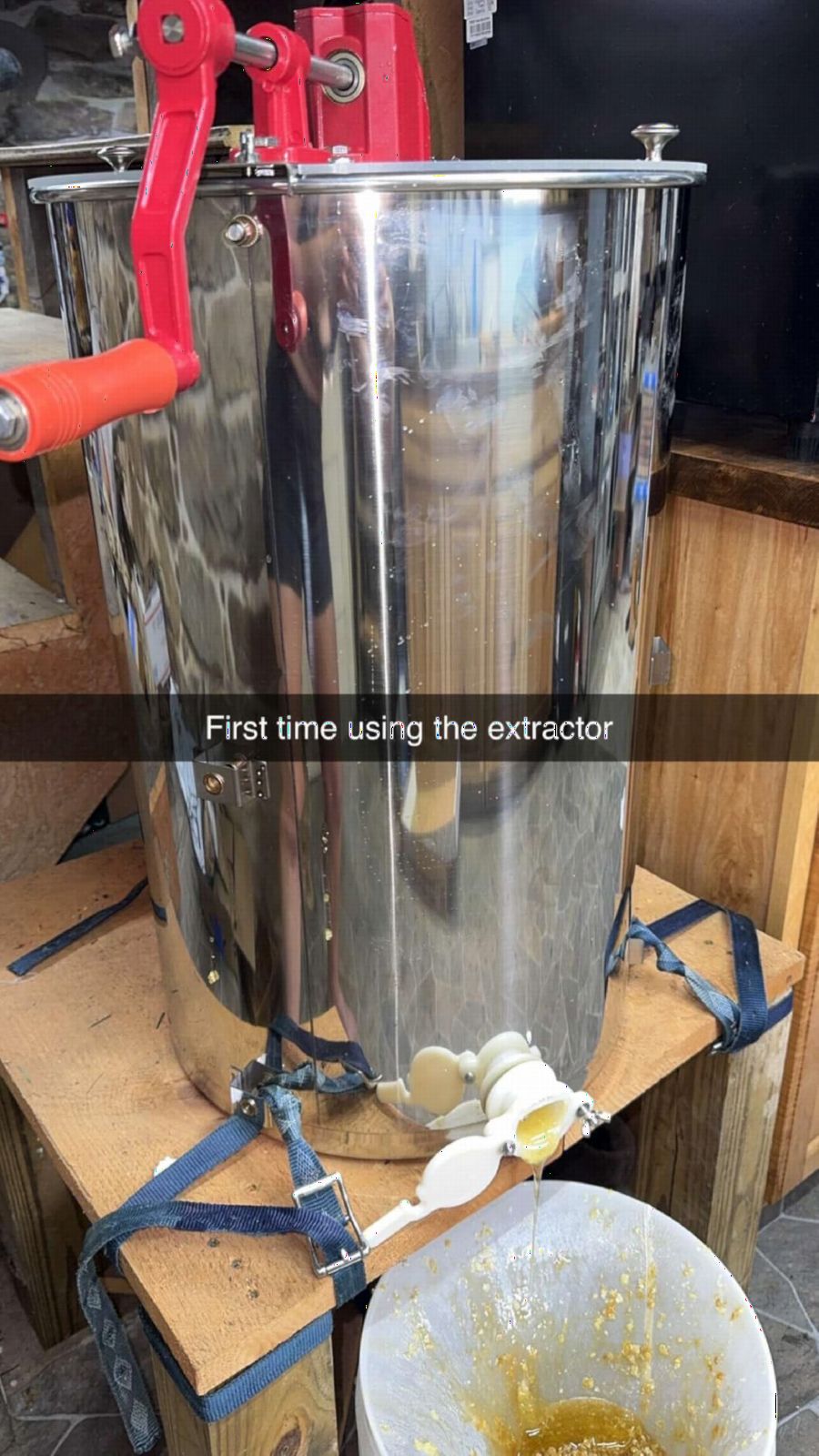
The polished stainless steel drum is rust-resistant and wipes clean easily after each use. VEVOR includes a transparent Plexiglas lid so you can monitor extraction progress without stopping the spin. The ergonomic handle design reduces hand fatigue during longer sessions, which matters when you’re processing multiple batches.
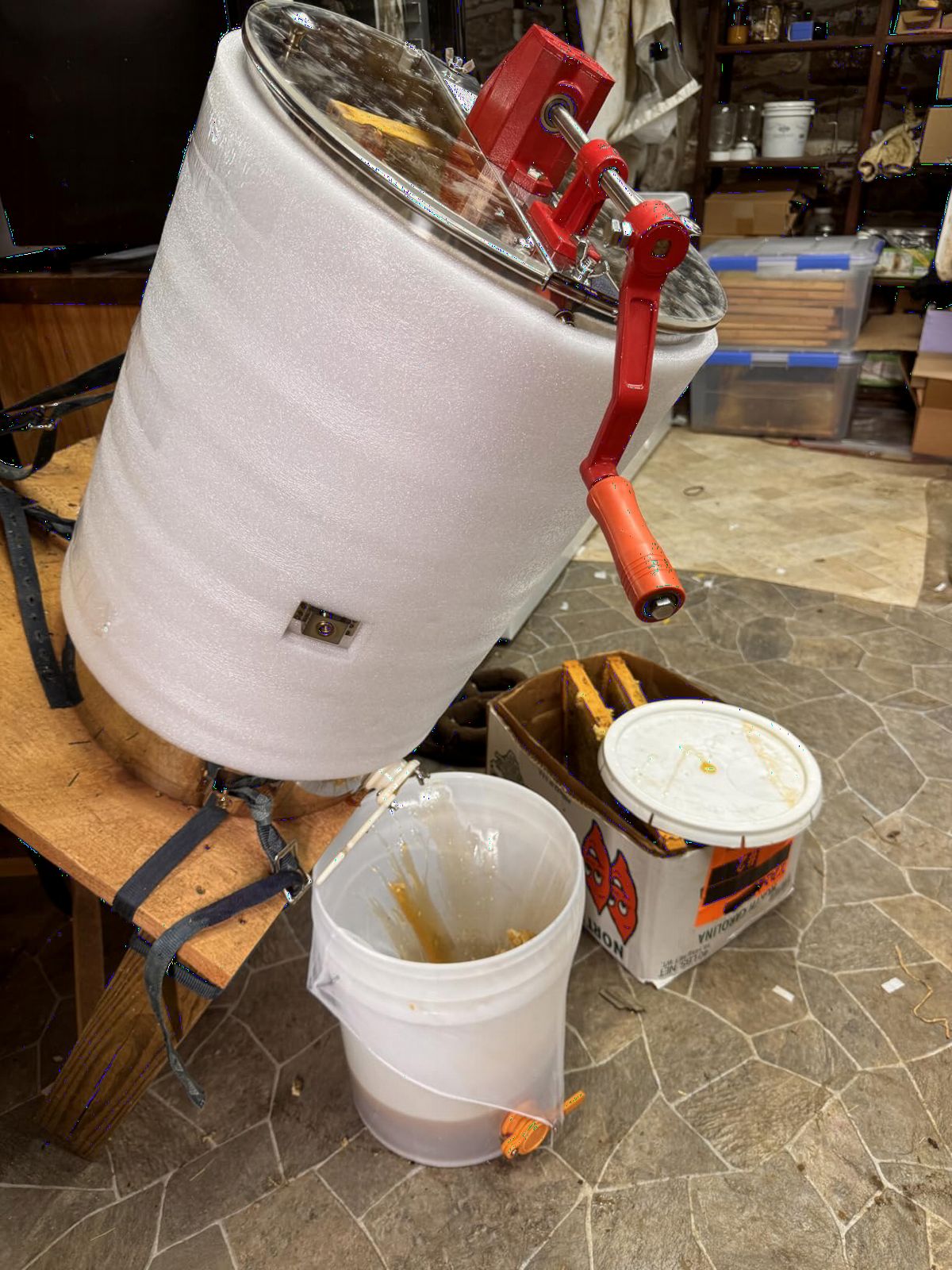
One feature I appreciate is the ability to bolt the legs to a plywood base. This stabilizes the unit significantly and raises the drain valve high enough to fit a 5-gallon bucket underneath. Forum beekeepers consistently recommend this plywood trick for VEVOR extractors to eliminate the wobble that some users report at higher cranking speeds.
Assembly and Setup Tips
Some users report that the legs arrive slightly bent from shipping. This is a common issue with budget extractors and is usually fixable by carefully straightening the legs with pliers or a mallet. Take time during assembly to ensure the basket sits level inside the drum, because an unbalanced basket causes excessive vibration during spinning.
Bolting the legs to a 2×2 foot plywood square adds about 15 minutes to setup but dramatically improves stability. The plywood also protects your floor from scratches and gives you a flat surface if you’re working on uneven ground or grass.
Is the VEVOR Manual Right for Your Hive Count
This extractor suits beekeepers with 3 to 7 hives who want manual operation at a fair price. The 4-frame capacity means fewer batch loads than a 2-frame unit, which saves significant time during peak harvest. If you typically harvest 16 to 28 frames per session, you’re looking at 4 to 7 batches, which is very manageable with a manual crank.
The trade-off is the gear noise. Several users mention that the gears produce a grinding sound during operation. It’s not loud enough to be a dealbreaker, but if you’re extracting in a basement or attached garage late at night, the neighbors might notice.
3. VEVOR 4/8 Frame Electric Honey Extractor – Best Electric for Small Apiaries
VEVOR Electric Honey Extractor, 4/8 Frame, Silver
4-8 frame capacity
140W electric motor
Adjustable speed up to 1300 rpm
Auto-stop safety lid
Height adjustable stand
Pros
- Powerful 140W motor saves time and effort
- Adjustable speed protects delicate comb
- Safety auto-stop when lid opens
- Quality stainless steel construction
- Height adjustable stand reduces fatigue
Cons
- More expensive than manual models
- Requires power outlet nearby
- Motor noise higher than some expected
The VEVOR 4/8 Frame Electric extractor is where manual effort meets modern convenience. With a 140W motor spinning frames at adjustable speeds up to 1300 rpm, this unit processes 4 deep or 8 medium frames per batch. For a beekeeper with 6 to 10 hives, this is the point where going electric starts making real sense.
I’ve talked to several hobbyists who upgraded from manual to electric within their first or second season, and the common refrain is that they wish they’d gone electric sooner. The time savings are substantial. What takes 20 to 30 minutes of cranking by hand gets done in 5 to 8 minutes with a motor, and your arms will thank you.
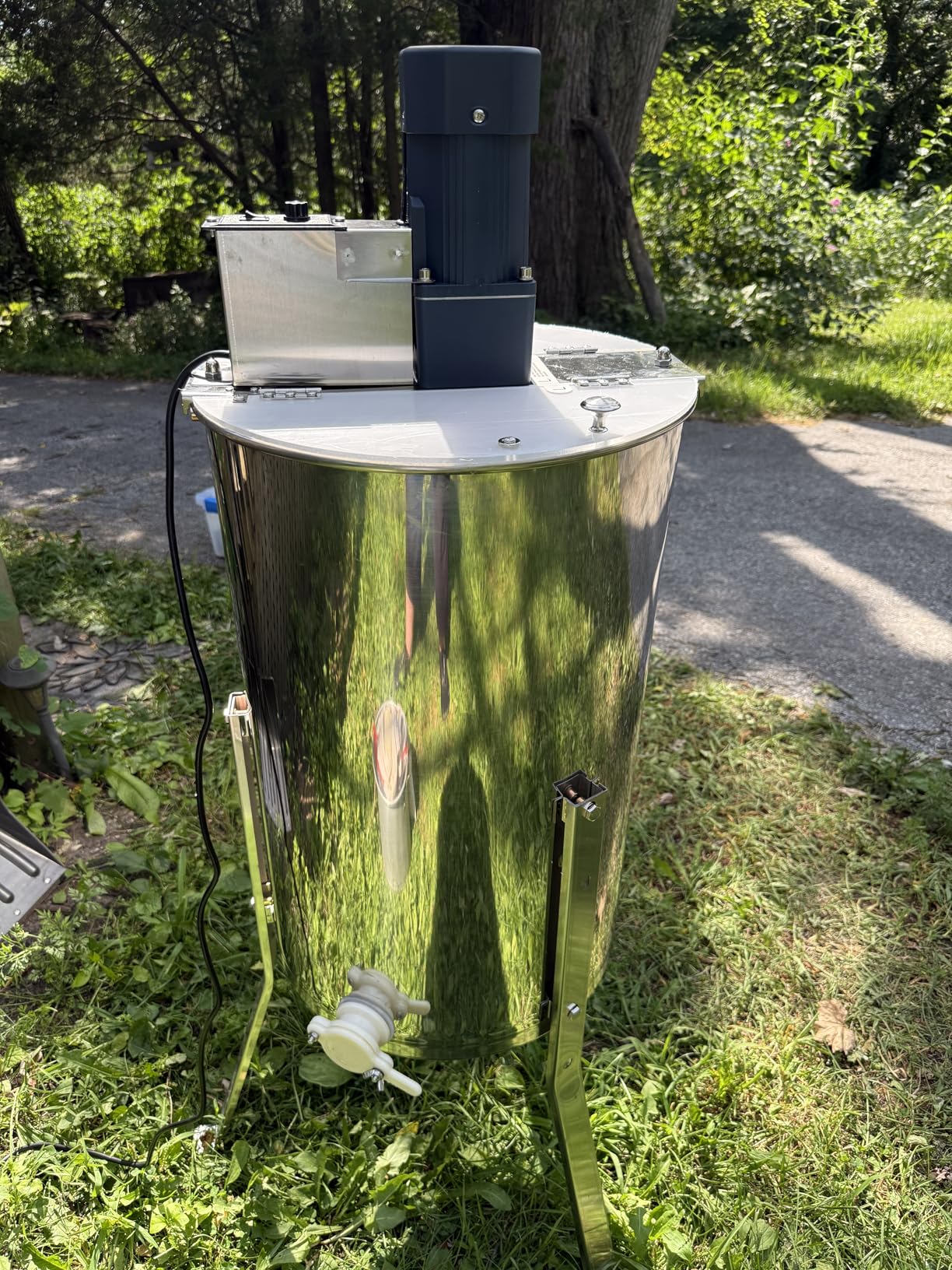
The adjustable speed control is the feature that elevates this extractor above basic electric models. You can start slow to ease honey off the outer comb layers, then increase speed for thorough extraction. This gentle-to-aggressive approach protects delicate wax structures and minimizes comb damage, which means your bees spend less energy rebuilding.
The safety auto-stop feature is a genuine peace-of-mind addition. The motor stops automatically when the transparent lid is opened, which prevents accidental contact with the spinning basket. If you have kids helping with harvest or curious pets in the extraction area, this feature alone justifies the upgrade cost.
Speed Control and Comb Preservation
The adjustable speed matters most for beekeepers using plastic foundation or delicate natural comb. Start at a low rpm for the first minute to fling off the surface honey, then ramp up gradually. This technique prevents the comb from blowing out, which is when centrifugal force tears the wax away from the frame.
Experienced beekeepers on beekeeping forums recommend running each side for about 2 to 3 minutes at moderate speed, then flipping the frames and repeating. With 4 deep frames loaded, a full extraction cycle takes roughly 12 to 15 minutes including flipping time. That’s efficient for a small apiary harvest.
Power and Noise Considerations
The 140W motor requires a standard 110V outlet, so you’ll need to extract near a power source or run an extension cord. The motor does produce noticeable noise during operation, which several reviewers mention is louder than they expected. If you’re extracting in a shared space, plan accordingly.
For apiary-demonstration use or educational settings, the noise level is comparable to a large kitchen mixer. Not silent, but not industrial-loud either. The motor runs smoothest at mid-range speeds, so find the sweet spot where the basket spins balanced and the motor isn’t straining.
4. BeeCastle 4/12 Frame Electric Honey Extractor – Best High-Capacity Electric
BeeCastle 4/12 Frame Electric Honey Extractor Stainless Steel Honeycomb Drum Spinner Extractor, Beekeeping Extraction Equipment (4 Deep Frames)
4 deep or 12 medium frames
140W motor
1250 rpm max speed
Dual magnetic lids
Detachable power cord
Carry handles
Pros
- Highest capacity handling 12 medium frames
- Portable with carry handles
- Magnetic lids for secure closure
- Detachable cord for easy storage
- Versatile deep and medium frame support
Cons
- Limited track record with 77 reviews
- Newest product with unknown durability
- Not Prime eligible
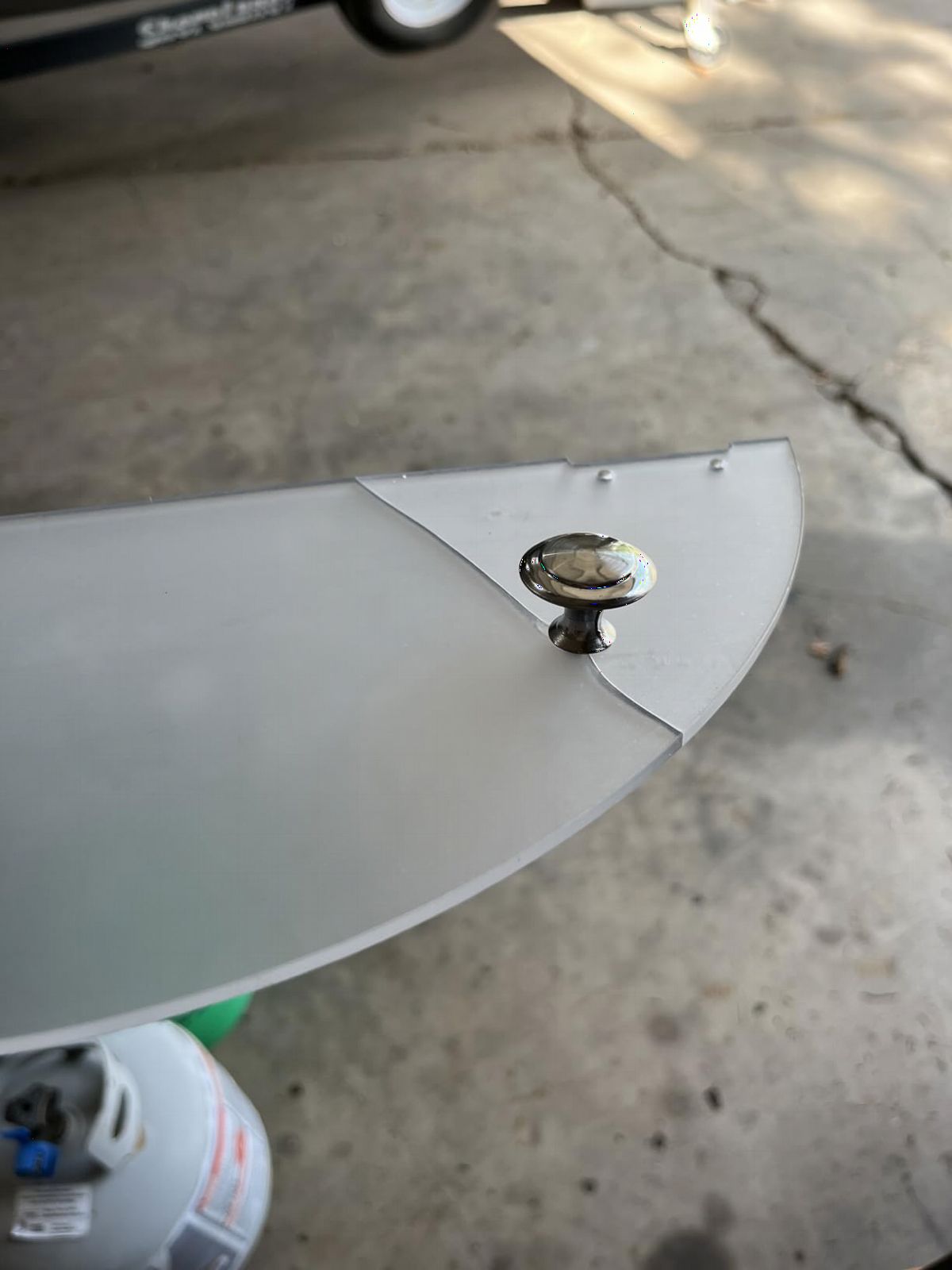
The BeeCastle 4/12 Frame Electric extractor is the capacity king of this lineup. It processes 4 deep frames or a remarkable 12 medium frames in a single batch. For beekeepers running all-medium supers, that means you can load up an entire super’s worth of frames and walk away while the motor does the work.
I was drawn to this model because of the thoughtful design touches that suggest someone actually used an extractor before designing one. The dual magnetic lids snap securely into place without fiddly latches, and they stay closed during operation. The two carry handles make it practical to move between storage and extraction areas, which sounds minor until you’ve lugged a 30-pound drum across a yard.
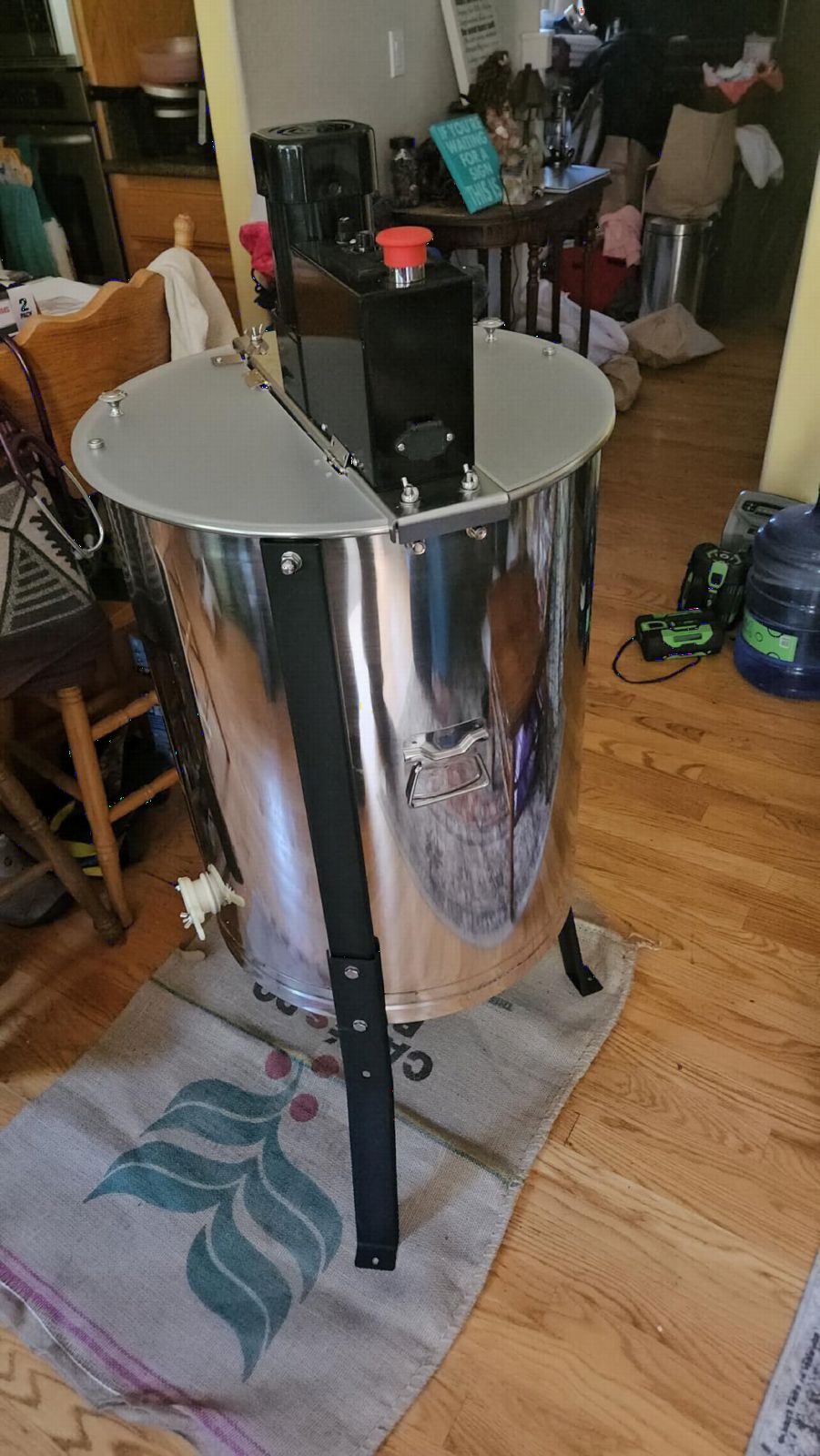
The detachable power cord is another practical feature that competitors often overlook. When extraction season is over, you detach the cord and store it separately. No more bent pins or frayed connections from the cord getting crammed against the drum in storage. It also means if the cord ever gets damaged, replacement is simple.
The 140W motor reaches 1250 rpm with adjustable speed control, giving you the same gentle-start capability as the VEVOR electric model. The height-adjustable stand ranges from 37 to 41 inches, accommodating different bucket sizes and operator heights comfortably.
When 12-Frame Capacity Matters
If you’re running 8 to 10 hives with medium supers, harvest day can mean processing 40 to 60 frames. With a 4-frame extractor, that’s 10 to 15 batch loads. With the BeeCastle loaded at 12 medium frames, you’re looking at 4 to 5 loads. That difference is the gap between an all-day marathon and a focused morning session.
The versatility of handling both deep and medium frames also future-proofs your purchase. Many beekeepers start with deeps for brood and mediums for honey, then gradually shift to all-mediums as they standardize their equipment. This extractor handles both configurations without compromise.
New Product Considerations
As a product released in February 2025, the BeeCastle has a shorter track record than the other extractors in this guide. The 77 reviews and 4.1-star rating are promising but limited. If you value long-term proven reliability over capacity and modern features, the VEVOR or VIVO models offer more established histories.
That said, the features list reads like a wishlist compiled from years of beekeeper complaints about other extractors. Magnetic lids, carry handles, detachable cords, and high capacity suggest the manufacturer studied the market carefully. The stainless steel construction and 140W motor match the proven specs of competing models.
5. VIVO 4 Frame Manual Honey Extractor – Best Premium Manual Extractor
VIVO Honey Extractor 8 Frame Rack (4 Deep Frames), Food Grade Stainless Steel Honey Processing Equipment, Manual Crank Honeycomb Drum Spinner with Transparent Lid, BEE-V004B
4-8 frame capacity
Food grade stainless steel
25.2 inch tall drum
Elevated 15.4 inch honey gate
1 year warranty
Clear Plexiglas lid
Pros
- Premium food grade stainless steel
- Excellent drainage design with minimal waste
- Generous 25.2 inch drum height
- 1 year warranty for peace of mind
- 4.5 star rating with 71 percent 5-star reviews
Cons
- Higher price point than competitors
- Not Prime eligible
- Heavier at 34 pounds
The VIVO 4 Frame Manual extractor, model BEE-V004B, is what happens when a manufacturer focuses on quality over price competition. At 34 pounds, it’s significantly heavier than the VEVOR models, and that weight comes from thicker steel and more robust construction throughout. This is an extractor built to last decades, not seasons.
What impressed me most is the drainage design. The honey gate sits 15.4 inches from the floor, keeping it well above the extracted honey pool inside the drum. The gate opening sits just 0.5 inches from the barrel bottom, meaning nearly every drop of honey drains out. Multiple reviewers highlight this as a standout feature, with one noting that barely any honey remains in the drum after draining.
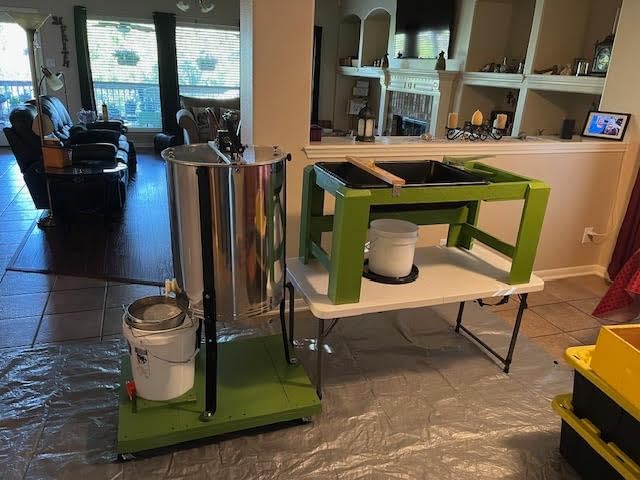
The 25.2-inch drum height gives you generous capacity for honey accumulation during extraction. On smaller extractors, you sometimes need to stop and drain mid-process because the honey pool reaches the spinning basket. With the VIVO’s tall drum, you can process multiple batches before needing to open the gate.
The 1-year warranty is a meaningful vote of confidence from VIVO. Most budget extractors come with no stated warranty, so the fact that VIVO stands behind their product for a full year tells you they trust their manufacturing quality. Combined with the 4.5-star rating, this is the most reliable manual extractor in our lineup.
Build Quality and Long-Term Value
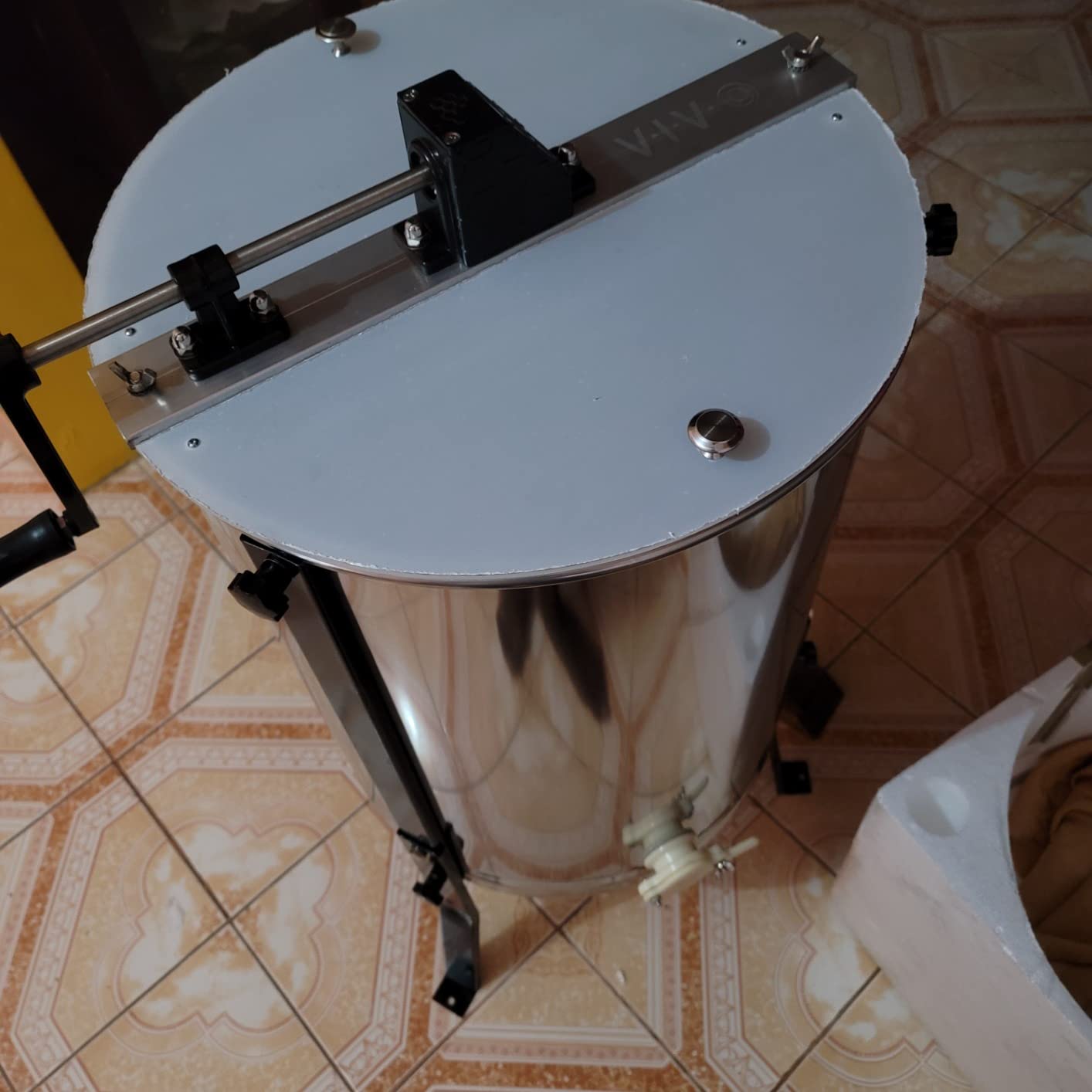
The food grade stainless steel construction meets standards for honey-contact surfaces. This matters if you’re selling honey commercially or want assurance that no contaminants leach into your harvest. The thicker steel also resists dents and warping better than thinner gauge drums on cheaper models.
The clear Plexiglas lid seals tightly against the drum opening, preventing honey from splashing out during aggressive spinning. Reviewers consistently mention the solid feel of the lid and the secure fit, which eliminates the wobble and splash issues reported with some competing models.
Is the Premium Price Worth It
The VIVO costs more than the VEVOR and VINGLI manual extractors, but the price difference buys tangible improvements in drainage efficiency, drum capacity, and build quality. For a beekeeper with 4 to 8 hives who plans to keep bees for years, the VIVO is an investment that pays off in reliability and reduced frustration.
If you extract once or twice a year, the extra cost spreads thin over time. And if you ever sell the extractor, a well-maintained VIVO with a known brand name holds resale value better than generic alternatives. Consider it the premium choice for beekeepers who value quality and warranty protection.
How to Choose the Right Honey Extractor for Your Apiary?
Choosing between the best honey extractors for small apiary operations comes down to a handful of key decisions. Let me walk you through the factors that matter most so you can match an extractor to your specific situation.
Manual vs Electric: Which Power Type Makes Sense
The manual versus electric debate is the first fork in the road. Manual extractors cost less, have no motor to break, and work anywhere without needing electricity. They’re perfect for beekeepers with 2 to 5 hives who process 10 to 20 frames per harvest. The physical effort is real but manageable for occasional use.
Electric extractors cost more but save significant time and labor. If you have 6 or more hives, or if physical limitations make cranking difficult, the motor pays for itself in reduced fatigue. Most beekeepers I’ve talked to who upgraded to electric say they’d never go back to manual.
A middle-ground approach is starting with a manual unit and upgrading later. Many forums feature beekeepers who did exactly this, and the consensus is that a quality manual extractor holds enough resale value to recoup most of the original cost when you upgrade.
Tangential vs Radial: Understanding Basket Design
Tangential extractors position frames with one side facing outward. Centrifugal force pulls honey from the outer side first, then you flip the frames to extract the other side. This design is standard on smaller hobbyist extractors and works well for all frame types including deeps.
Radial extractors position frames like spokes in a wheel, with the top bar pointing toward the center. Honey extracts from both sides simultaneously, eliminating the need to flip frames. Radial designs are more efficient but typically require larger drums and work best with medium or shallow frames.
All five extractors in this guide use tangential design, which is the standard for small-apiary capacity ranges. Radial extractors generally start at 9-frame capacity and above, targeting commercial or large hobbyist operations.
Frame Capacity: Matching Size to Your Hive Count
Frame capacity directly determines how many batch loads you’ll need per harvest. Here’s a practical guide based on common small-apiary scenarios. A 2-frame extractor suits 2 to 4 hives, processing about 12 to 20 frames per harvest in 6 to 10 batches. A 4-frame extractor works well for 4 to 7 hives, handling 20 to 35 frames in 5 to 9 batches.
For 7 to 10 hives bringing in 35 to 60 frames, consider a high-capacity electric model like the BeeCastle 4/12 Frame. Running 12 medium frames per batch cuts your loading cycles significantly. The math is simple: fewer batches mean less time standing at the extractor.
Also consider frame depth. Deep frames hold more honey but take longer to extract per side. If you run all deeps, factor in extra time per batch compared to medium or shallow frames.
Material Quality: Why Stainless Steel Matters
All five extractors in this guide use stainless steel construction, and that’s not a coincidence. Stainless steel resists rust, doesn’t react with honey’s natural acidity, and cleans easily with water. Food grade stainless steel goes a step further by meeting standards for surfaces in contact with food products.
Avoid extractors with plastic drums. Several forum beekeepers report that plastic models warp, crack, or absorb odors over time. Plastic also scratches easily, creating crevices where bacteria can grow. The initial savings on a plastic extractor evaporate quickly when you’re replacing it after two seasons.
When comparing stainless steel models, check the gauge. Thicker steel (lower gauge numbers) resists denting and holds its shape better during high-speed spinning. The VIVO’s heavier weight at 34 pounds compared to the VEVOR’s 21.4 pounds reflects thicker steel construction.
Cleaning and Maintenance Tips
Cleaning your extractor immediately after use is the single most important maintenance step. Honey residue that dries inside the drum becomes sticky and difficult to remove, and it can ferment between seasons. Rinse the drum and basket with warm water, wipe with a soft cloth, and let it dry completely before storage.
For the gears and moving parts, a food-grade lubricant applied annually keeps manual extractors cranking smoothly. Electric models need their motors kept dry and their power cords stored without kinks. Check the honey gate valve seal each season and replace it if you notice any leaking during extraction.
Store your extractor with the lid off to allow air circulation. This prevents moisture buildup that can lead to rust even on stainless steel. A light coat of food-grade mineral oil on the interior surface before long-term storage adds an extra layer of protection.
Storage and Space Planning
Extractors take up significant space, especially with their stands assembled. The VEVOR and VINGLI units stand about 40 inches tall with legs attached. Consider where you’ll store the unit between harvests, whether that’s a garage shelf, a shed, or a dedicated beekeeping equipment area.
If storage space is tight, look for extractors with removable legs like the VEVOR models. Removing the legs reduces the stored height by roughly 18 inches, making it possible to slide the drum onto a shelf or into a cabinet. The BeeCastle’s detachable power cord also reduces the storage footprint slightly.
Forum beekeepers share creative storage solutions including hanging extractors from garage ceiling hooks and disassembling stands to store components flat. Plan your storage before purchase so you’re not surprised when the box arrives.
Frequently Asked Questions
What is the best honey extractor for a hobbyist with 4 hives?
For a hobbyist with 4 hives, a 2 to 4 frame manual extractor is ideal. The VINGLI 2 Frame Manual offers the best value at under $110, while the VEVOR 2/4 Frame Manual provides adjustable height and larger capacity for around $130. Both handle the 16 to 24 frames a 4-hive apiary typically produces per harvest.
Do I need to uncap the frames before using a honey extractor?
Yes, you must uncap frames before extraction. The wax cappings seal honey inside each cell, and the extractor cannot remove honey through intact cappings. Use a hot uncapping knife or scratcher to remove the wax seal from both sides of each frame before loading it into the extractor basket.
Will an extractor damage my wax comb?
When used correctly, a honey extractor preserves wax comb for reuse. Start at a low speed and gradually increase to prevent blowouts. Tangential extractors are gentler than radial designs for delicate comb. Proper speed control and balanced loading are the keys to protecting your frames season after season.
Can I extract honey from deep frames in all extractors?
Not all extractors handle deep frames. Check the frame size specifications before purchasing. The VEVOR 2/4 Frame holds 2 deep frames, the VEVOR 4/8 Frame holds 4 deeps, the BeeCastle handles 4 deeps, and the VIVO processes 4 deeps. Smaller budget extractors may only accept medium or shallow frames.
Can I extract honey from plastic frames?
Yes, you can extract honey from plastic frames and plastic foundation. Plastic frames are actually more durable than wooden frames during extraction and less prone to blowouts. Start at a moderate speed and avoid maximum rpm to protect the comb structure, whether it is drawn on plastic or wax foundation.
Wrapping Up: Choosing Your Honey Extractor
Finding the best honey extractors small apiary beekeepers can depend on doesn’t have to be complicated. For budget-conscious beginners with 2 to 4 hives, the VINGLI 2 Frame Manual delivers proven reliability at an unbeatable price. The VEVOR 2/4 Frame Manual adds frame capacity and adjustable height for those wanting more flexibility. And for beekeepers ready to go electric, the VEVOR 4/8 Frame Electric offers motor-driven extraction with safety features that make harvest day genuinely enjoyable.
If you need maximum capacity for a growing operation, the BeeCastle 4/12 Frame Electric handles 12 medium frames per batch. And for those who prioritize build quality and warranty protection above all, the VIVO 4 Frame Manual stands alone as the premium manual choice.
The right extractor transforms harvest day from a dreaded chore into the satisfying culmination of a season’s work. Match your frame count, budget, and power preference to the models above, and you’ll be spinning honey like a pro this 2026 season.
1 thought on “5 Best Honey Extractors for Small Apiaries (September 2026) Reviews”