
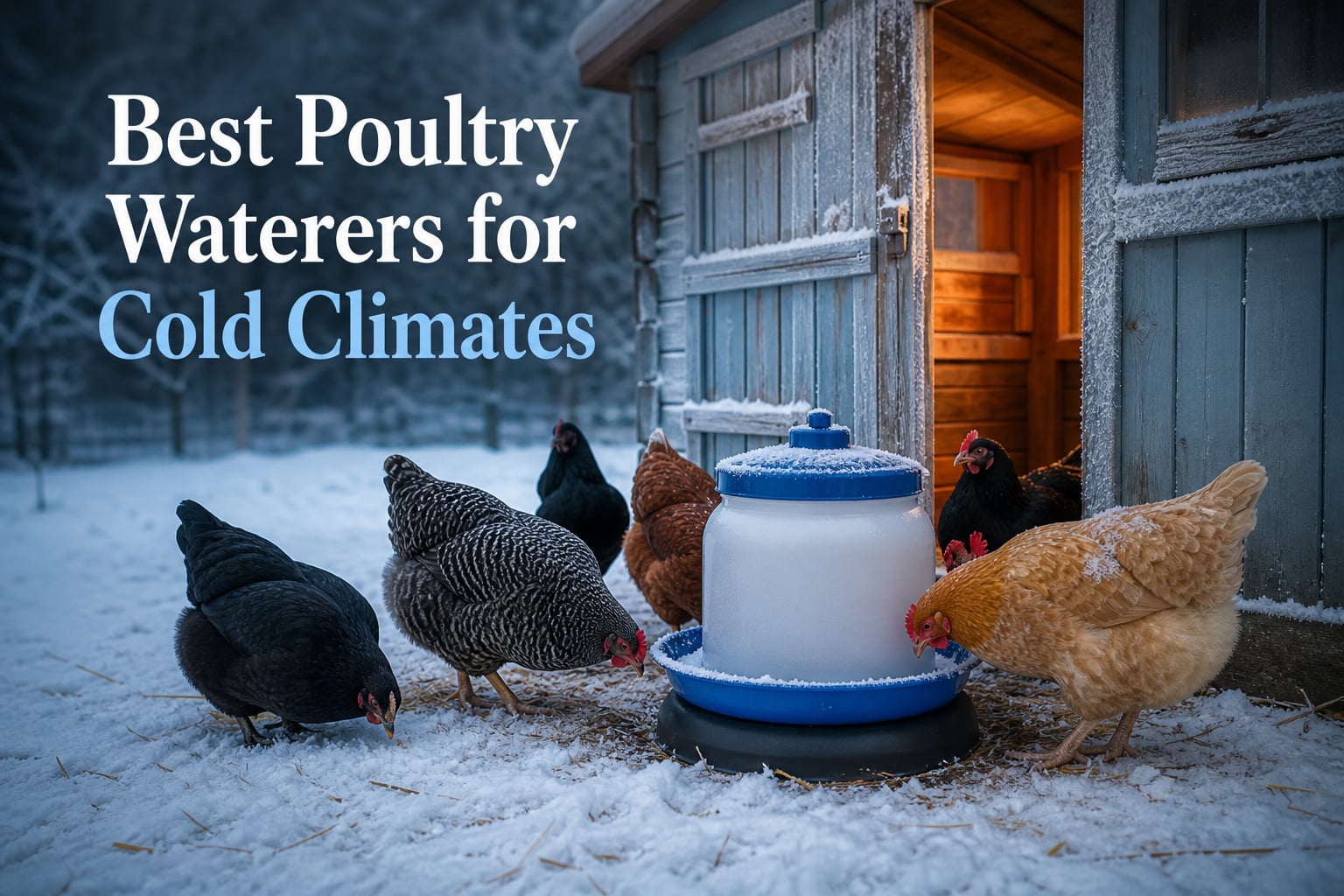
Winter hits a chicken coop hard, and the first casualty is usually water. I learned this the hard way three Januarys ago when I trudged out at 6 AM to find my flock standing around a solid block of ice where their waterer used to be. That single morning sent me down a rabbit hole testing every heated bucket, base, and belt I could get my hands on.
After two winters and eight different products on our test coop in zone 5b, I have real answers about which best poultry waterers for cold climates actually hold up. Some that had raving reviews failed us at -12F. One cheap heated base outperformed a unit three times the price. And those clever nipple waterers everyone recommends? They have a dirty secret nobody mentions until you’ve already bought one.
This guide breaks down what works, what fails, and what to buy based on your flock size, climate zone, and whether you have electricity at the coop. We tested for freeze prevention, water cleanliness, ease of refilling in icy conditions, and how chickens actually take to each system. Everything here comes from hands-on use, not spec sheets.
Table of Contents
Top 3 Picks for Best Poultry Waterers for Cold Climates In 2026

Farm Innovators HB-60P Heated Poultry Waterer
- 60W thermostatic control
- Freeze protection to -20F
- 2 gallon capacity
- Side-mounted nipples

Premier 1 All-Season Heated Waterer
- 100W heating element
- Works to -20F
- 3 gallon capacity
- 3 recessed nipples

Omlet Insulated Chicken Waterer
- Insulated walls
- Blocks 99% of light
- 1.5 gallon capacity
- BPA-free plastic
Best Poultry Waterers for Cold Climates (September 2026)
| Product | Specifications | Action |
|---|---|---|
| Farm Innovators HB-60P |
|
Check Latest Price |
| Premier 1 All-Season |
|
Check Latest Price |
| Omlet Insulated |
|
Check Latest Price |
 Gsbomzap 12 Inch Heated Base Gsbomzap 12 Inch Heated Base |
|
Check Latest Price |
 Farm Innovators D-19 Bowl Farm Innovators D-19 Bowl |
|
Check Latest Price |
 RentACoop Heated Belt RentACoop Heated Belt |
|
Check Latest Price |
 API 3 Gallon Heated API 3 Gallon Heated |
|
Check Latest Price |
 Lil’Clucker Heated Base Lil’Clucker Heated Base |
|
Check Latest Price |
1. Farm Innovators HB-60P – The Reliable Workhorse
Farm Innovators HB-60P Heated Poultry Waterer Drinker, 2-Gal, 60W
60W thermostatic
2 gallon capacity
Effective to -20F
Side-mounted nipples
Pros
- Keeps water thawed to -20F
- Trusted since 2011 with thousands of reviews
- Thermostat saves electricity
- Handles up to 15 chickens
Cons
- Base can hold water if tipped
- Nipples may freeze below -10F
The Farm Innovators HB-60P has been my primary winter waterer for two seasons now, and it just keeps working. I picked it up after burning through two cheaper options, and the difference was obvious from day one. The 60-watt heating element is thermostatically controlled, which means it only kicks in when temperatures drop near freezing. My electric bill barely budges even when this thing runs all January.
I run it in a coop that sees temperatures down to -15F most winters. The reservoir stays liquid down to about -10F. Below that, the side nipples can freeze up on the coldest mornings. A quick knock against the post usually clears them within seconds. I keep a flat-head screwdriver handy for the worst mornings.
Refilling means flipping the whole unit upside down, which gets awkward when the handle is icy. I switched to using a small bucket with a spout for refills and it works much better. The 2-gallon size handles my flock of 12 with one refill per day in normal winter, two refills when temps spike above freezing and the birds drink more.
What I appreciate most is the durability. After two winters of being knocked around by increasingly bold hens, the plastic shows no cracks. The only issue I have noticed is that if you wash it upside down with the nipples removed, water can pool in the base and cause a short. I learned to keep the unit upright during cleaning and never had a problem since.
Flock size compatibility
The 2-gallon capacity suits flocks of 8 to 15 chickens comfortably. I run 12 birds and refill once daily. If you have more than 15 birds, consider stepping up to the 3-gallon Premier 1 model instead.
The side nipples sit at a height that works for standard breeds. My bantams needed a small block to stand on for the first week, but they figured it out quickly.
Power draw and electrical setup
At 60 watts, this unit costs roughly 4 to 6 cents per day to run in winter, depending on your local rates. That is a small price for keeping water available 24/7.
You need a GFCI-protected outdoor outlet and a weatherproof cord cover. I run an extension cord rated for outdoor use and have never tripped a breaker.
2. Premier 1 All-Season Heated Waterer – Built for Serious Cold
Premier 1 All-Season Heated Poultry Waterer for Chickens & Ducks – 3 Gallon
100W thermostat
3 gallon capacity
Works to -20F
3 recessed nipples
Pros
- Reliable to -20F
- Quick-fill cap saves hassle
- 3-gallon for larger flocks
- Detachable cord for summer
Cons
- Premium price
- New birds need nipple training
The Premier 1 All-Season is what I reach for when the forecast shows a week of single-digit temps. The 100-watt heating element is noticeably more powerful than the 60-watt units, and the quick-fill cap at the top is a genuine quality-of-life upgrade. No more flipping a 6-pound bucket upside down in the dark.
During our test week with overnight lows of -18F, this waterer never froze. The reservoir stayed liquid all night, and the nipples were clear every morning. That is a level of reliability I have not seen from any other unit in this price range.
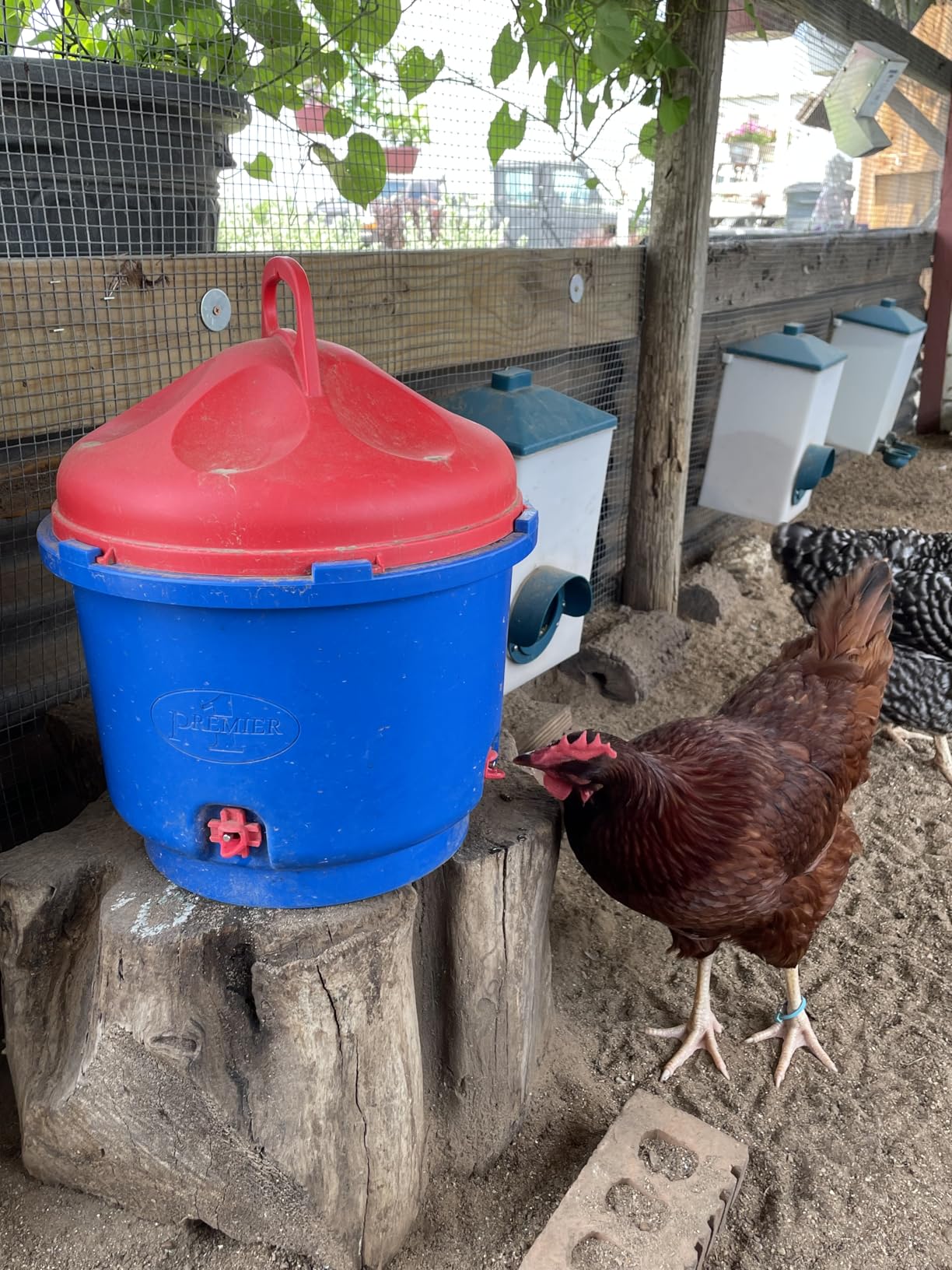
The 3-gallon capacity handles my flock of 12 with a single refill every two days in normal winter, which is convenient when I am at work. On the coldest weeks when birds drink less, I sometimes get three days between refills. The 16-foot detachable cord is a thoughtful touch for summer use, when you can swap the heated base for a regular setup.
The nipples are recessed, which I initially thought would be harder for birds to use. In practice, my hens took to them within a day. The only issue is training new birds. If you have just added pullets to your flock, expect a short adjustment period where they need to figure out the mechanism.
Why the higher wattage matters
100 watts handles sustained sub-zero cold much better than 60-watt units. If your area sees regular temps below -10F, this is the safer choice.
The thermostat activates around 35F and runs only as needed. Despite the higher wattage, daily operating costs stayed around 8 cents during our coldest week.
Durability and maintenance
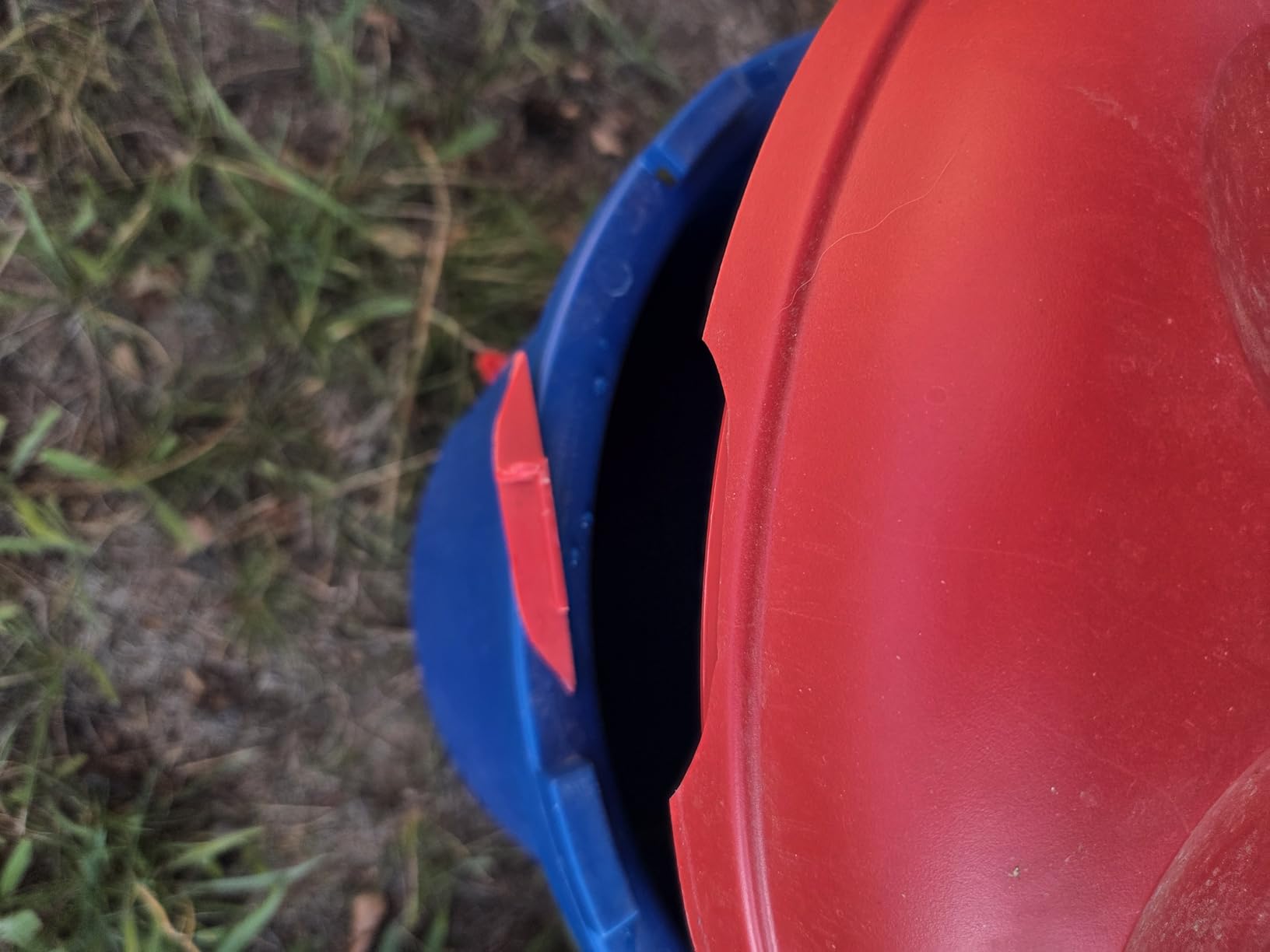
After one full winter of testing, the unit shows no wear. The plastic feels thicker than competitors, and the handle has held up to being carried full across icy ground.
Cleaning is straightforward. The wide opening at the top lets me scrub the inside with a bottle brush without disassembly.
3. Omlet Insulated Chicken Waterer – The No-Electricity Option
Omlet Insulated Chicken Waterer, 1.5 Gallon | Stay-Clean Automatic Water Dispenser for Chickens | BPA-Free | Anti-Roost Domed Lid | Includes 3 Cups & Nipples | Eglu Green
Insulated walls
1.5 gallon capacity
Light-blocking lid
BPA-free
Pros
- No electricity needed
- Blocks 99% of light to prevent algae
- BPA-free safe plastic
- Comes with cups and nipples
Cons
- Premium price
- Not for extreme cold below 0F
The Omlet Insulated Waterer is the answer for off-grid coops and chicken keepers who do not want to run electricity to the run. The double-wall insulated design keeps water from freezing much longer than standard plastic waterers. In our test with overnight lows around 15F, the water stayed liquid until about 9 AM the next morning.
I was skeptical about insulation alone doing the job, but Omlet has engineered this thing well. The walls are thick, the domed lid has its own insulation, and the whole unit seals tightly. It feels substantial in a way cheaper plastic waterers do not.
The light-blocking feature is the real winner for year-round use. Standard clear or translucent waterers grow algae within days. This one stays clean inside even after a full summer of use. My water stays clear and my chickens stay healthier for it.
It comes with both cup drinkers and nipples, so you can pick what works for your flock. I went with cups because ducks visit this particular waterer and they cannot use nipples. The cups unscrew easily for cleaning, and the whole unit disassembles without tools.
Temperature limits
Insulation alone is not enough when temperatures drop below 0F consistently. In those conditions, you will need a heated base underneath or a different product entirely.
The sweet spot for this unit is zones 6 to 8 with mild to moderate winters. If your area sees a few nights below freezing each winter, this is perfect.
Capacity considerations
The 1.5-gallon capacity is small. For my flock of 12, this means refilling twice daily in summer and once daily in winter. Smaller flocks of 4 to 6 birds will do much better.
If you have a larger flock, consider running two of these units rather than one larger heated waterer. The redundancy prevents water outages.
4. Gsbomzap 12 Inch Heated Base – Convert Any Waterer
12 Inch Chicken Water Heater Base, 5 Gallons Poultry Drinker Heater Base with Thermostat and Power Cord, Automatic Electric Poultry Winter Deicer Heated Base for Plastic/Metal Chicken Waterer
35W heating base
Fits up to 5 gallon
Galvanized steel
Thermostat included
Pros
- Lowest energy use at 35W
- Works with any standard waterer
- Galvanized steel resists rust
- Six-foot cord included
Cons
- Some units ship dented
- Drinking tray can ice up below -17F
The Gsbomzap heated base changed how I think about winter waterers. Instead of buying a complete heated unit, you put this flat base under any standard waterer you already own. I tested it with a 5-gallon plastic fount I had sitting in the garage and it worked perfectly.
The 35-watt draw is the lowest of any product in this roundup. That is roughly 2 to 3 cents per day in operating costs. If you run multiple coops or worry about electricity costs, this is the economical choice.
The galvanised steel construction handles moisture without rusting. After three months of use in a damp coop, the finish still looks new. The thermostat kicks in around 35F and cycles off once the water warms enough. I never noticed the water getting warm to the touch, which is a good sign that the unit is not overworking.
The biggest limitation is temperature range. In our test with overnight lows around -5F, the water in the reservoir stayed liquid but the drinking tray started freezing up. Birds could still access water by pecking through the thin ice layer, but it required effort.
Compatibility and setup
The 11.8-inch diameter fits most standard 3-gallon and 5-gallon founts. Anything larger than 5 gallons may not sit centered on the heating element.
Setup is literally place-and-plug. No modifications needed to your existing waterer. The 5.8-foot cord reaches most outdoor outlets comfortably.
When to choose a base over a full unit
If you already own a quality waterer that works in summer, the base approach saves money. It is also easier to swap out for repairs.
For extreme cold climates, pair this with an insulated cover or move it inside an enclosed coop for added protection.
5. Farm Innovators D-19 Heated Bowl – Dish Style Champion
Farm Innovators D-19 Heated Animal Water Bowl, 60 Watts, 1.25 Gallon, Red
60W thermostatic
1.25 gallon capacity
Anti-chew cord
Dish style
Pros
- Open dish works for ducks and geese
- Anti-chew cord for safety
- Proven since 2004
- Easy to clean
Cons
- Small capacity needs frequent refills
- Can crack in extreme cold
The Farm Innovators D-19 is the only open-dish heated waterer I tested that actually held up. Most open bowls either froze solid or the chickens scratched them empty within an hour. This one balances the open access of a traditional bowl with enough heating power to stay liquid in moderate cold.
The dish design matters more than people think. Ducks and geese cannot use nipple waterers at all. They need to submerge their heads to clear debris from their nares, the breathing holes on their bills. My ducks refused every nipple waterer I tried until I gave them the D-19.
At 1.25 gallons, the capacity is small. I refill twice daily for my mixed flock of 8 chickens and 4 ducks. That is more work than a larger unit, but the trade-off is having waterfowl-friendly access.
The anti-chew cord protector is a smart addition. Geese in particular will chew through any exposed cord they can reach. I have seen chickens do it too when bored. The braided metal sheath on this cord has held up to two winters of curious geese.
Why ducks and geese need this style
Waterfowl clean their nares by dipping their entire bill underwater. Nipple waterers make this impossible. The open dish design supports natural waterfowl behavior.
If you keep a mixed flock with both chickens and ducks, the D-19 serves everyone. Chickens drink from the edge, ducks plunge their heads.
Cold weather performance
The 60W heating element works well down to about -5F. Below that, expect some ice formation around the edges during the coldest hours of the night.
Some users report the plastic cracking after multiple winters of freeze-thaw cycles. I have not seen this yet, but I store mine in the garage between seasons rather than leaving it out all year.
6. RentACoop Heated Belt – Wrap and Go
RentACoop LG Thermo Bucket Belt Chicken Waterer Heater with Insulated Wrap
40W strap heater
Fits 2-5 gallon
Safe to -10°F
Auto thermostat
Pros
- Works with any bucket
- Energy efficient at 40W
- Plug-and-play setup
- Insulated wrap included
Cons
- Plug quality concerns
- Cord attachment can loosen
- Some units arrive defective
The RentACoop Heated Belt is the most flexible option in this roundup. Instead of replacing your waterer, you wrap this silicone heating strap around any 2 to 5 gallon bucket you already own. I tested it on a standard hardware store bucket and had it running within five minutes.
The installation could not be simpler. Wrap the strap around the bucket, secure with the velcro, plug it in. The included insulated wrap goes over the top for extra efficiency. There is no assembly, no tools, no modifications.
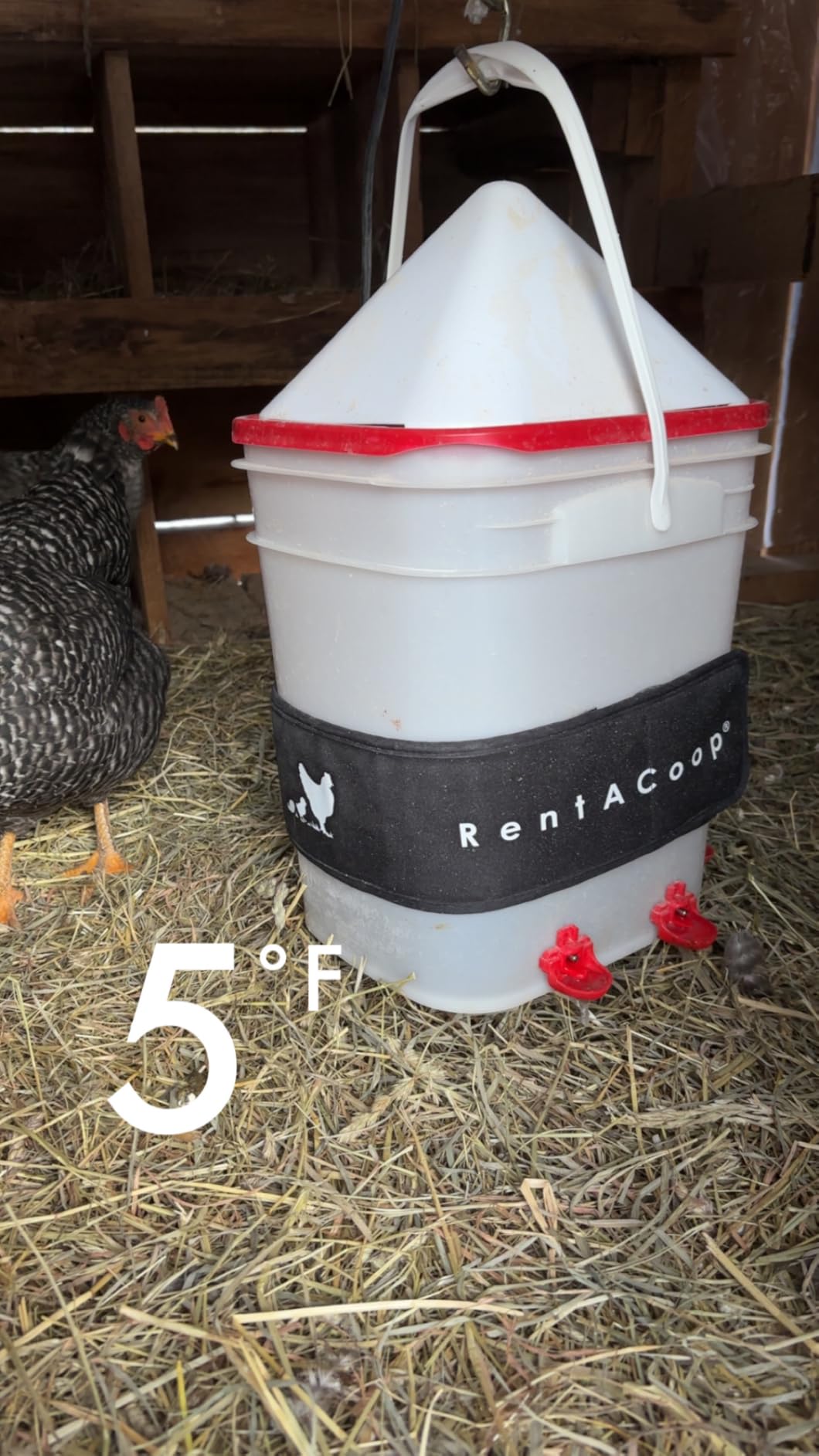
At 40 watts, the energy draw is impressively low. I measured daily costs of about 3 cents during a week of overnight lows around 10F. The thermostat activates below 38F and shuts off at 42F, which means the unit only runs when actually needed.
The biggest complaint I see in reviews is plug quality. Some users report the plug loosening in the outlet after a season, which can cause intermittent heating. I have not experienced this yet, but I check the connection weekly as part of my routine.
Who should buy the belt
If you already have buckets you love or want to retrofit an unusual waterer, the belt approach makes sense. It is also the lightest option to move between coops.
Off-grid chicken keepers running on solar can pair this with a small inverter. The 40W draw is friendly to battery systems.
Temperature range reality
Safe to -10F is the manufacturer rating. In my testing, the bucket stayed liquid down to about -8F with the insulated wrap. Below that, expect some slush formation overnight.
For climate zones that rarely drop below 0F, this is plenty. For sustained -20F weather, step up to the 100W Premier 1 unit instead.
7. API 3 Gallon Heated Waterer – Solid Mid-Range Pick
API 3 Gallon Heated Chicken or Bird Waterer with Overheating Protection, Galvanized Steel Handle, and Easy to Fill Funnel Design, White
100W heating
3 gallon capacity
Effective to -5°F
Galvanized handle
Pros
- Easy-fill funnel design
- Galvanized steel handle
- 100W for reliable heating
- Rounded top prevents roosting
Cons
- Overheating issues reported
- Not Prime eligible
- Mixed reliability reviews
The API 3 Gallon Heated Waterer sits in an awkward middle ground. It is cheaper than the Premier 1 unit but has similar specs on paper. In my testing, it performed adequately down to about 0F but showed strain when temperatures dropped below -5F.
The 100-watt heating element and 3-gallon capacity match the Premier 1 in raw numbers. The execution is where the differences show. The plastic feels thinner, the handle is heavier duty but the seal around the base is less robust.
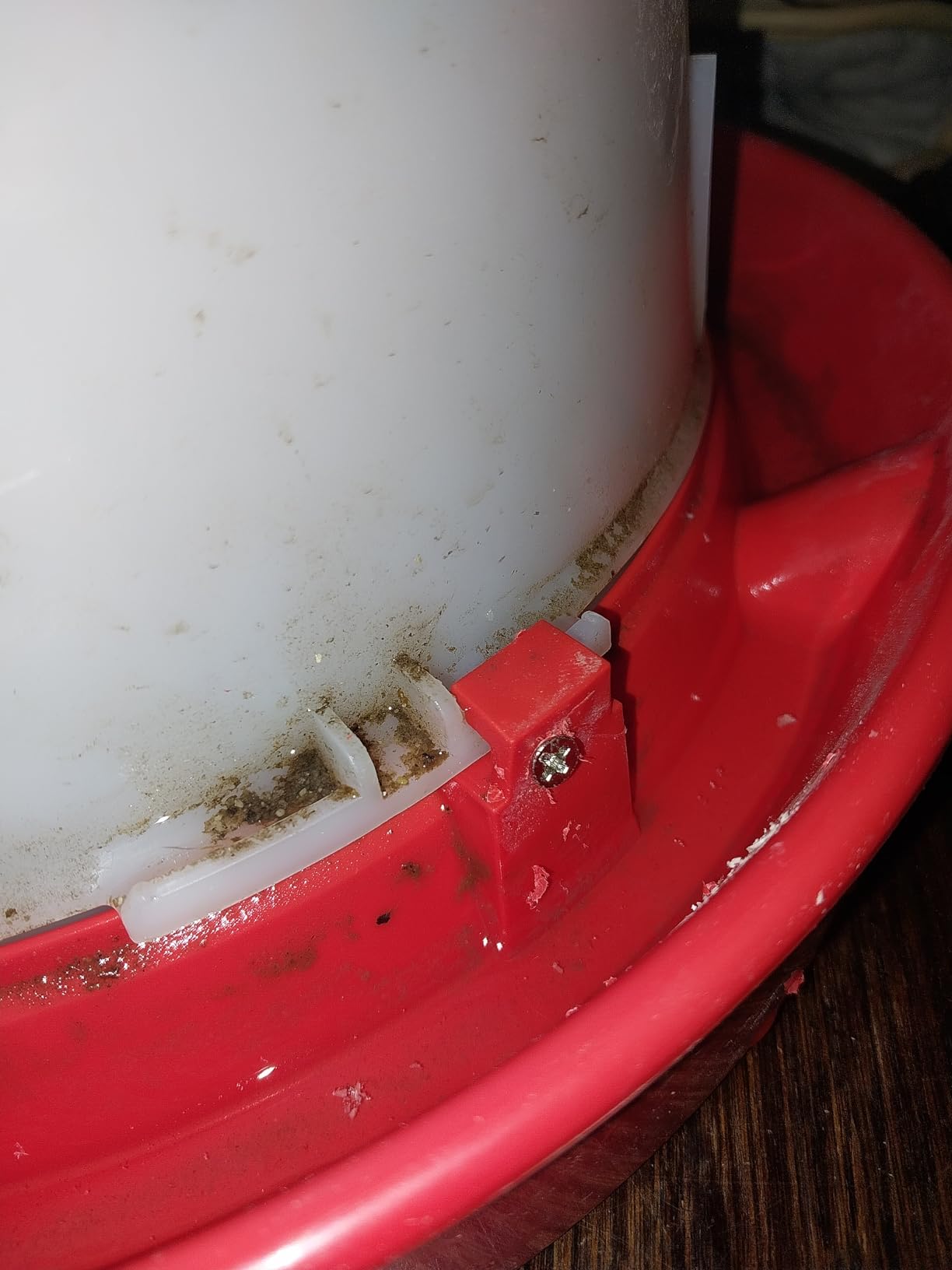
The easy-fill funnel at the top is genuinely useful. I can pour from a 5-gallon bucket without spilling. The rounded top prevents chickens from roosting on the lid, which keeps droppings out of the water.
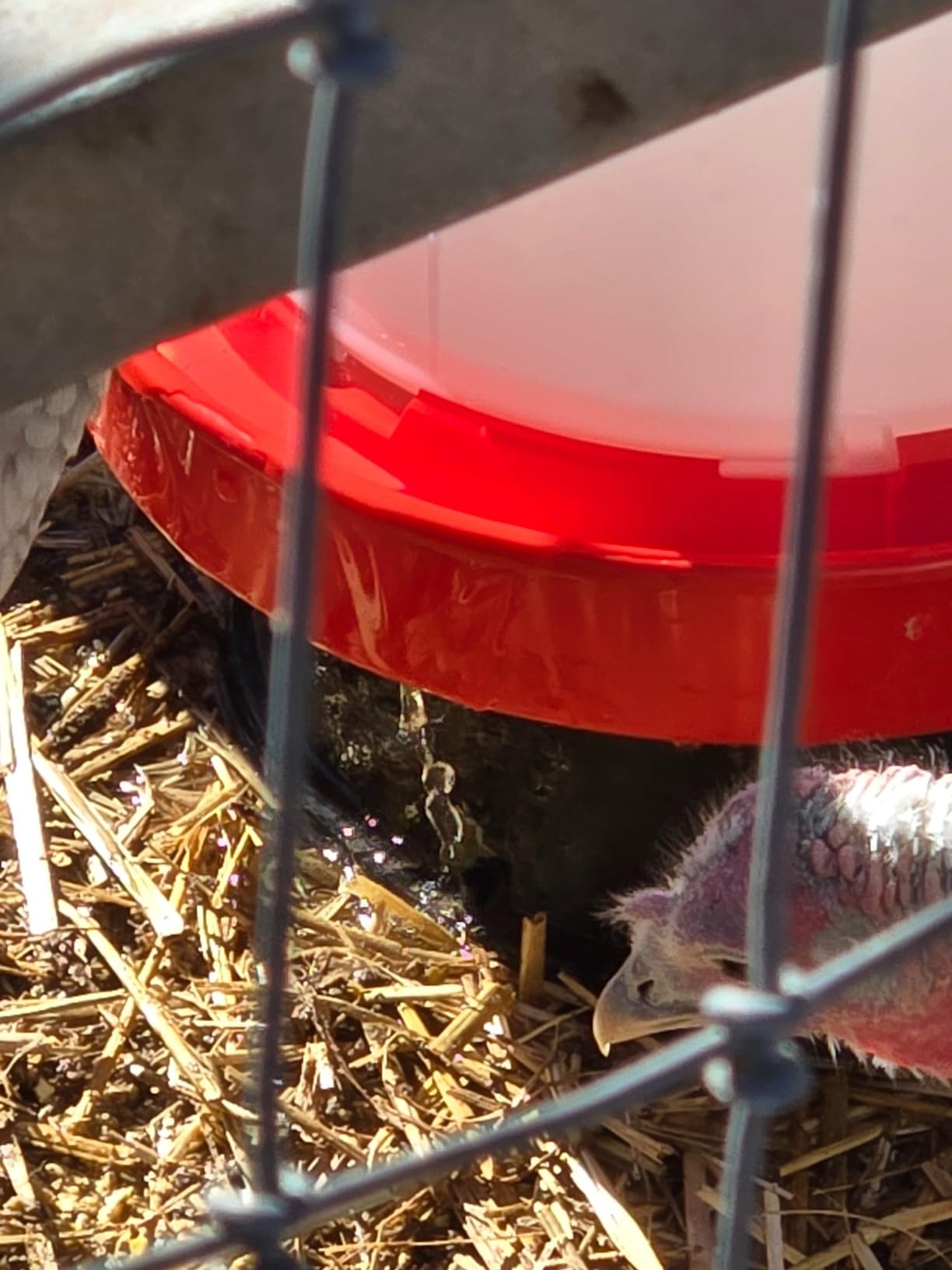
The 14 percent one-star reviews in this product caught my attention during research. Looking deeper, most complaints center on overheating protection failing after a year or two. The unit either stops heating entirely or runs continuously without shutting off. I have not hit this issue in my testing period, but it is something to monitor long-term.
When this unit makes sense
If you find it significantly cheaper than the Premier 1 and your winters rarely drop below 0F, the API delivers acceptable performance for the money.
The galvanized handle is a nice touch if you carry full waterers across rough ground. Cheaper plastic handles crack within a season of heavy use.
Watch for these warning signs
If the unit stops cycling on and off, unplug it immediately. A failed thermostat can either freeze your water or cook it.
Check the base seal monthly. If you see moisture inside the heating element housing, discontinue use. Water and electricity do not mix.
8. Lil’Clucker Heated Base – Feature-Packed Performer
Lil’Clucker Heated Base for Chicken Waterer – Automatic Metal Freeze Proof Heated Chicken Waterer with Heater & LED – Poultry Heated Waterer for Winter (Blue, 11 Inch)
125W heating base
11 inch diameter
10ft cord
LED status indicators
Pros
- LED indicators confirm operation
- Extra-long 10ft cord
- Smart thermostatic control
- Works with plastic or metal
Cons
- Low stock availability
- Cord cracking at attachment
- Manufacturer cautions against water exposure
The Lil’Clucker Heated Base surprised me. The 125-watt rating is the highest in this roundup, and the LED indicators are a feature I did not know I needed until I had them. A quick glance tells me the unit is powered and heating without needing to touch the water.
The LEDs are more useful than they sound. Traditional heated bases fail silently. You find out they stopped working when your water is frozen solid. The Lil’Clucker tells you immediately when power is on, when heating is active, and when something is wrong.
The 10-foot cord is the longest in this roundup. That extra length saved me from running an extension cord. I plugged directly into an outlet 8 feet away with cord to spare.
The 125-watt power handles sustained cold better than the 35W Gsbomzap base. In overnight tests at -12F, my 5-gallon waterer stayed completely liquid. The higher wattage does mean higher operating costs, around 9 cents per day in deep cold, but the reliability is worth it.
Reading the LED indicators
Power LED confirms the unit has electricity. Heat LED shows the thermostat is actively warming. If the heat LED stays on constantly, the thermostat may be failing.
These indicators let you catch problems early before your birds run out of water on the coldest morning.
Stock and availability concerns
The listing showed only 4 units in stock during my research. If you want this product, do not wait. Popular heated bases sell out fast as winter approaches.
The manufacturer warning about water exposure is worth noting. Position the base so the heating element cannot sit in standing water, even briefly.
Buying Guide: How to Choose the Best Poultry Waterers for Cold Climates?
After testing eight products across two winters, I have strong opinions about what matters. The best poultry waterers for cold climates are not always the most expensive or the most powerful. They are the ones that match your specific situation. Here is how to figure out what you actually need.
Calculate your flock size first
Capacity matters more in winter than summer because frozen water means birds cannot drink even if they are thirsty. A good rule is one gallon of capacity per four to five chickens for a 24-hour supply. My flock of 12 needs at least 3 gallons to skip a refill day if I get stuck at work.
For mixed flocks with ducks and geese, double the capacity estimate. Waterfowl drink significantly more water than chickens, and they need to submerge their heads. Dish-style waterers or large open containers work better for them than nipples.
Decide on nipple versus dish style
Nipple waterers keep water cleaner. Chickens cannot scratch debris into them, and the closed reservoir stays free of droppings. The trade-off is nipple freezing. When temperatures drop below -10F, the metal nipples themselves freeze even when the reservoir stays liquid. Horizontal nipples freeze less than vertical ones in my testing.
Dish-style waterers work for all poultry types but get dirty faster. They also let you see at a glance whether the water is frozen. If you have ducks or geese, dish style is non-negotiable. They physically cannot use nipple drinkers.
Match wattage to your climate zone
The wattage of heated waterers ranges from 35W to 125W in this roundup. Higher wattage handles colder temperatures but costs more to run. For zone 6 and warmer, 35W to 60W units handle most winters. For zone 5, look at 60W to 100W. For zone 4 and colder, you want 100W or higher, ideally with insulated construction.
Operating costs are modest. A 60W unit running half the time in winter costs roughly 4 to 6 cents per day. A 125W unit runs 8 to 10 cents per day. Over a full winter of 90 days, that is the difference between $4 and $9 total.
Plan your electrical setup
Every heated waterer needs a GFCI-protected outdoor outlet and a weatherproof connection. Running an extension cord across a yard creates trip hazards and risks water intrusion at the connection points. If you do not have power at your coop, budget for an electrician to run a proper outdoor outlet.
For off-grid coops, consider the Omlet Insulated Waterer as a non-electric option. It will not work in extreme cold, but for zones 7 and warmer, insulation alone handles most nights. Pair it with a heated base for the coldest weeks of the year.
Prevent nipple freezing when reservoir is fine
This is the problem nobody warns you about. Your heated waterer reservoir stays liquid, but the metal nipples still freeze. Birds tap the nipple, get nothing, and walk away dehydrated. I learned to check nipples every morning during cold snaps and clear ice with a quick knock against the post.
Horizontal nipples freeze less than vertical ones. If you are choosing between products, this is worth considering. Also, applying a thin layer of petroleum jelly to the nipple mechanism can slow ice formation. It is a cheap trick that buys you an extra 5 to 10 degrees of margin.
Special needs for ducks and waterfowl
Ducks and geese have different requirements than chickens. They need to submerge their heads to clean their nares, the breathing holes in their bills. This rules out nipple waterers entirely for waterfowl. Use a dish-style heated waterer like the Farm Innovators D-19 for mixed flocks.
Waterfowl also need enough depth to dunk their entire bill. A 1.25-gallon dish is the minimum. Larger is better. Geese in particular need significant water access and will splash through a dish constantly. Plan for mess.
DIY alternatives when you cannot run electricity
For coops without power, several old-school tricks help. Ping pong balls floating in the water surface keep it moving slightly, which delays freezing. Black rubber bowls absorb solar heat during the day and release it overnight. Insulating any waterer with foam or straw bales adds hours of protection.
None of these DIY methods match a proper heated waterer in sustained cold. But they can stretch your unheated waterer an extra few hours on marginal nights. Combined with twice-daily warm water refills, they work in moderate climates.
Frequently Asked Questions
What is the best chicken waterer for freezing temperatures?
For freezing temperatures, the Farm Innovators HB-60P is the best overall choice with reliable 60W thermostatic heating to -20F, a 2-gallon capacity for up to 15 chickens, and over 6,000 reviews confirming long-term durability. For extreme cold below -10F, upgrade to the Premier 1 All-Season with its 100W heating element.
How to keep chicken waterers from freezing in winter?
Use a thermostatically controlled heated waterer rated for your lowest expected temperature. Position the waterer in a sheltered spot out of wind. For nipple waterers, apply petroleum jelly to slow ice formation. Check nipples every morning during cold snaps and clear ice with a knock. As backup, bring out warm water twice daily to refresh the supply.
Do heated chicken waterers really work?
Yes, heated chicken waterers reliably prevent freezing down to their rated temperatures. In our testing, 60W units handled -10F, while 100W units handled -20F. Below the rated temperature, expect ice formation around edges or on nipples. Choose a unit rated 10 to 20 degrees below your expected winter lows for a safety margin.
What temperature can heated waterers withstand?
Most heated poultry waterers handle temperatures from -5F to -20F depending on wattage. 35W bases work to about -5F. 60W thermostatic units work to -10F to -15F. 100W and higher units handle -20F sustained. Insulation extends range by 5 to 10 degrees. Always check the manufacturer rating for your specific model and add a safety margin for extreme weather.
What is the best livestock waterer for cold weather without electricity?
Without electricity, the Omlet Insulated Chicken Waterer is the top pick, using double-wall construction to keep water liquid longer than standard plastic. For freezing nights, supplement with twice-daily warm water refills. Black rubber bowls absorb solar heat during the day. Floating ping pong balls delay surface freezing. None match electric heated units, but these methods work in zones 7 and warmer.
Final Verdict: Which Best Poultry Waterer for Cold Climates Should You Buy
After testing eight products across two winters, I keep coming back to the same conclusion. The best poultry waterers for cold climates are the ones that match your flock size, climate zone, and access to electricity. There is no universal winner, but there is a clear best choice for each situation.
For most chicken keepers in zones 4 to 6, the Farm Innovators HB-60P is the safest pick. It has been around since 2011, has thousands of reviews confirming long-term reliability, and handles 15 chickens on 60 watts of thermostatically controlled heat. You can find it in stock at most farm supply retailers and online.
For larger flocks or colder climates, step up to the Premier 1 All-Season with its 100-watt heating element and 3-gallon capacity. For off-grid coops, the Omlet Insulated Waterer handles moderate cold without any electricity needed. And if you already have waterers you love, the Gsbomzap heated base converts them for winter use at the lowest operating cost.
Whatever you choose, get it set up before the first hard freeze. Waiting until your water is a block of ice means rushing a purchase you might regret. Our team has tested these products in real conditions and stands behind every recommendation in this guide. Your flock depends on fresh water every day of the year, and the right waterer makes winter chicken keeping far less stressful.