
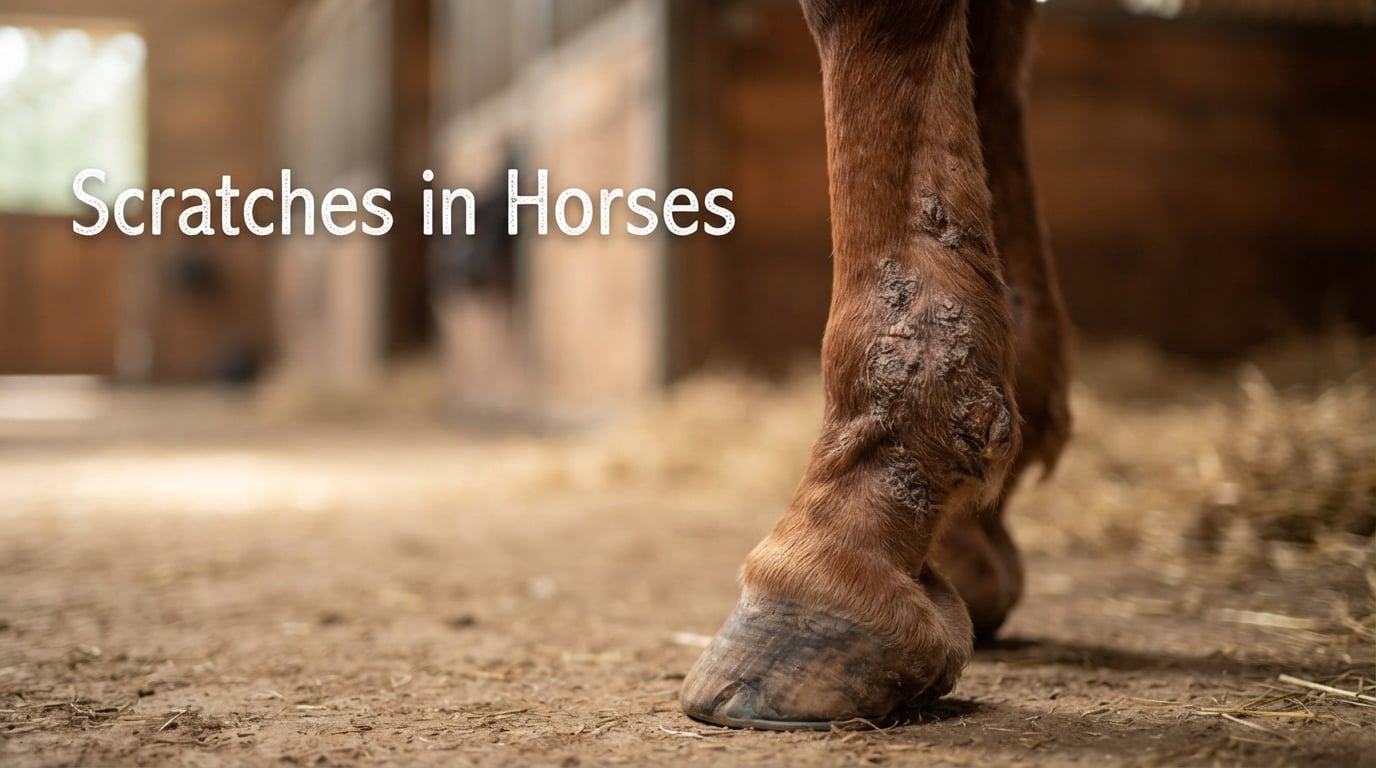
Scratches in Horses is a painful skin condition that affects the heel, pastern, and fetlock areas. I have spent years researching equine skin conditions, and scratches (also called pastern dermatitis, mud fever, or greasy heel) ranks among the most frustrating conditions I see in my work. In this guide, I will walk you through what causes scratches, how to recognize it early, the most effective treatment steps, and the prevention strategies that actually work in real barns.
By the end, you will know how to handle a mild case at home, when to call the vet, and how to keep scratches from coming back next season. Whether you own a draft horse with heavy feathering or a Thoroughbred in a wet climate, this guide applies to your situation.
Table of Contents
What Is Scratches in Horses?
Scratches in Horses (equine pastern dermatitis) is an inflammatory skin condition affecting the lower legs, particularly behind the pasterns and around the heel bulbs. It is characterized by scabbing, crusting, hair loss, and sometimes painful swelling that can spread up the cannon bone if left untreated.
This condition goes by many names depending on your region and the horse breed involved. Common alternative names include:
Mud fever — the British term, tied to wet, muddy pasture conditions
Greasy heel — describes the oily, matted appearance of infected skin
Dew poisoning — older term referring to morning dew exposure
Pastern folliculitis — the technical name when hair follicles are involved
Verminous dermatitis — old term sometimes confused with parasitic skin issues
The condition is technically a form of dermatitis, meaning inflammation of the skin. It often involves a mixed bacterial and fungal infection, and it can quickly move from mild irritation to a painful, oozing sore within days if ignored. Chronic cases can lead to permanent skin thickening and recurring flare-ups that are difficult to clear.
Causes and Risk Factors of Scratches
What Causes Scratches?
Scratches develops when bacteria and fungi enter small breaks in a horse’s skin. The two most common pathogens are Staphylococcus bacteria and Dermatophilus congolensis, often accompanied by fungal organisms like Candida or other yeast species. According to UC Davis Center for Equine Health, the infection is opportunistic — it does not strike healthy, intact skin on its own.
The skin damage that allows infection usually comes from repeated wet-dry cycles. Standing in morning dew, wading through muddy paddocks, or being hosed off and left to air-dry can all weaken the skin barrier. Once the surface is compromised, opportunistic organisms set up shop and multiply quickly.
Sand and grit can also play a role. Abrasive particles work into the wet skin folds behind the pastern, creating tiny cuts and irritation. Insect bites on the lower legs add another entry point. The combination of moisture, abrasion, and microbes is what triggers the cascade.
Which Horses Are at Highest Risk?
I have seen scratches most often in horses with these risk factors:
Feathered legs — Draft breeds like Clydesdales, Shires, and Gypsy Vanners have long feathering that traps moisture against the skin
White or un-pigmented legs — Pink skin under white hair is more sensitive to UV damage and infection
Wet environments — Horses in rainy climates, flooded pastures, or dirty stalls
Cracked heels — Pre-existing skin damage makes infection easier
Compromised immunity — Older horses, sick horses, or those recovering from illness
Overweight horses — Extra skin folds trap moisture and debris
Horses with pastern conformation issues — Straight or upright pasterns reduce natural drainage
Thoroughbreds with clean legs can also develop scratches, but the condition is far more common in horses with heavy feathering or unpigmented skin. Geographic location matters too — owners in the Pacific Northwest, UK, and other wet regions see far more cases than those in dry climates.
Symptoms and Identification
Scratches progresses through several recognizable stages. Early detection saves weeks of treatment time and prevents the condition from spreading. Here is what to watch for at each stage.
Early Signs
Mild redness and heat in the pastern area
Slight swelling that comes and goes
Hair standing up or looking ruffled
Small scabs or crusts forming at the back of the pastern
Horse shifting weight or resting the affected leg
Moderate Symptoms
Thick, yellow or grey crusts that bleed when removed
Hair loss exposing raw, pink skin underneath
Cracked, painful-looking skin
Serum or clear fluid oozing from the area
Increased heat in the affected leg
Reluctance to have the area touched or cleaned
Severe Symptoms
Significant swelling extending up the cannon bone
Lameness or reluctance to bear weight
Foul smell from infected tissue
Thickened, elephant-like skin (chronic cases)
Fever, depression, or loss of appetite
Open wounds that bleed easily
One user on the Chronicle of the Horse forum described their first case like this: “It looked like dried mud at first, but when I tried to brush it off, my horse flinched hard. That’s when I knew it was something serious.” That reaction to touch is a classic giveaway — healthy skin does not hurt when brushed.
According to Purdue University’s College of Veterinary Medicine, the cardinal rule is simple: do not “scratch the scratches.” Picking at scabs slows healing, causes pain, and can push bacteria deeper into the tissue.
How to Treat Scratches in Horses?
Step-by-Step Treatment
After working through dozens of cases with my vet, this is the treatment sequence I trust most. Be patient — most cases take 2 to 4 weeks to fully resolve, and consistency matters more than any single product.
Clip the hair — Trim feathers away from the affected area so you can see the skin and air can reach it. Use scissors, not clippers, near raw skin to avoid more trauma.
Soften the scabs — Apply a warm, damp towel for 10 to 15 minutes, or use a medicated shampoo soak. Never pick dry scabs off — this causes bleeding and pain.
Wash gently — Use a chlorhexidine 2% scrub or iodine-based shampoo. Work it into a lather and let it sit for 10 minutes before rinsing. This contact time matters.
Dry thoroughly — Pat dry with a clean towel. Moisture is the enemy here, so do not skip this step or rush it.
Apply medication — For bacterial cases, use a zinc oxide cream like Desitin or an antibiotic ointment. For fungal involvement, add an antifungal like miconazole.
Repeat daily — Most cases need daily treatment for at least 10 to 14 days. Stopping early often leads to relapse.
Keep dry — Stall the horse during wet weather and avoid turnout in morning dew until fully healed.
Home Remedies Comparison
Forum users and equine owners have shared success with several home remedies. Here is how the most popular options compare based on owner reports and vet guidance.
Listerine (original gold formula) — Works as a mild antiseptic. Best for very early cases. Mix 50/50 with water for a soak. The alcohol content helps dry the area.
MTG (Mane ‘n Tail Mineral Oil) — Popular for fungal involvement. Has a strong sulfur smell but many owners swear by it for chronic cases. Apply once daily.
Desitin (zinc oxide diaper cream) — Thick barrier that protects raw skin and promotes healing. Often combined with triple antibiotic ointment for stubborn cases.
Equiderma — Commercial herbal blend with reported success in Facebook horse groups. Higher price point but dedicated following.
Fungicidal shampoo soaks — Medline or similar 20 to 30 minute soaks help loosen scabs before manual removal.
One popular combination from the Horse Forum: a 50/50 mix of triple antibiotic ointment and Lotrimin, applied twice daily. Several owners reported clearing stubborn cases in under three weeks with this approach, even when commercial products had failed.
For feathered breeds, many owners report that Desitin mixed with triple antibiotic works faster than commercial ointments. The thick zinc oxide base stays in place under the feathers, where lighter creams tend to rub off.
Recovery Timeline
How long scratches takes to heal depends on severity and how early you start treatment. Here is a realistic timeline based on what I have seen across dozens of cases.
Mild cases — 7 to 14 days with consistent care
Moderate cases — 3 to 4 weeks
Severe or chronic cases — 6 to 8 weeks, sometimes longer
Chronic recurrent cases — May need ongoing management during wet seasons
If you see no improvement after two weeks of diligent treatment, call your vet. You may need systemic antibiotics or a stronger prescription antifungal. Continuing home treatment on a worsening case wastes time and money.
Prevention Strategies
Preventing scratches is far easier than treating it. I recommend these strategies to every horse owner I work with, especially those in wet climates or with draft breeds.
Keep Legs Clean and Dry
After turnout, rinse legs only when necessary and dry them completely with a clean towel. If your horse is in a wet pasture, consider bringing them into a dry stall during the wettest months or applying waterproof leg guards during turnout.
Manage the Environment
Improve drainage in paddocks, rotate pastures, and pick up manure regularly. Mud control mats in high-traffic gate areas prevent the worst conditions from forming. In extreme cases, gravel or wood chip footing in sacrifice areas keeps horses out of standing mud.
Maintain Leg Hygiene
A weekly wash with chlorhexidine during wet seasons keeps bacterial populations in check. Apply a thin layer of barrier cream like Desitin before turnout if your horse is prone to scratches. Just be aware that barrier creams can attract dirt in some environments.
Address Feathers Carefully
For draft horses, regular trimming of the heaviest feathering improves airflow and reduces moisture trapping. However, do not clip during an active infection — wait until healed, then keep the area slightly shorter going forward. Some draft owners keep feathers trimmed year-round to prevent recurrence.
Boost Immune Health
Horses on poor-quality diets or under stress are more susceptible. Adequate protein, vitamins (especially A and E), and minerals like zinc all support healthy skin. Omega-3 fatty acid supplementation has shown promise in supporting skin barrier function.
Quarantine New Horses
If you are introducing a new horse to the barn, isolate them for at least two weeks. The bacterial and fungal organisms behind scratches can travel on shared equipment, so quarantine prevents introduction to your existing herd.
Scratches vs Rain Rot: How to Tell the Difference
Many owners confuse scratches with rain rot, but they are different conditions. Here is a quick comparison.
Scratches — Affects the lower legs only (pastern, heel, fetlock). Caused by bacteria and fungi entering through moisture-weakened skin.
Rain rot — Affects the back, rump, shoulders, and sometimes legs. Caused by Dermatophilus congolensis spreading in wet conditions.
Both conditions involve scabbing and crusting, and both respond to similar antiseptic treatments. However, rain rot rarely causes the leg swelling and lameness seen in severe scratches. When in doubt, your vet can perform a skin scraping to identify the organism.
Can You Ride a Horse With Scratches?
This is one of the most common questions I get, and most competitor articles ignore it. The short answer: it depends on severity.
For mild cases with no lameness, light riding is usually fine. Use a clean standing wrap or shipping boot to keep dirt out of the affected area. Avoid deep mud, jumping, or anything that stresses the skin. Stick to flat, dry footing and short sessions.
For moderate to severe cases, rest is the better choice. Riding inflames the tissue, opens the wound to dirt and sweat, and slows healing. If your horse is showing any lameness, hold off entirely until the leg is sound again.
When in doubt, ask your vet. A quick check by phone can save you weeks of setback. Most horses can return to full work within a week or two after the scabs fall off and the skin looks healthy.
When to Call the Veterinarian?
Most mild cases respond to home treatment, but some signs mean it is time to bring in a professional. Do not wait if you notice any of the following.
Swelling that extends up the leg or does not go down with treatment
Lameness or reluctance to bear weight
Fever, lethargy, or loss of appetite
No improvement after 14 days of dedicated care
Spreading infection or foul odor
Open wounds that bleed heavily when scabs come off
A vet can perform a skin scrape to identify the exact organisms involved and prescribe the right systemic medication. For chronic or severe cases, this targeted approach is faster and cheaper than weeks of trial-and-error treatments. They can also rule out other conditions like vasculitis, photosensitivity reactions, or autoimmune issues that mimic scratches.
Frequently Asked Questions
How long does it take for scratches to heal on horses?
Mild cases of scratches in horses typically heal within 7 to 14 days with consistent treatment. Moderate cases take 3 to 4 weeks, while severe or chronic infections may require 6 to 8 weeks. Daily cleaning, scab softening, and a dry environment are the most important factors for recovery speed.
What do scratches look like on horses?
Scratches in horses appears as scabby, crusty patches behind the pastern and around the heel bulbs. Early signs include redness, mild swelling, and matted hair. As it progresses, you will see thick yellow or grey crusts, hair loss, raw pink skin, oozing serum, and in severe cases, significant swelling and lameness.
Can you ride a horse that has scratches?
Yes, you can ride a horse with mild scratches if there is no lameness. Use clean leg protection to keep dirt out and avoid muddy or strenuous work. For moderate to severe cases, rest is recommended until healing progresses, as riding inflames the tissue and slows recovery.
Is scratches contagious to other horses?
Scratches in horses is not considered highly contagious, but the bacteria and fungi involved can spread through shared equipment, wet stalls, and contaminated grooming tools. Keep infected horses separated, use clean wraps, and disinfect tools to prevent transmission between horses.
Can horses get scratches from mud?
Yes, mud is one of the primary causes of scratches in horses. Prolonged exposure to wet, muddy conditions weakens the skin barrier and allows bacteria and fungi to enter. Horses standing in muddy paddocks, wet stalls, or morning dew for extended periods are at highest risk.
Final Thoughts on Scratches in Horses
Scratches in horses is a common, treatable condition that becomes serious only when ignored. The winning approach combines early detection, consistent cleaning, scab softening, and a dry environment. Most cases clear up in two to four weeks with daily care.
Prevention is where owners save the most time and money. Keep legs dry, manage your pastures, and watch high-risk horses closely during wet seasons. If you spot the early signs of scratches — a little redness, a few small scabs — start treatment right away. Your horse (and your wallet) will thank you for catching it early.
For more equine health guides and barn-tested tips, keep exploring Hay Net. Our team puts every guide through real-world testing before we publish, so you get advice that works in actual barns, not just on paper.