
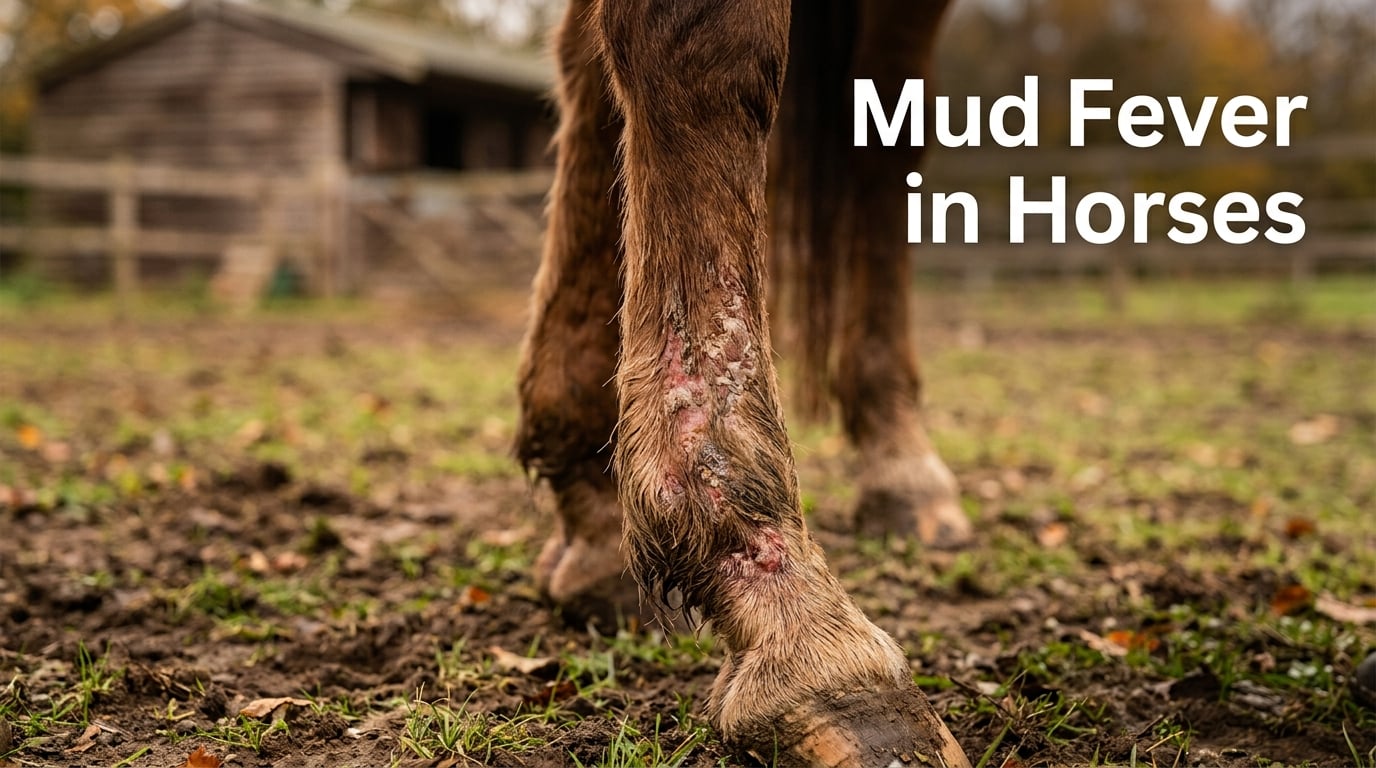
If your horse has come in from the field with crusty scabs on the lower legs, matted patches of hair, or legs that feel warm and tight to the touch, mud fever in horses is likely what you’re dealing with. It’s one of the most common — and most frustrating — skin conditions horse owners face through the wetter months of the year, and it can range from a minor irritation to a genuinely painful problem that affects your horse’s soundness.
The good news is that most cases respond well to treatment when caught early and managed properly. The hard part is staying consistent, understanding what’s actually causing it, and making the right management changes to stop it coming back season after season.
This guide covers everything: what mud fever is, how to recognise it before it gets serious, how to treat it step by step, and what you can do to reduce the risk going forward.
Table of Contents
What Is Mud Fever in Horses?
Mud fever is the common name for a group of skin conditions that affect the lower legs of horses, most often the pastern, heel, and back of the fetlock. The medical term is pastern dermatitis, and you’ll also hear it called greasy heel, scratches, or cracked heels depending on which part of the world you’re in.
The primary cause is the bacterium Dermatophilus congolensis, though other bacteria — such as Staphylococcus or Pseudomonas species — and even fungi can be involved, particularly in chronic or severe cases. The condition isn’t directly caused by mud itself. What actually happens is that prolonged exposure to wet and dirty conditions breaks down the skin’s natural protective barrier through a process called maceration, where the skin becomes softened and weakened from repeated or continuous wetting.
Once that protective barrier is compromised, opportunistic bacteria can enter through tiny cracks, cuts, or abrasions in the skin surface. They thrive in the warm, moist environment beneath matted hair and begin to cause the infection that produces the characteristic scabs and discharge.
Mud fever is non-contagious — a horse won’t pass it directly to another horse through contact in the field. That said, the bacteria can survive on shared equipment like leg boots, brushes, and grooming tools, so it’s sensible to keep these separate and clean them thoroughly if one horse in your yard has a flare-up.
Signs and Symptoms of Mud Fever
Mud fever doesn’t look the same in every horse. How it presents depends on how long it’s been developing, how severe the infection is, and whether there are any underlying factors driving it. Some horses get mild, localised scabbing that clears up quickly. Others develop extensive lesions covering much of the lower leg, with significant swelling and lameness.
What Are the First Signs of Mud Fever?
The earliest signs are often easy to miss, especially on horses with dark-coloured legs or heavy feathering that hides what’s happening underneath. Running your hands down your horse’s legs during daily grooming is one of the most reliable ways to detect changes before they become visible.
Early warning signs to feel and look for include:
Matted or crusty patches of hair around the pastern and heel bulbs
Small scabs or crusts forming on the skin surface
Mild heat in the lower leg compared to the other legs
Skin that feels slightly thicker, tighter, or more textured than normal
Sensitivity or flinching when you press or squeeze the area gently
As the condition progresses without treatment, the signs become much more obvious. You’ll notice larger, more defined scabs lifting away from the skin, often with a greasy or creamy discharge underneath. The hair in the affected area may begin to fall out, exposing raw, reddened, and sometimes ulcerated skin beneath.
More advanced symptoms include:
Significant swelling in the lower leg, particularly around the pastern and fetlock
Obvious heat and tenderness in the affected limb
Lameness, which can range from mild stiffness to being unable to bear full weight
Your horse being reluctant to have the legs touched or handled
In severe or neglected cases, mud fever can lead to serious secondary complications. Cellulitis — a deep infection spreading into the soft tissues beneath the skin — can develop rapidly and cause dramatic swelling of the entire lower limb. Lymphangitis, where the lymphatic vessels in the leg become inflamed, is another serious complication that requires immediate veterinary treatment and can cause permanent scarring to the lymphatic system if not treated promptly.
What Causes Mud Fever in Horses?
Mud fever rarely has a single cause. It’s usually a combination of environmental conditions, individual susceptibility factors, and sometimes an underlying health issue all working together to break down the skin’s defences.
The primary environmental trigger is prolonged moisture. When horses stand for long periods in waterlogged ground, wade through boggy areas, or have their legs repeatedly washed without being thoroughly dried afterwards, the skin on the lower legs becomes soft and porous. This process of maceration is the starting point for most mud fever cases.
Physical trauma to the skin also plays a role. Sandy or gritty soil can act like fine sandpaper on wet skin, and small cuts or abrasions from rough ground, plant stems, or even the horse’s own hooves can create entry points for bacteria. Once Dermatophilus congolensis or other bacteria gain access to the deeper layers of skin, the infection takes hold.
Risk Factors That Increase Susceptibility
Some horses are significantly more prone to mud fever than others, and knowing which risk factors apply to your horse helps you prioritise your monitoring and prevention efforts.
Feathered horses — Clydesdales, Shires, Friesians, Gypsy Cobs, and other heavy or native breeds — face a higher risk than horses with clean legs. The thick feathering traps moisture against the skin, reduces airflow, and makes it extremely difficult to spot early-stage infection until it’s already well established. Many owners of feathered breeds routinely clip the lower legs during the risk season specifically because of this.
Horses with white legs and pink-pigmented skin are also at elevated risk. Pink skin tends to be more sensitive and less resistant to bacterial and fungal invasion than dark, heavily pigmented skin. If your horse has one or two white legs, those are the ones to watch most closely.
Horses with Cushing’s Disease (also called PPID, or Pituitary Pars Intermedia Dysfunction) are considerably more vulnerable to all kinds of skin infections, including mud fever. Cushing’s impairs the immune system’s ability to respond effectively to pathogens. If your horse has repeated bouts of mud fever despite good management, discussing a Cushing’s test with your vet is genuinely worthwhile — it’s a simple blood test and the answer could change how you approach treatment entirely.
Mites — specifically Chorioptes equi, a surface-dwelling mite common in feathered horses — deserve more attention than they typically get as a contributing factor. These microscopic parasites cause intense itching and irritation in the lower leg area. The horse’s response — stamping, rubbing, scratching — creates skin trauma that gives bacteria the entry point they need. If your horse is unusually itchy around the lower legs or constantly stamps and fidgets, mites may be involved alongside or ahead of a bacterial infection.
Additional risk factors include:
Heavy clay soils that hold water and become severely waterlogged in winter
Poached, churned-up gateways and congregation points around feeders or water troughs
Poor field drainage and low-lying land
High stocking density on small fields
Washing legs with water and not drying them completely
Horses in poor general condition with compromised immune function
How to Treat Mud Fever in Horses: Step-by-Step
Treating mud fever properly takes time and consistency. One of the most common reasons mud fever keeps coming back is incomplete treatment — stopping too soon, returning the horse to wet conditions before healing is finished, or not addressing what’s driving it in the first place.
For mild to moderate cases, the following step-by-step approach is widely recommended by vets and equine professionals:
Step 1: Remove your horse from wet conditions. This is non-negotiable. Stable your horse on dry, clean bedding and keep them off the wet pasture until the mud fever has fully resolved. You cannot treat mud fever effectively while the legs are continuously being exposed to mud and moisture.
Step 2: Soften the scabs before attempting to remove them. Apply a diluted antiseptic wash — Hibiscrub diluted to a 0.1% solution is widely recommended and is the product most commonly mentioned by both vets and experienced horse owners in forum discussions. Warm water with a small amount of antibacterial soap also works. Allow the solution to sit on the scabs for five to ten minutes to soften them before you attempt to lift them away.
Step 3: Work slowly and gently. Mud fever is painful, and your horse will tell you that during treatment. Using a soft cloth, gauze, or a very soft brush, carefully work the softened scabs away from the skin. Try to lift them cleanly rather than scrubbing, which can damage the fragile skin underneath and cause unnecessary pain. If your horse is very distressed, or if the scabbing is extensive and deeply embedded, speak to your vet. Sedation is sometimes used to allow thorough, effective cleaning without causing undue stress to the horse.
Step 4: Rinse and dry the area completely. Rinse with clean water and then dry the area thoroughly — this step is absolutely critical. Leftover moisture beneath a bandage or barrier cream will simply perpetuate the problem. Pat the area with a clean towel and allow it to air dry before applying anything else.
Step 5: Apply an antibacterial or barrier cream. Once the skin is completely dry, apply a suitable antibacterial ointment or cream. Ingredients like zinc oxide, silver sulfadiazine, and antibacterial compounds help fight the infection while protecting the cleaned skin. For persistent or severe infections, a vet-prescribed cream is often significantly more effective than over-the-counter alternatives. Prescription creams can contain targeted antibiotics or antifungal agents matched to the specific bacteria or fungi causing the infection. The forum consensus backs this up — experienced horse owners consistently report that vet prescription products make a real difference for stubborn cases.
Step 6: Bandage and monitor daily. Apply a clean stable bandage over suitable padding. The bandage protects the area, absorbs any discharge, and keeps the treatment cream in contact with the skin. Change the bandage and repeat the full cleaning and treatment process daily until the skin has healed completely and new hair is beginning to grow back.
One technique worth knowing about for cases that aren’t responding to standard treatment is the cling film method, sometimes called an occlusive dressing technique. After applying the cream, a layer of cling film is wrapped around the leg under the bandage. This keeps the cream in contact with the skin for longer and creates a slightly moist environment that can promote tissue repair. Discuss this with your vet if standard daily treatment isn’t giving results after a week.
When to Call Your Vet
Most mild cases of mud fever can be handled at home with the steps above. But there are clear situations where you should contact your vet promptly rather than waiting to see if things improve on their own.
Call your vet if:
Your horse is lame or is showing obvious pain and reluctance to bear weight
The lower leg is very hot, significantly swollen, or weeping large amounts of fluid
Red streaks appear running up the inside of the leg — this can signal lymphangitis or spreading cellulitis and requires urgent treatment
The condition has not improved after three to five days of consistent and correct home treatment
Your horse has a raised temperature, seems generally unwell, or has gone off its food
The scabs are very thick, extensive, or impossible to soften and remove at home
Your horse is a known Cushing’s case, or you suspect an underlying immune issue
Your vet may take a skin swab from the affected area to identify exactly what organism is causing the infection. This allows them to prescribe the most appropriate antibiotic or antifungal treatment rather than guessing. In some cases, blood tests will also be recommended to check for underlying conditions that may be making your horse more susceptible.
How to Prevent Mud Fever in Horses
Prevention really does pay off when it comes to mud fever. Once a horse has experienced it, there’s a tendency for it to recur in subsequent wet seasons — but good management can dramatically reduce how often and how severely that happens.
Daily leg checks form the backbone of any prevention routine. Running your hands down your horse’s legs every time they come in from the field takes under a minute and means you’ll detect any changes — warmth, thickening, early scabs — long before they develop into a serious problem. Getting into this habit is one of the most valuable things you can do.
Keeping legs as dry as possible is the most effective single preventative measure. This doesn’t necessarily mean washing off every trace of mud — in fact, letting mud dry and brushing it off is often less damaging to the skin than repeatedly wetting it. If you do wash your horse’s legs, always dry them thoroughly afterwards and don’t leave wet legs standing in wet bedding.
Barrier creams applied to clean, dry legs before turnout create a physical water-resistant layer between the skin and the wet environment. Products based on petroleum jelly, zinc cream, or specialised equine mud fever barrier creams all work in this way. Apply them to the pastern, the heel bulbs, and the back of the fetlock — the areas most exposed to mud and moisture — before you turn your horse out in wet conditions.
Field management is another major lever. Specific improvements you can make include:
Installing hard standing areas at gateways and around water troughs, where horses tend to stand for long periods
Resting and rotating paddocks to allow recovery and reduce poaching
Moving hay feeders and water points regularly to prevent one area becoming badly churned up
Using a track system to allow horses to move freely without concentrating on small, overused areas
Adding woodchip, rubber matting, or a similar surface to high-traffic congregation points
These are longer-term investments but they make a genuine, lasting difference to how much time your horses spend standing in deep, wet mud.
Special Considerations for Feathered Horses
If you own a feathered breed, mud fever prevention needs a bit of extra thought. The heavy hair around the lower legs that looks so impressive also creates the ideal conditions for moisture retention and bacterial growth — and hides the early signs of infection until things are already well progressed.
Many experienced owners of Clydesdales, Shire horses, Cobs, and similar breeds choose to clip the lower legs from autumn onwards and keep them clipped through the winter months. This feels counterintuitive — surely leaving the hair on keeps the legs warmer? — but in practice, clipped legs dry faster, are much easier to check and treat, and make applying barrier creams and bandages far more straightforward. The tradeoff in terms of warmth is minimal compared to the benefit of being able to actually see and manage what’s happening with the skin.
If you choose not to clip, make a point of deliberately parting the feathering during every grooming session and pressing gently around the pasterns and heel area with your fingers. You’re feeling for matted clumps, scabs, heat, or sensitivity. Also consider whether Chorioptes mites might be playing a role if your horse shows unusual leg irritation. A vet visit to confirm or rule out mites before they contribute to an established mud fever infection could save you weeks of treatment.
Mud Fever vs Rain Scald: What Is the Difference?
Rain scald and mud fever are closely related conditions that are often caused by the same bacterium — Dermatophilus congolensis — and can occur simultaneously in the same horse. Horse owners sometimes confuse the two or don’t realise their horse has both at once.
The key difference is location. Mud fever affects the lower legs, while rain scald (also known as rain rot or dermatophilosis) affects the back, neck, rump, and hindquarters — the surfaces most exposed to persistent rainfall. Both produce the same characteristic crusty scabs with matted hair pulling away to reveal raw skin underneath. Both are triggered by the same mechanism: prolonged moisture breaking down the skin’s defences and allowing bacteria to take hold.
If your horse has scabs across both the lower legs and the upper body, the underlying management issues are the same for both. Treating both areas simultaneously with the same antibacterial approach — and addressing the wet conditions driving the problem — gives the best and fastest results.
Frequently Asked Questions
How do you get rid of mud fever in horses?
To get rid of mud fever, first stable your horse on dry bedding away from wet ground. Soften the scabs using a Hibiscrub 0.1% solution or warm water with antibacterial soap, then gently remove them and rinse the area clean. Dry the skin completely before applying an antibacterial cream. Bandage the leg and repeat this process daily. For severe cases — lameness, significant swelling, or no improvement after three to five days — contact your vet, who may prescribe targeted antibiotics or antifungal treatments.
Will mud fever go away on its own?
Mud fever rarely resolves without intervention. In very mild, early-stage cases with just a few small scabs, removing the horse from wet conditions and keeping legs dry may be enough. But in most cases the infection will worsen without active treatment — the scabs thicken, the skin underneath becomes more damaged, and secondary complications like cellulitis can develop. Starting treatment early gives the best results and prevents the condition from becoming a long, difficult battle.
Does purple spray help mud fever?
Purple spray (violet spray or gentian violet spray) has mild antibacterial and antifungal properties and can be useful as part of mud fever treatment, particularly for drying out and protecting freshly cleaned skin. However, it is not sufficient as a standalone treatment for moderate to severe mud fever. It works best as an adjunct to proper scab removal, thorough drying, and an appropriate antibacterial cream. For serious infections, a vet-prescribed cream will be considerably more effective.
What are the first signs of mud fever?
The first signs of mud fever are often felt rather than seen. Look for matted or crusty patches of hair around the pastern and heel bulbs, mild heat in the lower leg, skin that feels slightly thicker or more textured than normal, and sensitivity or flinching when you press the area. In horses with dark legs or heavy feathering, these early signs can be very easy to miss if you don’t run your hands carefully over the area during grooming.
The Bottom Line on Mud Fever in Horses
Mud fever in horses is a common and treatable condition, but it rewards early action and punishes delay. The horses that suffer most are those where the problem is spotted late, treated inconsistently, or where the underlying management issues — wet fields, poor drainage, repeated wetting without drying — are never properly addressed.
Build daily leg checks into your routine, understand which of your horses are most at risk, act quickly when you see the first signs, and make the management changes that reduce how much time your horses spend standing in wet, muddy conditions. That combination gives you the best chance of keeping mud fever to a minimum, season after season.
If you’re ever in doubt about whether a case is serious enough for veterinary attention, err on the side of calling. A five-minute conversation with your vet early on is far less costly — in time, money, and horse welfare — than dealing with cellulitis or lymphangitis further down the line.