
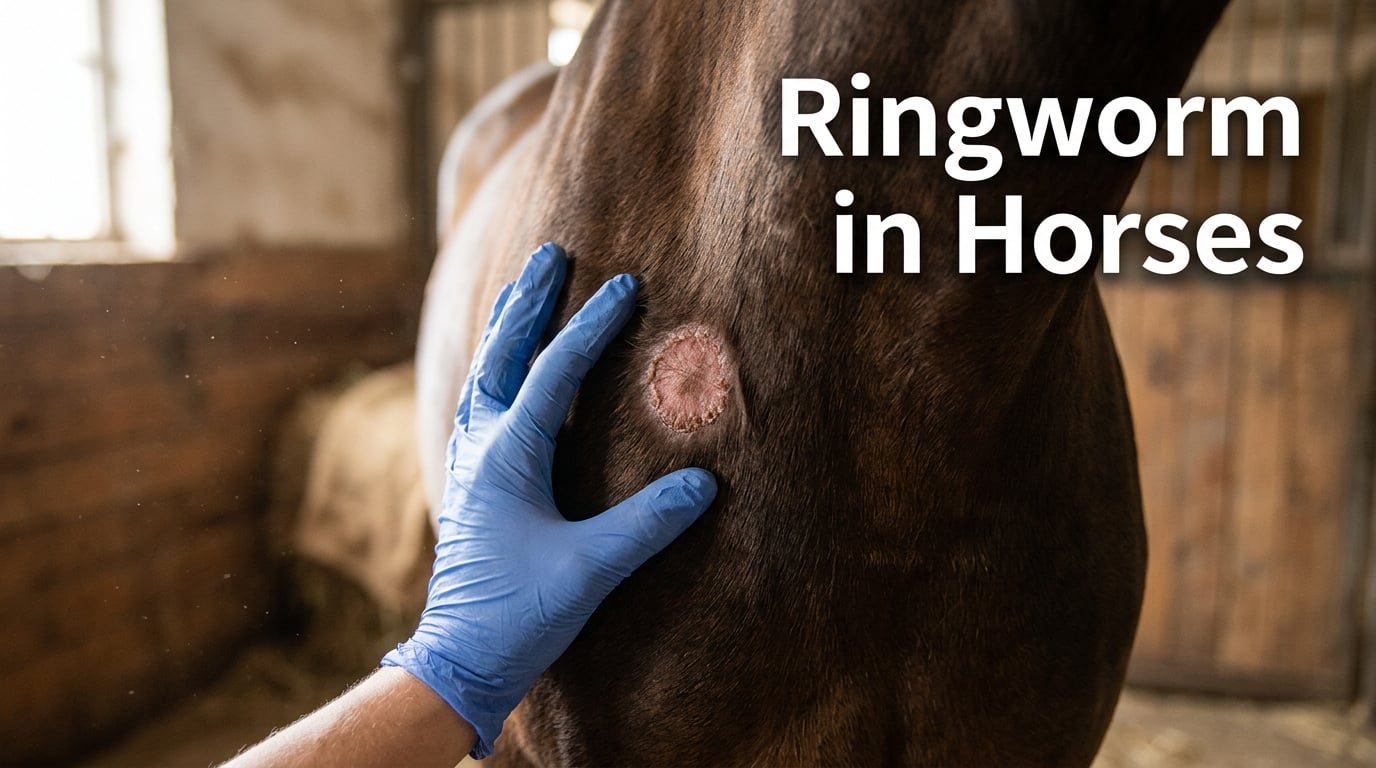
Ringworm in horses is one of the most common skin infections barn owners will encounter, and it tends to show up exactly when you do not have time for it. I have walked dozens of boarders and trainers through an outbreak, and the same worries keep coming back: how do I know it really is ringworm, will it spread to my other horses, and can my kids catch it? This 2026 guide covers everything you need to identify, treat, and clear ringworm from your horse and your barn.
Table of Contents
What Is Ringworm in Horses?
Ringworm in horses is a contagious fungal skin infection, not a parasite, despite the misleading name. It is caused by dermatophytes, most often Trichophyton equinum and sometimes Trichophyton mentagrophytes, which feed on keratin in the outer skin layer and hair shafts. The clinical name for the disease is dermatophytosis.
The fungus spreads outward in a circle as it colonizes new skin and hair, which is why the classic lesion looks like a raised, scaly ring. The hair inside that ring breaks off close to the skin, leaving a patch of stubble that looks shaved or thinned.
Highly contagious to other horses, ponies, donkeys, and humans
Survives on tack, brushes, fences, and stall walls for months as fungal spores
Most common in young, elderly, or immune-compromised horses
Usually self-limiting within 6 to 12 weeks with proper care
Confirmed with a fungal culture or PCR test by your veterinarian
Symptoms and Signs of Ringworm in Horses
Ringworm in horses almost always announces itself as a small, round patch of hair loss that grows over days. The earliest lesions are easy to miss because they look like a simple rub or clipper nick. Early recognition cuts treatment time and limits how many horses get exposed.
Here is what to look for during your daily grooming:
Circular hair loss: Roughly round bald patches, often 1 to 3 cm across at first, with stubble that breaks easily.
Scaly or crusty skin: Grey-white, flaky crusts that lift off with the hair when tugged.
Reddened or raised border: The outer edge of the lesion often looks pink and slightly puffy.
Itching and sensitivity: Some horses scratch against walls; others resent being brushed over the spot.
Classic locations: Girth area (sometimes called girth itch), chest, neck, shoulders, face, and saddle region.
Multiple lesions: Left untreated, the fungus seeds new patches across the body through grooming and tack.
Sometimes horses carry the fungus without obvious signs, which is one reason outbreaks spread so quickly in shared facilities.
How Ringworm Spreads Between Horses
Ringworm in horses spreads through any route that carries fungal spores from an infected horse or contaminated object to a new host. Spores are tough; they survive on wood, metal, fabric, and dirt for 12 months or more in the right conditions.
The most common transmission routes are:
Direct horse-to-horse contact: Greeting over a fence, mutual grooming, shared turnout.
Fomites (contaminated objects): Brushes, combs, clipper blades, saddle pads, girths, halters, blankets, and buckets.
Stall and fence contact: Spores cling to wood and concrete walls, particularly in damp, poorly ventilated barns.
Bedding and soil: Some dermatophytes live in soil for years, and T. mentagrophytes is the more soil-borne of the two main species.
Stress, crowding, poor nutrition, and a heavy winter coat all weaken the skin barrier and increase the odds the infection takes hold.
How Vets Diagnose Ringworm in Horses
A vet will start with a physical exam of the lesions and your horse’s history, then collect a few hairs and skin scrapings from the active border of a lesion. A quick in-clinic look under the microscope can confirm fungal elements, but the gold standard is a fungal culture or PCR test sent to a diagnostic lab.
Definitive diagnosis matters because several conditions look almost identical, including rain rot, bacterial folliculitis, and sarcoptic mange. Treating the wrong condition wastes weeks and may make the real infection worse.
Your vet will also want to check how widely the fungus has spread and whether other horses on the property need testing.
Treatment Options for Ringworm in Horses
Treating ringworm in horses works best when you attack the fungus on the horse, in the environment, and on every piece of equipment at the same time. Most mild cases clear in 4 to 8 weeks with diligent topical care alone. Moderate to severe outbreaks benefit from oral medication as well.
Here is the step-by-step process our team follows during a barn outbreak:
Isolate the affected horse. Move them to a separate paddock or end-of-barn stall with dedicated equipment, water buckets, and feed tubs. No nose-to-nose turnout or shared fence lines.
Clip hair around lesions carefully. Use scissors rather than clippers when possible, since clippers spread spores. If you must clip, disinfect the blades between strokes with a chlorhexidine or bleach solution.
Bathe with an antifungal shampoo. Use a chlorhexidine, miconazole, or ketoconazole shampoo 3 times per week for the first 2 weeks. Let the lather sit for 10 minutes before rinsing so the active ingredients actually contact the fungus.
Apply topical antifungal solutions. After bathing, dab lesions with miconazole or terbinafine cream, or a lime-sulfur dip, depending on your vet’s recommendation.
Consider oral medication for stubborn cases. Oral griseofulvin or terbinafine, prescribed by your vet, helps with widespread or persistent infections.
Repeat until cultures come back negative. Your vet may recheck with a fungal culture 2 to 3 weeks after treatment starts.
Always wear disposable gloves when handling infected horses, and wash your hands and forearms with antifungal soap afterward.
Environmental Disinfection Checklist
Fungal spores in the barn are the single biggest reason ringworm in horses returns weeks after the lesions clear. Skipping the environmental side of treatment guarantees another round of outbreaks next season.
Work through this checklist before reintroducing a treated horse to shared space:
Strip and clean stalls. Remove all bedding, then scrub walls, bars, and floors with a 1:10 bleach-to-water solution. Let it sit 10 minutes before rinsing.
Disinfect all brushes and combs. Soak for 10 minutes in a bleach solution or chlorhexidine scrub, then rinse and air-dry.
Clean tack and saddle pads. Wipe leather tack with an antifungal spray safe for leather; wash fabric pads in hot water with a disinfectant laundry additive.
Sterilize clipper blades. Use barbicide or a chlorhexidine soak between every horse and at the end of each clip session.
Treat fence rails and stall doors. Wipe common contact points weekly for at least a month after the last active lesion.
Rotate or burn bedding. Compost contaminated bedding away from horse traffic, or bag it for disposal.
Ventilation matters too: spores thrive in warm, humid air. Open doors and windows, and let stalls dry fully between uses.
Can Humans Catch Ringworm From Horses?
Yes. Ringworm in horses is a zoonotic infection, which means it can jump from horse to human, especially to children, older adults, and anyone with a weakened immune system. The infection typically shows up as a red, scaly, itchy ring on the arms, neck, or torso of the handler.
Protect yourself and your family with these habits:
Wear disposable nitrile gloves whenever you apply topical treatments or handle infected horses.
Wash hands and forearms with antifungal soap after every handling session.
Keep young children away from infected horses until the vet gives the all-clear.
Launder barn clothes separately in hot water, and shower right after finishing barn chores.
If you develop a skin lesion after handling a ringworm horse, see your doctor and mention the equine exposure right away. Human ringworm clears quickly with prescription antifungal cream once identified.
Ringworm Recovery Timeline and Outlook
Most ringworm cases in healthy adult horses clear in 6 to 12 weeks, even without medication, because the immune system eventually pushes the fungus out. Treatment shortens that timeline and limits spread. Hair regrowth typically starts 2 to 4 weeks after the lesion heals and finishes within 2 to 3 months.
Young foals, senior horses, and any animal on long-term steroids often take longer and may need oral antifungal support. Have your vet recheck the horse and run a follow-up culture before declaring the barn ringworm-free.
Prevention Strategies for Ringworm in Horses
Outbreak prevention is far easier than outbreak control. Once you have been through a barn-wide case, you will not skip these steps again.
Quarantine new arrivals. Keep incoming horses separate for 14 to 21 days and inspect their skin daily before allowing shared turnout.
Do not share equipment. Color-code brushes, halters, and buckets so each horse has its own set.
Disinfect clippers and tack between horses. Even healthy-looking horses can carry spores silently.
Feed for immune health. Balanced protein, zinc, copper, and vitamin A all support skin barrier function.
Manage stress and crowding. Overstocked barns with poor ventilation are the perfect storm for fungal outbreaks.
When to Call the Vet
Ringworm is rarely an emergency, but a few situations call for prompt veterinary attention. Call your vet if lesions spread rapidly despite treatment, if the skin becomes oozing or painful (possible secondary bacterial infection), if multiple horses develop lesions within days, or if anyone in the family develops a suspicious skin rash.
A vet can confirm the diagnosis, prescribe oral medication for stubborn cases, and help document the infection for your boarding barn or show association.
Ringworm vs Rain Rot: How to Tell Them Apart?
Ringworm and rain rot (also called rain scald) are the two conditions horse owners confuse most often. Rain rot is a bacterial infection caused by Dermatophilus congolensis, not a fungus, and it shows up after prolonged wet weather. Look for paintbrush-like scabs that lift off in tufts along the topline and rump, rather than the round, ring-shaped lesions of ringworm.
Treatment differs, so a quick vet check saves time. Antiseptic chlorhexidine scrubs clear rain rot, while ringworm needs antifungal therapy. Many barns deal with both at once because wet, crowded conditions favor either pathogen.
Frequently Asked Questions
How do I treat ringworm in horses?
Start by isolating the affected horse, then bathe with an antifungal shampoo such as chlorhexidine or miconazole 3 times per week, clip the hair around the lesions, and apply a topical antifungal like terbinafine cream or lime-sulfur dip. Severe or widespread cases need oral griseofulvin from your vet, and the stall plus all tack must be disinfected at the same time.
Can humans get ringworm from a horse?
Yes. Ringworm in horses is zoonotic, meaning it can transfer to people, especially children and anyone with a weakened immune system. It usually appears as a red, scaly, itchy ring on the arms, neck, or torso. Wear disposable gloves when handling infected horses and wash your hands with antifungal soap after each session.
Does ringworm in horses go away on its own?
In healthy adult horses ringworm is self-limiting and usually clears within 6 to 12 weeks even without treatment, but treating the horse and disinfecting the environment speeds recovery and prevents spread to other horses and humans. Foals, seniors, and immune-compromised horses often need oral antifungal medication.
How did my horse get ringworm?
Ringworm spreads through direct contact with an infected horse, shared brushes, halters, saddle pads, clipper blades, and contaminated stall walls or fencing. The fungal spores can survive in bedding, soil, and on equipment for months, which is why new horse arrivals and shared grooming supplies are common culprits.
What is the fastest way to cure ringworm in a horse?
Combine aggressive topical care with environmental disinfection and an oral antifungal from your vet if needed. Clip the hair around lesions, bathe with antifungal shampoo 3 times weekly, apply terbinafine or miconazole cream, isolate the horse, and bleach all stalls, brushes, and tack the same day treatment starts.
How long is ringworm contagious in horses?
A horse can spread ringworm from the moment lesions appear until roughly 2 to 3 weeks after visible lesions have healed and a follow-up fungal culture is negative. Treat all in-contact horses and disinfect the environment during this window to prevent a recurrence.
Final Thoughts on Ringworm in Horses
Ringworm in horses looks dramatic but is highly manageable when you isolate the affected horse early, treat the lesions with antifungal shampoo, disinfect the stall and every piece of equipment, and protect yourself from zoonotic spread. Ringworm in horses clears faster when the whole barn works the same plan at the same time. Talk to your veterinarian to confirm the diagnosis, choose the right medication, and get back to a fungus-free barn.