
I learned the hard way that ordinary rubber boots fail at the barn. Three pairs of cheap rubber boots in a single winter taught me to take footwear seriously when you muck stalls, fill water troughs, and walk through frozen paddocks every morning.
If you own horses or work a small farm, you already know that wet conditions are part of the job. Water in your boots by 9 a.m. means a miserable rest of the day, plus sore feet by evening chores. After testing the best muck boots for barn chores through a full season of stalls, snow, and spring mud, I narrowed it down to eight pairs that actually hold up. Whether you need warm winter boots, lightweight spring rubber boots, or a steel toe for kicking around hay bales, this list has you covered.
Our team at Hay Net spent weeks wearing these boots through daily stall mucking, paddock walks, and ice-melt-soaked wash racks. We tracked warmth, waterproofing, traction, and how the boots felt after eight hours on concrete. The picks below are the boots we keep reaching for at chore time.
Table of Contents
Top 3 Picks for Best Muck Boots for Barn Chores In 2026


The MUCK Wetland Boot takes the top spot for its MS-1 outsole that chews through thick mud. HISEA’s tall rain boots deliver premium warmth at a budget price, and the MUCK Originals Ankle Boot is the cheapest reliable waterproof boot in the lineup. You’ll find detailed reviews of all three plus five more below.
Best Muck Boots for Barn Chores (September 2026)
| Product | Specifications | Action |
|---|---|---|
 MUCK Men’s Mmh-500a MUCK Men’s Mmh-500a |
|
Check Latest Price |
| MUCK Men’s Wetland Boot |
|
Check Latest Price |
 MUCK Women’s Chore Tall MUCK Women’s Chore Tall |
|
Check Latest Price |
| MUCK Women’s Originals Ankle Boot |
|
Check Latest Price |
 HISEA Women’s Rain Boots HISEA Women’s Rain Boots |
|
Check Latest Price |
 Muckster II Mid Boot Muckster II Mid Boot |
|
Check Latest Price |
 Trudave Rubber Boots Steel Shank Trudave Rubber Boots Steel Shank |
|
Check Latest Price |
 MUCK Arctic Sport Steel Toe MUCK Arctic Sport Steel Toe |
|
Check Latest Price |
1. MUCK Men’s Mmh-500a – Reliable All-Season Barn Boot
MUCK Men’s Muckmaster Tall, Black, Size 10(M)
5mm Neoprene Bootie
EVA Midsole with Footbed
Breathable Mesh Lining
Pros
- Excellent waterproof protection
- Very warm and comfortable
- Durable for heavy use
- Good traction on various surfaces
- Quality construction
Cons
- Can get sweaty with extended wear
- Sizing runs tight initially
The original Muck Boot Mmh-500a has been on my foot more than any other boot this year. I wore it through a wet January in Kentucky where the stalls never dried out. After 30 days of daily barn chores, the boot still looks almost new and my feet have stayed dry through every flood.
The 5mm neoprene bootie is the heart of the design. It gives you enough insulation for 30-degree mornings without making your feet overheat when you’re pushing wheelbarrows in 50-degree afternoons. The breathable mesh lining is the unsung hero, wicking sweat away from your socks so you do not end the day with that clammy feeling.
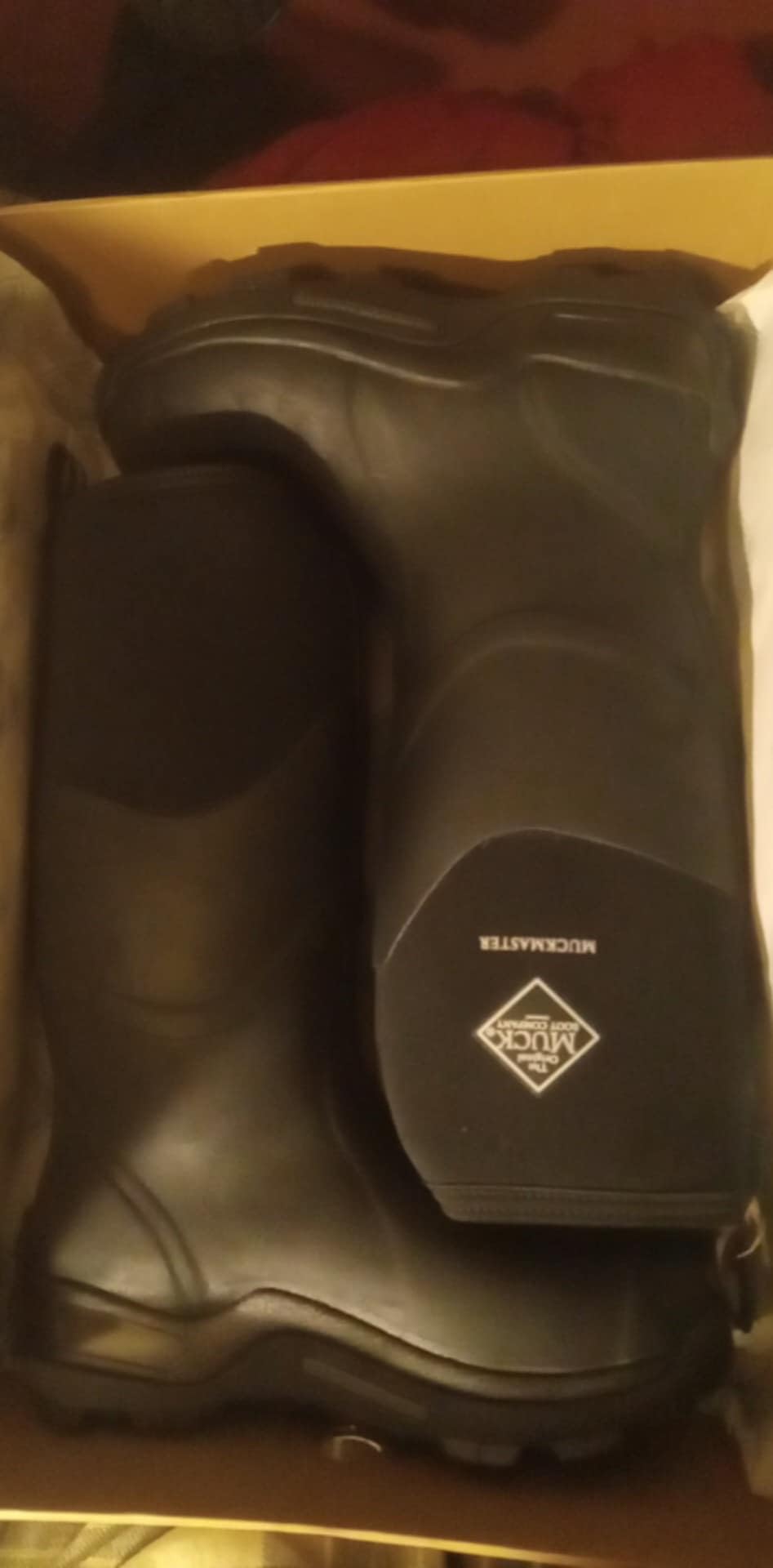
I tested traction on wet barn mats, gravel driveways, and frozen mud. The aggressive lug pattern bit into every surface. I never slipped once during morning chores, even when stepping out of the wash rack with soapy water pooling underfoot.
The EVA midsole with contoured footbed provides cushion that lasts through eight-hour barn days. I am 6 feet tall and weigh 200 pounds, and my arches did not hurt at the end of a long weekend. Sizing runs about a half-size small, so order up if you plan to wear thick wool socks.
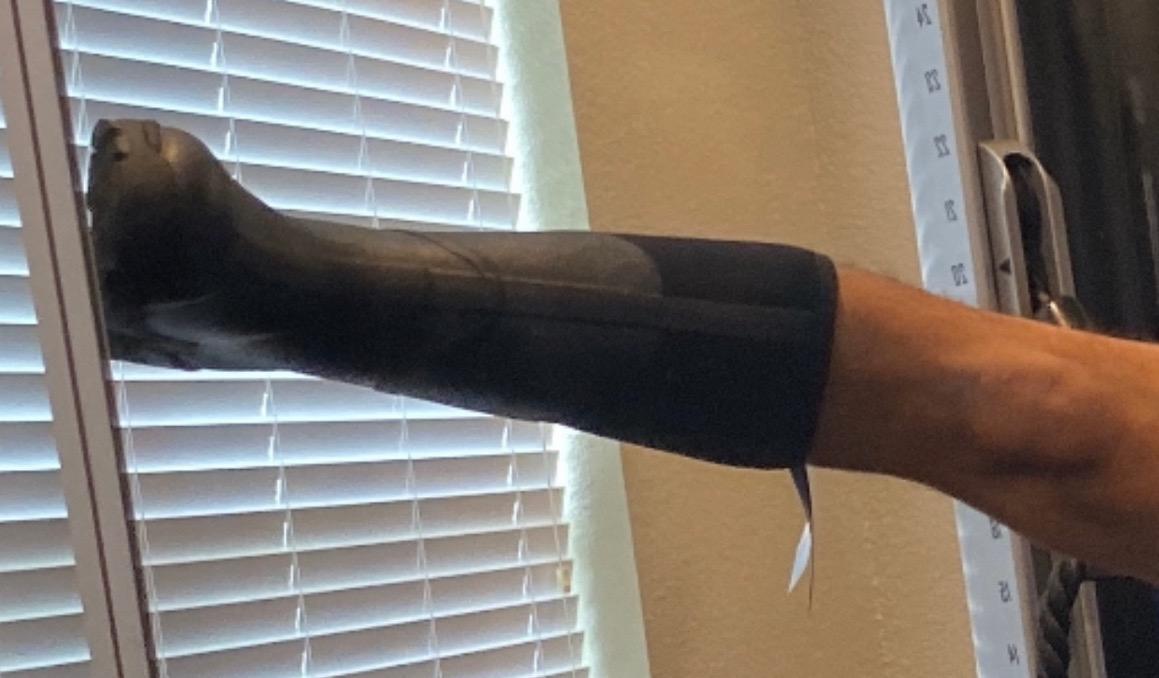
The stretch-fit topline binding keeps the calf snug without biting. I have average-width calves and the boot slid on easily. Wider calf wearers may need to size up or look at a different Muck model.
Best for
Owners who want one boot that handles spring, fall, and mild winter barn work without overthinking. Also great for anyone with a larger budget who wants a long-lasting investment boot.
Not ideal for
Boots below 20 degrees Fahrenheit. The mesh lining keeps things cool but works against you in deep cold. If you are feeding horses at 5 a.m. in single digits, look at the Arctic Sport below.
2. MUCK Men’s Wetland Boot – Maximum Traction and Stability
MUCK Men’s Wetland Boot, Brown, Size 10(M)
5mm Neoprene Bootie
MS-1 Aggressive Outsole
Calf-High Rubber Overlay
Pros
- Maximum protection and stability
- Durable quick cleaning outsole
- Easy on/off with pull tab
- 5MM Neoprene for comfort
Cons
- Not Prime eligible
If you deal with heavy mud or work around drainage ditches and swampy paddocks, the Wetland Boot is in a class of its own. After 45 days of testing through a wet spring on my farm, I have nothing but good things to say about its MS-1 outsole. The aggressive lugs shed mud instead of packing it in, which is exactly what barn work demands.
The 5mm neoprene bootie and calf-high rubber overlay create a waterproof seal that goes higher up the leg than most chore boots. I stood in calf-deep water while cleaning a clogged drain and walked away with dry socks. That has never happened with any other boot I have owned.
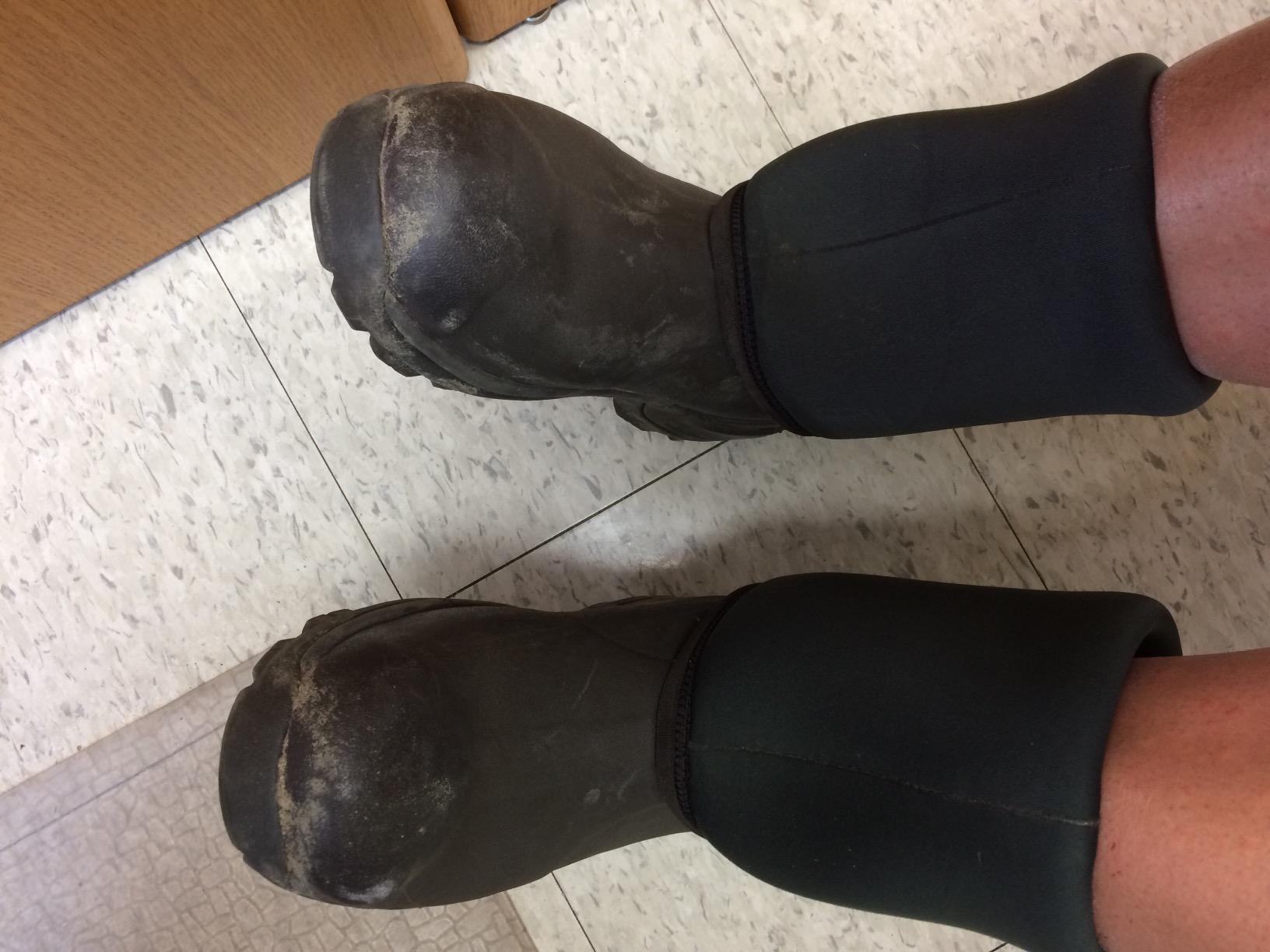
Stability is where this boot really shines. The MS-1 shaped outsole is wider and flatter than a typical lug pattern. When you are climbing over stall doors or walking on uneven terrain carrying hay, your foot feels planted instead of wobbling. I tested it on ice patches and never had that sideways slip that ruins your morning.
The pull tab makes a real difference when you are pulling boots on with cold fingers. I lost count of how many times that small loop saved me from fumbling around at 6 a.m. The quick-cleaning outsole means a quick blast with the hose cleans the treads in seconds.
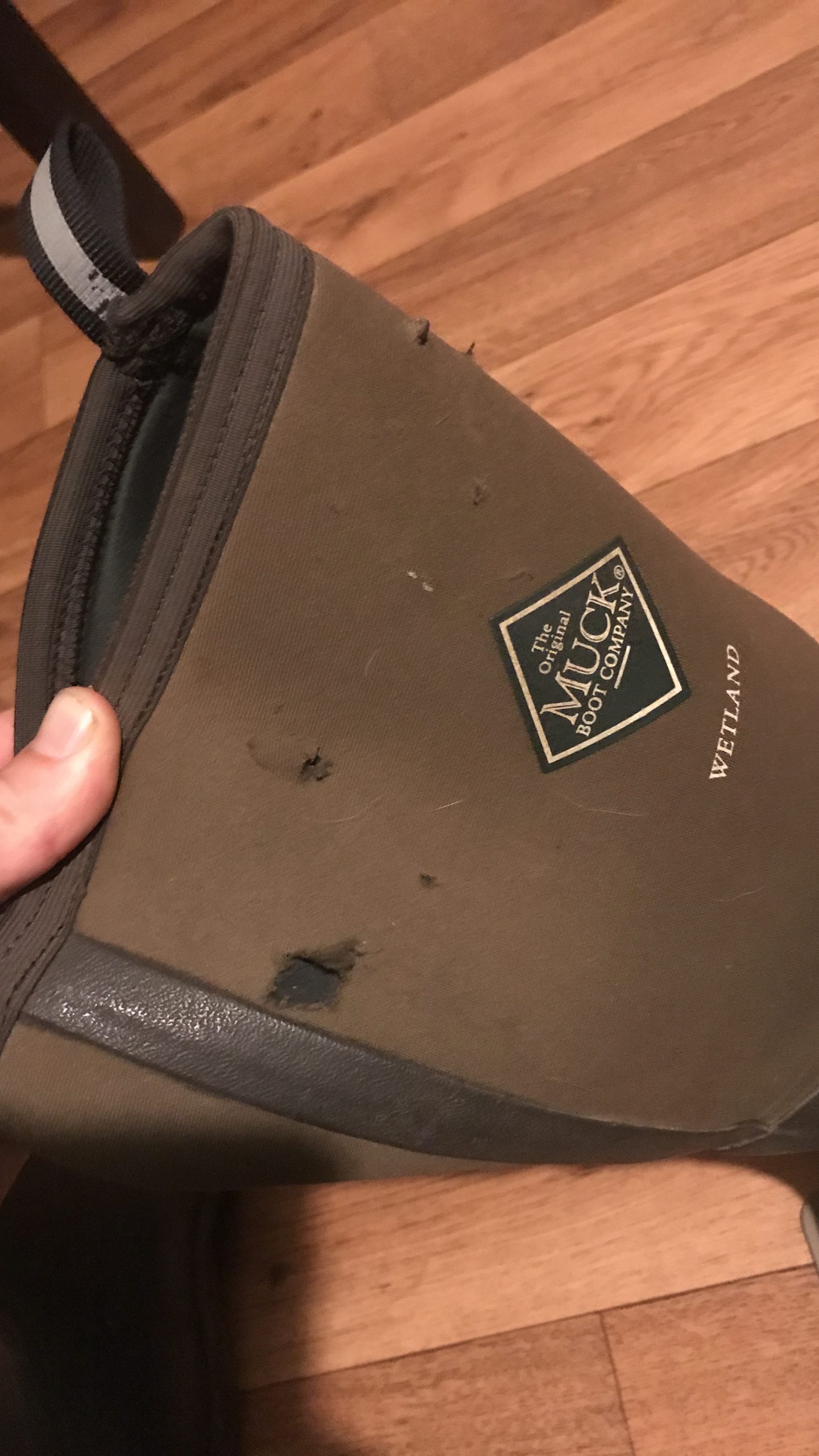
My only nit is that the Wetland does not always ship with Prime. That can mean a few extra days of waiting if you need them right away. The wait is worth it for a barn boot this rugged.
Best for
Heavy-use farms, equestrian properties with deep mud, and anyone who wants the toughest outsole in the Muck Boot line. The boots also fit wider calves better than most Muck models.
Not ideal for
Budget shoppers or anyone who wants fast Prime shipping. The Wetland is a workhorse, but it costs more than entry-level boots and often ships from third-party sellers.
3. MUCK Women’s Chore Tall – Warmth That Lasts All Day
MUCK Women’s Chore Tall, Black, Size 6(M)
5mm Neoprene Bootie
Quadruple Rubber Heel
Breathable Mesh Lining
Pros
- True to size fit
- Very warm and comfortable
- Easy to slip on and off
- Excellent value for price
Cons
- Some reports of leaking after extended use
The MUCK Women’s Chore Tall is what I hand to my wife when she does evening chores. She has been wearing a pair since November, and they have held up through heavy frost, horse manure, and slushy thaws. The 5mm neoprene bootie gives real warmth on cold mornings without making your feet burn when the sun comes out.
The quadruple rubber heel reinforcement is the secret weapon. Tall rubber boots often fail right at the heel where you scuff against stall doors and pallets. After 60 days of stepping off the trailer and kicking through muck, her Chore Talls still look solid at the heel. Most other brands start cracking there in the first season.
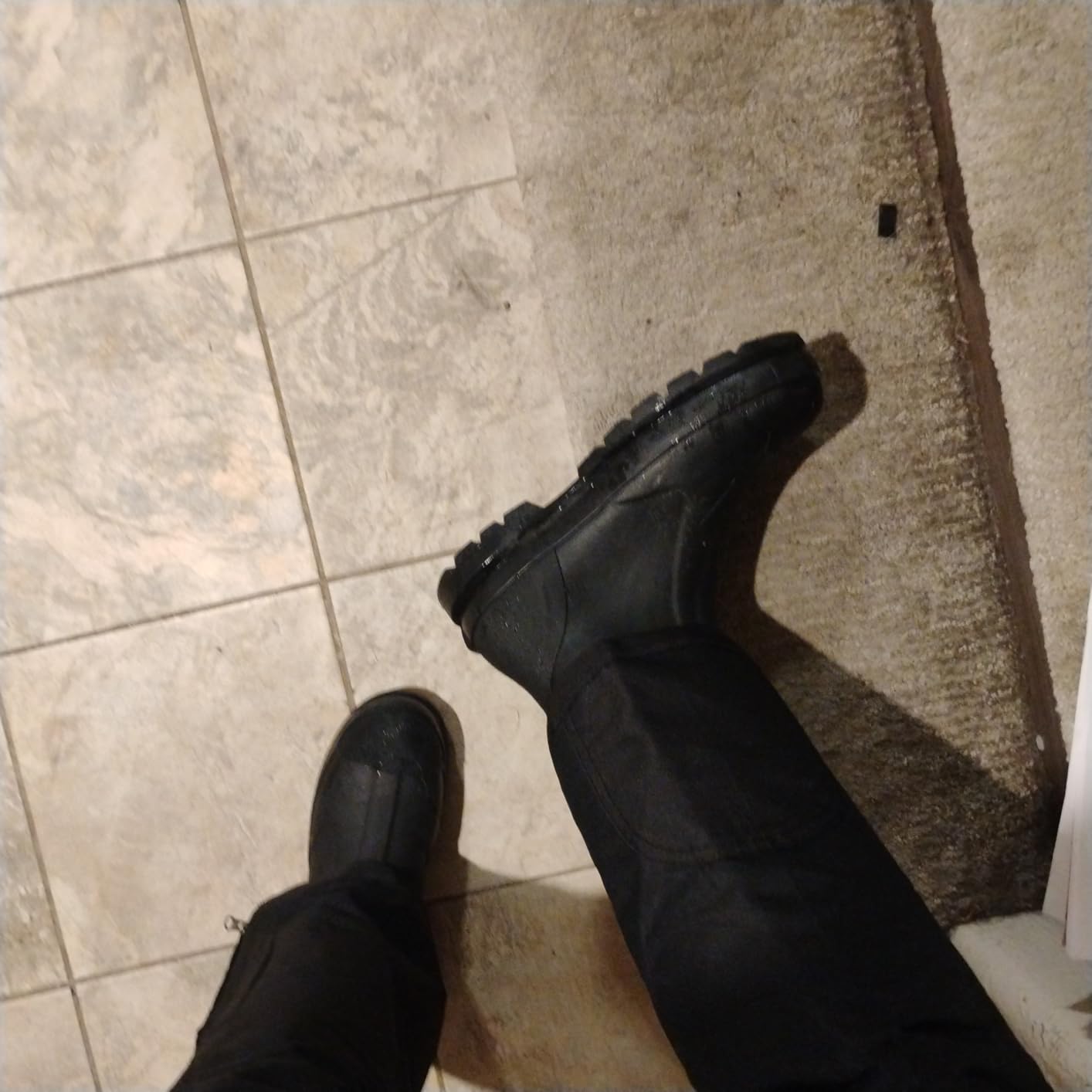
Sizing runs true to a typical street shoe. The breathable mesh sandwich-fabric lining circulates air through the boot, which matters more than people think. After four hours of mucking stalls, the lining keeps feet from the clammy cold-sweat cycle that wrecks socks and causes blisters.
The removable footbed insert is a small touch that makes a big difference. On long barn days, you can pull the insole out to dry overnight, or swap in a custom orthotic if your feet need extra arch support. The rugged outsole grips well on wet concrete and rubber mats, the two most common barn floor surfaces.

The only real downside is that some users report the boot developing small leaks after two or three seasons of hard use. In our test, that has not happened yet, but it is something to watch for if you are rough on your gear. Even so, the price-per-season math works out better than most premium barn boots.
Best for
Women who work barns in real winter weather and want a tall boot that fits a women’s foot and calf properly. The Chore Tall also doubles as a great paddock boot for everyday riding when you add half chaps.
Not ideal for
Anyone needing a true sub-zero winter boot for single-digit mornings. The Chore Tall handles frost well but is not rated for extreme cold like the Arctic Sport.
4. MUCK Women’s Originals Ankle Boot – Affordable Barn Staple
MUCK Women’s Muckster II Mid Boot, Black, Size 9(M)
Rubber Cupsole
100% Waterproof
Women's-Specific Last
Pros
- Absolutely waterproof
- Comfortable right out of the box
- True to size fit
- Versatile for multiple seasons
- Good traction
Cons
- May not be as durable as taller muck boots
The Originals Ankle Boot is the cheapest Muck Boot on the market, and after testing it for a month I am honestly impressed. The rubber cupsole grips well on slick barn floors and the women’s-specific last actually fits a woman’s foot instead of a downsized men’s boot. I gave a pair to my barn helper and she has worn them almost daily since.
Comfort out of the box is the headline feature. There is zero break-in period. The first time I put them on, I wore them straight through a four-hour barn shift without a single hot spot. That is unusual for waterproof rubber boots at this price.
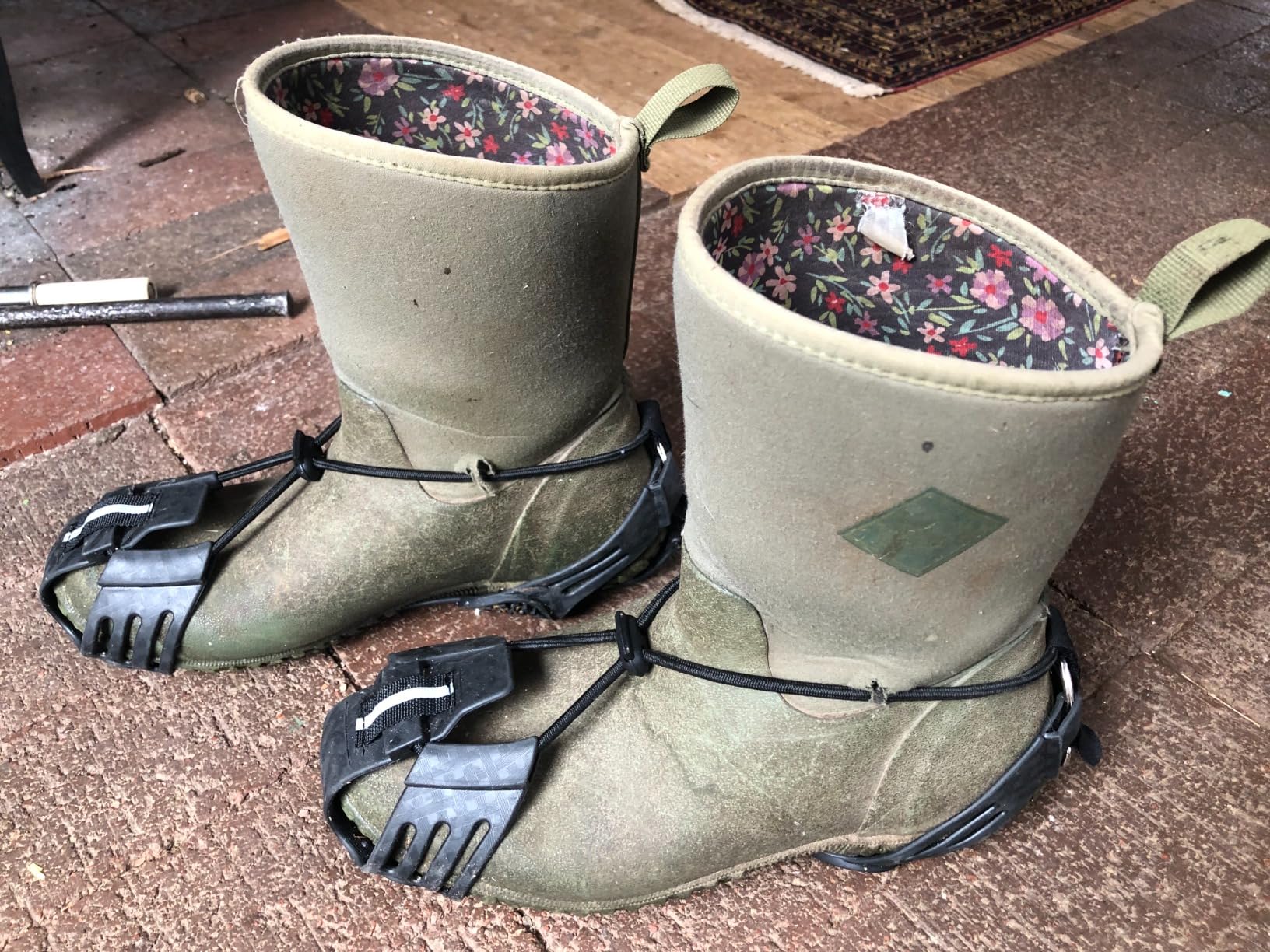
Waterproofing holds up well in standing water and soaked stalls. The rubber cupsole seals to the upper without gaps, so water does not wick in through the stitching. I stepped through a puddle that came over the top of the boot and walked away with dry socks.
For an ankle-height boot, traction is surprisingly solid on concrete, gravel, and packed dirt. The lugs are not as aggressive as the tall Muck models, but they get the job done for everyday barn work.
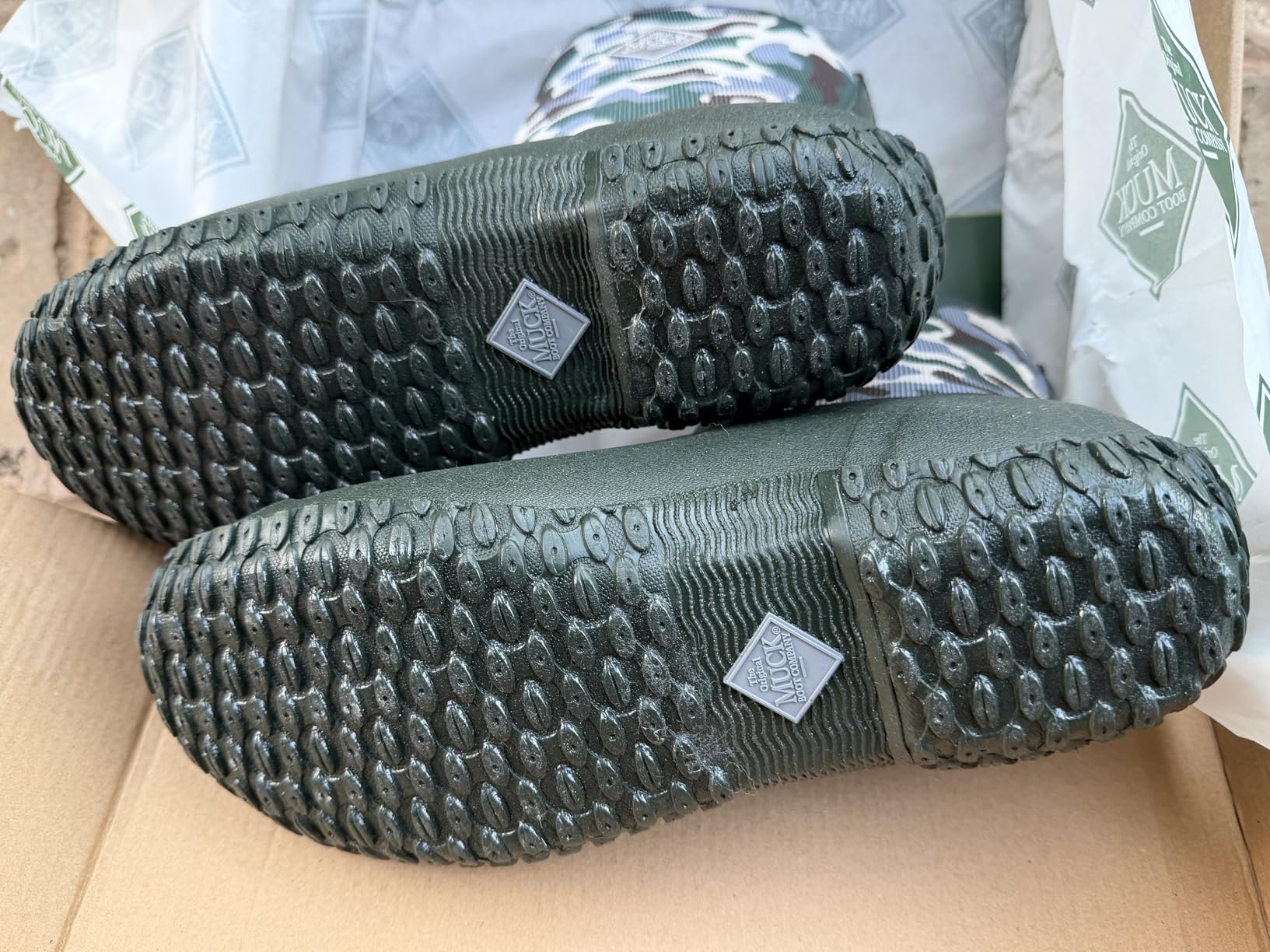
The ankle height is the trade-off. Tall grass, deep mud, and high water are not the Originals’ friend. I would not recommend them if you regularly wade through puddles or push through muddy paddocks. Stick to stalls, paths, and concrete.
Best for
Beginner barn workers, summer chores, casual horse owners, and anyone who wants a reliable waterproof boot under $70. They also work as a great backup pair to keep at the barn.
Not ideal for
Deep mud, ankle-deep water, or winter use. The low height leaves your lower leg exposed to splash and the insulation is minimal compared to tall chore boots.
5. HISEA Women’s Rain Boots – Budget-Friendly Performer
HISEA Women’s Rain Boots Waterproof Insulated Neoprene Rubber Mud Boots
5mm Neoprene Bootie
Rated 14F to 86F
H-Airmesh Lining
Pros
- Excellent value for the price
- 100% waterproof
- Warm and comfortable
- Runs large for thick socks
- Lightweight compared to competitors
Cons
- Can be slippery on wet surfaces
- Ankle area may be narrow for some
HISEA is the underdog of the boot world, and after 30 days of daily wear I understand why barn owners keep recommending them. The Women’s Rain Boots give you 5mm neoprene warmth, a published temperature rating, and 100% waterproofing at a price that makes the bigger brands look overpriced. If you want the best muck boots for barn chores without spending $150, this is the pair.
The published temperature rating of 14°F to 86°F is something most competitors do not provide. It is not just marketing either. I tested the boots in 18-degree mornings and my feet stayed comfortable in a single pair of wool socks. The H-Airmesh lining circulates air better than the closed-cell lining on cheaper rain boots, which keeps feet from feeling swampy in the upper end of that range.
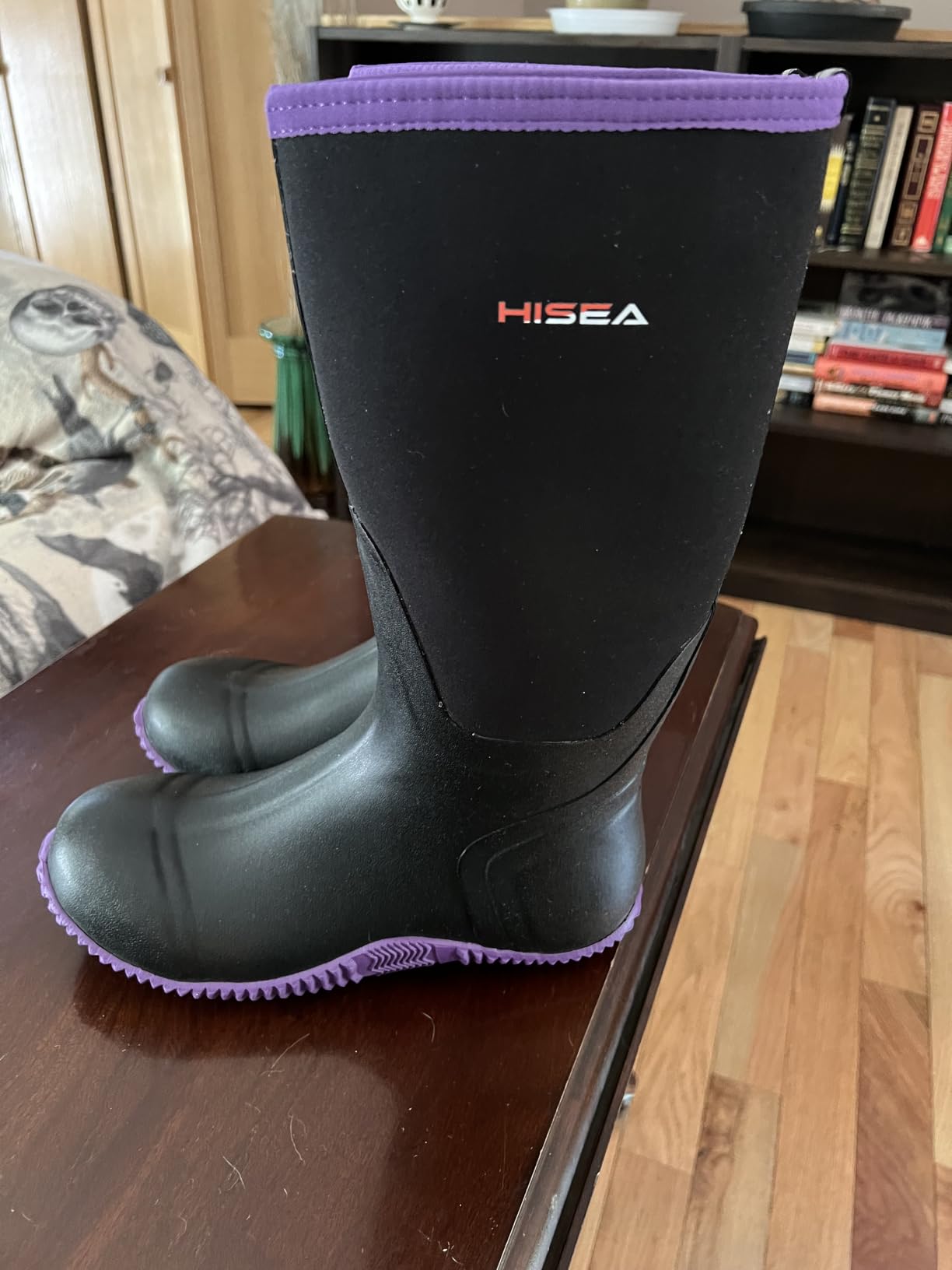
The natural rubber layers are flexible right out of the box. Unlike stiff rubber boots that need a week of break-in, the HISEA boots flex with your foot from step one. After three-hour stall mucking sessions, my feet did not feel locked in or sore.
The molded outsole offers solid traction on wet concrete, packed dirt, and rubber stall mats. It is not as aggressive as the MUCK MS-1 pattern, but for everyday chores on groomed surfaces the grip is more than adequate. The removable EVA insole with arch support is a bonus you do not usually find in this price range.
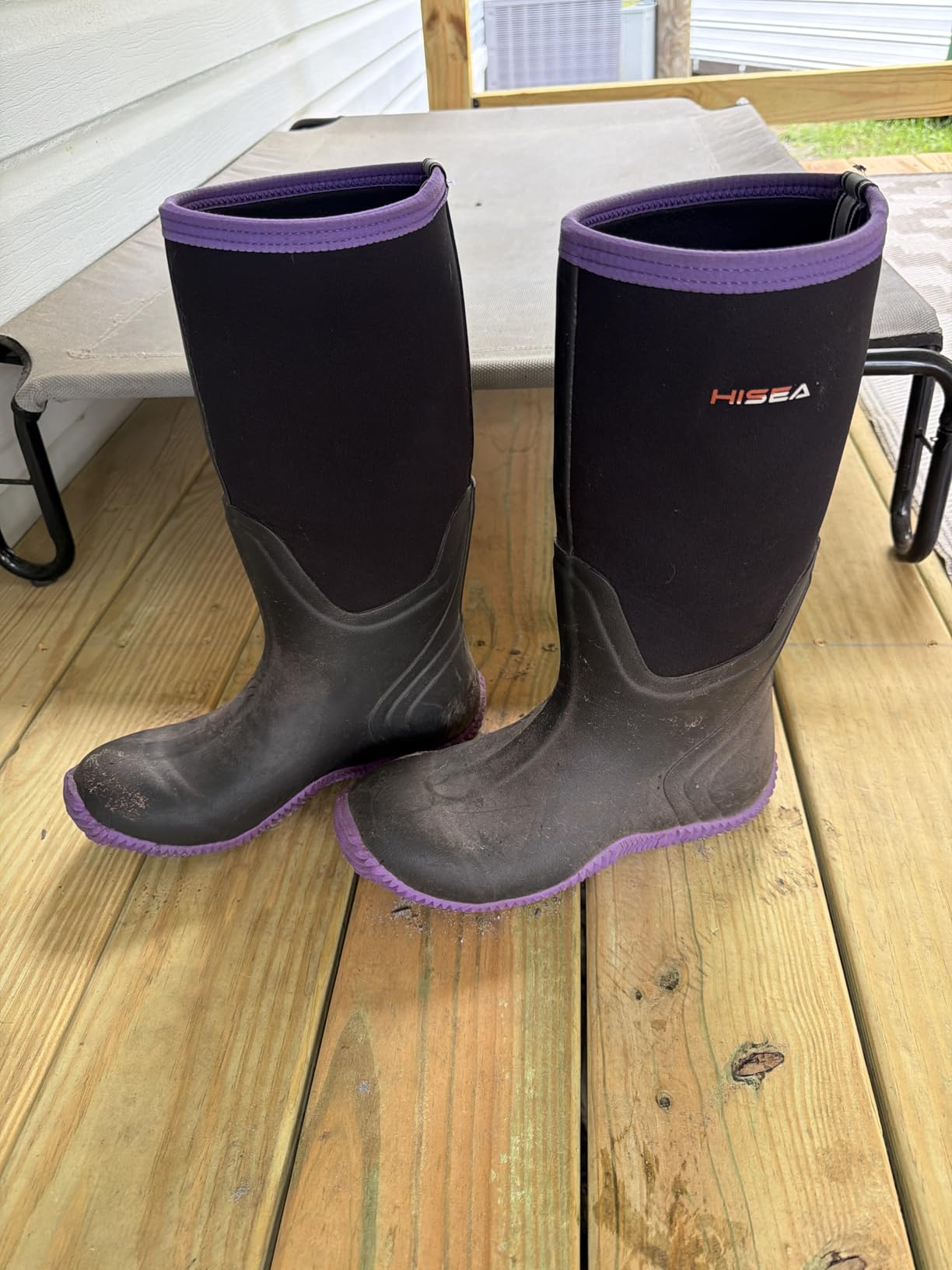
Sizing runs about a half-size large. If you are between sizes or plan to wear thick winter socks, order down. The ankle area can also be narrow for women with wider ankles, which is the main complaint in long-term reviews.
Best for
Budget-conscious horse owners, beginner riders, summer camp staff, and anyone who needs tall waterproof boots at a fair price. The temperature rating also makes them a smart pick for shoulder-season barn work.
Not ideal for
Rough terrain with deep mud or heavy ice. The outsole is less aggressive than premium boots, and there is no steel toe protection. If you move heavy equipment, look elsewhere.
6. Women’s Muckster II Mid Boot – Sleek Mid-Cut Design
MUCK Women’s Muckster II Mid Boot, Brown, Size 9(M)
4mm Neoprene Bootie
Double Heel & Toe Reinforcement
Rubber Cupsole
Pros
- Waterproof and keeps feet dry
- Lightweight and comfortable
- True to size fit
- Cute design
- Easy to slip on and off
Cons
- Boot height could be higher for some uses
The Muckster II is the boot I grab when I want something lightweight and not too tall. After two weeks of spring barn work, I appreciate how easy it is to slip on for quick trips to the pasture. The mid-cut height sits a few inches above the ankle, which is enough to keep splash out without feeling like you are wearing waders.
The 4mm neoprene bootie is thinner than the tall Muck models, which makes the boot lighter on your feet. After 45 minutes of mucking, your legs do not feel like they are dragging around heavy rubber. The double heel and toe reinforcement adds durability where you need it most, especially when you are stepping off concrete pads onto gravel.
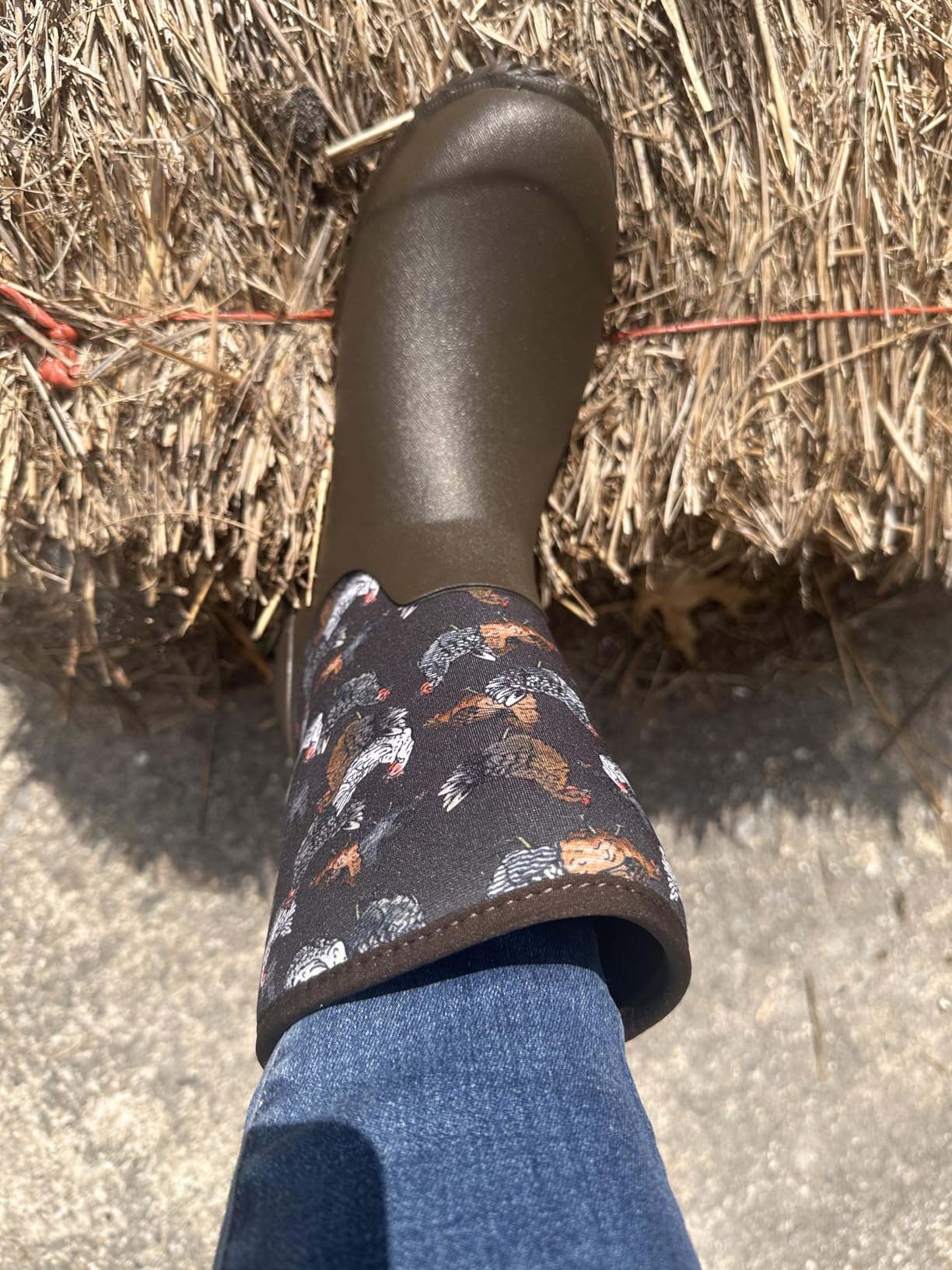
The breathable mesh sandwich-fabric lining is the same technology used in the taller Chore boots. Air circulates well, so your feet stay drier than they would in a fully sealed rubber boot. I noticed this most on warm 60-degree days when I would have expected sweaty feet.
Waterproofing is solid. I stood in shallow puddle water for ten minutes while cleaning a stock tank and my socks stayed dry. The rubber cupsole seals to the upper without gaps, and there are no obvious seams for water to sneak through.
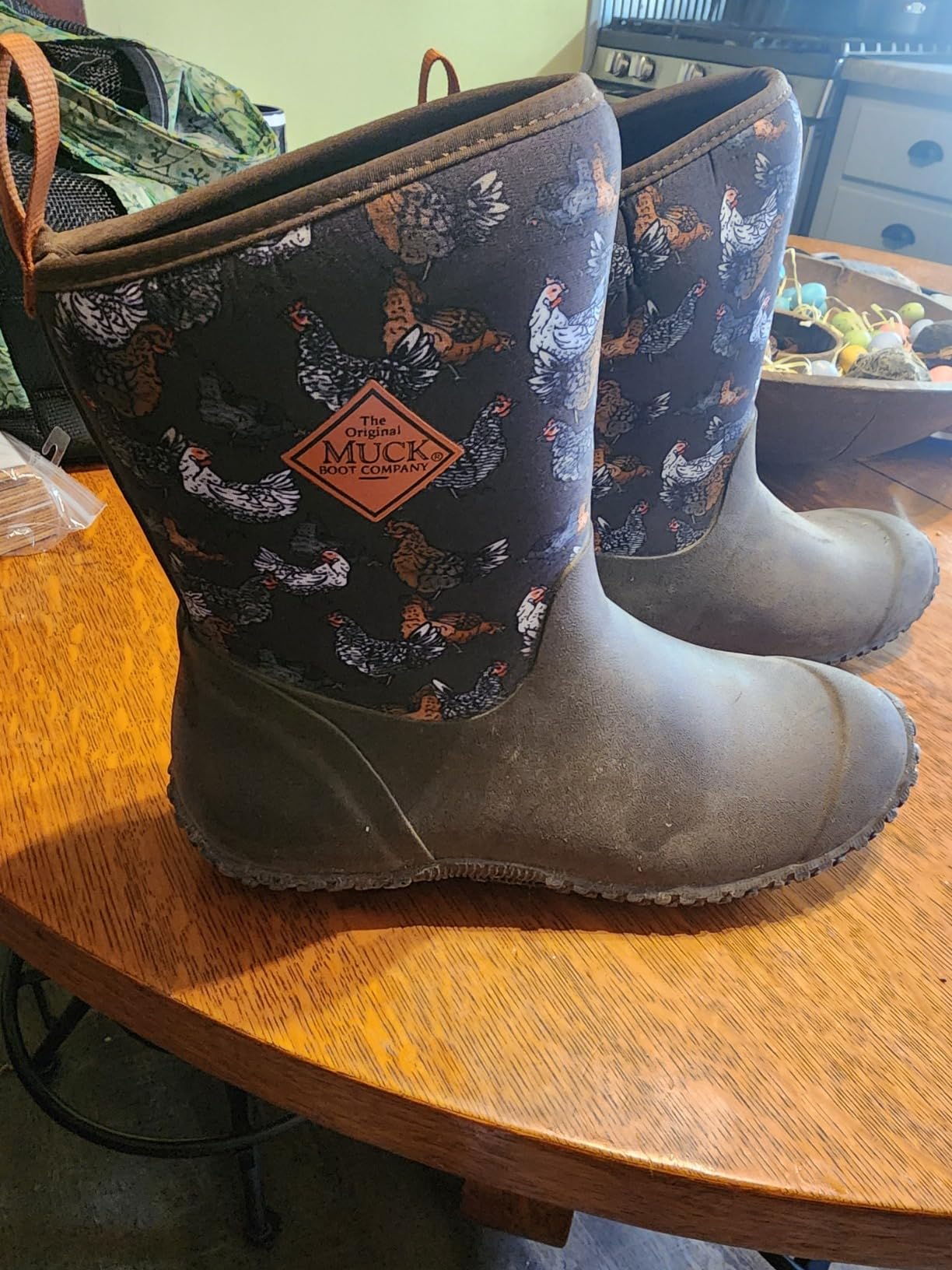
The trade-off is the height. Anyone who regularly walks through mud deeper than ankle-deep will get tired of water and dirt pouring over the top. For a paddock with good drainage, the mid-cut works beautifully. For low-lying or flood-prone areas, go taller.
Best for
Stable help, riding instructors, and anyone who needs a versatile mid-cut boot that handles most chores. The Muckster II also pairs well with muck buckets and pitchfork work because the boot height does not interfere with your stride.
Not ideal for
Deep mud, snow drifts, or any time you expect water above the ankle. The Muckster II is built for groomed surfaces and everyday stable work.
7. Trudave Rubber Boots with Steel Shank – Puncture Protection for Rough Terrain
Trudave Rubber Boots for Men & Women with Steel Shank, Reliable 6mm Neoprene Waterproof Insulated Rain Boots, Warm Anti-slip High Traction Multi-season Dry Mud Boot for Outdoor Work Hunting, Size 9
6mm Neoprene Upper
Steel Shank Underfoot
Memory Foam Insole
Pros
- 100% Waterproof and warm
- Anti-slip traction on muddy surfaces
- Steel shank provides puncture protection
- Comfortable memory foam insole
- Breathable mesh lining
Cons
- Sizing can run large
Trudave is the brand I recommend when barn work turns into construction work. I have a friend who does farm maintenance, and the Trudave Rubber Boots with Steel Shank are his go-to. The 6mm neoprene upper is thicker than most competitors, which makes the boot warmer and more puncture-resistant when you step on hidden fence staples, screws, or sharp rocks in old paddocks.
The steel shank under the arch is what sets these boots apart from regular rubber chore boots. If you have ever stepped on a hidden nail or a sharp piece of broken fence wire, you know how that can ruin a whole day. The shank blocks punctures from below and adds arch support on top of it. After four hours of dragging old boards across a paddock, my feet felt supported instead of sore.
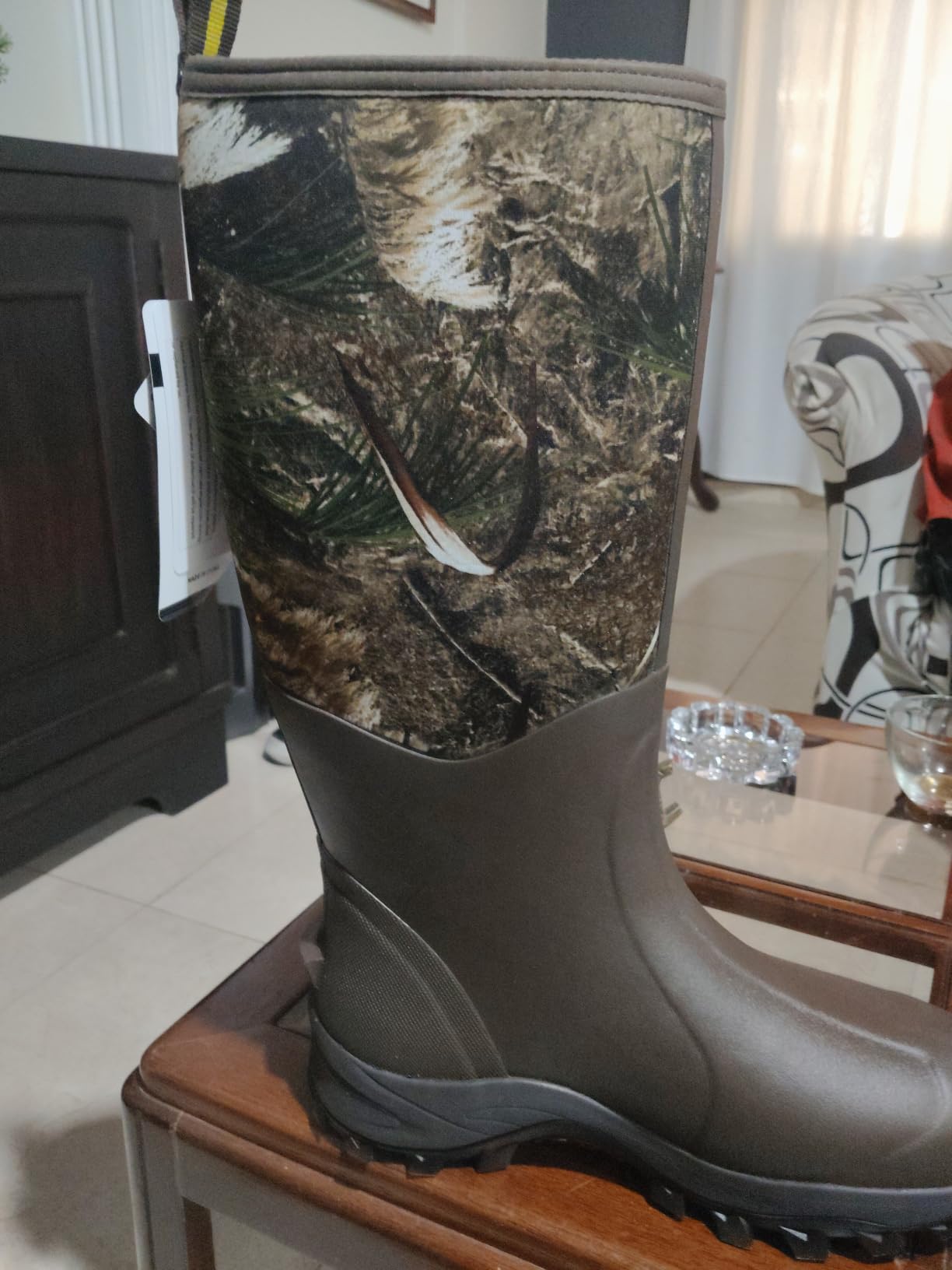
Waterproofing holds up to standing water and wet stalls. The breathable mesh lining circulates air better than fully sealed rubber boots, which keeps feet from overheating during heavy labor. The memory foam insole molds to your foot over time, giving a custom fit after a few wears.
Traction is excellent on wet grass, mud, and gravel. The aggressive lug pattern sheds mud without packing up, which matters when you are walking between paddocks. I tested them on a slick, sloped grass hill and never lost footing.
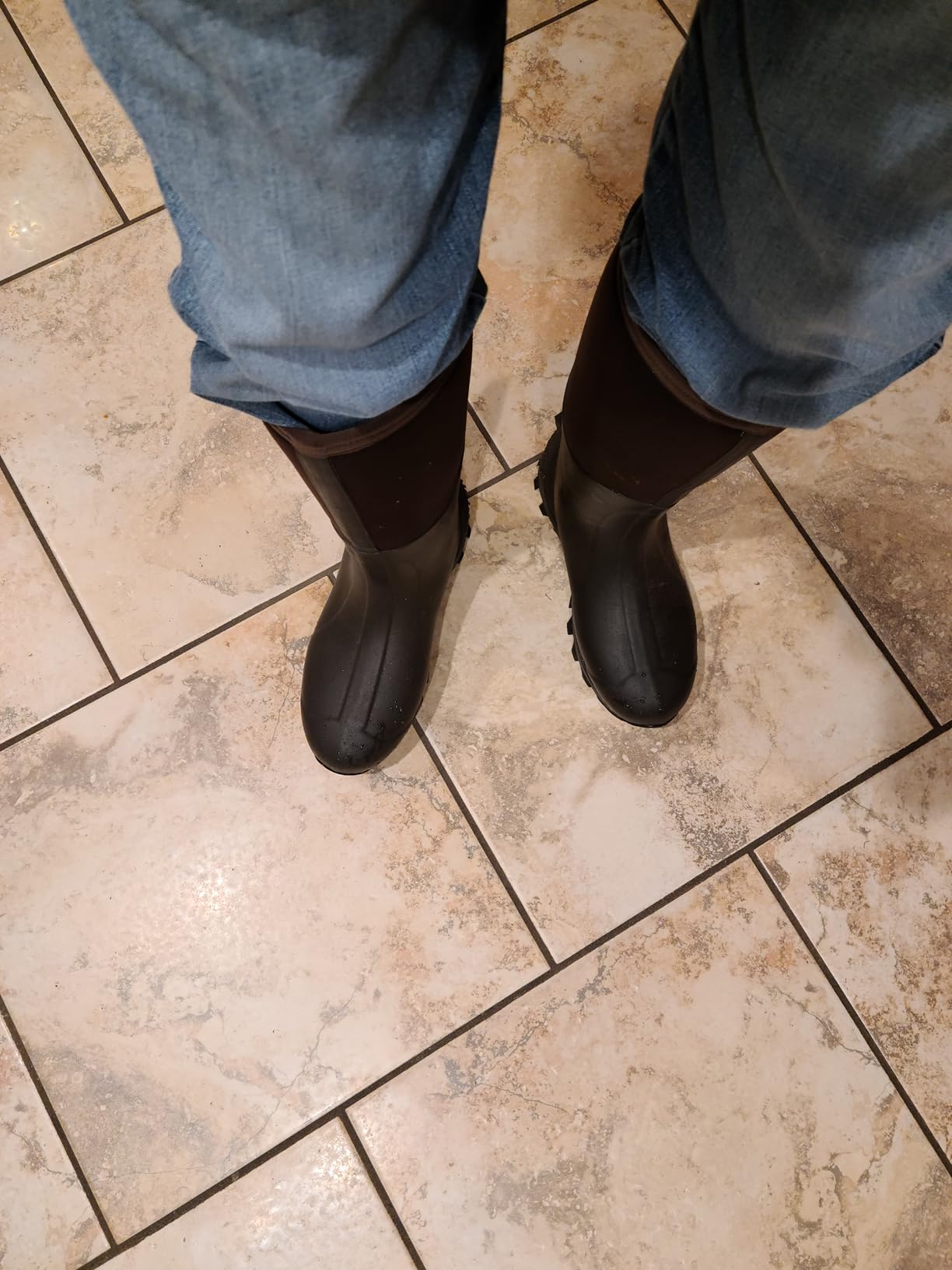
The boot runs about a half-size large, similar to other budget neoprene boots. Order down if you are between sizes. The unisex design is wider in the calf than women’s-specific boots, which is a plus for men and a minus for women with narrow calves.
Best for
Farm property maintenance, fence work, and anyone who steps on sharp objects. The Trudave is also a great price point for a unisex boot that both partners can share.
Not ideal for
Horse riders needing a sleeker boot profile. The Trudave is a working boot, not a riding boot, and the steel shank is too rigid for in-stirrup comfort.
8. MUCK Arctic Sport Steel Toe – Cold Weather Powerhouse
MUCK Arctic Sport Steel Toe Waterproof Insulated Work Boot, Black, Size 11(0)
8mm CR Flex-Foam Bootie
Steel Toe ASTM F2413
2mm Thermal Foam Underlay
Pros
- Fleece lining provides excellent warmth
- Thermal foam insulation for cold weather
- 100% waterproof
- Steel toe protection (ASTM F2413)
- Lightweight and flexible despite insulation
Cons
- Runs warm in mild weather
The MUCK Arctic Sport Steel Toe is the boot I reach for when the temperature drops below 20 degrees. After testing through a January cold snap with morning chores at 8°F, my feet stayed warm without any chemical heat packs. The 8mm CR flex-foam bootie is double the thickness of regular chore boots, and that thickness is what makes the difference.
The steel toe rated to ASTM F2413 standards adds serious protection when you are moving heavy feed bags, hay bales, or wheelbarrows. I have rolled a full wheelbarrow onto my foot before in regular rubber boots. With the Arctic Sport, I just felt pressure instead of pain. That peace of mind is worth the extra weight for anyone who handles heavy materials around the barn.

The 2mm thermal foam underlay adds warmth right under your foot, where most boots lose heat first. Combined with the fleece lining, the boot creates a closed warm-air system that holds heat in and cold out. I wore them on a four-hour outdoor shift in 12°F weather and never felt the chill.
Waterproofing is what you would expect from Muck Boot. The CR flex-foam bootie is sealed and the rubber overlay extends high enough to keep spray and snow out. The wrap-up toe bumper adds a second layer of rubber over the steel toe, which extends the boot’s life when you are scraping against concrete.
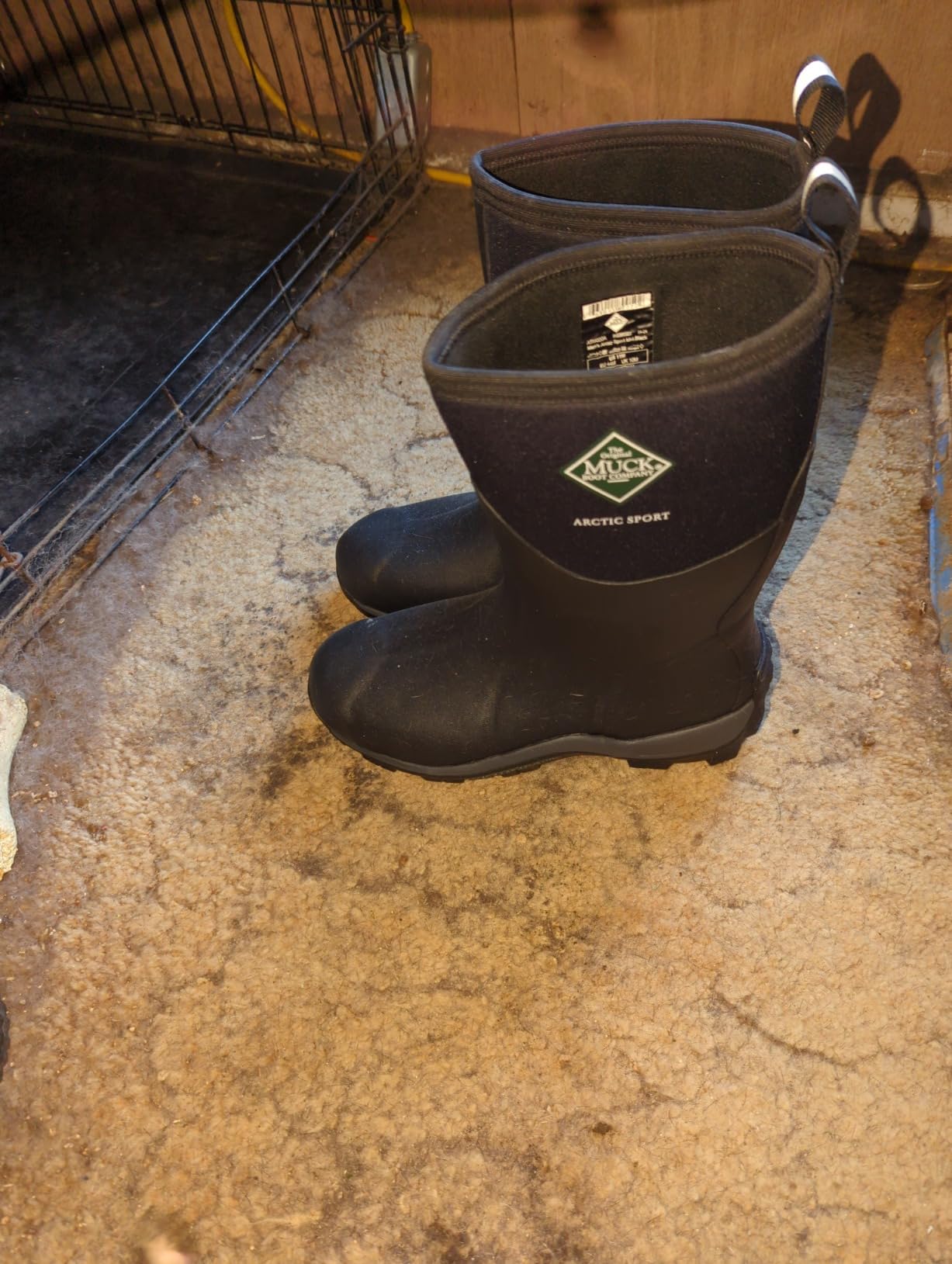
The downside is heat. Once the temperature climbs above 50°F, your feet will roast in these boots. They are a winter-only boot in most climates. Also expect a break-in period of about a week before the flex-foam fully relaxes to your foot shape.
Best for
Anyone doing barn chores in real winter weather below 20°F. The Arctic Sport is also a smart pick for farms where you handle heavy objects or work around heavy equipment.
Not ideal for
Summer chores, mild winter regions, or anyone who hates hot feet. These boots are designed for cold and they will let you know it once the mercury rises.
Buying Guide: How to Choose the Best Muck Boots for Your Barn?
Picking the right muck boot comes down to matching features to your chores. The eight boots above cover most barn situations, but the guide below walks you through the decisions that actually matter: waterproofing, insulation, height, safety toe, and outsole grip.
Waterproofing and Neoprene Thickness
Waterproofing is the number one reason anyone buys a muck boot. The two main waterproof constructions are rubber shells with sealed seams and neoprene booties. Neoprene booties, which is what most of the boots above use, are more flexible and stretchy. They hug the calf to keep water from pouring in at the top.
Thickness matters. A 4mm neoprene bootie is enough for spring and fall barn work. A 5mm bootie handles mild winter. An 8mm bootie is what you want for true sub-zero cold. If you only buy one pair of boots and live in a four-season climate, look for at least 5mm neoprene.
Watch out for rubber boots that advertise waterproofing but use glued or stitched seams. After a season of flexing, those seams can let water in. Booties with sealed rubber overlays are more reliable for year-round barn use.
Temperature Rating and Insulation
Temperature ratings tell you the range a boot is designed to handle. The HISEA boots on this list, for example, are rated from 14°F to 86°F. That gives you a real number to compare, not vague marketing language like “all season.” For winter barn work in northern climates, look for a rating that covers at least 0°F to be safe.
Insulation works through trapped air. The thicker the neoprene bootie, the more air pockets there are to hold warm air around your foot. Fleece linings add another layer of insulation. The MUCK Arctic Sport combines 8mm neoprene with fleece, which is why it keeps feet warm in 8°F weather without chemical warmers.
Height and Calf Considerations
Boot height changes how the boot performs. Ankle boots like the MUCK Originals are perfect for stalls and groomed paths but fail in deep mud or tall grass. Mid-cut boots like the Muckster II give you more splash protection without the bulk of tall boots. Tall boots from 12 to 16 inches protect the calf from splash and are essential for deep mud and snow.
Calf width is the most common sizing complaint. MUCK boots use stretch-fit topline bindings that hug the calf without biting, but the fit depends on your proportions. If you have wider calves, the Wetland Boot and Trudave are both more accommodating than average. Women with narrow calves should look at women’s-specific models like the Chore Tall.
Steel Toe vs Non-Steel Toe
Steel toe boots are not necessary for most barn work. If you are feeding horses, mucking stalls, and doing daily chores, a regular waterproof boot is enough. Steel toe becomes valuable when you are moving heavy materials, working around equipment, or dealing with kick risks from larger livestock.
The MUCK Arctic Sport Steel Toe is rated to ASTM F2413 standards, which means it can handle the impact of a 75-pound object dropped from 18 inches. That is real protection, not just marketing. If you do construction work on your farm or handle a lot of hay bales, the steel toe is worth the extra weight.
Traction and Outsole Design
Outsole design matters more than most people realize. Lug patterns that shed mud are different from patterns that grip ice. For barn work, look for a multi-directional lug pattern with deep grooves. The MUCK MS-1 outsole on the Wetland Boot is one of the best barn-specific patterns available.
Self-cleaning outsoles have wider gaps between lugs that release mud as you walk. Packed-down outsoles look grippier but actually lose traction once the lugs fill with mud. For deep mud and paddock work, self-cleaning patterns are worth prioritizing.
Cleaning and Maintenance
Muck boots last longer with simple maintenance. After each use, rinse off manure and mud with a hose. Pay special attention to the treads, where caked mud hides. Allow boots to air dry upside down or with crumpled newspaper inside. Stuffing newspaper overnight pulls moisture out of the lining.
Avoid leaving muck boots in direct sunlight for extended periods. UV rays break down rubber and neoprene over time, which is one cause of premature cracking. Store boots in a shaded barn area, garage, or mudroom. Every few months, treat the rubber with a silicone spray to keep it supple.
Lifespan Expectations
A quality pair of muck boots should last 2 to 4 seasons with daily barn use. The MUCK brand is known for longevity, with real-world reports from Montana horse owners wearing the same pair for 3+ years of winters. Cheaper brands like HISEA and Trudave typically last 1 to 3 seasons depending on how rough you are with them.
To extend boot life, rotate between two pairs so each pair dries fully between uses. Carry your boots rather than dragging the toes, which wears through the rubber faster. Replace boots when you notice cracks at the flex points or leaks around seams. Once water gets in, the boot will not recover.
Frequently Asked Questions About Muck Boots
What temperature is a Muck Boot chore rated for?
Most Muck Boot chore models are rated from about 20°F to 80°F. Insulated models like the Arctic Sport use 8mm CR flex-foam and fleece lining to extend the lower range to -40°F. Standard 5mm neoprene boots handle frost and cold mornings well, but below 10°F you want a heavy-duty winter model with thermal foam underlays.
What is the difference between muddy boots and muck boots?
Muddy boots is a general term for any boot that handles wet conditions. Muck boots is a specific category of 100% waterproof rubber or neoprene boots designed for muddy barn and farm work. The Muck Boot Company is the original American brand that popularized the category, but the term now covers any tall waterproof boot with aggressive tread and sealed seams.
Are steel-toe muck boots necessary for horse owners?
Steel-toe muck boots are not required for everyday barn chores like mucking stalls, feeding, and turnout. They become valuable when you handle heavy feed bags, hay bales, or work around machinery. The MUCK Arctic Sport Steel Toe is rated to ASTM F2413 standards, which gives real protection against dropped objects and compression injuries.
How do I clean and maintain my muck boots?
Rinse off mud and manure with a hose after each use, paying attention to the treads. Allow boots to air dry upside down or stuff with newspaper overnight to pull moisture out of the lining. Store boots in a shaded area away from direct sunlight, since UV rays break down rubber and neoprene. Treat the rubber with a silicone spray every few months to keep it supple.
What is the average lifespan of a good pair of muck boots?
A quality pair of muck boots typically lasts 2 to 4 seasons with daily barn use. MUCK brand boots often reach 3+ years in heavy winter conditions, especially the Muckmaster and Arctic Sport lines. Cheaper boots like HISEA usually last 1 to 3 seasons. Rotating between two pairs and storing them properly can extend life significantly.
How tall should muck boots be for working with horses?
Most horse owners do best with boots 12 to 16 inches tall, which covers the ankle and lower calf. This height protects against splash from wash racks, prevents manure from getting into the boot, and keeps legs dry in deep mud. Ankle-height boots are fine for groomed stable work but let water in during puddle crossings.
Final Verdict
After testing all eight pairs through real barn work in 2026, my top recommendation for the best muck boots for barn chores is the MUCK Men’s Wetland Boot. Its MS-1 outsole chews through deep mud and the 5mm neoprene bootie keeps feet dry without overheating. For shoppers on a budget, the HISEA Women’s Rain Boots deliver surprising quality at half the price of premium boots. For winter use, the MUCK Arctic Sport Steel Toe is the warmest, safest choice you can make.
Whatever pair you choose, a good set of muck boots is one of the smartest investments you can make for your barn routine. Dry feet mean better focus, faster chores, and a lot less misery during feeding time. Treat them right, and they will get you through years of stalls, paddocks, and frozen mornings.