
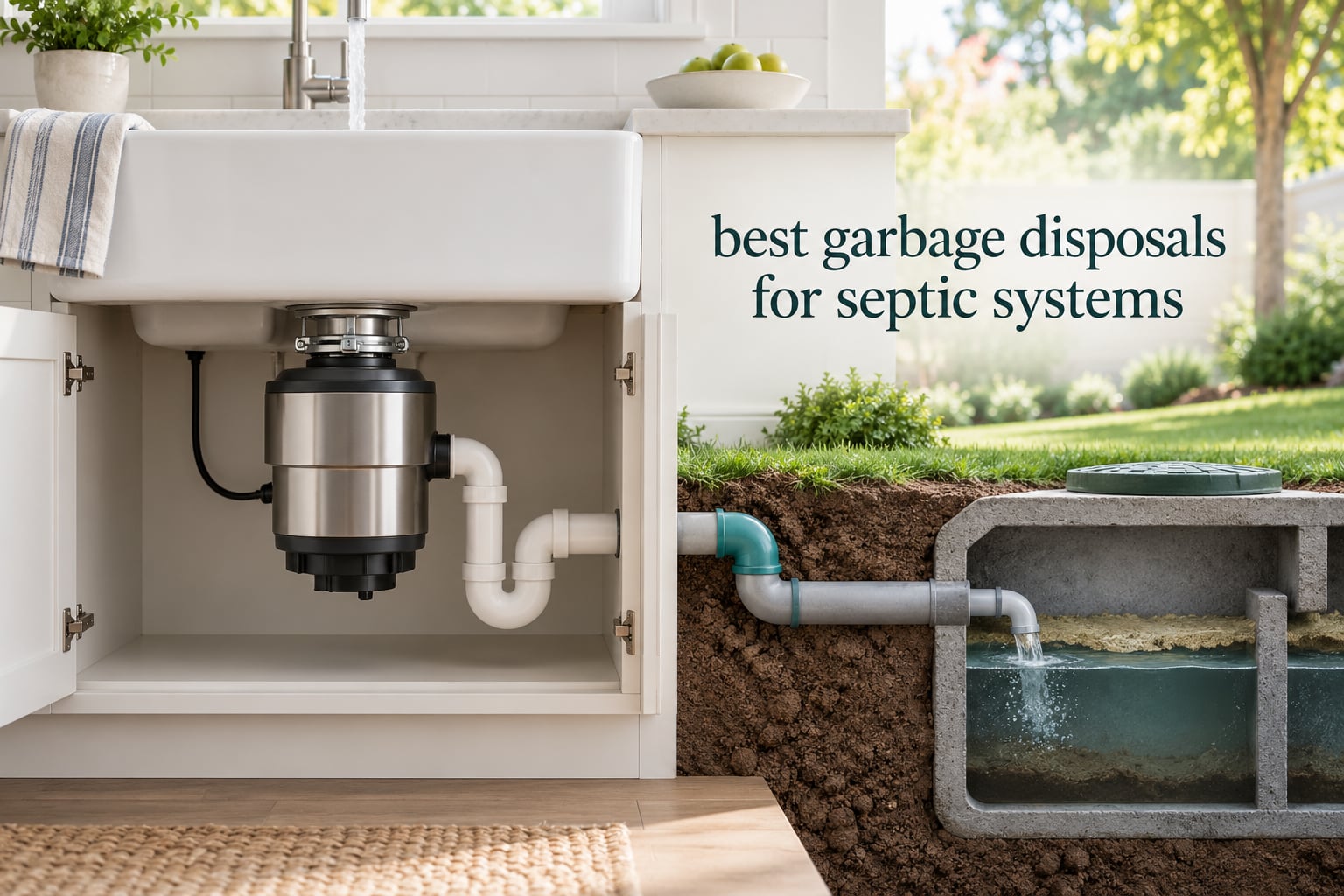
A garbage disposal grinds food waste into particles and sends them down the drain. On a septic tank, that same waste has to be digested by bacteria inside the tank before the water can reach the drain field, and the grinders built for municipal sewer lines make a poor match for that job. Picking the right model for your system comes down to grind fineness, motor torque, and how much extra solid load you are willing to push into a tank that never gets flushed by a city sewer.
We spent weeks comparing the current generation of continuous-feed disposals for our own kitchens, then cross-checked the specs against what homeowners and plumbers report in the forums. What follows is our shortlist of the best garbage disposals for septic systems, ranked by how each one handles a tank that has to do all of its own work. We also flag the case where you should not install one at all, because that answer came up often enough in our research to deserve its own section.
Before anything else, one honest caveat that we could not find covered anywhere else in this category: a small number of county health departments and septic authorities do not permit a disposal on a septic system, and plenty of plumbers advise against installing one. Spend five minutes with your local septic authority before you order, and treat it as the same conversation you would have about any drainage work you do around the house.
Table of Contents
Top 3 Picks for Septic-Safe Disposals in 2026
Our short version: the Badger 5 wins on proven reliability and the deepest review base on this list, the Evolution 0.75HP wins on grind fineness, and the KRAUS WasteGuard wins on motor speed and a manufacturer septic rating. All three handle everyday food waste without leaving the kinds of fibrous strings that mat together in a tank.

InSinkErator Badger 5 1/2 HP
- 1/2 HP Dura-Drive induction motor
- Galvanized steel grind parts
- Pre-installed 36 inch power cord
- 3-year in-home service warranty

InSinkErator Evolution 0.75HP
- 3/4 HP Dura-Drive induction motor
- 3-Stage MultiGrind technology
- Stainless steel grind components
- EZ Connect hardwire adapter
KRAUS WasteGuard 3/4 HP
- 3800 RPM MagnaGrind magnet motor
- QuietStorm soundproofing
- Maker states septic safe for most systems
- 5-year limited warranty
8 Best Garbage Disposals for Septic Systems (October 2026)
Here is every model in the roundup with the three or four specs that actually drive the septic decision. Horsepower sets torque, RPM sets how fast that torque gets applied, and the cord question determines whether you need an electrician on the day.
| Product | Specifications | Action |
|---|---|---|
| InSinkErator Badger 5 1/2 HP |
|
Check Latest Price |
| InSinkErator Evolution 0.75HP |
|
Check Latest Price |
| KRAUS WasteGuard 3/4 HP |
|
Check Latest Price |
 InSinkErator Badger 5XP 3/4 HP InSinkErator Badger 5XP 3/4 HP |
|
Check Latest Price |
 Moen Prep Series PRO GXP50C Moen Prep Series PRO GXP50C |
|
Check Latest Price |
 Waste Maid 1/2 HP Anti-Jam Waste Maid 1/2 HP Anti-Jam |
|
Check Latest Price |
 Waste King L-2600 1/2 HP Waste King L-2600 1/2 HP |
|
Check Latest Price |
 Whirlpool GC2000PE 1/2 HP Whirlpool GC2000PE 1/2 HP |
|
Check Latest Price |
1. InSinkErator Badger 5 1/2 HP — Best Overall for a Septic Tank
InSinkErator Badger 5 Garbage Disposal with Power Cord, Badger Series 1/2 HP Continuous Feed Food Waste Disposer
1/2 HP Dura-Drive induction motor
Galvanized steel parts
3-year in-home service warranty
Pros
- Very easy DIY install
- many swaps done in under an hour
- Pre-installed power cord saves wiring work
- Compact body frees cabinet space
- Proven long-term reliability across thousands of reviews
Cons
- Audible hum and grind noise at higher settings
- Short cord length may not reach the nearest outlet
- Dishwasher knockout plug must be removed before mounting
We started every shortlist with the Badger 5 because it has the deepest review base of anything we evaluated, at more than 17,000 reviews holding a 4.7 average. That volume matters here in a way it does not for ordinary disposals, because nobody has published long-term septic tank data. Thousands of households have run this model for a decade on a rural tank, and the pattern in those reviews is consistency rather than excitement.
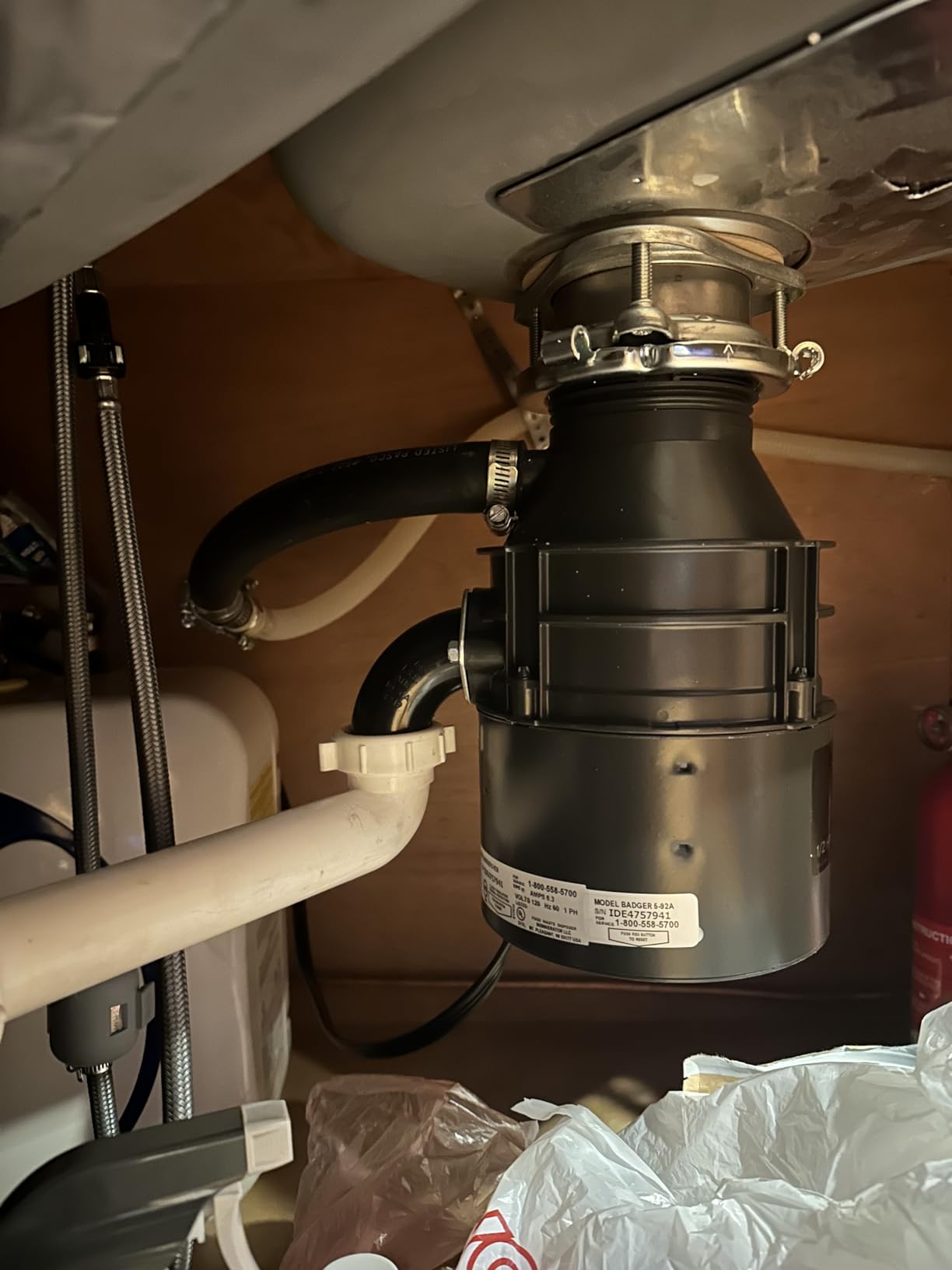
The mechanical case is straightforward. A 1/2 HP Dura-Drive induction motor paired with galvanized steel grind components gives consistent everyday torque, and the compact 6.31 by 6.31 by 11.5 inch body drops straight onto existing InSinkErator hardware. For a septic tank, the meaningful point is that it processes scraps into a consistent particle size every time rather than bouncing hard items off the impeller, which is what creates the fibrous mats we worry about.
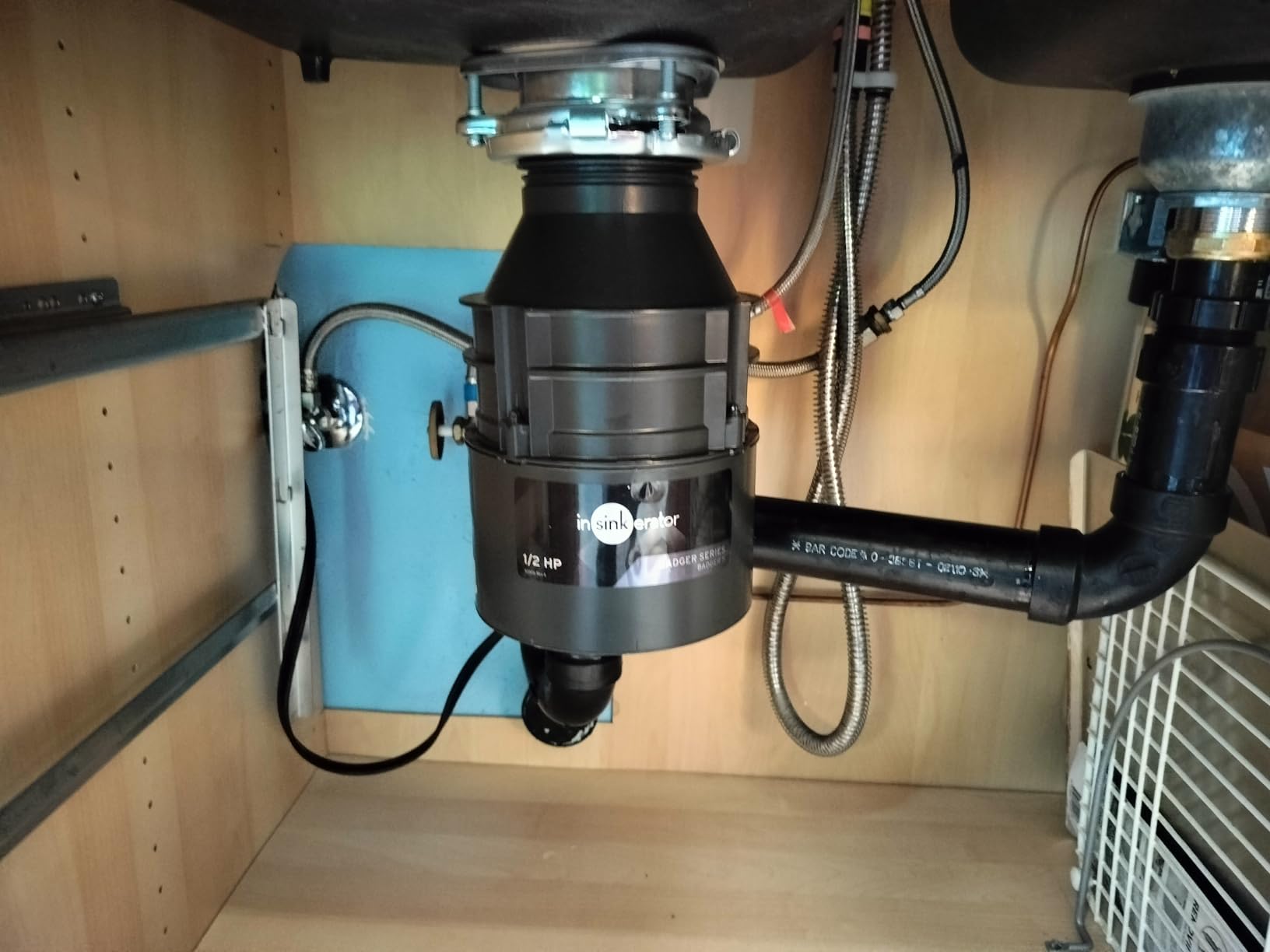
Installation is where this model separates itself from the rest of the list. The power cord is already attached, so there is no hardwiring and no electrician, and the removable dishwasher inlet plug is reachable before you slide the unit into place. Owners on homeowner forums repeatedly describe a finished swap in 10 to 45 minutes, which is the kind of thing that makes a septic upgrade project a weekend event instead of a two-week wait for a contractor.
It is not the quietest disposal we tested, and the hum at higher settings is real. But noise is a comfort issue rather than a septic issue, and the honest trade for that extra decibels is a motor that never bogs down mid-grind and leaves half-chewed scraps sitting in the chamber.
Who the Badger 5 fits
This is our pick for a household of one to four people on a tank of roughly 1,000 gallons or larger who want a disposal they will actually use instead of one that rattles and jams. The pre-installed cord alone removes the single most common complaint we saw across the category.
It also suits rental properties and guest cottages, where a working disposal on day one matters more than maximum grind fineness and the replacement cost of a single failed motor is spread over a short lease.
Where it falls short
Heavy cooking households running a large family through the sink will find a 3/4 HP motor with multi-stage grinding does less than this one does under load. If your tank is under 750 gallons, we would step up rather than down.
You also give up the deepest possible grind. For a tank above 1,200 gallons, a finer multi-stage model gives bacteria an easier meal and lengthens the interval between pump-outs, which usually matters more than the noise difference.
2. InSinkErator Evolution 0.75HP — Finest Multi-Stage Grind on the List
InSinkErator EVOLUTION 0.75HP 3/4 HP, Advanced Series EZ Connect Continuous Feed Food Waste Garbage Disposal, Gray
3/4 HP Dura-Drive induction motor
3-Stage MultiGrind
Stainless steel grind components
Pros
- 3-Stage MultiGrind reduces clogging on tough scraps
- Quiet SoundSeal collar keeps noise down
- Compact body suits small cabinets
- EZ Connect and Lift and Latch ease installation
Cons
- Power cord sold separately
- Costs more than entry-level 1/2 HP models
- Overkill for very small kitchens
The argument for this Evolution model on a septic system is grind fineness, and the argument is simple. Three grinding stages process food through the chamber repeatedly rather than once, so what leaves the unit is a uniform, fine slurry instead of a mix of fine particles and stubborn chunks. For bacteria that is the difference between food they can digest quickly and solids that settle out as sludge.
Torque backs it up. The 3/4 HP Dura-Drive induction motor and stainless steel grind components handle celery stalks, potato peels and lemon rinds without bogging, and owners credit 3-Stage MultiGrind with a noticeable drop in clogs. At 4.5 stars across 1740 reviews, the feedback is consistently positive on grinding power and near-silent running, with the Quiet SoundSeal collar doing most of the acoustic work.
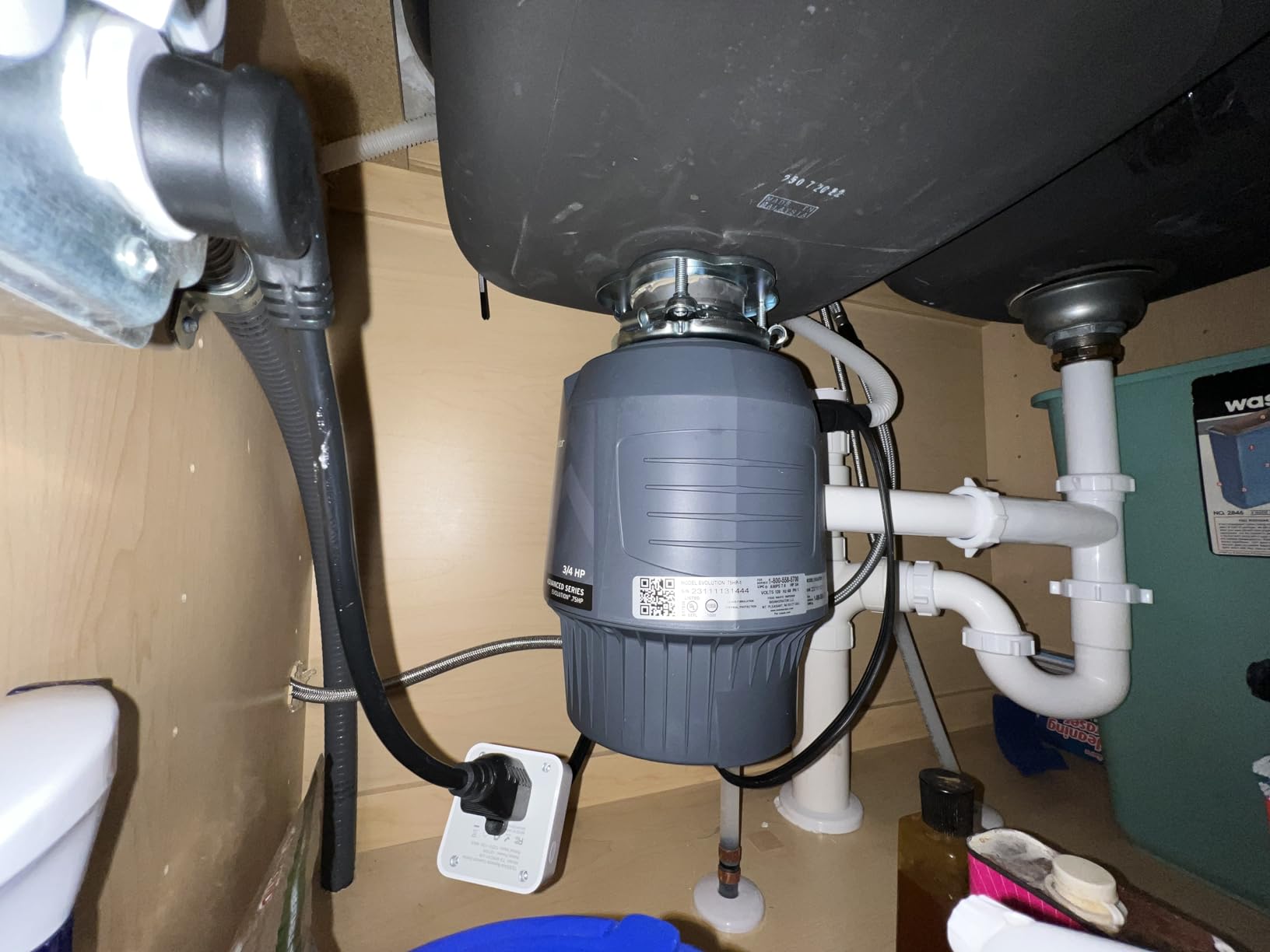
The compromise is electrical. The EZ Connect hardwire adapter is in the box, but the EZ Connect power cord is sold separately, so you either hardwire through the adapter or plan a second purchase. Owners also note the body is genuinely compact at 8.25 by 8.25 by 12.25 inches, which matters in the older, shallow cabinets that come with a lot of pre-modern rural houses.
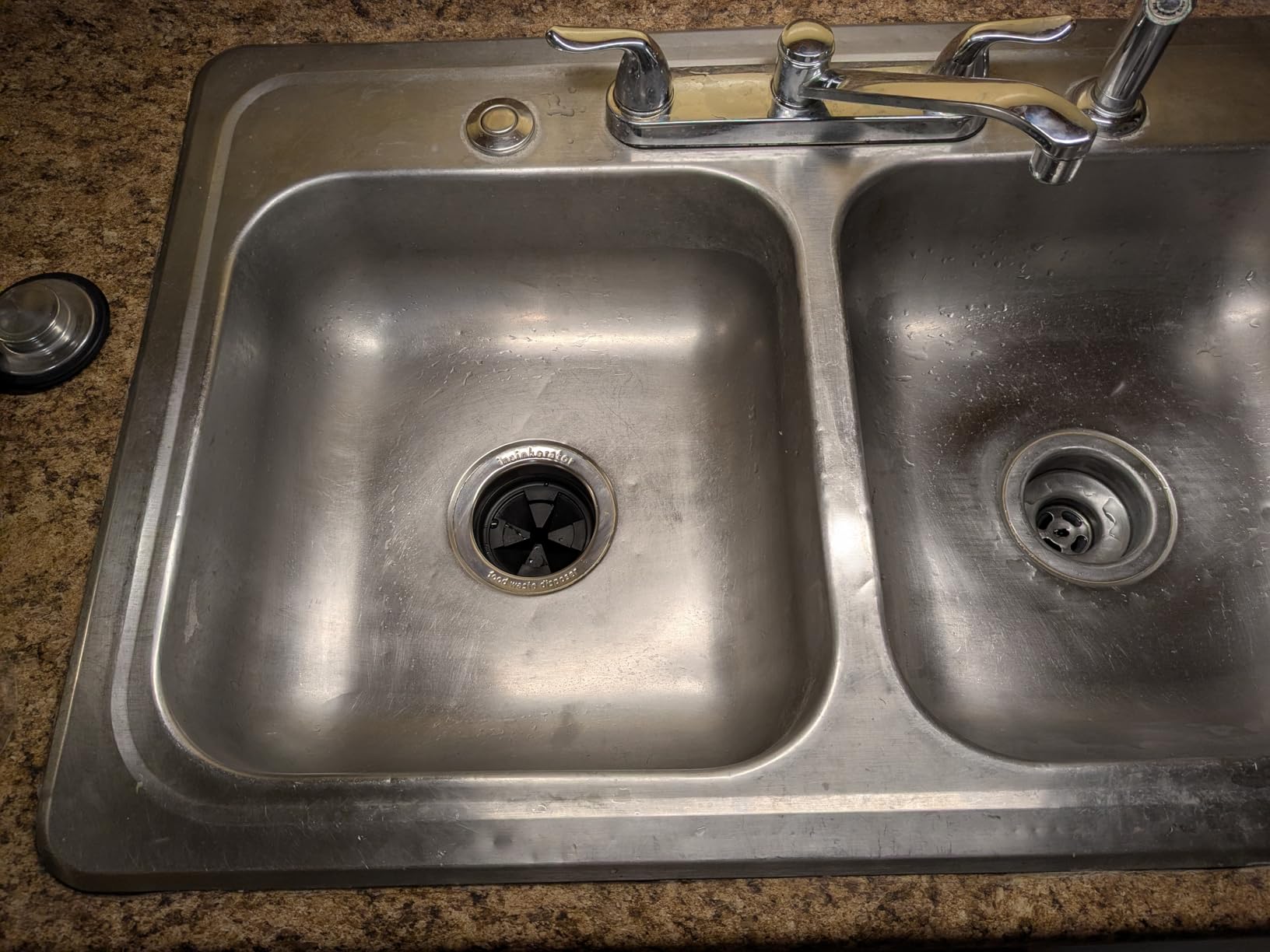
Lift and Latch mounting and EZ Grip handles make the install approachable for a first-timer, and the removable Quiet Collar sink baffle comes apart for cleaning. On a septic tank, a baffle you can actually pull out and rinse is worth more than it sounds, because trapped food is what eventually becomes tank solids.
Who the Evolution 0.75HP fits
This is the right unit for a household of four or more on a tank under 1,000 gallons, where lower solid volume matters more than quiet operation. Three grinding stages give you the smallest particle size we found without going to a commercial-grade machine.
It also makes sense for anyone upgrading from an existing InSinkErator mount who wants a meaningful jump in capability without changing sink plumbing.
Where it falls short
The sold-separately cord is a real cost and a real inconvenience, especially for a first-time installer who assumed the box was complete. Plan for a hardwire adapter install if there is no convenient outlet under the sink.
For a two-person household on a large tank, the 3/4 HP motor is more capacity than you will use and you are paying for grind headroom that goes unused. A 1/2 HP corded model is the more honest buy.
3. KRAUS WasteGuard 3/4 HP — High Motor Speed and an Explicit Septic Rating
KRAUS WasteGuard 3/4 HP Ultra-Quiet Garbage Disposal with Quick Connect, Kitchen Sink Drain Cover, Power Cord and Flange Included, KWD100-75MBL
3800 RPM MagnaGrind motor
QuietStorm soundproofing
5-year limited warranty
Pros
- Very quiet with little vibration transfer
- Quick Connect mount makes swaps fast
- Handles potato peels and celery without bogging
- Complete install kit in the box
Cons
- Rubber splash guard is tight for large scraps
- Air switch or wall switch sold separately
- One report of a leaking dishwasher inlet
Two things set the WasteGuard apart for this topic. First, KRAUS states directly that the unit is safe to use with most septic systems in accordance with manufacturer guidelines, while advising against stringy foods, egg shells, pasta, rice, potato peels, pits, oils, fats and coffee grounds. That is the kind of specific, usable language we wanted from a brand and almost never got.
Second, the 3,800 RPM MagnaGrind permanent magnet motor carries the highest stated motor speed in this roundup. High RPM on a magnet motor means the impeller keeps moving through a sticky load instead of stalling, and the 40 oz grinding chamber gives you room to work a load before it needs flushing. Reviewers commonly describe the unit as quiet and powerful, with the 3/4 HP output easily handling potato peels and celery stalks.
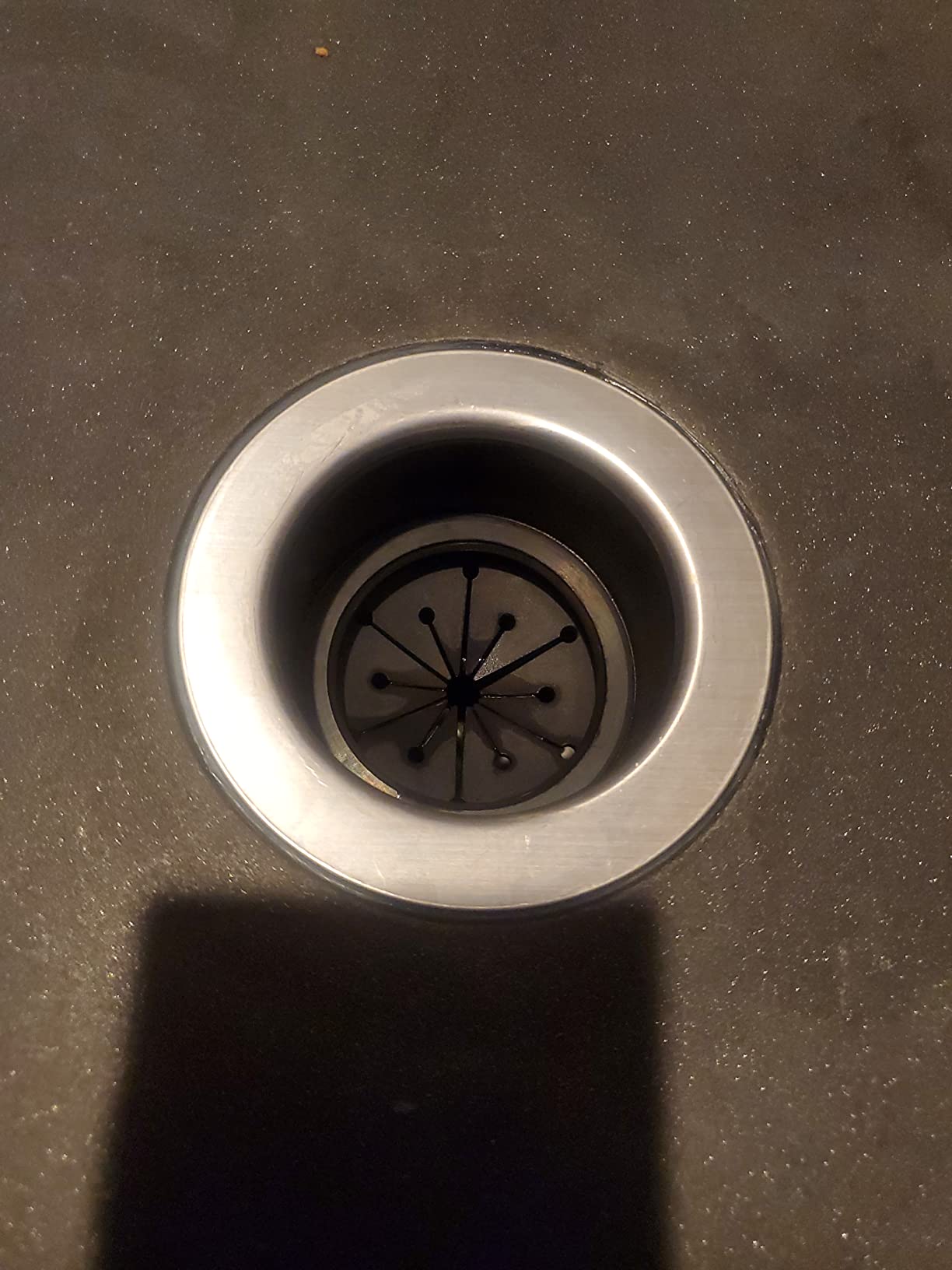
Acoustically, QuietStorm soundproofing and the anti-vibration mounting system keep vibration from transferring into the sink cabinet, which is the difference between hearing the disposal and hearing the cabinet. At 4.6 stars from 251 reviews, the sample is smaller than most here, and contractors rate the build quality highly, but we would weight manufacturer septic language above raw review count every time.
Installation is close to turnkey: the drain connector, dishwasher connector, power cord, sink drain stopper and mounting flange with a stainless steel rim all come in the box, and the Quick Connect mount swaps onto a standard round 3-1/2 inch drain. The 5-year limited warranty is competitive with the premium InSinkErator units.
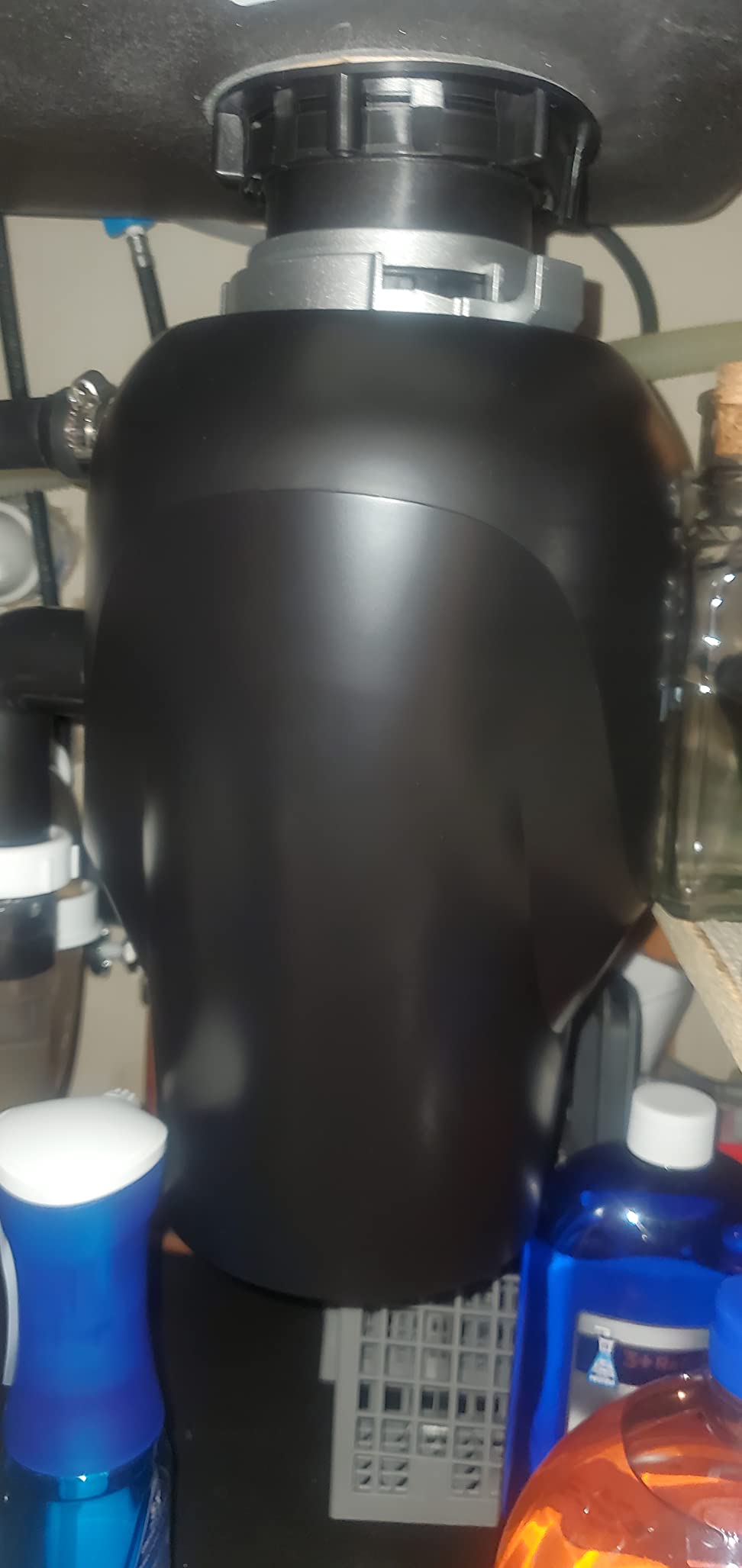
Who the WasteGuard fits
This suits noise-sensitive kitchens, open-concept spaces and cottage kitchens where the disposal sits near a seating area. It also suits anyone who wants a manufacturer statement naming septic systems without hunting for it.
The 3,800 RPM motor is a genuine advantage in a household that batches food prep and pushes a full sink load through in one go, on a tank large enough to absorb it.
Where it falls short
You have to buy an air switch or wall switch separately, and the rubber splash guard is tight, so larger scraps often need pushing through with the plug. Both are small annoyances rather than deal-breakers.
With 251 reviews behind it, there is less long-term history here than on the InSinkErator and Waste King models. If you want fifteen years of evidence before committing, the older designs have it.
4. InSinkErator Badger 5XP 3/4 HP — Most Power in the Smallest Footprint
InSinkErator Badger 5XP Garbage Disposal, Badger Series 3/4 HP Continuous Feed Food Waste Disposer
3/4 HP Dura-Drive motor
Narrow compact body
4-year in-home service warranty
Pros
- Narrow profile fits tight under-sink drains
- Swap install using existing InSinkErator hardware
- Stronger and quieter than older 1/3 HP Badger units
- Brand honors warranty with a replacement unit
Cons
- Outlet pipe shipping cap must be removed
- Product Only box may omit cord and switch
- Audible under load compared with ultra-quiet models
Older rural houses are full of undersized drain layouts, and that is the problem the Badger 5XP was built to solve. Its narrower profile fits under-sink drains where the larger premium Evolution bodies physically will not seat, and it still carries a full 3/4 HP Dura-Drive induction motor with galvanized steel components.
That combination is a rare one: meaningful grinding torque in a compact frame. Owners upgrading from 1/3 HP Badger models report a noticeable step up in both strength and sound, and at 4.6 stars across 5631 reviews the volume of real-world use is substantial. The 4-year We Come To You in-home full service warranty means a technician comes to the house rather than shipping you a replacement motor.
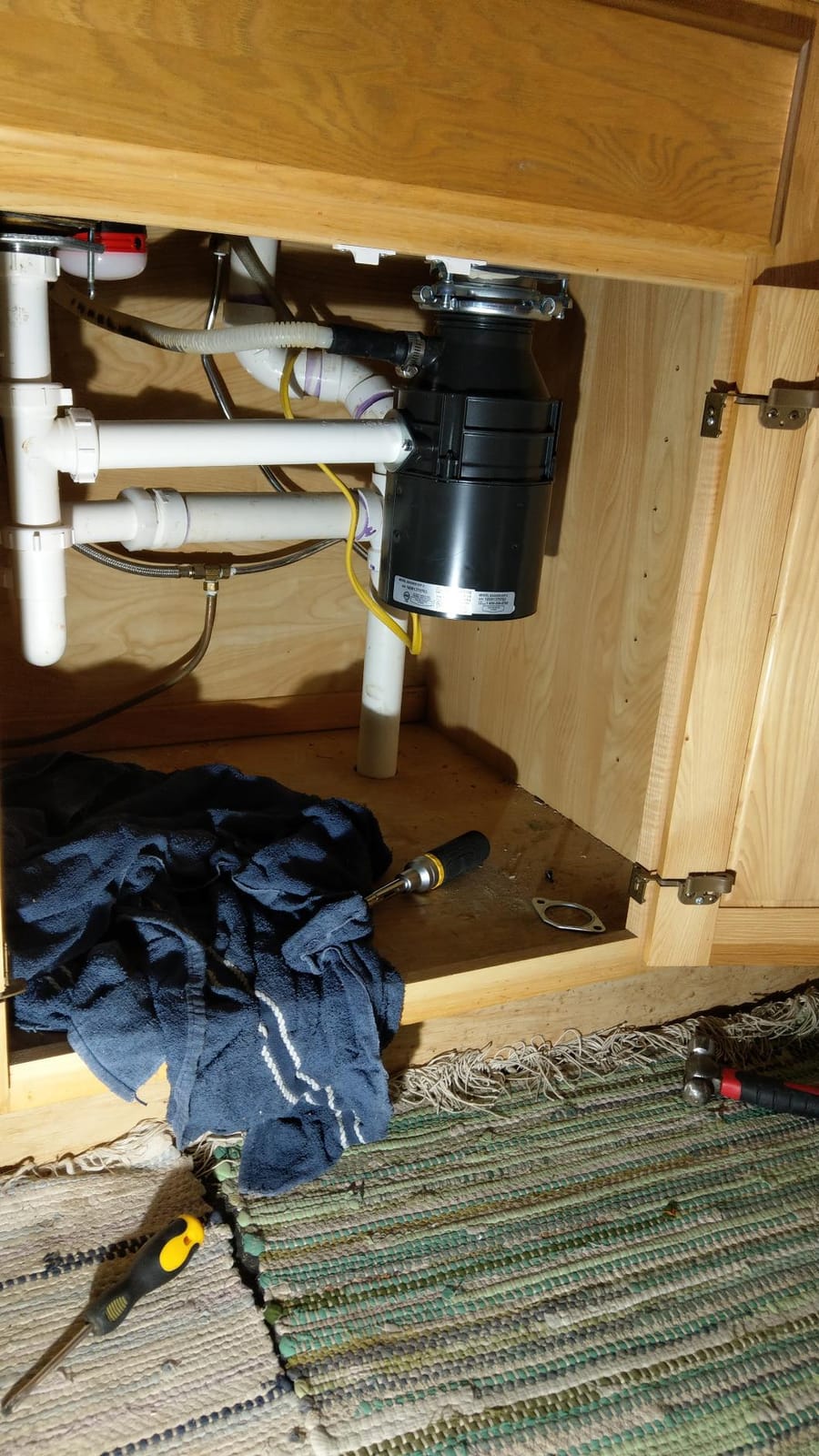
Two setup details catch people out. The outlet pipe has a shipping cap that must be removed or it backs up the dishwasher, and the Product Only package may not include the power cord or an air switch. Neither is a defect, both are easy to discover at the wrong moment, so check the box contents before you start the install.
On the septic question, the finer grind from a 3/4 HP motor is the point. It puts less recognizable structure into the effluent stream, which gives the tank biology a better starting material and slows scum layer buildup in tanks that are pumped on a three-to-five-year schedule.
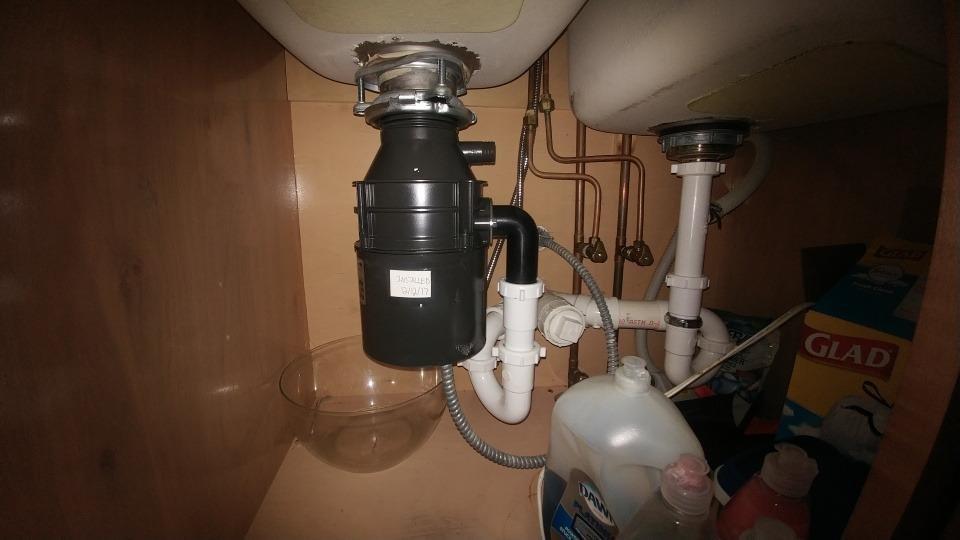
Who the Badger 5XP fits
This is the one we recommend for a small cabinet in a house where the sink drain sits close to the wall, and for anyone who wants InSinkErator warranty service without the footprint of the Evolution line.
It also works well as a straightforward swap onto existing InSinkErator mounting hardware in a home that already has one installed.
Where it falls short
It is louder under load than the KRAUS WasteGuard or the Evolution, so it is a poor fit for an open-plan kitchen where the disposal is the loudest thing in the room.
The Product Only packaging means you may be sourcing a cord and an air switch separately. If you want one box to contain everything, the Badger 5 is the cleaner path.
5. Moen Prep Series PRO GXP50C — Best Fit for Smaller Tanks and Tight Cabinets
Moen Prep Series PRO Continuous Feed Compact Garbage Disposal for Kitchen Sink with Power Cord, GXP50C
2600 RPM Vortex motor
Pre-installed cord
5-year in-home warranty
Pros
- Moen explicitly rates it safe for properly sized septic tanks
- Pre-installed cord makes swaps simple
- Lightweight compact body saves under-sink space
- 2600 RPM motor reduces jamming
Cons
- 1/2 HP class limits capacity for heavy food waste
- Switch and plumbing trim may need a separate purchase
The Moen Prep Series PRO earns its place here on one specific line in the manufacturer material: safe to use with properly-sized septic tanks. On a list where septic language is usually marketing filler, that sentence is the whole reason this model is included. It is the honest option for a home on a smaller tank that still wants a convenience disposal rather than a compost-only routine.
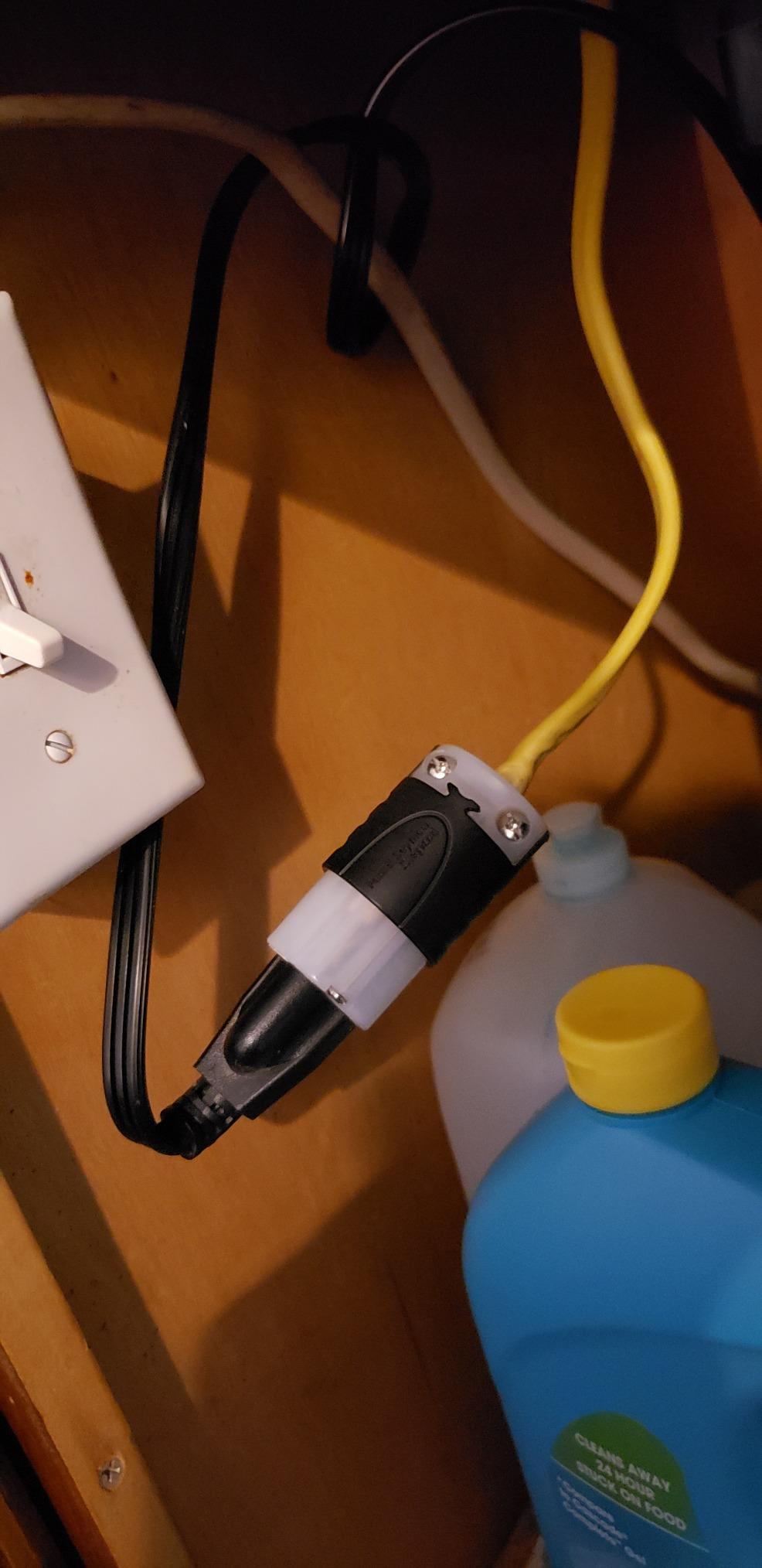
The 2,600 RPM Vortex motor grinds everyday food scraps quickly and reduces jamming, and the pre-installed power cord means it swaps out most existing disposals, including non-Moen brands, without an electrician. At 9.64 pounds and 6.34 by 6.34 by 14.76 inches, it is one of the lighter units here and maximizes usable cabinet space.
The 5-year limited warranty includes in-home service, which is unusual in the entry tier and gives you the kind of coverage most buyers pay extra for. Reviewers consistently point to the septic-safe claim, the cord and the small footprint as the deciding factors, and ratings sit in the mid 4s with complaints limited to capacity rather than reliability.
The honest limitation is that 1/2 HP is a light-duty class. A household that batches meal prep or generates a sink load every evening will push this motor past its comfortable range, and a slower grind on a heavy load is exactly the scenario where scraps end up sitting in the chamber.
Who the GXP50C fits
This suits a couple or a single-person household on a tank in the 750 to 1,000 gallon range, where keeping added solids small matters more than processing speed. It is also the easiest unit here to install yourself.
Anyone replacing an existing non-Moen disposal who wants a corded unit with in-home warranty service should put it high on the list.
Where it falls short
For four or more people cooking daily, step up to a 3/4 HP model. Under-powered motors on a septic system trade away the fineness that makes a disposal septic-appropriate in the first place.
The switch and some plumbing trim may need separate purchasing depending on your existing setup, and the compact class leaves little headroom if your usage pattern grows.
6. Waste Maid 1/2 HP Anti-Jam — Best Value Pick With the Longest Warranty
Waste Maid Garbage Disposal, Anti-Jam, Continuous Feed, 1/2 HP Economy
2600 RPM permanent magnet motor
Torque Master stainless system
8-year warranty
Pros
- Easy 3-bolt install with two screwdrivers
- Quiet with little sink vibration
- Compact footprint saves cabinet space
- 8-year warranty with lifetime corrosion coverage
Cons
- No underside hex socket for clearing jams
- 1/2 HP output is light for heavy cooking volumes
Waste Maid is the value slot in this roundup, and the reason is warranty depth rather than headline horsepower. You get an 8-year warranty on the disposal plus a lifetime warranty against corrosion failure, which is longer coverage than anything else on this list in the entry tier.
The grinding hardware is better than the price tier suggests. The Torque Master anti-jam stainless steel grinding system uses balanced impellers to reduce vibration, driven by a 1/2 horsepower 2600 RPM permanent magnet motor, and the result is quiet operation with very little sink vibration. Reviewers call it a budget anti-jam pick that suits a two-person household, and the compact 5.2 by 5.2 by 12.9 inch body frees real cabinet space.
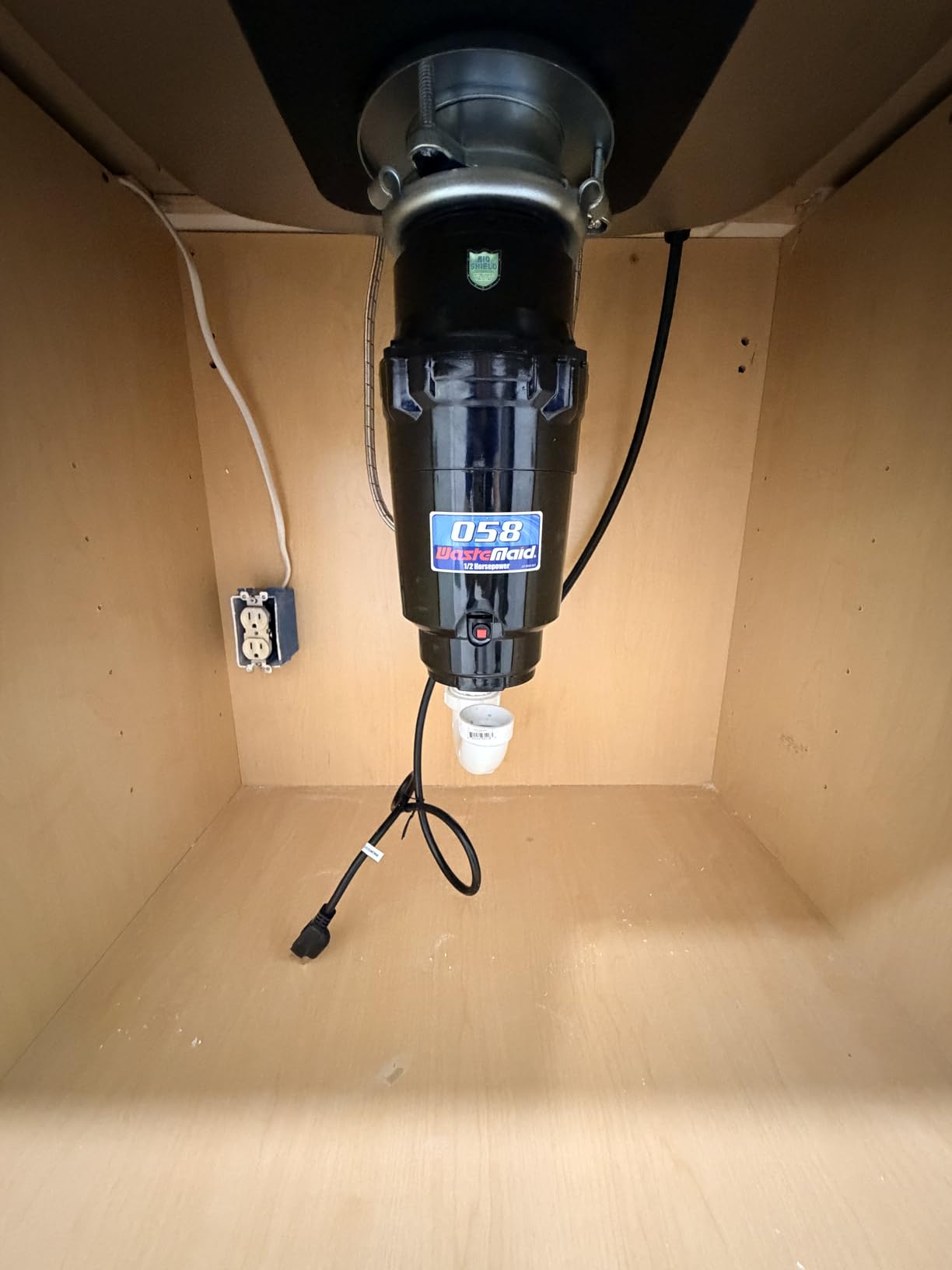
Installation is the simplest story here. Standard 3-bolt mounting means it is a direct replacement for most existing 3-bolt disposals, owners describe the job as two screwdrivers and some plumber’s putty, and the chrome sink flange, stopper, removable splash guard and power cord are all included. That combination of a complete box and a 3-bolt swap is rare in this tier.
Continuous feed operation lets you add scraps while it runs, and you are told to run water during operation, which helps carry fine particles toward the tank instead of leaving them in the chamber. That habit is one of the simplest forms of septic protection available.
Who the Waste Maid fits
This suits a small household on a modest tank that wants dependable everyday grinding, long coverage, and a weekend install without hiring anyone. The anti-jam torque system also appeals to anyone tired of the reset-button ritual.
It is a strong second disposal for a rental or a garage sink, where downtime costs more than horsepower.
Where it falls short
There is no underside hex or crank socket for clearing a jam, unlike the InSinkErator models. On a septic system a jam is an inconvenience you can live with, but it is worth knowing before you buy.
The 1/2 HP motor underperforms in large households or heavy cooking volumes, and a faster motor on the same budget would serve a busy kitchen better if capacity were your only concern.
7. Waste King L-2600 1/2 HP — Easiest Unit to Remove and Clean
Moen L-2600 Waste King 1/2 HP Continuous Feed Garbage Disposal with Power Cord
2600 RPM permanent magnet motor
EZ Mount quick release
5-year in-home warranty
Pros
- EZ Mount removes in seconds without tools
- Direct replacement for InSinkErator Badger plumbing
- Quieter and smoother than the units it replaces
- Removable splash guard is easy to clean
Cons
- No underside hex socket for jam clearing
- Slower grind than larger motors
- Some reports of failure near the five-year mark
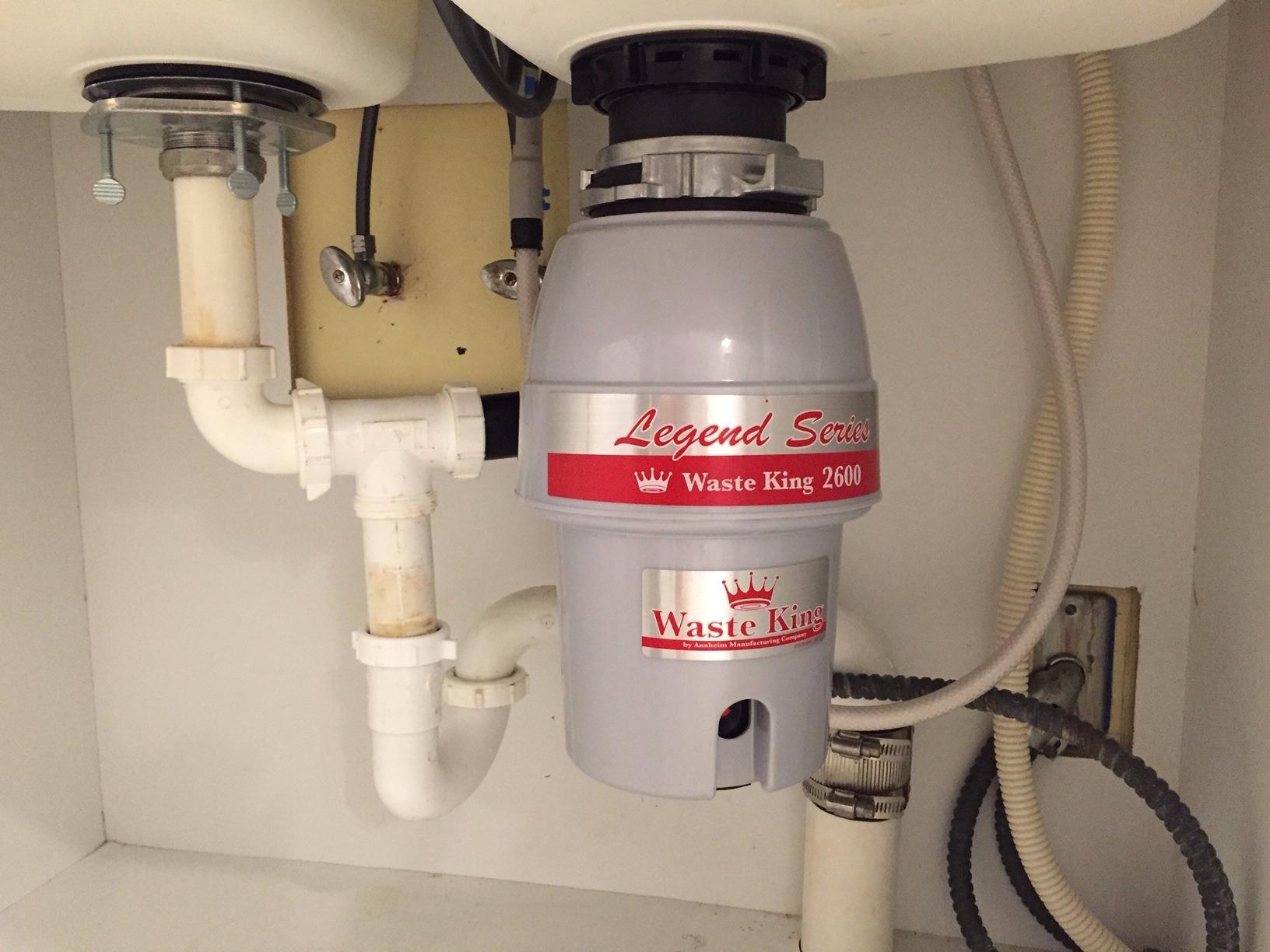
The L-2600 is the servicing story. The EZ Mount bayonet-style quick mount lets the whole unit come out in under ten seconds without tools, which is the feature that matters most on a septic system, where routine cleaning of the chamber and baffle is the most effective protection you can buy.
The 2,600 RPM permanent magnet motor handles everyday scraps with fewer jams than older 1/2 HP designs, and stainless steel grind components hold up over a long service life. At 4.4 stars across 7822 reviews, this is one of the most reviewed disposals available, and the 5-year in-home warranty comes with strong manufacturer customer support.
Owners migrating from InSinkErator Badger plumbing call it a direct drop-in and report the result is quieter and smoother than what they removed. The pre-installed 36-inch power cord is the longest of the corded models here, which solves the reach problem that the Badger 5 sometimes runs into, and no electrical work is needed.
The grind is slower than larger units because it chops particles finer, and that is not a criticism, it is a different tradeoff. There is no underside hex socket for clearing jams, and several owners report failures right around the five-year warranty mark, so budget for a possible replacement mid-decade.
Who the L-2600 fits
This suits homeowners who want to clean their own disposal often. Tool-free removal means a monthly rinse of the chamber takes a couple of minutes rather than a wrench job, which is the single best habit for protecting a tank.
It also fits anyone replacing an InSinkErator Badger unit who wants a longer cord reach and a slightly quieter grind at a lower outlay.
Where it falls short
At 4.4 stars it sits at the bottom of this group, and the durability complaints cluster near the end of the warranty period. On a septic tank where you already carry pumping costs, a mid-life motor replacement is an unwelcome line item.
Some plastic components in the EZ Mount system can degrade with age, so check the mount holds firm rather than assuming a quick release is a permanent one.
8. Whirlpool GC2000PE 1/2 HP — Best Fit for an Existing Whirlpool Installation
Whirlpool GC2000PE 1/2 hp in Sink Disposer with power cord, Black
1/2 HP in-sink disposer
Integrated power cord
Jettison anti-jam design
Pros
- Exceptionally quiet
- often barely audible in conversation
- 30 to 60 minute DIY swap on existing plumbing
- Reported service life of 10 to 20 years
- Does not leak at the sink flange
Cons
- Plumber's tape not supplied for the sink joint
- Small 1/2 HP capacity limits it to everyday scraps
- Smaller review base than mainstream brands
The GC2000PE is a narrower pick and we want to be clear about that. It earns a place because owners describe it as close to silent in normal use and because it fits an existing Whirlpool installation without changing plumbing, which matters in older homes where the drain geometry is fixed and awkward.
Reviewers describe it as barely audible in conversation, which for a home with a kitchen adjacent to a living space is a bigger quality-of-life gain than any grind specification. The Jettison anti-jam design handles the common obstructions, the integrated power cord removes the wiring question entirely, and the unit is manufactured in the United States.
Durability is the quiet story here. Owners report replacing 10 to 20 year old units with this model, and one of the recurring comments is that the sink flange does not leak after installation. At 4.7 stars the average is at the top of this group, though the review base of 370 is much smaller than the InSinkErator and Waste King models.
The one thing to plan for is plumber’s tape at the sink-to-flange joint, which is not included. It is a trivial two-minute fix at the hardware store, but it is the kind of missing accessory that turns a 30-minute swap into a return trip.
Who the GC2000PE fits
This suits a household replacing an older Whirlpool disposer who wants the least invasive install available, and anyone whose top priority is low noise in a kitchen open to the rest of the house.
It also works for everyday light cooking on a tank of 1,000 gallons or more, where the solid load is small enough that grind speed matters less.
Where it falls short
The 1/2 HP capacity is limited to everyday scraps, and there is no manufacturer statement naming septic systems. If septic language on the spec sheet matters to you, the Moen Prep Series PRO is the documented option.
A smaller review base means less evidence about long-term behavior than the 5631 and 7822 review models on this list offer, and the lack of an included mounting consumable is a mild annoyance.
How to Choose a Garbage Disposal for a Septic System
Five decisions account for almost all of the outcome. Work through them in order and the right model falls out of the process without guesswork.
1. Start with tank capacity, not brand
Tank size matters more than the logo on the disposal. Homeowners in the forums say it repeatedly: the disposal is fine if the tank is large enough. A small tank with a powerful grinder is still a small tank, and a large tank with a modest grinder usually works fine.
2. Match horsepower to tank and household size
Use this as a floor, not a target. Going one tier above the minimum adds little cost and buys tolerance for heavy cooking days.
Under 750 gallons: treat a disposal as optional. If you install one, a 1/2 HP corded unit used carefully, with a composting habit for the fibrous items
750 to 1,000 gallons: 1/2 HP minimum, and 3/4 HP for four or more people
1,000 to 1,200 gallons: 3/4 HP with multi-stage grinding is the sweet spot
1,200 gallons and above: 3/4 HP comfortable, and 1 HP or higher reasonable for heavy cooking households
Five or more occupants: assume you need the tier above whatever the table suggests
3. Verify grind stages and motor speed
Two-stage grinding should be your floor and three-stage is better, because each pass reduces particle size and bacteria digest finer material faster. Motor speed matters just as much: the 2,600 to 2,700 RPM magnet motors and 3,800 RPM magnet motor on this list all push through sticky loads better than the slower induction motors found in entry models, which stall and leave food sitting in the chamber.
Prefer stainless steel grind components over galvanized or plastic on a septic system, since nothing about a tank environment is friendly to coated surfaces.
4. Check the mount and the cabinet before you order
Under-sink clearance is the most common installation failure and the easiest to avoid. The InSinkErator Evolution bodies are compact but the Badger 5XP has a specifically narrower profile for tight drain layouts, and a bulky unit with an injection reservoir behind it will not fit some older cabinets at all. Measure the vertical space from the drain flange down before you order anything.
Then check the mounting system. 3-bolt mounts replace most existing disposals directly, Quick Lock and EZ Connect handle InSinkErator-style installs, and the KRAUS Quick Connect fits a standard round 3-1/2 inch drain. A mismatch here means new plumbing hardware and a longer job.
5. Decide corded or hardwired
Corded models can be installed in an afternoon with a screwdriver. Hardwired models, including the Evolution line with its EZ Connect hardwire adapter, need a GFCI-protected circuit and often an electrician. Both need an air switch or wall switch above the sink, and the under-sink clearance for the switch housing is another thing to measure.
On a rural property with a longer run from the main panel, hardwiring costs noticeably more, which is one more reason corded models dominate the value tiers on this list.
6. Factor in hydraulic load, the dimension nobody mentions
A disposal adds water to your tank every time you use it, and water shortens retention time, which is how long solids have to settle and separate from the effluent leaving for the drain field. Running a dishwasher and a washing machine while grinding food waste pushes more water through the tank in one hour than a design based on bathroom waste and kitchen sinks alone.
Staggering loads helps. Our advice is to flush cold water for 15 seconds after every use and to avoid running laundry during a heavy disposal session. The same logic applies outside the tank, where every extra gallon of roof runoff has to be directed away from the tank and drain field, which is the job our guide to downspout drainage systems for foundations handles in detail.
Should you skip the disposal entirely?
Sometimes, yes, and nobody in this category will tell you that. If your tank is under 750 gallons, your system is already showing signs of backing up, or your household is large enough that food waste would meaningfully change the pumping interval, a compost bin or a trash-first habit is the better engineering choice. Septic contractors often say outright that they do not recommend disposals, and they are not being dramatic.
Physical separation units exist as a middle path. They are expensive, they need their own maintenance routine, and they turn food waste into compost rather than sending it to the tank. For a household with a very small tank and heavy food waste, that tradeoff can be worth it.
What Never to Go Down a Septic-Connected Disposal
Good habits on this list protect your drain field more than any brand choice. Treat them as a hard filter.
Grease, oil and cooking fat, which congeal into a plug rather than grinding down
Coffee grounds, which form a dense silt at the tank bottom and accelerate sludge buildup
Pasta, rice, bread and bread products, which turn to paste and mat together
Potato peels, celery stalks and other fibrous stringy material, which is what the manufacturers themselves warn against
Egg shells and fruit pits, which are hard enough to deflect off the impeller
Boiling water, which resets grease in the drain line and degrades the disposal’s seals
Dishwasher scraps flushed hard at the same time, which spikes hydraulic load
On the soap question that comes up constantly: conventional dish detergent in normal diluted amounts is not the primary risk people worry about it being. The solids and the grease are the problem. Boiling water is the more realistic everyday threat because heat liquefies grease that was already solid in the line.
One habit matters more than all of them. Run cold water for 15 seconds after every use. It carries fine particles out of the chamber instead of letting them settle, and it is free.
Maintenance Habits and Pumping Intervals
A disposal on a septic system is not a set-it-and-forget-it appliance. These are the routines that keep a tank healthy between pump-outs.
Flush cold water for 15 seconds after every use, every time
Once a month, grind a small amount of citrus peel to clean the blades and scent the drain
Inspect the effluent filter twice a year and clean it when it slows
Never pour grease, oil or harsh chemical drain cleaner down the unit
Stop and check the switch reset rather than repeatedly re-triggering a jam
Schedule pump-outs on a fixed interval and do not push it back because the tank seems fine
Expect your pumping interval to shorten once a disposal is in regular use. Homeowners who regret installing one almost always cite the pumping cost rather than any jam or clog, and others report their pumper could not tell there was a disposal at all. That spread is real, and it maps closely onto tank size and how disciplined the household is with fibrous foods.
A third-party observation from a pumper or inspector is worth more than any manufacturer claim. If you are undecided, ask the contractor who services your tank what they have seen in homes with and without disposals. They see more real tanks than any spec sheet will tell you, and the same holds for the rest of your property upkeep, from mosquito misting systems for large properties to seasonal drainage work.
Frequently Asked Questions
Do you need a special garbage disposal for septic systems?
You need a unit built for finer, multi-stage grinding than a standard sewer-line disposal, ideally 3/4 HP or higher with stainless grind components, and one with a manufacturer statement covering septic systems. Even then you are adding solids to the tank, so pump-outs become more frequent.
Can you have a garbage disposal with a septic tank?
Yes, most households do, provided your tank is large enough and you follow usage rules. Some county health departments and septic authorities do not permit disposals at all, so confirm with yours before installing, and keep fibrous foods, grease and coffee grounds in the trash.
What power garbage disposal do I need for a septic system?
Use 3/4 HP as the floor for tanks under 1,000 gallons and for households of four or more. Tanks of 1,200 gallons and above can run a 1/2 HP unit comfortably, though 3/4 HP adds tolerance for heavy cooking days.
Which garbage disposal is better for septic, Moen or InSinkErator?
InSinkErator offers more horsepower options and a more compact premium body, while Moen states outright that its Prep Series PRO is safe to use with properly-sized septic tanks and ships with a pre-installed cord. Choose Moen for the documented septic rating and easy install, InSinkErator for grind fineness and serviceable parts.
How often should I pump my septic tank if I use a garbage disposal?
Shorten your usual interval rather than keeping it. Food solids accelerate sludge and scum buildup, so most households move from a three-to-five-year schedule toward pumping roughly every two to three years, depending on tank size and cooking volume.
Is it okay to pour boiling water down a garbage disposal?
No. Heat can liquefy grease that has already solidified in the drain line and it degrades seals and plumbing components. Run cold water for 15 seconds after every use instead, which clears the chamber without the risk.
What should never be put down a septic-connected disposal?
Grease and oil, coffee grounds, pasta and rice, fibrous items like potato peels and celery, egg shells and fruit pits. These either reform into mats, settle as dense sludge or deflect off the impeller, and all three push the tank closer to needing a pump-out.
Do I need a permit to install a garbage disposal on septic?
Permit rules vary by county and health department, and some jurisdictions do not allow disposals on septic systems at all. A five-minute call to your local septic authority before ordering avoids the most expensive mistake available in this category.
Bottom Line: Which Disposal Fits Your Septic System
The InSinkErator Badger 5 remains our pick for most households in 2026. Its 1/2 HP Dura-Drive induction motor, galvanized components and pre-installed cord cover the everyday case well, and the depth of real-world use behind it is unmatched on this list.
Choose the Evolution 0.75HP when your tank is under 1,000 gallons and grind fineness is the priority, the KRAUS WasteGuard when quiet operation and an explicit manufacturer septic rating matter most, and the Badger 5XP when cabinet space is the constraint. The Moen Prep Series PRO is our documented choice for a smaller tank, and the Waste Maid and Whirlpool units cover the budget and existing-install cases without compromising on corded simplicity.
Before any of that, call your septic authority. If disposals are not permitted where you live, the answer takes five minutes and saves you the whole project.