
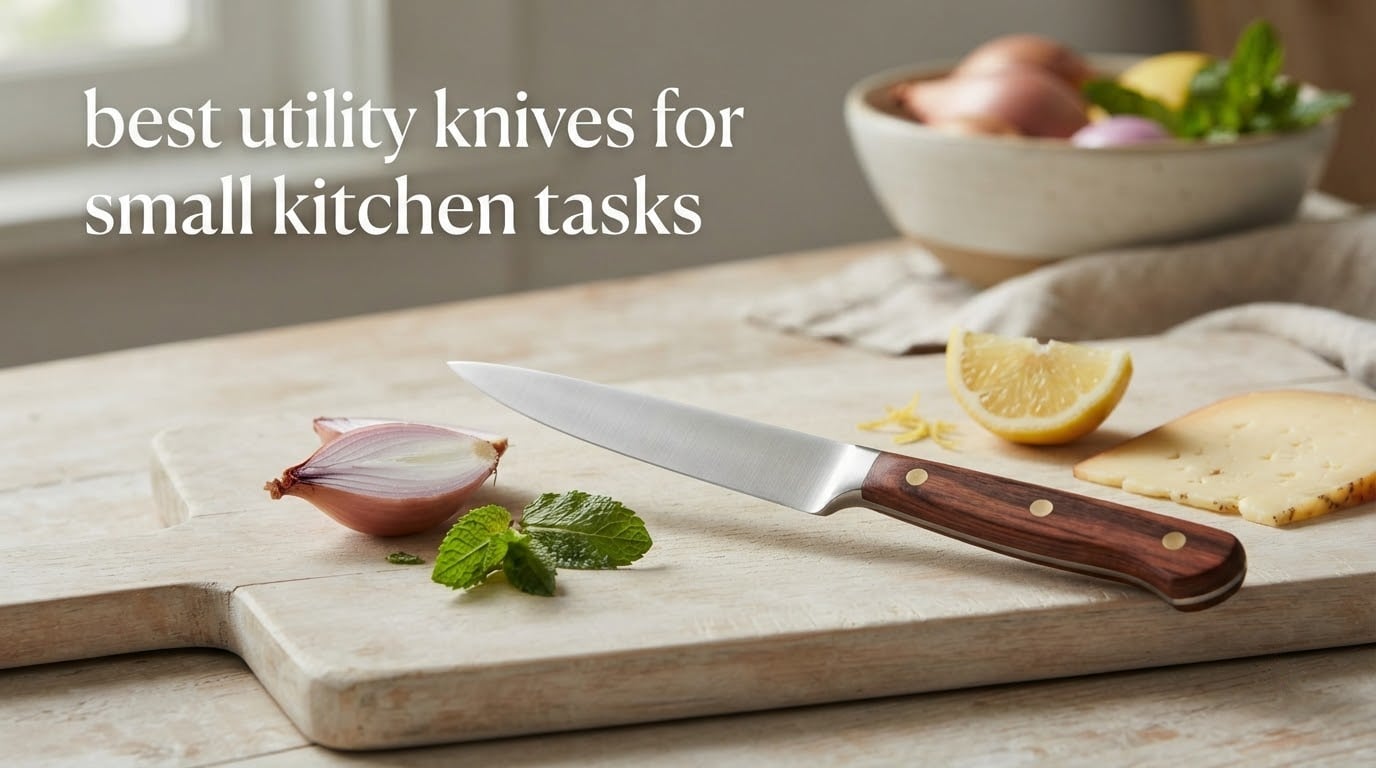
A utility knife is a small all-purpose kitchen knife, usually 5 to 7 inches long, that sits between a paring knife and a chef’s knife. It handles the everyday prep that feels awkward with a big blade — peeling apples, trimming brussels sprouts, slicing cheese, mincing shallots, cutting sandwich crusts off a stack of bread. If you only own three knives, this is one of them.
That is why the best utility knives for small kitchen tasks is a buying decision with more variables than it looks. Blade length decides how much food fits in one cut. Edge type decides whether a tomato skins cleanly or splits. Handle width decides whether your grip stays secure on a wet potato. And steel type decides whether you are sharpening the knife every month or every two years.
We spent weeks working through ten of the most-reviewed utility knives on the market, comparing blade geometry, steel hardness, balance, handle dimensions, and the recurring complaints in customer reviews. Every pick below carries a note on who it suits and who should skip it, because the biggest complaint about the roundups we found while researching this topic was that every single one of them was pros-only.
Last updated for October 2026. How these picks were evaluated: we used manufacturer specifications for blade length, steel type, construction and weight, and cross-referenced them against customer review patterns for edge retention, grip security and durability. Where reviews and spec sheets disagree, we say so.
Table of Contents
Top 3 Best Utility Knives For Small Kitchen Tasks (October 2026)
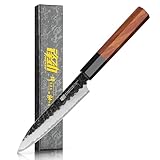
FINDKING Dynasty 5 Inch Utility
- 9Cr18MoV high carbon steel
- Forged blade with hammered finish
- Octagonal rosewood handle
- 2.56 ounce balance at the grip

Victorinox Swiss Classic 4.5 Inch
- Serrated round blade for soft produce
- Swiss-made and dishwasher friendly
- Compact 4.5 inch size
- Synthetic handle

Cutluxe 5.5 Inch Utility Knife
- Full tang triple-riveted pakkawood
- Hand sharpened at 14-16 degrees
- German steel at 56+ Rockwell
- Lifetime warranty
Best Utility Knives for Small Kitchen Tasks in 2026
Here is the short list first. Each line names the knife, its blade length, and the job it does best.
FINDKING Dynasty 5 Inch — forged 9Cr18MoV high carbon steel that stays sharp for years between sharpenings.
Cutluxe 5.5 Inch — full tang pakkawood build that reviewers with larger hands call the easiest to grip.
Mercer Culinary Genesis 5 Inch — the all-purpose in-between knife with a taper-ground German edge.
Victorinox Swiss Classic 4.5 Inch Serrated — a 4.8-rated pick here, and the one for soft produce.
Global 5 Inch — 114 grams of ice-tempered CROMOVA steel, comfortable for long prep sessions.
PAUDIN 5 Inch — a gift-boxed German stainless all-rounder for everyday slicing and mincing.
TUO Fiery Phoenix 5 Inch — 3.2 ounces, the pick for delicate trimming with a slim blade.
Henckels Classic 6 Inch — an unusually deep blade at a manageable length, and it goes in the dishwasher.
Wusthof Gourmet 4.5 Inch Serrated — Solingen-made and sized right between a paring knife and a cook’s knife.
Wusthof Classic 6 Inch — forged full tang with a full bolster, the most build-heavy option in the group.
| Product | Specifications | Action |
|---|---|---|
| FINDKING Dynasty 5 Inch Utility Knife |
|
Check Latest Price |
 PAUDIN 5 Inch Utility Knife PAUDIN 5 Inch Utility Knife |
|
Check Latest Price |
| Victorinox Swiss Classic 4.5 Inch Serrated Utility |
|
Check Latest Price |
| Cutluxe 5.5 Inch Utility Knife |
|
Check Latest Price |
 Mercer Culinary Genesis 5 Inch Utility Knife Mercer Culinary Genesis 5 Inch Utility Knife |
|
Check Latest Price |
 TUO Fiery Phoenix 5 Inch Utility Knife TUO Fiery Phoenix 5 Inch Utility Knife |
|
Check Latest Price |
 Wusthof Gourmet 4.5 Inch Serrated Utility Knife Wusthof Gourmet 4.5 Inch Serrated Utility Knife |
|
Check Latest Price |
 Global 5 Inch Utility Knife Global 5 Inch Utility Knife |
|
Check Latest Price |
 Henckels Classic 6 Inch Utility Knife Henckels Classic 6 Inch Utility Knife |
|
Check Latest Price |
 Wusthof Classic 6 Inch Utility Knife Wusthof Classic 6 Inch Utility Knife |
|
Check Latest Price |
Utility Knife vs Paring Knife vs Petty Knife: Which One Do You Need?
A utility knife is not a different tool from a petty knife — the two names describe the same mid-size category in Western kitchens, and the confusion comes from how brands label things. The practical line is this: a paring knife is 3 to 4 inches and does detail work in your hand. A utility knife is 5 to 7 inches and does board work. A petty knife is a regional name that most makers apply at or below about 150 mm, so anything they call a petty is functionally a utility knife.
You can settle the paring-versus-utility question by looking at where the knife touches the food. If the tip is doing the work in midair — peeling an apple, hulling a strawberry, deveining a shrimp — you want a paring knife. If the middle of the blade is doing the work on a board — dicing a shallot, slicing a cheese wedge, cutting the crust off a sandwich — you want a utility knife.
One more naming trap worth knowing: several brands market 3 inch blades as “utility knives” because the category name sells better than “paring knife.” Check the listed blade length rather than trusting the label. Every pick in this roundup lists its length, and all ten are genuine 4.5 inch or longer blades.
How to Choose the Right Blade Length for Small Tasks?
Five inches is the detail-first length. A 5 inch blade moves freely on a small board, reaches into tight corners, and handles shallots, garlic and herbs without shifting the whole knife. Several owners of the FINDKING and TUO picks describe it as the knife they reach for first, because the shorter blade turns with the wrist instead of fighting it.
Six inches is the consensus default, and it is the one to buy if you want a single answer. A 6 inch blade cuts a full sandwich crust in one pass, has enough length for a cheese wedge, and stays under control on a tomato. Forum cooks almost universally default to 6 inch for this reason, and both of the 6 inch options here — Henckels and Wusthof Classic — sit at the sweet spot.
Seven inches is the upper bound, and it is where buyers start complaining. Longer blades give you more cutting length and less control, and on a compact board they feel unwieldy. If your prep is mostly small vegetables and herbs rather than long cuts, seven inches buys you little.
Depth matters as much as length. The Henckels 6 inch carries roughly an inch of blade depth, which is unusual at that length and lets it handle melons and larger produce without switching tools. Most competitors in this category are narrower, which is why they are listed for shallots and herbs rather than big produce.
1. FINDKING Dynasty 5 Inch Utility Knife for Long-Term Edge Retention
FINDKING Kitchen Utility Knife, 5 Inch Japanese Paring Knife, Small Fruit Knife with 9Cr18MoV High Carbon Steel Blade, Rosewood Octagonal Handle, for Fruits and Vegetables, Dynasty Series
5 inch forged blade
9Cr18MoV high carbon steel
Rosewood octagonal handle
2.56 ounces
Pros
- Sharp out of the box and holds an edge for years
- Hammered finish helps food release
- Balance point sits right at the grip
- Compact enough for tight board work
Cons
- Reactive high carbon steel needs hand washing and drying
- Rosewood handle benefits from occasional oiling
- Listed 5 inch measures nearer 4.75 inch of edge
This is the pick I keep coming back to, and the reason is steel. The blade is forged 9Cr18MoV high carbon steel, which is a harder alloy than the European stainless most utility knives use, and that hardness shows up directly in how rarely you reach for the honing rod.
Reviewers describe owners using it two or more times a day for years without sharpening. At 2.56 ounces with the centre of gravity sitting right at the grip, it is the most balanced knife in this roundup for one-handed detail work.
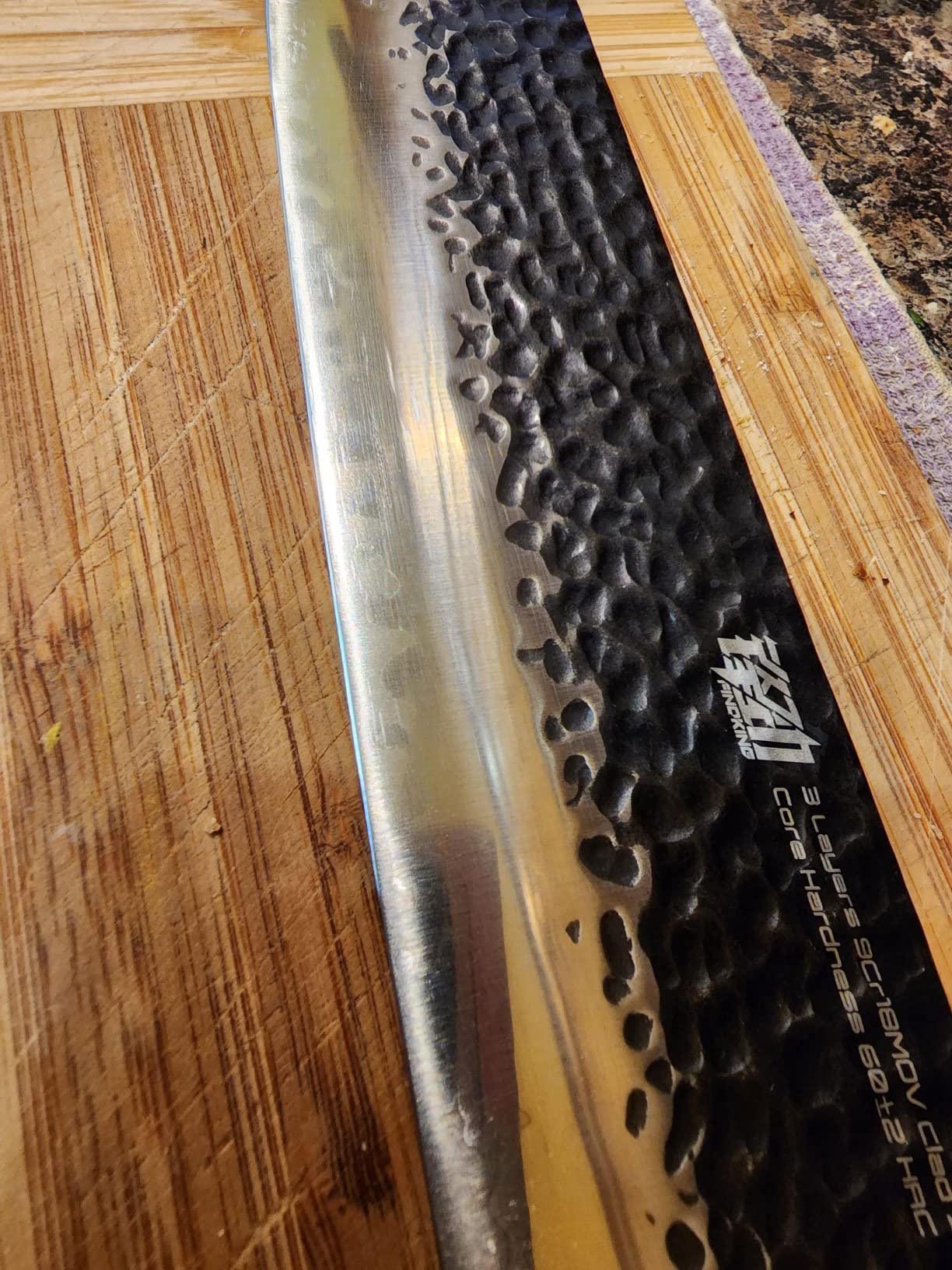
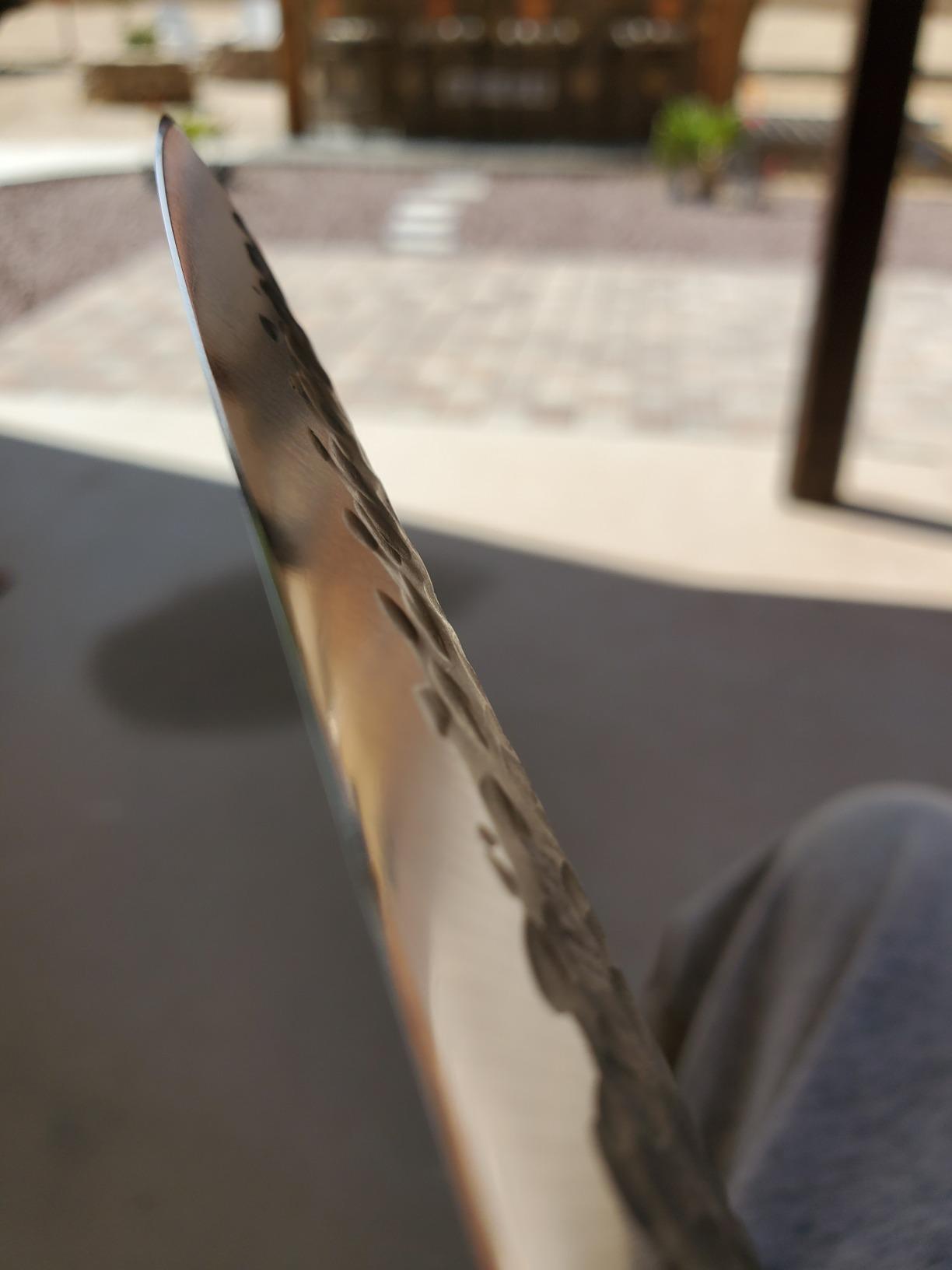
The hammered surface finish is not decoration. Food releases noticeably better from a hammered face, which matters when you are slicing soft tomato or cucumber and do not want juice running across the board.
The octagonal rosewood handle is the traditional Japanese shape, and it gives you precise fingertip control over the tip. Reviewers consistently note that the grip stays secure even with wet hands, which is a recurring safety complaint we found on smaller handles in this category.
The trade-off is care. This is reactive high carbon steel rather than true stainless, so it needs hand washing and immediate drying, and the wood handle wants an occasional oil. If you would rather rinse and go, that is a real cost to weigh.
Why it earns the top spot?
The combination of a harder blade steel and a genuinely light body is rare. Most knives that hold an edge this well are noticeably heavier, and most knives this light have softer stainless edges that go dull between sessions.
Where it will disappoint you?
It is the wrong knife for anything structural. No bones, no frozen food, no hard squash, and no one should be trying to fillet anything with a 4.75 inch edge. If you need a boning knife or a heavy cleaver, this is not it.
2. PAUDIN 5 Inch Utility Knife as an Easy Gift-Ready All-Rounder
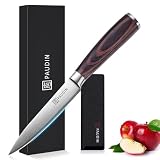
PAUDIN Kitchen Utility Knife, 5 Inch Chef Knife Fruit Knife, Gift Box
Forged blade with German stainless core
Hardened to 56+ Rockwell
Pakkawood handle
Gift box included
Pros
- Sharp and nimble for slicing dicing and mincing
- Ergonomic pakkawood grip
- Comes in gift packaging
- Easy to clean and re-sharpen
Cons
- Listing mixes 5 inch and 7 inch size variants
- Waved blade pattern is decorative not true Damascus
- Handle needs hand washing
The German stainless cutting core here is hardened to 56+ Rockwell, which puts it on the same hardness footing as several forged knives in this roundup without the reactive-steel care burden. It is a stainless blade, so you can be less precious about drying it.
Buyers treat it as a capable all-rounder: sharp enough to mince garlic, light enough to slice fruit, and balanced enough that the pakkawood handle does most of the work. Eighty percent of its reviews are five-star.

One caveat worth reading carefully before you order. The product listing mixes size variants — the product name reads as a 5 inch utility knife while the size fields on the same page show a 7 inch option. Check which variant you are actually buying, because the two feel noticeably different in the hand.
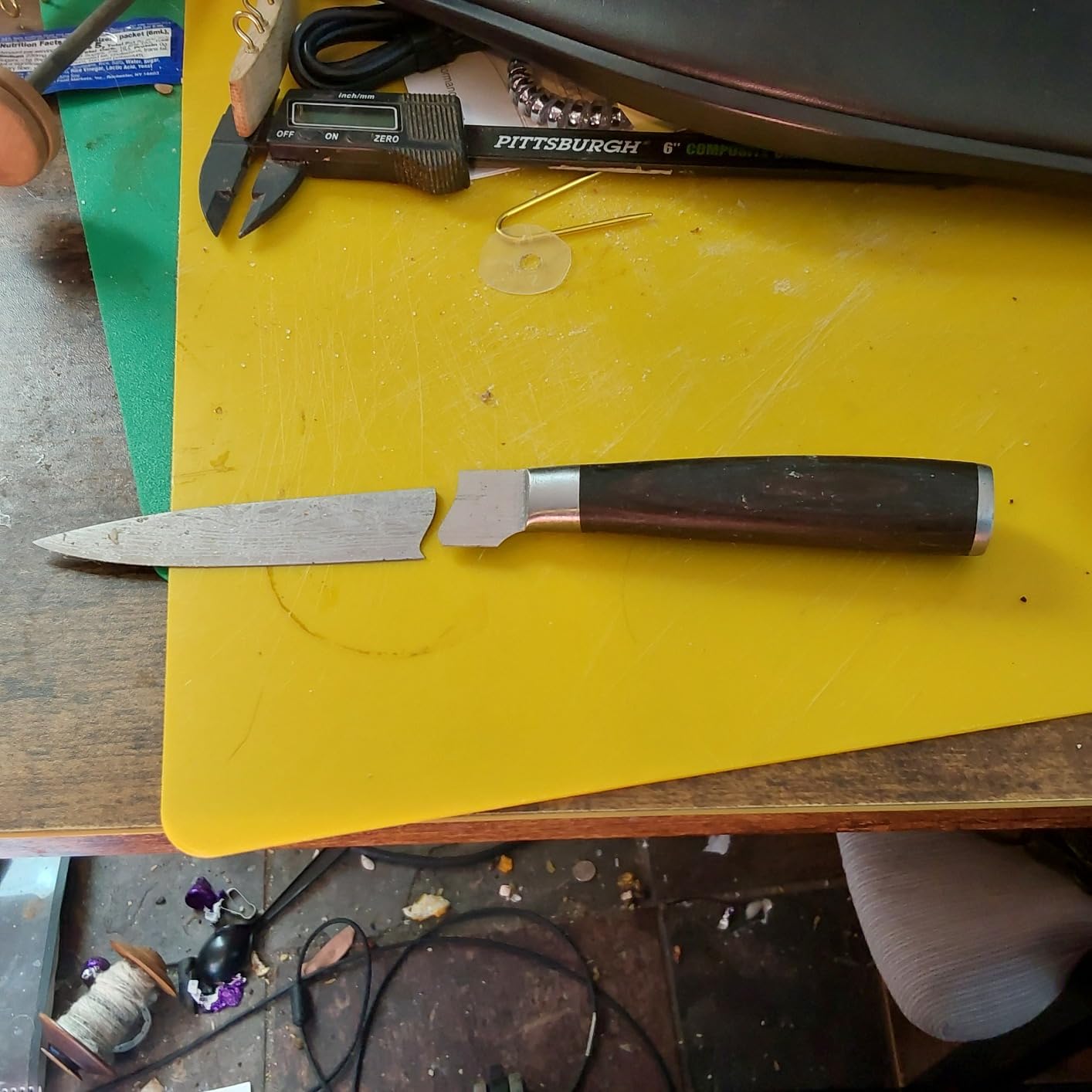
The wavy pattern across the blade is decorative. It is not layered Damascus steel and does not change how the knife performs, so treat it as a visual style rather than a material upgrade.
Why it earns its place?
It is the easiest option here to buy as a present, with gift packaging included, and it does not punish a new cook with a demanding care routine. If someone is building their first knife drawer, this is a safe and capable entry point.
Where it will disappoint you?
Reviewers who expected layered Damascus construction were disappointed by the decorative pattern. If you care about blade geometry detail or want a wood handle you can oil and renew, look at the Cutluxe or TUO instead.
3. Victorinox Swiss Classic 4.5 Inch Serrated Utility Knife for Soft Produce
Victorinox VIC-6.7836.L119 Swiss Classic Utility – Colored 4½” Serrated Round Blade ¾” width at handle Orange, Multicolor
4.5 inch serrated round blade
Approximately 3/4 inch blade width
Swiss-made
Synthetic handle
Pros
- 4.8 average rating with 91 percent five-star reviews
- Serrated edge handles soft produce and bread without crushing
- Compact and lightweight for tight prep
- Handle is dishwasher friendly
Cons
- Serrated edge cannot do fine push cuts or peeling
- Three-quarter inch blade width limits it to light work
- Synthetic handle is plain compared with wood or full steel
This is tied for the highest average rating in the roundup at 4.8, with 91 percent five-star reviews and only 1 percent one-star. That consistency across more than two thousand reviews is the strongest signal in the whole set.
The serrated edge is the point. On tomatoes, soft fruit, crusty bread and soft cheese, the serrations cut through without crushing the interior or dragging the skin across the cut face. Straight-edged knives do the opposite on those foods.
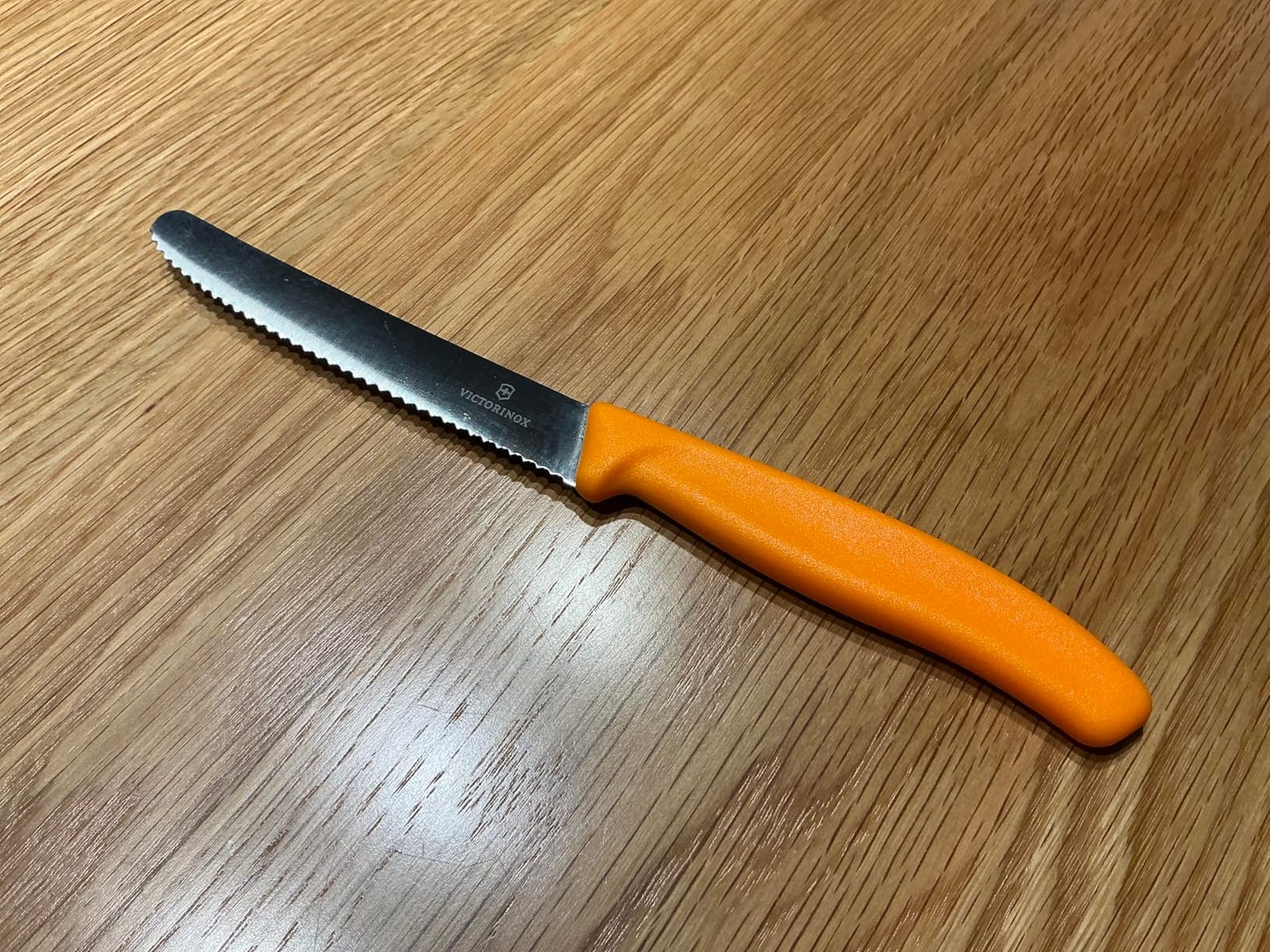
At 4.5 inches with roughly a three-quarter inch blade width, it is compact enough for a small board or a drawer beside a paring knife. Owners frequently mention it as a gift that performs far above what it costs.
Why it earns its place?
If your small kitchen tasks are mostly soft-skinned produce, soft bread and cheese, this is the right edge type. The handle is synthetic and dishwasher friendly, so maintenance is close to zero.
Where it will disappoint you?
Serrations cannot do fine push cuts, peeling or precise trimming. New owners also find serrations intimidating because honing them is unfamiliar — they do not take a steel the way a straight edge does, and they need a different tool and a different mindset.
4. Cutluxe 5.5 Inch Utility Knife for Large Hands and Full Tang Work
Cutluxe Kitchen Utility Knife, 5.5″ Paring Knife – Razor Sharp Blade
5.5 inch hand-sharpened blade
14-16 degrees per side
German steel at 56+ Rockwell
Full tang pakkawood handle
Pros
- Full tang triple-riveted build feels sturdy
- Handle suits large or arthritic hands
- Sharp out of the box with strong edge retention
- Backed by a lifetime warranty
Cons
- Heavier than most utility knives at 5.28 ounces
- Handle means hand washing only
- Some buyers found it larger than expected for a utility knife
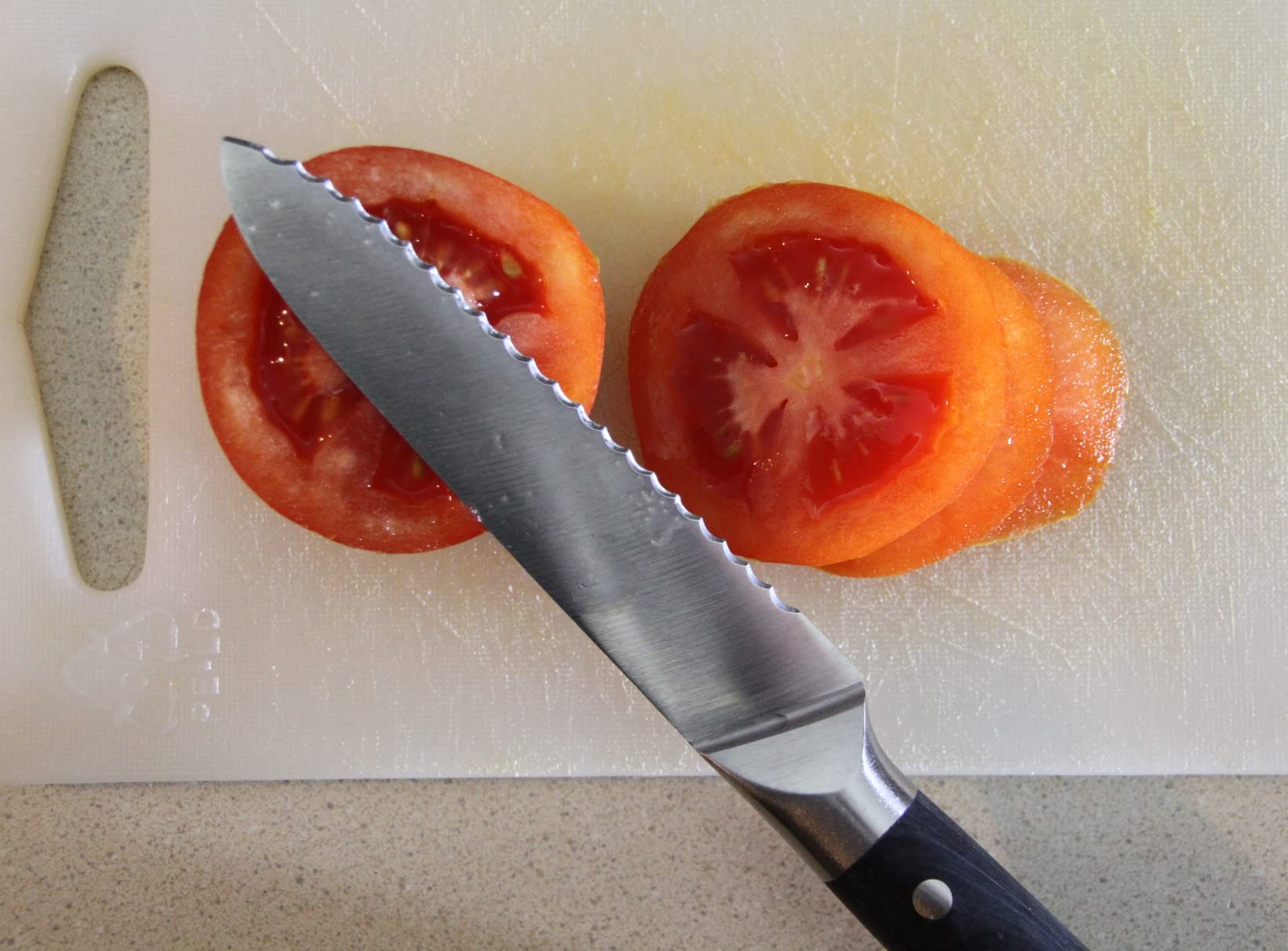
This is one of only two picks here built with a documented full tang and a triple-riveted handle, which is the construction forum cooks treat as the baseline quality marker. It does not flex, and it feels like a tool rather than an accessory.
The blade is forged high-carbon German steel at 56+ Rockwell, hand sharpened to 14-16 degrees per side. That is a slightly steeper angle than a Japanese-style edge, and it trades a little slice speed for noticeably more durability on hard contact with a board.
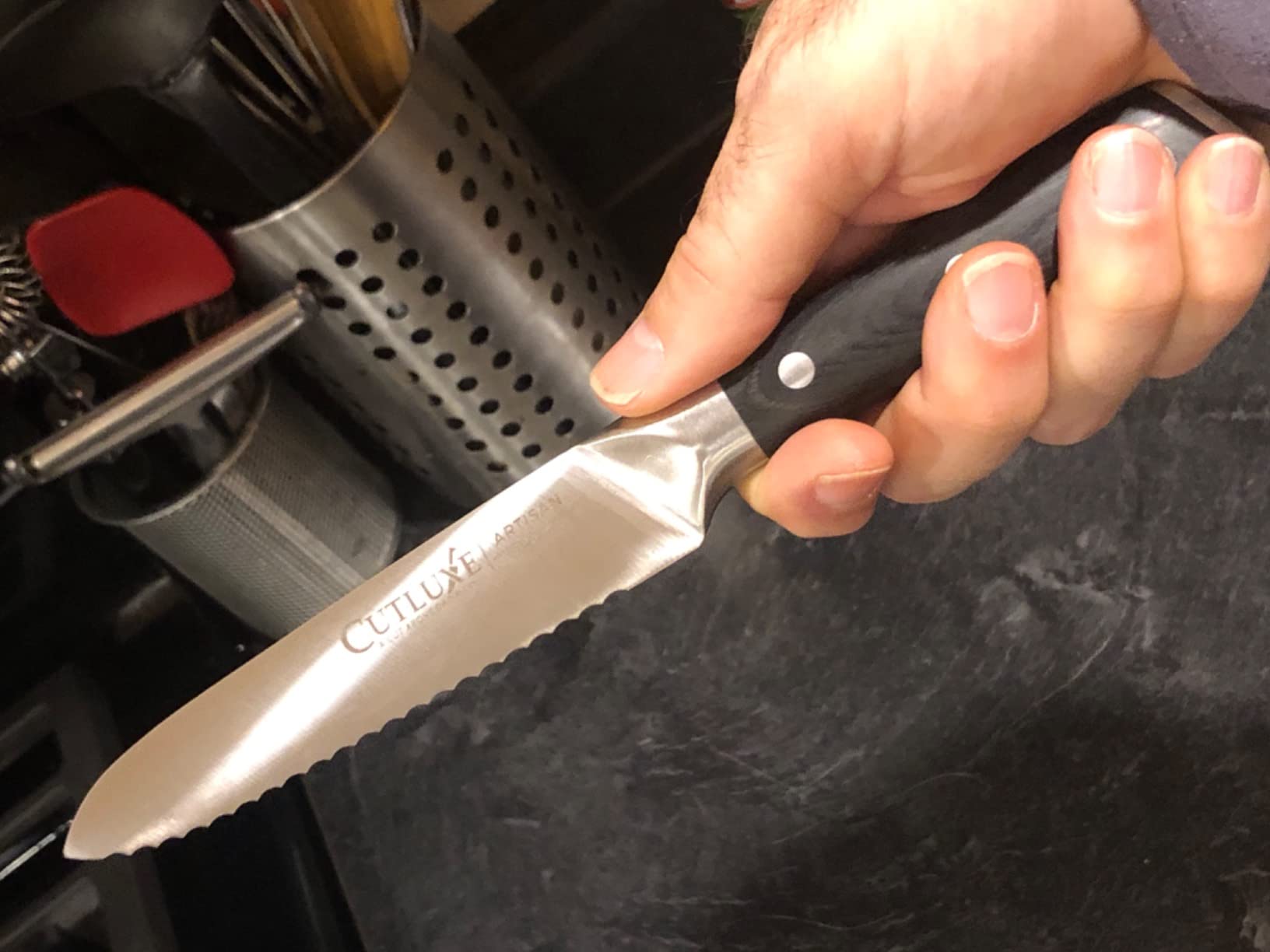
Handle dimensions are the headline here. Reviewers with larger hands, and specifically reviewers with arthritic hands, repeatedly single out the rounded, generously sized handle as the reason they can use this knife comfortably. That is not a spec-sheet detail — it is the difference between a knife you use and a knife that sits in the drawer.
The knife also carries a lifetime warranty against material and workmanship defects, which is the kind of long-term signal enthusiasts treat as a value marker.
Why it earns its place?
It is the sturdiest, most repairable knife here, and it is the one reviewers with hand-strength or grip-reach problems specifically recommend. If your hands are larger than average, this is the safest buy in the roundup.
Where it will disappoint you?
At 5.28 ounces it is the heaviest utility knife in this set, and at least one buyer returned it because it felt too weighty and too sharp to handle. Reviewers used to lighter knives report a genuine learning curve.
5. Mercer Culinary Genesis 5 Inch Utility Knife as the Everyday Workhorse
Mercer Culinary M20405 Genesis 5-Inch Utility Knife,Black
5 inch precision-forged blade
Taper-ground high carbon German steel
Non-slip Santoprene handle
Limited lifetime warranty
Pros
- Works well on pickles fruit cheese and sandwich prep
- Taper grind keeps the edge sharp with routine use
- Handle grips securely with wet hands
- Highest sales rank of any utility knife here
Cons
- Hand wash only and not dishwasher safe
- Stamped-style handle is less refined than wood or full tang
- Some users find the blade thin for heavy jobs
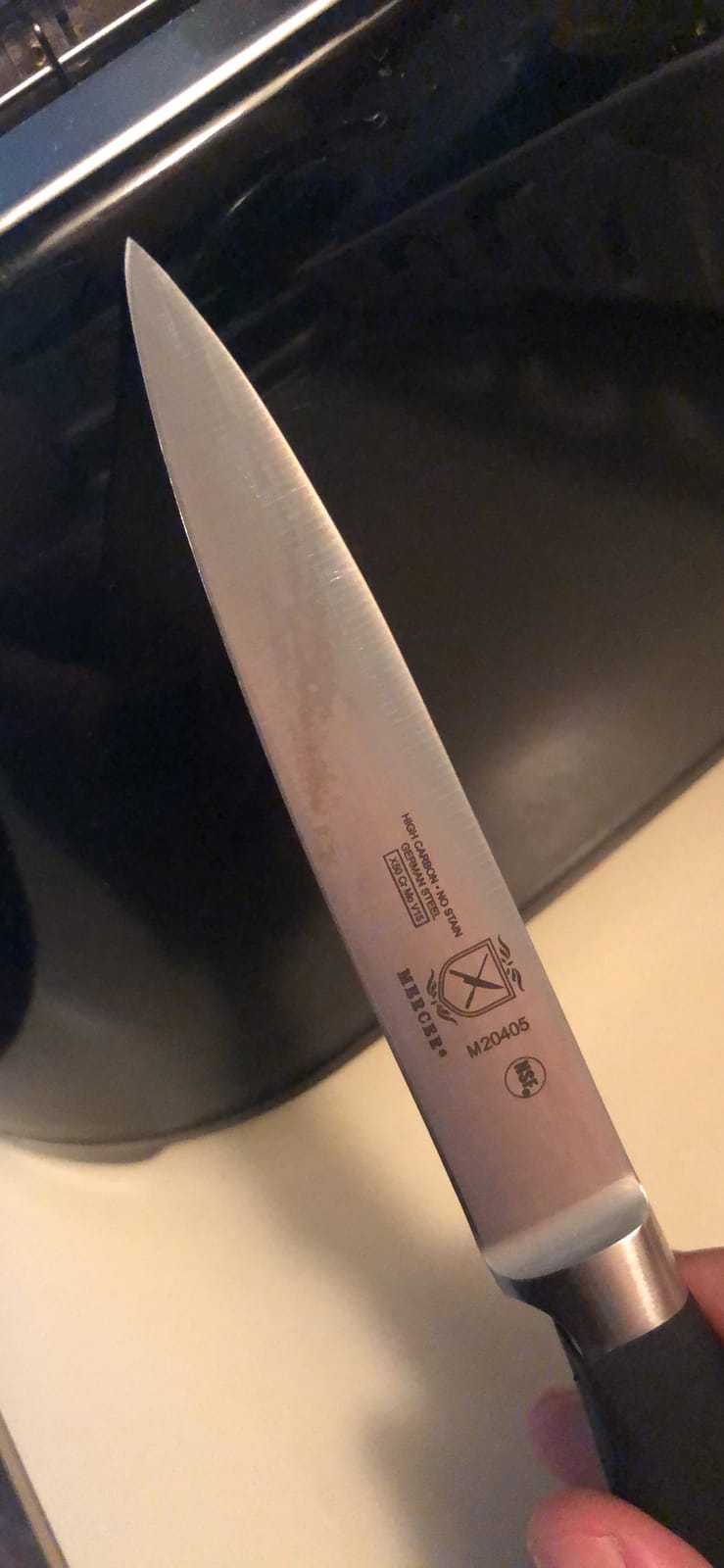
The Genesis is the most-used recommendation we found across customer reviews, and it holds the best sales rank of any utility knife in this group. It is not the sharpest steel or the most refined handle, but it does the everyday jobs without fuss.
The blade is precision forged from high-carbon German steel with a taper-ground edge. That grind narrows toward the belly, which is why reviewers like it for slicing pickles, fruit and cheese in long shallow passes rather than pushing straight down.

The Santoprene handle is the quiet hero. Reviewers specifically praise it for staying secure with wet hands, which is the exact complaint that surfaces most often about narrow handles on small utility knives. It also comes with a limited lifetime manufacturer warranty.
This is the knife to buy if you want one blade for apples, cheese, pickles and sandwich prep and you do not want to think about steel types.
Why it earns its place?
It is the most broadly applicable everyday knife in the roundup at a size that suits most hands and most boards. The wet-hand grip and lifetime warranty do more for daily reliability than a fancier alloy would.
Where it will disappoint you?
The handle is a basic stamped-style moulded grip, so it does not have the refinement or the repairability of a full tang pakkawood handle. A minority of users also find the blade a little thin for heavier work, and it is hand wash only.
6. TUO Fiery Phoenix 5 Inch Utility Knife for Light, Delicate Prep
TUO Utility Knife, 5 inch Small Kitchen Knife for Paring & Slicing, with Ergonomic Pakkawood Handle, High Carbon German Stainless Steel – Fiery Phoenix Series
5 inch slim blade
German X50CrMov15 at HRC 56
Hand sharpened at 14 degrees
3.2 ounces
Pros
- Very light at 3.2 ounces for delicate work
- Hand-honed edge at 14 degrees per side
- German stainless resists rust well
- Polished pakkawood handle with polished bolster
Cons
- Slim blade profile lacks strength for heavy tasks
- Pakkawood handle requires hand washing
- Lightweight feel may not suit users who want a substantial blade
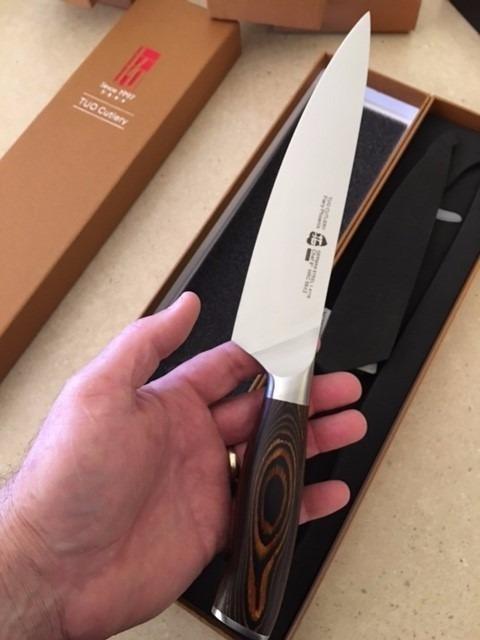
At 3.2 ounces this is the second-lightest knife here, and the reviews make clear that is the entire point. Owners describe it as precise and delicate, which is exactly what you want when you are trimming herbs, peeling a potato or shaping a piece of fish.
The blade is German X50CrMov15 stainless vacuum heat treated to HRC 56 plus or minus 2, then hand sharpened with the three-step honbazuke method at 14 degrees per side. A 14 degree edge is a fine, fast-cutting angle, and it is why reviewers describe clean push cuts on soft produce.
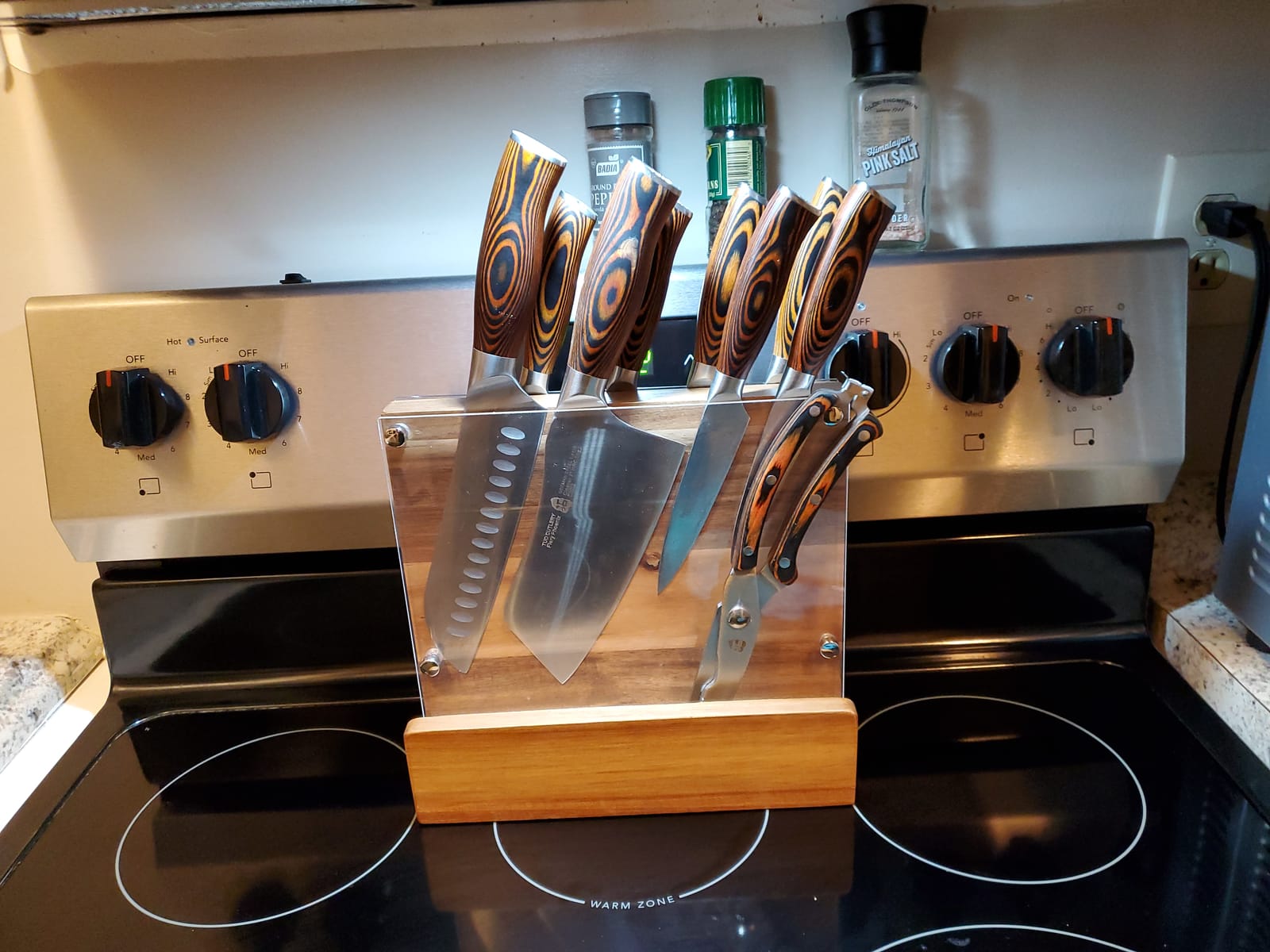
The polished pakkawood handle with a polished bolster is shaped for a pinch grip, giving your fingertips direct control near the heel of the blade. That is the Japanese-style control that makes small precision work possible.
It is also the best-stocked option in the box: gift box, wiping cloth and product brochure all included, plus a lifetime guarantee against manufacturer defects.
Why it earns its place?
It is the pick for anyone whose hands tire quickly, or anyone doing fine detail work on a small board. The light body and fine edge make controlled movements easier than a heavier blade does.
Where it will disappoint you?
The slim blade profile is the mirror image of the Cutluxe. Reviewers are explicit that it lacks strength for heavy cutting, boning or anything structural. Users who prefer a substantial blade will find it underwhelming.
7. Wusthof Gourmet 4.5 Inch Serrated Utility Knife for Soft Vegetables
WÜSTHOF Gourmet 4.5″ Utility Knife, Black
4.5 inch serrated blade
Laser-cut stamped high carbon stainless
Polypropylene handle
1.92 ounces
Pros
- Correctly sized between a paring and cook's knife
- Good for mincing shallots onions and herbs
- Synthetic handle resists heat and discolouration
- Made in Solingen Germany
Cons
- Stamped construction lacks forged blade rigidity
- Hand wash only
- Lowest average rating in this roundup at 4.5
This is the honest pick in the roundup for one job: mincing shallots, onions and soft herbs. At 4.5 inches it sits exactly where a utility knife should, and the serrated edge breaks down onion without leaving a translucent skin behind.
It is stamped rather than forged, and at 1.92 ounces it is light. The synthetic polypropylene handle resists heat, fading and impact, which matters in a kitchen where the handle gets washed and dropped.
Why it earns its place?
If you mostly want one small knife for soft vegetables and herbs, this does that job cleanly and the serrations need no honing rod. The Solingen manufacture and limited lifetime warranty add credibility at a lower tier.
Where it will disappoint you?
Stamped construction does not have the rigidity of a fully forged blade, and reviewers feel it on harder contact. It carries the lowest average rating in this roundup at 4.5, with 4 percent one-star reviews, and it is hand wash only.
8. Global 5 Inch Utility Knife for Featherweight Balance
Global 5″ Chef’s Utility Knife
5 inch utility blade
Ice-tempered CROMOVA stainless steel
Hollow handle design
114 grams
Pros
- Extremely light at 114 grams with very long edge retention
- Hollow handle stays comfortable and secure when wet
- Many owners report decades of ownership
- Resists rust stains and corrosion
Cons
- CROMOVA steel can stain if not dried right after washing
- Needs frequent honing with a ceramic rod
- Listing size fields differ from the 5 inch marketed blade
At 114 grams this is one of the lightest knives in the roundup, and balance is the reason to buy it. Reviews repeatedly describe reduced hand fatigue during long prep sessions and comfort for small hands.
The blade is ice-tempered, hardened CROMOVA stainless steel, which is what gives it the very long edge retention owners report. Several owners have kept Global knives for twenty years or more and still consider them sharp.
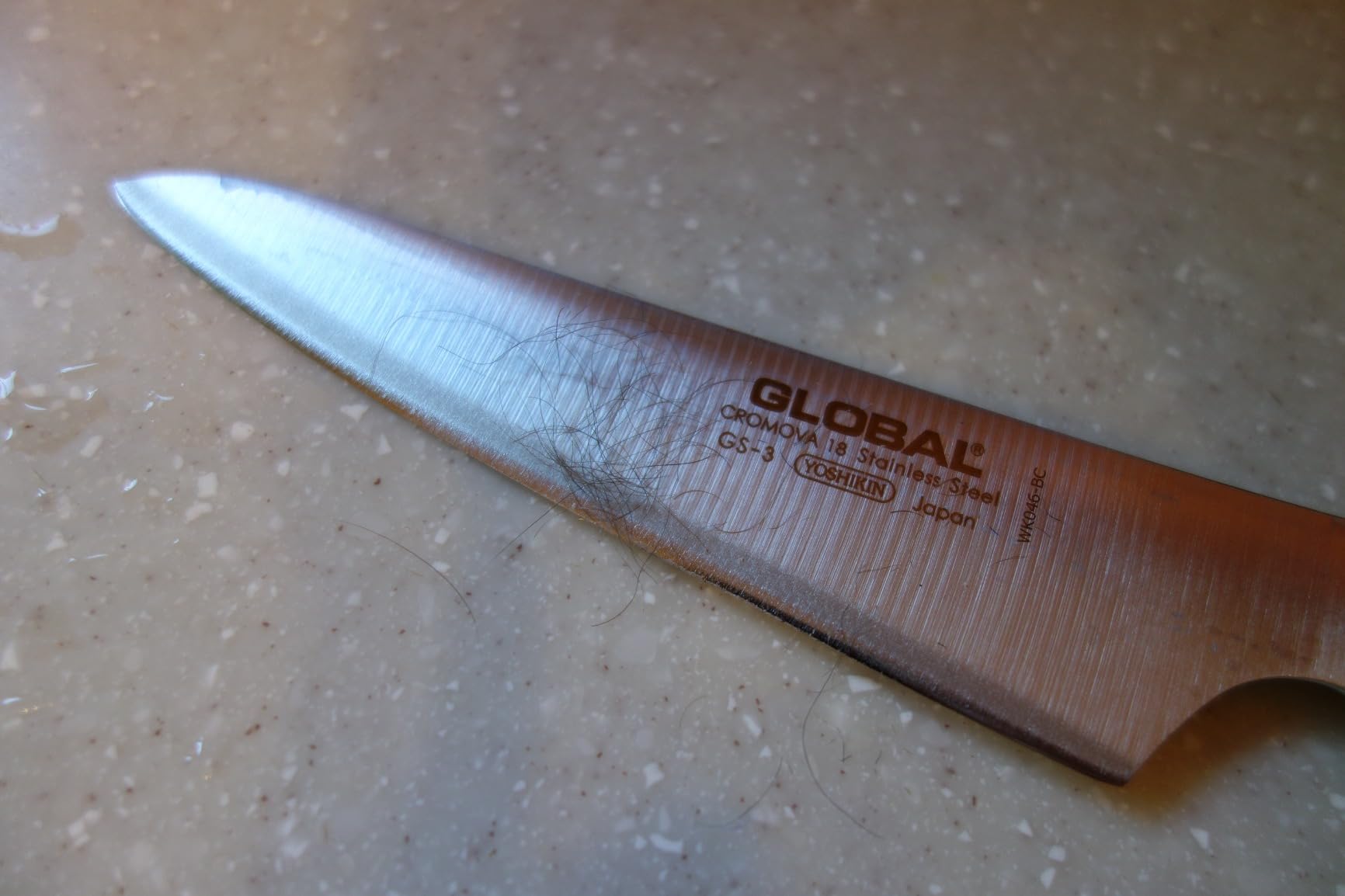
The hollow handle design is the signature: no visible rivets, no tang, and a grip that stays secure even when wet. It is also the only fully stainless handle in this roundup, so nothing about it needs oiling or special care.
Be aware of a labelling quirk. The listing carries an 8 inch size field and an 8.75 inch item length, while the product itself is marketed as a 5 inch utility blade and identified as model GS-3.

Why it earns its place?
It is the best option in the set for long prep sessions, small hands, or anyone who finds handle fatigue limiting. A limited lifetime guarantee backs it, and owners report extraordinary longevity.
Where it will disappoint you?
CROMOVA is high carbon stainless, so it can stain if you do not dry it immediately, and it needs more frequent honing with a ceramic rod than a German or Japanese stainless blade. It is also the least repairable option here, with no tang to replace or resurface.
9. Henckels Classic 6 Inch Utility Knife for a Deep Blade and Dishwasher Life
Henckels Classic 6-Inch Utility Knife, Razor-Sharp, German Engineered
6 inch blade at about 1 inch depth
Fully forged high carbon stainless
Triple-riveted stainless handle
Dishwasher safe
Pros
- Razor sharp out of the box and holds its edge for months
- Deep 1 inch blade at a 6 inch length is rare
- Forged seamless blade to handle transition
- Dishwasher safe and described as stain and rust free
Cons
- Handle can run small for users with larger hands
- Very hard steel takes real effort to sharpen
- Stainless handle can feel slippery compared with wood
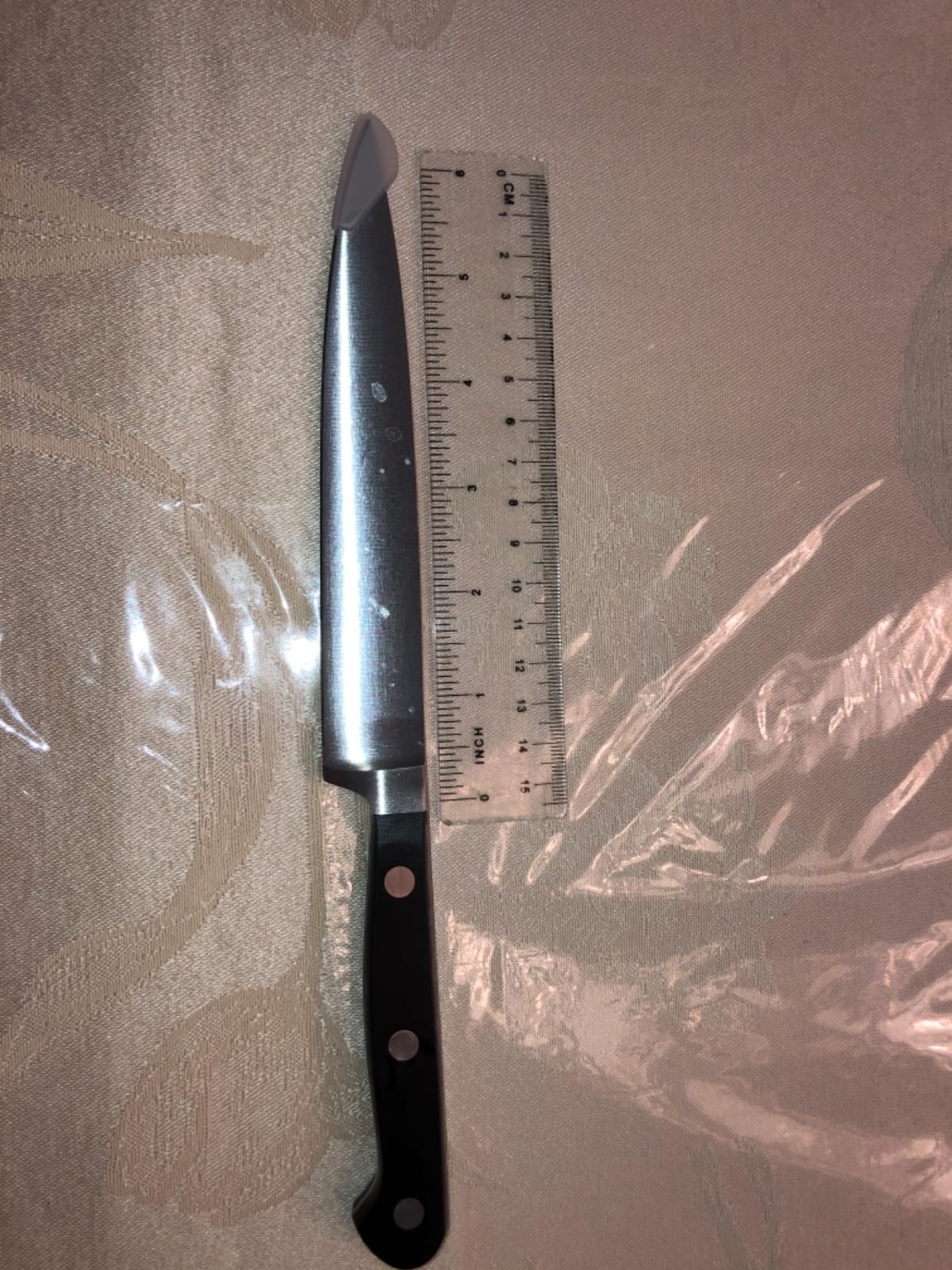
This is the six-inch recommendation for most home cooks, and the blade depth is the reason. Roughly one inch of depth on a six-inch blade is unusually generous, and it lets you cut melons and larger produce without switching to a chef’s knife.
Construction is fully forged with a seamless transition from blade to handle and a traditional triple-riveted stainless grip. That is a long-term build, and it carries a lifetime warranty against manufacturer defects.
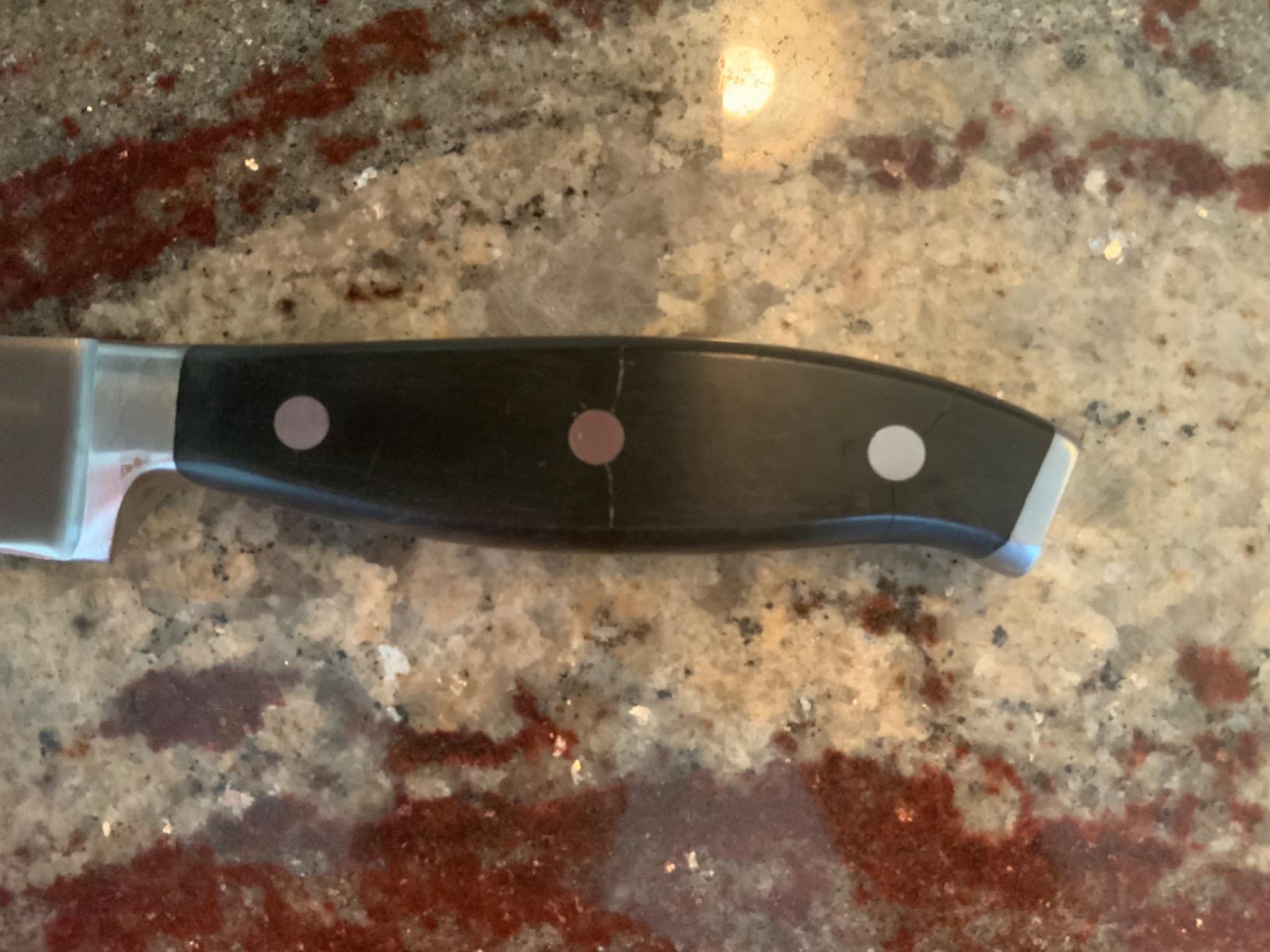
Owners describe months of daily use without touching a steel, and many call it their most-used knife. Reviewers also praise the strong tip for detail work and controlled small cuts.
It is the only fully dishwasher-safe straight-edge utility knife in this roundup, which for a busy household is not a small convenience.
Why it earns its place?
It is the best single answer to the six-inch question, with a depth and tip that smaller knives cannot match, and it survives a dishwasher. If you want one utility knife and nothing else, this is it.
Where it will disappoint you?
The handle runs small for users with larger hands, and stainless handles feel slippery next to pakkawood. Because the steel is very hard, sharpening it yourself takes real effort if the edge ever goes.
10. Wusthof Classic 6 Inch Utility Knife for Forged Longevity
WÜSTHOF Classic 6″ Utility Knife, Black
6 inch forged blade at 6.3 inch listed length
Full tang with full bolster
Triple-riveted POM handle
Made in Solingen
Pros
- Excellent edge retention and sharpens back up easily
- Full tang and full bolster for stability and control
- Weight suits the 6 inch size
- Owners report Wusthof knives in service for decades
Cons
- Highest cost of the utility knives in this roundup
- Hand wash only with a damp cloth
- Lowest review count here at 244
This is the build-heaviest knife in the roundup. It is forged from a single piece of high-carbon stainless steel with a full tang, a full bolster, and a triple-riveted POM handle, made in Solingen. Ninety percent of its reviews are five-star.
The slim blade profile is designed for precision cuts through shallots, mushrooms and herbs and for dicing vegetables, and at 3.2 ounces the weight suits a 6 inch size without feeling heavy.
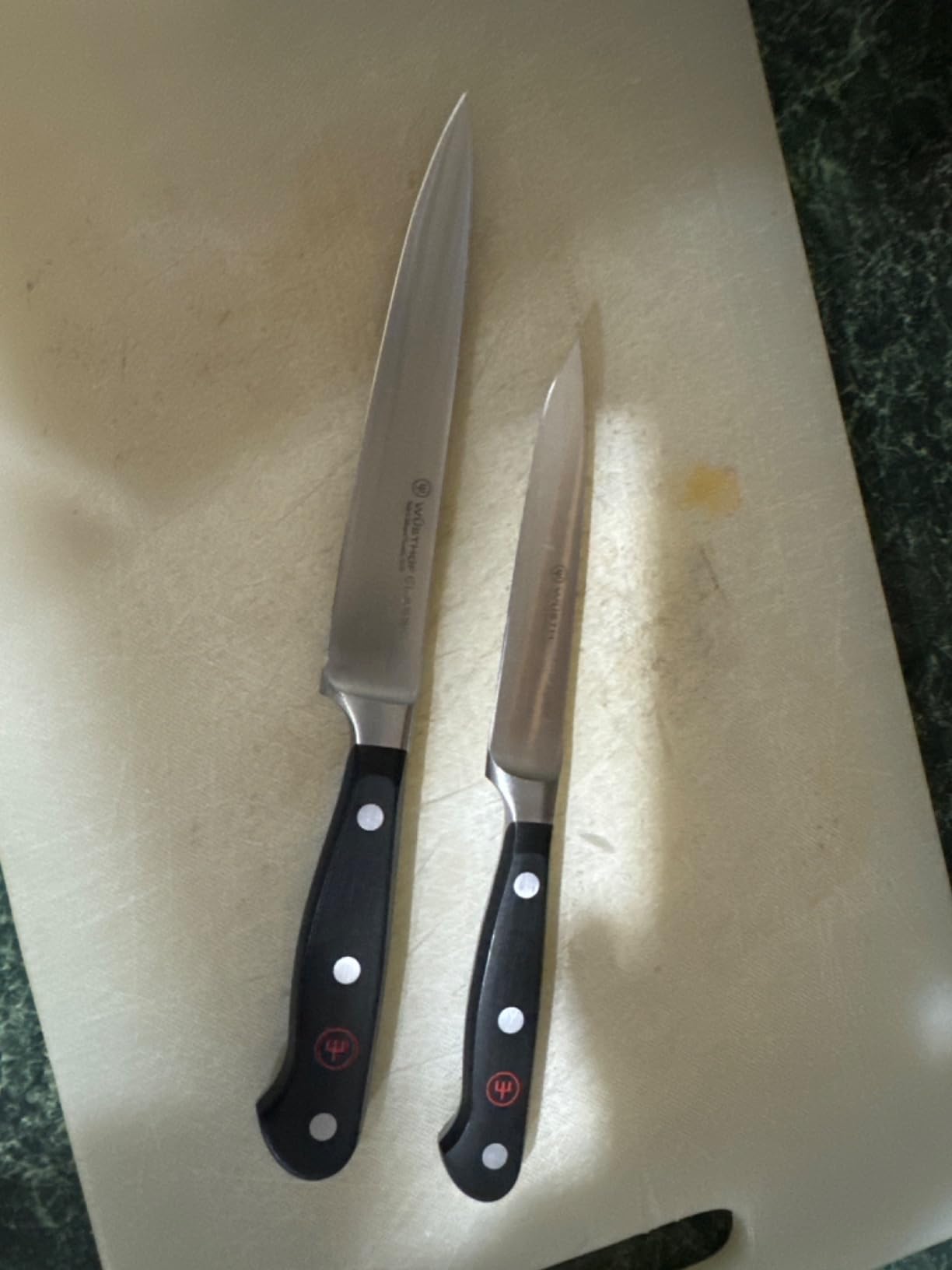
What stands out in the reviews is time. Owners report that the same blade has kept Wusthof knives in service for twenty-five years or more, which is the durability argument no specification sheet makes for you.
Two practical warnings from reviewers: hand wash only with a damp cloth, and never use it on glass, ceramic or metal cutting surfaces.

Why it earns its place?
If you want one utility knife that lasts decades and you are buying it once, the full tang and full bolster construction is the strongest durability story in this roundup. Edge retention is excellent and it sharpens back up without drama.
Where it will disappoint you?
It costs the most of anything here, and its review count is the lowest in the set at 244, so the long-term owner reports come from a smaller sample. For most cooks it is a step past what the job requires.
Serrated vs Straight Edge Utility Knives: When Serrated Wins?
Serrated utility knives win on soft, textured or thin foods: tomatoes, citrus, soft fruit, crusty bread, cooked chicken, soft cheese. The teeth act like a saw, cutting fibres apart rather than compressing them, so the interior stays intact instead of turning to mush.
Straight-edge utility knives win on firm, smooth or delicate work: push cuts, peeling, trimming, shallots, garlic, herbs and any cut where you want a clean flat face. They also sharpen far more easily, because an edge angle you can measure is an angle you can restore with a stone.
Our rule of thumb after working through these knives: if more than half your small tasks involve a skin or a crust, buy serrated. If most of your prep is peeled or firm produce and herbs, buy straight edge. Two picks here are serrated, the Victorinox and the Wusthof Gourmet, and they cover the first case well.
Utility Knives for Small Hands and Compact Kitchens
Hand size is the most overlooked factor in this category, and it comes up constantly in the complaints we found. Two things decide whether a small utility knife works for you: how much handle fits inside your gripping hand, and whether your knuckles clear the bolster when you push forward.
The Global 5 inch is the strongest pick for small hands, at 114 grams with a slim hollow handle that keeps fatigue down through long sessions. The TUO at 3.2 ounces is the other option, with a polished pakkawood handle shaped for a pinch grip.
For larger hands, the Cutluxe is the answer. Reviewers with larger and arthritic hands specifically call out its rounded, generously sized handle as the reason it is comfortable, while the Henckels triple-riveted handle is the one reviewers flag as running small.
On compact kitchens, blade length is the real constraint. A 5 inch knife takes up less room on a small board and is easier to control in tight working space than a 6 or 7 inch blade. If your board is the constraint, choose 5 inches and pair it with a straight edge.
How We Evaluated and How to Keep a Small Knife Sharp?
Every pick in this roundup was assessed on the same four things: blade length and depth, steel type and stated hardness, construction method, and handle material. We then checked those specifications against the recurring themes in customer reviews, especially edge retention, grip security and durability. Where the spec sheet and the reviews disagree, we flagged it rather than picking a side.
On care, the pattern across all ten knives is consistent. Eight of the ten are hand wash only — all but the dishwasher-friendly Victorinox and Henckels — and reviewers on those models say the same thing repeatedly: a wash and a dry, nothing more.
Keep a honing rod in the drawer and use it before a task, not after. Honing straightens a rolled edge and takes seconds. Sharpening removes metal and is a far bigger job, which is why a knife that is only ever honed rarely needs sharpening.
Use a wood or plastic cutting board. Glass, ceramic and metal surfaces destroy an edge quickly, and Wusthof reviewers specifically warn their own owners off them. A knife that slips on glass is both a ruined edge and a safety problem.
One caution for anyone sharpening small knives: a large-diameter sharpener is difficult to keep at a consistent angle on a 4.5 inch blade, which is why forum cooks report that small knives are harder to sharpen than large ones. A smaller stone or a fine abrasive at a fixed angle will serve you better.
Frequently Asked Questions
Is a petty knife the same as a utility knife?
In Western kitchens, yes — the two names describe the same mid-size category of knife. The community convention is that brands start calling a blade a utility knife at around 150 mm or more, so a petty knife from most makers behaves like a 5 to 7 inch utility knife. The real distinction that matters is against the paring knife, which is 3 to 4 inches and used in the hand rather than on the board.
Should I get a paring knife or a utility knife?
Get a paring knife for detail work done in midair — peeling, hulling strawberries, deveining shrimp, cutting a bad spot out of a pepper. Get a utility knife for work done on a board — dicing shallots, slicing cheese, trimming brussel sprouts, cutting sandwich crusts. If you own a chef’s knife already, the utility knife is the one that fills the gap between the paring knife and the big blade.
What is the best blade length for a utility knife?
Six inches is the consensus default and the safest single answer. It cuts a full sandwich crust in one pass, handles a cheese wedge and small vegetables, and stays controllable on a tomato. Choose 5 inches if your prep is mostly shallots, garlic and herbs or if you work on a small board. Choose 7 inches only if you want more cutting length per stroke and can live with less control.
What is a 5 inch utility knife used for?
A 5 inch utility knife is used for fine prep on a small board: mincing shallots and garlic, slicing soft fruit, peeling, shaping, trimming herbs and cutting sandwich crusts. The shorter blade turns with your wrist instead of fighting it, which is why most owners of the picks in this roundup describe it as the knife they reach for first.
What is the best mini utility knife for everyday use?
The best mini utility knives for everyday use are the FINDKING 5 inch, which holds an edge for years between sharpenings, the Global 5 inch at 114 grams for balance and low fatigue, and the TUO 5 inch at 3.2 ounces for delicate trimming. Each weighs under three ounces and turns easily in a small kitchen. Full-size utility knives handle the same jobs but feel slower in tight working space.
Is a serrated utility knife worth owning?
Yes, if most of your small tasks involve a skin or a crust — tomatoes, citrus, soft fruit, crusty bread, cooked chicken or soft cheese. The serrations cut through fibres without crushing the interior, which is exactly what a straight edge does badly on those foods. Straight-edge utility knives are better for push cuts, peeling, trimming and herbs, and they are far easier to sharpen.
What are the three knives that every kitchen needs?
A chef’s knife, a utility knife or a mid-size knife, and a bread knife. The chef’s knife handles bulk prep, the utility knife handles everything awkward on a small board, and the bread knife handles anything baked. A paring knife is a strong fourth addition, mainly for peeling and detail work in the hand. Multi-tools and full knife sets are not necessary and often duplicate these three badly.
Bottom Line: The Best Utility Knives for Small Kitchen Tasks in 2026
The FINDKING 5 inch is our top pick for 2026 because hard 9Cr18MoV steel and a 2.56 ounce body combine edge retention with genuine one-handed control. The Cutluxe 5.5 inch is the sturdiest and the best for larger hands, the Mercer Genesis is the most broadly useful everyday knife, and the Victorinox 4.5 inch has the highest rating in the group if your prep is mostly soft produce.
If you are buying one knife, buy the six-inch Henckels. If you are building a kit, start with the five-inch FINDKING and add a serrated option later. Every pick above is a good small kitchen knife — the only wrong choice is one that does not match your hands or your food.