
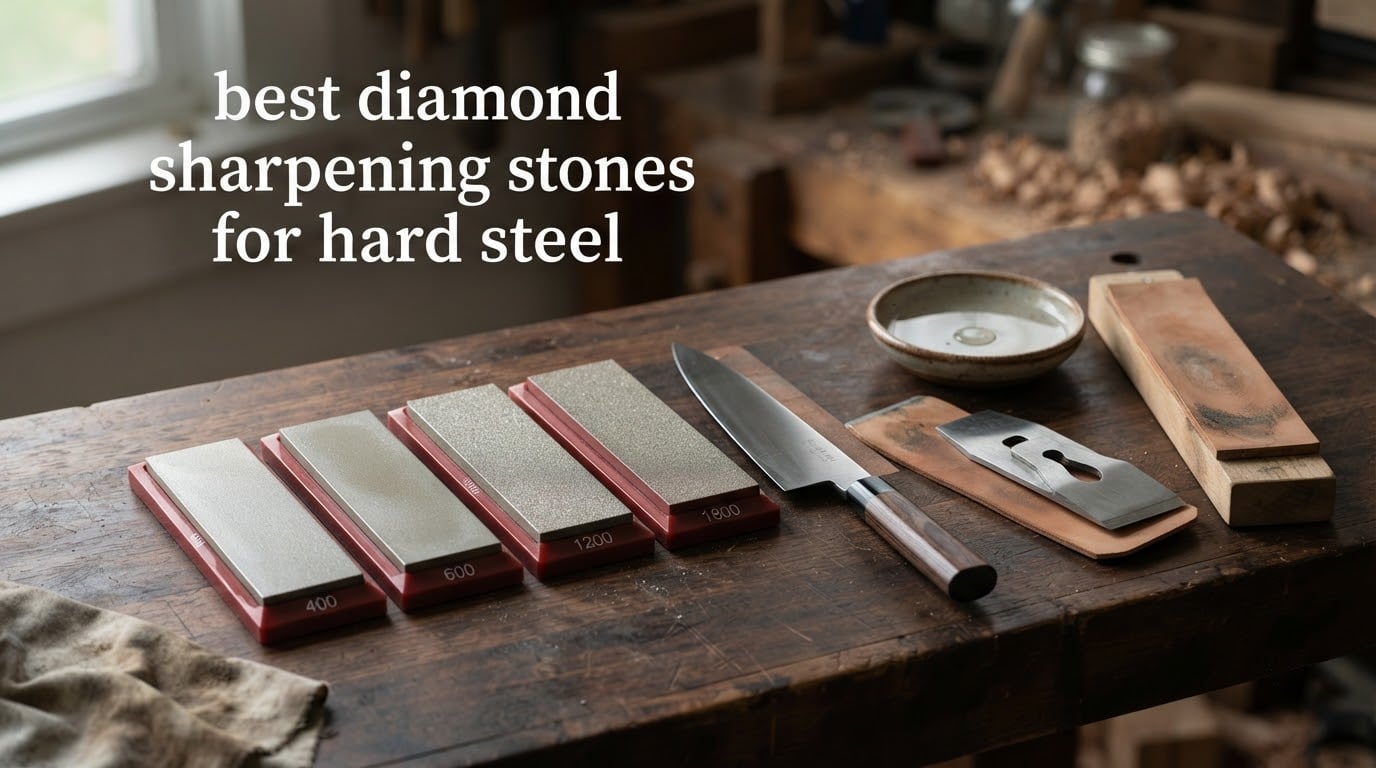
Sharpening D2, S35VN, S90V, S110V, CPM-M4, Maxamet, K390 or Vanax on a conventional 1000 grit stone is where most people give up. The stone is not broken and your technique is not wrong. The abrasive simply is not fresh enough to abrade a matrix packed with vanadium and chromium carbides, so it skips, glazes over and wears flat while the edge barely changes. Practitioners on chefknivestogoforums describe the same result in blunt terms: a King 1000 barely cuts CPM-M4, while slicing simple white #2 steel without complaint.
That is the whole argument for the best diamond sharpening stones for hard steel. A diamond plate carries industrial synthetic diamond that fractures to expose new cutting facets instead of slowly rounding away, so it keeps cutting hard alloys and stays flat. This roundup covers ten plates and sharpeners that hold up on carbide-rich steel, plus the technical details that decide service life on that steel: monocrystalline versus polycrystalline, plated versus resin-bonded, substrate thickness, and continuous versus interrupted surfaces.
A note on how we chose. We are practitioners, not a testing lab, and we do not pretend otherwise. Every pick below is chosen on published specifications, owner feedback and how each plate behaves on hardened and powder metallurgy steels. Where enthusiasts on chefknivestogoforums and r/sharpening reach a consensus, we say so. Where they disagree, we tell you which steel each side of the argument suits. Every pick names who should skip it, because the worst diamond plate for you may be perfect for someone else.
Table of Contents
Top 3 Diamond Sharpening Stones For Hard Steel (October 2026)

SHARPAL 162N 8-Inch Diamond Stone
- 325 and 1200 grit dual face
- 0.35 inch stainless base
- MirrorFlat surface
- dry sharpening

SHARPAL 181N Diamond Sharpening File
- 325 and 1200 grit file faces
- cowhide strop sheath
- paracord handle
- 160 g

Work Sharp Benchstone 3-Sided
- 400 and 800 grit diamond plus ceramic
- 20 and 25 degree guides
- pivot-response base
Quick Overview: All 10 Diamond Sharpening Stones Compared
The table below lists every pick with the grit range, plate format and the reason it earns a place on a hard-steel bench. Diamond content and substrate thickness matter more on D2 and Maxamet than on a kitchen knife, and those are the details in the features column.
| Product | Specifications | Action |
|---|---|---|
| SHARPAL 162N 8-Inch Diamond Stone |
|
Check Latest Price |
 Smiths DCS4 Field Sharpener Smiths DCS4 Field Sharpener |
|
Check Latest Price |
 SHARPAL 156N 6-Inch Diamond Stone SHARPAL 156N 6-Inch Diamond Stone |
|
Check Latest Price |
 S SATC 400/1000 Diamond Plate S SATC 400/1000 Diamond Plate |
|
Check Latest Price |
 DMT FWFC 8-Inch DuoSharp DMT FWFC 8-Inch DuoSharp |
|
Check Latest Price |
| Work Sharp Benchstone 3-Sided |
|
Check Latest Price |
 DMT D8C Dia-Sharp Bench Stone DMT D8C Dia-Sharp Bench Stone |
|
Check Latest Price |
| SHARPAL 181N Diamond Sharpening File |
|
Check Latest Price |
 DMT DiaFold Extra Fine/Fine DMT DiaFold Extra Fine/Fine |
|
Check Latest Price |
 Goodjob 400/1000/8000 Tri-Sided Stone Goodjob 400/1000/8000 Tri-Sided Stone |
|
Check Latest Price |
Is a Whetstone or a Diamond Better?
Diamond is better for hard steel; a whetstone is better for a refined final edge. On D2, S90V, Maxamet or any hardened tool steel, an aluminum oxide or silicon carbide stone loads and glazes before it removes meaningful material, so a diamond plate wins decisively. On a thin kitchen knife, a high-grit ceramic or waterstone still produces a cleaner, more polished bevel that a diamond plate alone cannot match.
The honest four-way comparison looks like this. A waterstone cuts steel beautifully and gives a traditional, slightly convex edge, but it dishes, needs soaking and dies on carbide-rich powder metallurgy steel. A ceramic stone stays flat and needs no water, is cheap and consistent, and cuts many hardened steels, though it still polishes out far slower than diamond. A diamond stone cuts hardest, stays flat longest and needs no water at all, but its finest grits still leave a coarser scratch pattern that a strop or ceramic must finish. Cubic boron nitride compounds are the fourth option, and they are not a stone at all.
CBN is worth separating out because it is routinely misunderstood. Diamond is harder than CBN, so diamond abrades vanadium carbide but can also tear carbides out of the steel matrix, leaving pits. CBN is slightly softer and abrades those carbides cleanly. Enthusiasts on chefknivestogoforums pair a CBN emulsion or diamond spray with a stone above 1000 grit for exactly this reason, and on CPM-M4 with roughly 4 percent vanadium it becomes close to a requirement rather than a refinement. Treat it as an add-on booster, not a replacement for a plate.
Hard Steel Decoded: Which Steels Actually Need Diamond?
One myth does more damage than any other: that harder steel needs a harder stone. It does not. It needs a more fresh abrasive of the same hardness class. A 1000 grit stone does not fail on Maxamet because it is soft, it fails because the grit is too fine and the surface has already glazed over. The experienced fix, repeated on chefknivestogoforums, is almost always a coarser starting grit rather than a different brand.
Mapping your steel to a pick:
D2, S7, A2, HSS chisels and plane irons hardened tool steel that a good 400 grit diamond handles in minutes. Our pick is the S SATC 400/1000 plate, with the Work Sharp benchstone close behind for its angle guides.
S35VN and S90V the classic powder metallurgy problem. These need 325 grit or coarser to open the edge, then a fine diamond to finish. The DMT D8C coarse bench stone sets the bevel, and the SHARPAL 162N 1200 face refines it.
S110V and K390 genuinely abrasion-resistant alloys. One 1000 grit stone used for both stages is the usual mistake; most of the work belongs at 320 grit or coarser.
CPM-M4, Maxamet and Vanax where a CBN or diamond spray booster above 1000 grit moves from optional to sensible. The SHARPAL 181N file pairs a coarse face with a cowhide strop, which suits the toothy working edge these tool steels want.
Soft decorative or laminated steel where edge geometry and polishing matter more than speed. A fine ceramic or waterstone is the better tool here, and no diamond on this list will change that.
One more point that the manufacturer literature rarely makes: a mirror polish is the wrong target for tool steel. Enthusiasts consistently note that M4 and its neighbours perform best with a toothy working edge, so a slightly coarser finish is a feature rather than a defect.
1. SHARPAL 162N 8-Inch Diamond Stone: The Best All-Round Plate for Hardened Steel
SHARPAL 162N Double-sided Diamond Sharpening Stone, 8 in. x 3 in.
325 and 1200 grit dual face
8 x 3 in surface
0.35 inch stainless substrate
Pros
- Electroplated industrial monocrystalline diamond
- stays flat over time
- 325 grit removes hardened steel fast
- 1200 face refines to a keen edge
- handles carbide ceramic and high speed steel
Cons
- 1200 grit is too coarse for mirror finishes or 3000 grit work
- fine side loads with metal and needs scrubbing
- angle guide adds friction if used on every pass
This is the plate I keep reaching for on D2 and S35VN, and it is the first thing I hand someone whose old stone stopped cutting. The 325 face is roughly 45 micron, which sounds mild until you put a dull S90V knife on it. The bevel comes back in a couple of minutes, and the 1200 face is fine enough to shave hair from a working edge without leaving a scratch pattern you can feel with a thumbnail.
What separates it from generic plates is the 0.35 inch stainless substrate. That is real plate thickness, not credit-card-thin steel with a plating on top, and it is the difference between a tool that stays flat for years and one that dishes in a season. MirrorFlat machining keeps the two faces parallel, so the whole surface contacts the bevel rather than a narrow band.
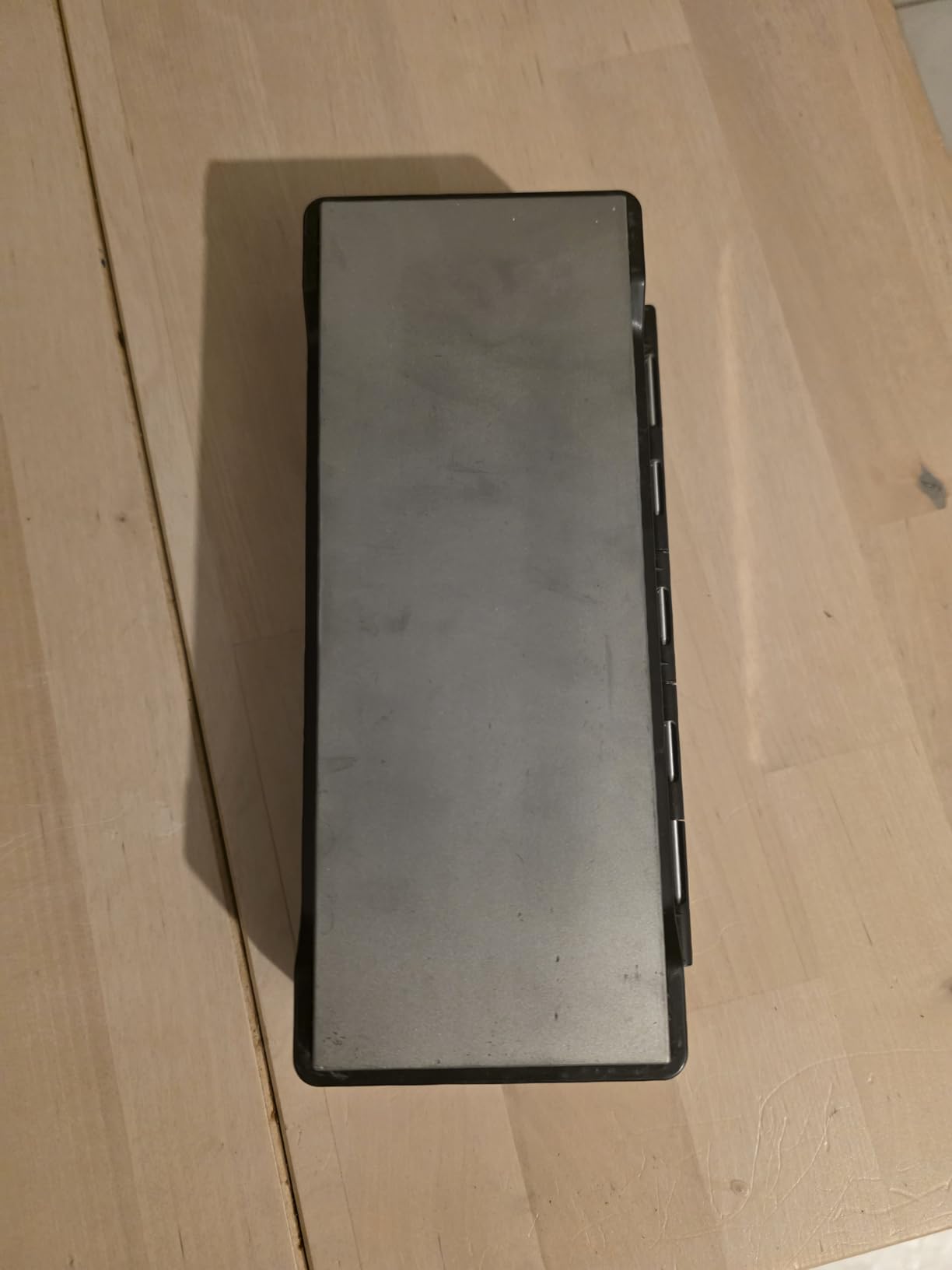
Reviewers describe it as the fastest-cutting plate in its class on hardened and tungsten-carbide-edged tools, and the 8 by 3 inch footprint is wide enough for a full-length bevel on a hunting knife. Owners also report hair-shaving results on pocket and kitchen knives once the 1200 side is used properly. A few flag occasional corrosion on the steel substrate and discourage using the case lid as a platform, since the polished lid is smoother than the abrasive.
The one real limitation is the top of the grit range. This is a 1200 grit ceiling, so anything finer has to come from a strop, a ceramic stone or a separate plate. On carbide-rich steel, treat the 1200 face as a refining step and finish on the case’s cowhide strop or a loaded leather wheel.
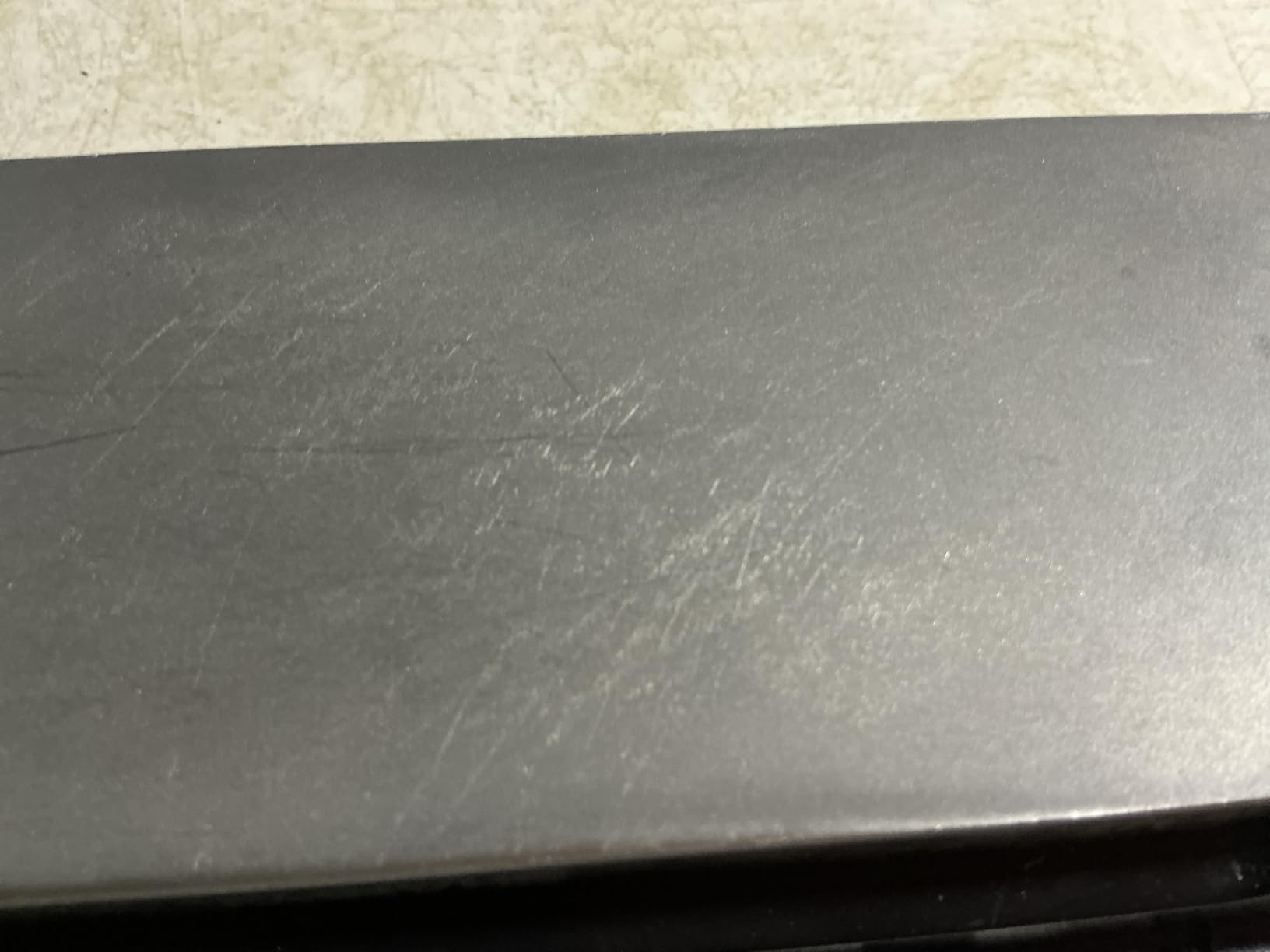
What a sharpened edge from this plate can and cannot do?
The 325 side leaves a visible tooth pattern that slices rope and shaves paper once refined, which is exactly what you want on a working knife in S35VN or S90V. It will not produce a mirror, and the 1200 face alone will not change that. If your goal is a thin kitchen edge with refined geometry, pair it with a ceramic or load the strop compound.
For edge restoration it is close to ideal. A chipped tip or a rolled edge disappears on the 325 face in a short session, and because the plate does not need soaking or oil, you can do it at the bench with nothing but the case under your hands.
Who should skip this plate?
Skip it if you need a true mirror finish, if you work primarily on thin ceramic-coated blades where you want minimal stock removal, or if you want a single-grit specialist plate. Buy the 6 inch SHARPAL if the 8 inch face feels unwieldy, or the DMT D8C if you want a continuous coarse surface and a lapping plate in one.
2. Smiths DCS4 4-Inch Combination Sharpener: Best for Field Touch-Ups
Smith’s DCS4 4” Diamond Combination Sharpener – Double Sided Stone – Outdoor Field Knife Sharpener – Fish Hook & Pointed Tools Micro Sharpener – Lightweight, Compact, Handheld
325 and 750 grit color-coded faces
22 g total weight
folding handle storage
Pros
- Light enough for a pack at 22 g
- color-coded grit sides
- hook groove and micro-pad for pointed tools
- handle stores and protects the stone
- puts a serviceable edge on a knife in a minute or two
Cons
- Small surface suits touch-ups rather than full regrinds
- interrupted surface marks delicate kitchen edges
- heavier and bulkier than some foldable competitors
This is not a bench stone and I would not use it for a full regrind. It is the sharpener that lives in a pack, and on a hard steel hunting knife with a dull but intact edge it will put you back in business in a minute or two. The 325 face resets, the 750 face refines enough to shave, and that is the entire job.
What makes it interesting for hard steel is the interrupted surface. The recesses between the diamond clusters trap filings, which keeps the face cutting instead of glazing. The same feature is a drawback on a fine kitchen knife, since the raised pattern leaves a scratch pattern that no amount of careful technique fully hides.
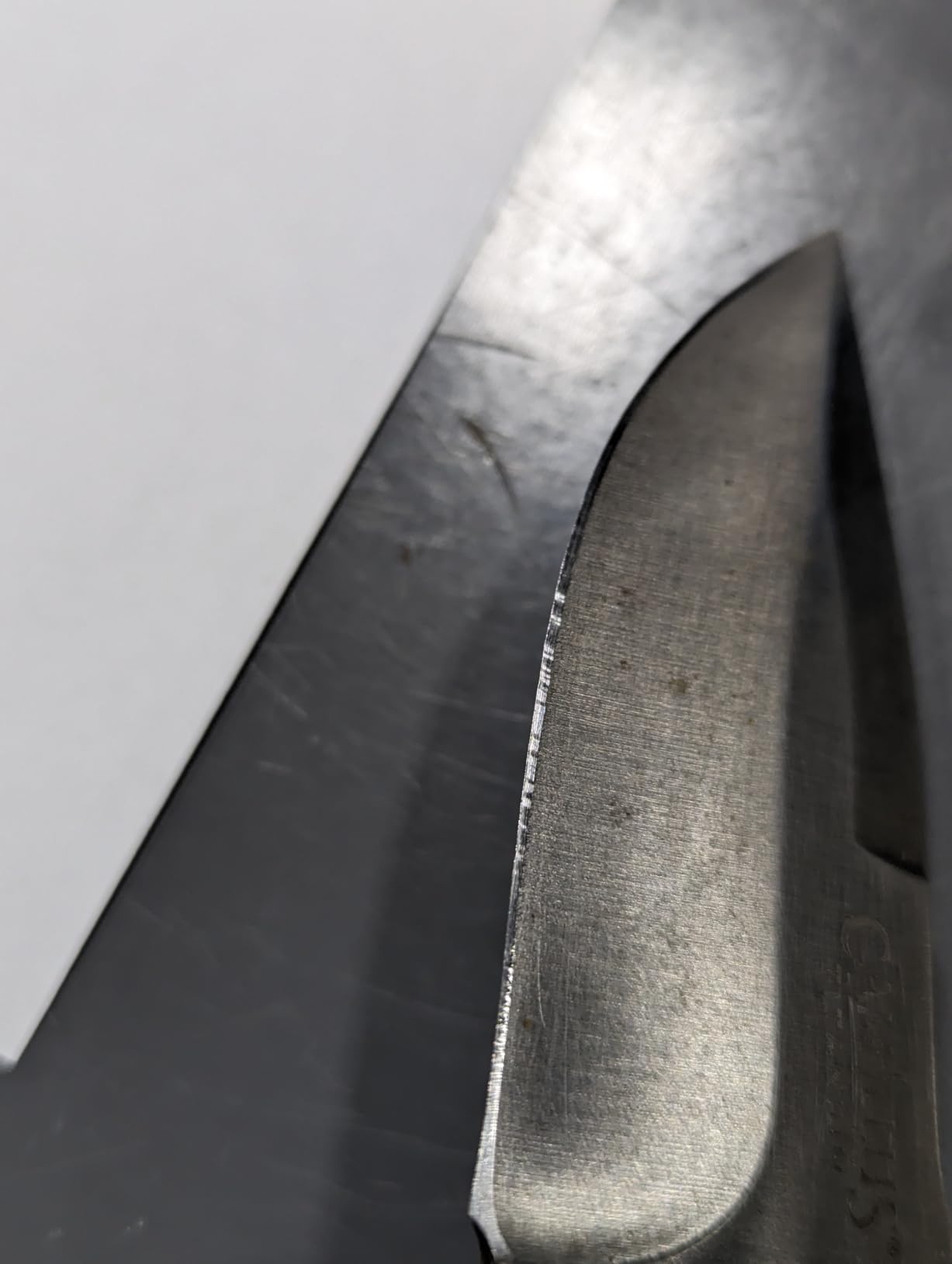
Owners consistently frame it as a fast, durable field tool. The micro-sharpening pad and groove on each side handle fish hooks and pointed tools, which is a niche no bench plate serves. The handle closes over the stone for protection, and a lanyard loop finishes it off for pack use.
Be realistic about the 22 g weight and the 4 inch face. It is not lighter than a good folding sharpener, and the interrupted surface means it leaves marks on a delicate edge. If your hard steel is a chisel or plane iron, this is the wrong shape entirely.
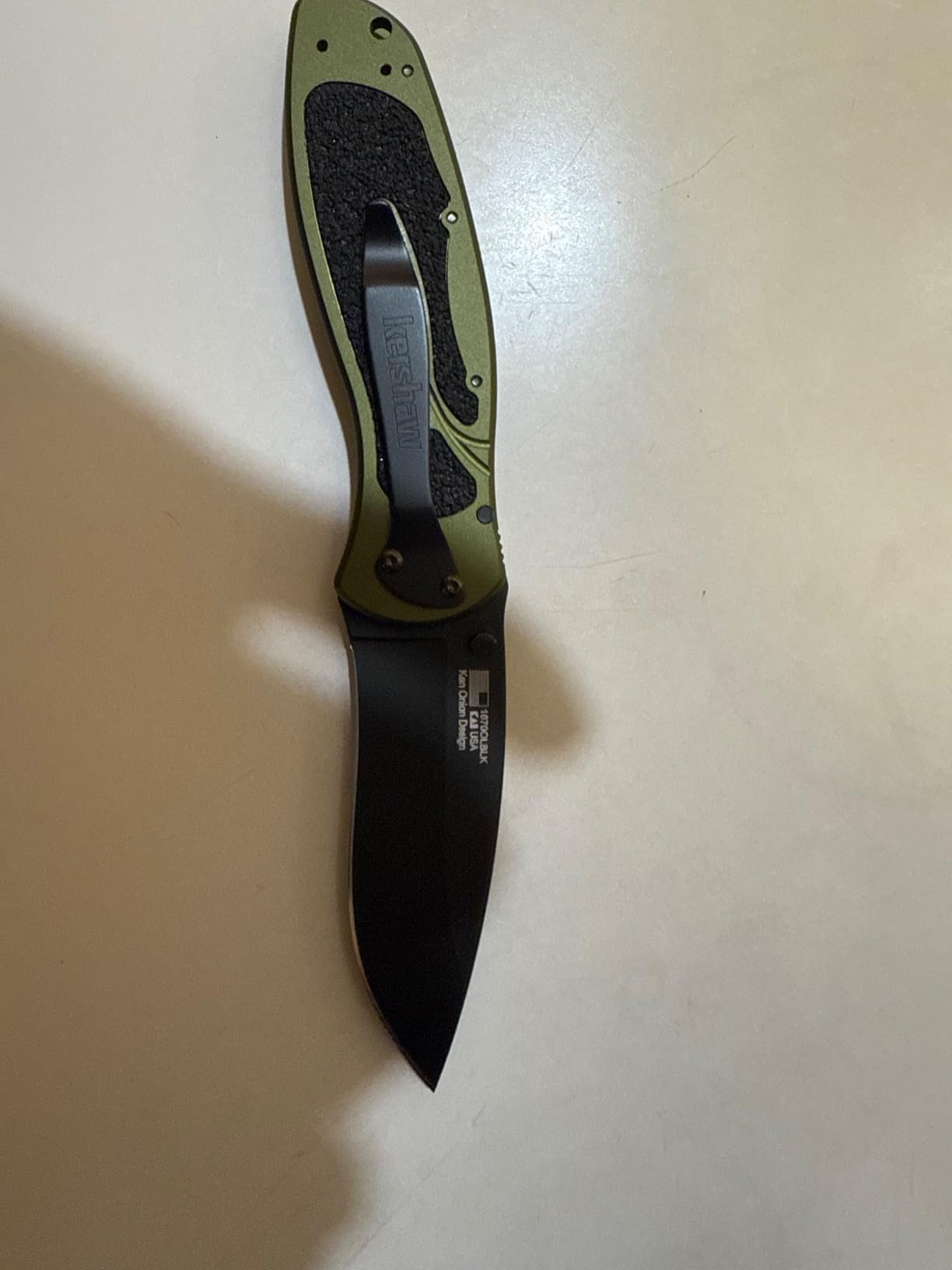
How it behaves on a hardened blade?
On D2 at a factory edge it is effective and unremarkable, which is exactly what you want in the field. The 325 grit is coarse enough to cut through a work-hardened edge without a long warm-up, and you can strop afterward on the hook groove side to clean it up.
It will not save a badly chipped tip. Once carbide is exposed on a severe edge, a 4 inch face means long strokes and a lot of repositioning. Take that job to a bench stone.
Who should skip this sharpener?
Skip it if you own thin ceramic or coated kitchen knives, if you do long bevel work on chisels, or if you already have a full bench setup and want one more plate. The value here is portability, and only portability.
3. SHARPAL 156N 6-Inch Diamond Stone: Best Compact Plate for Controlled Work
SHARPAL 156N Double-sided Diamond Sharpening Stone, 6 in. x 2.5 in.
325 and 1200 grit dual face
6 x 2.5 in surface
0.33 inch stainless base
Pros
- Compact face is easier to control for beginners
- same 325 and 1200 pairing as the larger plates
- durable steel-core body
- case doubles as a non-slip platform
- handles hardened high carbon carbide and ceramic
Cons
- 1200 grit leaves a scratch pattern that needs a strop or finer stone
- fine side loads with metal if not cleaned
- smaller surface means more strokes per edge than an 8 inch plate
The 156N is the same abrasive and the same grit pairing as the 8 inch plate, shrunk. That matters more than it sounds: a 6 by 2.5 inch face gives you roughly a third less stroke length, which means more controllable contact on a short blade and easier learning of a consistent angle. For a first diamond plate on D2 or a hardened chisel, I have found the smaller face is genuinely easier to learn on.
The 0.33 inch stainless base keeps the plate rigid, and the electroplated monocrystalline diamond cuts fast at 325 grit. It runs dry, needs no oil and no water, and MirrorFlat machining keeps the surfaces parallel. The included case gives you a stable platform at a decent height for a chisel or plane iron.
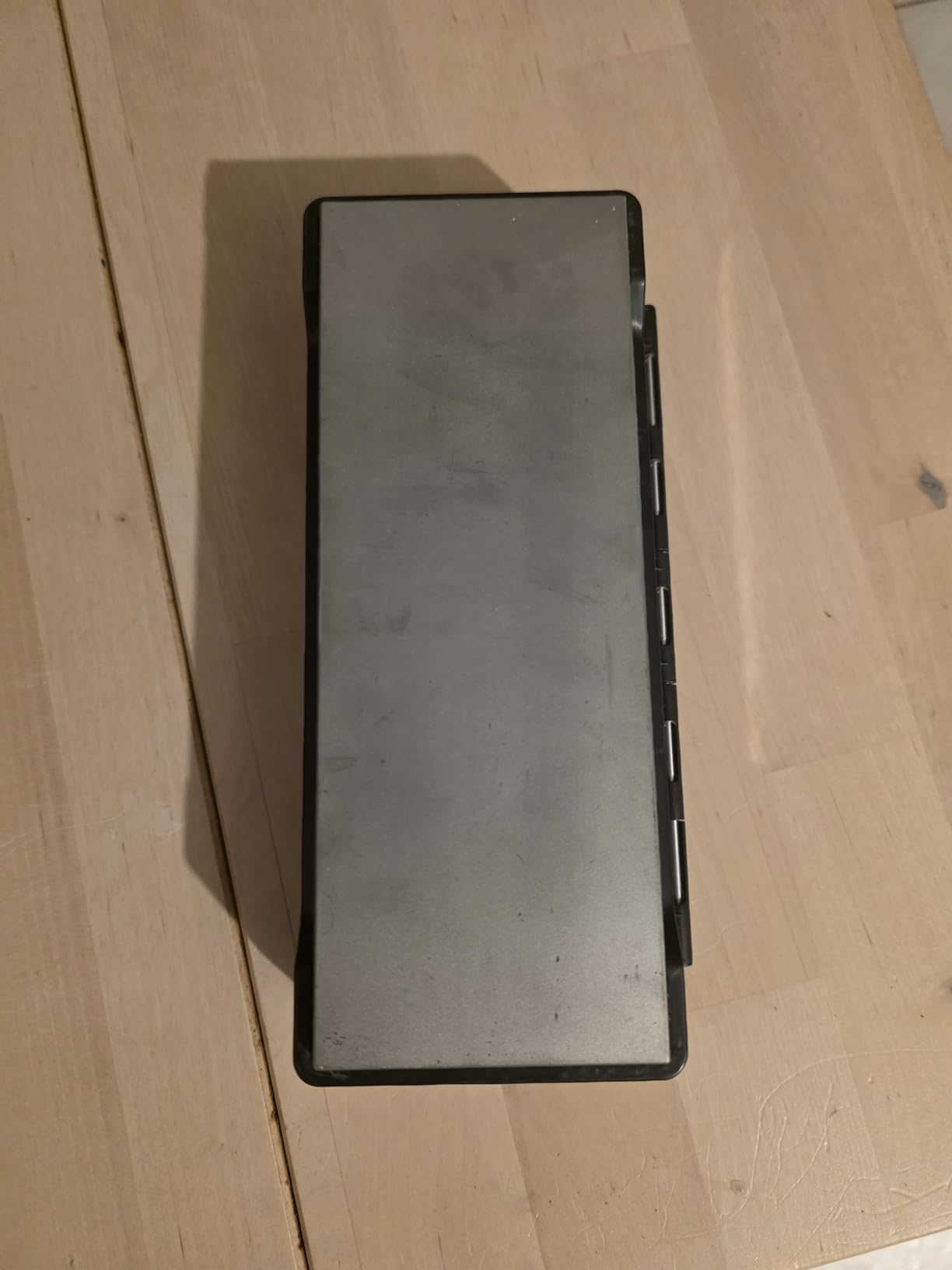
Reviewers praise the balance: fast enough for hardened and high-carbon steel, small enough that a beginner can control it, and a case platform that means you do not need a separate base. The recurring advice is to pair it with a strop or a finer stone, because 1200 grit is where it stops.
The same advice is a mild warning about this class of plate. On carbide-rich steel, the 1200 face will load with metal faster than a coarser plate, and once it glazes you are back to long strokes. Clean it with a brush and a drop of water every few sharpening sessions and it behaves.
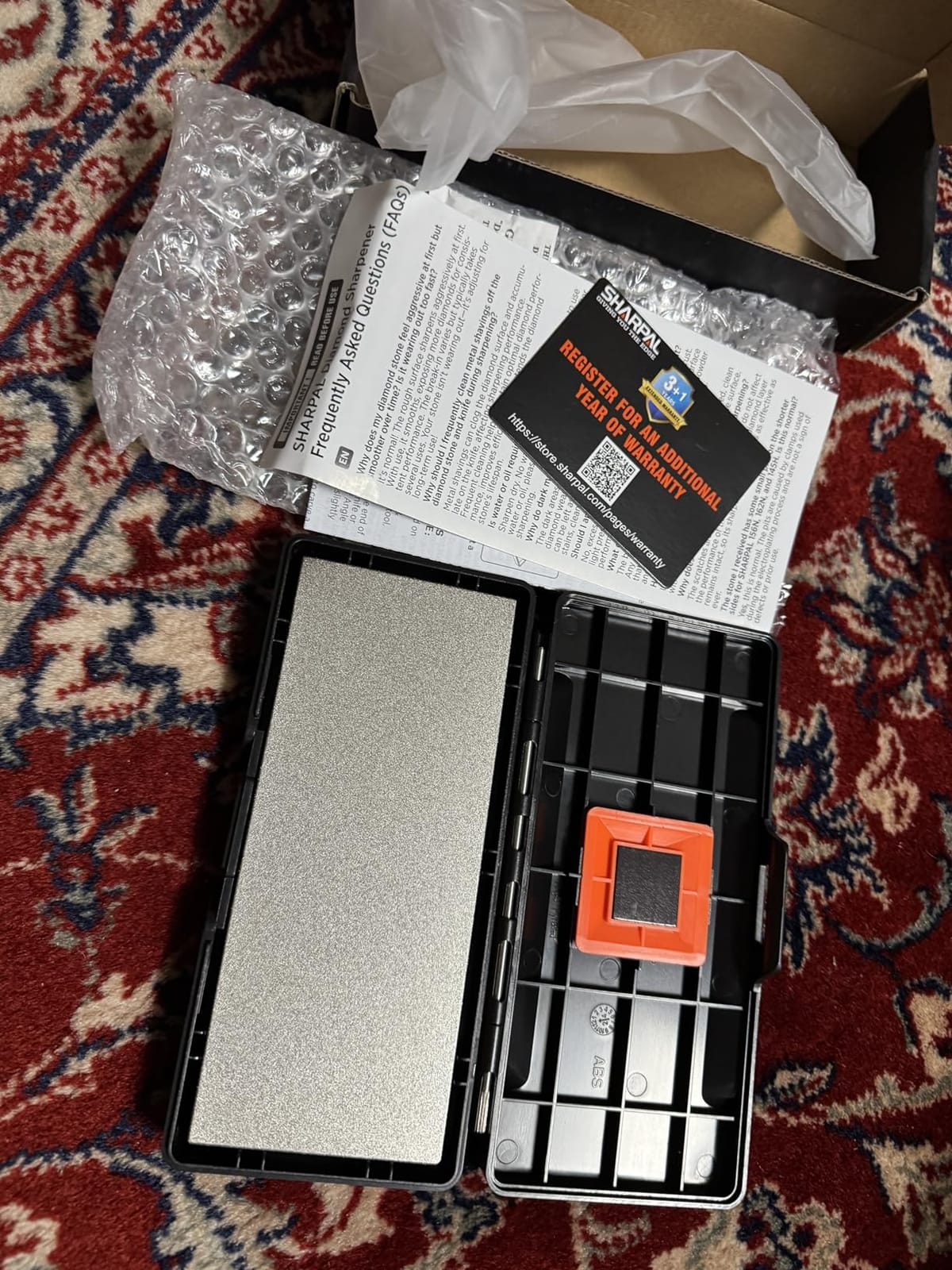
Why size decides the answer for some people?
If you sharpen full-length hunting knives, axes or hand plane irons, stroke length wins and the 8 inch plate is the better buy. If you sharpen penknives, small kitchen knives, scissors and chisels, the 6 inch face does the same job with less repositioning and easier angle control.
On hard steel specifically, the difference is speed rather than capability. Both plates cut D2 and S90V well. The bigger one just gets there in fewer strokes.
Who should skip this plate?
Skip it if you mostly work on long blades, if you want a fine finishing surface beyond 1200 grit, or if you already own the 8 inch SHARPAL, because the grit pairings are identical. Two plates with the same grits is a duplicate, not a system.
4. S SATC 8-Inch 400/1000 Diamond Plate: Best Budget Entry for Tool Steel
S SATC Diamond Sharpening Stone 2 Side Grit 400/1000 Diamond Plate Honing Stone 8-inch Hone Sharpener White
400 and 1000 grit dual face
8 inch machined steel plate
electroplated mono diamond
Pros
- Low entry cost into diamond sharpening
- plated design will not crater or need flattening
- 400 grit repairs dull edges
- 1000 grit handles routine honing
- also works on chisels and planer blades
Cons
- 400 and 1000 grits are limited for polished finishes
- lightweight plate can move without a base
- flatness and coating consistency vary between examples
This is the plate to buy when the question is whether diamond is worth the switch at all. The 400 face opens an edge and the 1000 face refines it, and because the plate is machined steel with electroplated monocrystalline diamond, it will not dish the way a waterstone does. For anyone who has watched a ceramic stone glaze over on D2, that flatness is the main event.
Where the grit range matters is on harder alloys. 400 grit is enough to set a bevel on hardened tool steel, and 1000 is enough to refine it into a keen working edge. It is not enough to finish S110V or Maxamet, where you would want a coarser start and a finer end, and the fine face will load quickly on carbides.
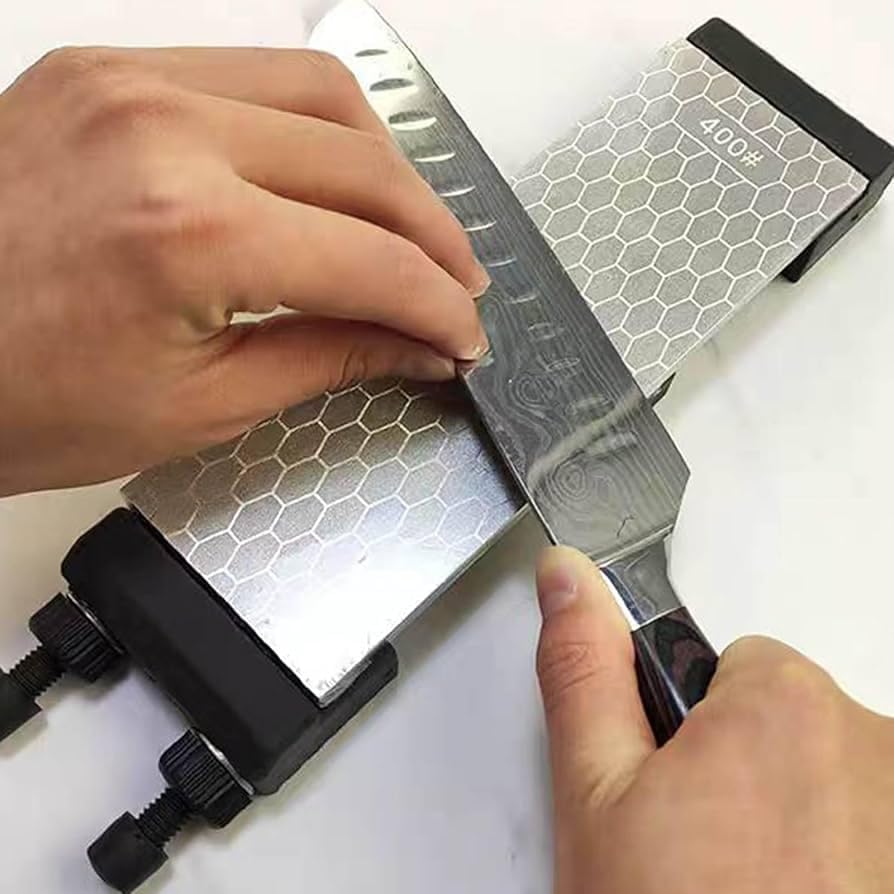
Reviewers treat this as a capable low-cost plate for kitchen knives plus light tool work, with the 400 grit doing the heavy lifting on dull edges. Some feel the grit range is short for polished finishes, and that is the honest limitation of a two-sided plate at this tier.
Two practical notes. The plate is light enough to move on its own, so a non-slip mat underneath matters more than it would with a heavy bench stone. And because plating consistency varies, inspect the surface under good light before you trust it with an expensive edge.
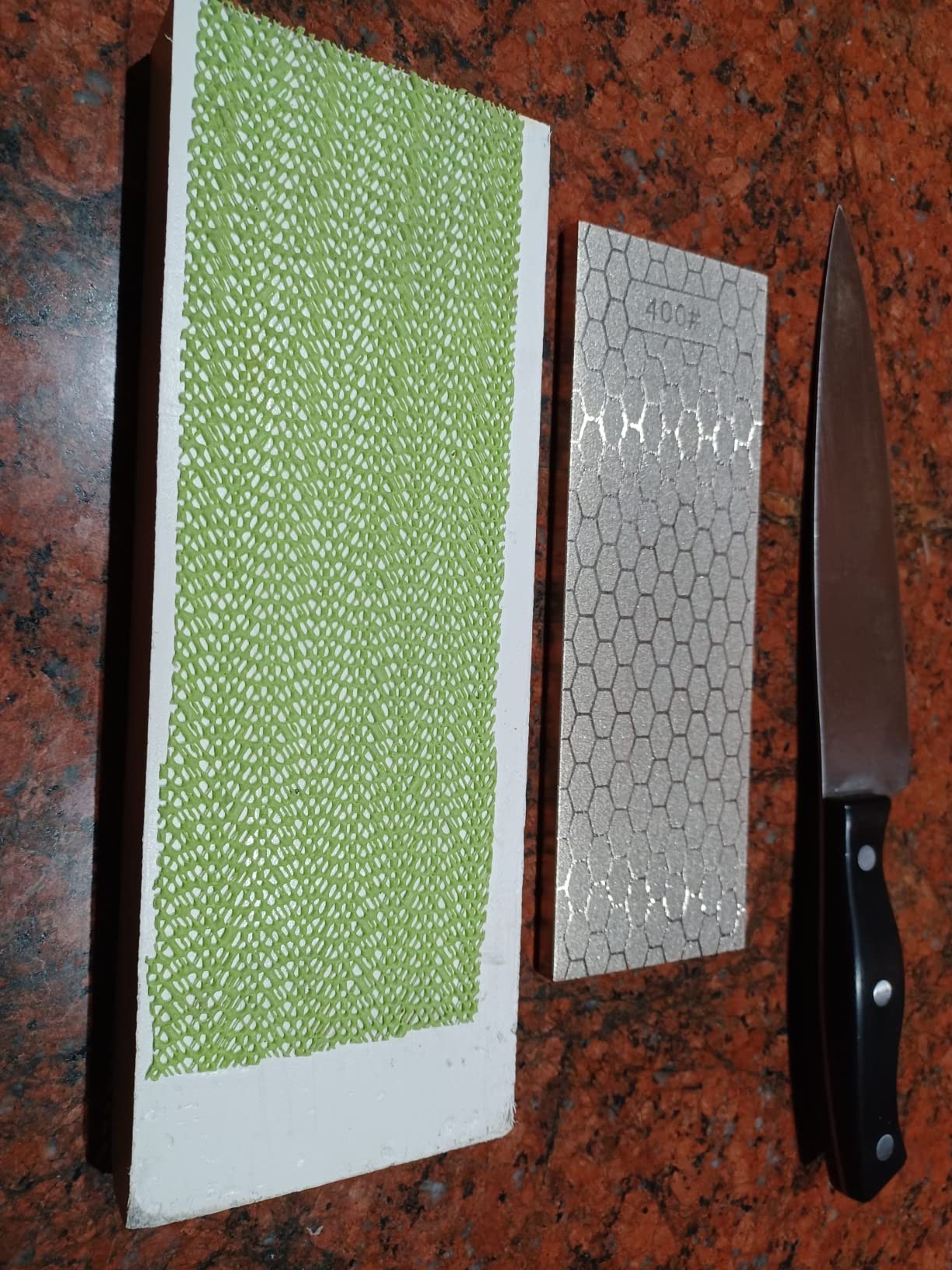
Whether it holds up on hardened chisels and plane irons
For a sharpening bevel that has been dulled rather than destroyed, yes. A 400 grit diamond face will clean up a rolled edge on a hardened chisel quickly, and because it does not dish you can keep the same reference angle across sessions. That repeatability is what makes a plated plate attractive for hand tools.
For a badly damaged or nicked edge, you are asking a 400 grit to do what a 325 or coarser does better, and it will be slower. Pair it with the DMT D8C if your work includes heavy repair.
Who should skip this plate?
Skip it if you need to sharpen very hard powder metallurgy steel as a primary job, if you want an edge finish finer than 1000 grit, or if you already own a two-sided plate at these grits. It is a first diamond plate, not a finishing system.
5. DMT FWFC 8-Inch DuoSharp: Best Portable Plate for Edge Repair
DMT FWFC DuoSharp Double-Sided Diamond Sharpening Stone for Knives and More, 8-Inch, Fine/Coarse, White
325 mesh coarse and 600 mesh fine
8 inch foldable plate
75 g total
Pros
- Compact and light enough to a toolbox or pack
- dual grit covers repair and finishing
- cuts noticeably faster than water or oil stones
- foldable handles protect the plate
- made in USA with micronized monocrystalline diamond
Cons
- Plastic handles feel flimsy and flex under pressure
- 8 inch surface is small for full-size bench work
- occasional reports of missing coating along an edge
The DuoSharp is the plate I recommend when someone wants real bench-stone performance in something that fits a drawer. The 325 mesh coarse face and 600 mesh fine face cover the two stages that matter on hard steel, and DMT builds these in the USA on a machined substrate rather than a stamped one. It cuts dry or with water, and no oil is needed.
That grit pairing is the strategic choice. 325 for opening a dull or damaged edge on S35VN and D2, 600 for refining without stepping down through four grits. Most of the forum complaint about stones that will not cut hard steel is really a complaint about starting too fine, and 325 coarse is the answer to it.
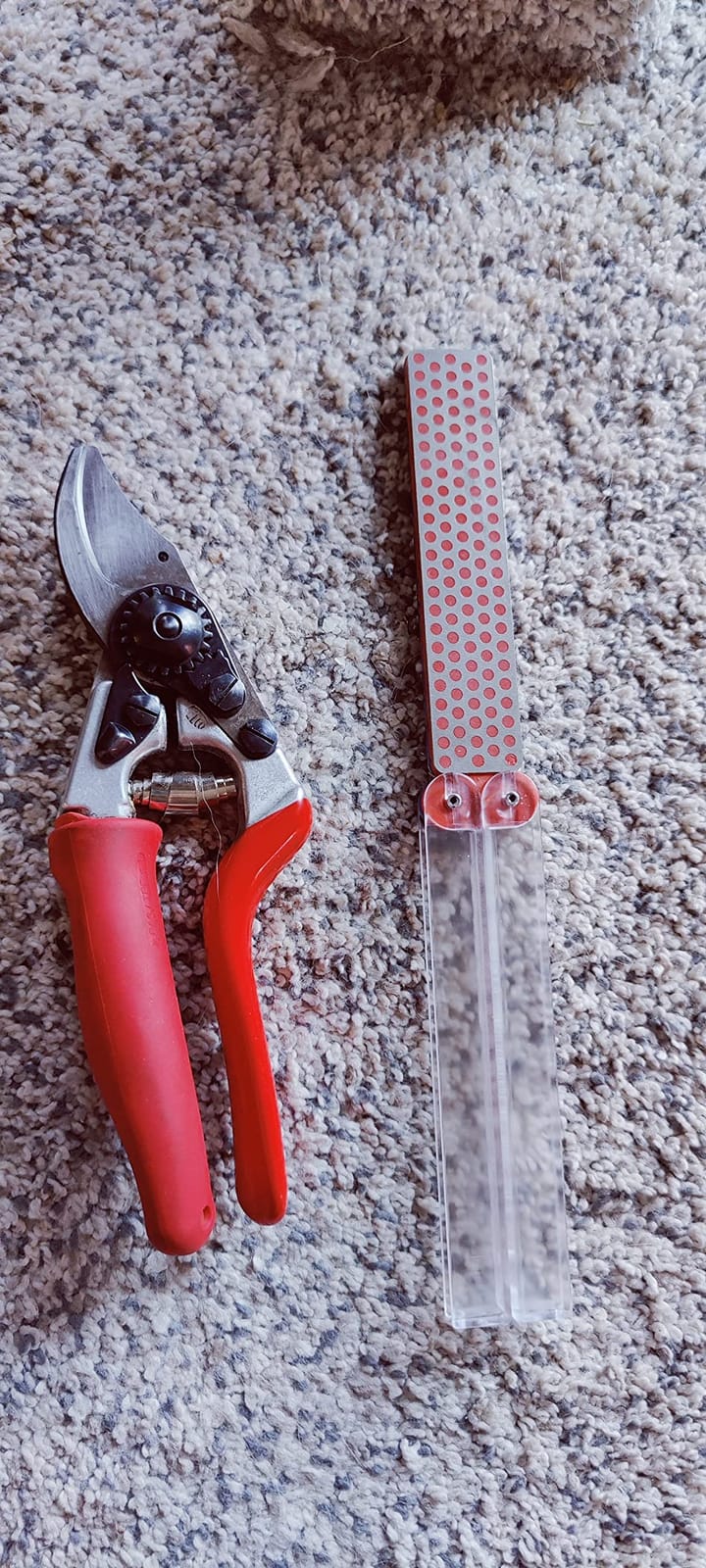
Owners like the portability and the fast, even cutting, and many use it as the companion to a larger bench stone. The most repeated complaint is the thin, slightly flexing plastic handle, which several reviewers would upgrade, and a small number report localized missing coating on arrival.
Check the coating before first use. Run a finger along the edges under a light, because a bare patch on a hard-steel edge will not cut evenly and there is no point discovering it halfway through a session.
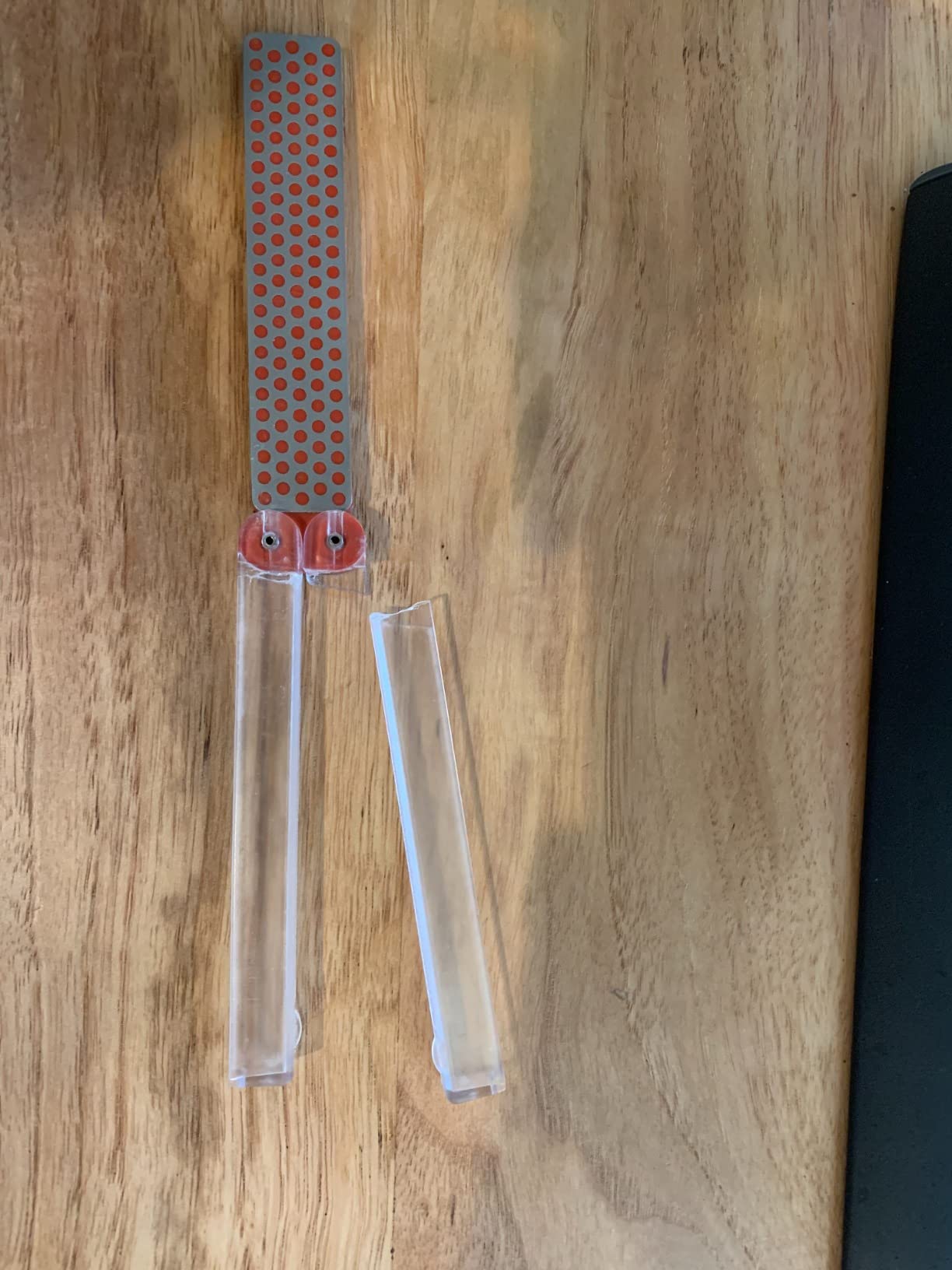
How the 325 and 600 pairing behaves on tough steel?
On S35VN and S90V the 325 face does the real work and the 600 face does the cleanup, and the combination gets you a working edge without a long progression. On Maxamet and CPM-M4 you would still want something coarser to start and a booster compound above 1000, because 600 is not a finishing grit.
The foldable design also means the plate is protected in transit, which matters if you are hauling it to a job site rather than using it at a fixed bench.
Who should skip this plate?
Skip it if you sharpen long blades daily and want maximum stroke length, if the flexing handle bothers you under heavy pressure on a thick chisel, or if you already own the 8 inch SHARPAL with a 325 and 1200 pairing, which covers a wider range.
6. Work Sharp 3-Sided Benchstone: Best All-in-One Sharpening System
Work Sharp Benchstone Knife Sharpener, 3 sided for faster manual pocket or hunting knife sharpening
400 grit, 800 grit and ceramic faces
20 and 25 degree guides
pivot-response base
Pros
- Three surfaces cover repair honing and polishing in one unit
- angle guides hold a consistent bevel for beginners
- pivot-response base follows blade curvature for even contact
- replacement abrasives extend service life
- fast cutting diamond on the two coarser faces
Cons
- Ceramic finishing face is less aggressive and slower on hardened steels
- angle guides need careful alignment to seat
- compact size limits stroke length on long blades
This is the pick for a beginner, and the reason is the angle guide rather than the abrasive. Holding 20 or 25 degrees by hand on a piece of D2 is genuinely hard, and the guide blocks remove the most common beginner failure, which is an uneven bevel. Remove the guides when you are confident and you have a freehand benchstone.
Aesthetically the three faces cover a full progression: 400 grit diamond to repair and set, 800 grit diamond to refine, and a fine ceramic face to polish. The diamond faces are what cut hard steel. The ceramic face is a finishing step, and on hardened steel it is the slowest and least aggressive part of the system.
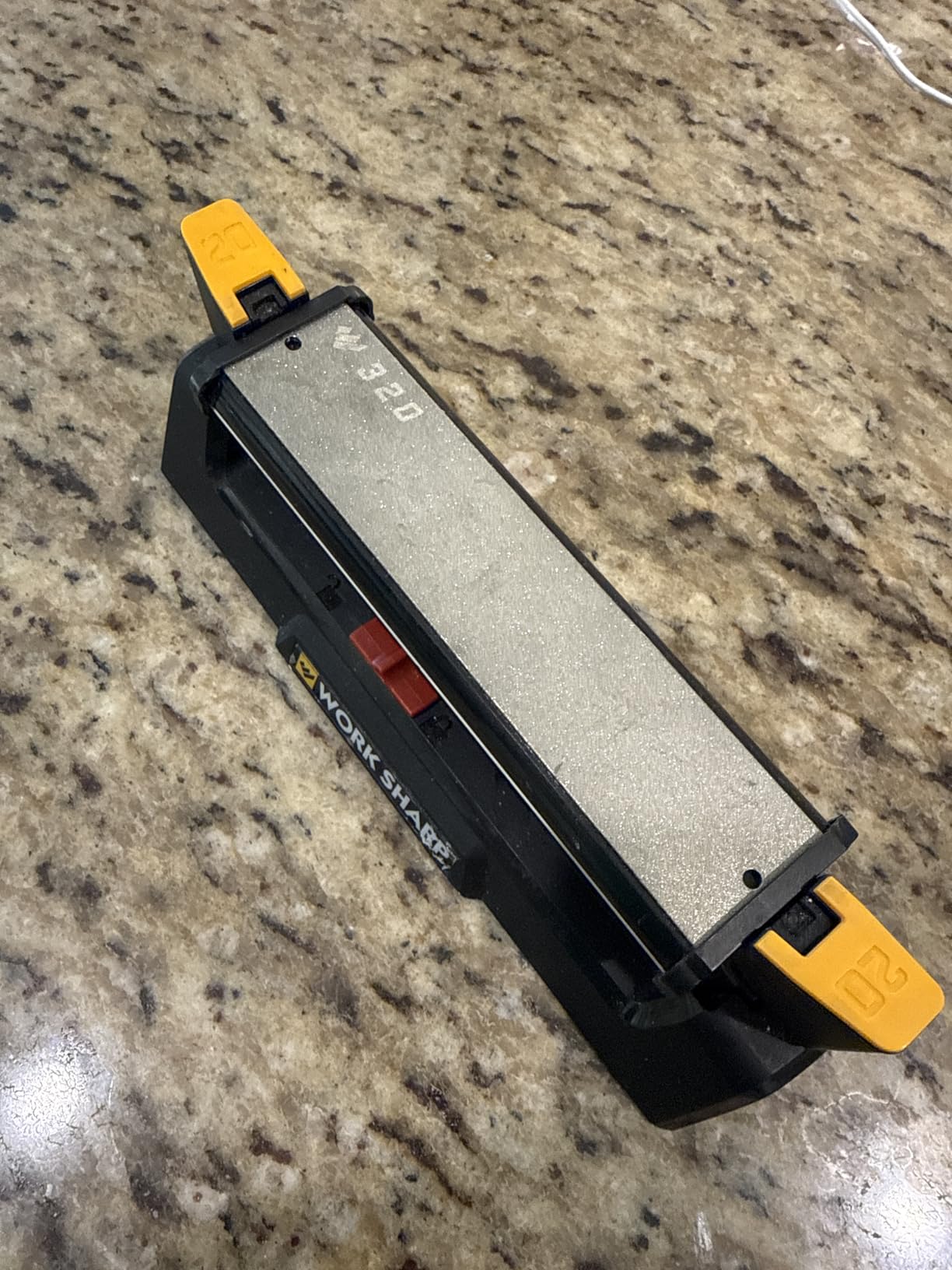
The pivot-response base is the feature enthusiasts credit most. It follows the curvature of the blade so contact stays even along a curved edge, and it can be locked rigid when you want a fixed reference. Replacement abrasives are sold separately, so the system does not die when one face wears out.
A few reviewers note the guide blocks take practice to seat quickly on every pass, which is fair. Expect a slightly slower rhythm than freehand. The 3-year warranty and a family manufacturing background add confidence for a first purchase.
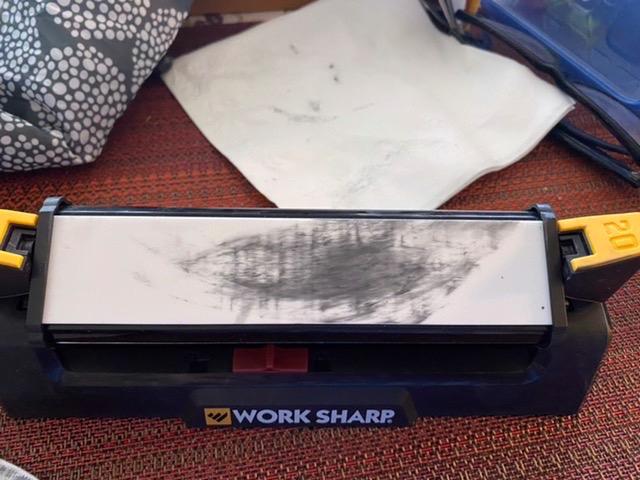
What it can and cannot do on S90V and D2?
It can set a bevel and refine a working edge on hardened tool steel and most stainless, and the 400 and 800 diamond faces do that quickly. The angle guide is what makes the result even rather than lopsided, which matters more on hard steel because you spend more time on the stone and mistakes are more expensive.
It cannot finish S110V, Maxamet or CPM-M4 the way a dedicated fine diamond or a CBN-charged stone can, and the ceramic face is too gentle to be the answer there. For those alloys, add a plate rather than relying on the system.
Who should skip this system?
Skip it if you already know your angles and want maximum stroke length on long blades, if your work is mostly on the hardest powder steels, or if you prefer buying one specialist plate over a multi-surface system. It is a teaching tool and an all-rounder, not an enthusiast finish.
7. DMT D8C Dia-Sharp Bench Stone: Best Continuous Coarse Plate for Reprofiling
DMT D8C Dia-Sharp Bench Stone – Diamond Knife Sharpener for the Workshop, Jobsite or Kitchen – Coarse (325) – Flat Diamond Sharpening – Non-Slip Knife Sharpener- Made in the USA – 8 x 3 x 0.38 Inches
continuous 325 grit face
8 x 3 x 0.38 in plate
four non-skid feet
Pros
- Stays permanently flat and doubles as a whetstone lapping plate
- very aggressive 325 grit that reprofiles edges fast
- heavy enough to stay put on large blades and chisels
- works on super steels including S110V and S90V
- never needs flattening
Cons
- Coarse only so it cannot finish an edge
- quality control varies with missing feet and surface bumps
- loose diamond flecks can gouge softer stones
This is the aggressive end of the list, and it is the plate I want on an edge that has been through firewood, bone or a dulling stone. The 325 grit is continuous rather than interrupted, so the surface has no recesses to catch on a tool point, and the plate is heavy enough at 8 by 3 by 0.38 inches that you can push real pressure into a chisel or a broadhead without it moving.
For hard steel this is a reprofiling tool, not a finishing tool. S90V and S110V owners report it cuts those alloys quickly, and the 325 grit is exactly the coarse start that forum consensus says is missing from most failed sharpening attempts. You follow it with a fine plate, not with this one.
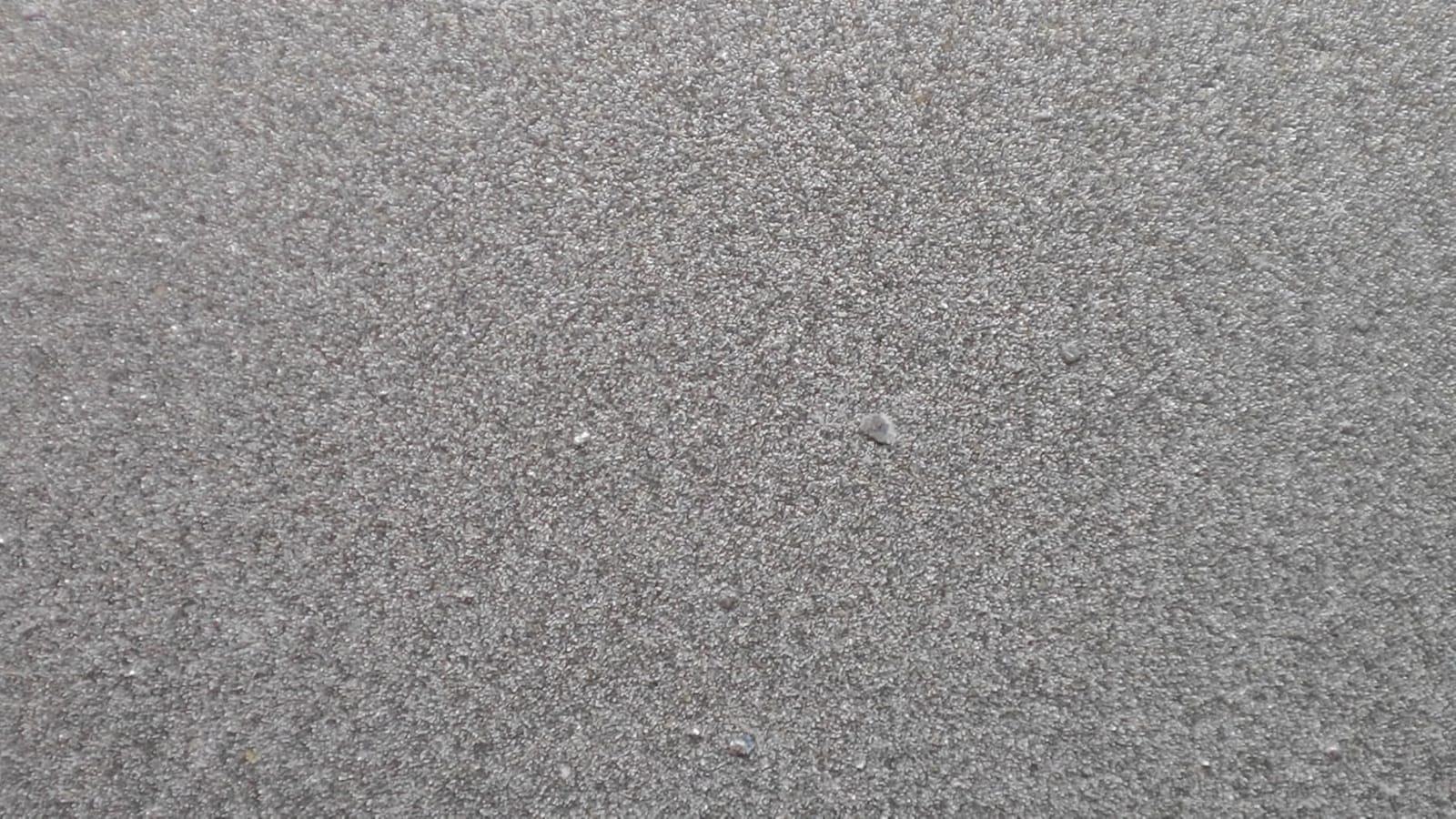
The lapping plate use is a genuine bonus. Because it never dishes, woodworkers use it to flatten a cupped waterstone, and that same flatness is what makes the sharpening result repeatable. A continuous face is also the right choice for tools with points and corners that would catch in an interrupted surface.
The 4.4 rating reflects real quality control complaints: missing rubber feet, a raised bump on one example, and inconsistent diamond coverage. Inspect it on arrival. Loose diamond flecks in the box are a known issue and can scratch a softer stone if you store them together.
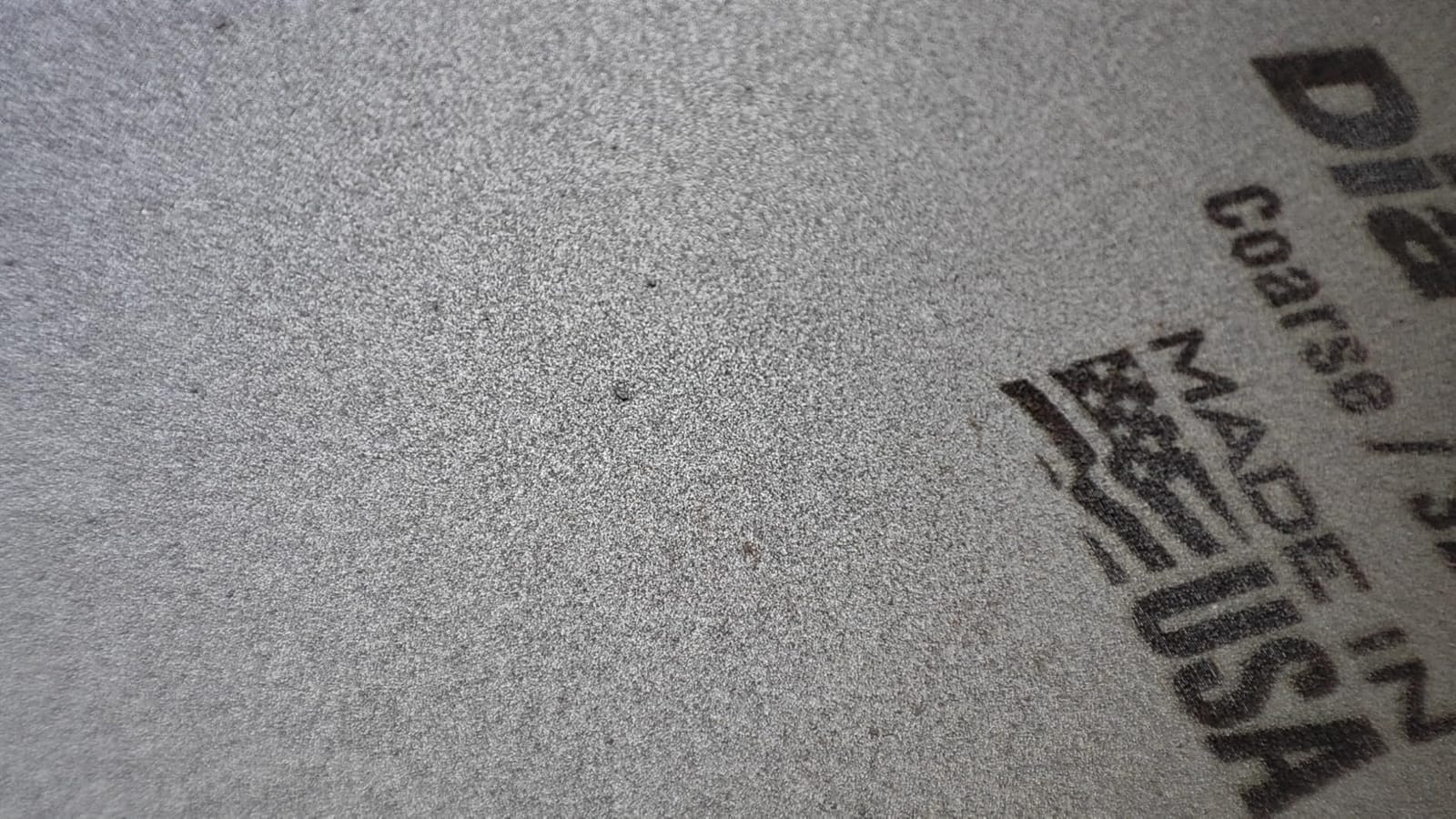
Why a continuous surface changes carbide behaviour?
An interrupted surface traps swarf in its recesses, which keeps the face clean on soft steel and soft copper. On carbide-rich steel, that trapped metal packs into the same recesses and reduces contact. A continuous surface has nowhere to hold debris, so it keeps cutting at the same rate longer on exactly the alloys where interrupted plates start to bog down.
The trade-off is edge geometry. A continuous coarse face is excellent for flattening a bevel and clearing damage quickly, and it leaves a more aggressive scratch pattern. You want a finer face afterwards regardless.
Who should skip this plate?
Skip it if you need one plate that does everything, because this one cannot finish an edge at all. Skip it if you already own a 325 grit plate, since a second coarse plate is redundant. Buy it as a coarse stage in a two-plate system, and pair it with the SHARPAL 162N for the fine half.
8. SHARPAL 181N Dual-Grit Diamond Sharpening File: The Most Reviewed Pick Here
SHARPAL 181N Dual-Grit Diamond Sharpening Stone File
325 and 1200 grit file faces
8.66 in long
160 g with sheath
Pros
- File shape reaches awkward angles on shears spades and garden tools
- dual 325 and 1200 grit covers reset and hone
- handles carbide titanium ceramic and super hard materials
- genuine cowhide leather sheath doubles as a strop
- paracord handle for camp use
Cons
- Narrow file format leaves a different scratch pattern than a bench stone
- 1200 grit is not fine enough for a mirror finish on hard steel
- less suitable for long straight bevel work than a wide plate
With more owner reviews than anything else in this roundup, the 181N is the file-shaped option, and the shape is the point. A narrow file reaches angles and slots that a wide plate physically cannot: the inside of a hedge shear, the narrow clearance on garden shears, the flat of a mower blade, the tip of a hatchet. Buyers consistently favour it as an all-purpose hand sharpener for axes, shears and blades that take abuse.
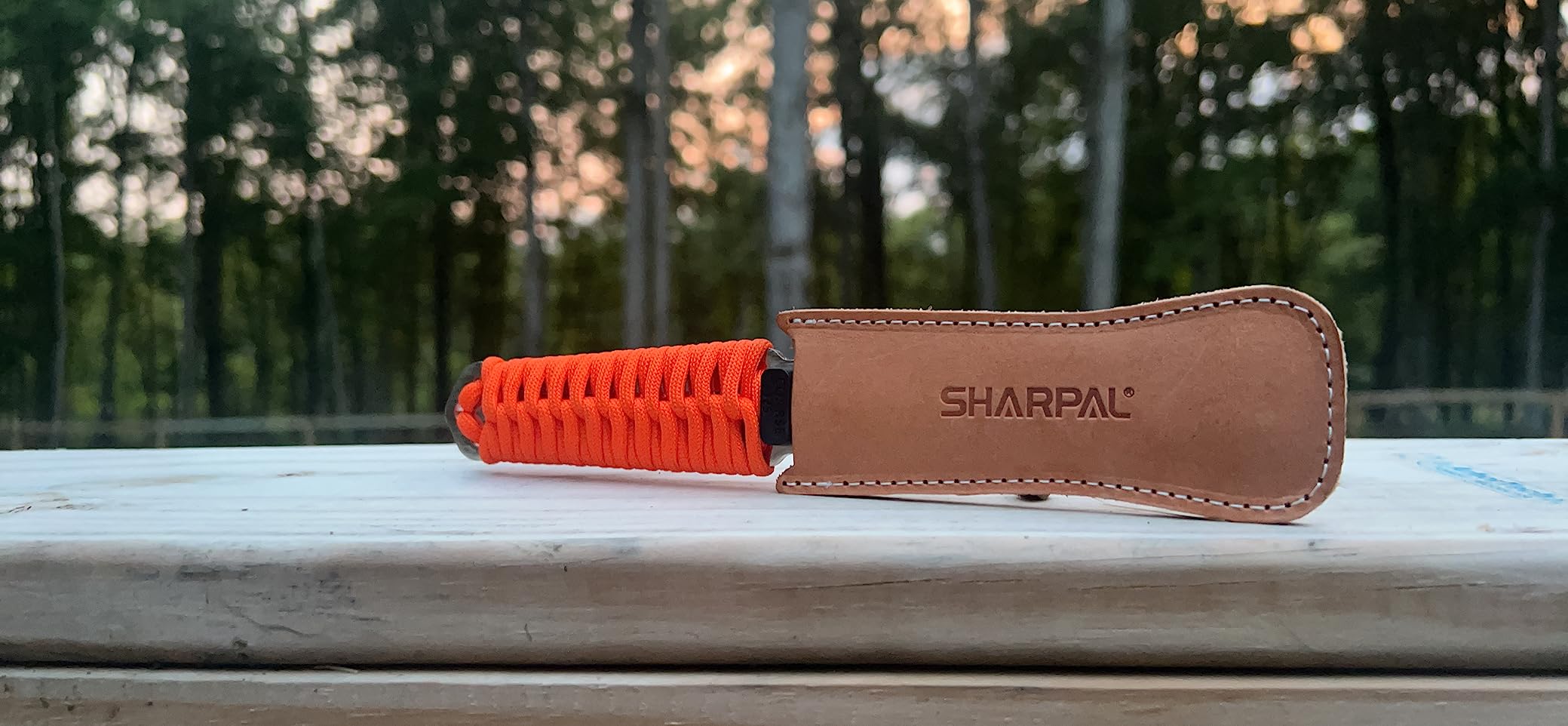
On hard steel, the electroplated monocrystalline diamond on a stainless base does what you would expect. The 325 face resets a damaged edge on carbide, titanium, ceramic and high speed steel, and the 1200 face brings it to a keen working edge. The included cowhide leather sheath is a genuine strop, which is the missing finishing step on a plate that stops at 1200.
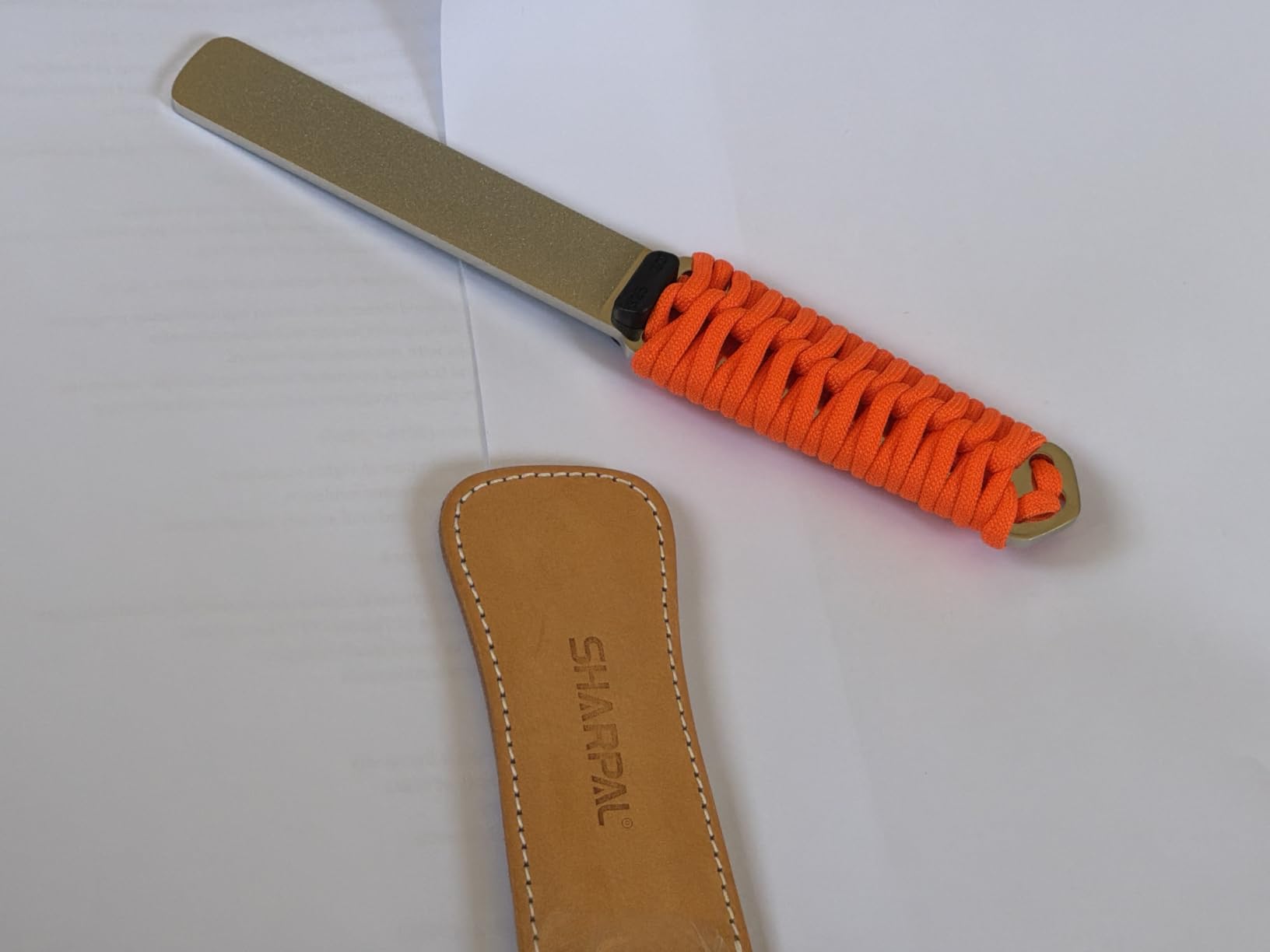
That combination matters for tool steel. A toothy working edge left by the 1200 face, then cleaned up on the cowhide sheath, gives you an edge that keeps its bite on tough materials. Enthusiasts note that a mirror polish is the wrong target for these steels anyway, so the file-plus-strop pairing suits the material rather than fighting it.
The paracord handle and 160 g weight make it a pack item. A few users find it less effective for long straight bevel grinding than a wide plate, and that is a shape limitation, not an abrasive one.
When a file format beats a flat plate?
A file wins whenever the working area is narrow or awkward. Shears, pruners, hedge shears, wood chisels with a tight mouth, a saw kerf, a mower blade sitting on a bench. It also wins when you want one tool that travels, because 160 g and a paracord loop is easier to justify than a plate and a case.
A plate wins when you want a long, straight, flat reference for a knife bevel or a plane iron. Trying to draw a straight bevel on a narrow file is possible but slower and less consistent.
Who should skip this tool?
Skip it if you want a polished mirror edge, if your main work is full-length bevel grinding on big knives, or if you already own a bench plate and a strop. As a companion to a bench setup it is excellent; as a replacement for one, it is the wrong shape.
9. DMT DiaFold Extra Fine/Fine: Best Travel Sharpener for Hard Steel
DMT DiaFold Portable Sharpening Stone – Double Sided, Foldable Diamond Knife Sharpener for the Workshop, Jobsite or Kitchen – Extra Fine/Coarse – Non-Slip – 9.5L x 5W x 3.25H Inches
extra fine and fine foldable pair
2.4 oz folded
raised dot bond pattern
Pros
- Folds flat at 2.4 oz for a pocket or wallet
- raised dot pattern keeps the surface clean and cutting
- washable and rinses back to new
- extra fine side polishes an already sharp edge on hard steels
- color-coded sides
Cons
- Plastic handle feels flimsy and plates lack grit labelling
- short working surface is awkward on long knives
- fine pairing is for honing rather than repairing damage
Be clear about what this pairing is for. Extra fine and fine is a honing and polishing combination, not a repair combination. It belongs in a pocket next to a bench plate, restoring an edge that is dull but undamaged, and it does that job well on tough steels like D2 and CM154 that owners report it refreshing quickly.
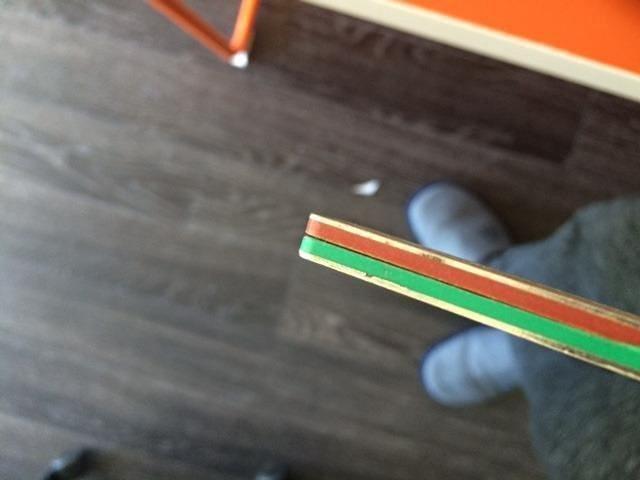
The raised dot bond pattern is the detail worth noting. Diamond sits on discrete raised points, so swarf falls away instead of packing into the face, and the plate rinses clean under water and goes back to cutting. On carbide-rich steel, where a continuous-plated face can load up, that self-cleaning behaviour is a genuine advantage.
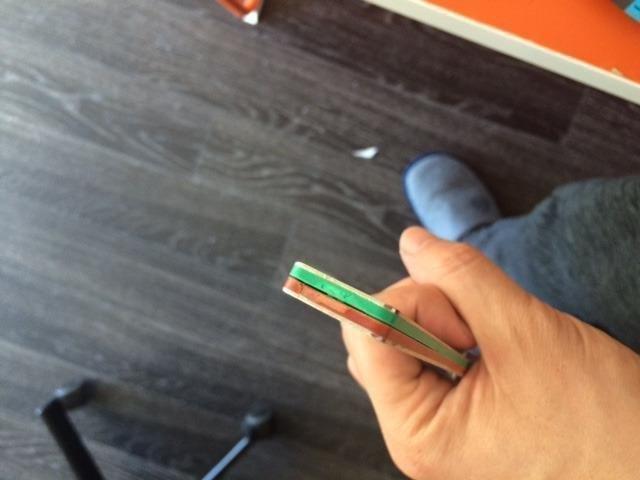
At 2.4 ounces it folds flat enough for a wallet, which no plate in this roundup manages. Reviewers call it a dependable travel and field sharpener and credit the washable surface for staying consistent over time.
The complaints are consistent and reasonable: thin plastic handles, a short working surface, and no grit labelling on the plates themselves. The colour coding is on the handles, so you are reading the handle rather than the abrasive.
Keeping a hard-steel edge between sessions
This is the plate I would carry to check an edge before a hunt or a big job. The extra fine side removes the final burr and cleans up the scratch pattern left by a 1200 face, and on a hard alloy that has been sitting in a sheath it is enough to bring back a shaving edge without touching the bevel.
It cannot rescue a dull-behaved edge. If the knife skips or has a visible roll, you need the coarse face of a plate like the SHARPAL 162N, not a fine pair.
Who should skip this sharpener?
Skip it if you do no travel sharpening, if your edges are always damaged rather than merely dull, or if you work on long fillet knives where a short face is frustrating. There is a coarse and extra coarse version of the DiaFold, but this fine pairing is the wrong tool for chips.
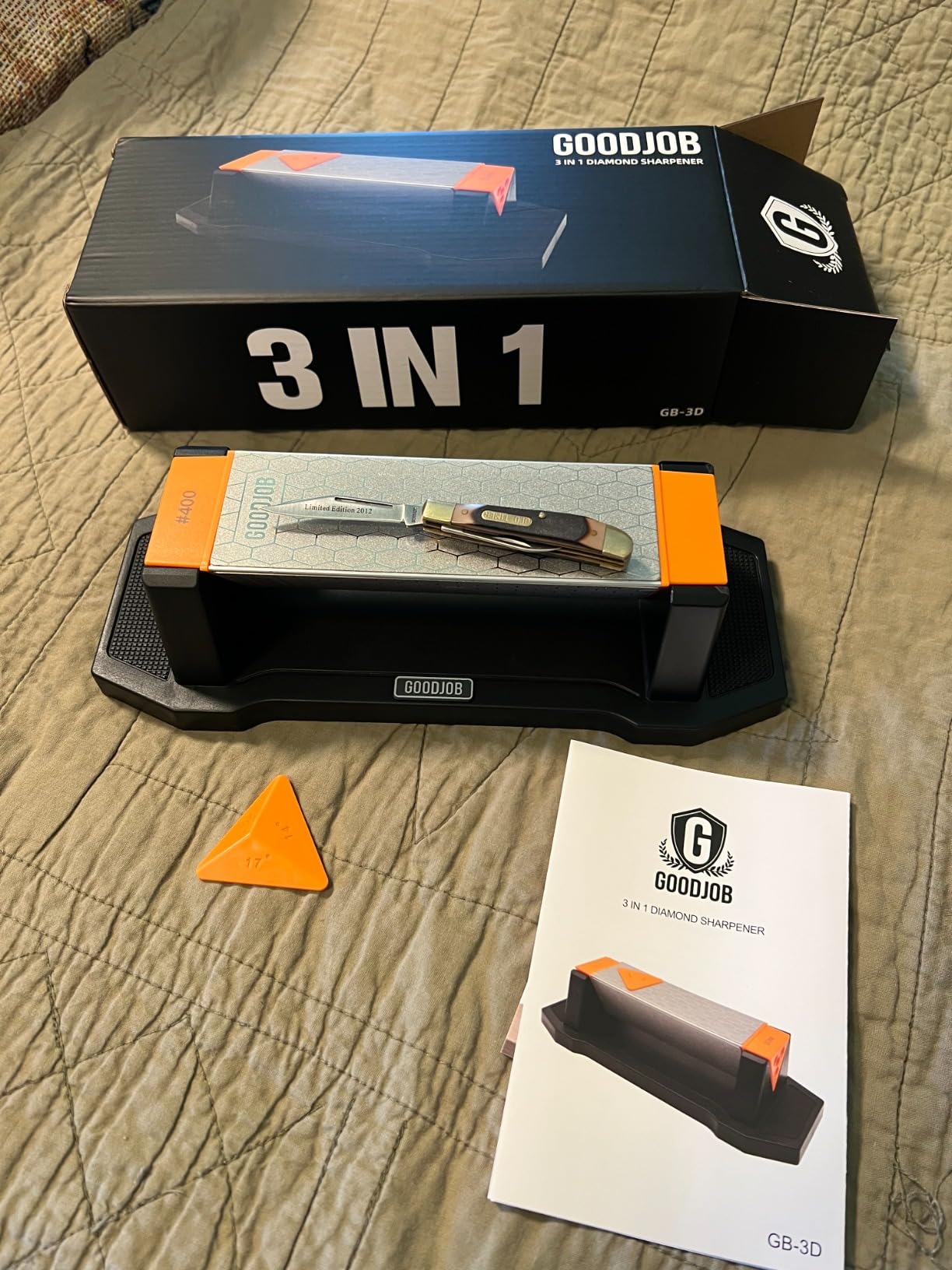
10. Goodjob 400/1000/8000 Tri-Sided Stone: Best for Chisels, Planes and a Polished Finish
Diamond Sharpening Stone, 3‑Sided Grit 400/1000/8000 for Knife Sharpening
400 and 1000 grit diamond faces
8000 grit ceramic finish
14, 17 and 20 degree guide
Pros
- Full progression from 400 repair through 1000 honing to an 8000 ceramic polish
- built-in angle guide helps beginners hold a consistent bevel
- works on high hardness steels plus knives and chisels
- wide non-slip base keeps the stone stable
Cons
- 8000 ceramic is a polishing step only
- angle guide has fewer options than some competing systems
- needs water or oil rather than sharpening dry
This is the only pick on the list that ends in a genuine polish, and that is why it earns its place on hand tools. A 400 face repairs a dulled chisel, a 1000 face refines it, and the 8000 ceramic face burnishes the edge to a finish a diamond plate alone cannot reach. For a hand plane iron or a carding scraper that has been properly set, that third stage is the difference between keen and truly sharp.
The built-in 14, 17 and 20 degree guide covers the common bevel angles for knives and light woodworking. The wide non-slip base is stable enough to work a chisel against, and the reported 1.1 pound weight keeps it from walking on the bench.
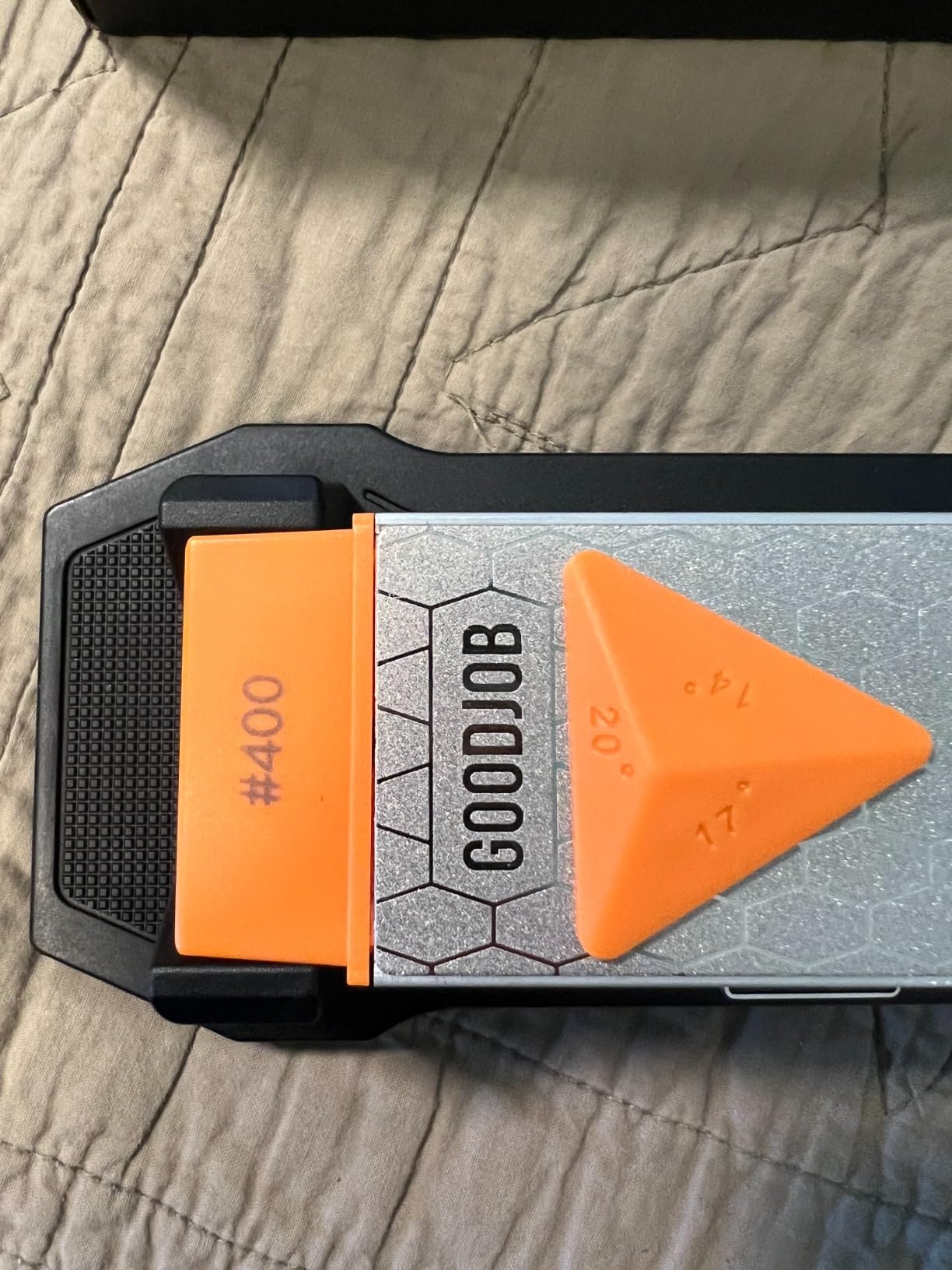
Owners appreciate having a complete progression in one small stone, and the angle guide is credited with making hand sharpening easier for beginners working with hard kitchen steel and chisels. The 8000 face delivers a polished result, and it is correctly understood as the final step rather than a repair surface.
Two things to plan around. It works wet, with water or honing oil, so it is the one pick here that is not a dry sharpener, and you rinse and store it after use. And the angle guide has fewer options than some competing systems, so 25 and 30 degree edges need freehand work.
What it does for a hand tool edge that a diamond plate cannot?
A chisel or plane iron is about geometry as much as sharpness. The 400 and 1000 diamond faces set a clean, flat bevel, and then the ceramic face removes the scratch pattern that would make the edge feel rough on hardwood. Diamond grit at 1000 leaves a visible tooth; ceramic at 8000 takes it away.
On hardened tool steel that combination works well because the coarse stage is doing the removal and the hard steel is only being polished at the end, which is far kinder to the stone than trying to cut all the way through in ceramic.
Who should skip this stone?
Skip it if you sharpen dry as a habit, if your tools use bevel angles above 20 degrees, or if you work primarily on S110V, Maxamet or CPM-M4 and need a coarser diamond start than 400. It is a hand-tool and finishing system more than a hard-powder-steel system.
How to Sharpen Hard Steel with a Diamond Stone?
Five steps, and the order matters more than the brand. Most reports that a diamond stone will not cut hard steel are reports that somebody started at 1000 grit.
Start coarser than feels necessary. For a dull, chipped or factory edge on D2, S90V, S110V or Maxamet, begin at 325 grit or coarser. The 400 and 1000 faces on the tri-sided picks are correct only if the edge is merely dull.
Climb the ladder in real steps. 325 to 600 to 1200 works. Jumping from 1000 straight to a mirror target on hard steel is what makes a session last three times longer than it should.
Keep the angle and light the pressure. On hard steel the abrasive is doing the work, not you. Set a guide if you have one, use the full plate, and let the stone cut rather than leaning on it.
Deburr every stage. Raise a burr on one side only, then remove it on the other. A burr left on Maxamet or S110V will fold over and chip later.
Finish with a strop or compound. A cowhide strop, a loaded leather wheel, or a CBN or diamond spray matched to your finest grit cleans up the last of the scratch pattern. Above 1000 grit on CPM-M4, Maxamet or Vanax, that booster is close to required rather than optional.
Swarf management is simple and it decides how long the plate lasts. Brush or rinse metal off the face every few minutes, more often on the fine side and more often on carbide-rich steel. A glazed face is the main reason a good diamond plate starts to feel like a bad one.
Monocrystalline vs Polycrystalline, Resin-Bonded vs Plated
Monocrystalline means the abrasive is a single crystal with no internal grain boundaries, so it fractures predictably and exposes a new facet when it wears. Polycrystalline is many small crystals bonded together, which fractures more easily and more randomly. Monocrystalline diamond is the more durable of the two and is what most enthusiast plates use, and every plate in this roundup except the Work Sharp ceramic face specifies it or a micronized variant.
Plated means diamond particles are electroplated onto a steel substrate in a thin layer. It is the most common construction, it is what SHARPAL, DMT and S SATC use, and it is extremely flat. Resin-bonded means diamond is held in a resin layer that is thicker and more forgiving, which sheds metal more readily and tolerates heavier use but wears faster. Sintered means diamond is held in a vitrified or metal-bonded block, the hardest-wearing construction of all and the one you pay most for.
The connection to hard steel is the part most guides miss. On D2, S35VN, S90V and the powder metallurgy alloys, a thin plating has less material to give, so it wears down to the steel substrate sooner. A thicker resin bond or a sintered block holds more diamond, and holding more diamond is what keeps the cutting rate up on an alloy that resists abrasion. Substrate thickness then decides whether the plate stays flat after that happens. Credit-card-thin steel dishes; 0.33 to 0.38 inch plate does not.
Continuous vs Interrupted Diamond Surfaces
A continuous surface is solid diamond from edge to edge, like the DMT D8C. An interrupted surface is diamond clusters with gaps between them, like the Smiths DCS4 and the DMT DiaFold raised-dot pattern. The interrupted design traps swarf in the recesses, which keeps the face clean and self-cleaning on ordinary steel and copper.
For hard steel, the choice inverts. Carbide-rich steel generates metal dust faster, and that dust packs into the recesses of an interrupted surface, cutting off contact and making the plate feel blunt. Tool edges with points, tips and corners also catch in the recesses. That is why the continuous plate is the better coarse stage on Maxamet and S110V, and why the interrupted pattern is preferred for pointed tools and hooks where the grooves deliberately catch filings.
Store diamond plates apart from each other. Loose diamond flecks from a coarse continuous plate will scratch a finer surface, and a fine face with a nick in it will never cut evenly again.
How to Choose a Diamond Sharpening Stone?
Five criteria decide whether a plate serves hard steel well, and grit comes first because a wrong grit is the single most common reason people conclude that diamond does not work on their knives.
1. Grit ladder. You need a coarse face around 325 grit, not a face at 1000 that does everything. If you only want one plate, a dual-sided 325 and 1200 pairing covers the widest range on hard steel. Add a coarser plate if you regularly repair chips on S110V or above.
2. Plate size. An 8 by 3 inch face gives long straight strokes for long blades. A 6 by 2.5 inch face is more controllable for short knives and beginners. A 4 inch face is for touch-ups, not regrinds.
3. Substrate thickness. This is the hardest spec to find in a listing and the one that matters most on hard steel. Look for a stated thickness; 0.33 inch and above is what you want. Plates with no stated thickness are usually thin steel and will dish over time under carbide load.
4. Bond type. Plated is the value choice and is fine for most hard steel work. Resin-bonded sheds swarf better and is worth it if you sharpen dirty outdoor tools. Sintered is the durability choice for daily professional use.
5. Base and finishing. A non-slip base or rubber feet matters more than it sounds, because hard steel needs steady pressure. A continuous plate can double as a lapping plate for flattening a cupped waterstone. And decide where your finishing happens, because no plate here goes past 1200 grit except the tri-sided ceramic system. A strop or a booster compound is part of the plan, not an optional extra.
If you already have a machine and you are weighing powered sharpening against hand stones for the same hard steel, our guides to the best bench grinders for sharpening tools and the best benchtop belt grinders for tool sharpening cover that side. For a permanent place to keep all of this, our best steel workbenches for home shops roundup is worth a look, because a flat, stable bench surface is what lets you use a light hand on a hard plate.
Frequently Asked Questions
Is whetstone or diamond better?
Diamond is better for hard steel, and a whetstone is better for a refined final edge. A waterstone or ceramic stone loads and glazes on D2, S90V or Maxamet before it removes meaningful material, while a diamond plate keeps cutting. For a polished kitchen bevel, finish the diamond work on a high-grit ceramic or a strop.
Are diamond whetstones better?
Diamond whetstones are better for hard, abrasion-resistant steel because industrial diamond keeps a fresh cutting surface far longer than aluminum oxide or silicon carbide. They are worse for fine finishing, since even a 1200 grit plate leaves a scratch pattern that ceramic or a strop removes more cleanly. Use them for removal and refinement, not for the last stage.
Is D2 steel hard to sharpen?
D2 is moderate rather than extreme. Hardened D2 responds well to a 325 or 400 grit diamond, then refines at 1000 or 1200. The real difficulty is not hardness but the chromium-rich carbides, which make a glazed stone feel like no progress is being made. Start coarser, clean the face often, and it sharpens like ordinary tool steel.
What is the hardest knife steel to sharpen?
The hardest steels to sharpen are the powder metallurgy alloys such as S110V, Maxamet, K390, Vanax and CPM-M4, because vanadium and chromium carbides resist abrasion far more than simple high carbon steel. Practitioners on chefknivestogoforums recommend a coarse 220 to 320 grit start, small grit steps, and a CBN or diamond spray booster above 1000 grit.
Are DMT diamond stones good?
DMT plates are consistently regarded as the default high-quality diamond bench stone. They use micronized monocrystalline diamond on a machined steel substrate, cut faster than water or oil stones, stay flat without lapping, and are made in the USA. The D8C coarse bench stone is the pick here, and its main limitation is that it is coarse only.
Does a diamond stone dish or wear out?
A diamond plate will not dish the way a waterstone does, and a quality plate should stay flat for years. It will eventually wear down, and credit-card-thin steel substrates wear much faster than solid plate under carbide-rich steel. Look for a stated substrate thickness of 0.33 inch or more, and clean swarf off the face regularly to keep the cut rate up.
Conclusion: Which Diamond Stone for Which Steel?
For most people sharpening hard steel, the SHARPAL 162N 8-inch plate is the best diamond sharpening stone for hard steel: a 325 face that sets a bevel on D2 and S90V, a 1200 face that refines it, and 0.35 inch of stainless substrate that keeps it flat. Match the coarse half of the problem to the steel. D2, S7 and A2 start at 400 grit on the S SATC or the Work Sharp benchstone. S90V, S110V, K390, Maxamet and CPM-M4 start at 325 grit on the SHARPAL 162N or the DMT D8C, and above 1000 grit on those alloys add a CBN or diamond spray booster.
Finish where your plate cannot. No diamond plate here goes past 1200 grit except the Goodjob tri-sided system, so a cowhide strop, a loaded leather wheel or a ceramic face completes the edge. Buy one plate, not three, and add the second only when you know which steel you keep sharpening.