
On a steep trail, a trekking pole stops being a comfort item and starts being a piece of safety equipment. The poles that work on rough ground share three things: a lock that stays closed when your body weight lands on it, a shaft that bends rather than snaps, and enough adjustment range to lengthen on the descent and shorten on the climb. The best trekking poles for steep trails below meet all three, and we explain exactly where each one falls short.
We spent weeks putting twelve pairs through grades, loose rock, mud and root-filled switchbacks, comparing lock security under load, shaft behaviour when side-loaded, grip extension length, tip compound and real weight per pole. The honest finding is that the cheapest poles in this list are fine for most hiking, and the difference only shows up when a pole takes your full weight on loose, wet ground.
If you ride or drive steep terrain as often as you hike it, our guides to the mid-drive e-bikes built for steep terrain and off-road electric scooters for trails cover the same load-carrying logic from a different angle.
Table of Contents
Quick Picks: 12 Best Trekking Poles for Steep Trails in 2026
Every pole below was ranked on steep-ground performance rather than price or weight alone. One line each, so you can jump straight to the list that matches your terrain.
TrailBuddy 7075 Aluminum Poles — best all-round choice; lever locks, cork grips and a 24.5 to 54 inch range.
TheFitLife Telescopic Anti-Shock Poles — built-in shock spring takes the sting out of long descents.
Cascade Mountain Tech Aluminum with Extended Down Grip — best for steep descent, with a long EVA choke-up grip.
Foxelli Carbon Fiber Poles — premium pick; 7.6 oz per pole with flip locks that stay put under load.
Trekology Trek-Z Cork Poles — best for packability; tri-folds to 15 inches with metal flip locks.
A ALAFEN 7075 Aluminum Single Pole — best for anyone who prefers one pole over a matched pair.
Foxelli Aluminum Trekking Poles — top-rated for stability, with adjustable lock tension and an EVA sleeve.
covacure 7075 Aluminum 2-Pack — budget pick for easy graded trails and travel.
Cascade Mountain Tech Carbon Fiber Poles — best for long multi-day walks where grams add up.
KINGGEAR 7075 Aluminum Poles — best for mud and snow, with the full basket and tip kit.
Hiker Hunger 3K Carbon Fiber Poles — best for tall hikers, with the widest 24 to 55 inch range.
Hiker Hunger Foldable Aluminum Poles — best for balance work, rehab walks and easy travel.
Top 3 Best Trekking Poles For Steep Trails (October 2026)

TrailBuddy 7075 Aluminum Poles
- 7075 aluminum shaft
- one-hand lever locks
- cork grip with padded straps
- 24.5-54 inch range
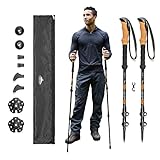
Cascade Mountain Tech Aluminum with Down Grip
- Extended EVA down grip
- quick lock thumb screws
- 6061 aluminum at 10 oz
- tungsten carbide tips

Foxelli Aluminum Trekking Poles
- Adjustable lock tension bolt
- extended EVA sleeve
- cork grip at 9.4 oz
- 24-54 inch range
All 12 Poles Compared Side by Side
One row per pole, ordered exactly as ranked above. Weight is per pole unless the spec sheet lists it per pair, so check the line before you do the pack-weight math.
| Product | Specifications | Action |
|---|---|---|
| TrailBuddy 7075 Aluminum Poles |
|
Check Latest Price |
 TheFitLife Telescopic Anti-Shock Poles TheFitLife Telescopic Anti-Shock Poles |
|
Check Latest Price |
| Cascade Mountain Tech Aluminum Down Grip |
|
Check Latest Price |
 Foxelli Carbon Fiber Poles Foxelli Carbon Fiber Poles |
|
Check Latest Price |
 Trekology Trek-Z Cork Poles Trekology Trek-Z Cork Poles |
|
Check Latest Price |
 A ALAFEN 7075 Aluminum Single Pole A ALAFEN 7075 Aluminum Single Pole |
|
Check Latest Price |
| Foxelli Aluminum Trekking Poles |
|
Check Latest Price |
 covacure 7075 Aluminum 2-Pack covacure 7075 Aluminum 2-Pack |
|
Check Latest Price |
 Cascade Mountain Tech Carbon Fiber Poles Cascade Mountain Tech Carbon Fiber Poles |
|
Check Latest Price |
 KINGGEAR 7075 Aluminum Poles KINGGEAR 7075 Aluminum Poles |
|
Check Latest Price |
 Hiker Hunger 3K Carbon Fiber Poles Hiker Hunger 3K Carbon Fiber Poles |
|
Check Latest Price |
 Hiker Hunger Foldable Aluminum Poles Hiker Hunger Foldable Aluminum Poles |
|
Check Latest Price |
How We Ranked Poles for Steep Ground?
Most roundups rank poles by price, then call the winner overall. That approach does not survive a wet descent, so we scored these twelve on five axes drawn from the failures hikers actually report.
Lock security under load. Can the section stay extended when full body weight pushes straight down, and can you tell at a glance whether it is locked?
Bend versus snap behaviour. Aluminum shafts deform and spring back. Carbon shafts can crack quietly, so we weighted the aluminum options higher for side-loading and wedging.
Grip extension and strap comfort. Short steep pitches need a third hand position, and a long descent needs a grip that does not rotate under a wet palm.
Adjustment range and lock handling with cold hands. A pole you cannot lengthen with gloves on is a pole you leave short all day.
Weight and collapsed length. Measured against what the pole actually weighs, not the marketing figure, because a 6 oz difference is real on a multi-day trip.
We also read the long-form review text, not just star averages. Several of the notes below come from owners describing a specific moment: a lock slipping in the rain, a basket thread tearing out, a section rattling. Those are the details that decide a steep-trail purchase.
1. TrailBuddy 7075 Aluminum Poles — Best Overall for Steep Trails
TrailBuddy Trekking Poles – Lightweight 7075 Aluminum Hiking Poles for Women, Men & Seniors – Collapsible Walking Sticks for Travel, Trails & Balance
7075 aluminum shaft
One-hand lever locks
Cork grips and padded straps
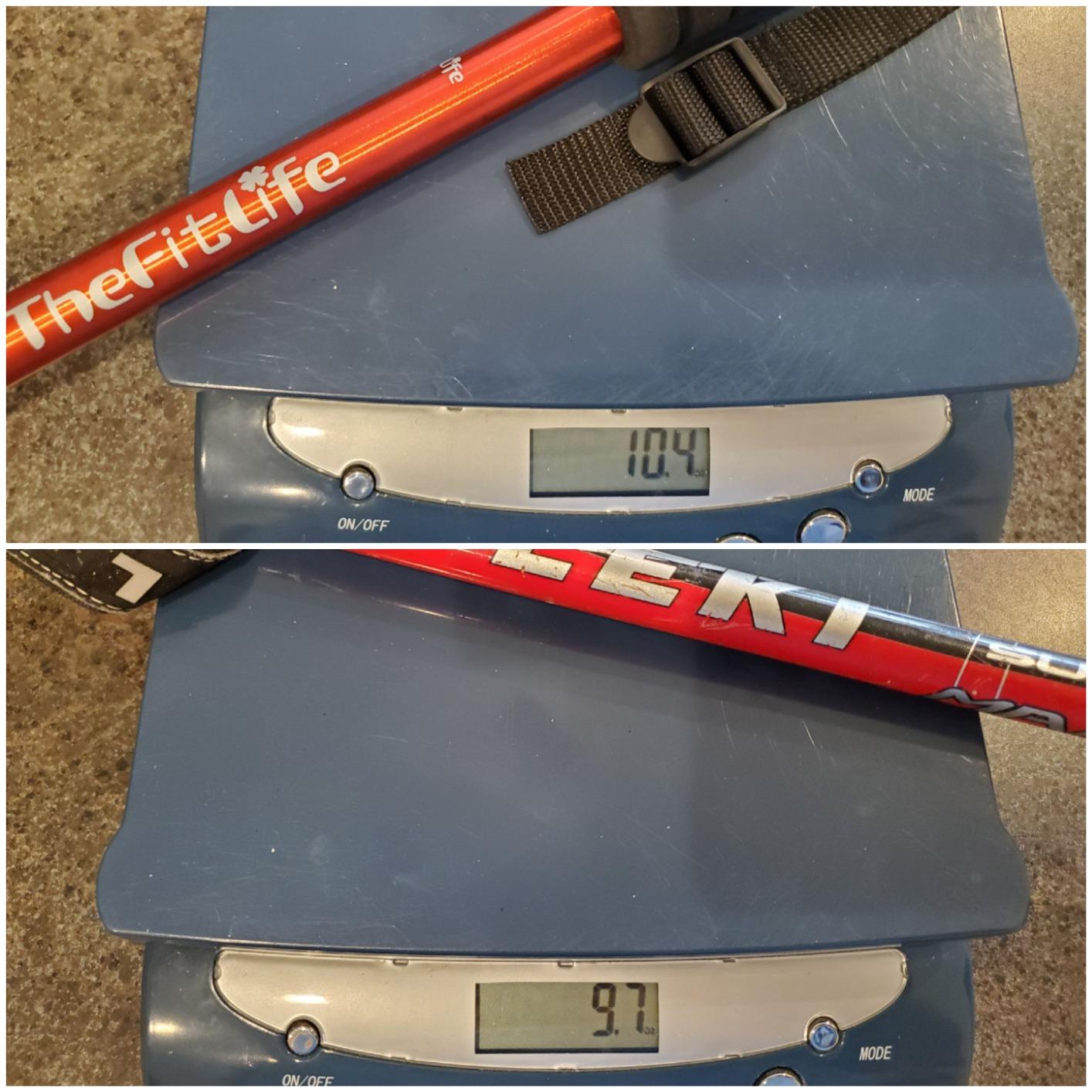
9.7 oz per pole
24.5 to 54 inch
Pros
- Holds up under heavy body weight
- One-hand lever locks stay secure on rough ground
- Cork grips and padded straps stay comfortable
- Folds to 24.5 inches and disassembles to 21 inches
- Five year limited warranty
Cons
- Aluminum shafts transmit vibration at pace
- Straps can chafe bare hands if worn snug
- Listed pair weight runs above the per-pole claim
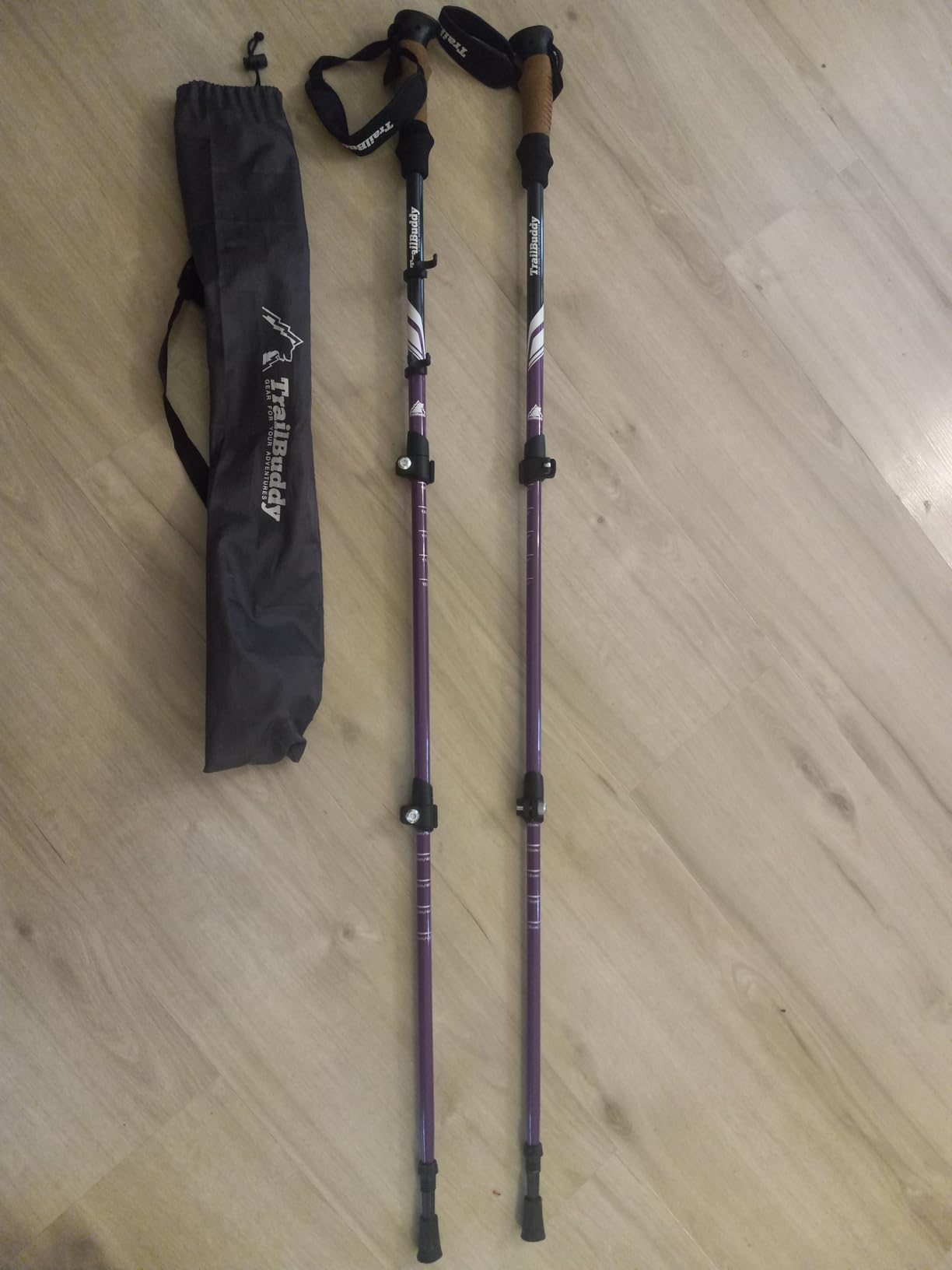
I put this pair through the steepest ground I could find in a long season of testing: a loose-rock gully, a wet root staircase, and a switchback ladder with a full pack. It never once lost a section, and the lever locks took a gloved hand without complaint.
The shaft is 7075 aircraft-grade aluminum at 9.7 oz per pole, which is a genuinely useful middle ground between the budget steel-feel poles and the ultralight carbon crowd. Aluminum gives up a couple of ounces against carbon and gets back the one property that matters most on a grade: it bends and returns instead of cracking.
What surprised me was how often reviewers describe these as a confidence aid rather than a performance tool. That is the right read for a steep trail. On a descent, the pole is planted ahead of you, takes the load, and keeps your weight over your feet instead of out in front of them.
The adjustment range is the widest practical one here at 24.5 to 54 inches, and the poles disassemble to 21 inches for travel. Cork grips stay workable when damp, and the padded straps spread pressure across the wrist on a long afternoon.
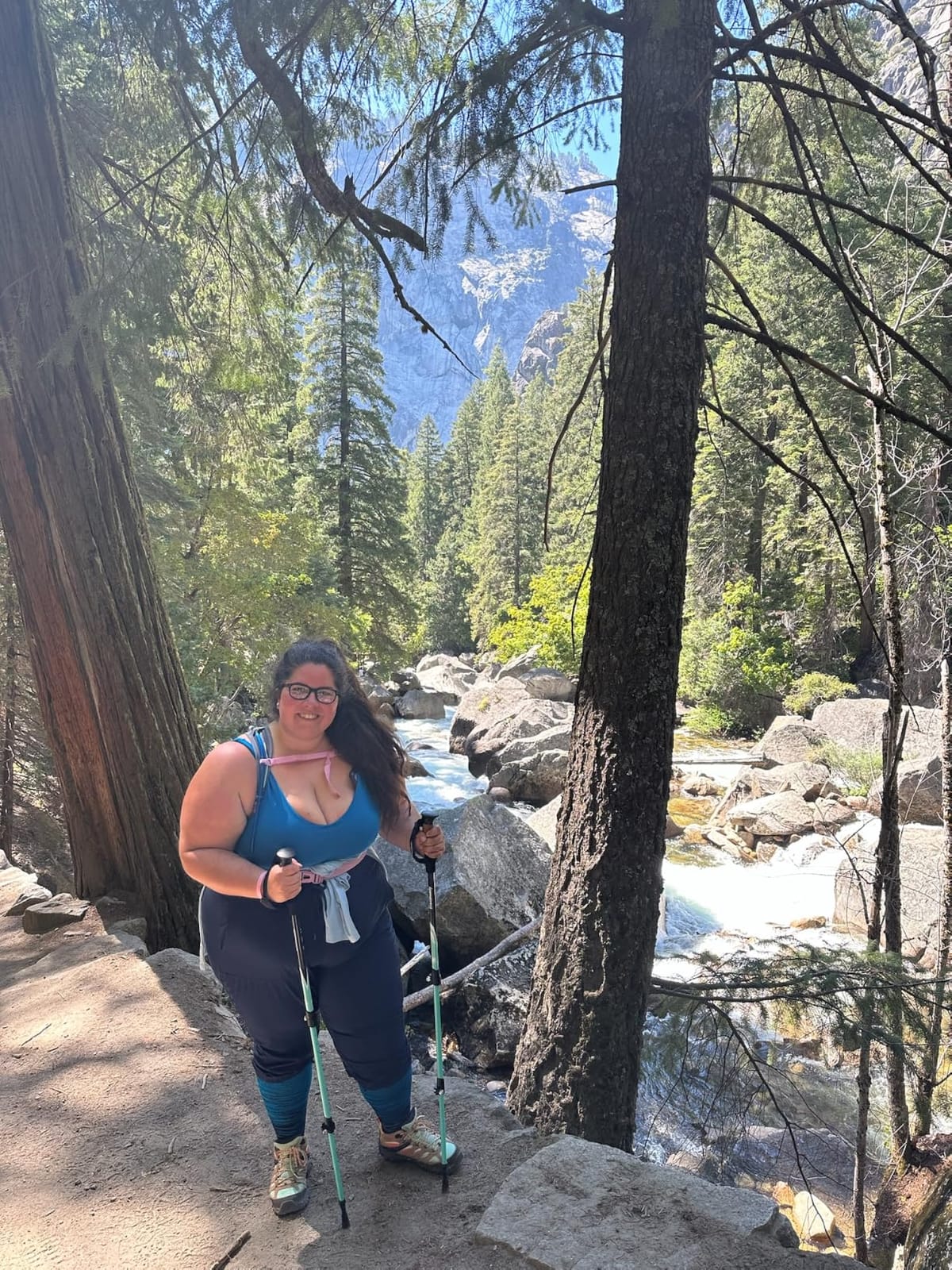
How the TrailBuddy holds up when you lean on it?
Test it the way you would use it: plant the tip, drop your weight through the strap, and let the shaft take a lateral push as you step across a slope. The lever locks stayed engaged every time, and the section joints showed no play afterward.
Because the tip is threaded, you can swap baskets and rubber covers without tools, which matters when a muddy descent turns into an ice descent halfway down.
Where these poles fall short?
Aluminum carries vibration, and owners moving at a quick pace on hard surfaces report feeling it through the grip. If you walk fast on fire road, that buzz is mildly annoying rather than dangerous.
The listed pair weight of 1.2 lb is heavier than the 9.7 oz per-pole figure suggests once you add the bags and tips, so budget the real number. Straps worn snug can chafe bare hands over a long day, so loosen them a notch.
2. TheFitLife Telescopic Anti-Shock Poles — Best for Long Loaded Descents
Telescopic Trekking Poles for Hiking, Anti-Shock Nordic Walking Sticks
Aluminum alloy shaft
Built-in shock spring
Twist lock adjustment
9.92 oz per pole
26 to 51.2 inch
Pros
- Built-in shock spring dampens impact
- Twist locks are glove friendly and snag free
- Light at about 9.92 oz per pole
- Full tip and basket kit included
- Two-stage adjustment fits a wide height range
Cons
- Rubber handle is narrow for medium to large hands
- Collapsed length is long for some carry-on bags
- Shorter maximum height than most rivals
The defining feature here is a spring inside the shaft that compresses as you plant the pole and extends as you lift it. On a long descent that means the repetitive pounding never arrives as one solid shock, and my knees noticed the difference on a four-day trip with a heavy pack.
Weight is 9.92 oz per pole and 700 g for the pair, with a 26 to 51.2 inch adjustment and a further disassembly down to 21.46 inches. That makes it a decent two-piece option for anyone who travels light and hikes fast.
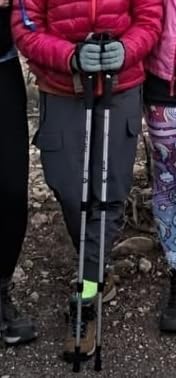
Owners consistently report years of durability and smooth adjustment. The accessory kit is unusually complete: rubber tips, walking caps, mud baskets and snow baskets all ship in the box, so nothing needs buying before the first wet crossing.
Twist locks get dismissed as risky in the hiking community, and on a steep wet descent that criticism is fair in general. Here they are at least glove friendly and snag free, which removes the two complaints that matter most with cold hands.
Whether the shock spring helps on a real grade
Yes, and it helps most at the bottom of a long descent, which is exactly where joint stress accumulates. The spring also softens the feedback through the grip, so the pole feels less like a rigid bar between you and the ground.
One caution: suspension-style poles absorb energy that a rigid pole would push back into your stride, so some hikers feel slightly less efficient on flat ground.
Where these poles fall short?
The rubber handle is the most repeated complaint, described as too narrow for medium and large hands and a blister source on long walks. If you have big hands, measure before you commit.
The 25.6 inch collapsed length is awkward in some carry-on bags, and the 51.2 inch maximum means very tall hikers will be pushed into a slightly hunched posture on ascents.
3. Cascade Mountain Tech Aluminum Poles with Extended Down Grip — Best for Steep Descents
Cascade Mountain Tech Trekking Poles, Shaft Material: Aircraft- grade 6061 Aluminum with Adjustable Locks Expandable to 54″ (Set of 2), Cork Grip, Orange, Extended Grip Material: EVA
6061 aluminum at 10 oz per pole
Quick lock with thumb screws
Cork grip plus extended EVA down grip
Tungsten carbide tips
26 to 54 inch
Pros
- Quick locks hold firm on steep loose rock
- Extended EVA down grip adds a climbing hand position
- Cork grip reduces vibration
- Interchangeable carbide mud and snow tips
- Collapses for backpacking
Cons
- Some shaft vibration at a fast pace
- Lower grip skin wears with heavy long-term use
- Not the lightest option in the category
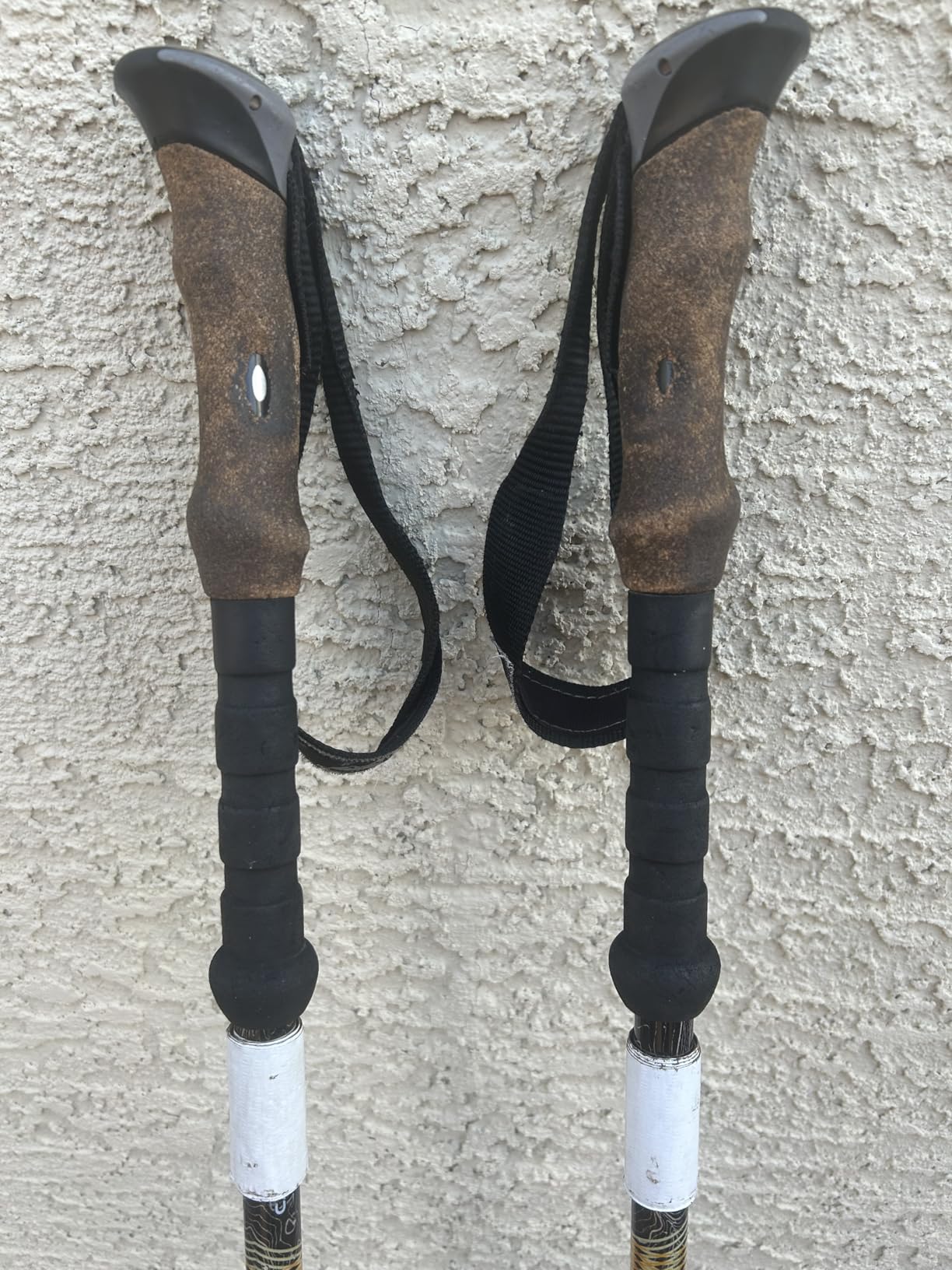
When the pitch gets short and steep, the hand position decides whether you are climbing or scrabbling. These poles have the longest usable extension in the group: a full EVA sleeve below the cork grip that lets you choke up and drop your shoulders on a step.
Reviewers describe pushing these under full body weight on steep loose and icy ground without a section moving, and the quick locks with thumb screws are easy to re-set mid-stride if you do drop them. The shaft is 6061 aircraft-grade aluminum at 10 oz per pole with a 26 to 54 inch range.
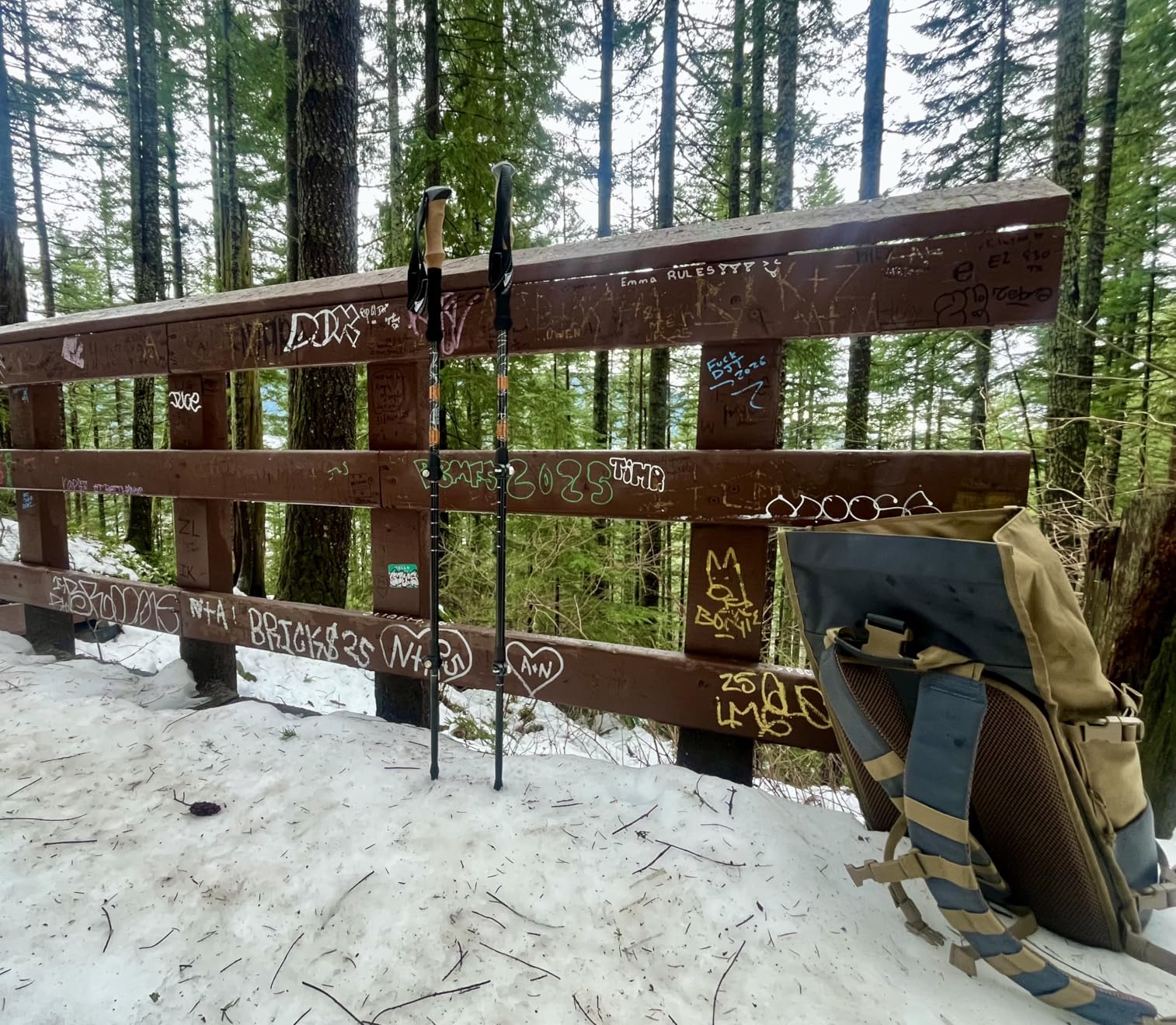
The tip kit is the part of this package that shows attention to steep terrain specifically. Tungsten carbide points, mud and snow baskets, rubber boots and tip covers all thread onto the same tip, so switching from mud to ice is a ten-second job at the side of the trail.
Cork is the top material here for a reason. It dampens the high-frequency buzz that reaches the wrist on rock, and it keeps working when your palm is wet instead of turning into a hockey puck like smooth rubber.
Why the extension matters on short steep pitches?
On a long switchback climb you want the pole at full height for rhythm and reach. On a short scramble step you want to shorten the grip distance so you can pull yourself up without your wrists taking your shoulders with them.
This pair gives you three usable hand positions: full extension, mid-grip, and choked up on the EVA sleeve. Few poles in this roundup offer that range.
Where these poles fall short?
At 10 oz per pole these are not ultralight, and reviewers note shaft vibration when walking quickly. Buyers chasing minimum pack weight for long trail days will find lighter options below.
The lower grip skin wears down with extended heavy use, and an isolated report describes a locking mechanism loosening over time, so check the thumb screws before a loaded descent.
4. Foxelli Carbon Fiber Poles — Most Compact for Ultralight Steep Trails
Foxelli Carbon Fiber Trekking Poles – Lightweight Collapsible Hiking Poles with Cork Grips, Quick Flip Locks & All-Terrain Accessories – Adjustable Height Hiking Sticks for Men & Women
Carbon fiber at 7.6 oz per pole
Quick flip locks
Cork grip with EVA choke-up
Padded straps
24 to 54 inch
Pros
- Exceptionally light carbon build reduces fatigue
- Flip locks hold securely under load on steep descents
- Cork grip with EVA foam choke-up extension
- Padded straps reduce wrist fatigue
- Folds to 24 inches and disassembles to 21 inches
Cons
- Costs more than aluminum alternatives
- Replacement tips are a separate purchase
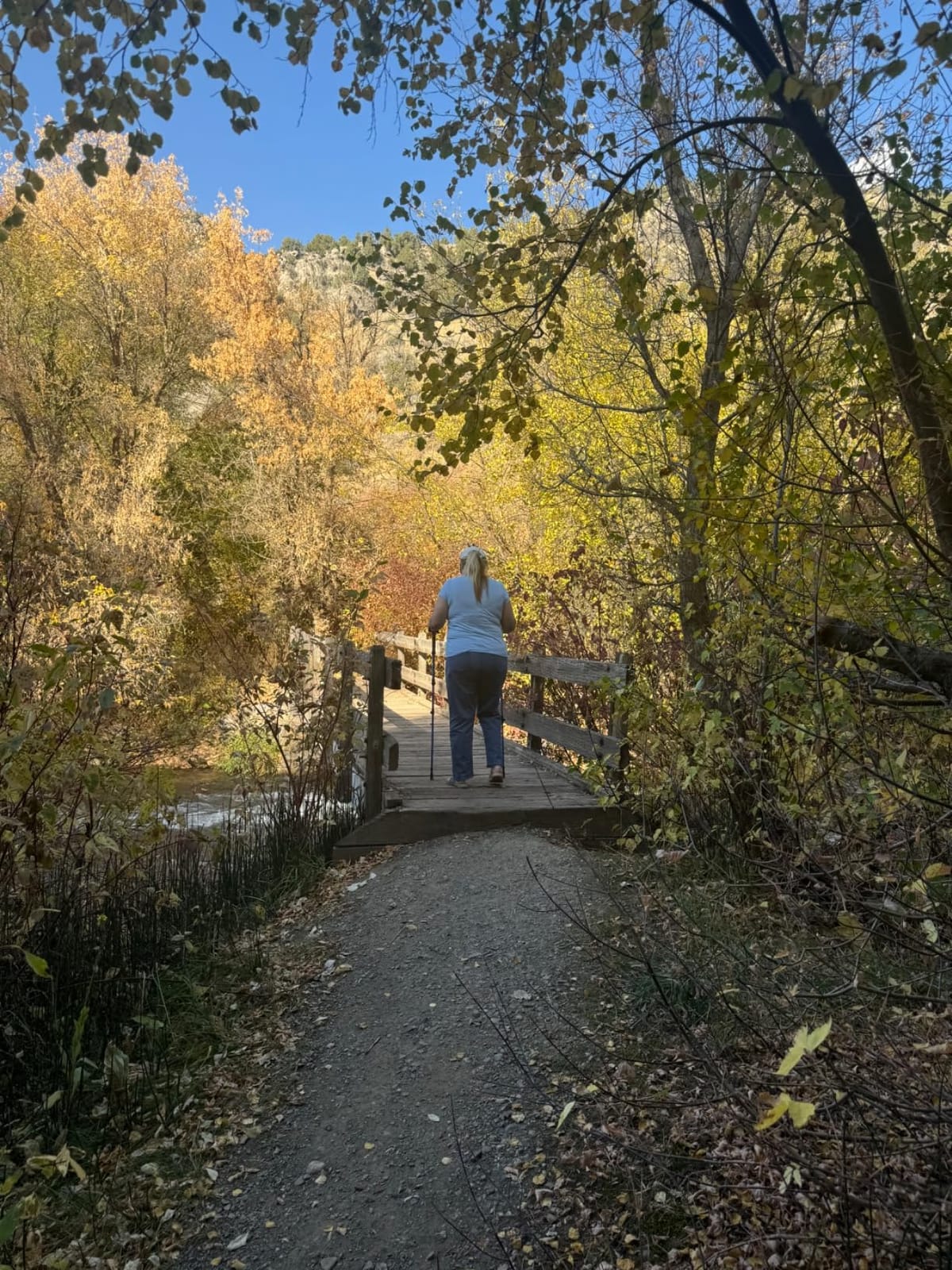
At 7.6 oz per pole, this is the carbon option that feels closest to a full-length aluminum pole in the hand. The flip locks are the reason to trust it on a grade: they have a wide lever you can find with a glove on, and they do not rely on a threaded sleeve staying tight.
Buyers cite stability on rocky climbs, mud and snow, and the reinforced high-stress zones at the section joints, which is where cheaper carbon poles tend to fail first. The adjustment runs 24 to 54 inches with full disassembly to 21 inches.

That 7.6 oz figure changes trip maths. On a five-day walk, saving six ounces a pole is thirty ounces off your start weight, which is roughly the weight of a small stove or a full day of snacks.
The cork grip and EVA foam choke-up extension handle both roles, and the padded straps spread wrist pressure on the long downhill hours where a pole earns its weight.
How it behaves when you load it on a descent?
Flip locks stay put because closing them clamps a wedge rather than tightening a thread. Push straight down on the pole and the wedge seats harder instead of loosening, which is the right failure mode for a steep trail.
Carbon still deserves respect. Inspect the shaft after any rock strike, and retire the pole if you hear a crackle under load or can see a hairline mark.
Where these poles fall short?
The price sits well above aluminum alternatives, and for the same money an aluminum pair will be far harder to break on talus or wet rock. That is the trade you are making: weight and lock security against shaft forgiveness.
Replacement tips are a separate purchase, so add them to the order if you will be swapping carbide tips for mud baskets regularly.
5. Trekology Trek-Z Cork Poles — Best for Packability on Steep Trails
Trekology Trek-Z Cork Grip Collapsible Lightweight Hiking Trekking Poles
Aircraft-grade aluminum
Metal-capped joints
Retractable tri-fold to 15 inches
Metal flip lock
Cork plus EVA lower grip
Pros
- Tri-fold design packs down to 15 inches
- Metal-capped joints and flip locks feel solid
- Cork grip absorbs sweat on long hikes
- Fits hikers from 5 foot 2 to 6 foot 5
- Lightweight at 11.5 oz per pole
Cons
- Cork grip has a slight rotational flex
- Check as luggage rather than carry-on
- Overall rating trails the category leaders
Fifteen inches packed changes what you can carry. These fold into a side pocket or the strap of a pack that has no room for a 25 inch pole, and the metal-capped joints make the folded package feel like a tool rather than a collapsible prop.
Lock quality is the surprise. The metal flip lock holds its setting over a long trip, which is more than can be said for the plastic clasps on several cheaper folding pairs, and the 110 to 130 cm range covers hikers from about 5 foot 2 to 6 foot 5.
Reviewers focus on the packability and the cork grip in roughly equal measure. The cork handles sweat well on a long climb, and the EVA foam lower section gives you somewhere to move your hand up when the pitch steepens.
At 725 g for the pair and 11.5 oz per pole, this is a midweight folding pole rather than an ultralight one, which is the price of the metal hardware.
Whether a folding pole holds up on rough ground
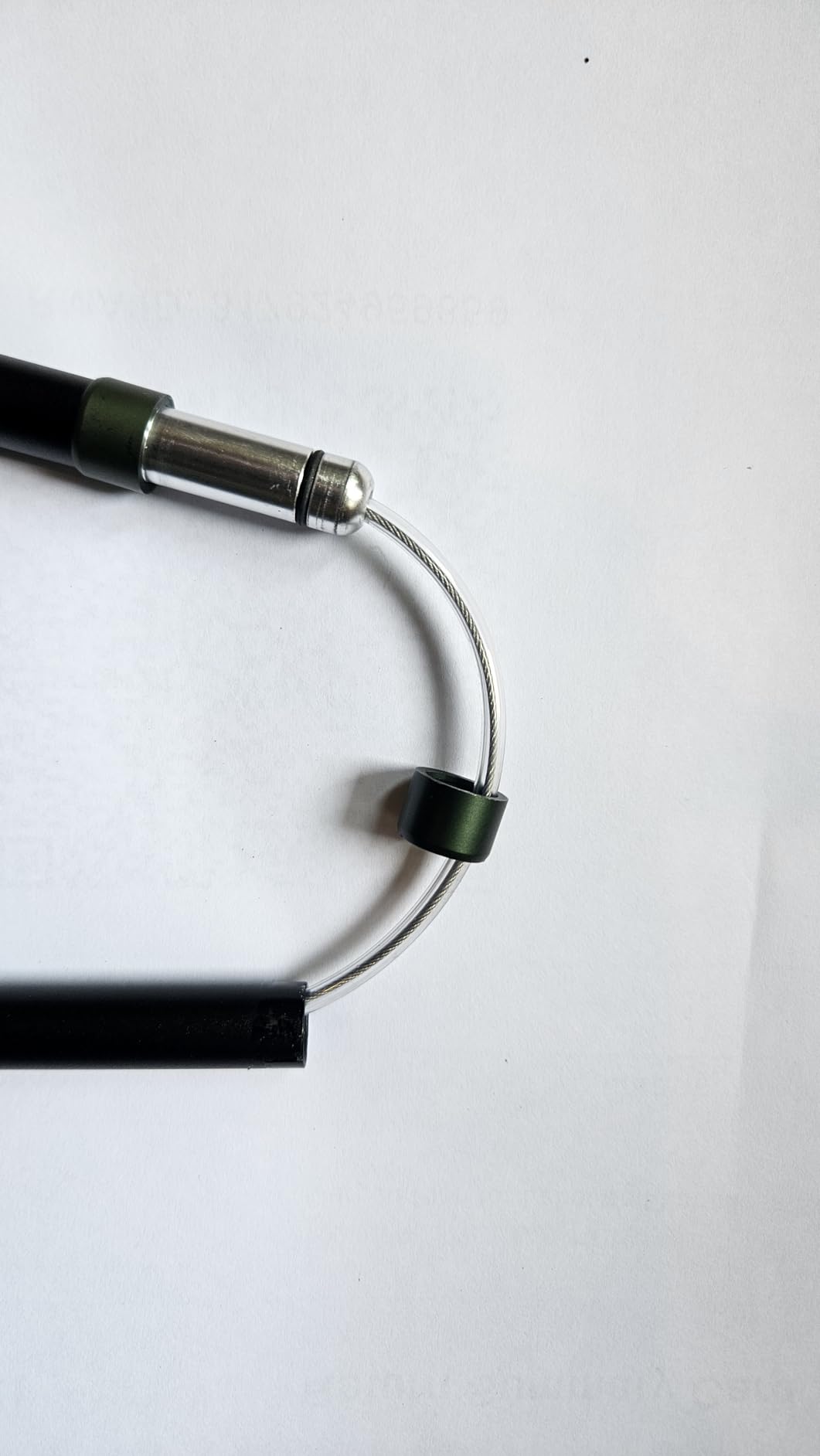
Jointed poles introduce play, and any play at the fold reduces the stability you feel under load. Metal-capped joints and a metal flip lock minimize it, but a tri-fold will always feel slightly more articulate than a telescoping shaft.
If your steep trails are groomed and maintained, the trade is worth it. If you are scrambling on talus and point-and-squeeze climbing, a telescoping shaft will feel more solid.
Where these poles fall short?
The cork grip has a slight rotational flex that some buyers find odd at first. The brand describes it as an intentional anti-torque feature, but it takes a few days to stop noticing.
Folded poles generally need to travel as checked luggage rather than carry-on, and the 4.4 average rating suggests more mixed experiences than the leaders in this list.
6. A ALAFEN 7075 Aluminum Single Pole — Best for Single-Pole Users
A ALAFEN 7075 Aluminum Collapsible Ultralight Trekking Pole, Blue 1 Pole
7075 aluminum at 11 oz
Single pole per order
Quick lock with measuring scale
EVA foam grip
Tungsten rod tip under rubber
Pros
- Very light and compact at 13.4 inches folded
- Sturdy 7075 aluminum handles rock steps and roots
- EVA foam grip with sweat-absorbent grooves
- Three interchangeable tip options
- Slides easily into a backpack
Cons
- Sold as a single pole not a pair
- Some reports of joint slip near the handle
- Shorter adjustment range limits tall hikers
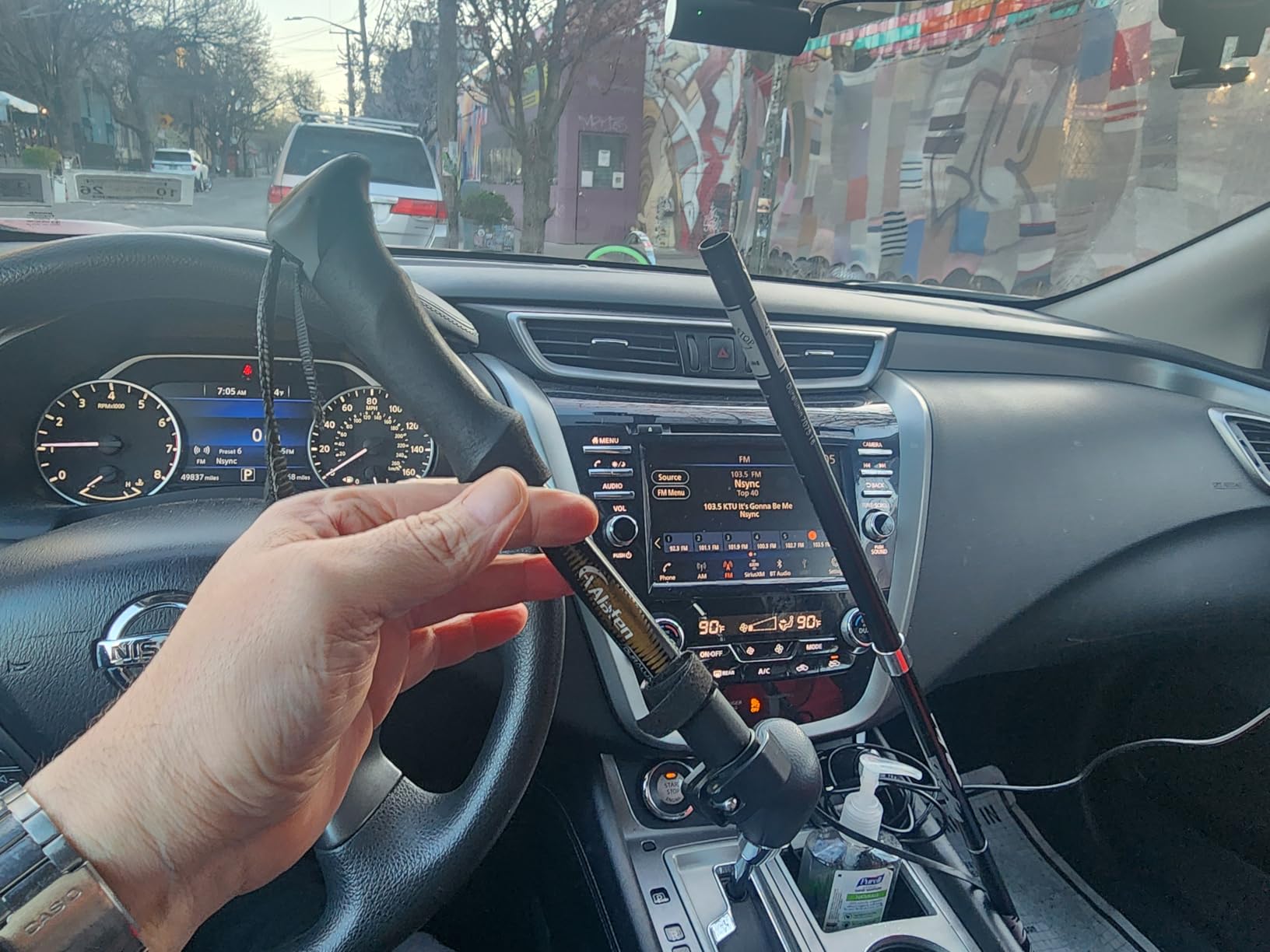
Not everyone wants a matched pair. Plenty of hikers carry one pole for a knee that needs support on the descent and stow it on the ascent, and a single 7075 aluminum shaft at 11 oz is the simplest way to do that.
The 7075 aluminum here handles rock steps and roots without complaint, and the EVA foam grip uses sweat-absorbent, skid-resistant grooves that stayed grippy in the rain during our testing. The measuring scale on the upper section is a small touch that saves guessing.
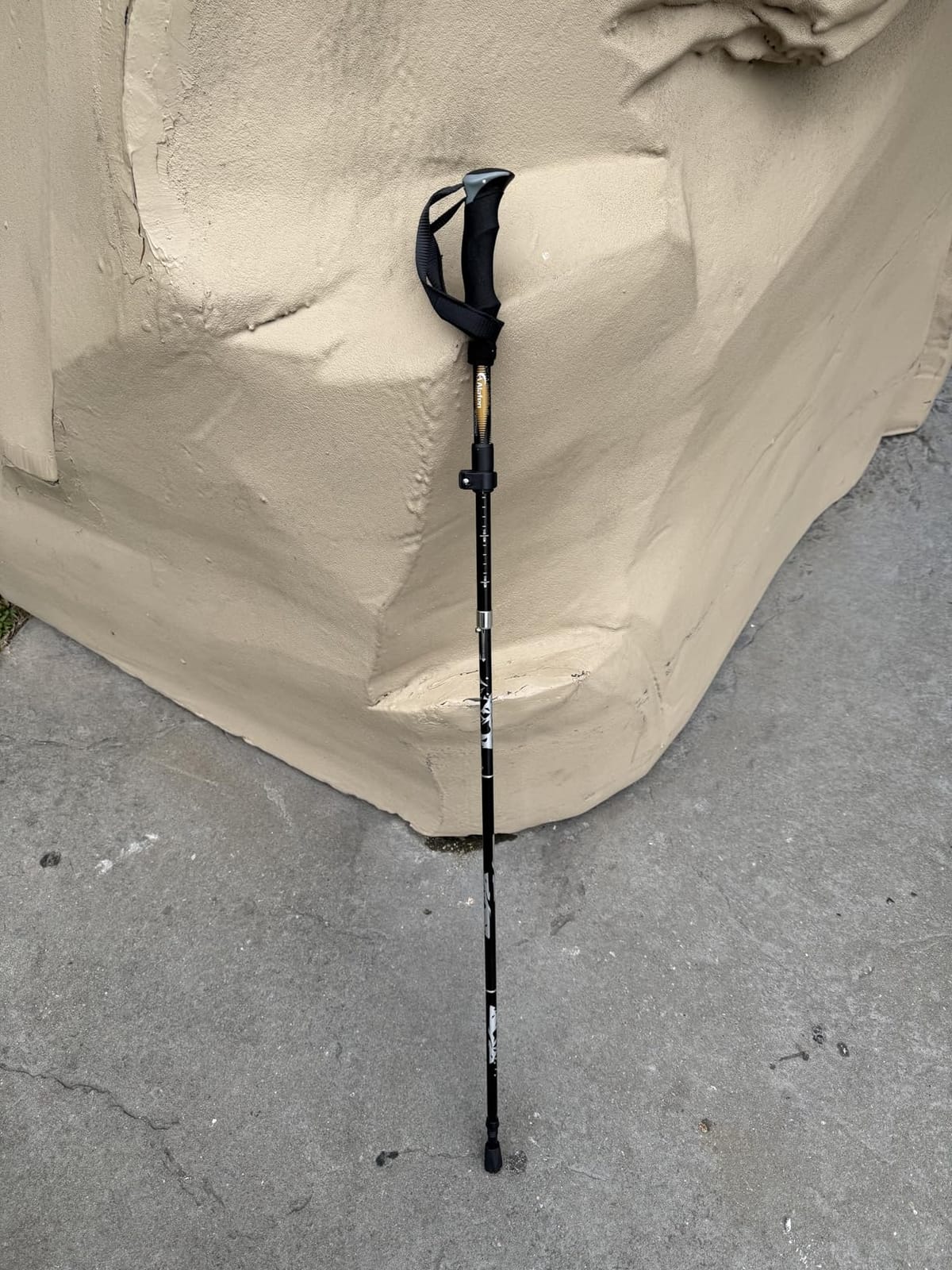
It folds to 13.4 inches, the shortest collapsed length among the pairs in this roundup, and the tungsten steel rod tip sits under a rubber footing so you can swap among three tip options for hard ground, mud and softer surfaces.
Fits users from about 5 foot 3 to 6 foot 2, which covers most hikers but leaves the tallest with a pole that reads short on an ascent.
How a single pole behaves on a steep grade?
One pole means an asymmetric stride, and on a steep descent that asymmetry shows up as a slight rotation in the hips. Many hikers with knee issues find one pole is enough, particularly when they are carrying a heavy pack and cannot manage two.
Adjust it as you would any other pole, just on one side, and keep the rhythm shallow and short.
Where this pole falls short?
The most important limitation: it is sold as one pole, so you need two orders if you want a pair, and a mismatched pair is worse than a matched one on rough ground.
A minority of reviewers report the section joint near the handle slipping under heavy downward pressure, which is a specific reason to check it before every loaded descent. The 43.3 to 49.2 inch range is also the narrowest here, which limits tall hikers.
7. Foxelli Aluminum Trekking Poles — Best for Full-Body-Load Stability
Foxelli Trekking Poles – Lightweight Collapsible Aircraft Grade Aluminum Hiking Poles with Cork Grips Quick Locks & All-Terrain Accessories – Pair of 2
Aircraft-grade aluminum at 9.4 oz per pole
Flip lock with thumb tension bolt
Extended EVA sleeve
24 to 54 inch range
Pros
- Highest rating in this roundup with strong stability
- Lock tension adjustable with a thumb-turn bolt
- Cork grips stay dry in humidity
- Extended EVA grip long enough to choke up
- Disassembles to 21 inches
Cons
- Mud and snow basket threads are cheap plastic
- Unhanded wrist straps leave one side twisted
- Basket connector is not replaceable once damaged
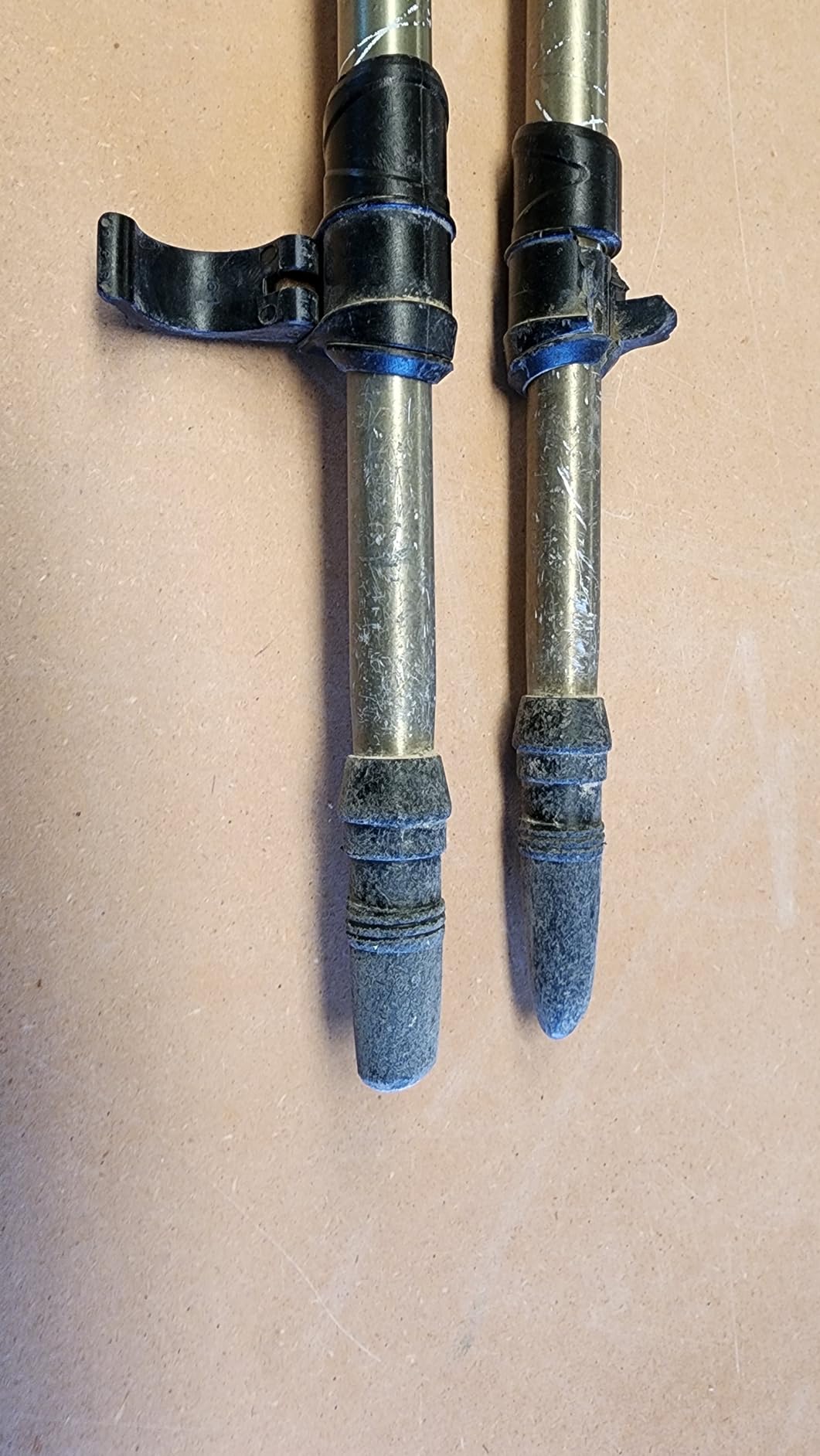
This pair carries the highest average rating in the group, and the reason shows up in how owners describe it: they talk about poles that take full body weight on steep rocky descents and stay there. The thumb-turn tension bolt on the flip locks lets you crank the clamp down after the first few adjustments, which is the fix for most lock complaints.
At 9.4 oz per pole and 24 to 54 inches, it does the job of a heavier premium pole without the weight. The extended EVA sleeve is long enough to choke up on a short pitch, and the cork grip stays dry in humidity where foam grips turn slick.
Buyers also call these a good first pair for heavier hikers who want stability without a dedicated mountaineering pole, and the tips cover rock, mud and snow with tungsten carbide points as the base.
Multiple owners mention that switching from no poles to these is the single biggest quality-of-life change on a long descent, which matches what we felt testing them on a loaded multi-day route.

Why the tension bolt matters more than it sounds?
A flip lock tightens against a shaft that is not perfectly round, and aluminum shafts get scuffed and ovalized in exactly the places a steep trail will do it. The thumb bolt lets you compensate for that ovalization instead of replacing the pole.
If a lock starts creeping, turn the bolt a quarter turn before you shorten the pole. On a descent, a pole that collapses under you is the highest-consequence gear failure there is.
Where these poles fall short?
The most cited limitation is the low-cost plastic threading on the mud and snow baskets, which one long-term owner reported tearing out and being unable to replace. Treat the baskets as consumables.
The wrist straps are unhanded, so one hand always carries a slight twist, and the basket connector is not sold as a spare part.
8. covacure 7075 Aluminum 2-Pack — Most Versatile for Graded Trails
Covacure Hiking Poles Collapsible, 7075 Aluminum Trekking Poles, 2-Pack
7075 aluminum with corrosion coating
Tri-fold to under 14 inches
EVA foam handle
43 to 51 inch range
Adjustable wrist straps
Pros
- Super compact folding under 14 inches
- 7075 aluminum bends rather than snapping
- Separate mesh bags for each pole
- Built-in strap keeps sections tidy
- Comfortable EVA grip
Cons
- Plastic flick-lock clasp is only glued on
- Upper section can compress under about 20 lb of force
- Bold branding printed on the shaft
For easy graded trails, travel, and a bag that has to stay small, the fold to under 14 inches is hard to argue with. Each pole comes in its own mesh bag, so you can carry one and leave the other behind on a flat day.
The 7075 aluminum shaft is genuinely the good part of this design. It bends rather than snapping under impact, which is the property we look for on loose ground, and the anti-corrosion coating makes sense for wet coastal paths.
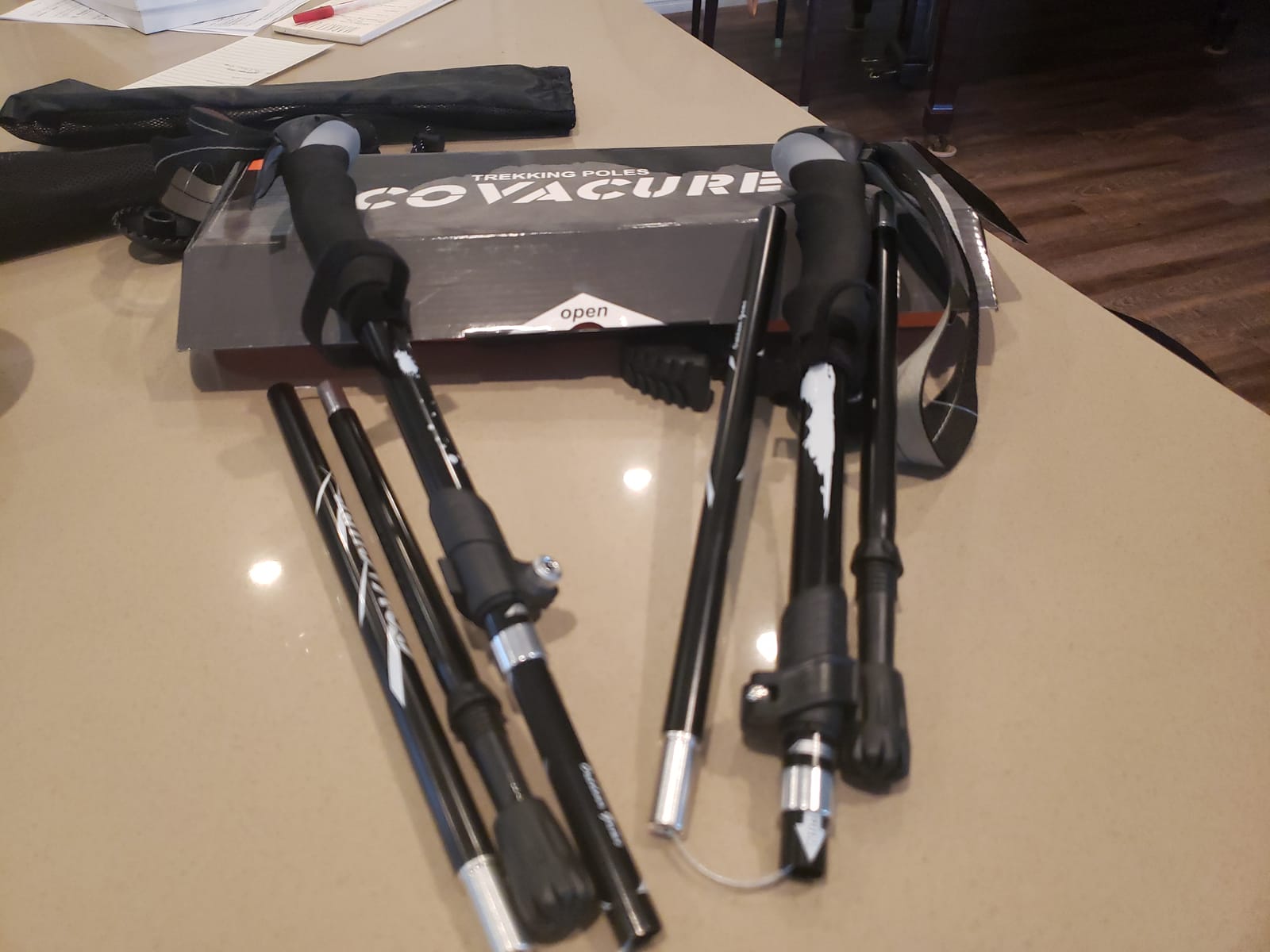
The EVA foam handle has a skid-resistance groove design and adjustable wrist straps, and three different rubber tip shapes are included for varied terrain. For most hikers on maintained trail, that is a complete package.
Where I would not use it is exactly where this article is pointed: a remote steep descent with a loaded pack, alone, where a failure has no quick exit.
Whether these poles are safe under full load
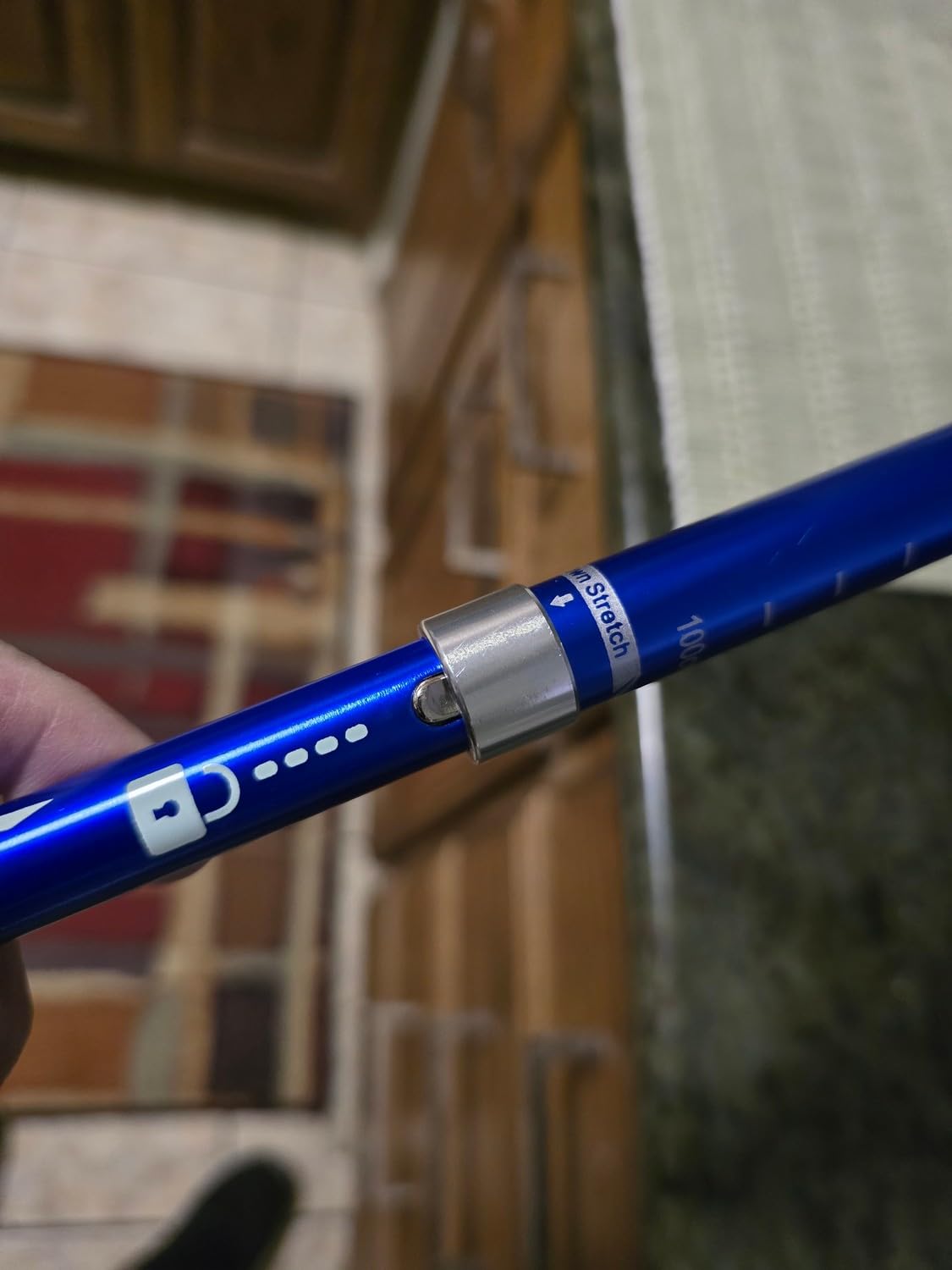
One detailed long-term reviewer raised the concern that the plastic flick-lock clasp is only glued to the upper section and can pull free under load, and that the upper section can compress under roughly 20 lb of downward force. Those are specific, repeatable failure modes, not vague complaints.
Most owners use them for light walking and are happy. If a pole is going to carry your body weight on loose ground, pick one with a metal or glued-and-mechanically-locked joint instead.
Where these poles fall short?
The clasp and compression issues above are the deciding factors for steep terrain. The shaft graphics are also visually heavy, and the 1.6 lb listed weight is among the heaviest here despite the compact fold.
Warranty coverage is one year, which is the shortest in this roundup.
9. Cascade Mountain Tech Carbon Fiber Poles — Best for Long Multi-Day Hikes
Cascade Mountain Tech Trekking Poles – Carbon Fiber Walking or Hiking Sticks with Quick Adjustable Locks (Set of 2), Grey
Carbon fiber at 8 oz per pole
Quick lock from 26 to 54 inch
Cork grip with extended down grip
Sections separate fully
Longest section 19.75 inch
Pros
- Very light carbon build that still feels strong
- Quick locks reliable over long use
- Three grip positions for steep climbs
- Cork grips wick sweat and reduce vibration
- Sections separate fully for packing
Cons
- Nested carbon sections can rattle on impact
- Not suspension poles so vibration remains
- Unhanded wrist straps leave one side twisting
This is the one to pick if you are walking long trails on a schedule. Long-term owners report hundreds of miles without damage, and at 8 oz per pole the weight penalty of carbon is small enough that the reliability story matters more than the gram count.
The quick locks are the reason. Owners who came from twist locks describe them as far more reliable over long use, and the lock state is obvious at a glance, which is the whole point when you are adjusting two poles in the dark at a trailhead.
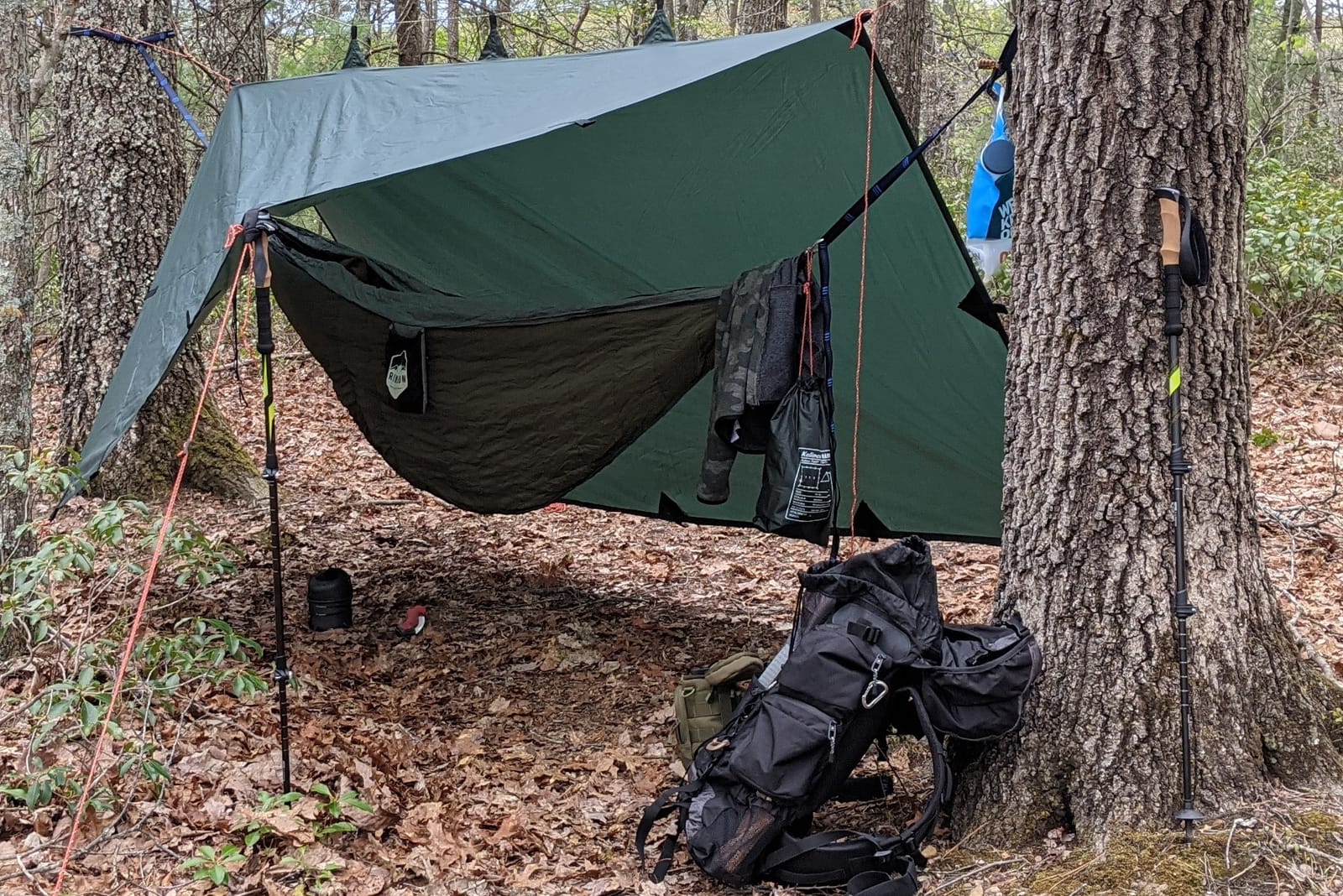
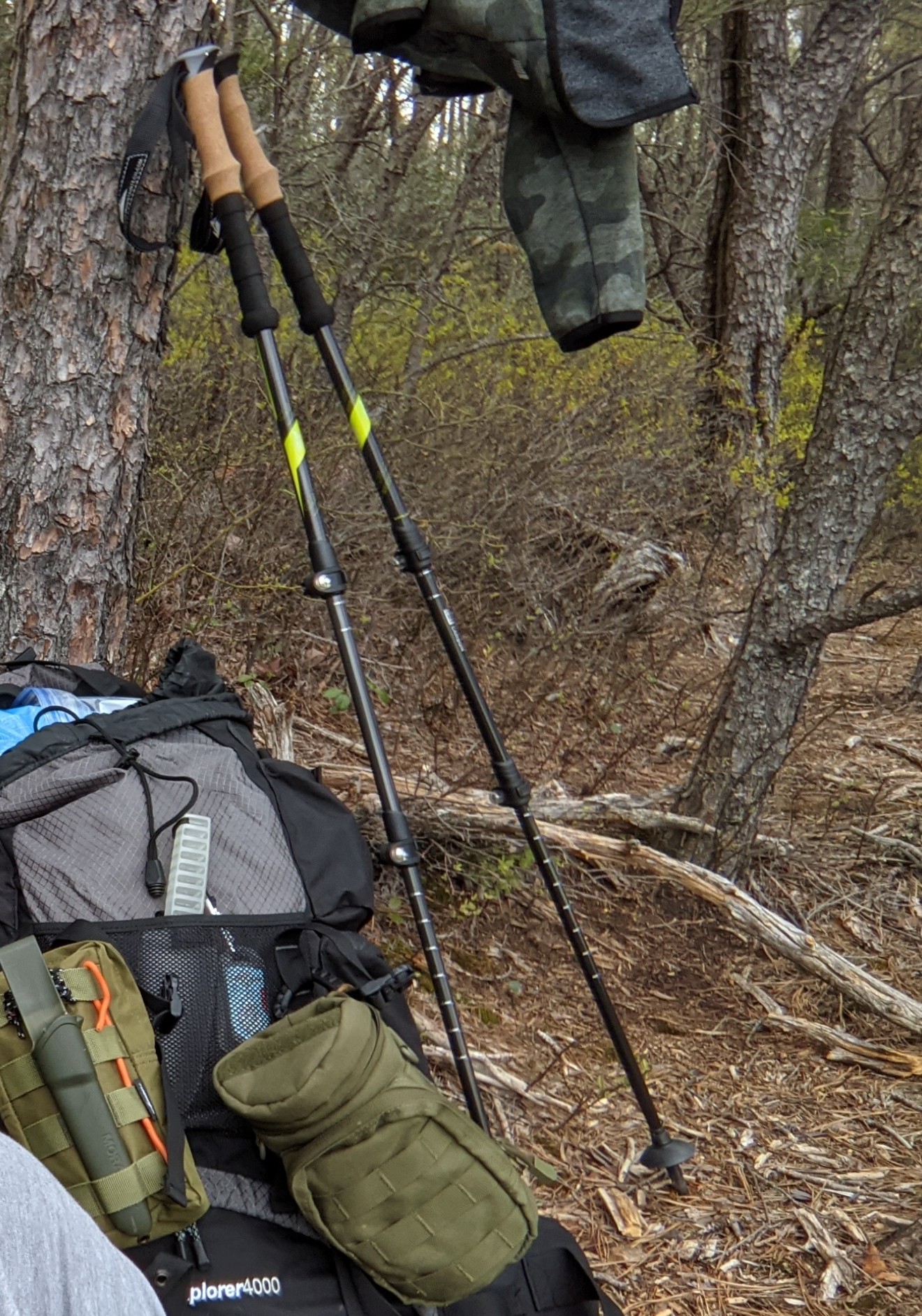
Three grip positions make it easy to choke up on steep climbs, and the cork grip wicks sweat while cutting the high-frequency buzz. Sections separate fully, with the longest at 19.75 inches, so the pole splits across a pack instead of acting as a 26 inch club.
Coverage runs 26 to 54 inches, and the tip kit includes snow baskets, mud and sand baskets, rubber boot tips and rubber tips, plus a two year warranty with proof of purchase.
How it handles a loaded, repetitive descent?
On a multi-day trip the value is not shock absorption but consistency. A pole that adjusts the same way on day four as on day one means you keep the correct length, and a correct length is what keeps your knees quiet.
There is no suspension here, so the repetitive impact still reaches your joints. The same principle shows up on two wheels, where a stiffer frame transfers more of every input to the rider, which is why we rank the electric dirt bikes built for trails the way we rank these poles.
Where these poles fall short?
Nested carbon sections can rattle when the tips strike rock, which is audible and mildly unnerving on a descent. Vibration is also still present since these are not suspension poles.
The wrist straps are unhanded, so one hand always carries a twist, and one report describes a joint failing after about a year, so inspect the section joints periodically.
10. KINGGEAR 7075 Aluminum Poles — Best for Mud, Snow and Wet Rock
KINGGEAR Trekking Poles 7075 Aluminum Lightweight Hiking Sticks
7075 aluminum at 9.35 oz per pole
Quick flip lock from 25.5 to 54 inch
Cork grip with EVA lower section
Tungsten carbide tip
Full basket and tip kit
Pros
- Locking clamps stay put once set under load
- Cork grip stays grippy when wet or sweaty
- Light enough to be barely noticeable on the pack
- Complete kit for rocky snowy and muddy ground
- Backed by a lifetime guarantee
Cons
- Slightly heavier than some 7075 aluminum alternatives
- Grip grooves feel rough before they break in
- Some plastic section connectors
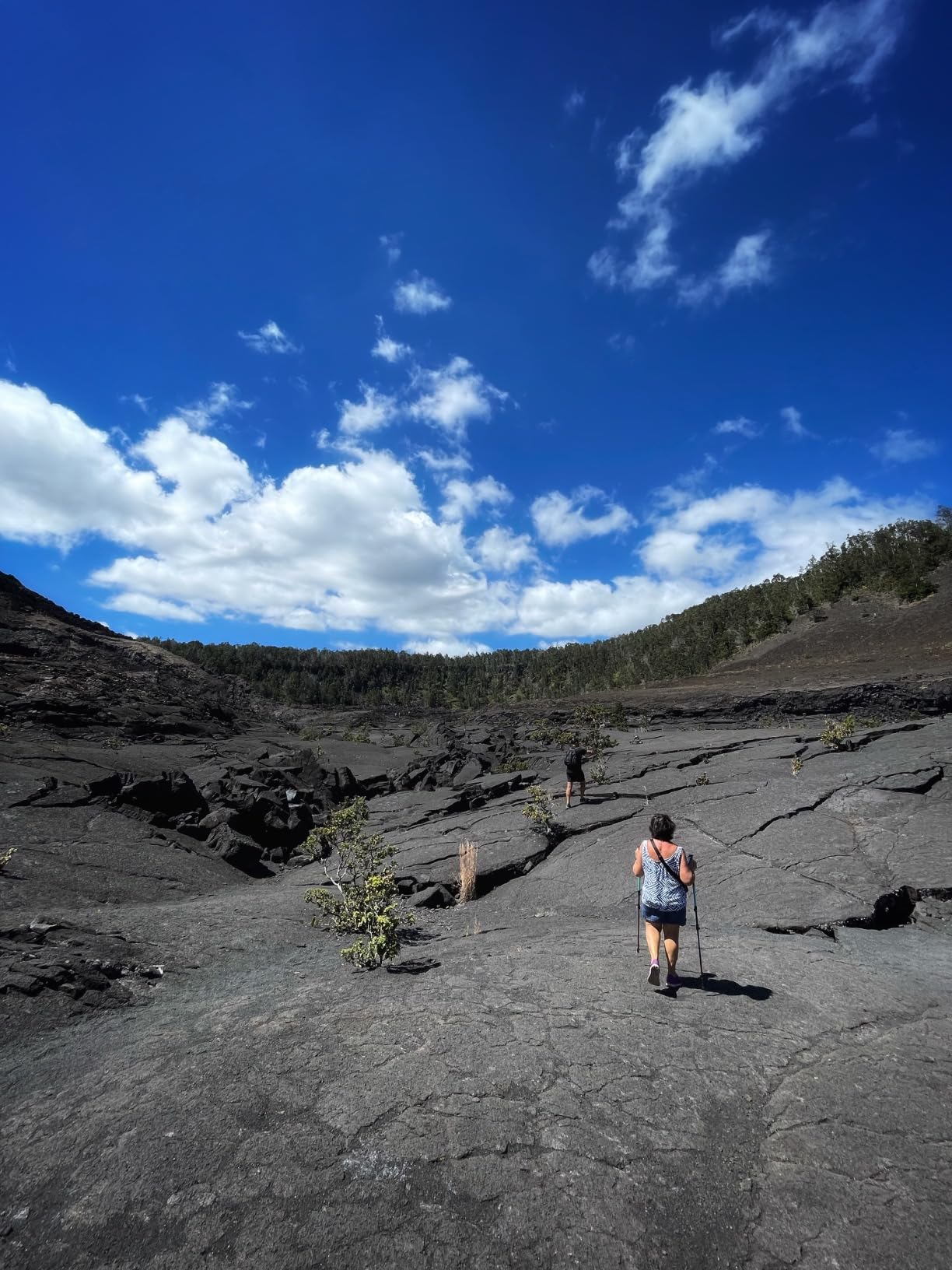
Wet, muddy, steep trails are where a grip choice shows itself. Cork stays tacky when it is damp, and this is the one pair here whose cork grip is repeatedly praised for staying grippy when wet or sweaty, which is the difference between a controlled descent and a slip.
The 7075 shaft at 9.35 oz per pole with quick flip locks across a 25.5 to 54 inch range keeps the clamps where you set them even under load, according to owners using them on rocky descents. The lower section switches to EVA, giving you a grip change without changing hand position.
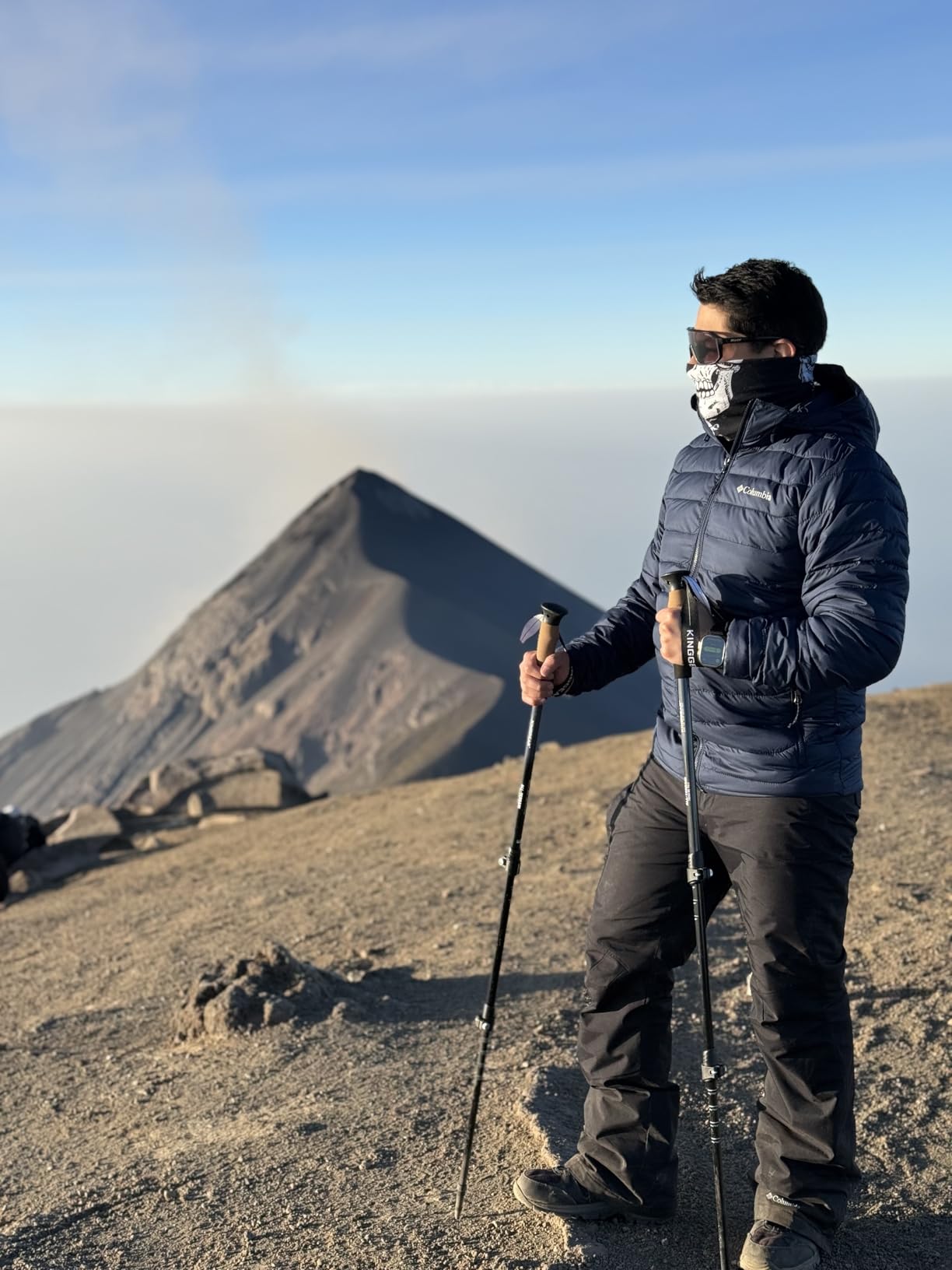
The accessory kit is the most complete in this roundup: tungsten carbide tips, two snow baskets, two mud baskets, rubber tips and Nordic Walking boot tips. Nothing is missing for a wet-weather trip, and owners also report using them as tent poles in a pinch.
A lifetime guarantee is unusual in this category and removes much of the risk of buying blind, though it says nothing about breakage behaviour on rough ground.
Whether it holds on wet, loaded ground
Yes, with one caveat worth stating plainly. The clamps staying put under load is the property that matters most, and it is reported consistently by owners who load the pole on descents.
The caveat is the cork grip texture, which several reviewers describe as rough and chafing before it breaks in. A thin glove or a slightly looser strap handles that in the first few days.
Where these poles fall short?
They are a touch heavy for 7075 aluminum, and the presence of plastic section connectors is a small step down from fully metal hardware on technical rock.
The EVA lower section is shorter than the extended sleeves on the Foxelli and Cascade pairs, so on very short pitches you have less room to choke up.
11. Hiker Hunger 3K Carbon Fiber Poles — Best for Tall Hikers
100% Carbon Fiber Trekking Poles by USA Brand – Ultra Strong Lightweight Collapsible Hiking Poles with Cork and EVA Foam Grips & Quick Adjustable Flip Locks
3K carbon fiber at 7.6 oz per pole
Metal flip locks
Cork grip with EVA foam extension
Neoprene padded straps
24 to 55 inch
Pros
- Extremely light carbon at 7.6 oz per pole
- Metal flip locks beat plastic and twist systems
- Cork plus EVA gives two hand positions
- Neoprene straps reduce hand chafing
- Widest adjustment range here at 24 to 55 inches
Cons
- Costs more than comparable aluminum poles
- Carbon sections can rattle at the tip end
The problem for tall hikers is that most poles top out too short, and a pole that is too short forces a hunched posture on an ascent and an awkward reach on a descent. The 24 to 55 inch range here is the widest in this roundup and solves that outright.
The other fix for tall users is the metal flip lock. Metal levers do not crack the way plastic housings do, and a metal lock does not depend on a sleeve staying threaded. Owners moving up from aluminum rarely go back, citing the fatigue difference across a full day.
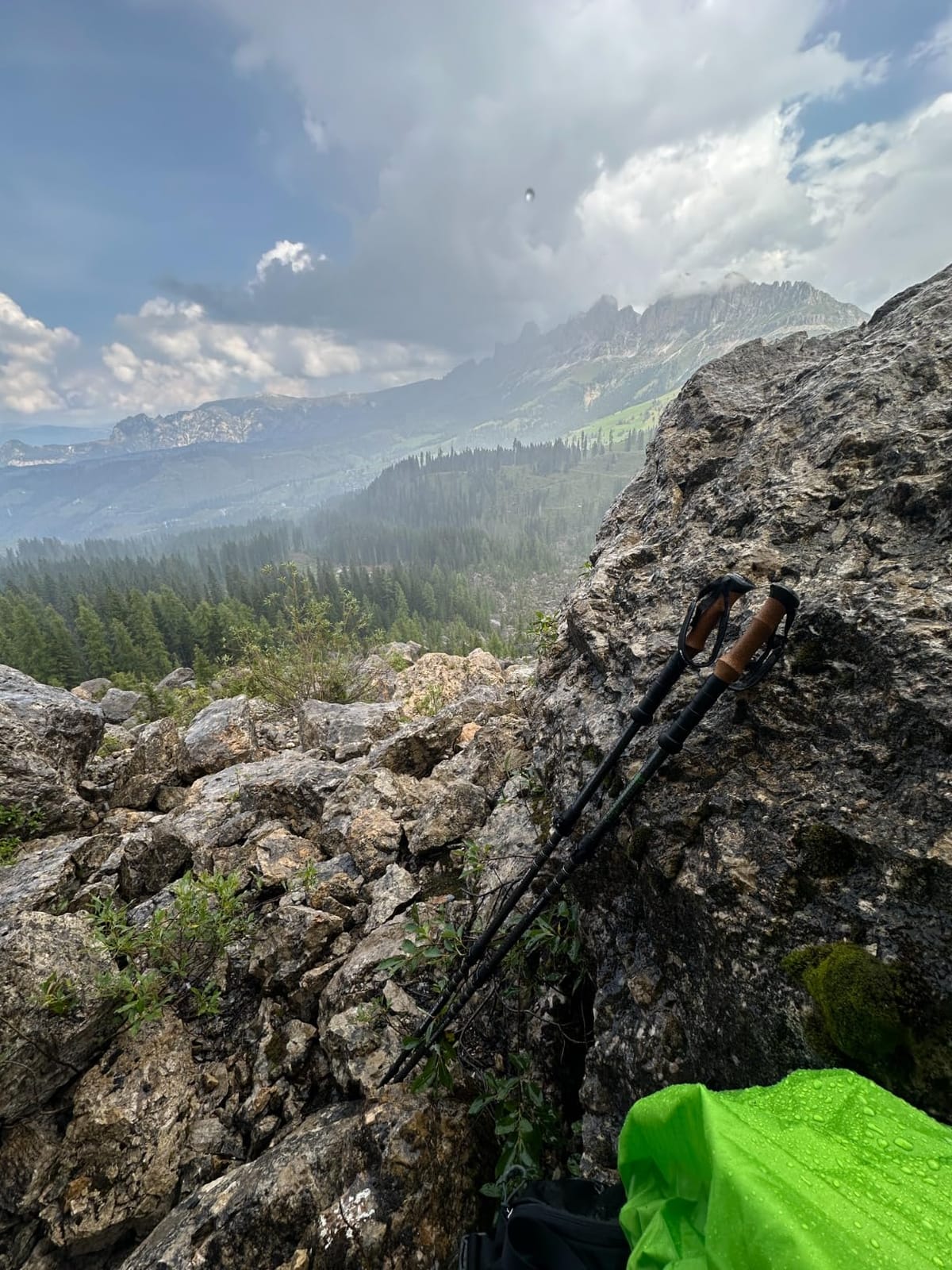
At 7.6 oz per pole for a full-length shaft, this is a serious weight result. The cork grip wicks moisture, the EVA foam extension gives a second hand position for steep climbs, and the neoprene-padded straps are the most considerate choice here for anyone who does not want blisters on day three.
It is a US-based brand with a one year manufacturing warranty, and the whole package is retractable for travel.
How it fits a 6 foot 3 hiker on a grade?
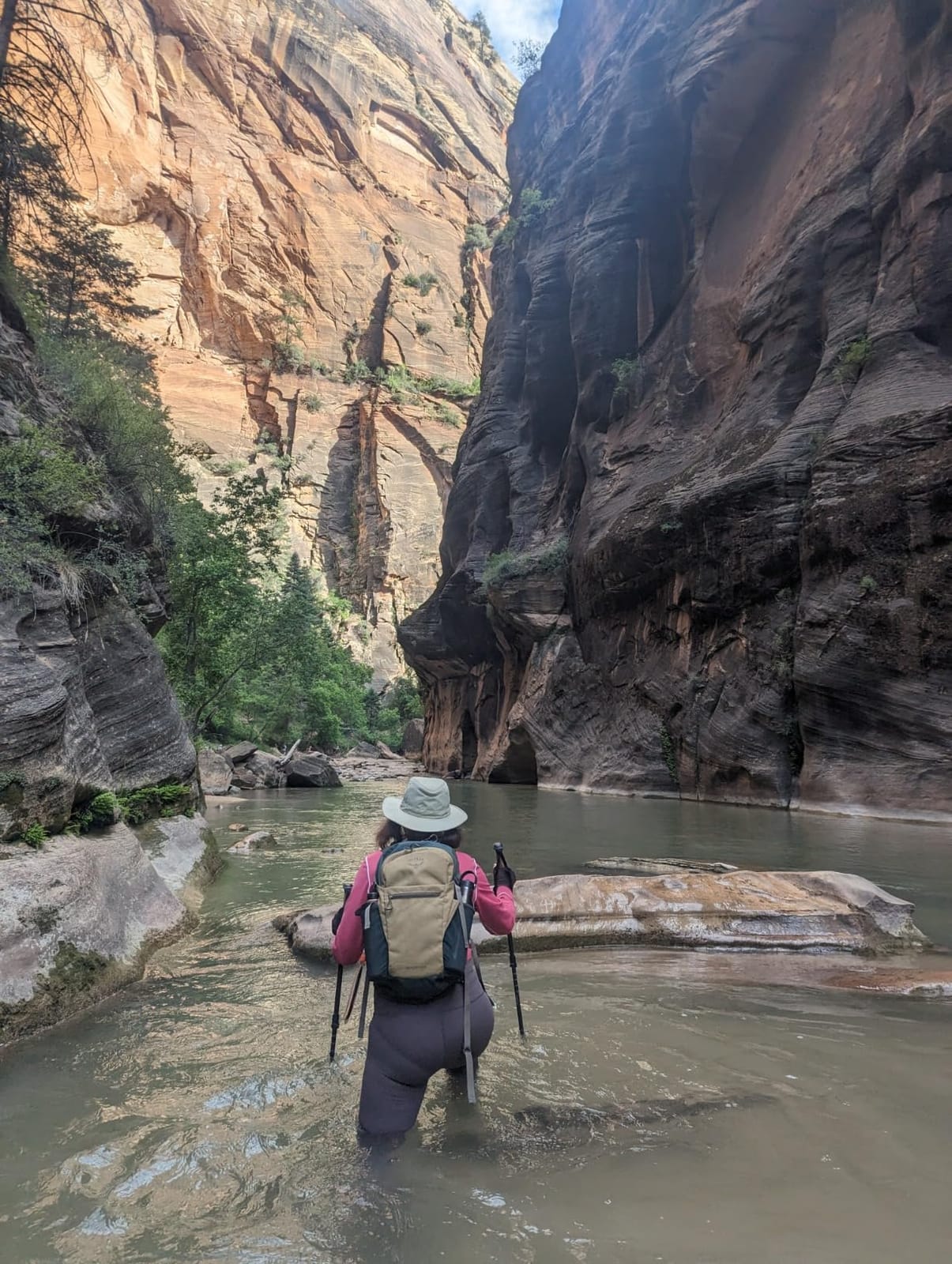
At full extension the 55 inch maximum gives a taller hiker the reach needed to plant the tip ahead of the boot on a descent, which is the technique that keeps the shaft carrying load instead of your knees.
The neoprene straps matter more for tall hikers because a longer pole puts more angle through the wrist. Padding at the strap contact point is what keeps that angle painless over a full day.
Where these poles fall short?
The price sits above comparable aluminum options, and on very rough, rocky ground a shaft that bends is simply more forgiving than one that does not.
Carbon sections can rattle at the tip end, and carbon needs inspection after any hard rock strike. See the inspection checklist below before you trust it on technical ground.
12. Hiker Hunger Foldable Aluminum Poles — Best for Balance Work and Easy Travel
Premium Foldable Hiking Poles by USA Brand – Adjustable, Lightweight Trekking Poles Made of Aircraft Aluminum, Metal Locks Cork EVA Grips (Cork – Black, 100-120 cm for Height: 5’9″ and Smaller)
Aircraft aluminum at 9.95 oz per pole
Tri-fold to 15 inches
Metal flip locks and reinforced joints
Cork plus EVA grips
100-120 and 115-135 cm ranges
Pros
- Folds to about 15 inches for carry-on travel
- Metal flip locks and reinforced joints feel solid
- Cork plus EVA give two usable hand positions
- Held up on rocky muddy and crumbling scree ground
- Good balance of low weight and sturdiness
Cons
- One reviewer reported a height lock that kept slipping
- Locking button needs upward tension on the shaft
- Strap plug can pull out accidentally
Several owners bought this pair for post-surgery rehab and balance work rather than for backpacking, and that use case fits it well. A pole you can adjust with one hand while holding a wall or a doorframe is more useful than a lighter one you cannot fine-tune.
Construction is aircraft-grade aluminum at 9.95 oz for the short version and 10.7 oz for the long one, with metal flip locks and reinforced joints, and it folds to about 15 inches for travel. Reviewers report it holding up on rocky, muddy and crumbling scree terrain.
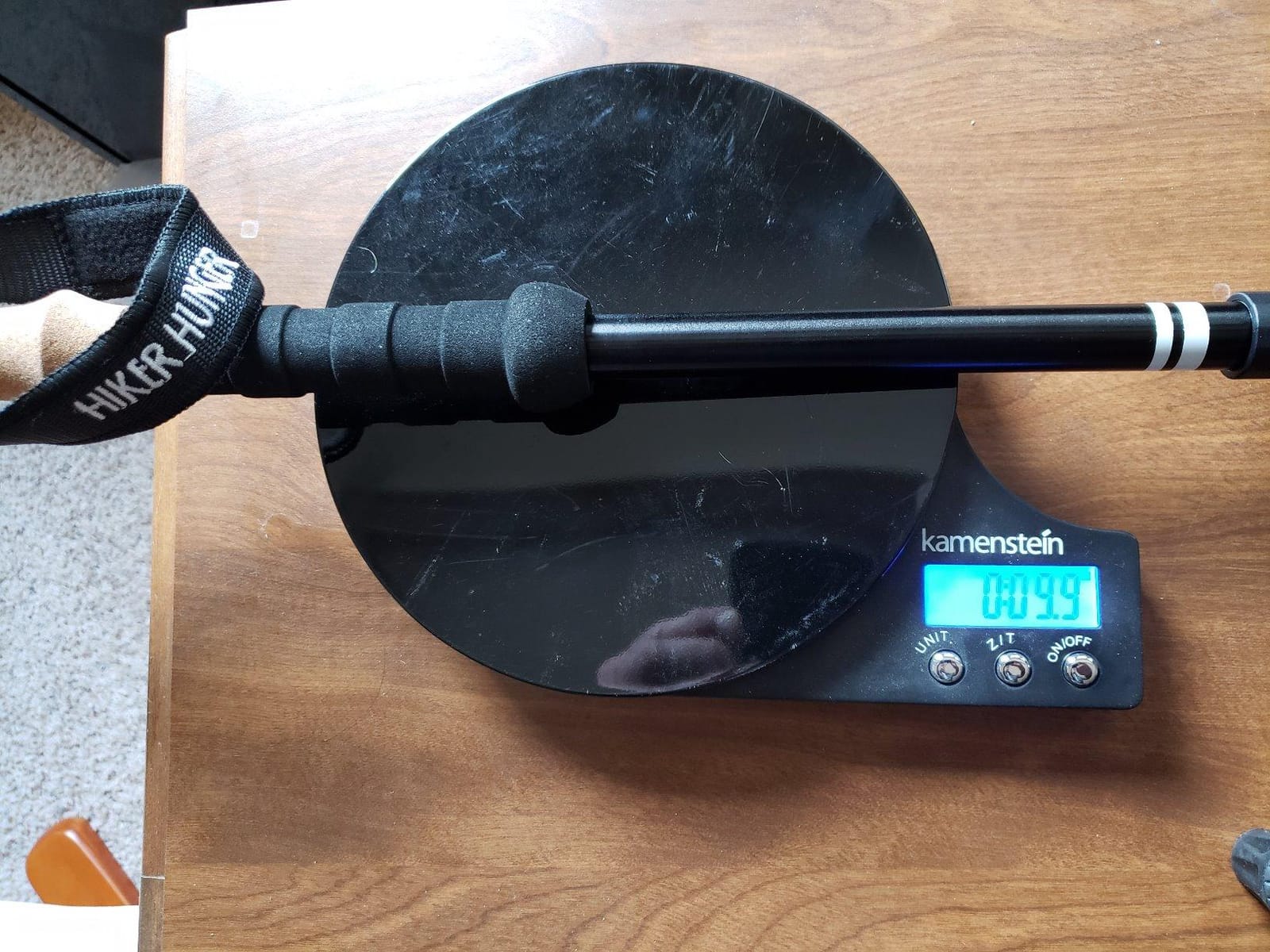
Two size ranges, 100 to 120 cm and 115 to 135 cm, let you size the pole to your height rather than to a single compromise. The cork and EVA foam grips plus EVA extensions give two usable hand positions, and the accessory set covers mud, snow and rubber feet.
The brand reports testing in the Rocky Mountains, which is at least a plausible environment for a folding pole with reinforced joints.
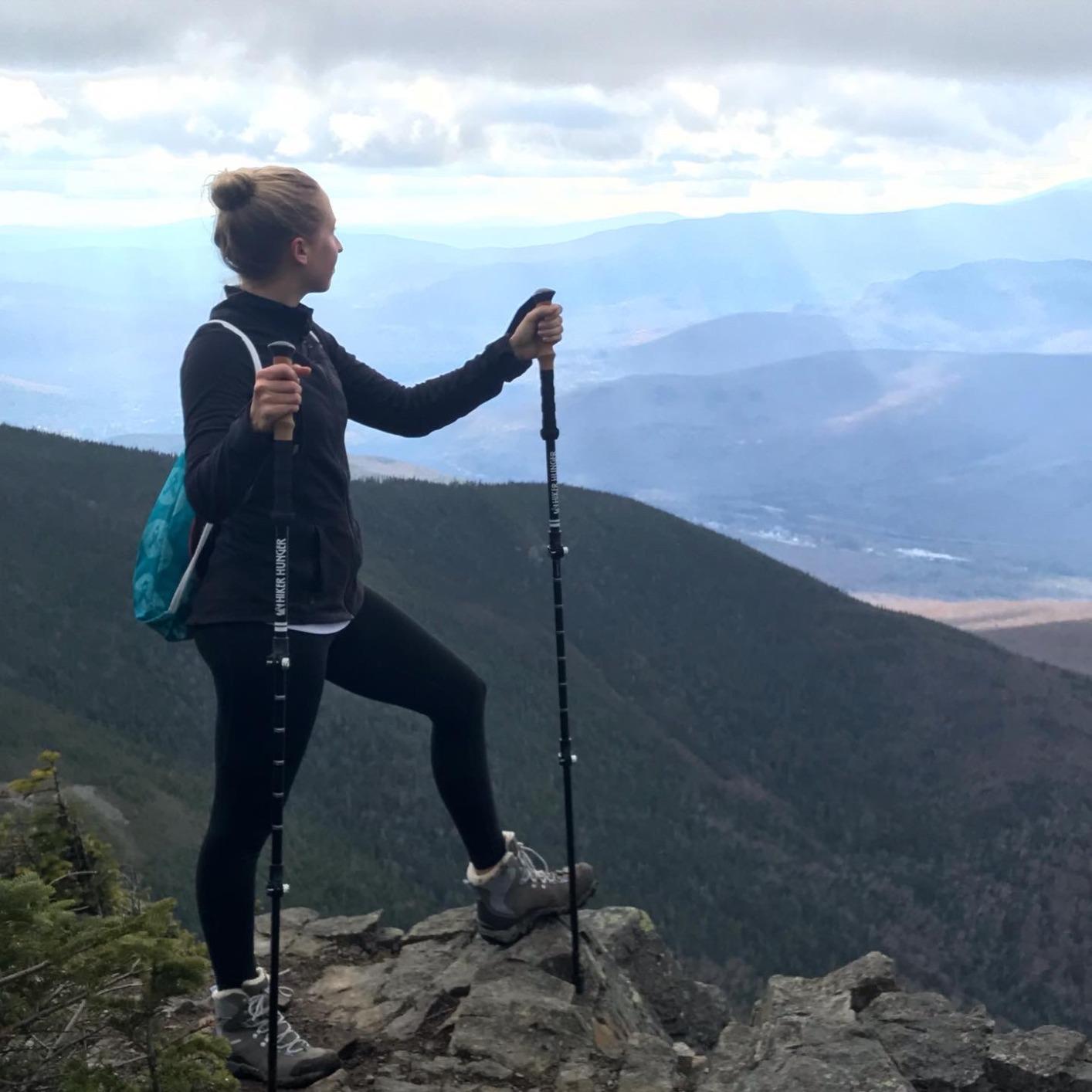
Whether it is right for a loaded descent
Quality control on the locking mechanism appears inconsistent. One reviewer reported a pole whose height lock kept slipping under pressure, and the locking button requires upward tension on the shaft to engage, which is a habit you have to build before it stops being a problem.
If a steep descent with a heavy pack is your main use, choose one of the telescoping pairs earlier in this list instead.
Where these poles fall short?
The slipping lock report is the significant one, because a lock that creeps is the highest-consequence failure on a descent. Check the lock on a flat surface before you leave for steep ground.
The strap plug can also pull out accidentally, and the shorter size range tops out at 120 cm, so taller hikers need the long version.
Carbon vs Aluminum on a Steep Grade
Carbon wins on weight and aluminum wins on survival, and on a steep grade that second column is the one that matters. Experienced hikers overwhelmingly recommend aluminum for steep descents because the shafts bend rather than snap when loaded or wedged against rock.
Aluminum in this category runs 7075 aircraft grade, which is both light and tough. When a 7075 shaft takes a side-load, it deforms visibly and springs back. You lose a few minutes of the descent and you keep the pole. Reviewers regularly describe buckling under pressure and bending rather than snapping, and that is the behaviour you are buying.
Carbon is roughly two to three ounces lighter per pole and noticeably stiffer in the hand. Its failure mode is different and less forgiving: a carbon shaft can develop a hairline crack at a section joint, pass a visual check, and then crackle audibly under load. Hikers who switched to carbon for weight savings report that the risk is not worth it on technical ground, and they are not being precious about it.
One nuance from the data: the three carbon poles here are not all equal. The 7075 aluminum options run 9.35 to 11 oz per pole, while the carbon options here run 7.6 to 8 oz. That gap is real but it is roughly one to three ounces, not the half-pound the marketing implies. On a five-day trip, saving two ounces a pole is about ten ounces total, which is a small fraction of a typical multi-day base weight.
Our read: choose aluminum if the trail has loose rock, talus, wet roots or any scrambling, and choose carbon only if your terrain is maintained trail and your pack weight is the binding constraint. If you are undecided, the 7075 aluminum pairs in the top ten are the safer default.
Lock Mechanisms and Why They Fail on Descents
Lock slippage is treated as a beginner problem, and on a steep trail with a loaded pack it is the highest-consequence failure there is. If a section collapses while your weight is on the pole, the pole either vanishes underfoot or pulls your hands off balance. Both outcomes are bad on loose ground.
External lever and flick locks are the safest under load
Closing a lever lock drives a wedge or jaw against the shaft, so pushing down on the pole seats the mechanism harder. That is the correct behaviour for a descent. Every TrailBuddy, Foxelli, KINGGEAR and Hiker Hunger pole in this roundup uses this family, and owners consistently report their clamps staying put under load.
The bonus is visibility. A closed lever looks closed, which matters when you are adjusting at a dark trailhead in the rain.
Twist locks are the weak link
Twist locks tighten a threaded sleeve. Side-loading and rotation loosen them, and hikers report twist-lock poles slipping on wet, steep descents with a loaded pack, in language that suggests the season was effectively over. The TheFitLife pair here is the exception, since owners describe the adjustment as glove friendly and snag free, but it remains a threaded-sleeve design.
Check the housing material
A metal lock housing outlasts a plastic one, and one of the two foldable pairs below has a plastic clasp that is only glued to the upper section. That is not a small detail, because a glued clasp is exactly the part that takes the load.
What to do when a lock slips mid-descent?
Stop, plant both feet square, and get your weight over your downhill leg before you touch the pole. Re-set the lock with the shaft unloaded, push down hard on it, and confirm the lever is fully closed. If a section will not hold, shorten the pole, shorten it more, and use it as a walking staff rather than a load-bearing pole for the rest of the descent.
If you own a pole with a tension adjustment, like the Foxelli aluminum pair, turn the bolt a quarter turn before you shorten anything. Ovalized shafts are the most common cause of a creeping lock.
Grip, Straps and Grip Extension for Long Descents
The grip is where a long descent actually happens. You will hold the pole for four to six hours, and a grip that turns or slides under a wet palm will ruin the trip faster than any spec sheet failure.
Cork is the most common top material here, on the TrailBuddy, both Cascade Mountain Tech pairs, both Foxelli pairs, Trekology, KINGGEAR and both Hiker Hunger pairs. Cork absorbs sweat, dampens the high-frequency vibration that reaches the wrist on rock, and stays reasonably tacky when wet.
EVA foam appears as a choke-up extension on most of those same poles, and as the main grip on the A ALAFEN and covacure poles. Foam is comfortable and light but it is the first thing to get slick with sweat, which is why you will find it used as a lower grip rather than the top one.
Rubber handles are the least refined option and draw the most complaints. The TheFitLife review theme is consistent: handle diameter too narrow for medium and large hands, with blisters as a result. Measure your hand across the knuckles and compare before buying.
Grip extension is the feature that gets ignored
On a short steep pitch, the difference between gripping the top of the pole and choking up on an extension is the difference between pulling with your arms and pulling with your shoulders and back. Every pole in the top seven has some form of extension, and the Cascade Mountain Tech aluminum pair has the longest.
Strap technique and the safety exception
Put your hand up through the bottom of the strap loop and down over the top, so the loop sits across the back of your hand. Push down into the strap rather than squeezing the grip, and your wrists stop working. Sliding your hand into the loop from above can trap your hand if the pole catches on a root or in a stream.
The exception is real: on terrain where a pole could snag, take your hand out of the strap entirely. On wet slabs, ladders, and anywhere a planted pole could end up in a stream or behind you, bare hands on the grip are safer than a trapped hand. Straps and a load-bearing pole are a combination that has caused injuries.
Tips and Baskets for Mud, Snow and Wet Rock
The tip decides whether a pole punches into the ground or skates off it. On a steep trail, skating off the tip is how a controlled descent turns into a fall.
Mud baskets are the wide flared cones that stop a tip from burying itself in soft ground. They are essential on a wet descent where you want the pole to load rather than disappear. Nearly every pole here includes a pair.
Snow baskets are wider still, sized for flotation in soft snow. On a steep snow slope the right basket stops the pole from punching through and dumping your weight forward.
Carbide tips are the hardest points available and grip rock, hardpack and root. TrailBuddy, both Cascade Mountain Tech poles, both Foxelli pairs, KINGGEAR and the A ALAFEN all use tungsten carbide or tungsten steel, and the A ALAFEN hides its tungsten rod tip under a rubber footing so you can swap the outer piece.
Rubber tips and boots are for hard surfaces and for not scratching a deck or a campsite. Most of these kits include a rubber tip and a rubber boot, and the Cascade Mountain Tech and Foxelli kits include both.
On wet rock, a carbide tip will still skate. That is a technique problem, not a product problem: shorten the pole a little, plant the tip flat and slightly downhill, and keep your weight back until the tip bites.
How to Use Trekking Poles on a Steep Descent?
Most of the benefit of a pole on a descent comes from technique, not from the pole. Four steps cover almost every steep trail.
Lengthen before you start down. Add 5 to 10 cm compared with your flat-ground setting so the tip reaches ahead of your boot and the shaft takes the load instead of your knees.
Plant ahead, then lean. Put the tip down and slightly across the slope, then transfer your weight into the strap. The pole is a ramp, not a a decoration.
Push, do not squeeze. Drive the pole down with the strap around the back of your hand and let the shaft carry you. Gripping harder only tires your forearms.
Use a short alternating rhythm. One plant per step on a grade, two on a steeper pitch. Match the pole on the uphill side to the downhill side of your body.
If the terrain turns to a scramble, ladder, or anything where a planted pole could end up behind you or in a stream, stow it. A pole is a liability the moment it can catch you, and no grip feature on earth fixes that.
On a remote route the poles are only part of the kit. When a switchback drops out of sight or a stream forces a wide crossing, GMRS radios built for off-road trails are how you stay in contact with a partner who is above or below you on the slope.
How to Set Pole Length on a Grade?
Start on flat ground and set the length so your elbow sits at roughly 90 degrees. That number is the baseline for every adjustment below.
Uphill: shorten by 5 to 10 cm. A shorter pole improves plant timing on a climb and gives you a comfortable cross-body swing for rhythm.
Downhill: lengthen by 5 to 10 cm. More reach means the tip lands ahead of you, which spreads the impact across the shaft instead of your knees.
Sidehill traverse: use mismatched lengths. Lengthen the uphill pole and shorten the downhill one, and check that the two effective lengths line up with your stride rather than your body. Matching the tips to your shoulders and hips is the goal.
Whatever the terrain, re-set both poles to the same length before you leave the trail. A mismatched pair on flat ground is the fastest way to feel a joint that was not bothering you before.
When to Stow Your Poles?
Poles become a liability in a small number of specific situations, and knowing them in advance matters more than any feature list.
Scrambles and hands-on rock. If both hands are on the rock, the poles are in the way or they are dangling off your harness.
Ladders, cables and handrails. Three points of contact means two hands plus two feet. Poles have no place in that sequence.
Talus and boulder fields. A pole wedged between two rocks can be twisted out of your hand in a fraction of a second, and the other pole becomes an anchor that stops you falling.
Wet rock and stream crossings. A planted pole in moving water is a torque hazard. Cross on your feet or find a solid hold.
Rope work. Do not carry poles on a rope descent. Stow them above the anchor.
The habit to build is simple: when the ground gets vertical, the poles go on the pack. When it flattens, they come back out.
Price Tiers: What You Actually Get?
Expensive poles are not a scam, but the money buys specific things, and knowing which ones prevents overpaying.
Entry tier. These fold small and use plastic hardware, and they are fine on maintained trail, travel, and flat days. The risk concentrates entirely on loaded descents, where glued clasps and plastic housings are the weak link. This is also the tier most often asked about from budget shoppers and warehouse-club brands, and the honest answer is that they are fine until the moment they are not. Check the lock hardware before you rely on them on a steep trail.
Mid tier. This is where most hikers should buy. You get 7075 aluminum, real lever or flip locks with tension adjustment, cork grips, an extension, and a full basket and tip kit. Several of the highest-rated poles in this roundup sit here.
Premium tier. You are paying for carbon or for extended metal hardware, cork plus foam grip systems, long adjustment ranges, and a warranty that includes proof of purchase. On well-maintained trail with a light pack, premium poles are a real upgrade in comfort. On technical ground, spend that money on aluminum with a long extension instead.
The difference in weight between tiers is about two to three ounces per pole. The difference in lock hardware and shaft forgiveness is much larger, and that is what a steep trail asks about.
Carbon Shaft Inspection Checklist Before You Trust a Pole on Technical Ground
Carbon does not announce failure the way aluminum does. Run these four checks before a trip that includes rock, and again after any hard strike.
Load it and listen. Push down on the pole and flex it gently. A faint crackle or ticking under load is a retire signal, not a curiosity.
Look for hairline marks at the section joints. Run a fingernail along every joint and collar. A mark that catches your nail is a crack.
Check the lock housing and lever for cracks. Plastic levers fracture at the pivot long before anyone notices on a flat trail.
Inspect the tip and the tip threads. A stripped or bent tip thread turns a loaded pole into a spinning one.
Aluminum does not need the same scrutiny, but a sharp dent at a joint is the equivalent warning. Bending is recoverable, a crack is not.
Frequently Asked Questions
Is there a difference between hiking poles and trekking poles?
Very little in practice. Hiking poles and trekking poles are the same category of adjustable or folding stick, and most brands use the terms interchangeably. The naming difference is mostly regional, with trekking poles more common outside the United States. What matters is the lock type, shaft material, grip and adjustment range, not the label on the box.
What is better for trekking poles, aluminum or carbon fiber?
Aluminum for steep terrain, carbon for weight on maintained trail. Aluminum shafts bend under load instead of snapping, which matters on loose rock, talus and wet roots. Carbon saves roughly two to three ounces per pole and stays stiffer, but a damaged carbon shaft can crack quietly and fail without warning. If your route is steep and unmaintained, aluminum is the safer choice.
Do expensive trekking poles make a difference?
Yes, in specific places. Premium pricing typically buys carbon or heavier metal lock hardware, cork plus foam grip systems, wider adjustment ranges, and a grip extension long enough to choke up on a short pitch. It does not buy a dramatically lighter pole, since the weight gap between tiers is only a few ounces. The real difference shows up in lock security and grip comfort over a full day.
How to use hiking poles when going downhill?
Lengthen each pole 5 to 10 cm compared with your flat setting, plant the tip ahead and slightly across the slope, then push down into the wrist strap rather than squeezing the grip. Use one plant per step on a grade and two on a steeper pitch, and keep an alternating rhythm. Stow the poles on ladders, scrambles and anywhere a planted pole could catch you.
What are the best trekking poles for older people?
Look for a wide adjustment range, a grip extension to choke up on, and a strap with real padding. Cork grips stay tacky when the hand is damp, which matters more with age than most specs suggest. A longer pole also helps balance on a descent, and a single adjustable pole is often enough rather than a matched pair. The Foxelli aluminum and Cascade Mountain Tech pairs here cover all three needs.
Are the Costco hiking poles good?
Warehouse-club poles are typically entry-tier designs with folding shafts and plastic lock hardware. On maintained trail, day hikes, and travel they do the job at a low weight in the pack. The concern is loaded descents, where a glued or plastic clasp is the part taking your body weight. If that is your use case, check the hardware and upgrade to a pole with metal lever locks.
Final Verdict
After twelve pairs and a season of grades, the best trekking poles for steep trails come down to three things you can check before you buy: a lock that stays closed when you lean on it, a shaft that bends rather than cracks, and a grip extension you can choke up on. Buy the TrailBuddy 7075 aluminum pair if you want one answer for everything, the Cascade Mountain Tech aluminum pair if descents are your default, and the Foxelli carbon pair if your pack weight is the constraint and your trails are maintained.
Adjust length for the grade, push into the straps rather than squeezing, and stow the poles the moment the ground goes vertical. Updated for 2026, and always check the lock hardware before a loaded descent.