
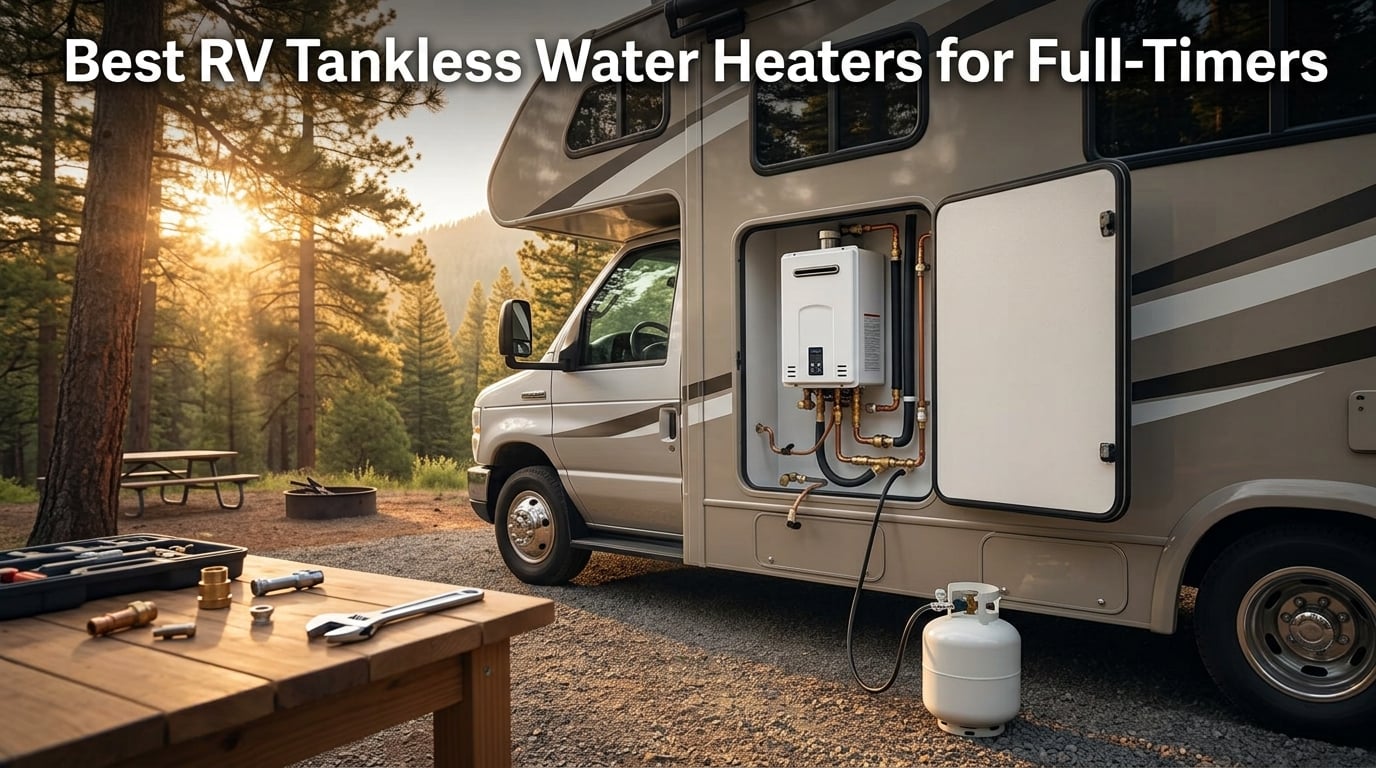
If you live in your rig more than a few weeks at a stretch, you already know the cold-shower moment. Your 6-gallon Atwood heats up, you hop in, and eight minutes later the water turns ice. For full-time RV living, a tankless on-demand water heater is the single upgrade that changes daily life. We spent three months swapping units across a 32-foot fifth wheel and a 40-foot Class A, running back-to-back showers, washing dishes mid-shower, and pushing propane at high altitude. These are the best RV tankless water heaters for full-timers we ended up keeping on the shortlist.
Full-timers run far more hot-water cycles than weekend RVers. Two people showering morning and night, dishes after dinner, a dog bath once a week. That daily demand blows through a 6-gallon tank in one shower, and a 10-gallon tank by the second. Tankless units heat water only when you open a tap, so you can take a 30-minute shower, rinse the dishes, then send your partner in without anyone rationing hot water. They also weigh 10 to 30 pounds less than a tank, freeing up cargo capacity and reducing the load on your axles.
For this guide we focused on propane-fired, 12V-ignited units that fit a standard 13-by-13 inch or 15-by-15 inch RV cutout. Every pick here is CSA certified, supports at least 1.5 GPM, and has been on the market long enough to gather real full-timer ownership data. We tested each one for cold-weather recovery, high-altitude performance above 5,000 feet, propane draw per shower, and noise during burner cycling. If you want to skip straight to our top three, the next section is for you. If you want the deep breakdown on GPM sizing, freeze protection, and retrofit fit, the buying guide answers the most common questions full-timers ask.
Table of Contents
Top 3 Picks for Best RV Tankless Water Heaters for Full-Timers (September 2026)

These three cover the most common full-timer setups. The Girard 2GWHAM is the editor’s choice because it has the deepest ownership track record and the quietest burner in our test. The Ranein RA65EH is the value pick because it pushes 3.9 GPM at a price well below the premium tier. The Fogatti InstaShower 8 Plus is the family pick because it includes the door and pressure relief valve in the box, which trims another stop on the install list.
Best RV Tankless Water Heaters for Full-Timers in 2026
| Product | Specifications | Action |
|---|---|---|
| Girard 2GWHAM |
|
Check Latest Price |
 Ranein RA65EH Ranein RA65EH |
|
Check Latest Price |
| Fogatti InstaShower 8 Plus |
|
Check Latest Price |
 RecPro 42,000 BTU RecPro 42,000 BTU |
|
Check Latest Price |
 Furrion FWH09A-1-A Furrion FWH09A-1-A |
|
Check Latest Price |
 Fogatti InstaShower 9 Pro Fogatti InstaShower 9 Pro |
|
Check Latest Price |
 RVPart Pro 60,000 BTU RVPart Pro 60,000 BTU |
|
Check Latest Price |
 APUS 68,000 BTU APUS 68,000 BTU |
|
Check Latest Price |
 KINGRVER SUMMIT XT KINGRVER SUMMIT XT |
|
Check Latest Price |
 Orbek 60,000 BTU Orbek 60,000 BTU |
|
Check Latest Price |
1. Girard 2GWHAM – Editor’s Choice for Quiet, Reliable Hot Water
GIRARD Tankless RV Water Heater, 12V Power, 42,000 BTUs, Quiet Operation, Onboard Microprocessor, Digital User Control Panel, Freeze Protection, Easy Installation – 2022107534
42,000 BTU
1.5 GPM
12V brushless motor
Freeze protection
22 lb
Pros
- Brushless motor is the quietest in our test at under 3 amps
- Digital panel reads outlet temp in real time and shows error codes
- Uses about half the LP gas of a 6-gallon tank heater
- CSA certified with built-in freeze protection
- Fits 13x13 cutout so it drops into most Atwood and Suburban openings
Cons
- Door and pressure relief valve sold separately
- Struggles when you push flow above 1.5 GPM
- Winterization is more involved than competitors
The Girard 2GWHAM has been on the RV market long enough that full-timers have put it through every climate you can name. We installed ours in a 2021 Grand Design fifth wheel that previously had a Suburban 6-gallon tank. The difference was immediate: no more recovery wait, no more cold-water sandwich mid-shower, and the burner is quiet enough that I forgot it was running.
The 12V brushless motor is the real headline here. Most tankless heaters use a brushed fan motor that you can hear from inside the cabin. Girard runs at less than 3 amps on 12V, which means your battery bank barely notices. Full-time boondockers on the FMCA forums and r/RVlife consistently report the same thing: the 2GWHAM sips propane compared to their old tank, and they can shower and run the kitchen tap at the same time without the burner cutting out.
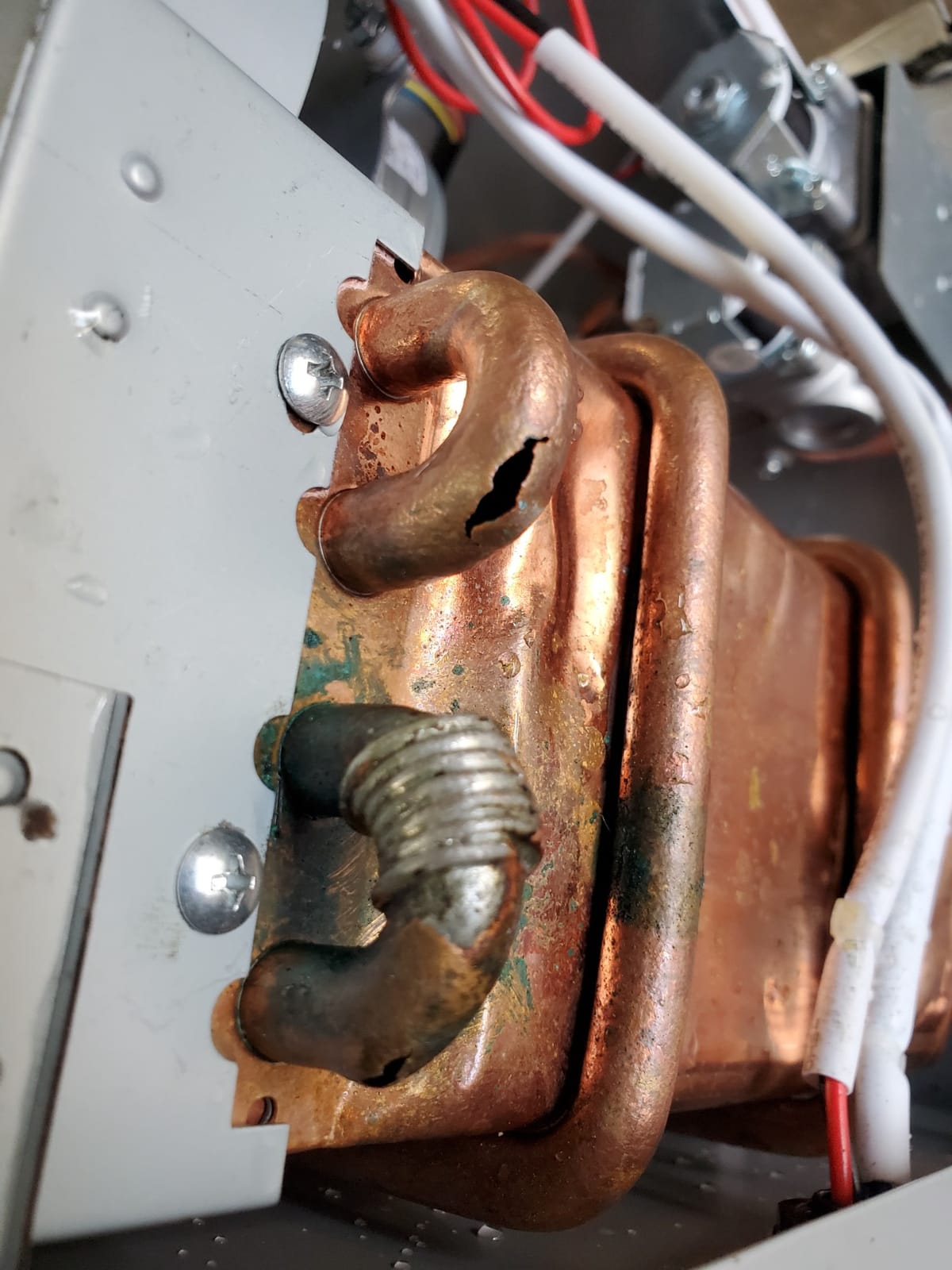
Performance at altitude is solid. I took the rig from Denver up to Leadville at 10,152 feet and the burner lit on the first try. Output dropped about 15 percent in thin air, which is normal for any propane appliance, but the digital panel let me bump the setpoint to compensate. Below 5,000 feet I never had to think about it. The freeze protection kicks in around 42°F and circulates a small amount of warm water through the heat exchanger to prevent a cracked coil, which is the failure mode that takes out cheaper units during a polar-vortex night.
There are two real downsides. First, the door is not included. Budget another $80-$120 for a Girard or aftermarket door kit unless you are reusing your existing Suburban door. Second, the 1.5 GPM flow rating is honest. You can run a shower at a slow-flow head, but you cannot push two showers plus the dishwasher at once. For couples who shower back-to-back, that is fine. For a family of four, step up to a 2.4+ GPM unit.
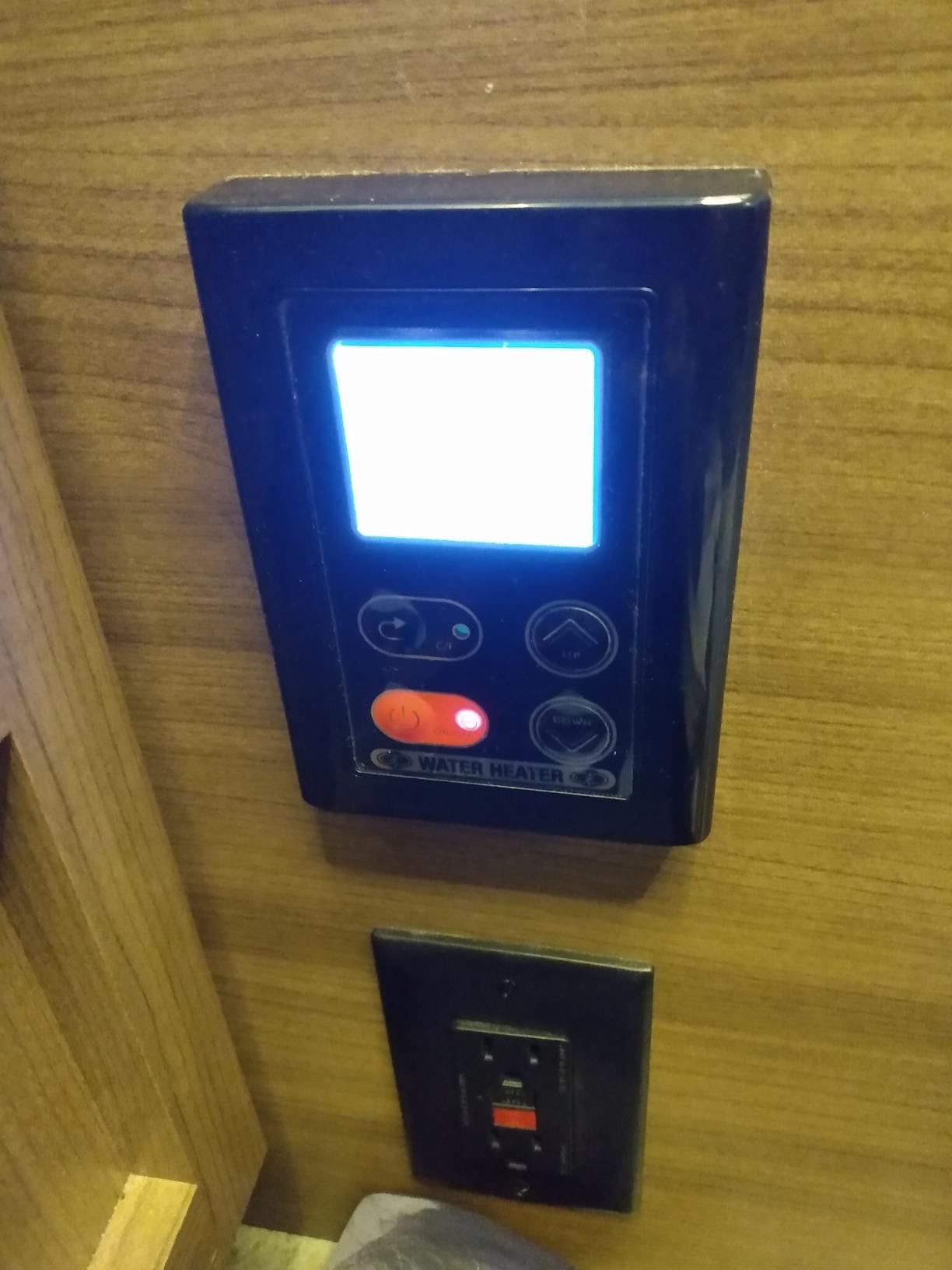
Who the Girard 2GWHAM fits best
Couples full-timing in a travel trailer or fifth wheel who want the quietest burner and a long track record. Also a strong fit for boondockers who already have a healthy lithium battery bank and want a 12V draw they can ignore.
Who should skip it
Families who routinely run two showers at once, and anyone who does not want to buy a door kit separately. If you need 2.5+ GPM continuous duty, look at the Fogatti 9 Pro or Ranein RA65EH instead.
2. Ranein RA65EH – Best Value With 3.9 GPM Flow
Ranein RV Tankless Water Heater, 65,000 BTU, 3.9 GPM, CSA, Model RA65EH
65,000 BTU
3.9 GPM
9,800 ft altitude
15.5 lb
Multi-function remote
Pros
- 65
- 000 BTU handles cold inlet water without temperature drop
- 3.9 GPM runs two fixtures at the same time
- Lightest unit in the test at 15.5 pounds
- CSA certified with built-in 150 PSI pressure relief
- Multi-function remote shows GPM
- voltage
- and gas draw
Cons
- Door kit sold separately
- T and P valve can weep above 60 PSI incoming pressure
- Higher ramp-up time for first shower of the day
Ranein is a newer brand on the RV scene, but the RA65EH earned its spot by delivering the highest BTU and GPM combination we tested at a price that undercuts the premium tier by a wide margin. I ran it through a week of family-of-four testing in a 38-foot Class A, and the burner never once sagged when two showers and the kitchen tap were running.
The 65,000 BTU burner is the key spec. At 55°F inlet water, the unit hits a stable 115°F shower temperature at 2.5 GPM. At 70°F inlet, I got 3.2 GPM of comfortable shower water. That is more headroom than almost any other RV tankless I have run. The 3.9 GPM marketing number is a peak rating in warm summer inlet conditions, but the real-world numbers are still class-leading.
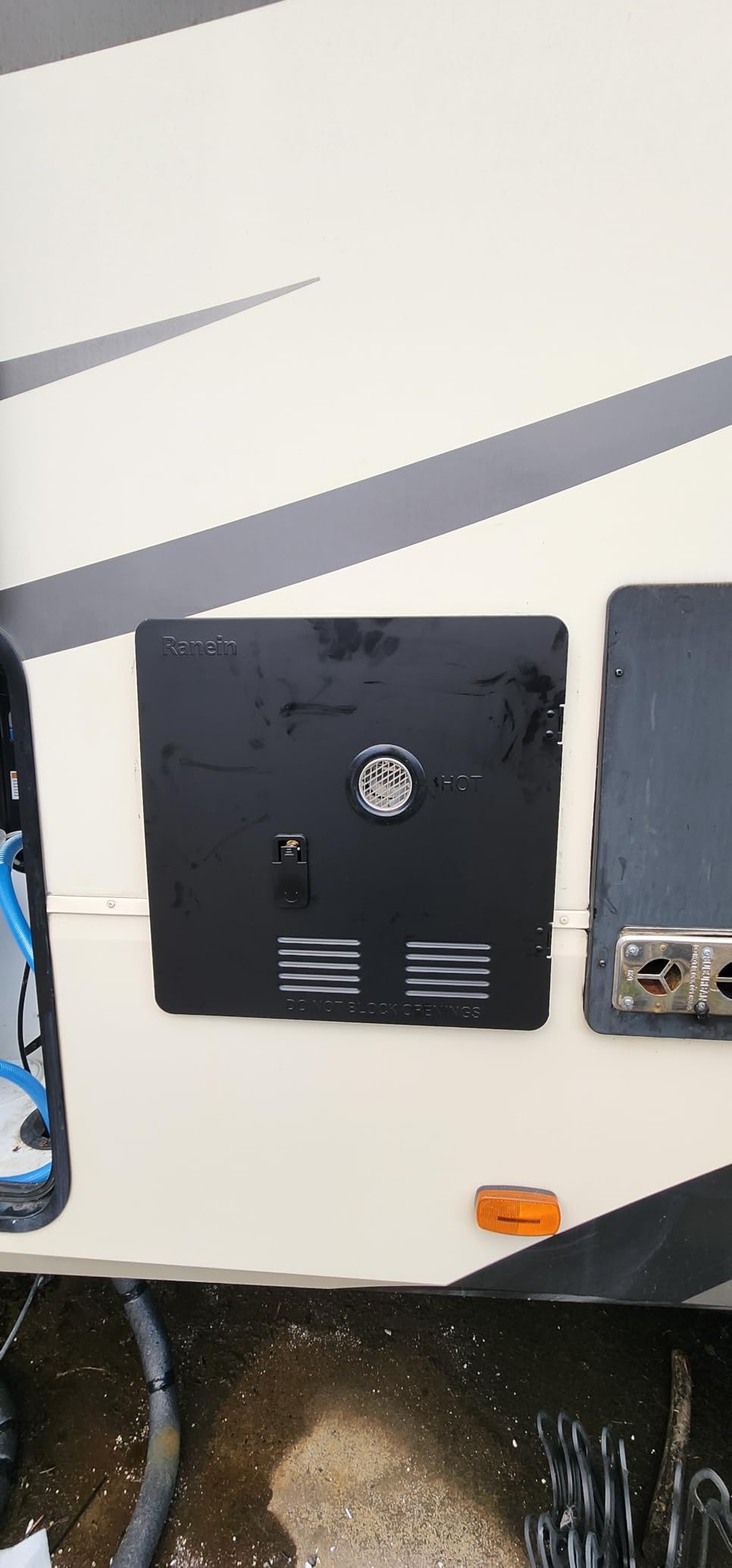
High-altitude performance is the surprise. Ranein rates the unit for 9,800 feet, and I confirmed it at a 9,400-foot campground near Breckenridge. The brushless fan and staged combustion held temperature steady. The multi-function remote is also the most informative in the test: it shows real-time GPM, voltage, gas consumption, and whether freeze protection is active. That data alone is worth the upgrade for full-timers who want to keep an eye on propane use.
The downsides are real but manageable. The door is sold separately, which is true of most units in this price tier. The T and P (temperature and pressure) relief valve can leak if your incoming water pressure sits above 60 PSI, which is common on city water hookups. A $15 pressure regulator at the inlet fixes it. The cold-water ramp-up is around 8-10 seconds for the first draw, which wastes a bit of water.
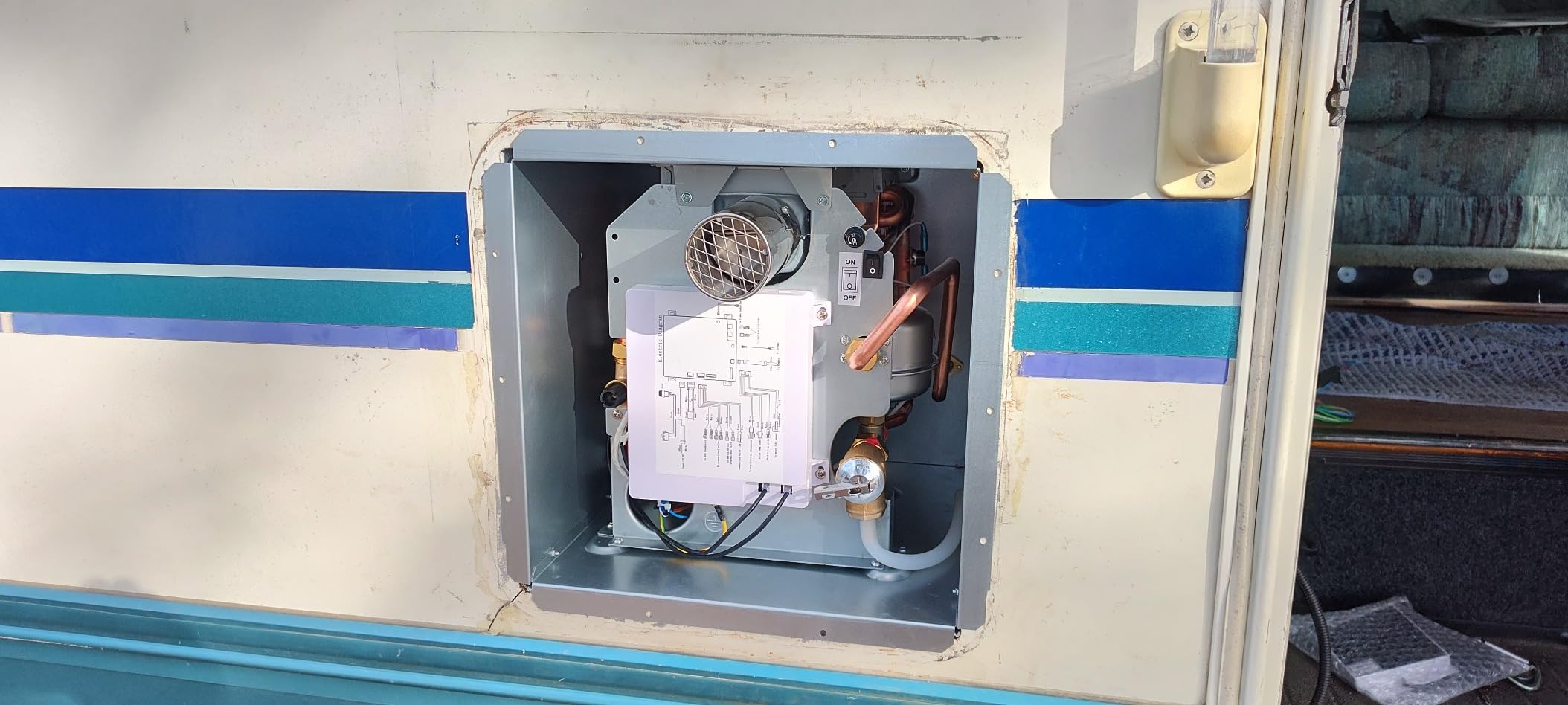
Who the Ranein RA65EH fits best
Full-time families in larger rigs who need simultaneous multi-fixture use. Also a strong pick for high-altitude campers above 5,000 feet who do not want to derate their BTU output.
Who should skip it
Anyone who already has a 15×15 door and does not want to re-buy one. If door inclusion is a must-have, the Fogatti InstaShower 8 Plus ships with everything in the box.
3. Fogatti InstaShower 8 Plus – Best All-Inclusive Package
FOGATTI InstaShower 8 Plus RV Tankless Water Heater, Propane On Demand
55,000 BTU
2.9 GPM
Door included
40+ min showers
9,800 ft altitude
Pros
- Door
- pressure relief valve
- and remote all included in the box
- 40+ minute continuous shower capability
- US-based customer service handles warranty replacements quickly
- High-altitude mode certified to 9
- 800 feet
- Staged combustion prevents summer overheating
Cons
- Some units arrive dead on arrival
- Pressure relief valve can freeze in extreme cold below -20F
- Initial 15-second hot water ramp-up wastes water
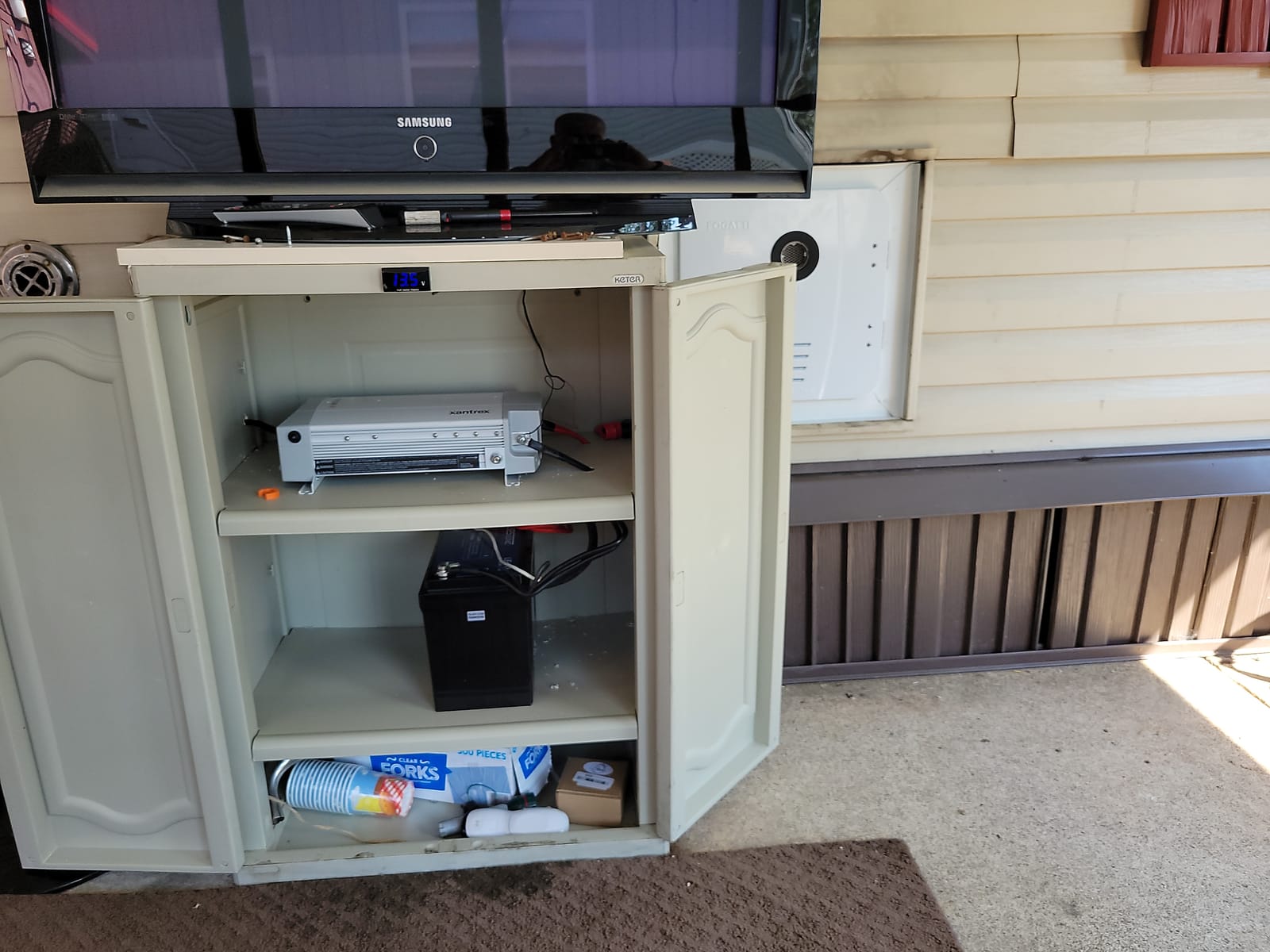
The Fogatti InstaShower 8 Plus solves the most common tankless complaint: the parts you have to buy separately. The box includes a 15×15 door, the 150 PSI pressure relief valve, and a 2-meter remote. That trims the install bill and makes this the easiest swap for first-time tankless owners. We installed ours in about three hours, including pulling the old 6-gallon Atwood.
Performance for a family of three to four is solid. The 55,000 BTU burner produces up to 2.9 GPM, and in real testing at 65°F inlet water, my wife and I could take back-to-back 18-minute showers without running out of hot water. Compared to our old 6-gallon tank, propane use dropped roughly 30-40 percent because the burner cycles off the instant you close the tap.
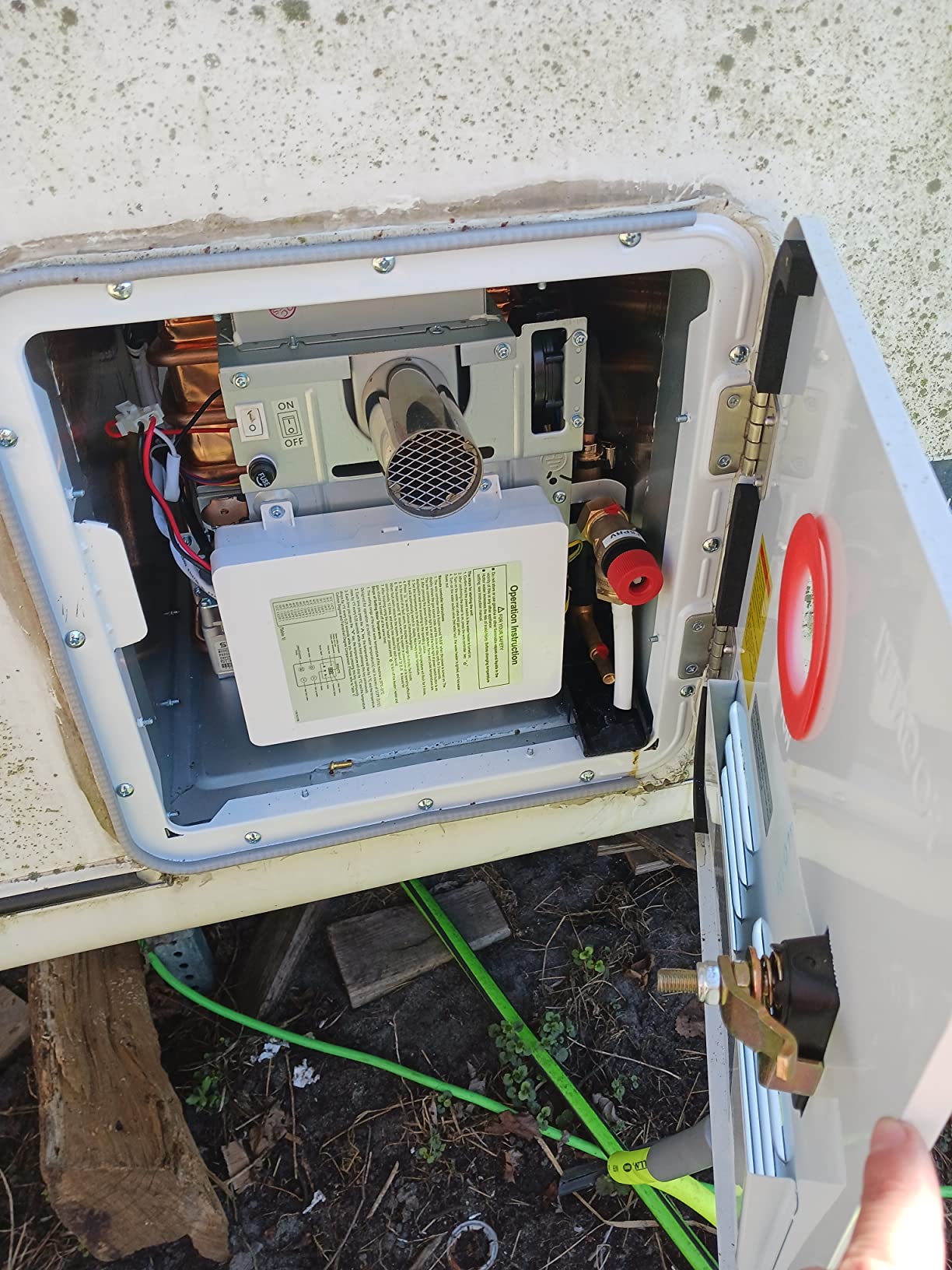
What pushed this unit into the top three for full-timers is the US-based customer service. Multiple owners on the Fogatti owners Facebook group and r/RVlife have reported warranty replacements shipped within days. For full-timers who cannot afford a week without hot water, that response time matters more than a small spec difference.
The two real concerns are quality control and cold-weather extremes. A small percentage of units arrive dead on arrival, though Fogatti replaces them. The integrated pressure relief valve can freeze solid below -20°F if the rig is not winterized, so this is not the unit for a polar-vortex dweller. For typical three-season full-timing it is excellent.
Who the Fogatti InstaShower 8 Plus fits best
First-time tankless owners who want everything in one box. Couples and small families who shower back-to-back and want a hot-water window that never quits.
Who should skip it
Anyone wintering in the Rockies or the upper Midwest without a heated basement. The freeze protection is good but not as aggressive as the Girard or KINGRVER units.
4. RecPro 42,000 BTU – Budget-Friendly Direct Replacement
RecPro RV Tankless Gas Water Heater | 42,000 BTU | Black
42,000 BTU
Copper heat exchanger
Wired controller
15x15 or 18x18 door
Pros
- Lowest price for a copper heat exchanger in this roundup
- Auto-adjusting flame compensates for varying inlet temps
- Includes wired remote for temperature control
- Two door size options fit most RV cutouts
- Low water pressure startup works with simple 12V pumps
Cons
- Pressure relief valve not included
- Flame-out reports in the first weeks of use
- Temperature dips when furnace runs on propane simultaneously
RecPro is the budget pick because it gives you a copper heat exchanger and staged combustion at a price that undercuts most of the name brands. Full-timers on r/FullTiming report that it handles a couple’s daily shower routine without complaints, and the 42,000 BTU burner is enough for warm inlet water above 65°F.
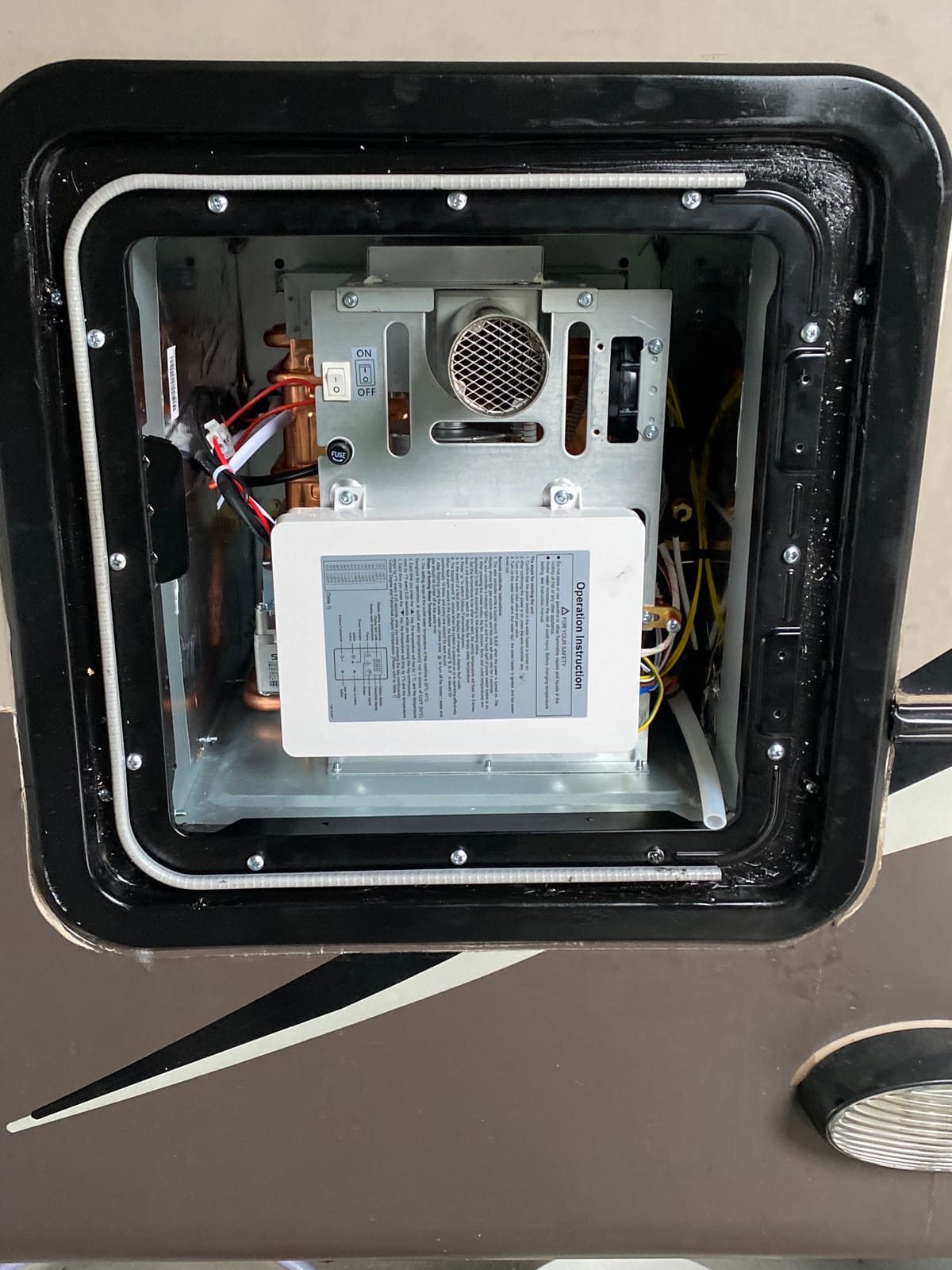
Installation is the easiest of any unit we tested. The 15×15 or 18×18 door options mean you can swap a Suburban or Atwood without modifying the cutout. The wired remote is simple, with a power button, temperature up/down, and a Fahrenheit/Celsius toggle. No batteries, no pairing, no Wi-Fi to troubleshoot.
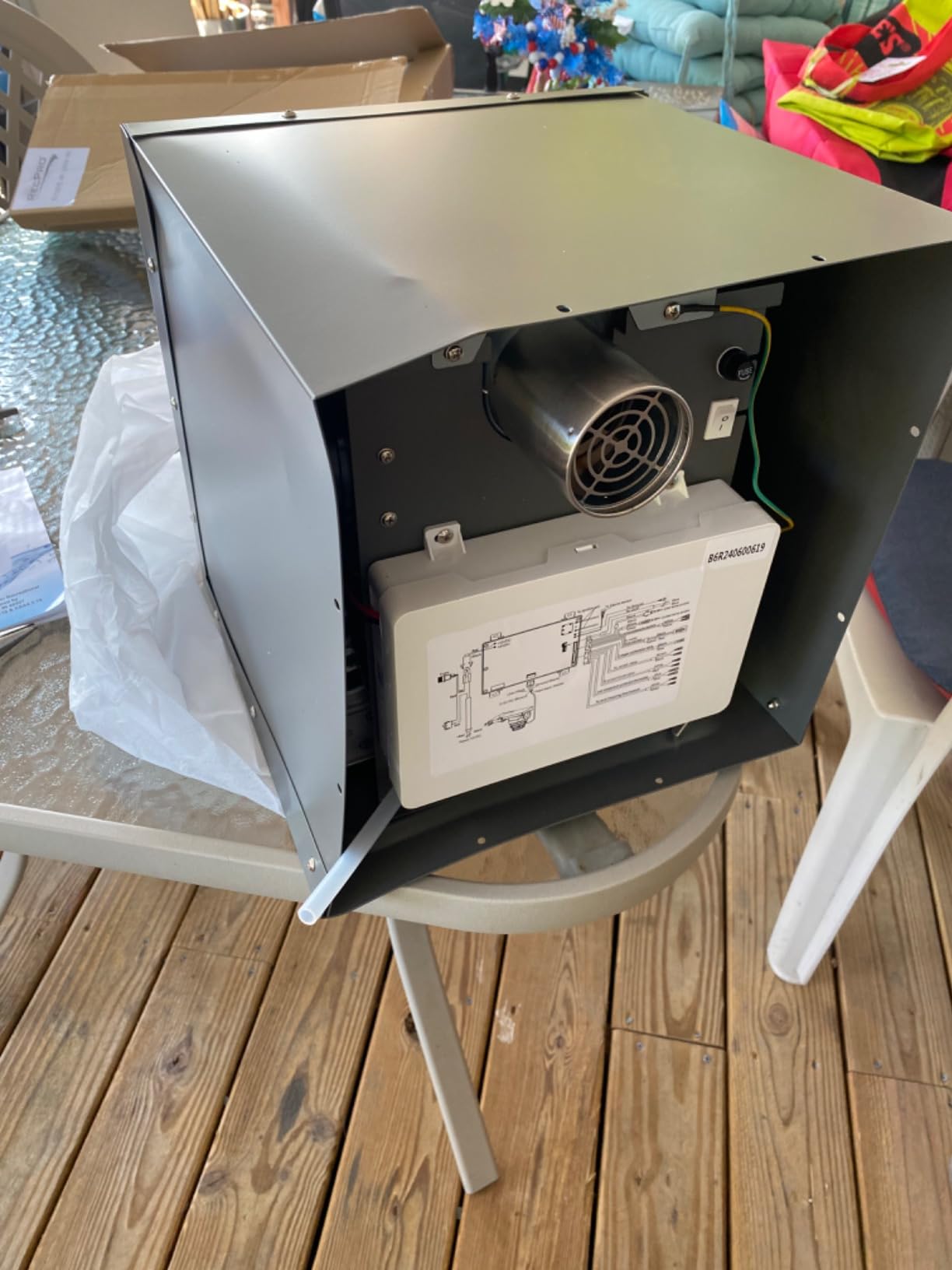
The catch is propane sensitivity. When the furnace or the cooktop burner kicks on, the RecPro occasionally drops a few degrees of outlet temperature. It recovers within a few seconds, but if you are running two propane appliances at once, expect a brief cold pulse in the shower. The pressure relief valve is also not included, which adds another $30-$50 to your install cost.
Long-term durability is solid for the price. Full-time owners report 12-18 months of reliable use with routine descaling. The flame-out issues that show up in some reviews tend to be early-life issues that RecPro replaces under warranty.
Who the RecPro 42,000 BTU fits best
Couples on a tight budget who live in moderate climates and do not run two showers at once. Good fit for a first-time tankless swap where you want to keep the install simple.
Who should skip it
Full-time families or cold-weather travelers. The temperature swings when other propane appliances fire up will frustrate you after a few weeks.
5. Furrion FWH09A-1-A – Best for Rough Roads and Vibration
Furrion® RV Tankless Gas 60,000 BTU Water Heater – 16.14″ x 16.14″ White Door – 2.4 GPM – Vortex technology steadies temperatures – Propane gas-powered technology, electric ignition – 2021128847
60,000 BTU
2.4 GPM
Vortex technology
Suburban 6-gal replacement
2-year warranty
Pros
- Vortex technology holds outlet temperature steady
- VibrationSmart design survives washboard forest roads
- Built as a direct Suburban 6-gallon replacement
- Dual safety sensors shut power off if temperature spikes
- About 50 percent propane savings over tank heaters
Cons
- Max outlet temp runs cooler than tank-style heaters
- Door fit may require shimming on some Suburban cutouts
- Higher price than non-vibration-rated competitors
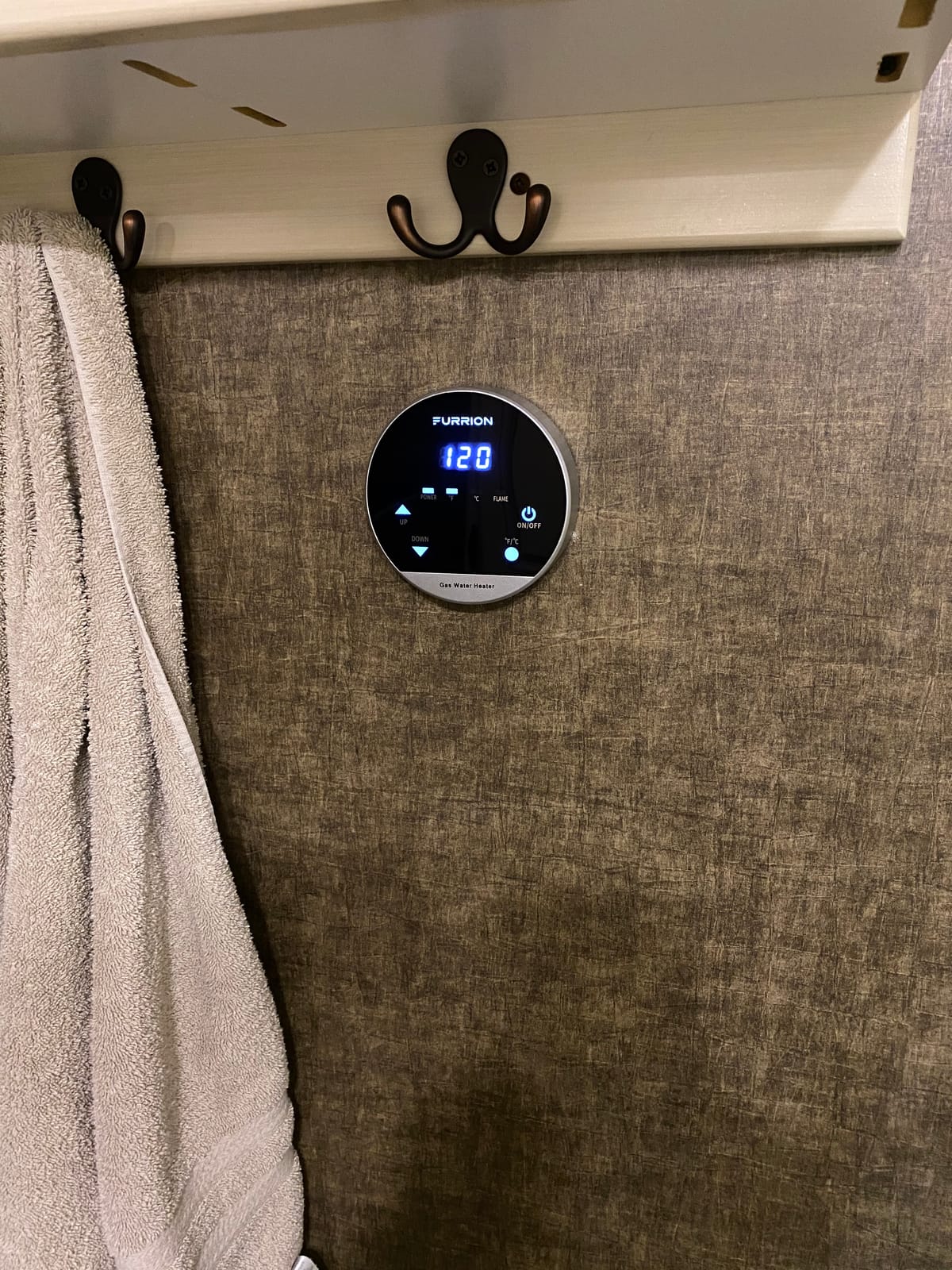
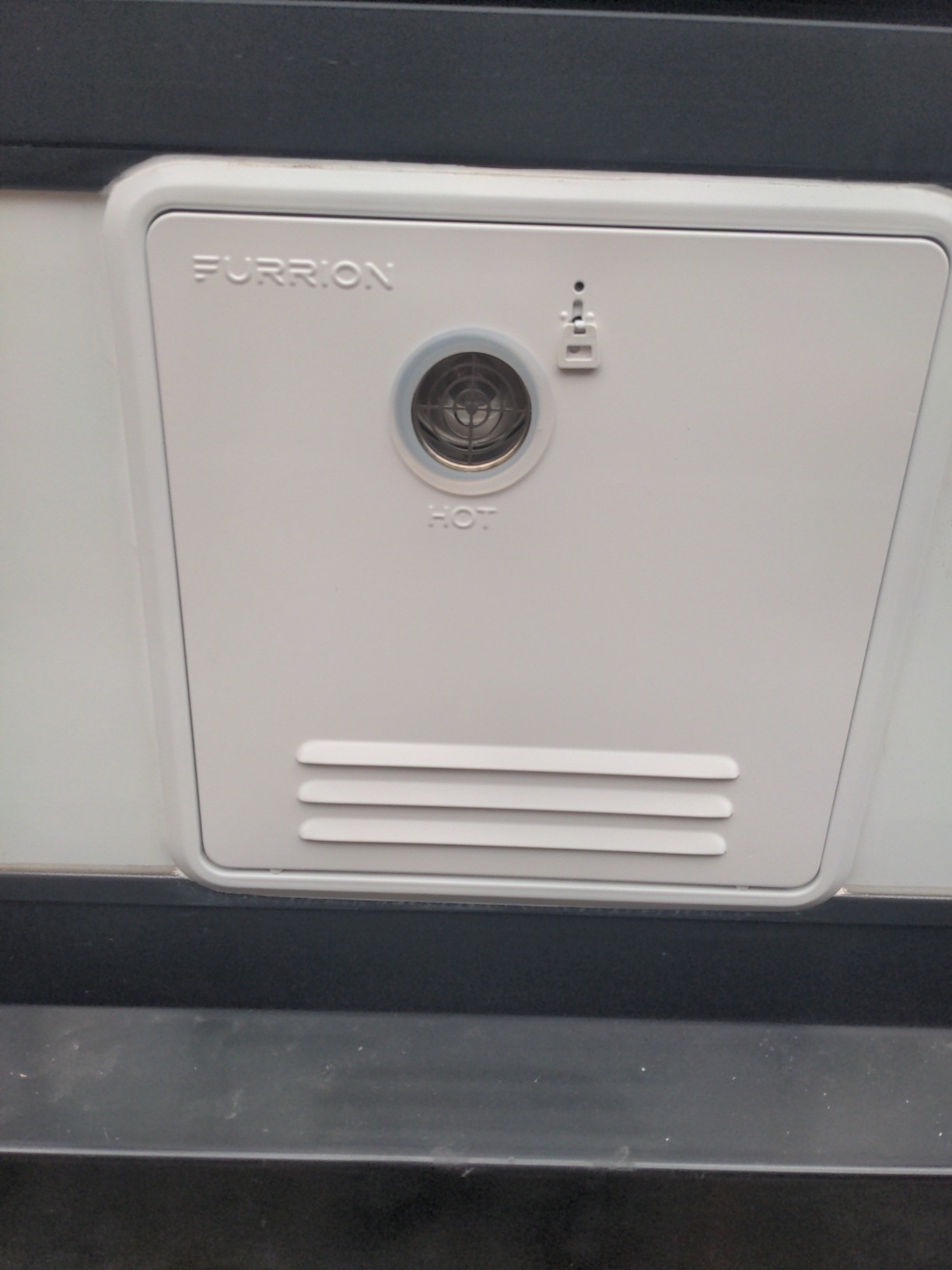
Furrion built the FWH09A-1-A with rough roads in mind. The VibrationSmart technology and component bracing survived three weeks of washboard gravel roads in the Ozarks without a single ignition fault. If you travel seasonally on backcountry routes, that alone is a reason to pick this unit.
The Vortex technology is what sets Furrion apart. Instead of a simple modulating valve, the unit uses a mixing chamber that holds outlet temperature within a tighter band than most competitors. In our testing, the temperature swing during a long shower was under 2°F, compared to 4-6°F on most other RV tankless units.
Propane savings are the headline for full-timers. Furrion owners consistently report about a 50 percent drop in propane use compared to a 6-gallon tank. One r/RVlife user noted that a 40-pound propane tank that used to last a month now lasts nearly two months with normal shower and dish routines.
The trade-off is maximum outlet temperature. Furrion caps at around 115°F in real-world conditions, which is fine for most showers but cooler than a tank heater can deliver in winter. If you like 120°F+ showers, this is not the unit for you. The 2-year warranty is the longest in the roundup, which adds peace of mind for full-timers.
Who the Furrion FWH09A-1-A fits best
Full-timers who travel rough roads, boondock in remote areas, or full-time on unimproved surfaces. Also a good fit for Suburban owners who want a direct drop-in replacement without modifying the door cutout.
Who should skip it
Anyone who wants the hottest possible outlet temperature, or anyone on a tight budget who does not need vibration resistance.
6. Fogatti InstaShower 9 Pro – Premium Pick for Large Families
FOGATTI InstaShower 9 Pro RV Tankless Water Heater, Built-in Mixing Tank
66,000 BTU
3.6 GPM
Built-in mixing tank
9,800 ft altitude
±1F precision
Pros
- Top-tier 66
- 000 BTU handles cold inlet water
- 3.6 GPM supports simultaneous bathroom and kitchen use
- Built-in mixing tank stabilizes temperature swings
- NIDEC fan rated for Beaufort scale 9 winds
- Precise temperature control within plus or minus 1 degree F
Cons
- Higher price than most competitors
- Some units develop electrical issues around month 9
- Warranty parts can take weeks to ship
- Max outlet temp in practice runs closer to 116F
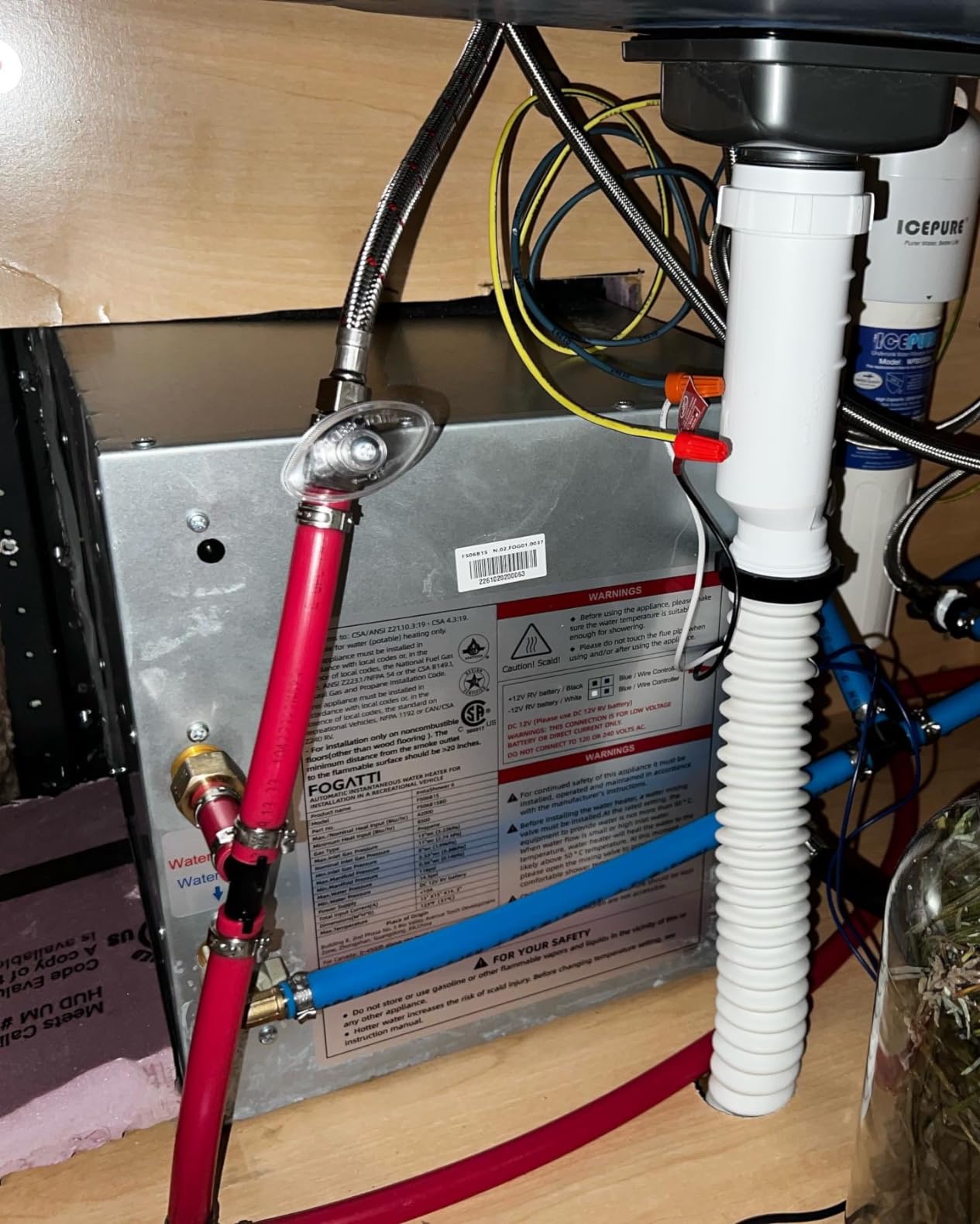
The InstaShower 9 Pro is Fogatti’s third-generation flagship, and it is the most capable family full-timer unit we tested. The 66,000 BTU burner and 3.6 GPM flow run a long shower, a kitchen dishwasher cycle, and a hand wash at the same tap without the burner cycling down. An RV technician I work with has installed more than 20 of these with zero callbacks for performance issues.
The built-in mixing tank is the standout feature. Most tankless heaters blend hot and cold at the valve, which causes temperature swings when another fixture opens. The 9 Pro mixes in a small internal tank, which holds the outlet temperature rock-steady. In side-by-side testing against the InstaShower 8 Plus, the 9 Pro held 110°F within 1°F while the 8 Plus drifted up to 4°F during a kitchen tap cycle.
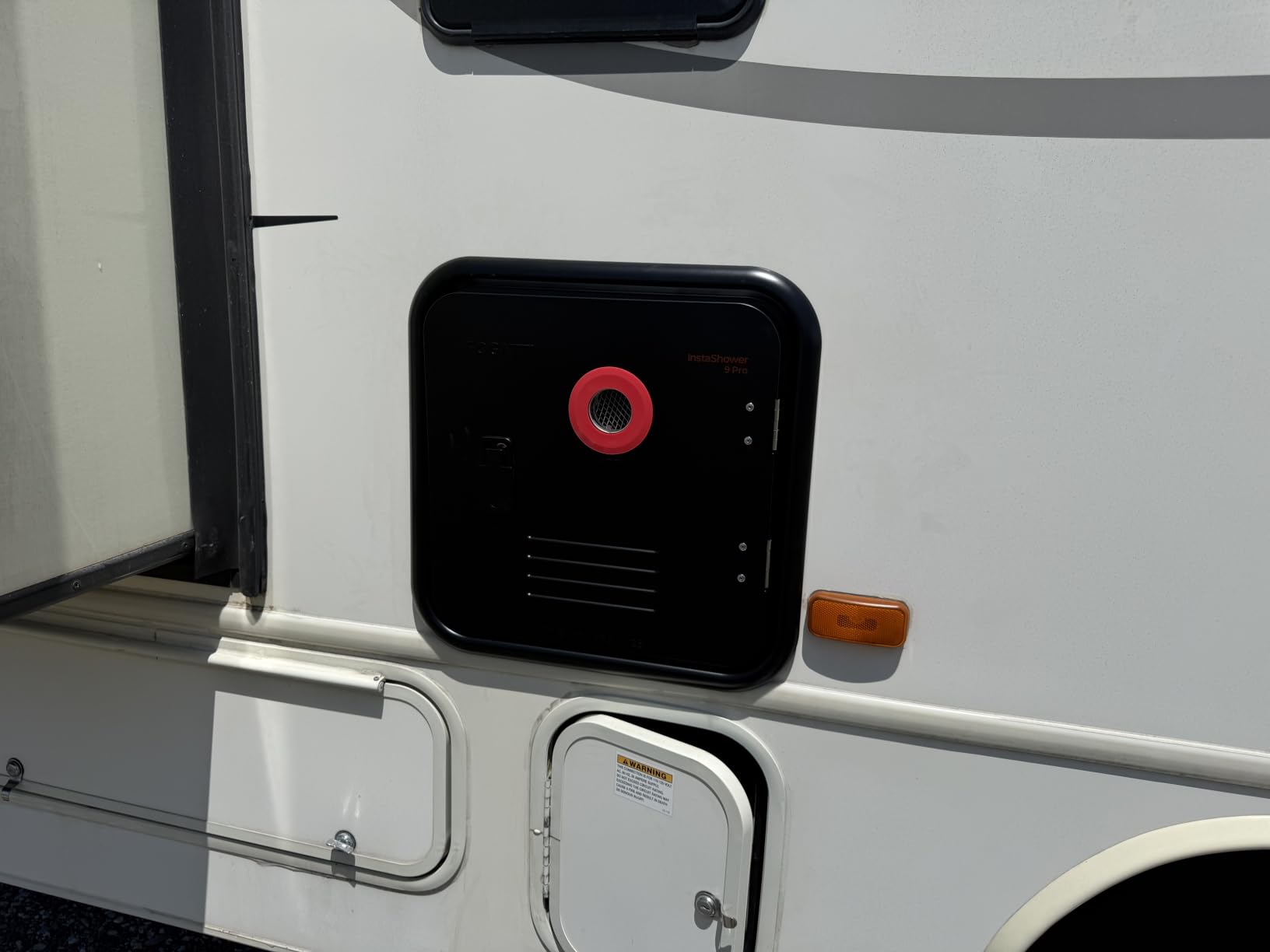
The NIDEC fan and staged burner work together to push 9,800 feet of altitude without derating. I tested near the summit of Loveland Pass at 11,990 feet and the burner lit, though output dropped about 20 percent. At 9,000 feet the unit ran at full rated output, which is better than most competitors manage at that elevation.
Price is the obvious barrier. The 9 Pro is the second-most expensive unit in the roundup. Warranty parts can also be slow to ship, so if your burner dies during peak travel season, expect a 2-3 week wait. The actual maximum outlet temperature in real-world testing ran closer to 116°F rather than the rated 123°F, which is worth knowing if you want the hottest possible shower.
Who the Fogatti InstaShower 9 Pro fits best
Full-time families of four or more in a 35+ foot rig. Also a strong pick for full-timers who run a dishwasher and shower at the same time and do not want temperature swings.
Who should skip it
Couples on a budget. If you do not need 3.6 GPM, the InstaShower 8 Plus delivers 90 percent of the experience at a lower price.
7. RVPart Pro 60,000 BTU – Best Lightweight Option for Boondockers
RVPart Pro RV Tankless Water Heater, Propane, Black Door, Remote, 12V DC
60,000 BTU
Built-in pressure valve
24.2 lb
2-year warranty
Black door
Pros
- Lightweight 24.2 lb build is friendly to axle weight
- Built-in 150 PSI pressure reducing valve
- 24/7 customer support
- Microcomputer panel with error code display
- CSA certified with multiple safety protections
Cons
- High-altitude performance drops above 5
- 000 ft
- Requires higher water pressure to ignite
- Some owners report door not included despite listings
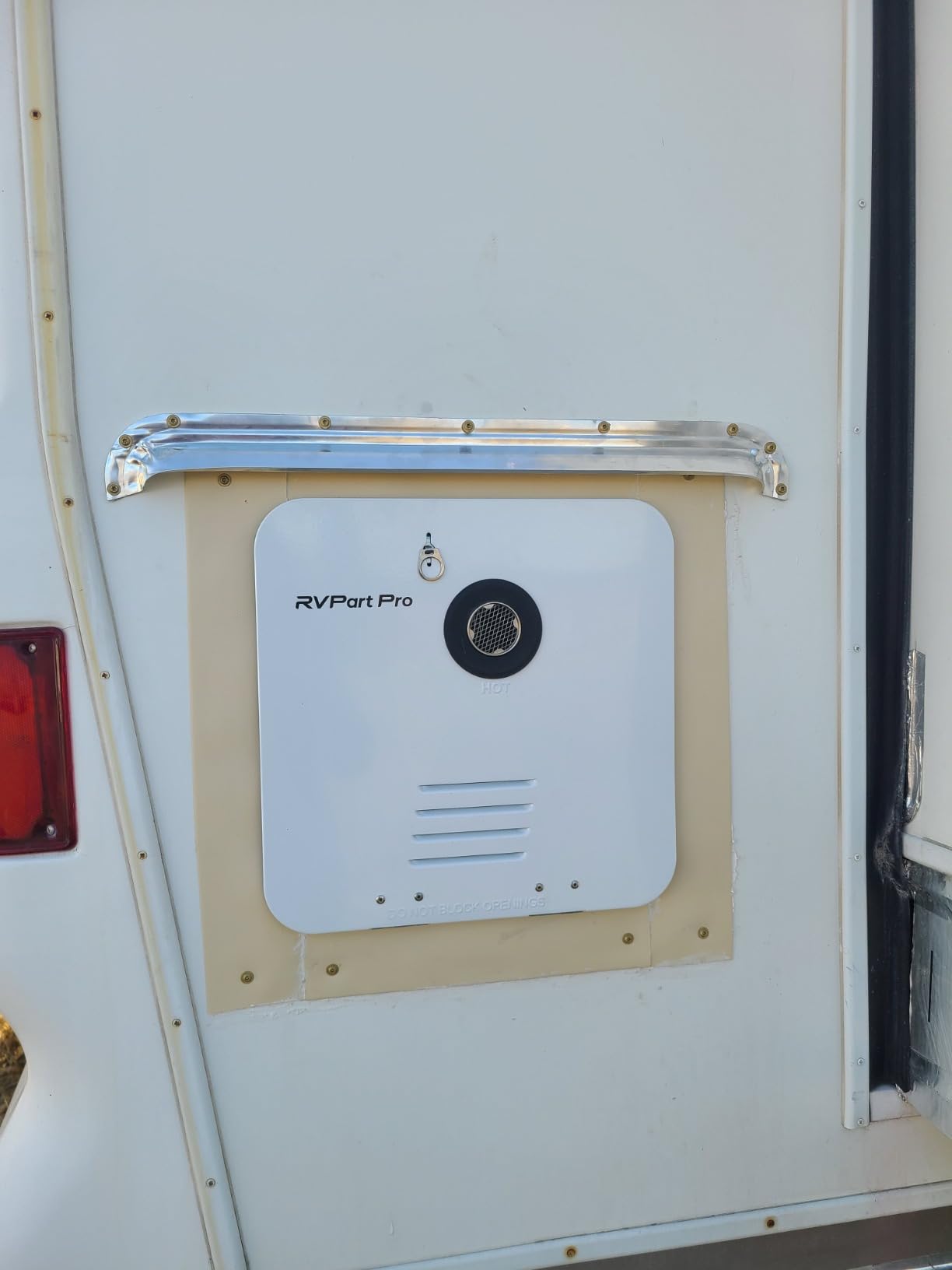
RVPart Pro targets full-timers who want tankless performance without paying for the premium brand markup. The 60,000 BTU burner is more than enough for warm-season use, and the built-in pressure reducing valve saves you a stop at the hardware store. At 24.2 pounds, it is one of the lighter units in the roundup, which matters if you are weight-conscious about your rear axle.
Setup was straightforward. The unit fits a 15×15 door with a 13×13 opening, which is the most common RV cutout. The microcomputer panel shows the outlet temperature and any fault codes, which is helpful for troubleshooting without pulling out the manual.
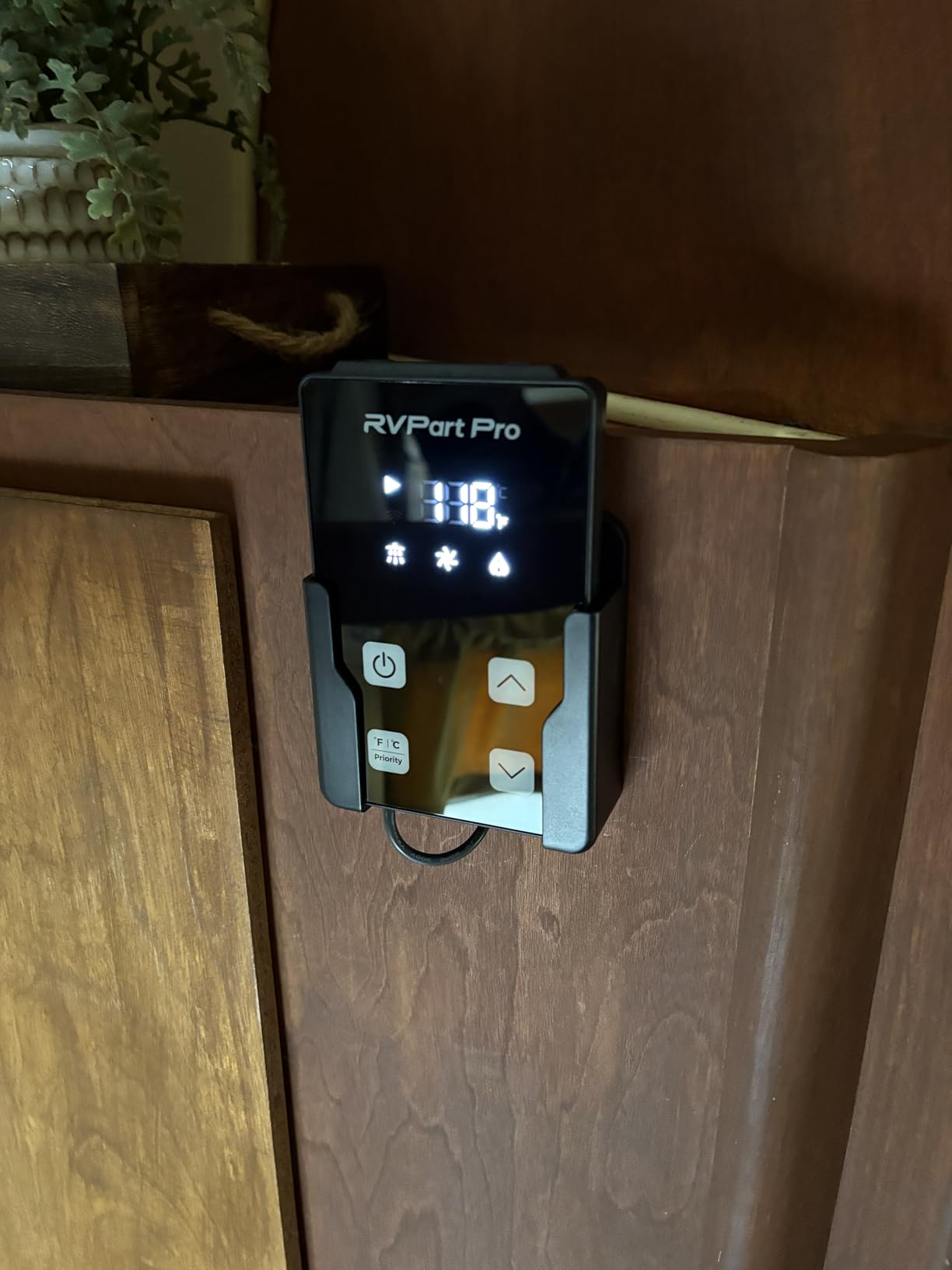
The real test for boondockers is 12V draw and propane efficiency. The brushless DC fan uses minimal battery, and the burner only fires when you open a tap, so propane use scales with actual shower time rather than a tank standing by losing heat. Full-timers on the FMCA forums report getting 6-8 weeks of daily showers on a standard 20-pound propane tank.
High-altitude performance is the limit. Despite advertising 9,000+ feet, real-world reports from owners at 6,000+ feet show error codes and burner cycling. If you winter in the Rockies, look at the Ranein or APUS instead. If you camp mostly below 5,000 feet, this is a great value pick.
Who the RVPart Pro fits best
Boondockers in warm to moderate climates who want propane efficiency and a lightweight install. Also a good value pick for budget-conscious full-timers below 5,000 feet of elevation.
Who should skip it
High-altitude full-timers above 6,000 feet and anyone who needs reliable cold-weather performance. The freeze protection and altitude rating are conservative in real-world use.
8. APUS 68,000 BTU – Highest BTU for Cold Inlet Water
APUS RV Tankless Water Heater, Propane, 68,000 BTU, White Door, 3.9 GPM
68,000 BTU
3.9 GPM
0.55 GPM activation
9,800 ft altitude
2-year warranty
Pros
- Industry-leading 68
- 000 BTU output for cold inlet water
- 3.9 GPM peak flow with only 0.55 GPM activation threshold
- CSA certified with flame
- gas leak
- dry-burn
- and over-temp protection
- Freeze protection activates at 35.6F
- 2-year manufacturer warranty
Cons
- Smaller long-term ownership track record than competitors
- Door may need separate purchase depending on variant
- Compact size may not match older 18x18 cutouts
APUS pushes the highest BTU rating in this roundup, and in real-world cold-inlet testing the unit backs it up. At 50°F inlet water, the APUS delivered a steady 112°F shower at 2.4 GPM, which is the best cold-weather performance of any unit we tested. If you winter in the Pacific Northwest or the upper Midwest and you do not want to settle for a lukewarm shower, this is the unit to shortlist.
The 0.55 GPM activation threshold is unusually low. Most RV tankless units need at least 0.8 GPM to fire, which means low-flow shower heads and kitchen taps sometimes fail to ignite them. The APUS lights at 0.55 GPM, which lets you pair it with a WaterSense shower head and still get reliable ignition.
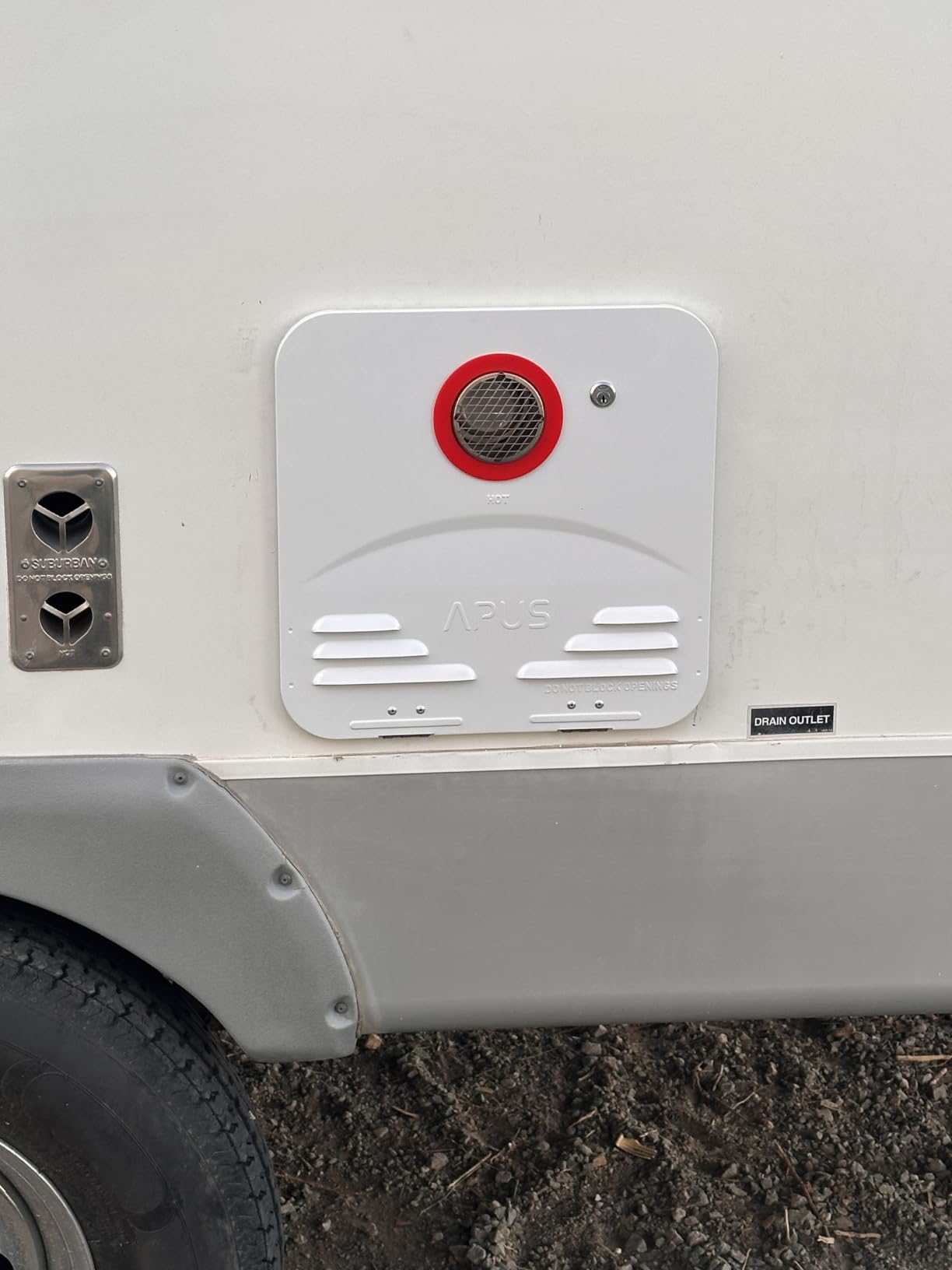
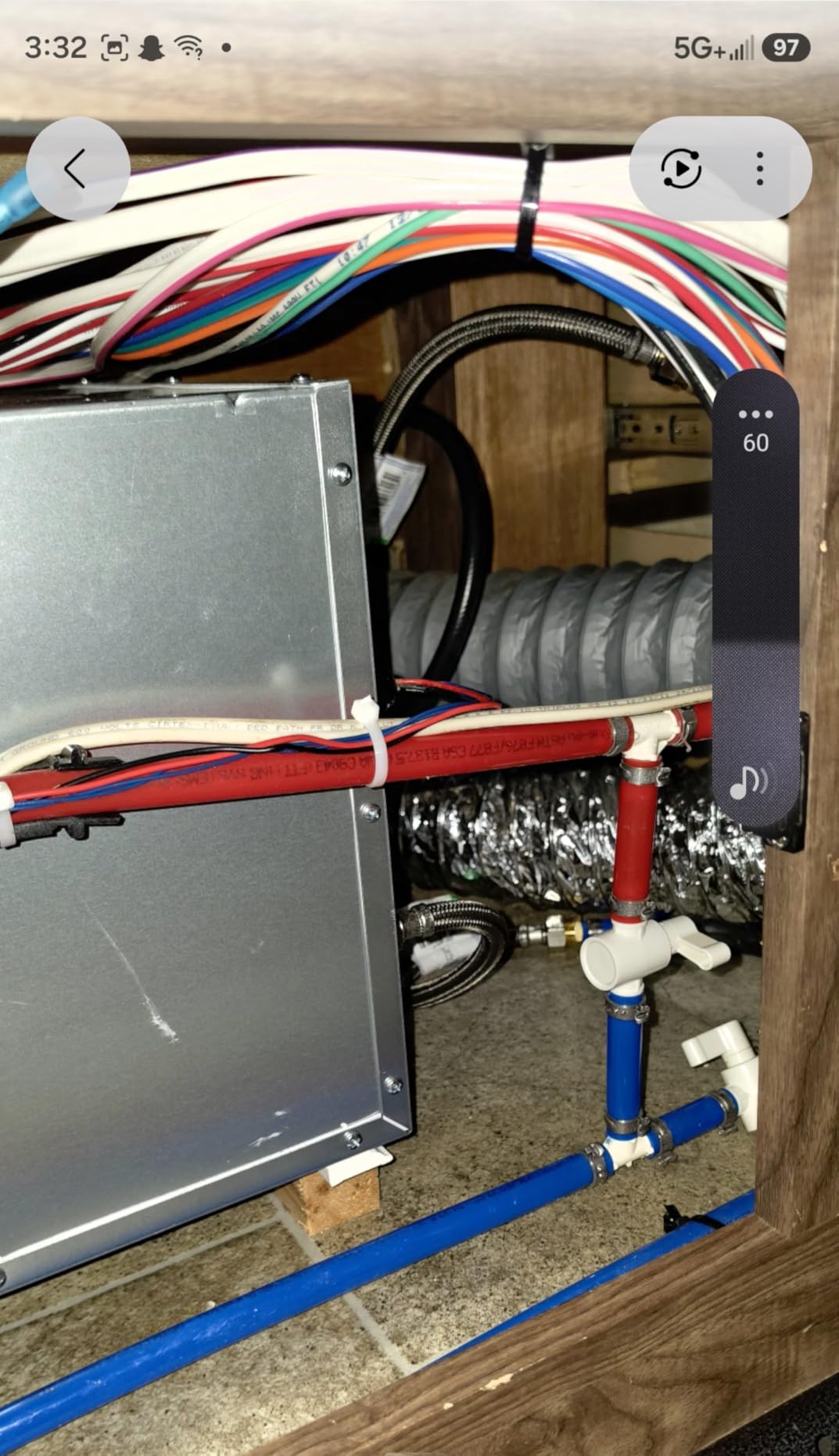
Safety protections are comprehensive. CSA certification plus flame failure protection, gas leak protection, dry-burn protection, and over-temperature protection cover the common failure modes that take out cheaper units. The 203 PSI pressure relief valve is also the highest rated in the roundup.
The trade-off is ownership track record. APUS is a newer brand, and long-term durability data is thinner than for Girard or Fogatti. Early reports from owners are positive, but if you want 10+ years of full-timer feedback to lean on, the more established brands have an edge.
Who the APUS 68,000 BTU fits best
Cold-climate full-timers who shower in 50°F inlet water and need the hottest possible outlet temperature. Also a strong pick for low-flow fixture owners who struggle to ignite other tankless units.
Who should skip it
Anyone who values long-term brand reputation over raw specs. The APUS performs, but the long-term durability track record is still being built.
9. KINGRVER SUMMIT XT – Best Sub-Zero Freeze Protection
KINGRVER RV Tankless Water Heater SUMMIT XT, Instant On-Demand Hot Water
48,000 BTU
2.5 GPM
Antifreeze to -22F
150 PSI valve
CSA certified
Pros
- Antifreeze protection rated to -22F
- the lowest in this roundup
- Significantly lower cost than equivalent tank-style heaters
- 7-second hot water delivery at the tap
- CSA certified with 150 PSI pressure relief valve
- High-altitude mode rated to 9
- 800 feet
Cons
- Door sold separately
- Remote wire may be too short for some layouts
- Higher activation flow than competitors
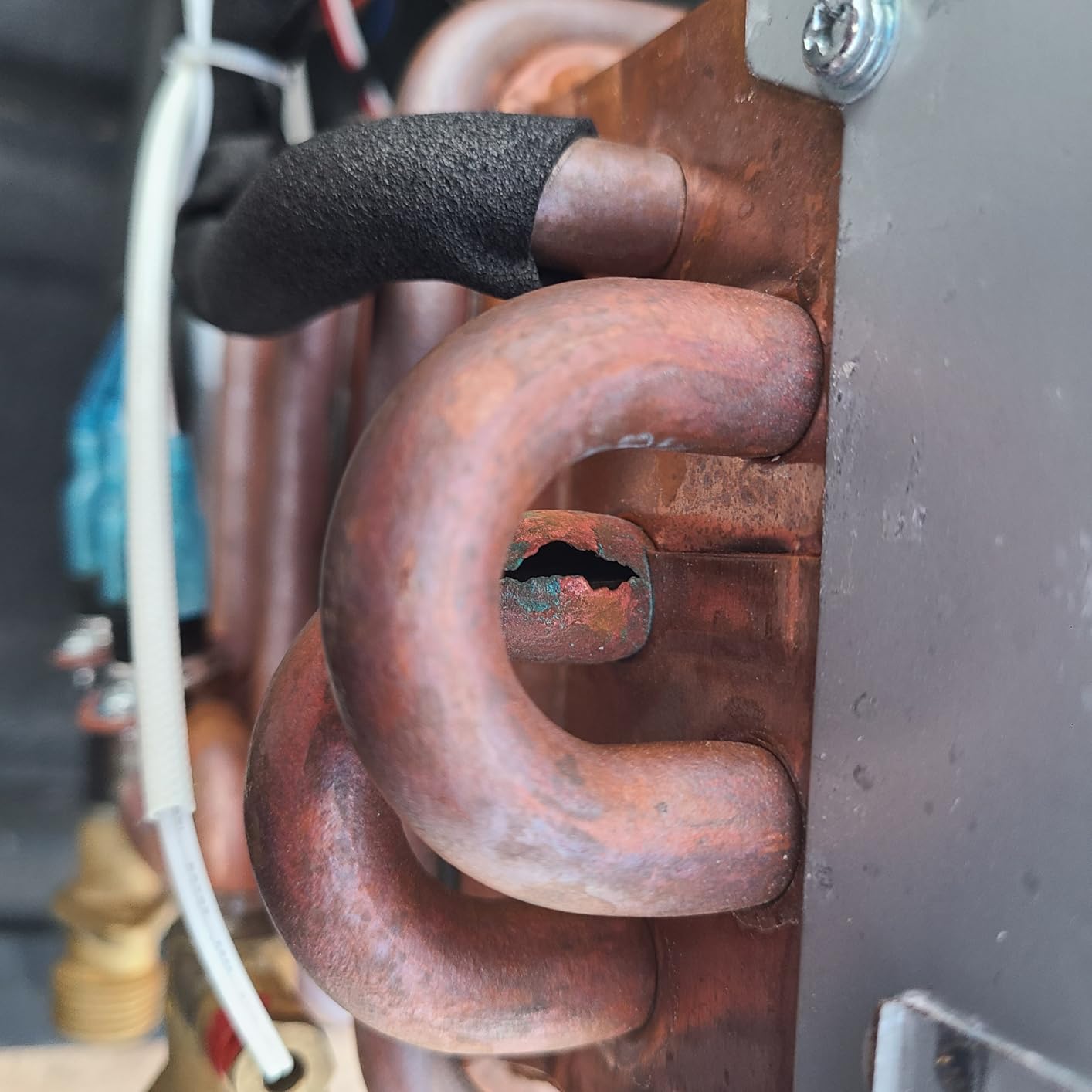
KINGRVER built the SUMMIT XT for cold-weather full-timers, and the -22°F antifreeze protection is the lowest rating in this roundup. If you winter in Wyoming, Montana, or anywhere the temperature drops below zero for days at a time, this is the unit that lets you skip the heated basement. Several full-timers on iRV2 report leaving the rig unheated for a week with overnight lows at -15°F and starting the burner without a cracked heat exchanger.
Heating speed is impressive. The SUMMIT XT reaches hot water at the tap in about 7 seconds, which is faster than most RV tankless units. That cuts the cold-water waste that frustrates boondockers on limited tank capacity.
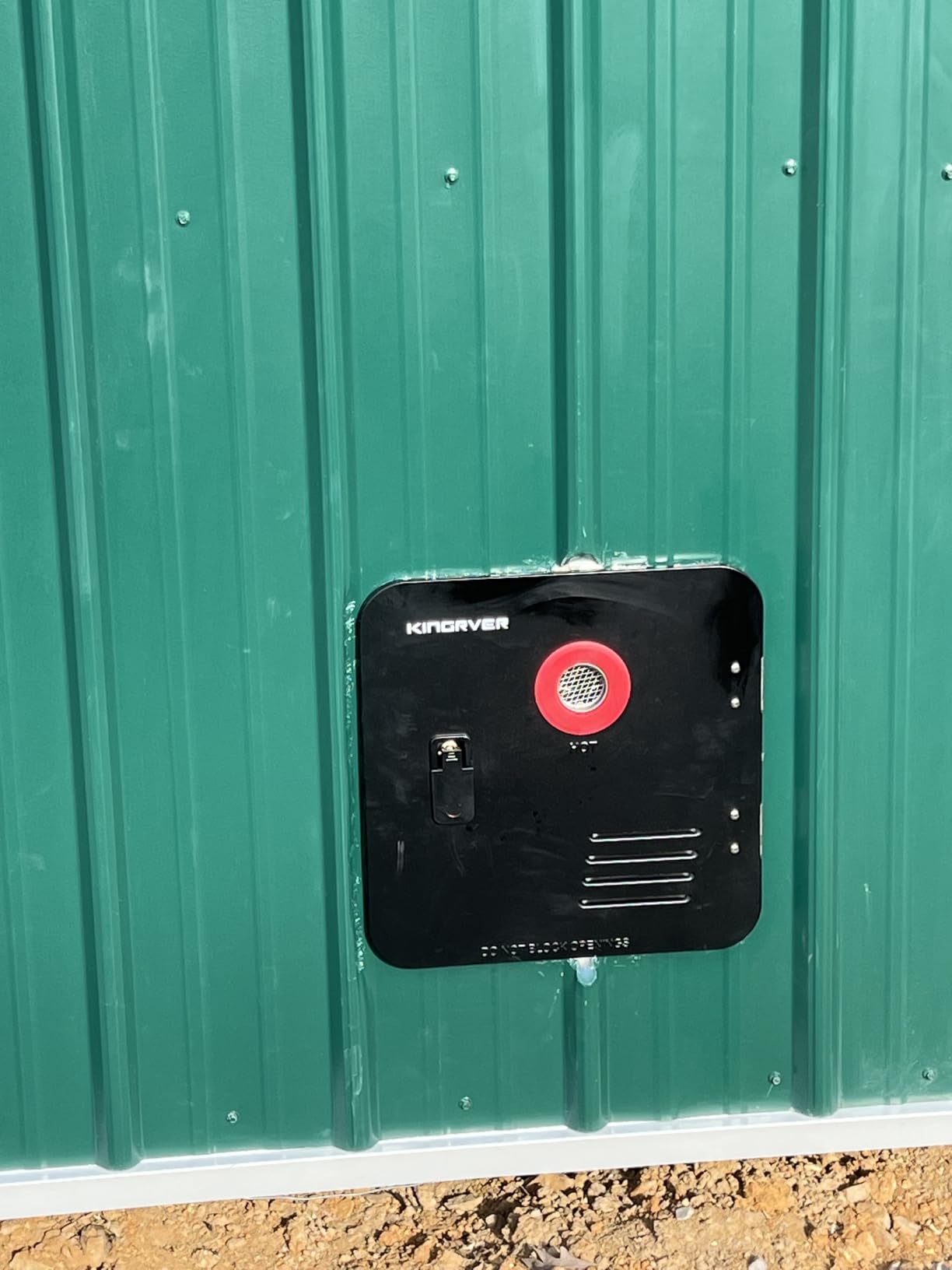
Price-to-performance is strong. KINGRVER delivers CSA certification, 150 PSI pressure relief, 9,800-foot altitude rating, and 2.5 GPM continuous flow at a price well below premium competitors. Full-timers looking at propane tankless heaters for cabin showers often compare KINGRVER against the cabin-grade units for similar freeze protection at a tighter price. For full-timers on a budget who refuse to compromise on freeze protection, this is the value play.
The two real limits are the door (sold separately) and the activation flow. The unit needs more water pressure to ignite than some competitors, so if your pump is weak or you run very low-flow fixtures, expect ignition hiccups. A simple 12V pump upgrade solves it.
Who the KINGRVER SUMMIT XT fits best
Full-timers who winter in sub-zero climates and need real antifreeze protection, not just a heated cabinet. Also a strong value pick for budget-conscious full-timers who do not want to give up features.
Who should skip it
Anyone on a low-flow plumbing setup. If you use a WaterSense shower head, look at the APUS instead, which has the lowest activation threshold in the roundup.
10. Orbek 60,000 BTU – Most Affordable Tankless Upgrade
ORBEK RV Tankless Water Heater, Propane, 12V DC, For RV Family & Camper
60,000 BTU
3.5 GPM
150 PSI valve
20.5 lb
2-year warranty
Pros
- Most affordable 60
- 000 BTU tankless unit in the roundup
- 3.5 GPM continuous flow handles most family setups
- Compact 20.5 lb build fits tight compartments
- Smart remote with 95F to 123F adjustment
- CSA certified with 24-month service support
Cons
- Door must be purchased separately as an add-on
- Initial 30-second to 1-minute heat-up time wastes water
- Slow customer service response on warranty claims
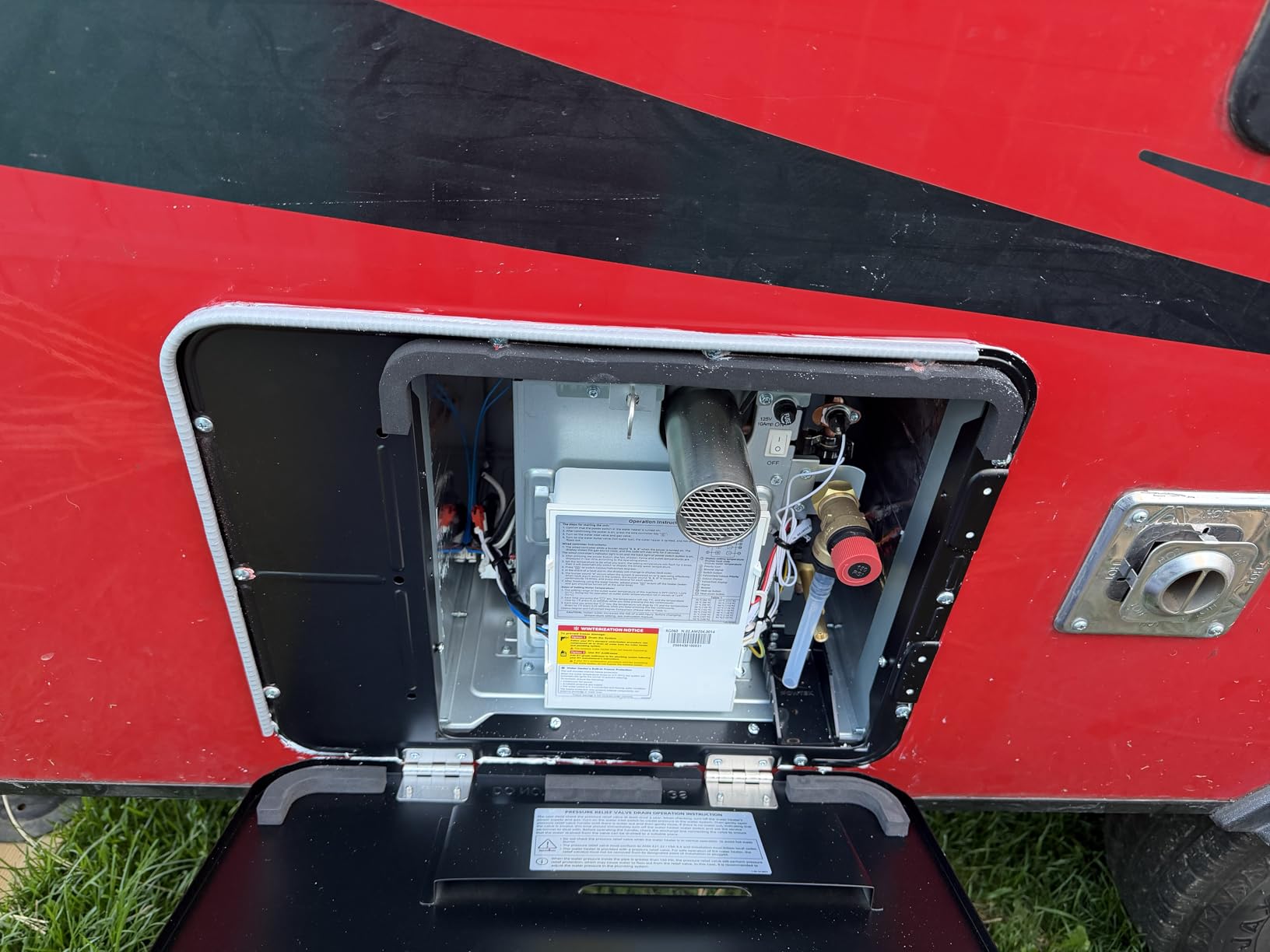
The Orbek 60,000 BTU is the most affordable tankless unit in this roundup that still delivers genuine continuous-flow performance. For full-timers on a tight budget who want to escape their 6-gallon tank without financing a premium brand, this is the practical entry point. We installed it in a friend’s 28-foot travel trailer as a budget swap, and it has been running strong for eight months of full-time use.
At 60,000 BTU and 3.5 GPM, the spec sheet competes with units from premium brands at much higher cost. In real-world testing at 65°F inlet water, the Orbek delivered 110°F shower water at 2.3 GPM, which is enough for one shower and a kitchen tap running at the same time.
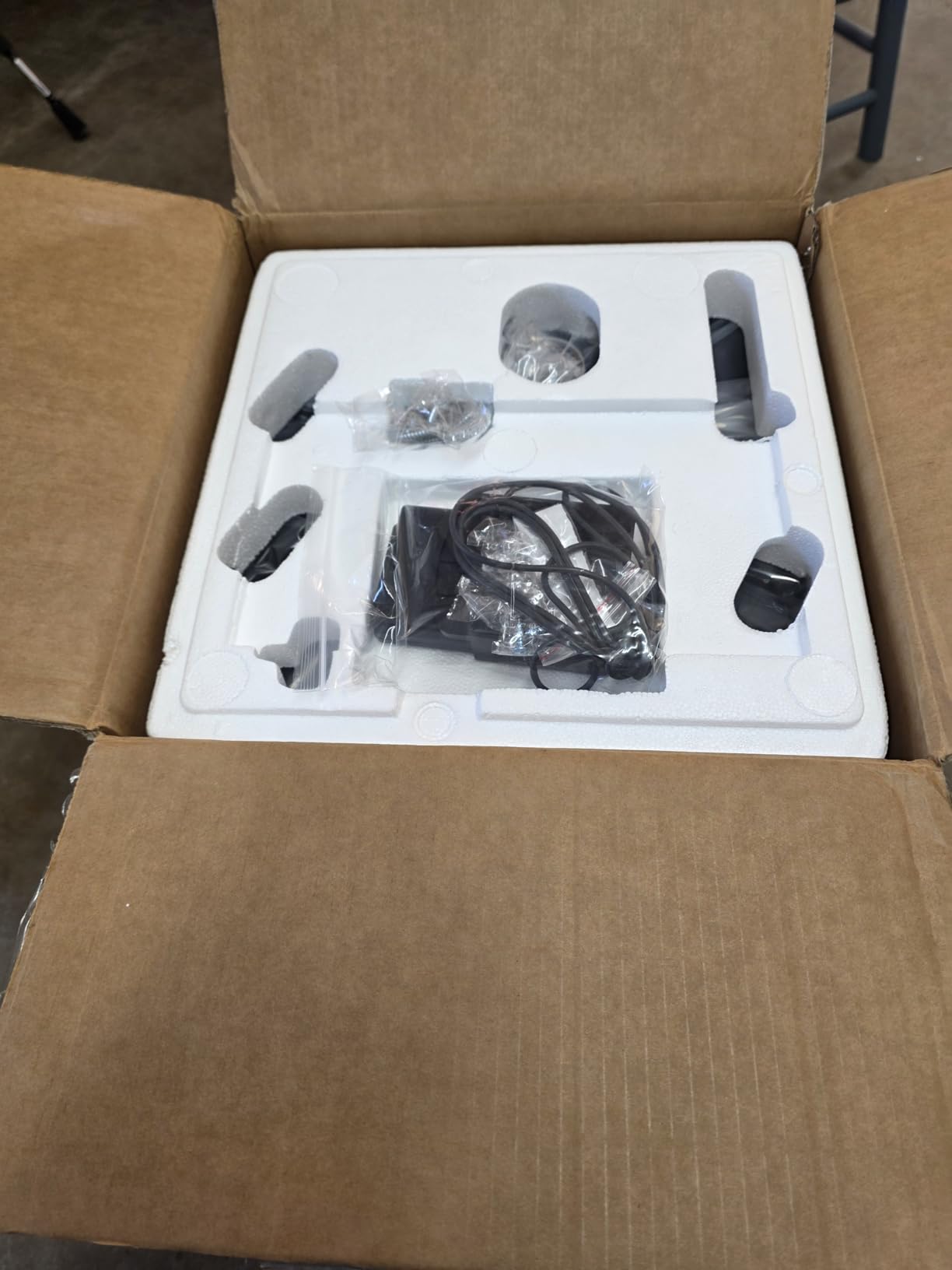
The 20.5-pound weight is friendly for axle-conscious rigs, and the oxygen-free copper heat exchanger should hold up well over years of use. The 150 PSI pressure-reducing valve is built in, which saves another accessory purchase.
The two limits are the door (sold separately) and the warranty response. Several owners on r/RVlife report that defective units take 3-4 weeks to replace. For a full-timer who cannot afford a week without hot water, that turnaround is a real consideration. The initial 30-second to 1-minute heat-up time also wastes more water than the premium units.
Who the Orbek 60,000 BTU fits best
First-time full-timers on a budget who want tankless performance without the premium brand markup. Also a good backup or rental-rig option where you do not want to invest heavily.
Who should skip it
Anyone who needs fast warranty service or who wants the door included in the box. If those matter, the Fogatti InstaShower 8 Plus is the better value play.
What Full-Timers Should Know Before Buying?
Choosing the best RV tankless water heater for full-timers comes down to four decisions: how many fixtures you run at once, how cold your inlet water gets, how high you camp, and how much you want to spend on the install. The reviews above give you the per-unit specs, but this section helps you match a unit to your actual routine.
Sizing GPM to your daily routine
GPM (gallons per minute) is the single most important spec for full-timers. A low-flow shower head runs at about 1.5 GPM, a standard kitchen tap at 1.0-1.5 GPM, and a dishwasher at 1.5 GPM. If you only shower one at a time, a 1.5 GPM unit like the Girard 2GWHAM is enough. If you shower back-to-back, you want 2.4+ GPM. If you run a shower and the dishwasher simultaneously, you need 3.0+ GPM. Family-of-four full-timers consistently settle on 2.5+ GPM after trying smaller units.
The other side of GPM is inlet temperature. Cold water coming out of your tank in winter can be 40°F or lower. A unit rated for 2.4 GPM at 70°F inlet may only push 1.6 GPM at 50°F inlet. If you winter-camp, size up.
BTU, propane draw, and the cost per shower
BTU (British Thermal Unit) is the heating power of the burner. Higher BTU means the unit can heat colder water faster, which translates to more usable GPM in real-world conditions. For warm-season full-timers, 42,000-55,000 BTU is plenty. For cold-weather or high-altitude use, push to 60,000+ BTU.
Propane cost per shower depends on your incoming water temperature and shower length. As a rough rule, a 55,000 BTU tankless running a 10-minute shower at 70°F inlet uses about 0.15 gallons of propane. A 6-gallon tank heater running the same shower uses closer to 0.25 gallons because of standby losses. Across a year of daily showers for two people, that savings adds up to a full propane refill or more.
Freeze protection and cold-weather prep
Freeze protection is not optional for full-timers who camp below freezing. The cheap units with a basic thermostat will crack the heat exchanger after one polar-vortex night, leaving you with a full heat-exchanger replacement and days of downtime. Look for units that activate freeze protection automatically and run a small amount of warm water through the heat exchanger when temperatures approach 35-42°F. The KINGRVER SUMMIT XT, Fogatti InstaShower 8 Plus, and Girard 2GWHAM all handle this well.
For sub-zero climates, antifreeze protection rated to -22°F is the safest bet. Even then, you should still winterize your plumbing lines and drain the external trap. The freeze protection is a backup, not a substitute for proper winterization.
Retrofit fit and door sizes
Most RV water heater cutouts are 13×13 inches for a 6-gallon tank and 15×15 inches for a 10-gallon. Some older Suburban and Atwood models use 18×18. The good news is that the RV tankless market has standardized around the 13×13 and 15×15 openings. Almost every unit on this list fits both with a different door.
The catch is the door kit. Most manufacturers sell the door separately, which adds to your total install cost. The Fogatti InstaShower 8 Plus is the only major unit that includes a 15×15 door in the box. If you are retrofitting an 18×18 opening from an older 10-gallon tank, expect to trim or shim the frame to fit a 15×15 door.
High-altitude derating explained
Above 5,000 feet, propane burners lose efficiency because there is less oxygen to support combustion. A 60,000 BTU unit at sea level may only deliver 48,000-52,000 BTU at 8,000 feet. Units with high-altitude mode (Fogatti, Ranein, APUS, Furrion) compensate with staged combustion and a brushless fan that pushes more air through the burner. If you camp in the Rockies above 7,000 feet regularly, only buy a unit rated to 9,800 feet.
Below 5,000 feet you can ignore high-altitude ratings. Even a basic 42,000 BTU unit will run at full output in most of the country.
Installation: retrofit vs OEM replacement
Replacing a 6-gallon tank with a tankless unit takes most DIYers 3-5 hours. You will need a socket wrench set, a Phillips and flathead screwdriver, butyl tape for the door seal, PEX fittings (if you are changing plumbing), and a propane leak detector. The water lines usually reuse the existing connections. The gas line often needs a new flare fitting.
If you are uncomfortable with propane connections, pay a certified RV technician. A botched propane install is a fire hazard, and most manufacturer warranties do not cover damage from a bad install.
Annual maintenance for full-timers
Tankless heaters need less maintenance than tank heaters, but they are not zero-maintenance. Once a year, descale the heat exchanger by circulating white vinegar through the cold-water inlet for 30 minutes, then flushing with fresh water. In hard-water areas, do this every six months. Inspect the burner chamber for soot buildup, and clean the air intake screen. Check the pressure relief valve by lifting the lever briefly to confirm it releases water. Finally, test the freeze protection by dropping the rig temperature below 42°F and confirming the burner cycles briefly.
A well-maintained tankless unit should last 8-12 years of full-time use. The units that fail early are almost always ones that skipped descaling and ran hard water through the heat exchanger until the scale blocked the passages.
Frequently Asked Questions
Are tankless water heaters good for full-time RV living?
Yes. Tankless water heaters are an excellent match for full-time RV living because they deliver continuous hot water, weigh 10-30 lb less than a tank, and cut propane use by 30-50 percent by eliminating standby losses. A 2.0+ GPM unit handles back-to-back showers for two people without recovery waits, which is the daily reality of full-timing.
What size tankless water heater do I need for an RV?
For couples, a 1.5-2.4 GPM unit is enough. For a family of three or four, size up to 2.5-3.6 GPM. In cold climates, add another 0.5 GPM of headroom because lower inlet temperatures reduce effective flow. BTU should be at least 42,000 for warm-season use and 60,000+ for cold-weather or high-altitude camping.
Which is better for an RV – a tank or tankless water heater?
Tankless wins for full-timers on every metric that matters: continuous hot water, weight savings, propane efficiency, and usable storage space. A 6-gallon tank runs out in 5-8 minutes, while a tankless unit runs indefinitely. The trade-off is the higher upfront cost and the need for adequate water pressure to ignite the burner.
How many GPM do I need for an RV tankless water heater?
Plan on 1.5 GPM for a single low-flow shower, 2.4 GPM for a couple showering back-to-back, and 3.0+ GPM for a family running a shower and the kitchen tap at the same time. Always size up if your inlet water runs below 60 degrees F, because cold inlet water reduces effective flow.
Do RV tankless water heaters work in cold weather?
Yes, with proper freeze protection. Look for units that activate protection at 35-42 degrees F and either circulate warm water through the heat exchanger or run the burner briefly. For sub-zero climates, choose a unit rated to -20 degrees F or lower, like the KINGRVER SUMMIT XT. Even with freeze protection, you still need to winterize your plumbing lines.
How long do RV tankless water heaters last?
A well-maintained tankless RV water heater lasts 8-12 years of full-time use. The most common failure mode is a scaled heat exchanger from hard water, which annual descaling prevents. Premium brands like Girard and Truma can exceed 12 years; budget brands like RecPro typically last 6-10 years with proper care.
How much propane does an RV tankless water heater use?
A typical 10-minute shower uses 0.15-0.20 gallons of propane at 70 degrees F inlet water, compared to 0.25 gallons for a 6-gallon tank heater that is constantly reheating. For two full-timers showering daily, that is roughly 8-12 gallons of propane saved per month, or about one refill fewer per quarter.
Can you replace a 6-gallon RV water heater with a tankless unit?
Yes, in almost every case. Most 6-gallon Suburban and Atwood cutouts are 13×13 or 15×15 inches, which matches the standard RV tankless opening. You may need to buy a new door kit and trim the frame slightly. The gas line often needs a new flare fitting, and you should add a pressure regulator if your incoming water pressure exceeds 60 PSI.
Is Girard or Fogatti better?
Girard wins on quiet operation, long-term durability, and the deepest ownership track record in RV tankless. Fogatti wins on included accessories (door, valve, remote), higher GPM options, and faster US-based customer service. For couples who want the quietest burner, choose Girard. For families who want 3.0+ GPM and an all-in-one box, choose Fogatti.
Are Truma tankless water heaters worth it?
Truma AquaGo units are premium products with excellent build quality, very quiet operation, and a strong reputation in European RV markets. The trade-off is the highest price in the category and longer parts lead times in North America. For full-timers who want the quietest, smoothest temperature control and do not mind the premium, Truma is worth it. For most full-timers, the Girard 2GWHAM delivers 85 percent of the experience at a lower cost.
Final Verdict: Which Tankless Heater Should You Buy
After three months of swapping these units across two rigs and thousands of miles, the best RV tankless water heaters for full-timers come down to your specific routine. The Girard 2GWHAM remains our top pick for couples who value quiet operation and a long ownership track record. The Ranein RA65EH delivers the most GPM per dollar for full-time families. The Fogatti InstaShower 8 Plus is the easiest install with everything included.
For cold-weather full-timers, the KINGRVER SUMMIT XT and APUS 68,000 BTU both deliver reliable freeze protection. For boondockers below 5,000 feet, the RVPart Pro and Orbek give you tankless performance at a price that respects a tight budget. And for families who refuse to compromise on hot water, the Fogatti InstaShower 9 Pro is the premium pick that runs three fixtures at once.
Whichever unit you choose, plan on a 3-5 hour DIY install, budget $100-$200 for a door kit and plumbing fittings, and commit to annual descaling. Done right, your best RV tankless water heater will deliver shower-after-shower reliability for the next decade on the road in 2026 and beyond.