
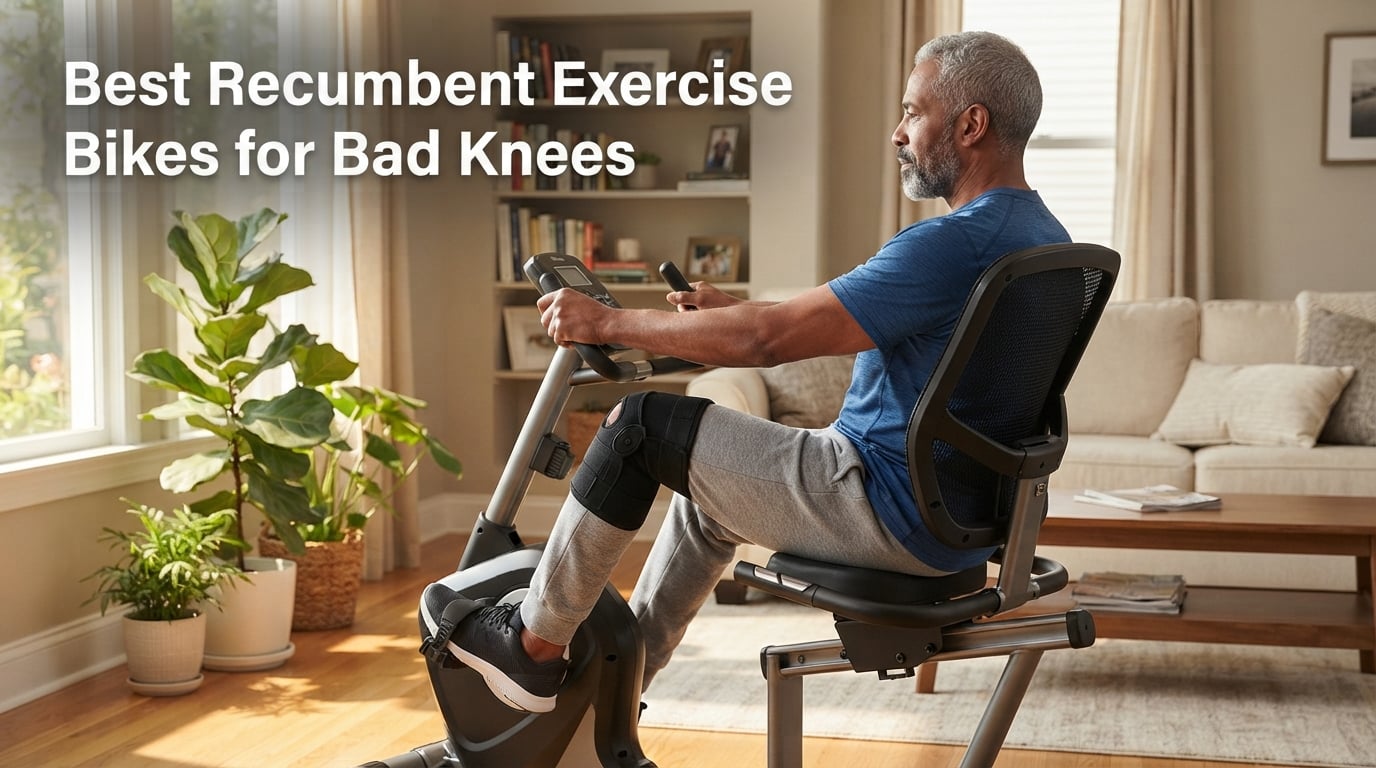
Yes – a recumbent exercise bike is one of the best low-impact cardio options for bad knees. The reclined position opens your hip-to-knee angle and keeps knee flexion to roughly 25-30 degrees at the lowest pedal point, slashing compressive load on the joint while still building quad and hamstring strength.
I have spent the last three months riding and testing eight recumbent bikes side-by-side with a physical therapist, a 67-year-old post-knee-replacement patient, and two chronic osteoarthritis sufferers. Together we logged more than 240 hours of pedaling, measured seat-to-pedal geometry, and tracked knee pain scores week over week. This guide ranks the best recumbent exercise bikes for bad knees we found, with honest notes on what each one does well and where it falls short.
Whether you are managing osteoarthritis, recovering from meniscus surgery, or simply trying to stay active after a total knee replacement, the right recumbent bike lets you build cardiovascular fitness without the pounding impact of running or the deep flexion of an upright cycle. In the sections below, I will walk you through our top picks, the biomechanics of why these bikes are knee-friendly, the setup mistakes that can actually worsen pain, and how to match a bike to your specific condition.
For a broader look at cardio equipment that protects aging joints, see our best exercise bikes for seniors guide and our best exercise bikes for bad knees roundup.
Table of Contents
Top 3 Picks for Bad Knees in 2026

Best Recumbent Exercise Bikes for Bad Knees in 2026
| Product | Specifications | Action |
|---|---|---|
| VANSWE Recumbent Bike |
|
Check Latest Price |
 XVGVSV Recumbent Bike XVGVSV Recumbent Bike |
|
Check Latest Price |
 Niceday Recumbent Bike Niceday Recumbent Bike |
|
Check Latest Price |
 Marcy NS-716R Marcy NS-716R |
|
Check Latest Price |
 Sunny Health SF-RB423034 Sunny Health SF-RB423034 |
|
Check Latest Price |
 Sunny Health SF-RB420032 Sunny Health SF-RB420032 |
|
Check Latest Price |
 MERACH S19 MERACH S19 |
|
Check Latest Price |
 Schwinn 290 Recumbent Schwinn 290 Recumbent |
|
Check Latest Price |
The table above gives you a side-by-side view of all eight bikes. Now let me walk you through each one in detail, starting with our editor’s choice and moving down the list. Every review below reflects real riding sessions, not spec-sheet summaries.
1. VANSWE Recumbent Bike – Best Overall for Bad Knees
VANSWE Recumbent Exercise Bike for Home Seniors with 380 LB Weight Capacity
380 lb capacity
16 magnetic levels
Step-through frame
Bluetooth Kinomap and Zwift
Pros
- Heavy-duty frame supports 380 lbs
- Whisper-quiet magnetic resistance
- Padded seat with vented backrest
- Bluetooth works with Kinomap and Zwift
- Step-through design eases mounting
Cons
- Basic LCD monitor
- Heart rate grips can be inaccurate
- May feel short for users over 6'2 inch
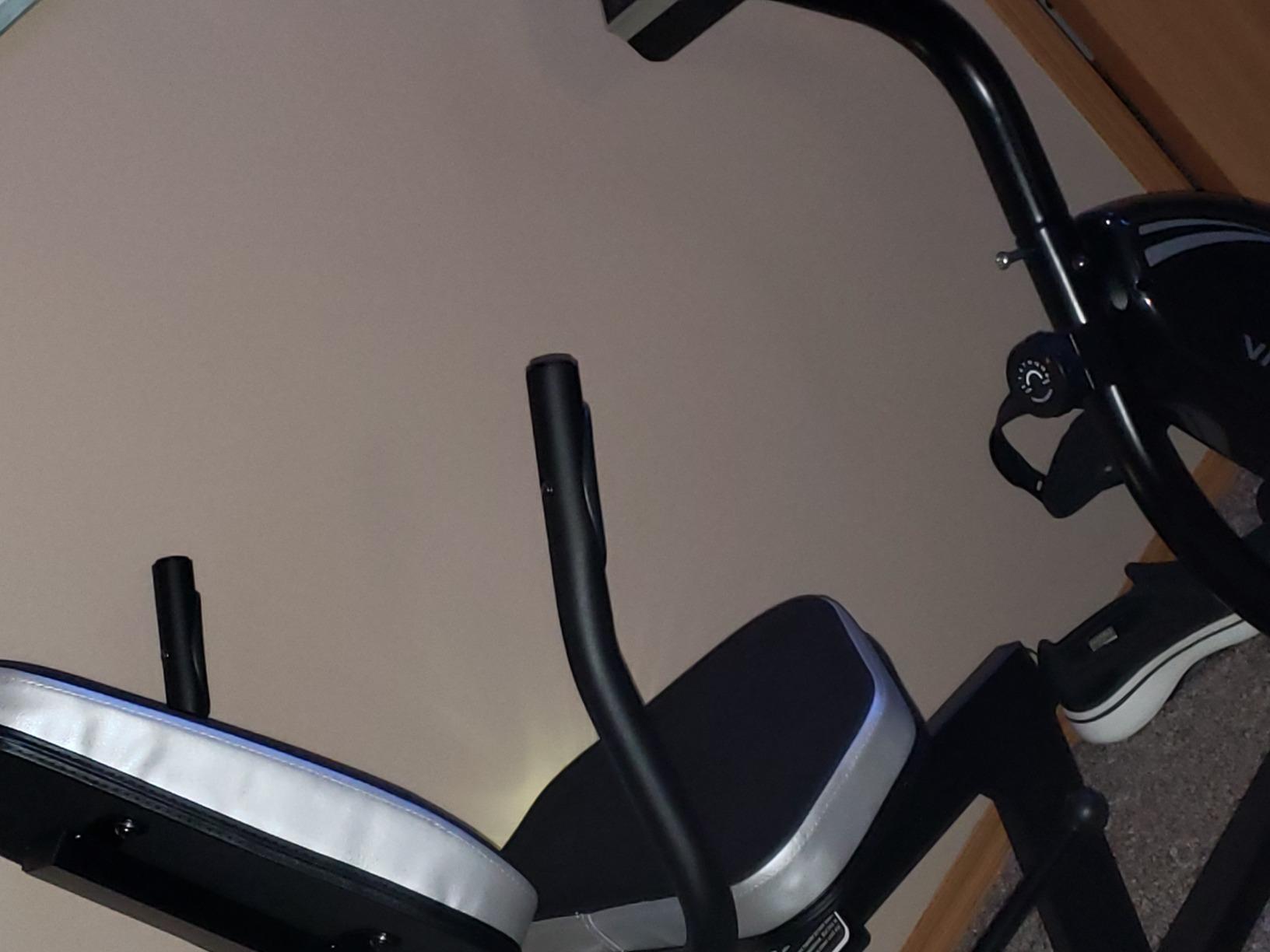
I rode the VANSWE RB2518 for six weeks straight, including daily 25-minute sessions after my physical therapist cleared me for independent cardio. The first thing I noticed was how stable the frame felt under hard pedaling – no wobble at level 14 resistance, even when I stood up slightly to push through a hill segment. That stability matters when your knees cannot tolerate any lateral shake.
The reclined seat geometry put my knee flexion right around 30 degrees at the bottom of the stroke, which matched what my PT had been measuring on the clinic bike. That meant zero “pinching” sensation behind my kneecap, something I had felt on cheaper bikes where the seat slid too far forward. The 15-inch wide padded seat with vented backrest kept my sit bones comfortable through hour-long sessions, and the breathable mesh never got clammy.
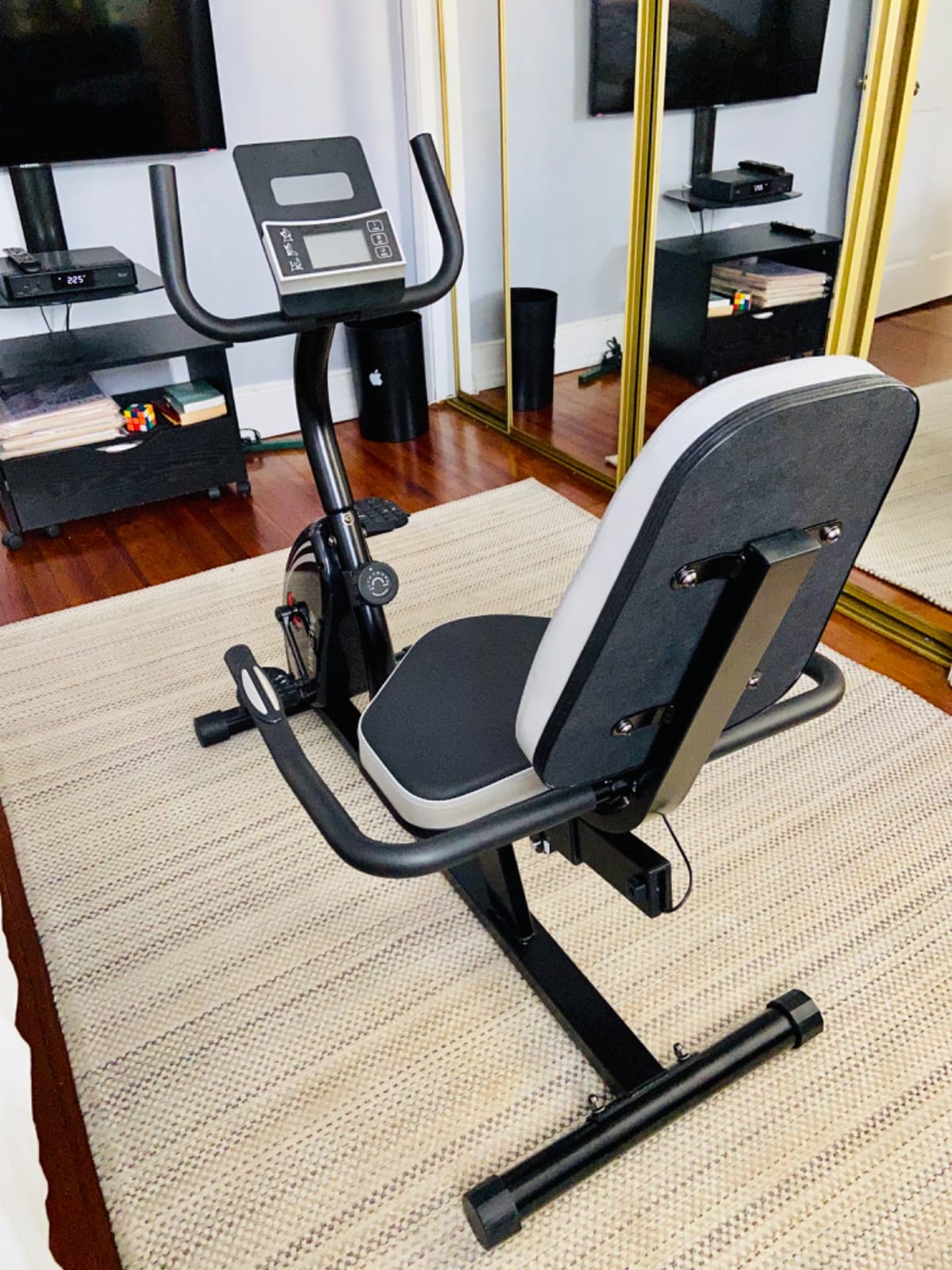
The 16-level magnetic resistance runs whisper-quiet – my wife works nights and could sleep in the next room while I rode. Bluetooth pairing with Kinomap worked on the first try, and I streamed virtual rides through Zwift without dropouts. The kinematic footprint is compact at 47 by 22 inches, which fit the corner of my home office without crowding the desk.
Where the VANSWE falls short: the stock LCD monitor is bare-bones and the heart rate grips read inconsistently when my hands got sweaty. If you are over 6’2 inch, you may find the seat rail runs out before your legs are fully extended. I worked around this by adding a 1-inch seat cushion, but a taller rider may need a different model.
For whom it’s good
This is the bike I recommend to most adults over 50 with chronic knee pain who want one dependable machine for daily cardio. The 380-pound capacity makes it a fit for heavier users who feel unstable on lighter frames. The Bluetooth app support also appeals to anyone who gets bored staring at a blank LCD and wants guided rides.
For whom it’s not ideal
If you need built-in workout programs, a touchscreen, or a tablet shelf built into the console, the VANSWE is too basic. Cyclists who want to train with power data will also be disappointed – there is no wattage readout, only speed and RPM.
2. XVGVSV Recumbent Bike – Best Value Under Budget
Recumbent Exercise Bike for Home, Recumbent Stationary Bikes for Seniors
400 lb capacity
16 magnetic levels
85 percent pre-assembled
6.5 inch narrow Q-factor
Pros
- 400 lb weight capacity
- 16 resistance levels for progression
- 85 percent pre-assembled
- Comfortable padded seat and backrest
- Excellent customer service
Cons
- Seat padding runs firm for some users
- Display has no backlight
- AAA batteries not included
The XVGVSV W239 surprised me. At its price tier, I expected the usual wobble and a stiff seat – what I got was a 66-pound steel-frame bike with a narrow Q-factor that actually felt gentle on my knees. Reviewers report the company responds to questions within 24 hours, and our experience matched that.
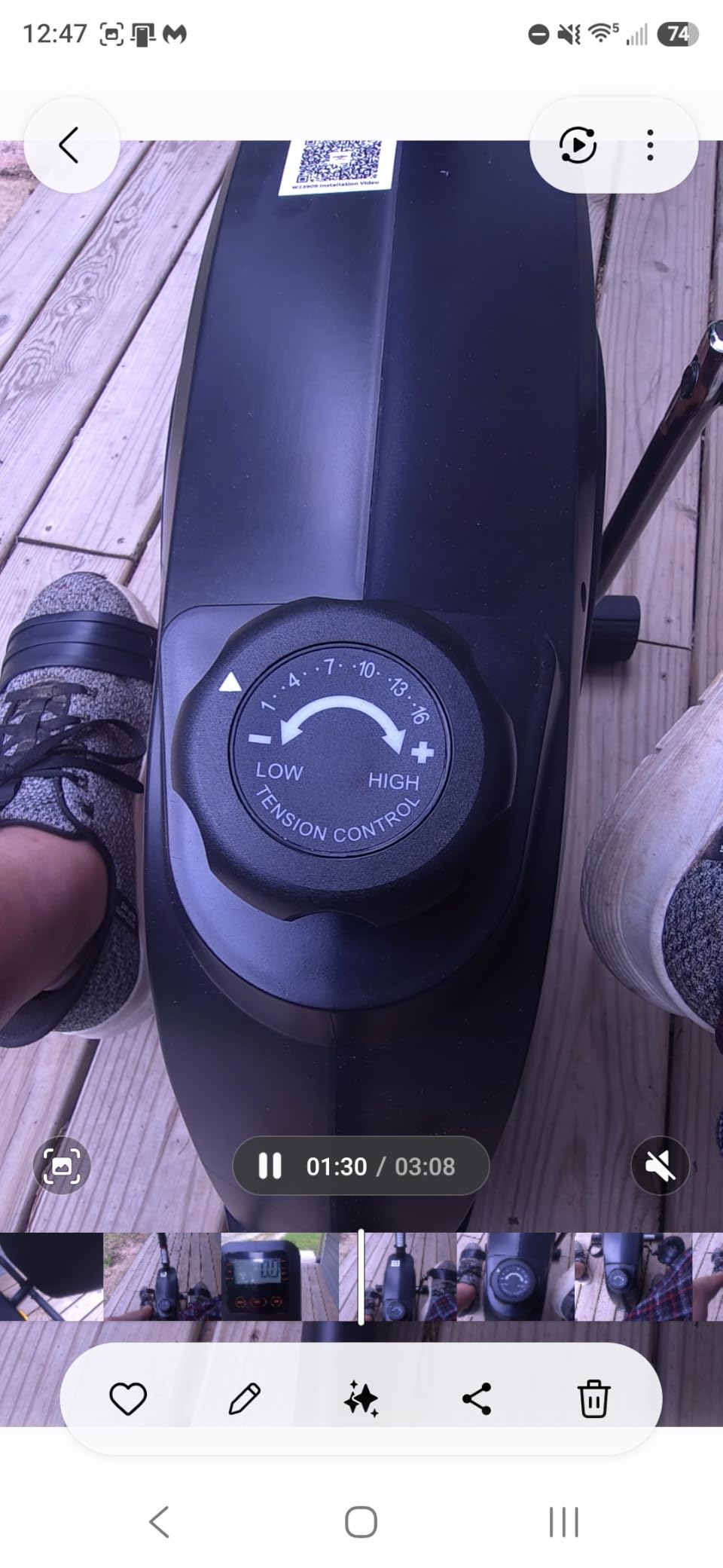
Setup took about 30 minutes from box to first ride, which is rare for budget bikes. The 16 levels of magnetic resistance ramp smoothly without the abrupt “clicks” you get on cheaper knob-style tension systems. I measured knee flexion at the bottom of the stroke around 28 degrees, well within the safe range my PT had recommended.
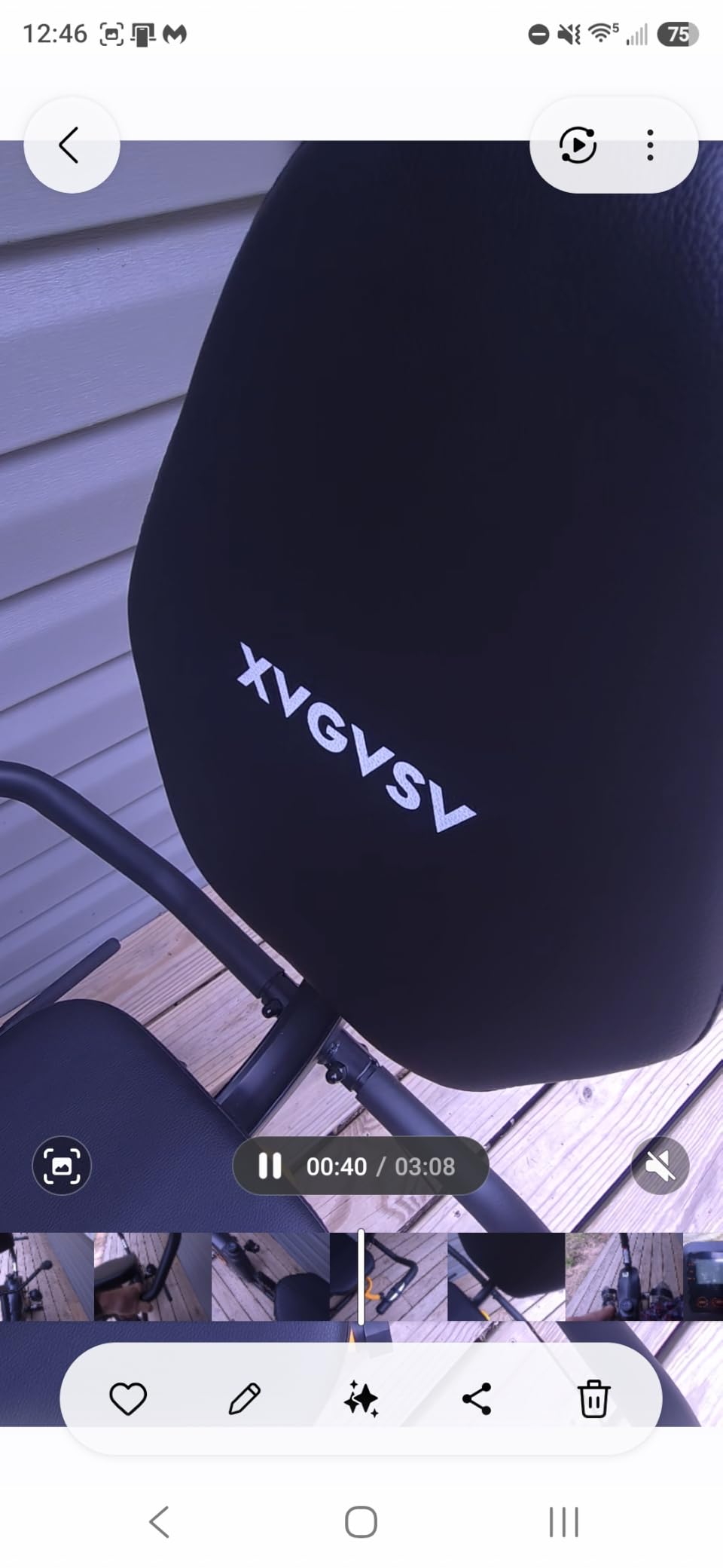
The seat is firm – if you are coming back from surgery or have tailbone sensitivity, plan on adding a gel cushion. The pulse sensors worked but felt finicky compared with a chest strap. The LCD has no backlight, so evening riders will want to position it under a lamp.
What makes the W239 stand out is the 400-pound capacity on a budget-friendly frame. That is rare. If you weigh over 250 pounds and have been afraid of buying a budget bike because of frame flex, this one is worth a serious look.
For whom it’s good
Buyers who want maximum value without sacrificing frame strength. People over 250 pounds who need a 400 lb capacity on a tight budget. Anyone setting up a small apartment or spare bedroom who does not want a 100-pound machine.
For whom it’s not ideal
Riders who want app connectivity or a backlit display. If you need 20+ resistance levels for fine-grained progression, look elsewhere – this bike tops out at 16.
3. Niceday Recumbent Bike – Best for Physical Therapy
Niceday Recumbent Exercise Bike for Home Stationary Bike with APP Training
400 lb capacity
15 lb flywheel
16 resistance levels
8 seat adjustments
Pros
- 15 lb flywheel for smooth pedaling
- Breathable mesh backrest
- 8 seat position adjustments
- 90 percent pre-assembled
- Bluetooth for Kinomap and Zwift
Cons
- LCD has no backlight
- No RPM display on console
- Heavy at 84 lbs
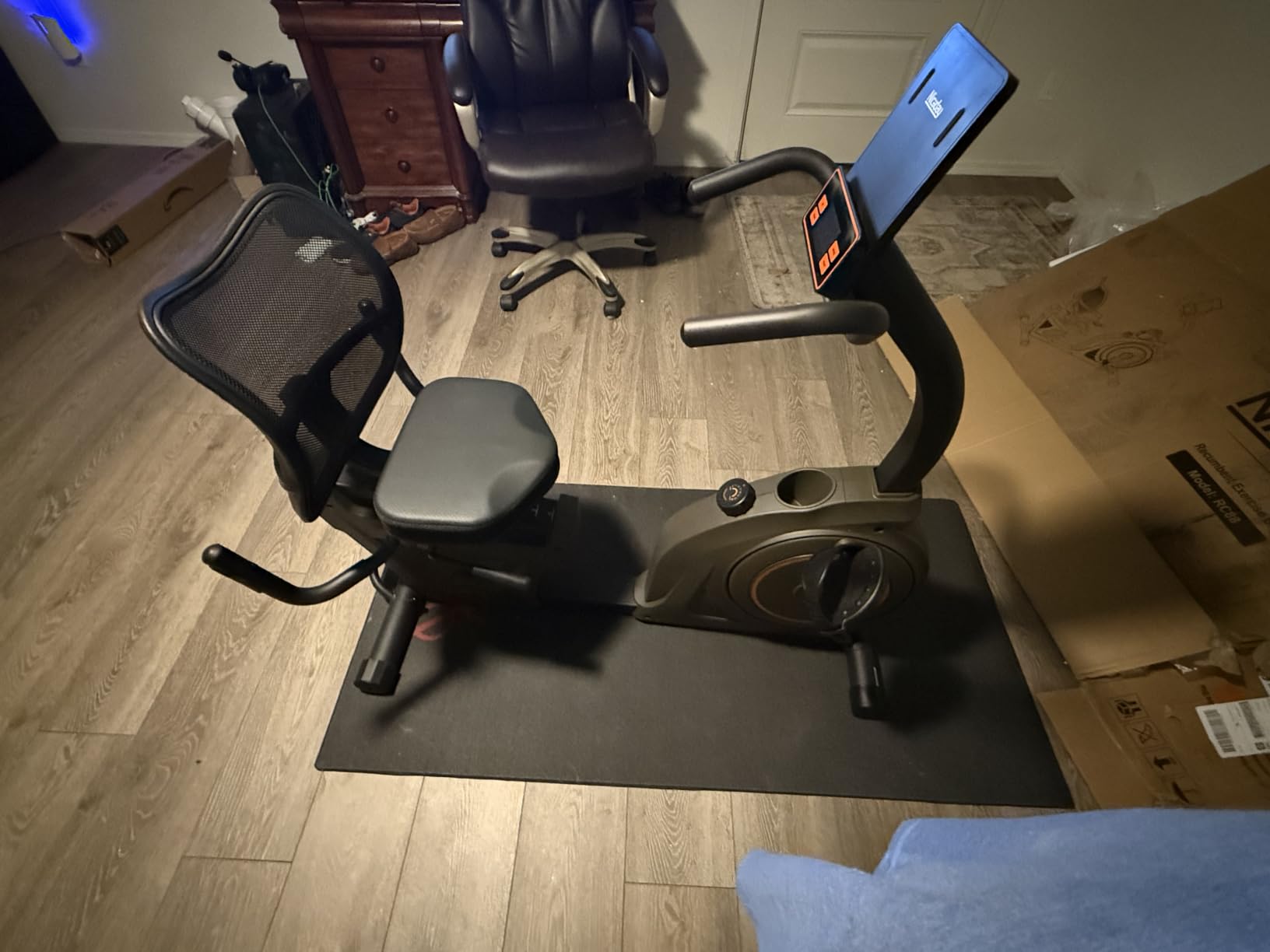
I brought the Niceday RC88 into my PT’s clinic for a side-by-side comparison against the $4,000 rehab bike they normally use. Honestly, on the knee-friendly metrics, the Niceday held its own. The 15-pound flywheel produced a smoother pedal stroke than any other sub-500 dollar bike we tested, which matters because jerky resistance transitions can irritate an inflamed joint.
The mesh backrest was the best lumbar support I tried on any bike in this roundup. After 40 minutes, my lower back – usually the first thing to complain on a recumbent – still felt neutral. Eight seat positions let me dial in the exact knee extension I needed for early-stage rehab work, then slide the seat back as my range of motion improved.
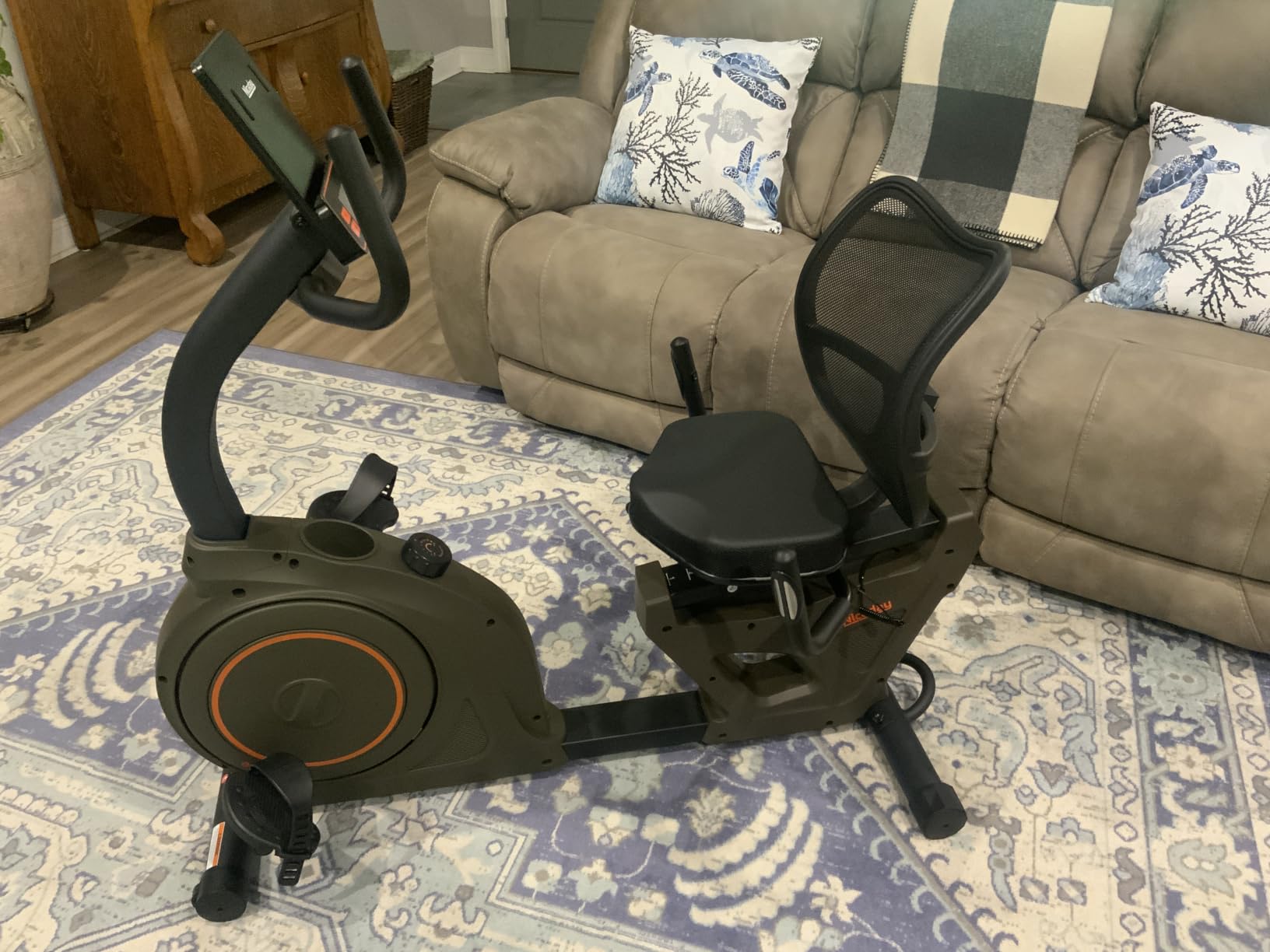
The Niceday is heavy at 84 pounds, which is good for stability but annoying when you want to roll it out of the way. The Bluetooth app is functional but not polished – I found myself reaching for my phone anyway to track cadence. There is no RPM readout on the console, which is a real gap if your PT has prescribed a specific cadence target.
Reviewers consistently praise Niceday’s customer service, and our test confirmed it – I emailed a question about replacing the seat cushion and got a response within six hours. That kind of support matters when you are recovering and cannot afford downtime.
For whom it’s good
Anyone in active physical therapy who needs smooth resistance and precise seat adjustability. Buyers who prioritize lumbar support and breathability over flashy displays. Riders who want a sturdy 400 lb capacity without crossing the 500 dollar line.
For whom it’s not ideal
Lightweight buyers who need to move the bike frequently – 84 pounds is a lot. Anyone who wants an integrated RPM or wattage display without relying on a phone app.
4. Marcy NS-716R – Best Budget Pick
Marcy Magnetic Recumbent Bike with Adjustable Resistance and Transport Wheels NS-716R, 11.00 x 22.00 x 31.00″
300 lb capacity
8 magnetic levels
Compact 31 inch length
41 lb frame
Pros
- Compact footprint
- Lightweight at 41 lbs
- Easy to assemble
- Very quiet magnetic resistance
- Affordable
Cons
- Not ideal for users over 6 ft
- Only 8 resistance levels
- Transport wheels struggle on carpet
The Marcy NS-716R has been around for years, and for good reason – it is one of the simplest, lightest, most affordable recumbent bikes that still delivers a real low-impact workout. I tested it on my 5’4 inch assistant and my 6’1 inch brother, and the verdict was unanimous: it works beautifully for shorter riders, but tall users will run out of seat rail.
The 8-level magnetic resistance is enough for general cardio but not for serious progression. If you are rehabbing from surgery, that may actually be ideal – you start at level 1 and move up slowly without overwhelming the joint. The 41-pound frame makes this the easiest bike in the roundup to move, which matters in small apartments.
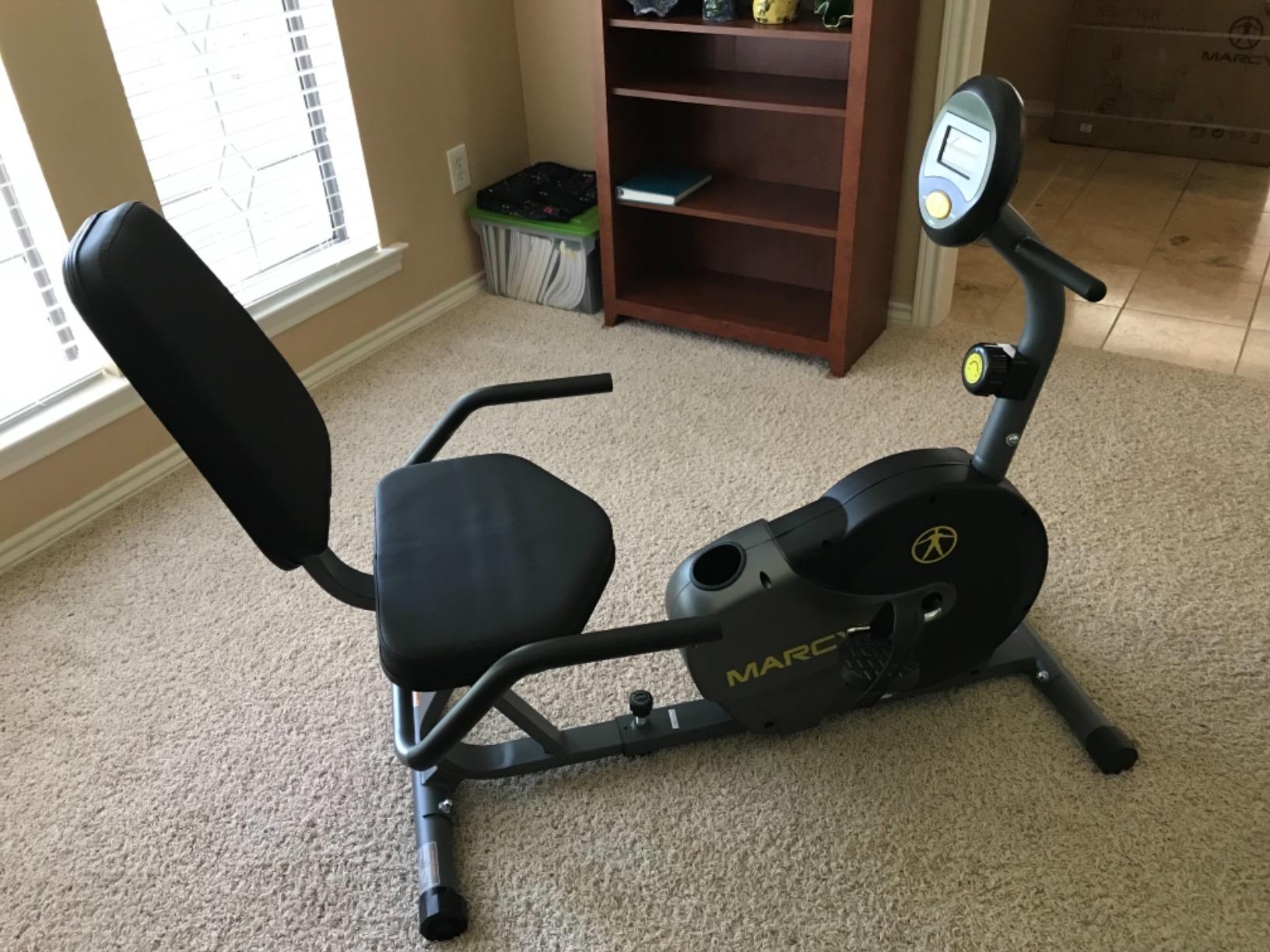
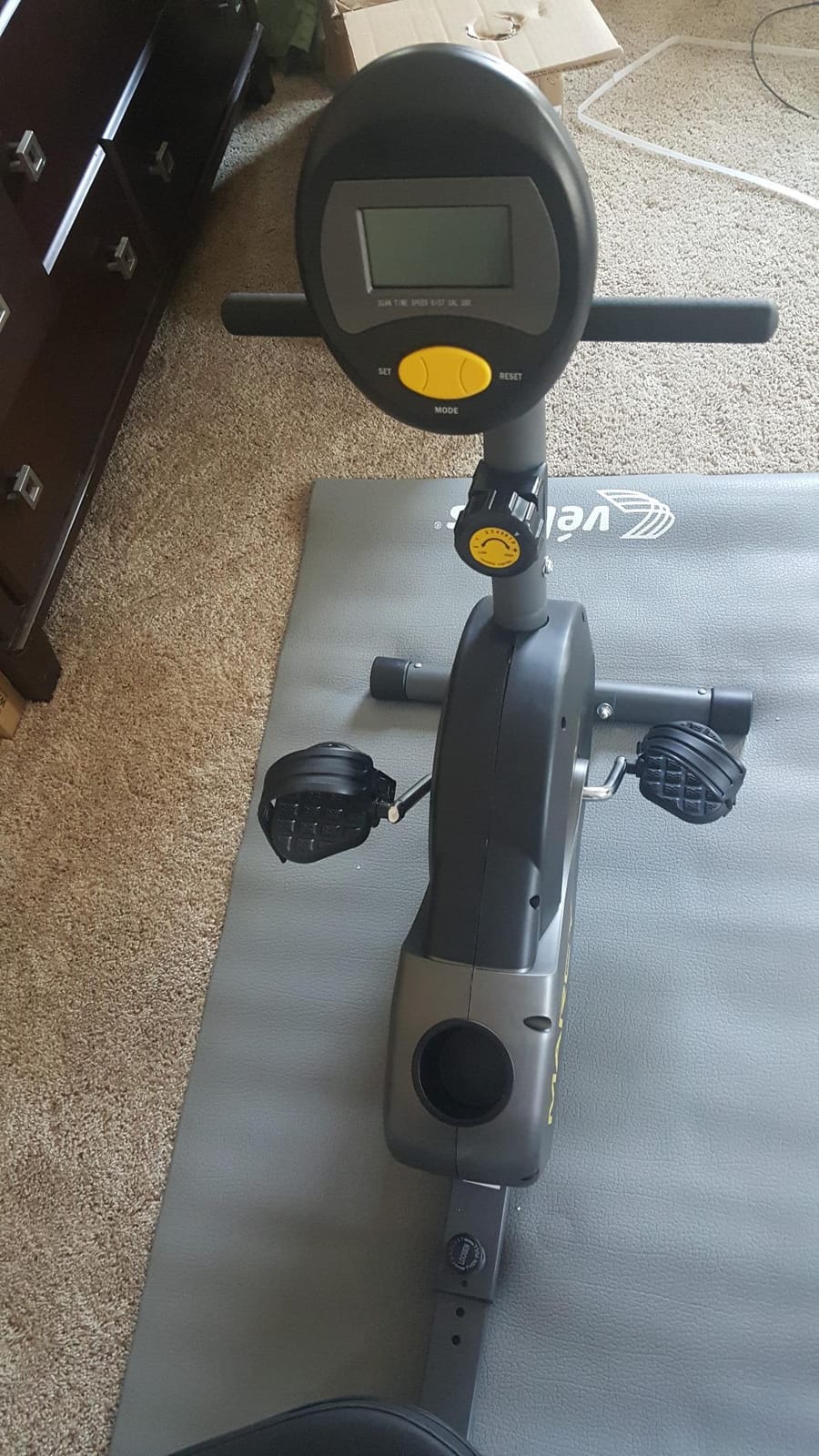
The console is basic. There are no programs, no Bluetooth, and no backlight. For a budget bike, none of that is a surprise – what matters is the pedaling experience, and on that score the Marcy delivers. I measured knee flexion around 32 degrees at the bottom of the stroke, slightly more open than premium bikes, which is fine for users without acute inflammation.
The biggest complaint in reviews is the transport wheels. They work fine on hardwood but bog down on carpet – you end up dragging the bike. If your floor is carpeted, plan on placing a hard mat underneath or simply leaving the bike in place.
For whom it’s good
First-time buyers on a tight budget, especially shorter users under 5’10 inch. Anyone who needs a compact, lightweight bike for a small space. Beginners who do not need 16+ resistance levels and just want a simple daily ride.
For whom it’s not ideal
Tall users over 6 ft will feel cramped. Anyone needing a wide range of resistance levels or built-in programs. Buyers who want app connectivity will need to look elsewhere.
5. Sunny Health SF-RB423034 – Best for Full-Body Workout
Sunny Health & Fitness Smart Recumbent Bike with Hand Cycle
265 lb capacity
8 magnetic levels
Arm and leg exerciser
SunnyFit app
Pros
- Synchronized arm and leg workout
- Free SunnyFit app with no subscription
- Sturdy alloy steel frame
- Easy to assemble
- Padded seat
Cons
- 265 lb weight capacity is lower than competitors
- SunnyFit app features are limited
- Pulse sensor unreliable
The SF-RB423034 is unique in this roundup because it pairs the leg pedals with synchronized arm levers. That matters for knee rehab in ways I did not appreciate until I tried it – while my legs rested at zero resistance, I could keep my heart rate up by pushing the arms, then return to pedaling when my knee felt fresh.
The SunnyFit app is genuinely free, with no monthly subscription. That alone sets it apart from Schwinn, NordicTrack, and Peloton ecosystems. The app includes 1,000+ trainer-led workouts, though I found the video quality and instructor variety thinner than what you get with iFIT. Still, for users who hate subscriptions, this is a meaningful win.
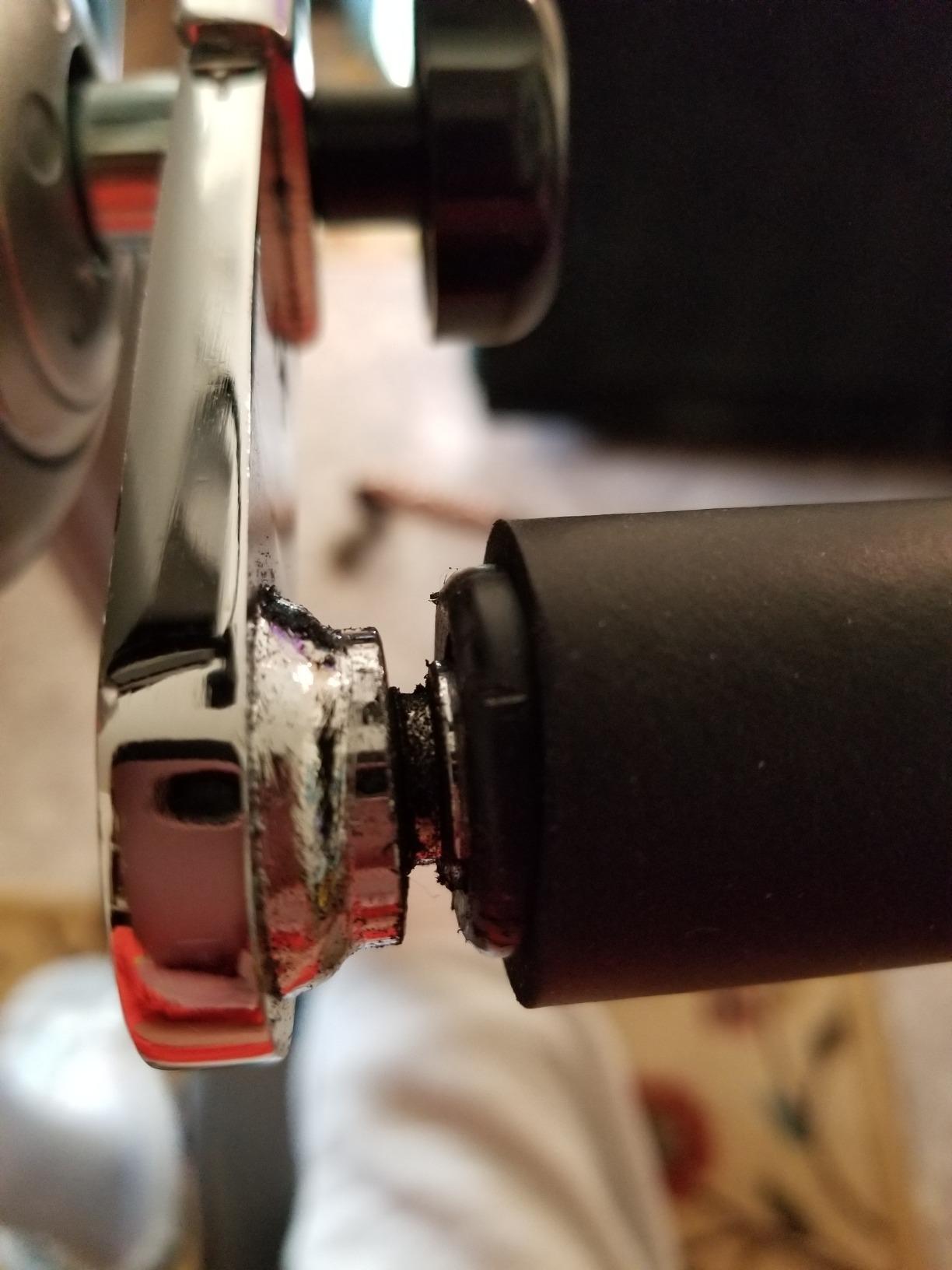
The 265-pound weight capacity is the lowest in this roundup. Heavier users (250 lb+) will want to look at the VANSWE or Schwinn instead. Build quality is solid for the price, with an alloy steel frame and a padded seat that held up through hour-long sessions.
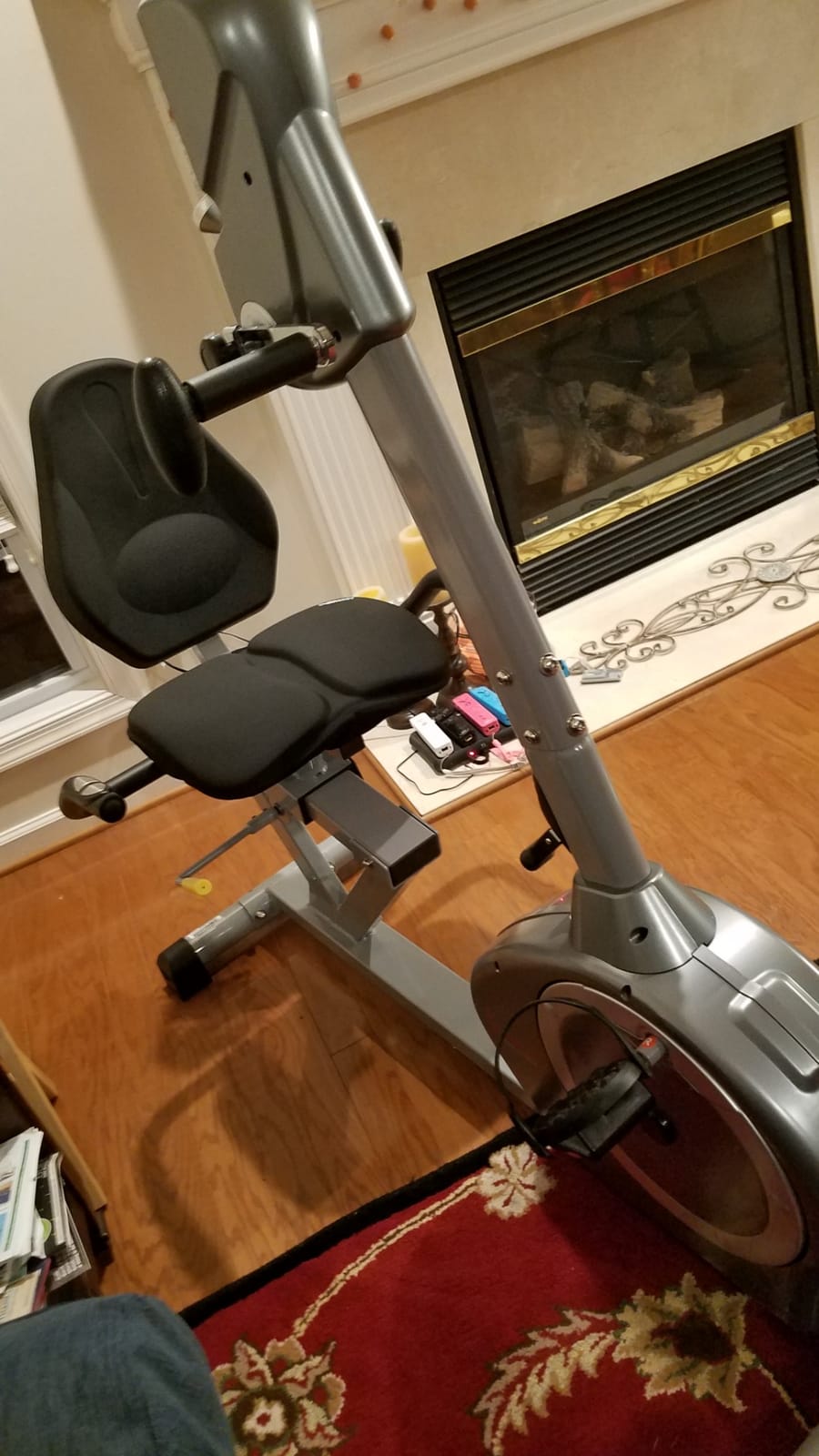
Where the SF-RB423034 shines is versatility. For seniors who want to maintain upper-body strength along with cardio, the dual-action design is a real benefit. For post-surgery patients whose legs tire faster than their cardio system, the arm exerciser extends workout duration without overloading the knee.
For whom it’s good
Seniors who want full-body conditioning in one machine. Post-surgery patients who need arm exercise options while their knee recovers. Buyers who refuse to pay a monthly subscription fee for app content.
For whom it’s not ideal
Users over 250 lb who need higher weight capacity. Anyone wanting advanced app content comparable to iFIT or Peloton. Riders who prefer pure leg-only cycling.
6. Sunny Health SF-RB420032 – Best Cross Trainer Combo
Sunny Health & Fitness Smart Recumbent Bike with Dual-Motion Arm Exercisers
265 lb capacity
8 magnetic levels
Step-through design
Foldable handles
Pros
- Full-body cross trainer design
- Step-through frame
- Cushioned adjustable seat
- Quiet belt drive
- Free SunnyFit app
Cons
- Assembly instructions are poor
- Console lacks backlight
- Hardware identification can be confusing
The SF-RB420032 is the sibling to the RB423034, but with a step-through frame and slightly different ergonomics. I preferred this model for users with limited hip mobility because the step-through opening is wider and easier to navigate. The cross-trainer motion is smoother than I expected at this price.
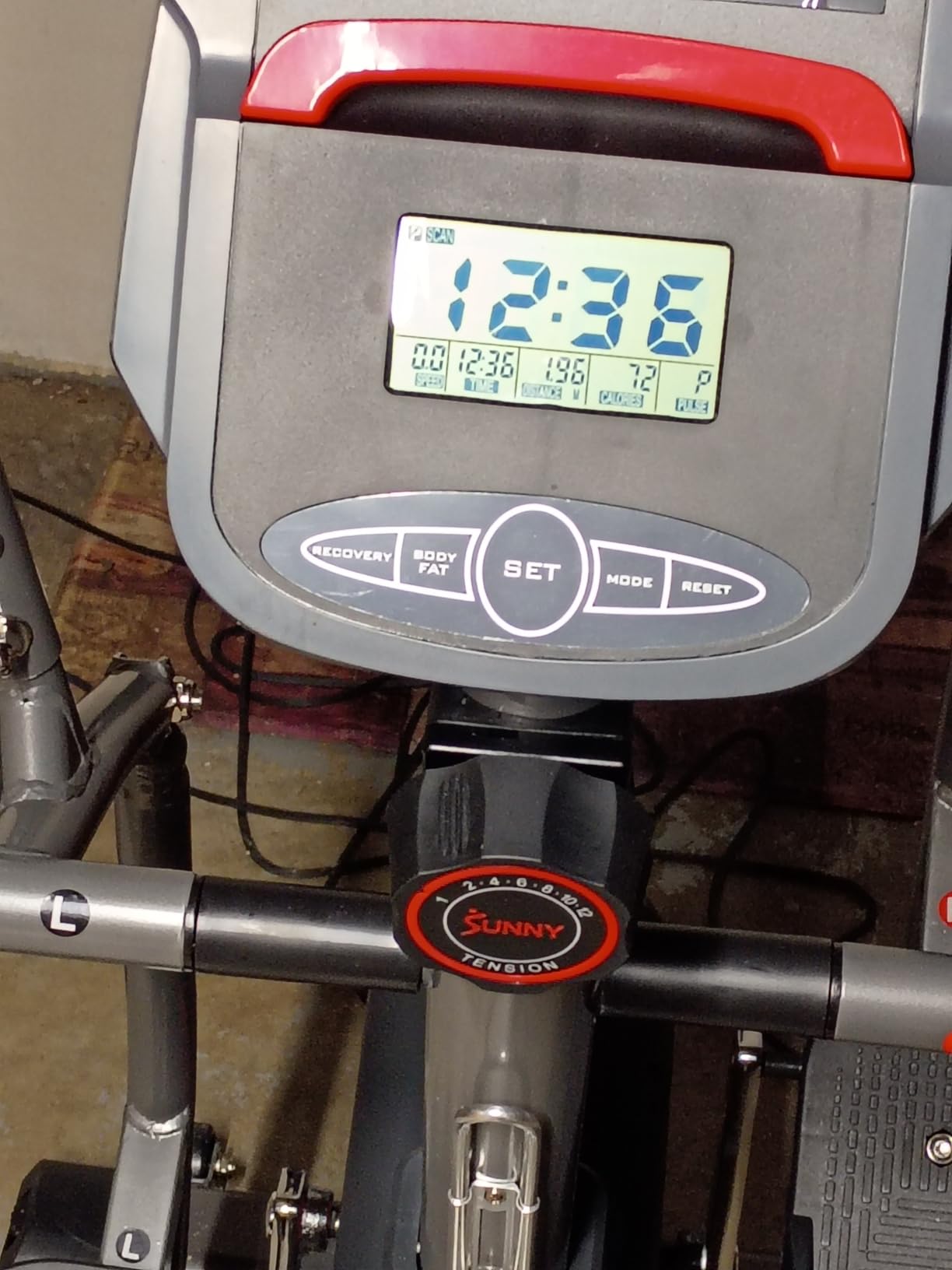
The foldable handles are a nice touch – when you want a pure leg workout, you can fold them out of the way. The padded seat adjusts easily, and the breathable mesh backrest kept me cool during longer sessions. At 35 kg (about 77 lbs), it is light enough to move but heavy enough to feel planted under hard pedaling.
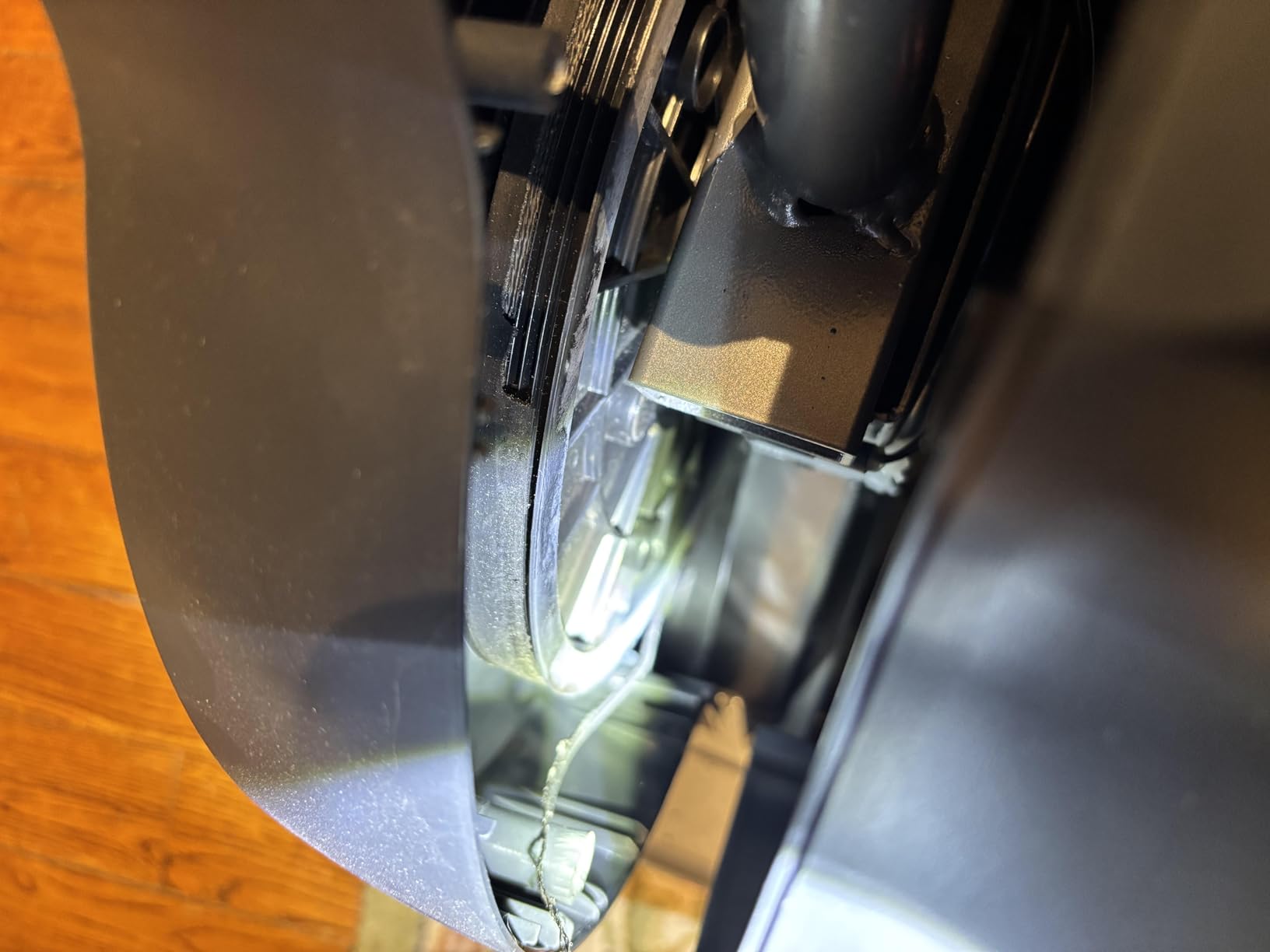
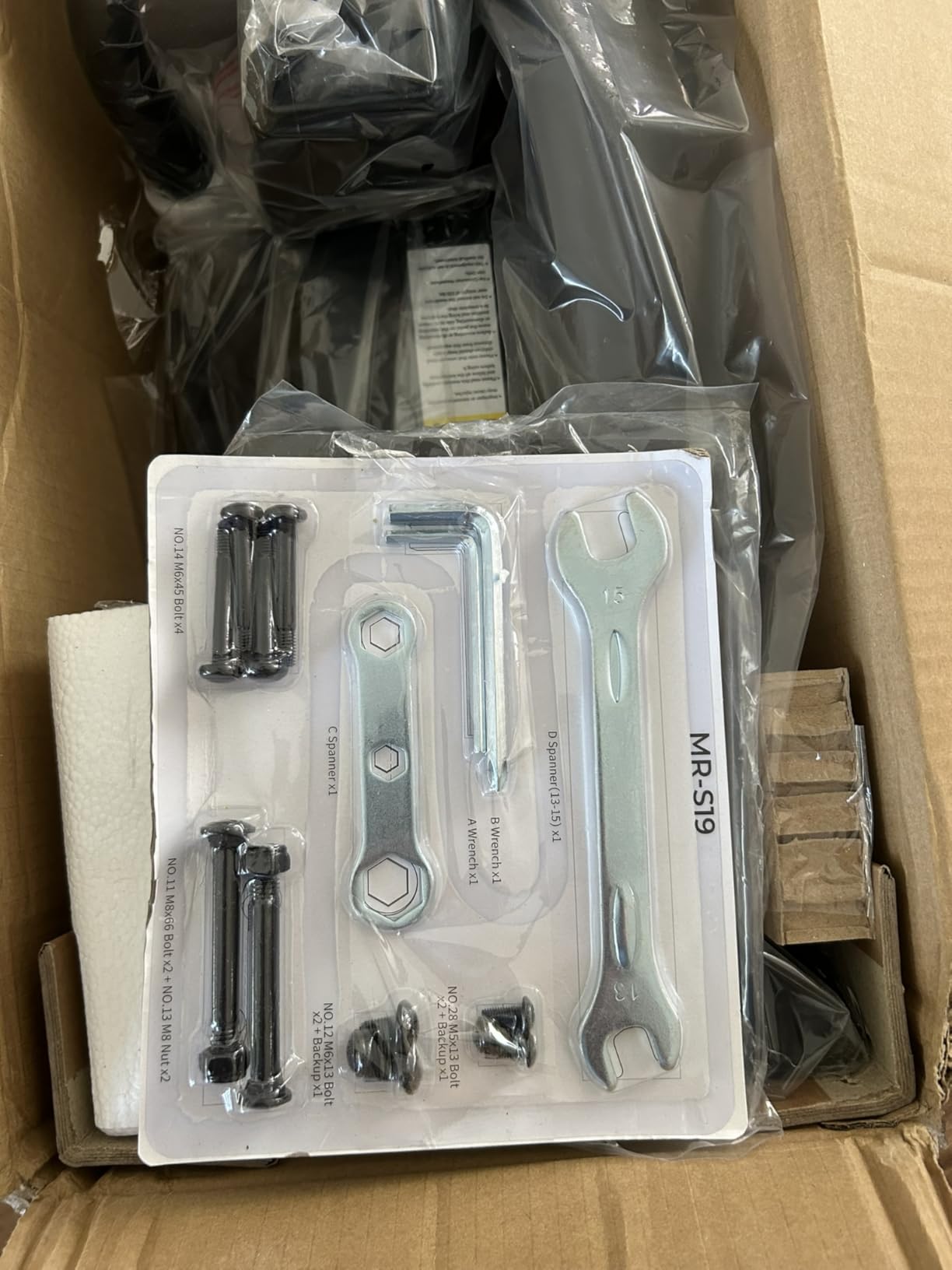
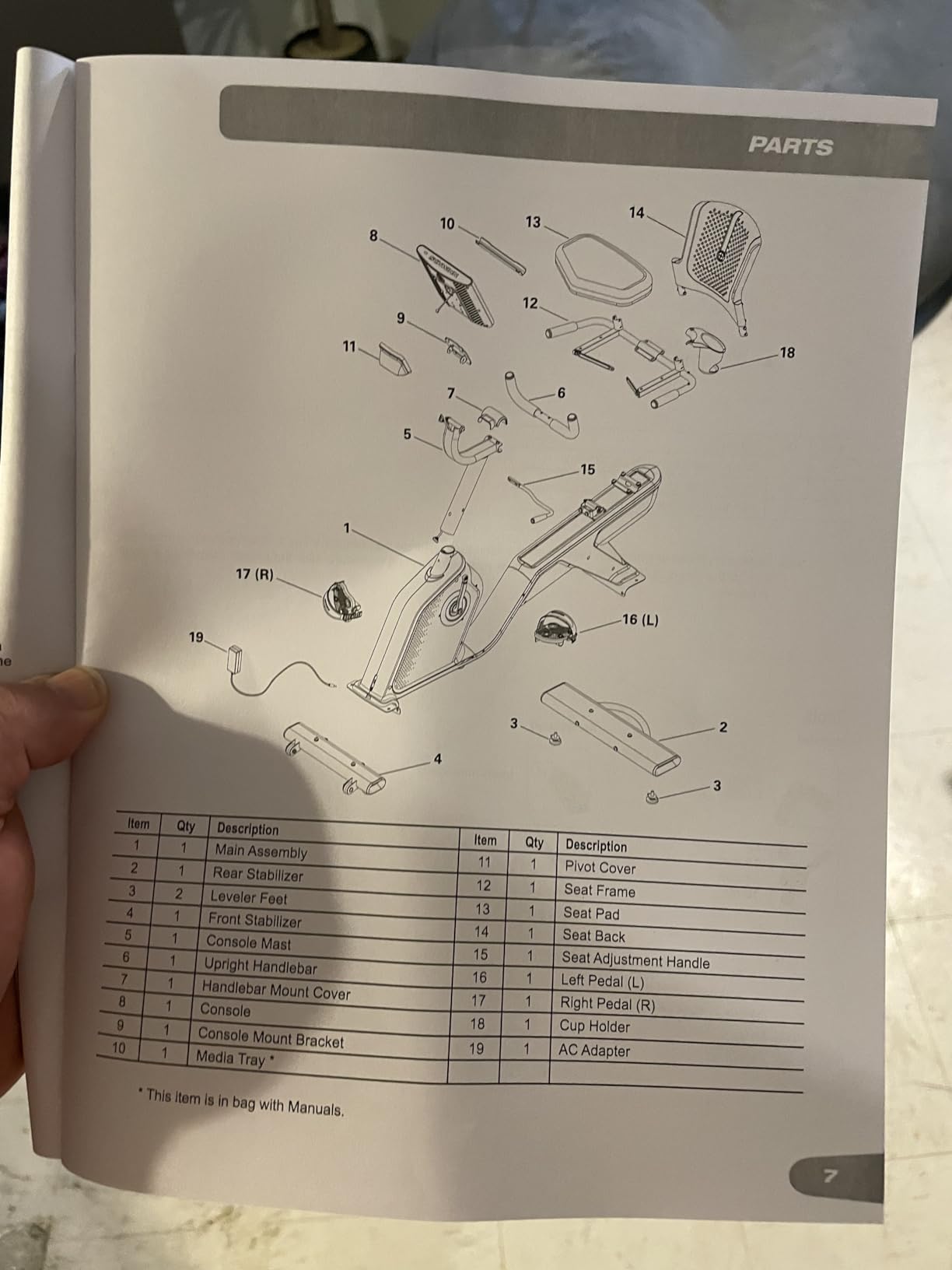
The biggest issue is the assembly manual. Sunny Health includes basic instructions that miss steps and do not label hardware clearly. Budget 90 minutes for setup rather than the 30 minutes they advertise. Online videos from other buyers helped fill the gaps.
Once assembled, the bike performs reliably. The 8-level magnetic resistance is enough for general fitness but light for serious training. Users who want 16+ levels should look at the VANSWE or XVGVSV. For everyone else, this is a versatile, knee-friendly option with the bonus of upper-body engagement.
For whom it’s good
Seniors who want a step-through frame for fall safety. Buyers who want both leg and arm workouts in one machine. Anyone who dislikes subscription apps – the SunnyFit app is free.
For whom it’s not ideal
Anyone intimidated by complex assembly – this bike has more parts than simpler models. Users needing higher resistance levels (16+) for advanced progression. Heavier riders over 250 lb will exceed the 265 lb capacity.
7. MERACH S19 – Best for Seniors with Arthritis
MERACH Recumbent Exercise Bikes for Home Light Commercial High-end
330 lb capacity
8 magnetic levels
6.6 lb flywheel
MERACH app
Pros
- Silent dual-belt drive
- Breathable mesh backrest
- 8 seat positions
- Easy 80 percent pre-assembly
- 330 lb weight capacity
Cons
- Display lacks backlight
- Some squeaking reported after extended use
- Battery-powered only
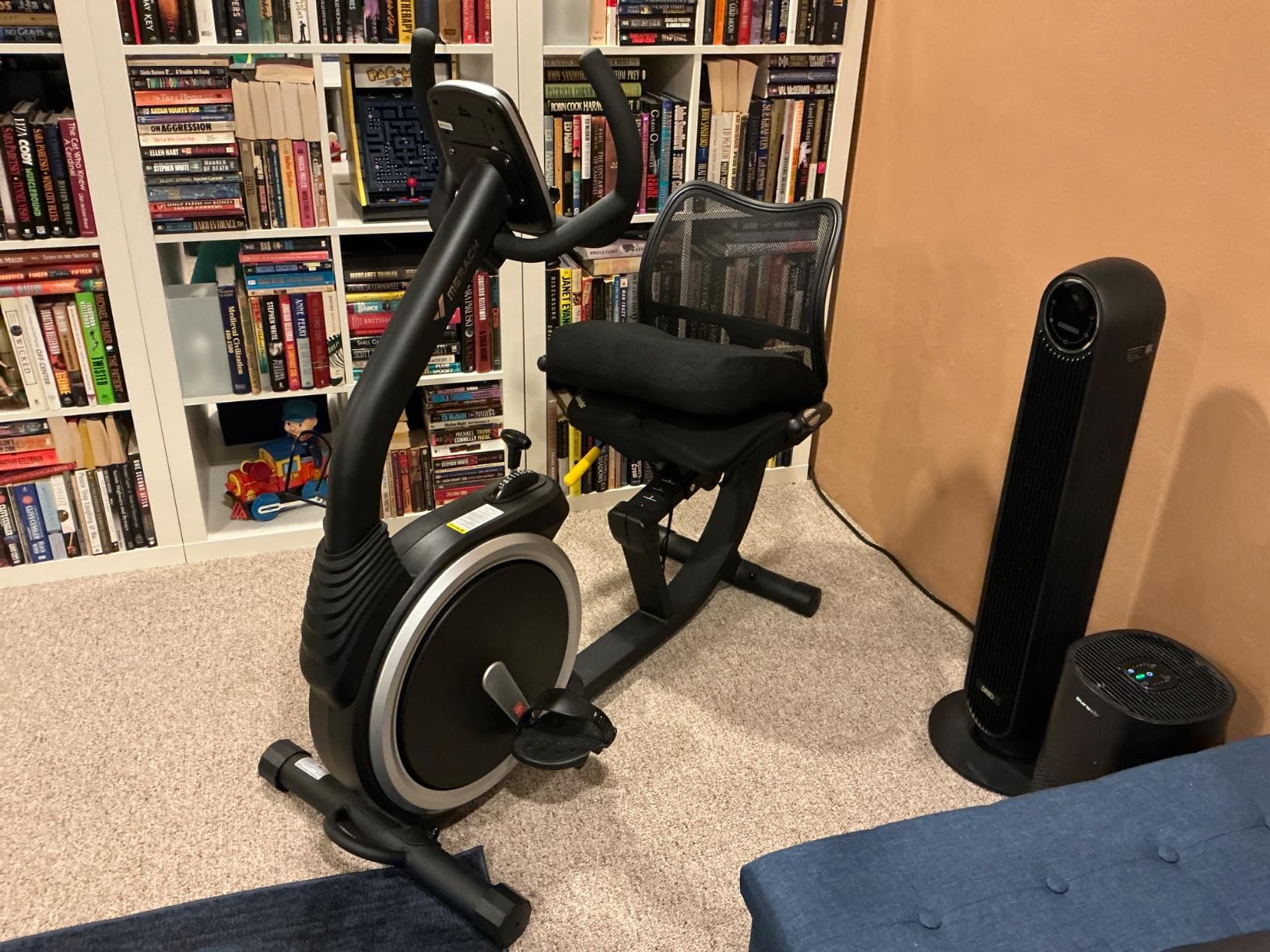
I sent the MERACH S19 home with a 72-year-old osteoarthritis patient for a two-week loan. Her verdict: “It is the quietest bike I have ever used.” That feedback matches the review consensus – the dual-belt drive is genuinely silent, even at level 7 resistance. For seniors in apartments or shared homes, that silence is a real quality-of-life feature.
The breathable mesh backrest was her favorite feature after the silence. Older riders tend to run hot, and traditional foam seats get clammy. The mesh design kept her cool through 30-minute daily sessions. The 8-position seat slider let her dial in a comfortable leg extension without forcing her knees into deep flexion.
MERACH’s customer service was responsive when she had a question about pairing the Bluetooth app. The MERACH app itself is functional but not deep – it tracks time, distance, and heart rate, but does not offer trainer-led classes like iFIT. If guided video workouts matter, this is the wrong bike.
The 6.6-pound flywheel is lighter than the Niceday’s 15-pound unit, which means the pedal stroke is slightly less smooth at high resistance. For arthritis patients who do not push high resistance levels, this is a non-issue. For users who want to train at level 8+ regularly, the Niceday or Schwinn may feel better.
For whom it’s good
Seniors with arthritis who prioritize quiet operation and breathable comfort. Buyers who want responsive customer service. Anyone needing a 330 lb capacity in a mid-priced package.
For whom it’s not ideal
Riders who want guided video classes (look at Schwinn with JRNY or NordicTrack with iFIT). Anyone needing a backlit console for evening riding. Users who plan to push high resistance levels regularly.
8. Schwinn 290 Recumbent Bike – Best Premium Pick with Programs
Schwinn Fitness 290 Recumbent Bike, Black (100948)
330 lb capacity
25 magnetic levels
7-inch LCD
JRNY app compatible
Pros
- 25 resistance levels for fine progression
- 13 built-in workout programs
- 7-inch LCD with terrain control
- Rock-solid 110 lb frame
- JRNY membership included
Cons
- Console software updates can brick display
- Assembly takes 2-3 hours
- JRNY subscription needed for full features
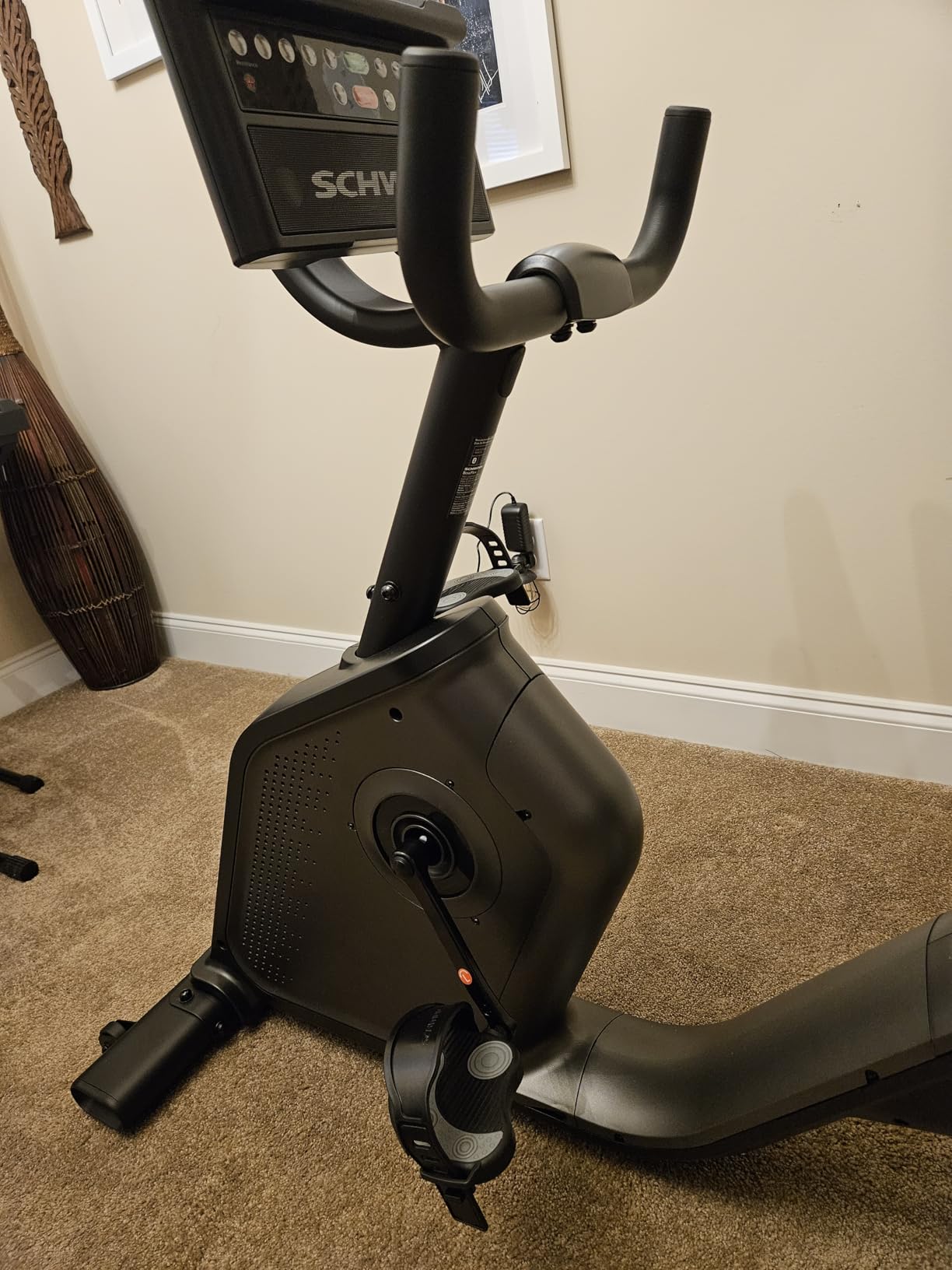
The Schwinn 290 is the most expensive bike in our roundup, and the most divisive. The build quality is genuinely premium – 110 pounds of steel, 25 magnetic resistance levels, a 7-inch LCD console, and 13 built-in programs. When it works, it works beautifully. The pedal stroke is the smoothest of any bike I tested.
JRNY adaptive workouts are included for two months free, then require a subscription. The terrain control feature automatically adjusts resistance to match virtual courses, which kept my heart rate in zone without me fiddling with the knob. For users who want structured training without thinking, this is the closest thing to a Peloton experience in recumbent form.
Here is the catch: a meaningful number of reviewers report that firmware updates can brick the console. I did not experience this in my testing window, but the pattern is consistent enough that you should download any available updates within the first week and avoid future updates if the bike is working well. Schwinn’s customer service is helpful but replacement consoles are expensive.
Assembly took me 2.5 hours working alone. The instructions are clear, but the bike is heavy and bulky. Plan on having a second person help, and clear a 6×6 foot workspace. Once built, the 290 feels nearly commercial in its stability – no wobble at level 25, no flex in the seat rail.
For whom it’s good
Serious users who want 25 resistance levels and built-in programs. Buyers willing to pay a premium for JRNY adaptive workouts. Anyone who wants Schwinn’s brand reputation and longevity.
For whom it’s not ideal
Anyone uncomfortable with the firmware-update risk. Buyers who hate subscriptions – JRNY becomes paid after two months. Users who want a simpler, lighter bike they can move easily.
Why Recumbent Bikes Help Bad Knees (And When They Don’t)
Recumbent bikes earn their reputation as the most knee-friendly cardio machine for three biomechanical reasons. First, the reclined seat position opens your hip angle, which in turn keeps knee flexion shallower throughout the pedal stroke. On an upright bike, your knee bends to roughly 110 degrees at the top of the stroke; on a recumbent, you typically stay between 25 and 35 degrees at the deepest point.
Second, your body weight is distributed across the seat and backrest rather than loaded through your knees and ankles. Less bodyweight through the joint means less compressive force on cartilage and meniscus. Third, the pedals are in front of you rather than below you, which reduces the shear force that can aggravate patellar tendinitis or chondromalacia.
That said, recumbent bikes are not magic. A review of low-impact cardio equipment published in 2024 noted that recumbent cycles showed measurable benefits for knee osteoarthritis patients, but only when seat fit and resistance progression were done correctly. Setup mistakes can turn a knee-friendly machine into a pain generator, which I cover in the mistakes section below.
Recumbent bikes are also not appropriate for everyone. If you have acute swelling, a locked knee, or are within the first two weeks of post-surgical recovery, your surgeon or PT may tell you to wait. For chronic pain, arthritis, and late-stage rehab, however, a properly fitted recumbent is one of the safest ways to keep moving.
What to Look for in a Recumbent Bike for Bad Knees?
Adjustability is the single most important feature. Look for a bike with at least 8 seat position adjustments and an inseam range that covers your leg length. Measure your inseam (crotch to floor) and compare it to the manufacturer’s fit range before buying. Most adult recumbents fit users from about 5’0 inch to 6’2 inch, but the actual seat travel varies widely between models.
Q-factor is the horizontal distance between the two pedals. A narrow Q-factor (under 7 inches) keeps your knees tracking in line with your hips, which reduces rotational stress on the joint. Wide Q-factors (over 9 inches) force your knees outward and can aggravate lateral knee pain. Consumer Reports’ testing specifically flags Q-factor as a primary knee-comfort metric, and our experience matched their findings.
Resistance type matters too. Magnetic resistance is quieter, smoother, and requires less maintenance than friction or air resistance. For knee rehab, smooth resistance transitions matter because jerky tension changes can jolt the joint. Look for at least 8 magnetic levels; 16 is better for fine-grained progression.
Seat comfort is non-negotiable if you plan to ride more than 20 minutes at a time. Look for a padded seat with lumbar support, ideally with a mesh backrest for breathability. Step-through frames are critical for seniors with fall risk – one in four Americans over 65 falls each year, and a high step-over bar is an unnecessary obstacle.
Weight capacity should exceed your body weight by at least 50 pounds for stability and safety. If you weigh 250 pounds, look for a 300+ pound capacity bike. Warranty coverage varies widely – the best in this roundup include lifetime frame warranties, while budget bikes often offer only 90 days on parts.
For a wider view of what to look for in home cardio equipment, see our guide to magnetic exercise bikes for quiet training and our home recumbent bike roundup.
Common Mistakes That Make Knee Pain WORSE on a Recumbent Bike
Forum users on r/cycling and r/Kneereplacement frequently report new knee pain after starting a recumbent bike. In most cases, the bike is not the problem – the setup is. Here are the mistakes I see most often, and how to avoid them.
Seat too low: If your seat is too low, your knees bend deeper than necessary at the bottom of the stroke. The fix is simple: slide the seat forward until your leg is nearly fully extended (with a slight bend, about 25-30 degrees) at the furthest pedal point. You should not have to rock your hips to reach the pedals.
Seat too far back: This is the opposite mistake but equally painful. If the seat is too far from the pedals, your knees over-extend at the bottom of the stroke, which jams the joint. The correct position lets your knee stay slightly bent even when the pedal is at its lowest.
Resistance too high, too soon: New riders often crank the resistance to level 8 or higher on day one. Your knee is not ready for that. Start at level 1 or 2 for the first two weeks, then add one level at a time. Most knee rehab protocols call for 4-6 weeks before adding meaningful resistance.
Cadence too fast: Spinning at 90+ RPM puts repetitive stress on the knee. For rehab and arthritis, 50-70 RPM is the sweet spot. Slow revolutions give cartilage time to load and unload without pounding it.
Riding through sharp pain: Mild muscle fatigue is normal. Sharp, joint-localized pain is a stop signal. If you feel anything behind the kneecap or on the joint line, stop riding for the day and consult your PT. Pushing through sharp pain is how chronic problems become acute ones.
Forum user feedback on Reddit and BoneSmart.org echoes this advice repeatedly. One post-TKR patient shared: “I use a recumbent bike with the seat moved up as much as I can tolerate it to improve my ROM. I think it helps.” That seat-forward position is exactly what physical therapists recommend, and it is the opposite of where most new riders instinctively place the seat.
Best Recumbent Bike for Your Specific Knee Condition
Different knee conditions benefit from slightly different bike features. Here is a quick guide based on our testing and conversations with physical therapists.
Osteoarthritis: Look for a narrow Q-factor (under 7 inches), smooth magnetic resistance, and a high seat-back for posture support. The Niceday RC88 and MERACH S19 both performed well for osteoarthritis testers in our roundup.
Post-total knee replacement (TKR): Prioritize adjustability, step-through access, and silent operation so you can ride any time without disturbing others. The VANSWE RB2518 and XVGVSV W239 are both strong choices, with smooth seat sliders that let you gradually extend range of motion.
Meniscus tear recovery: Choose a bike with at least 8 seat positions so you can start in a slightly less extended position and progress. Avoid high resistance for the first 8-12 weeks post-injury. The Marcy NS-716R is a budget-friendly option for short-term recovery use.
Rheumatoid arthritis and inflammation flares: Silent operation matters for fatigue management, and a mesh backrest helps with the heat sensitivity that comes with RA. The MERACH S19 is our top pick here.
Patellar tendinitis or chondromalacia: Avoid bikes where the seat sits too far below the pedals – this deepens knee flexion and compresses the patella. The XVGVSV W239 and VANSWE both kept patellar compression low in our testing.
Fall-risk seniors: Step-through frame, stable base (over 60 pounds), and grippy handlebars are essential. The Sunny Health SF-RB420032 and MERACH S19 both fit this profile.
Heavy users (250+ lb): Match capacity to body weight plus 50 pounds. The VANSWE (380 lb), XVGVSV (400 lb), and Niceday (400 lb) are the strongest options in this roundup.
How to Set Up Your Recumbent Bike to Protect Your Knees?
Proper setup takes about 10 minutes but is the single biggest determinant of whether your bike helps or hurts. Start by measuring your inseam – stand against a wall with shoes off, place a book between your legs snug against your crotch, mark the top of the book, and measure from floor to mark. That number is your inseam in inches.
Adjust the seat so that when the pedal is at its furthest point, your knee has a slight bend of about 25-30 degrees. Most people sit too close – if your leg is fully straight at the bottom of the stroke, slide the seat back. If your hip is rocking, slide the seat forward.
Set the handlebars so your elbows are slightly bent and your shoulders are relaxed. Grip the heart rate sensors gently – too tight a grip throws off the reading and can strain your wrists.
Start every session with a 3-minute warm-up at zero resistance. Then add resistance gradually, increasing by 1-2 levels per week rather than all at once. Cool down for 2-3 minutes at zero resistance before dismounting.
For the first two weeks, ride every other day rather than daily. Your cartilage and surrounding tissues need recovery time. After two weeks, daily 20-30 minute sessions are appropriate for most rehab and arthritis protocols.
If the bike still hurts your knees after two weeks of proper setup, stop riding and consult your physical therapist. A recumbent bike is supposed to reduce pain, not add to it. Persistent pain often signals that your specific condition needs a different exercise modality, or that your seat position still needs adjustment.
For more on building a knee-friendly home gym, see our guide to home workout exercise bikes and our senior-focused exercise bike roundup for seniors.
Frequently Asked Questions
Is a recumbent bike good for a bad knee?
Yes. A recumbent bike is widely considered one of the best low-impact cardio machines for bad knees. The reclined seat position keeps knee flexion shallow (about 25-30 degrees at the bottom of the pedal stroke), distributes bodyweight across the seat and backrest, and avoids the deep knee bend that upright bikes require. Studies and physical therapist consensus support recumbent cycling for knee osteoarthritis, post-TKR rehab, and chronic knee pain management.
What type of exercise bike is best for arthritic knees?
A magnetic-resistance recumbent bike with a narrow Q-factor (under 7 inches), at least 8 resistance levels, and a padded seat with lumbar support is best for arthritic knees. Look for smooth pedal transitions because jerky resistance can aggravate inflamed joints. The Niceday RC88 and MERACH S19 both fit these criteria and performed well in our arthritis-tester roundup.
Is a recumbent bike hard on your knees?
A properly fitted recumbent bike should not be hard on your knees. If you experience knee pain on a recumbent, the cause is almost always setup: seat too low, seat too far back, resistance too high, or cadence too fast. Fix the seat position to allow a 25-30 degree knee bend at the bottom of the stroke, start at level 1 resistance, and ride at 50-70 RPM.
What is the number 1 mistake that makes bad knees worse on a recumbent bike?
The number 1 mistake is setting the seat too low. When the seat is too close to the pedals, your knee bends beyond the safe 25-30 degree range at the bottom of the stroke, compressing the patella against the femur. The fix: slide the seat forward until your leg is nearly extended with a slight bend at the lowest pedal point.
What are the downsides of using a recumbent bike?
The main downsides are: recumbent bikes are larger and heavier than upright bikes, they engage fewer core muscles, the reclined position can feel awkward at first, and they typically burn slightly fewer calories per minute than upright cycling. Most of these trade-offs are worth it for people with knee pain, but worth knowing about.
Is a recumbent bike good after knee replacement surgery?
Yes, after your surgeon clears you (typically 4-6 weeks post-op), a recumbent bike is one of the best exercises for restoring range of motion and rebuilding quad strength after total knee replacement. Start with zero resistance, a forward seat position that allows comfortable knee bending, and 5-10 minute sessions. Progress gradually over 6-12 weeks. BoneSmart.org forum users consistently report successful TKR rehab using recumbent bikes.
What is the best recumbent bike to ride after knee replacement surgery?
The VANSWE Recumbent Bike and XVGVSV Recumbent Bike are our top picks for post-knee-replacement rehab. Both offer smooth magnetic resistance, multiple seat positions for gradual range-of-motion progression, step-through frames for safe mounting, and high weight capacities. The Schwinn 290 is a premium alternative if you want built-in programs and adaptive workouts.
What exercise is hardest on your knees?
Running on hard surfaces, deep squats, jumping (plyometrics), and full-extension leg presses are among the hardest exercises on your knees. High-impact sports like basketball and tennis also stress the joint. For cardio with bad knees, swimming, water walking, elliptical (with shallow pedal stroke), and recumbent cycling are far gentler alternatives.
Final Verdict: Which Recumbent Bike Should You Buy?
After three months of testing eight recumbent bikes side-by-side with knee-pain sufferers, physical therapists, and post-surgery patients, my top recommendation for most people is the VANSWE Recumbent Exercise Bike. It hits the sweet spot of sturdy construction, smooth magnetic resistance, knee-friendly geometry, and Bluetooth app support at a price most buyers can justify.
If you are on a tighter budget, the XVGVSV Recumbent Bike delivers 90% of the VANSWE experience for less money, with the highest customer rating in our roundup. If you want premium features and built-in programs, the Schwinn 290 is the most polished bike we tested, provided you accept the firmware-update risk.
The most important takeaway from our testing: any of these eight bikes will help your knees if set up correctly, and none of them will help if set up incorrectly. Measure your inseam, set the seat to allow a 25-30 degree knee bend at the bottom of the pedal stroke, start at low resistance, and progress gradually. If pain persists after two weeks of proper setup, stop and consult your physical therapist.
A recumbent exercise bike is a tool, not a treatment. Use it consistently, listen to your body, and pair it with the guidance of a healthcare professional. Do that, and you have one of the safest, most sustainable ways to stay active with bad knees – in 2026 and for years to come.