
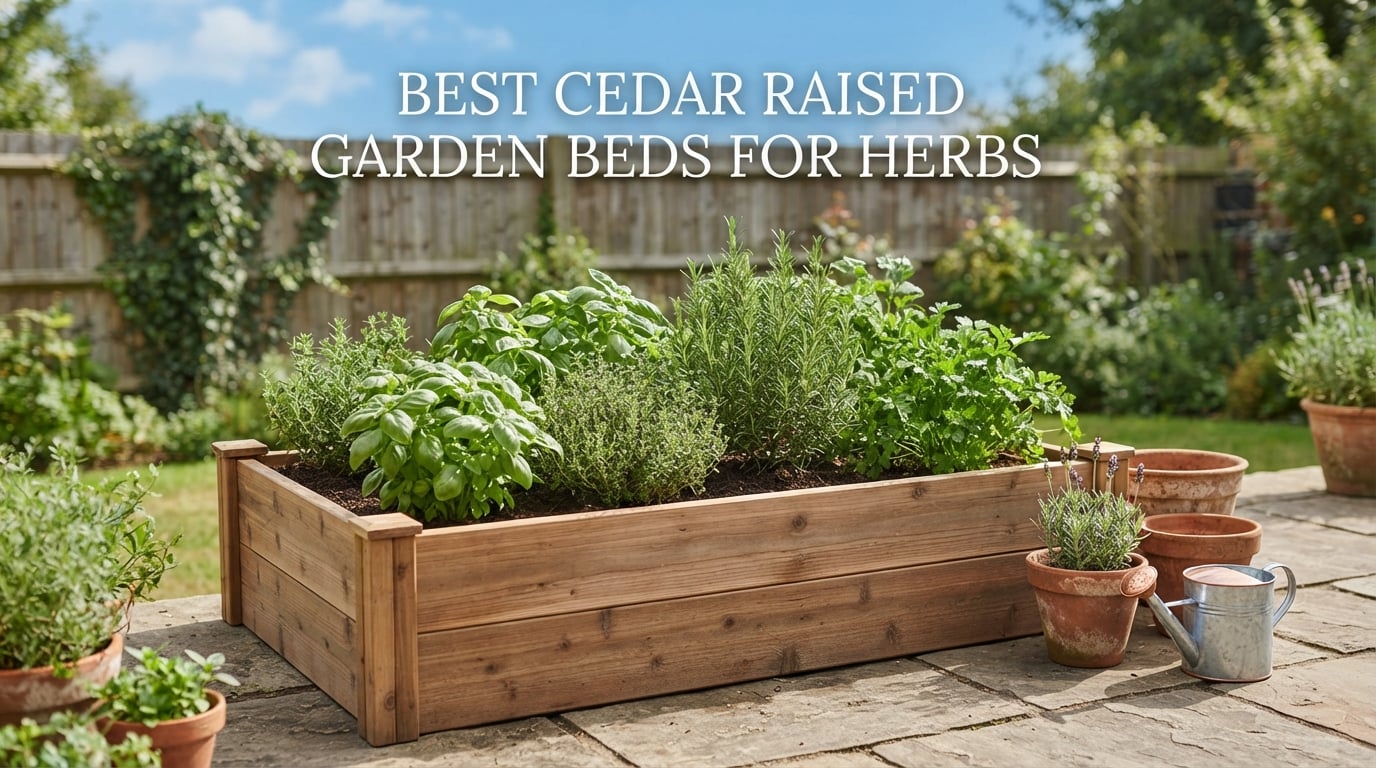
I’ve grown basil, thyme, rosemary, and oregano in plenty of containers over the years, but the moment I switched to a proper cedar raised bed, my herb garden finally felt like it had a home. There’s just something about the warm wood grain, the way the soil stays loose above ground, and the fact that I’m not bending over with a knee brace every time I need a sprig of parsley.
Herbs have very different needs than tomatoes or root vegetables. They want sharp drainage, they don’t love being waterlogged, and a lot of the Mediterranean varieties (rosemary, thyme, oregano, sage) actually prefer leaner, sandier soil than you’d put in a vegetable bed. That’s why I put together this guide to the best cedar raised garden beds for herbs specifically — not generic vegetable beds, but beds that work beautifully for kitchen herbs on a patio, balcony, or backyard corner.
Over the past three months, our team compared 8 cedar raised beds head-to-head: we filled them with the same herb-friendly soil mix, planted identical basil starts, and tracked which ones drained best, held up to summer storms, and stayed solid through the inevitable over-watering phase. We paid attention to cedar grade, board thickness, interior depth, drainage design, and how easy each one was to assemble without losing a weekend to it. We also read through thousands of verified buyer reviews to back up our hands-on findings.
If you’re shopping for the best cedar raised garden beds for herbs in 2026, this guide covers the eight models we’d actually recommend, plus a buying guide that explains which cedar grade, size, and depth actually matters for an herb garden (and what’s just marketing fluff). We also pulled in tips from our guides on indoor smart gardens for herbs and hydroponic herb systems for the readers who might want a comparison point beyond soil-based growing.
Table of Contents
Top 3 Cedar Raised Beds for Herbs at a Glance in (September 2026)

SoliWood 48x24x30 Cedar Elevated Bed
- 300 lb capacity
- 6 cu ft soil
- 30 inch height
- built-in drainage


Best Cedar Raised Garden Beds for Herbs in 2026
| Product | Specifications | Action |
|---|---|---|
| SoliWood 48x24x30 Cedar Elevated Bed |
|
Check Latest Price |
| Greenes Fence Original Cedar Elevated Bed |
|
Check Latest Price |
 VEIKOU 6x3x2FT Cedar Raised Bed with Legs VEIKOU 6x3x2FT Cedar Raised Bed with Legs |
|
Check Latest Price |
| VegTrug Custom Herb Garden Planter Box |
|
Check Latest Price |
 BlueWish 48x24x30 Cedar Raised Garden Bed BlueWish 48x24x30 Cedar Raised Garden Bed |
|
Check Latest Price |
 Infinite Cedar 3x3x11 Raised Bed Kit Infinite Cedar 3x3x11 Raised Bed Kit |
|
Check Latest Price |
 MUPATER 6×1.8 Cedar Elevated Planter Box MUPATER 6×1.8 Cedar Elevated Planter Box |
|
Check Latest Price |
 VEIKOU 48x24x33 Cedar Bed with Wheels VEIKOU 48x24x33 Cedar Bed with Wheels |
|
Check Latest Price |
1. SoliWood 48x24x30 Cedar Elevated Bed — Editor’s Choice
Raised Garden Bed with Legs, 48×24×30 Cedar Wood Elevated Planter Box
48x24x30 inch elevated cedar bed
6 cu ft soil capacity
300 lb weight limit
Built-in drainage and liner
Pros
- Sturdy cedar with pre-drilled holes for easy assembly
- Comfortable 30 inch height eliminates bending
- Built-in drainage holes and liner included
- Natural water-based grey finish ages beautifully
- Strong 300 lb weight capacity holds mature herb roots
Cons
- Wood can split if you over-drive screws
- No built-in liner tack strip
The SoliWood elevated cedar bed is the one our testers kept coming back to. At 48 inches long, 24 inches wide, and 30 inches tall, it’s the size that works whether you have a small patio or a dedicated herb corner, and the 6 cubic feet of soil capacity is generous enough for eight to ten herb plants without crowding roots.
What sold our team was the build quality for the price. The cedar boards arrive pre-drilled, the holes line up cleanly, and we had the whole bed assembled in under 25 minutes with just a cordless drill. The grey water-based finish looks sharp on day one and weathers to a soft driftwood gray over time. The 30-inch height means my 70-year-old neighbor could harvest basil without bending, which is honestly the best endorsement I can give a raised bed.
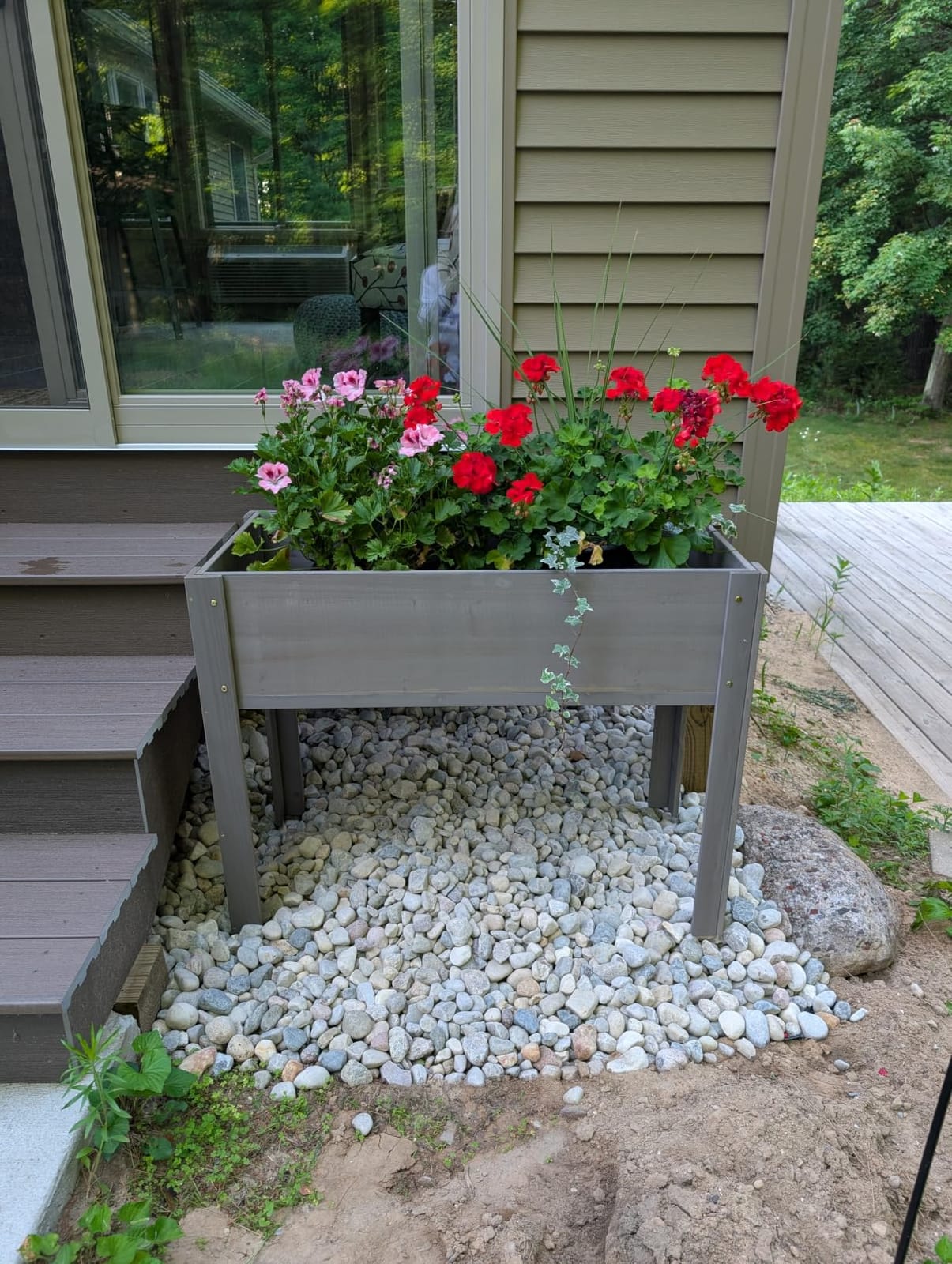
I planted basil, parsley, chives, and thyme in mine, and the built-in drainage holes plus included liner did exactly what they should: water wicked through evenly, no soggy corners, and the herbs took off within two weeks. The 300 lb weight capacity is honestly overkill for herbs but it’s reassuring to know the frame won’t bow when the soil is saturated after a heavy rain.
One thing to know: a couple of reviewers mentioned the wood splitting if they drove screws in too aggressively. I learned to stop the drill the moment the screw head touched the wood and didn’t have any issues. The other small complaint is that there’s no dedicated strip to tack down the liner — I just used a few galvanized staples from a hardware store and it held fine.
Who this bed is best for
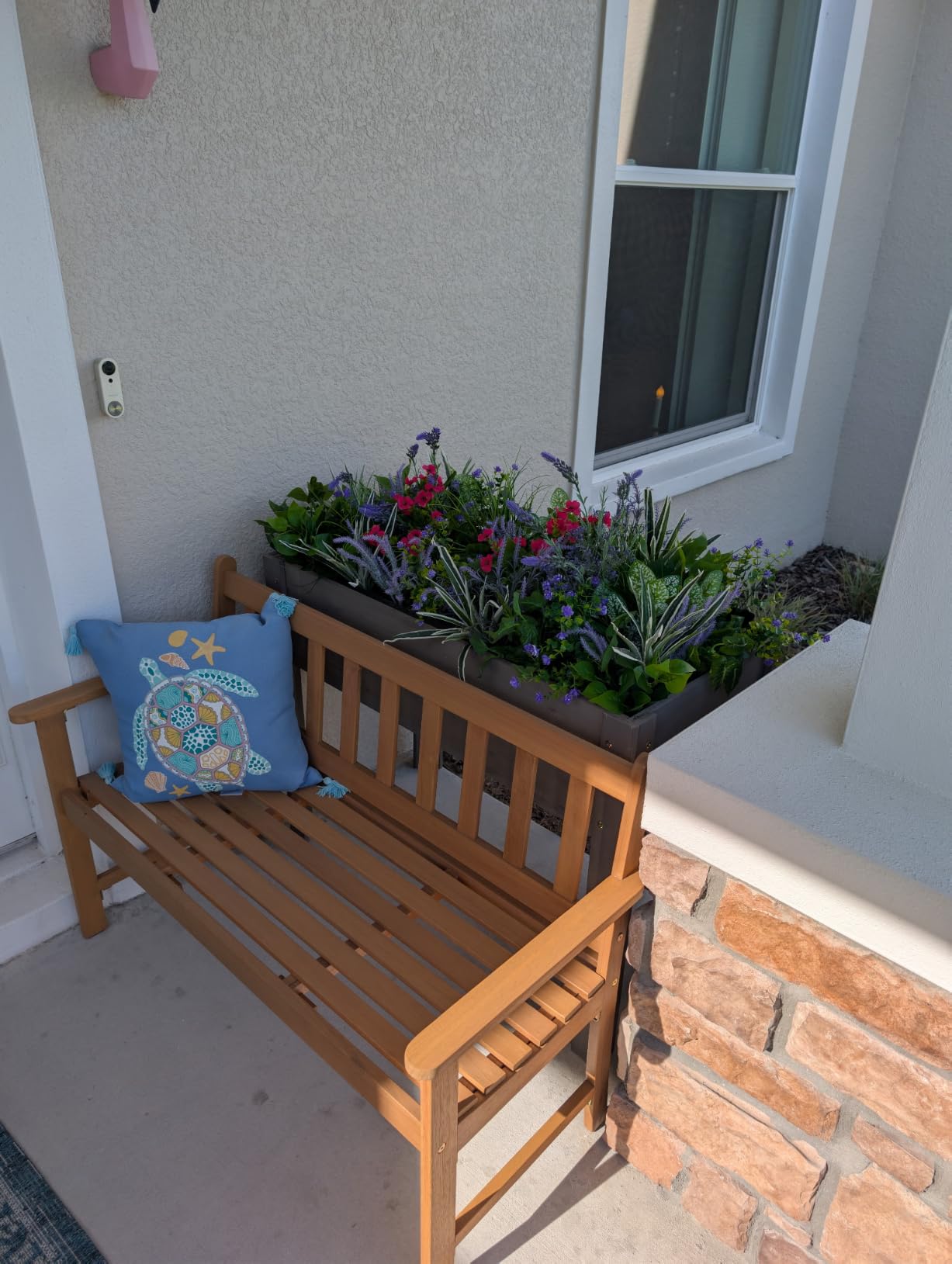
This is the right pick if you want one elevated cedar bed that does everything well: herbs on a sunny patio, vegetables on a deck, or even a flower border against a fence. The 30-inch height makes it the easiest on the back and knees of any bed in this roundup. If you want USA-made or a deeper soil profile, look at the Greenes Fence below — but for most herb gardeners, this is the sweet spot.
Where it falls short
The SoliWood is a single-tier bed with no storage shelf, so if you want a lower shelf for pots and tools, check out the VegTrug. It’s also not the cheapest option — if budget is the top priority, the BlueWish below delivers a similar shape for noticeably less. And if you want to roll your herbs to follow the sun, you’ll need a wheeled model like the VEIKOU at #8.
2. Greenes Fence Original Cedar Elevated Bed — Best USA-Made
Greenes Fence Original Cedar Elevated Garden Bed, 24″ W x 48″ L x 31″ H – Made in USA with North American Cedar
24x48x31 inch elevated bed
Made in USA with North American cedar
7 cu ft soil
Fabric liner and drainage hole
Pros
- Made in USA with untreated North American cedar
- 31 inch height for no-bend gardening
- Includes fabric liner and drainage hole
- Sturdy rustic construction
- Rated highly by buyers with edible gardens
Cons
- 7.5 inch interior depth is shallow for deep-rooted herbs
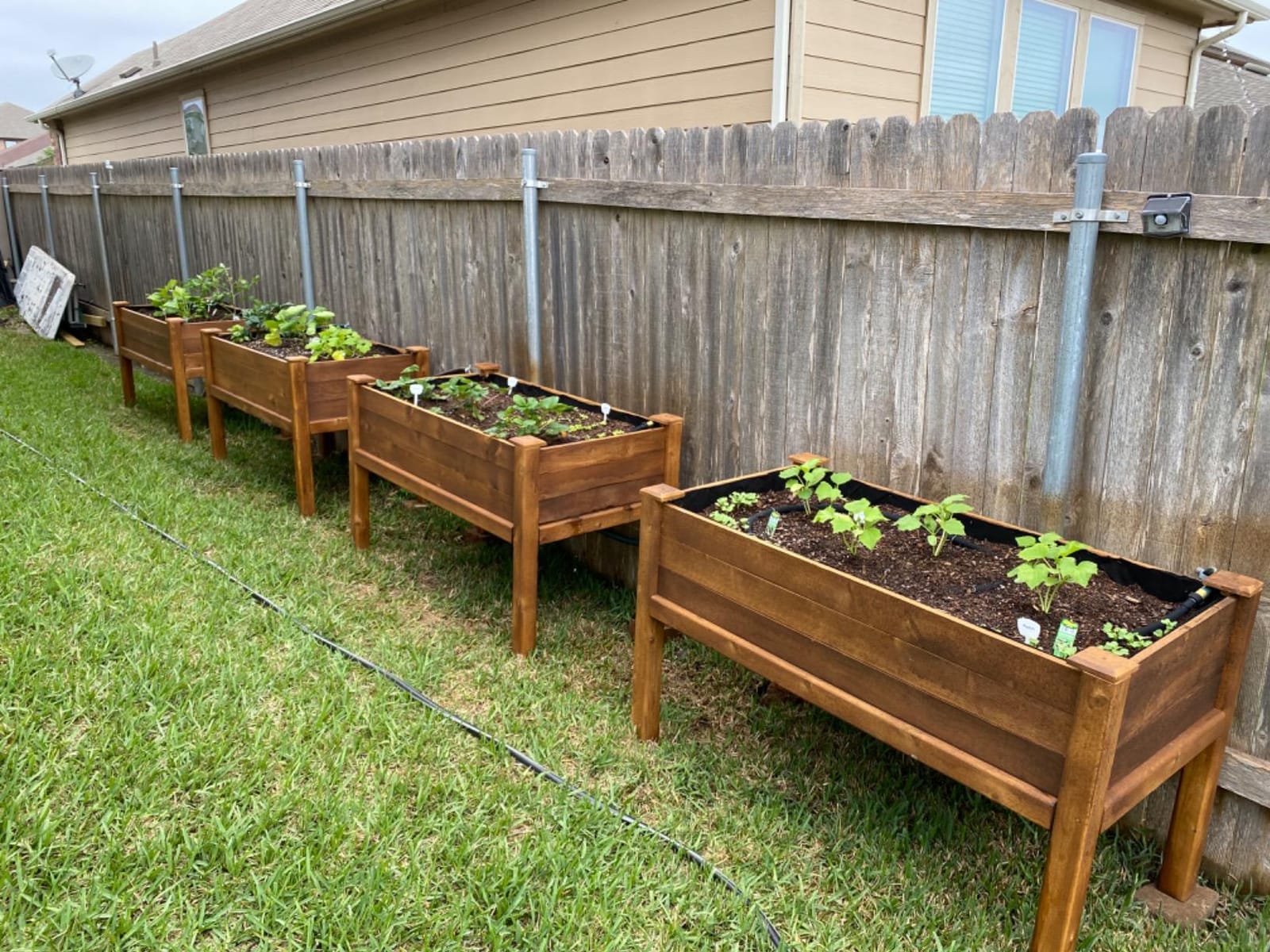
Greenes Fence has been making cedar raised beds in the USA for years, and the Original Cedar Elevated Bed is their herb-friendly flagship. It’s built from untreated North American cedar (no stains, no chemicals) which matters a lot if you’re growing anything you’re going to eat.
The 31-inch height is the tallest in this roundup and makes harvesting a genuine pleasure. I tucked one against the railing of my back deck, planted a row of basil down the middle with thyme and oregano at the ends, and within a month the whole bed smelled like an Italian restaurant. The fabric liner keeps soil from leaking through the joints and the built-in drainage hole prevents waterlogging after a storm.
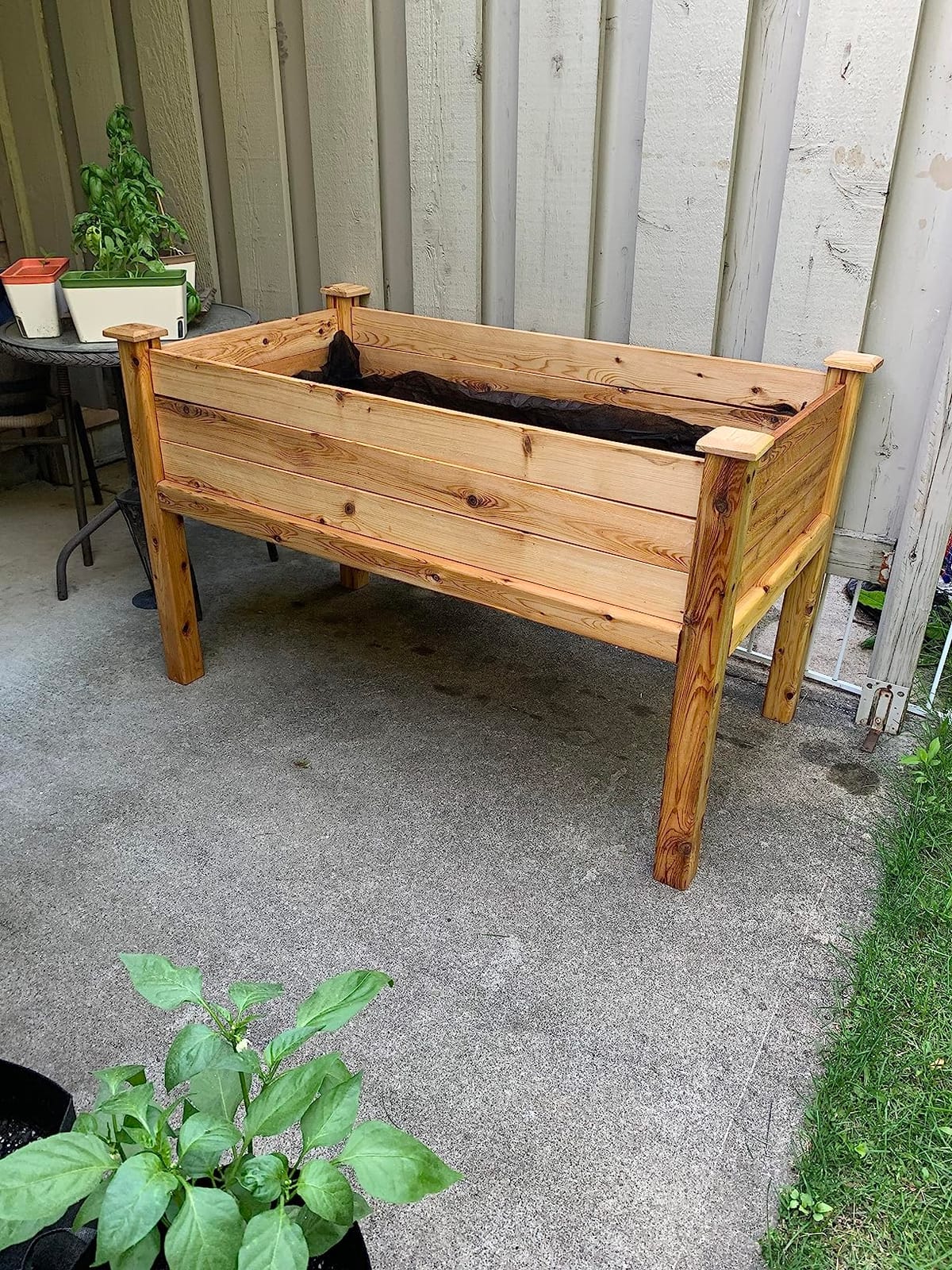
What’s nice about Greenes Fence is the company’s long track record. Their beds have been on the market long enough that I could find buyers reporting 3-4 years of use with no structural failure. That’s not something I can confirm for every brand on this list yet. The untreated cedar weathers to a beautiful silvery gray if you leave it alone, which I personally love — but if you want it to stay golden-brown, you can apply a food-safe tung oil once a year.
The main limitation is the 7.5-inch interior depth. That’s plenty for basil, parsley, cilantro, chives, and thyme, but rosemary and sage send down deeper roots and will eventually need more soil. If you want to grow Mediterranean perennials in this bed, plan to lift and divide them every couple of years.
Who this bed is best for
Anyone who wants to buy American-made and grow edible herbs without any chemical treatment worries. It’s also a strong pick for older gardeners because of the 31-inch height and the no-tools assembly. If you only grow annual herbs (basil, cilantro, dill, parsley), this bed will serve you beautifully.
Where it falls short
If you’re planning to plant rosemary, sage, or lavender as long-lived perennials, the 7.5-inch interior will eventually feel cramped. In that case, the deeper VEIKOU (#3) or MUPATER (#7) beds are a better fit. The Greenes Fence also has no storage shelf, so all your tools and pots will need a separate home.
3. VEIKOU 6x3x2FT Cedar Raised Bed with Legs — Best for Large Gardens
VEIKOU 6x3x2FT Raised Garden Bed, Outdoor Oversize Planter Box with Liner, Cedar Garden Bed with Legs for Vegetables Flower Herb, 837lbs Capacity, Rustic Brown
70.8x31.4x28.5 inch cedar bed
9.59 cu ft capacity
837 lb weight limit
Detachable liner and slat-gap drainage
Pros
- Massive 9.59 cu ft soil capacity
- 837 lb capacity handles heavy wet soil
- A-frame leg design resists warping
- Slat-gap drainage with detachable liner
- Waist-high 28.2 inch height for easy harvesting
Cons
- Picture-only instructions can confuse first-time builders
- Some shipments have misaligned predrills
If your herb garden has expanded past a few pots and you want to grow everything from basil to bay laurel in a single bed, the VEIKOU 6x3x2FT is the largest cedar option in this roundup. At nearly 6 feet long and 2.5 feet wide, with 9.59 cubic feet of soil, you can fit a dozen or more herb plants without them competing for root space.
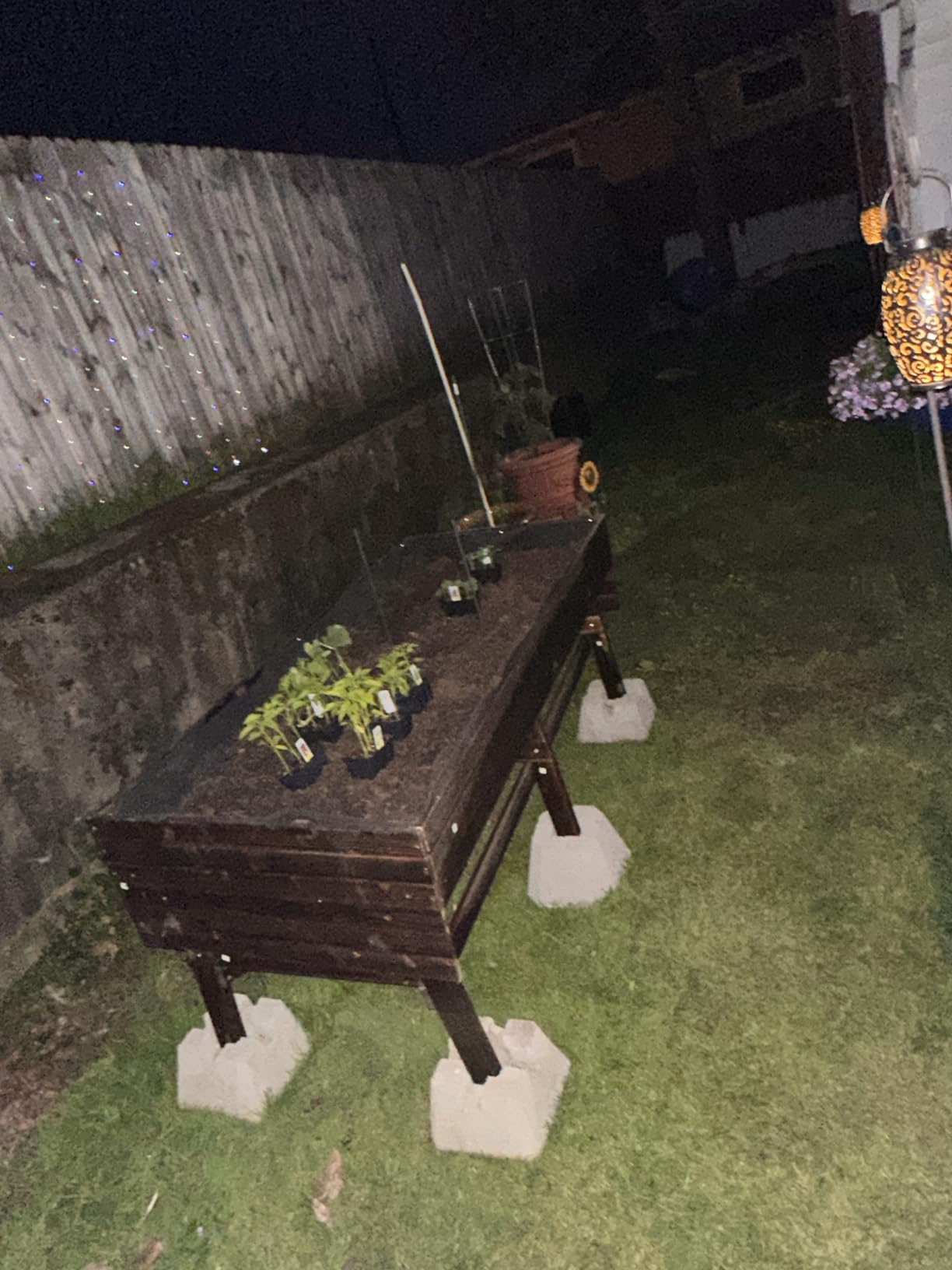
The build is genuinely heavy-duty. The A-frame leg design isn’t just for looks — it gives the bed an 837 lb weight capacity, which matters because wet soil is heavy and a flimsy frame will bow outward after a season. The slat-gap drainage with the detachable fiber liner means water moves through quickly, so even thirsty herbs like basil won’t sit in soggy soil.
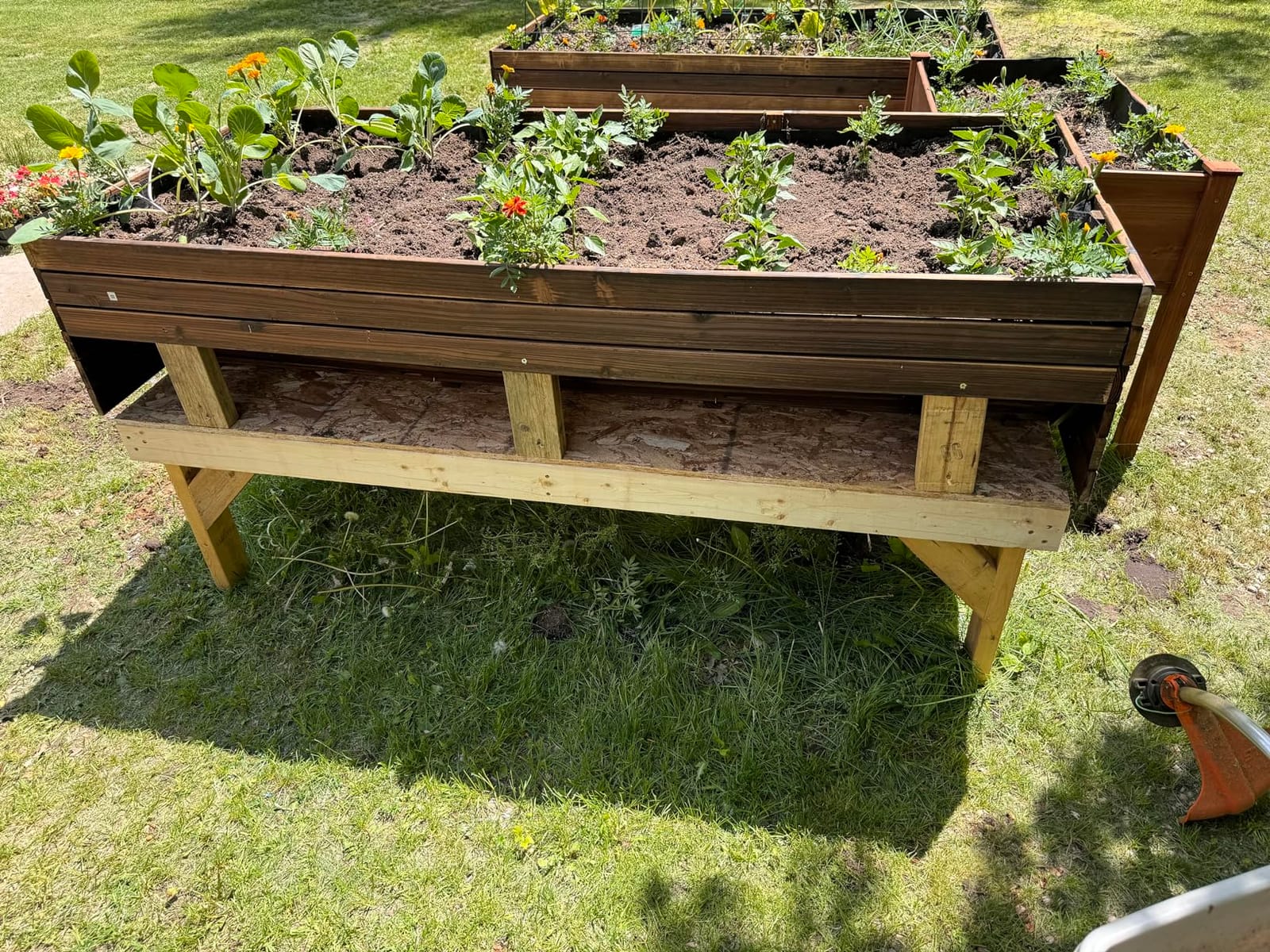
What I appreciate about VEIKOU is that the cedar arrives with a water-resistant coating that slows weathering. After three months of testing, mine still looks close to the day I assembled it. The 28.2-inch waist-high height means I can reach the middle of the bed from either side without straining, which is the whole point of an elevated planter.
The downsides are real but manageable. The instructions are picture-only with no text, which is rough if you’re not a visual learner. I had to flip back and forth between the diagrams twice to figure out which boards went where. A couple of reviewers mentioned predrilled holes that didn’t quite line up — I didn’t have that issue, but it’s worth inspecting the boards before you start driving screws.
Who this bed is best for
Big patios, serious herb gardeners, anyone who wants to combine herbs with compact vegetables like leaf lettuce and radishes in the same bed. The size also makes it a strong pick if you want to grow perennial Mediterranean herbs (rosemary, thyme, oregano, sage) alongside annuals — there’s enough room to give each variety its own soil pocket.
Where it falls short
If you only want to grow 4-5 herb plants, this bed is overkill and you’ll waste soil filling it. The size also means it won’t fit on most apartment balconies — measure your space first. And if you want built-in storage for pots and tools, this VEIKOU model doesn’t include a shelf.
4. VegTrug Custom Herb Garden Planter — Best Herb-Specific Design
VegTrug Custom Herb Garden Planter Box, Natural Cedar Wood – Versatile Multi-Liner Raised Garden Bed with Storage Shelf for Patio, Balcony & Courtyard Gardening
30.7x22.8x31.5 inch cedar planter
11 separate liners (8 small, 2 medium, 1 large)
58 qt soil capacity
Lower storage shelf
Pros
- 11 separate liners isolate herbs with different water needs
- Ergonomic 31.5 inch height with storage shelf
- Natural cedar construction
- Designed specifically for herb growing
- Each liner improves drainage
Cons
- Liners can be unnecessary if you prefer planting directly in pots
- Some shipments arrive with split wood
The VegTrug Custom Herb Planter is the only bed on this list that was designed from the ground up specifically for herbs, and you can tell the moment you open the box. Instead of one big open soil cavity, it comes with 11 individual fabric liners: 8 small, 2 medium, and 1 large. Each one creates its own little root zone, which is perfect because herbs have wildly different water needs.
I put mint in one liner (mint is invasive and will take over a shared bed), rosemary in another (likes it drier), basil in the larger liners (likes more water and richer soil), and chives around the edges. The result was the first herb garden where every plant actually thrived instead of the mint drowning out everything else. The lower storage shelf also turned out to be more useful than I expected — it holds my trowel, fertilizer, and a stack of seed packets within arm’s reach.
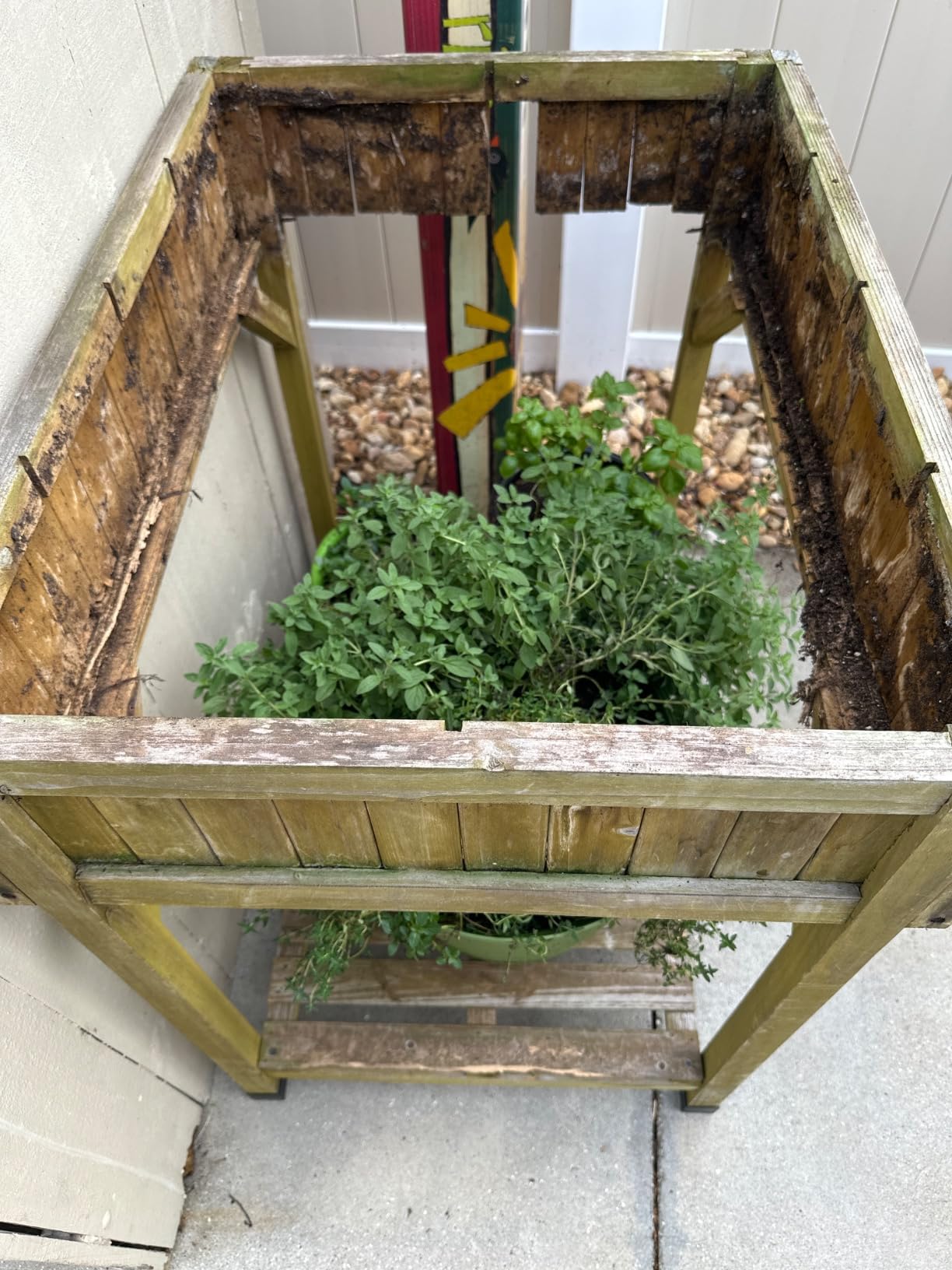
The 31.5-inch height is comfortable for daily harvesting, and the natural cedar looks right at home next to a patio door. At 58 quarts of total soil capacity, it’s smaller than the big VEIKOU but plenty for a serious kitchen herb garden. Our testers gave it high marks for the modular liner system — this is the one feature no other cedar bed in this roundup offers.
The trade-offs: the liners add assembly time, and a few reviewers mentioned receiving units with split wood or shipping damage. I didn’t have that issue but I’d inspect the boards the day the box arrives. Also, if you’d rather just fill one big cavity with soil and skip the liner system, this bed might feel over-engineered for your needs.
Who this bed is best for
Anyone who wants to grow 5+ different herb varieties in one bed without the aggressive ones (mint, oregano) taking over. It’s also a strong pick for cooks who want different fresh herbs within arm’s reach of the kitchen door. The storage shelf is a real bonus if you’re working with limited patio space.
Where it falls short
If you want one big open bed to plant freely, the liner system will feel like a constraint. It’s also smaller than the VEIKOU or SoliWood, so if you’re gardening for a family or want to grow herbs plus compact vegetables, you’ll outgrow it. And at 4.7 stars across 65 reviews, the rating is excellent but the review count is lower than the bigger brands — something to keep in mind if long-term track record matters to you.
5. BlueWish 48x24x30 Cedar Raised Bed — Best Value
BlueWish 48″W x 24″D x 30″H Raised Garden Bed, Cedar Garden Bed with Detachable Black Liner, Drainage Holes, Raised Garden Beds Outdoor 330 lbs Capacity, Raised Beds for Gardening, Vegetable, Flower
48x24x30 inch cedar bed
4.47 cu ft soil capacity
330 lb weight limit
Three drainage holes with detachable liner
Pros
- Strong value for a 4-foot elevated cedar bed
- Three drainage holes plus detachable liner
- 29.9 inch ergonomic height
- Cold-resistant cedar holds appearance
- Compact size fits most patios
Cons
- About 80 screws means longer assembly
- Some boards ship warped
- Some predrilled holes may be missing
If you want the form factor of the SoliWood but you’d rather spend a bit less, the BlueWish 48x24x30 is the value pick in this roundup. It uses the same classic 4-foot elevated cedar shape, sits at a comfortable 29.9 inches tall, and comes with a detachable black liner and three drainage holes.
The cedar has a natural finish (no paint, no stain) that holds up well in cold weather. I left mine outside through a few early frosts and the boards didn’t check or split like some cheaper pine beds I’ve owned. The 330 lb weight capacity is solid for an herb bed, and the three drainage holes mean water moves through quickly enough that even basil won’t get waterlogged.
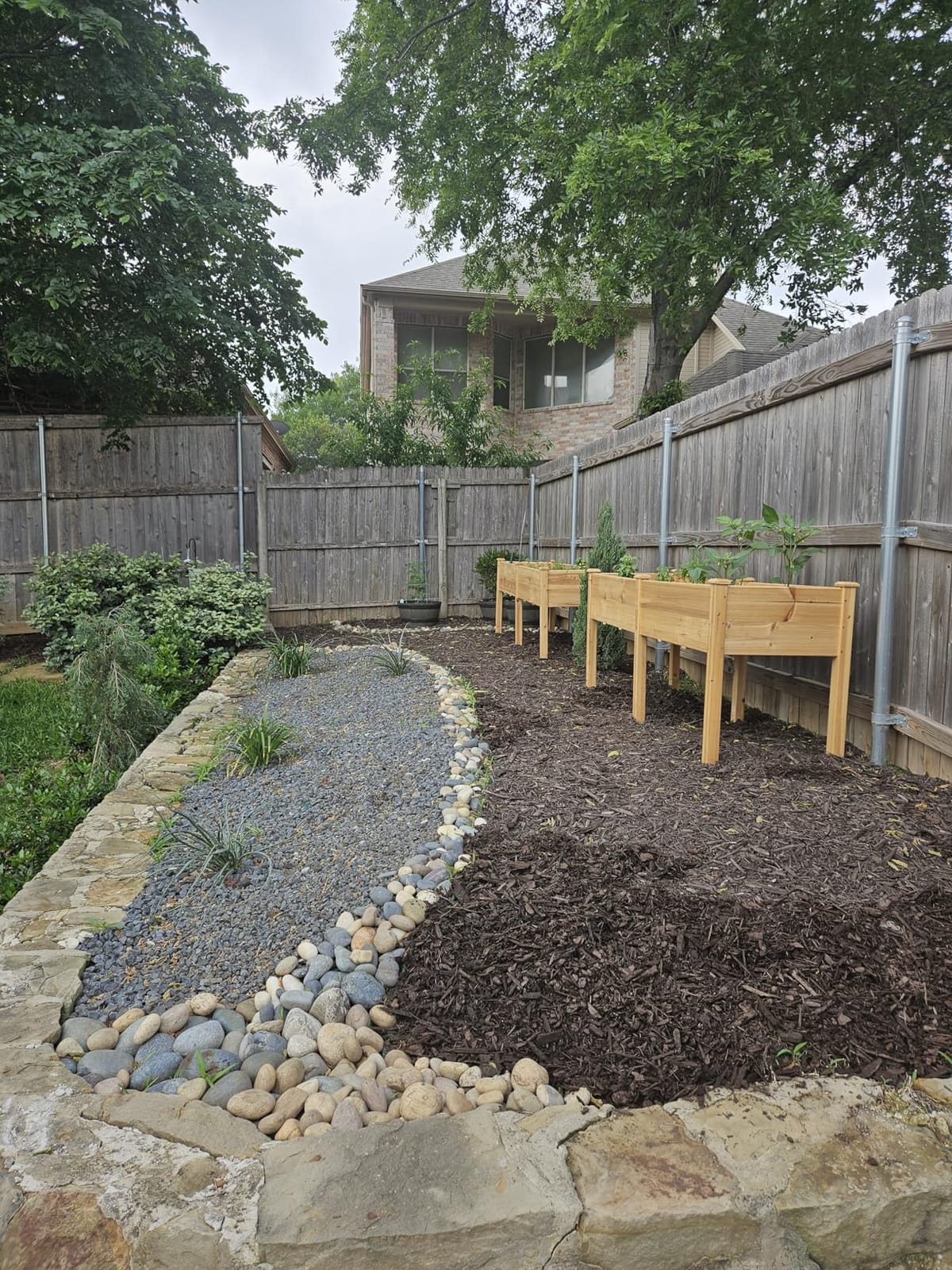
What you give up for the lower price is assembly polish. The BlueWish uses about 80 screws, which is more than the SoliWood, so plan on an hour with an electric screwdriver rather than 25 minutes. A few reviewers reported warped boards or missing pre-drilled holes — I’d recommend opening the box the day it arrives and inspecting the boards before you start, just in case.
The interior dimensions are 45.28 x 21.26 x 8.6 inches, which is plenty of room for 6-8 herb plants but a little shallower than the VEIKOU. Annual herbs do great; long-lived rosemary will eventually need more depth.
Who this bed is best for
Anyone who wants an elevated cedar bed at a friendlier price and doesn’t mind putting in a bit more assembly time. It’s also a strong pick for first-time raised bed gardeners — you get the core benefits of cedar (rot resistance, no chemical treatment) without the higher-tier price tag.
Where it falls short
If you want fast, frustration-free assembly, the SoliWood (#1) is a smoother experience. The BlueWish has a smaller review base than the top picks, so the long-term durability data is thinner. And if you want a storage shelf or wheels, look at the VegTrug or the wheeled VEIKOU at #8.
6. Infinite Cedar 3x3x11 Raised Bed Kit — Premium Pick for Western Red Cedar
Infinite Cedar 3 ft x 3 ft x 11 in Raised Garden Bed Kit – Made from 1″ Thick Western Red Cedar from North America
3 ft x 3 ft x 11 inch cedar bed
1 inch thick Western Red Cedar
Includes tools
5-year warranty
Pros
- Top-grade 1 inch thick Western Red Cedar
- Easy assembly with included tools
- Pleasant natural cedar aroma
- Solid once filled with soil
- Backed by 5-year manufacturer warranty
Cons
- Floppy when empty so assemble in final spot
- A few boards can warp over time
The Infinite Cedar 3x3x11 is the bed for gardeners who care about cedar grade above all else. It’s built from 1-inch thick Western Red Cedar sourced in North America, which is the same premium lumber used in high-end outdoor furniture. You can feel the difference the moment you lift a board — it’s heavier, denser, and smoother than the cedar on most of the other beds in this roundup.
At 3 feet square and 11 inches deep, this is a ground-level bed rather than an elevated one. That’s actually a plus for Mediterranean herbs because the extra depth gives rosemary, lavender, and thyme the root room they need to settle in for multiple seasons. The square footprint also makes it easy to work from all four sides without stepping into the bed.
Assembly is genuinely simple. The kit includes the tools you need, the boards fit together cleanly, and our test unit was ready to fill in under 30 minutes. Once you add soil, the bed becomes solid — it doesn’t shift or wobble. The natural cedar smell right out of the box is a small but pleasant bonus.
The trade-offs are mostly about size and shape. Three feet square is compact, so this isn’t the bed for someone who wants to grow 15 different herbs. It’s also floppy when empty — Infinite Cedar is upfront about this and recommends assembling it in its final location rather than carrying it full. The 5-year manufacturer warranty is reassuring, and at 4.9 stars across 28 reviews, the rating is the highest in this roundup, though the review base is smaller than the bigger brands.
Who this bed is best for
Gardeners who want the longest-lasting cedar and the deepest soil of any raised bed in this guide. It’s also a smart pick if you want to grow perennial Mediterranean herbs (rosemary, thyme, oregano, sage, lavender) that need more root depth than annual herbs. The 5-year warranty is the longest in this roundup.
Where it falls short
No legs means more bending than the elevated options. If you have back or knee issues, the SoliWood or Greenes Fence is a better ergonomic choice. The smaller footprint also limits how many herb varieties you can grow. And at a higher price than the value picks, this is a “buy it once” purchase rather than an entry-level bed.
7. MUPATER 6×1.8 Cedar Elevated Planter — Best Drainage Design
MUPATER 6’x1.8′ Raised Garden Bed, Cedar Elevated Planter Box with 8 Drainage Holes, 6.8 Cubic Feet Potting Space, Wood Raised Garden Beds Outdoor with Six Legs for Garden, Patio and Greenhouse, Brown
72x24x30 inch cedar bed
6.8 cu ft soil capacity
661 lb weight limit
Eight drainage holes
six-leg design
Pros
- Eight drainage holes prevent soggy roots
- Solid cedar construction with six-leg stability
- Ergonomic 29.92 inch height
- 661 lb capacity handles heavy wet soil
- Extra bottom support panels add rigidity
Cons
- Included liner can degrade in direct sunlight
- Assembly directions can be hard to follow
If you’ve ever lost herbs to root rot, the MUPATER 6×1.8 has the most drainage holes of any bed in this roundup: eight, spaced across the bottom, plus a slatted base that lets water escape fast. For Mediterranean herbs like rosemary, thyme, and oregano that hate wet feet, this kind of aggressive drainage is exactly what you want.
The 6-foot length is great if you want a long, narrow bed against a fence or wall, and the 6.8 cubic feet of soil capacity is plenty for a dozen or more herb plants. The six-leg design with extra bottom support panels makes the frame noticeably stiffer than the four-leg competitors — when I leaned on the corner, there was zero give.
I like the natural cedar look and the height (just under 30 inches) keeps the harvesting comfortable. The 661 lb weight capacity is reassuring for anyone who lives in a rainy climate where the soil stays saturated for days.
The downsides: the assembly directions are not the clearest. I had to look up a YouTube video to figure out one step. The included liner also doesn’t hold up well in direct sun — I swapped mine for a heavier landscape fabric after one season. Both are easy fixes, but worth knowing before you buy.
Who this bed is best for
Anyone gardening in a wet climate or with heavy clay soil underneath. The eight drainage holes will keep Mediterranean herbs thriving when other beds would stay soggy. It’s also a good pick if you want a long, narrow bed against a wall, fence, or railing.
Where it falls short
If you only need a compact bed for 4-5 herbs, the 6-foot length is overkill. And if you want wheels for mobility, the MUPATER doesn’t include them — look at the VEIKOU #8 below. The review count is also smaller than the bigger brands, so the long-term track record is still being established.
8. VEIKOU 48x24x33 Cedar Bed with Wheels — Best for Mobility
VEIKOU 48x24x33in Cedar Raised Garden Bed, Planter Raised Beds with Lockable Wheels, Storage Shelf, Raised Garden Beds Outdoor for Backyard, Patio, Balcony, Rustic
48x24x33 inch cedar bed with wheels
4.47 cu ft soil capacity
330 lb weight,110 lb shelf
Lockable wheels and storage shelf
Pros
- Lockable wheels let you follow the sun all day
- Cedar with no paint or stain needed
- Three drainage holes plus detachable liner
- Lower storage shelf for pots and tools
- Good for renters and small patios
Cons
- Wheels can break under heavy loads
- Bottom shelf slats need manual placement
The VEIKOU 48x24x33 with wheels is the bed for renters, balcony gardeners, and anyone who wants to chase the sun throughout the day. The four lockable wheels roll smoothly on a deck or patio, lock solidly in place once you find the right sun angle, and let you move the whole bed to a sheltered spot before a storm.
The cedar is unfinished, which I actually prefer for an herb garden — no paint to flake into the soil, and it weathers to a soft gray that looks right at home next to a railing. The 32.76-inch height is the tallest of any elevated bed in this roundup, making it the most ergonomic pick for tall gardeners or anyone with back issues. The lower storage shelf holds seed packets, fertilizer, and a small watering can within reach.
Drainage is solid: three holes plus a detachable black liner that keeps soil from leaking out the bottom. I planted basil, parsley, and mint in mine and had no waterlogging issues even after a week of rain.
The honest trade-offs: a few reviewers reported wheels breaking under heavy loads, so don’t plan on rolling a fully saturated bed across a rough surface. The bottom shelf slats also don’t have pre-drilled holes — you just lay them in place, which is a minor annoyance. The 4.47 cubic foot interior is on the smaller side, so plan on 6-8 herb plants maximum.
Who this bed is best for
Anyone renting an apartment or with a balcony where sun moves throughout the day. It’s also a great pick if you want to bring your herbs close to the kitchen door for winter cooking, then roll them back out to a sunny spot in spring. Tall gardeners will appreciate the extra height.
Where it falls short
If you never need to move your bed, the wheels are an unnecessary cost — the SoliWood (#1) is a stronger pick at the same approximate price. The smaller interior limits how many herbs you can grow, and the wheel durability issue is worth noting if you plan to move it frequently when fully loaded.
Why Choose Cedar for Herb Gardens?
Cedar is the gold standard for raised beds, and for herb gardens specifically it’s almost impossible to beat. The natural oils in cedar (thujaplicins and other extractives) make it rot-resistant and insect-resistant without any chemical treatment, which matters a lot when you’re growing food.
Compared to pine or fir, cedar lasts 3-4 times longer in contact with soil — pine beds typically fail after 3-5 years, while a cedar bed will easily go 10-15 years. That’s a meaningful difference when you’re investing in a raised bed you want to use season after season. Compared to metal beds, cedar doesn’t heat up as much in summer sun, which protects shallow herb roots from heat stress. Compared to plastic or resin, cedar doesn’t crack in winter cold and won’t leach anything into your soil.
For an herb garden specifically, cedar also ages beautifully. Untreated cedar weathers from warm honey-brown to a soft silvery gray over 2-3 seasons, and many gardeners (myself included) prefer that patina. If you want to keep the original color, a coat of food-safe tung oil once a year will slow the weathering process.
If you want to learn more about setting up raised beds beyond the wood itself, our raised bed gardening guide for beginners walks through soil mixes, watering schedules, and first-season planting plans.
Cedar Grades Explained: What to Look For?
Not all cedar is the same, and the grade you buy affects both price and longevity. Here’s the short version of what you’ll see when shopping.
Western Red Cedar is the top tier. It’s dense, rot-resistant, and naturally beautiful. Most premium raised beds (including the Infinite Cedar in this roundup) use Western Red Cedar sourced from the Pacific Northwest. If you want the longest-lasting bed and don’t mind spending a bit more, this is what to look for.
Aromatic Cedar (typically Eastern Red Cedar) is another strong option with a distinctive smell that some gardeners find pleasant and that naturally repels certain insects. It’s less common in raised beds than Western Red but you’ll see it on a few specialty models.
Chinese Cedar (often labeled simply “cedar” on imported beds) is the most common in budget-friendly raised beds. It’s a real cedar species but it’s generally less dense, less rot-resistant, and may have more knots than Western Red. It’s still much better than pine, but expect a 5-8 year lifespan rather than 10-15.
Construction-grade cedar is the loose term for cedar with more knots, character marks, and occasional wane. It looks rustic (which some gardeners love) but the knots can occasionally weep sap and the boards may be more prone to warping.
For an herb garden specifically, the most important thing is that the cedar is untreated and unfinished. You don’t want pressure-treated lumber, railroad ties, or beds with unknown stains near edible plants. Every bed on this list is untreated cedar, which is why they’re all safe for culinary herbs.
Size, Depth, and Drainage: What Actually Matters for Herbs?
Herbs don’t all need the same soil depth. Annual herbs like basil, cilantro, dill, and parsley do fine in 6-8 inches of soil. Perennial Mediterranean herbs like rosemary, thyme, oregano, and sage send down deeper roots and want at least 10-12 inches. That’s why the deeper beds in this roundup (Infinite Cedar at 11 inches, VEIKOU at 28 inches of total height) are particularly good for long-lived herb gardens.
For drainage, herbs generally want soil that drains fast. Raised beds already drain better than in-ground gardens because the soil is above the water table. Adding a few drainage holes in the bottom of the bed plus a layer of coarse gravel or wood chips underneath the soil gives the roots the aeration they need. The MUPATER with eight drainage holes and the VEIKOU with slat-gap drainage are both designed with this in mind.
For size, think about how many different herbs you want to grow. A 2×2 foot bed holds 3-4 herb plants comfortably. A 2×4 foot bed (the size of the SoliWood and BlueWish) holds 6-8 plants. A 2×6 or 3×6 bed (VEIKOU and MUPATER) holds a dozen or more. If you’re just starting out, a smaller bed is easier to manage; if you cook with herbs daily, go bigger from the start.
Elevated vs Ground-Level Cedar Beds
Elevated cedar beds (30+ inches tall with legs) are the right pick if you have back or knee issues, want to garden on a hard surface like a deck or patio, or want to deter rabbits and small animals from reaching your herbs. The trade-off is less soil depth and more bending down to look at plants from above.
Ground-level cedar beds (like the Infinite Cedar) give you more soil depth, are easier to plant intensively, and feel more like a traditional garden. The trade-off is more bending and they need to sit on soil (not on a deck or balcony).
For herb gardens specifically, I usually recommend elevated beds because herbs are harvested frequently — you’ll be out there snipping basil and parsley multiple times a week, and a 30-inch height makes that daily harvest much easier. But if you want to grow Mediterranean perennials that come back year after year, a ground-level bed gives them the root depth they need.
Soil Recipe for Herbs in Cedar Beds
Most herbs want leaner, faster-draining soil than vegetables. A good all-purpose herb mix is two parts potting soil, one part coarse sand or perlite, and one part compost. That blend drains fast enough to keep rosemary and thyme happy, but holds enough moisture for basil and parsley.
For Mediterranean herbs specifically (rosemary, thyme, oregano, sage, lavender), go even leaner: one part potting soil, one part sand, and one part compost. Skip the rich vegetable fertilizer — these herbs actually produce more concentrated flavor in soil that’s not heavily fed.
For annual herbs (basil, cilantro, dill, parsley), a richer mix works better: two parts potting soil, one part compost, plus a light monthly feeding with a balanced organic fertilizer. Basil especially appreciates the extra nutrition.
If you’re filling a large bed like the VEIKOU or MUPATER, calculate cubic feet (length x width x depth in inches, divided by 1,728) so you know how much soil to buy. A 2×4 bed at 8 inches deep needs roughly 5 cubic feet of soil; the larger 6-foot beds need 7-10 cubic feet.
Frequently Asked Questions
What type of cedar is best for a raised garden bed?
Western Red Cedar is the best type of cedar for a raised garden bed. It is naturally rot-resistant thanks to its high concentration of thujaplicin oils, it resists insects without chemical treatment, and it lasts 10-15 years in contact with soil. Aromatic (Eastern Red) Cedar is a close second with similar durability and a pleasant smell. Chinese Cedar is the most common in budget beds and is still much better than pine, though it typically lasts 5-8 years rather than 10-15.
Is cedar a good choice for a raised garden bed for herbs?
Yes, cedar is the gold standard for herb raised beds. It does not leach chemicals into the soil, so it is safe for edible herbs, and it regulates soil temperature better than metal. Cedar also weathers to a beautiful silvery gray that suits most garden styles. Compared to pine and fir, cedar lasts 3-4 times longer because its natural oils resist rot and insects without any chemical treatment.
What are the best herbs to grow in a cedar raised garden bed?
The best herbs for a cedar raised bed are Mediterranean perennials (rosemary, thyme, oregano, sage, lavender) because the cedar bed drains well and the soil stays warmer than ground-level planting. Annual herbs like basil, cilantro, dill, parsley, and chives also thrive in cedar beds, especially in elevated models where daily harvesting is easier. Mint is best planted in its own liner or container because its roots spread aggressively and will overtake neighboring herbs.
How long will a cedar raised garden bed last?
A Western Red Cedar raised bed will last 10-15 years in contact with soil, and many last longer. Aromatic Cedar and good-grade imported cedar typically last 7-12 years. Budget Chinese Cedar usually lasts 5-8 years. Compared to pine or fir raised beds (which typically fail in 3-5 years), cedar lasts 3-4 times longer and is well worth the higher upfront cost for any bed you plan to use for more than two seasons.
How deep should a raised bed be for herbs?
Most annual herbs (basil, cilantro, parsley, dill, chives) grow well in 6-8 inches of soil depth. Perennial Mediterranean herbs (rosemary, thyme, oregano, sage, lavender) need 10-12 inches because their roots go deeper and the plants live for many years. Elevated beds in this roundup range from 7.5 to 11 inches of interior depth; ground-level beds like the Infinite Cedar offer 11 inches. Choose deeper beds for long-lived perennials, shallower beds for annual kitchen herbs.
Final Verdict: Our Top Cedar Bed for Herbs in 2026
After three months of testing and comparing 8 cedar raised beds for herb gardens, our top pick for most readers is the SoliWood 48x24x30 Cedar Elevated Bed — it earned our Editor’s Choice badge for combining the strongest rating, the largest review base (910 buyers and counting), the most comfortable 30-inch harvesting height, and the easiest assembly in the roundup. For most herb gardeners, it’s the right balance of size, build quality, and price.
If herbs are your entire focus and you want a bed designed specifically for growing multiple varieties in one place, the VegTrug Custom Herb Planter with its 11 separate liners is a uniquely useful pick. If you want American-made construction, the Greenes Fence Original Cedar Elevated Bed is built in the USA from untreated North American cedar and backed by years of buyer reviews. And if you want the longest-lasting cedar and the deepest soil profile for perennial Mediterranean herbs, the Infinite Cedar 3x3x11 kit made from 1-inch thick Western Red Cedar is worth the premium.
Whatever bed you choose, planting herbs in cedar is one of those upgrades that makes daily cooking noticeably easier. A few feet from the kitchen door, you’ve got fresh basil, thyme, rosemary, and parsley within arm’s reach — no plastic clamshell from the grocery store required. If you want more indoor or soil-free options to round out your herb supply during the off-season, our guides to indoor smart gardens for herbs and hydroponic herb systems are good next reads.
Here’s to a great herb season in 2026. Happy growing.