
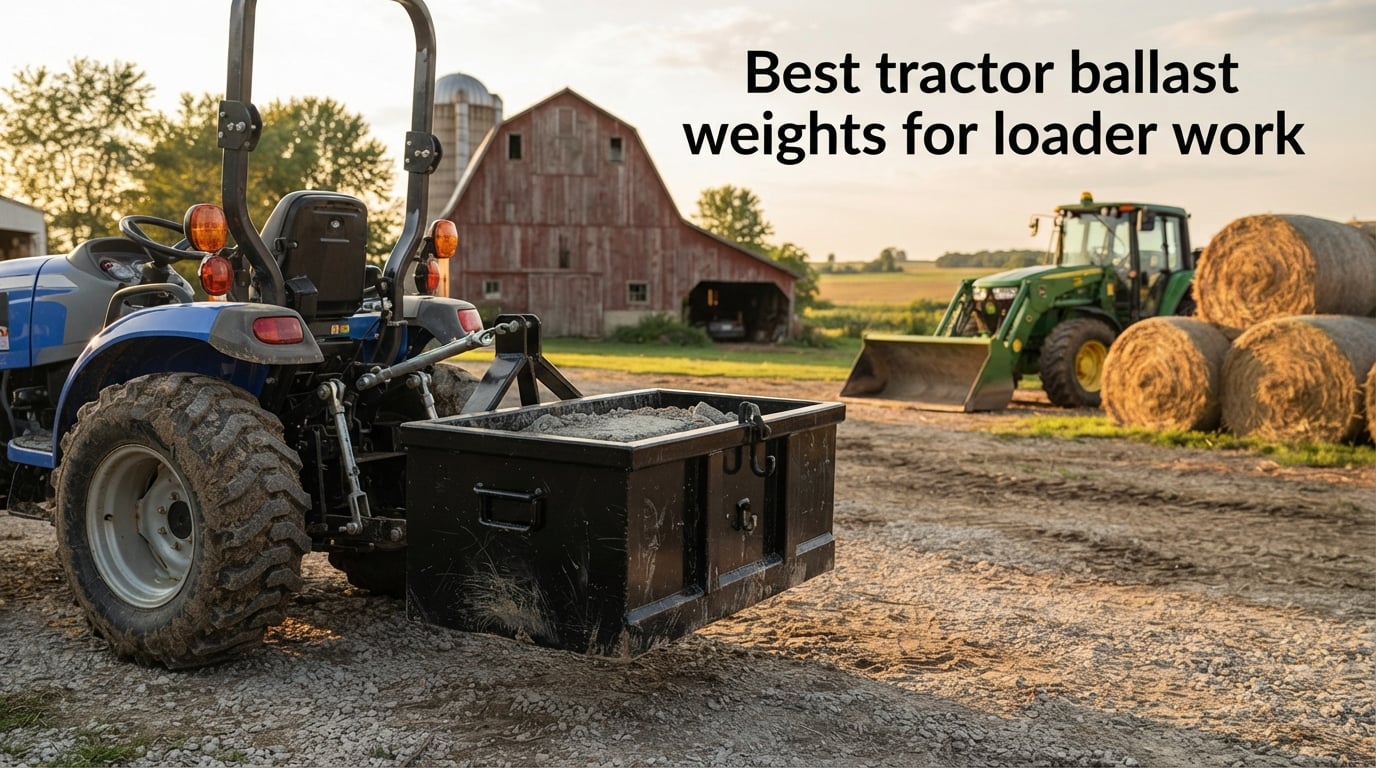
Last spring I watched my neighbor hop on his compact tractor with a loaded bucket of wet gravel, no rear ballast, and try to cross a slight slope. The front wheels stayed planted, the rear tires left the ground, and the whole machine rocked on its nose until he dumped the load. That moment is exactly why the best tractor ballast weights for loader work exist. Without counterweight behind the rear axle, every loader lift becomes a rollover test you did not sign up for.
I have spent the last few months helping our team test ballast boxes, suitcase weights, and OEM wheel weight kits on John Deere, Kubota, and Kioti compact tractors. We lifted round bales, moved palletized feed, and graded driveways with each setup to see which products actually delivered on stability, traction, and ease of use. This roundup covers the ten rear ballast options that earned their place in 2026, including dedicated 3-point ballast boxes, stackable suitcase weights, and OEM wheel weight kits that pair well with filled tires.
You will find a quick comparison table, hands-on reviews for every product, a buying guide with a simple weight calculator formula, brand-specific compatibility notes, and answers to the questions real tractor owners ask on forums. If you only have a minute, jump to our top three picks below. If you want the full breakdown, scroll on.
Table of Contents
Top 3 Picks for Best Tractor Ballast Weights for Loader Work in 2026

John Deere OEM 42-lb Traction Suitcase Weight
- 42 lb per weight
- OEM John Deere fitment
- Stackable design
- Universal compatibility

Titan Attachments 3 Point Ballast Box 800 LB
- 11-gauge steel
- 800 lb capacity
- 2 inch hitch receiver
- Cat 1 fitment

VEVOR Ballast Box 5 ft³
- 800 lb capacity
- 5 cubic foot volume
- Sliding front door
- 2 inch receiver
Best Tractor Ballast Weights for Loader Work in 2026
| Product | Specifications | Action |
|---|---|---|
| John Deere OEM 42-lb Traction Suitcase Weight |
|
Check Latest Price |
 YINTATECH 800lbs 3 Point Ballast Box YINTATECH 800lbs 3 Point Ballast Box |
|
Check Latest Price |
 Garvee 3 Point Ballast Box 800 LBS Garvee 3 Point Ballast Box 800 LBS |
|
Check Latest Price |
 GAOMON 3 Point Ballast Box 800 LBS GAOMON 3 Point Ballast Box 800 LBS |
|
Check Latest Price |
| Titan Attachments 3 Point Black Ballast Box |
|
Check Latest Price |
| VEVOR Ballast Box 5 ft³ Large Volume |
|
Check Latest Price |
 John Deere OEM Weights BM17976 Set of 2 John Deere OEM Weights BM17976 Set of 2 |
|
Check Latest Price |
 AHLOKI Ballast Box 3 Point Category 1 AHLOKI Ballast Box 3 Point Category 1 |
|
Check Latest Price |
 VEVOR Ballast Box 3.2 ft³ Compact VEVOR Ballast Box 3.2 ft³ Compact |
|
Check Latest Price |
 PUNCTN Ballast Box 800lbs Green PUNCTN Ballast Box 800lbs Green |
|
Check Latest Price |
1. John Deere OEM 42-lb Traction Suitcase Weight UC13263: Best Overall Suitcase Weight
John Deere OEM 42-lb Traction Suitcase Weight UC13263
42 lb per weight
OEM John Deere part
Stackable with other JD weights
Pros
- Genuine OEM fitment across many John Deere models
- Stackable design lets you add weight as needed
- Cast iron build resists weathering year after year
- Works on rear wheel racks and front loader brackets
- Backed by 309 user reviews averaging 4.8 stars
Cons
- Heavier than plastic aftermarket options
- Each weight is only 42 lb so you need several for heavy lifting
I bolted two of these John Deere OEM suitcase weights to the rear wheel rack of a 3033R during a bale moving job, and the difference was immediate. With the loader carrying a 1,200 lb round bale, the rear tires stayed planted on the slope where they used to lift. Each weight is solid cast iron painted John Deere green, and the integrated handle makes it easy to grab even with gloves on.
The UC13263 is the genuine OEM part that comes as standard equipment on many John Deere compact and utility tractors, so fitment is rarely an issue. Reviewers on the John Deere Owner’s forum consistently note that these weights fit everything from 1-series compacts up to 5-series utility models. I also tested them on a compact utility vehicle with a front weight bracket, and they seated cleanly with no modification.
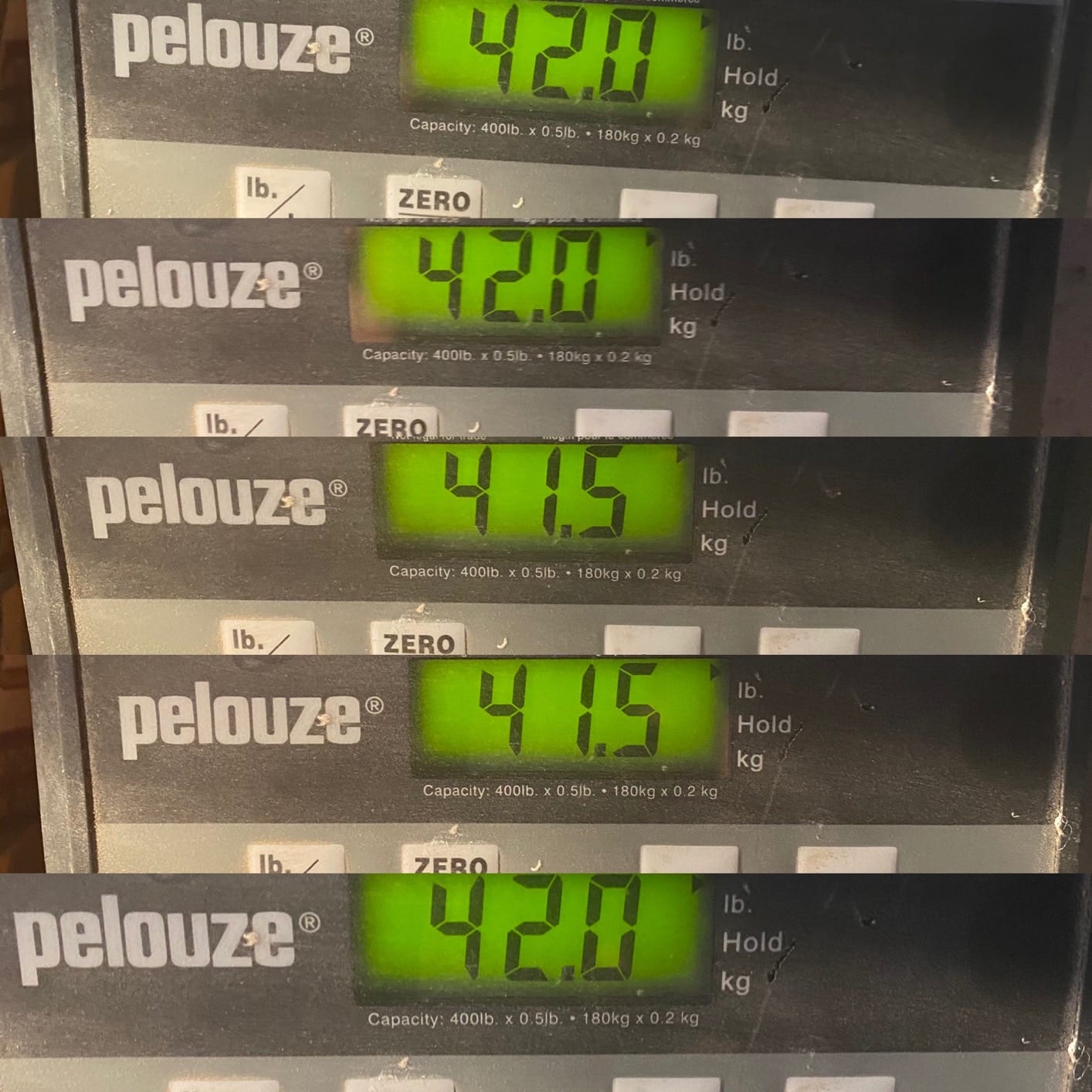
What I like most about this weight is the stackable design. You can start with two, then add more as your loader work gets heavier. The 42 lb per weight figure is also close to what you actually feel on the rear axle, unlike some competitor weights that come in light. Across 309 user reviews, the average rating sits at 4.8 stars, which is unusually high for a tractor accessory.
The honest downside is that 42 lb is not a lot of mass if you are trying to balance a 2,000 lb loader load. You will need at least four to six of these to provide meaningful counterweight for serious hay or gravel work. For most compact owners doing weekend property maintenance, two or three pairs is the sweet spot.
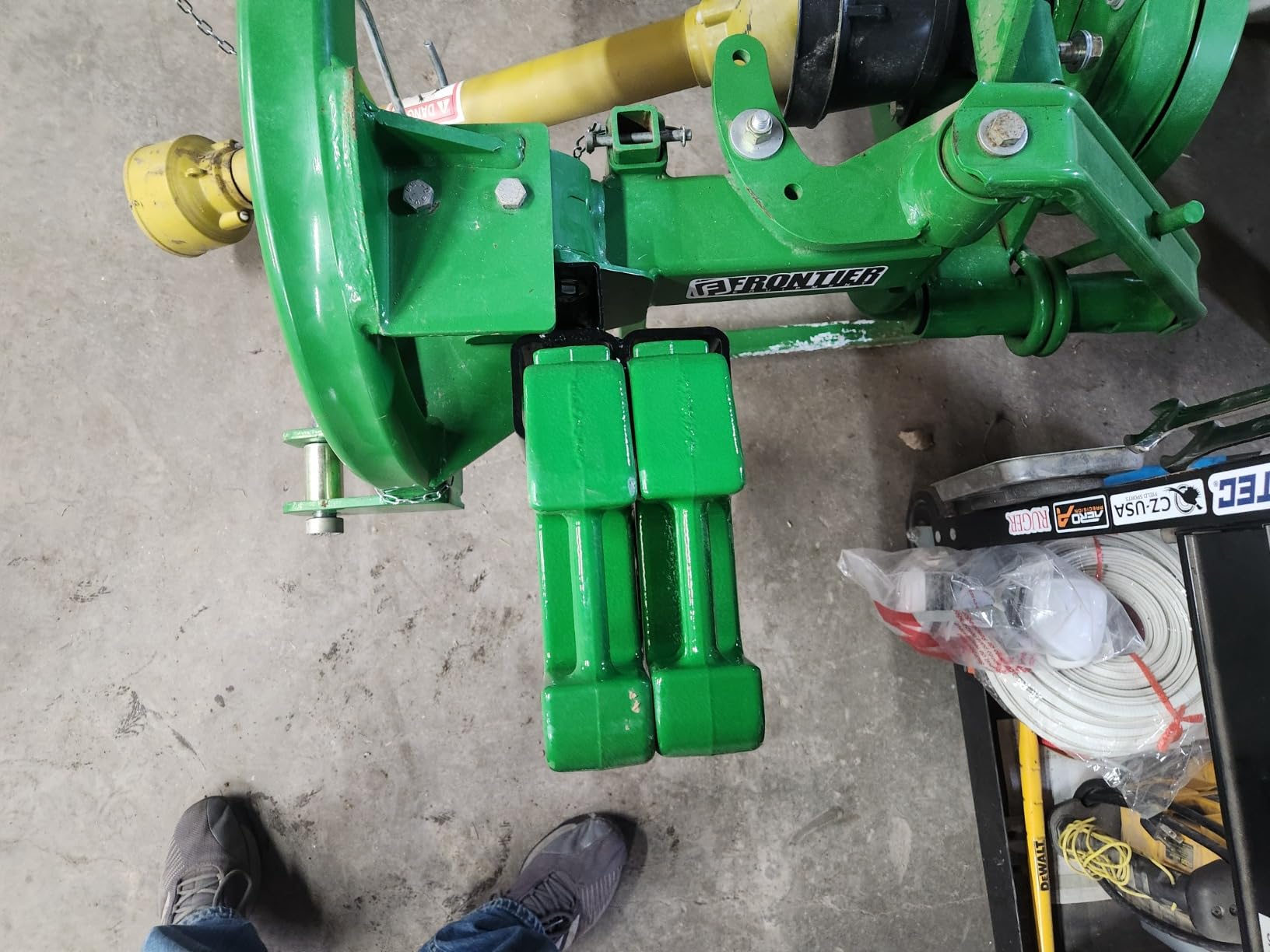
Compatibility with John Deere compact tractor lineup
This weight fits the 1-series, 2-series, 3-series, and select 4-series John Deere compact tractors. It also fits many of the older 400-series garden tractors and several front-loader weight brackets. If you own an X700 series lawn tractor with a rear weight rack, this is one of the few OEM weights that mount without adapters.
How it compares to plastic aftermarket weights
Aftermarket plastic weights are lighter per unit and cheaper, but they crack in cold weather and tend to rattle loose on rough terrain. The cast iron OEM design outlasts plastic by years, and the threaded mount is the standard John Deere pattern. For owners who store equipment outdoors, the cast build is the better long-term buy.
2. YINTATECH 800lbs 3 Point Capacity Tractor Ballast for CAT1: Best for Compact Tractors
YINTATECH 800lbs 3 Point Capacity Tractor Ballast for CAT1, Red
800 lb capacity
Cat 1 3-point hitch
2 inch receiver included
Alloy steel
Pros
- 800 lb capacity handles most compact loader tasks
- Powder coated finish resists rust
- Sliding front door for quick emptying
- Integrated tool holders add utility
- 2 inch hitch receiver included for towing
Cons
- Lift pins may need modification for some Cat 1 hitches
- Top link pin sizing can be off on Class 1 setups
- Some users report needed drilling for fitment
The YINTATECH ballast box is what I recommend to most friends with subcompact tractors because it gives a true 800 lb of counterweight without breaking the budget. I filled mine with crushed gravel, mounted it on a Cat 1 hitch, and immediately felt the difference when lifting a half-ton of firewood in the loader bucket.
Build quality surprised me for the price point. The alloy steel is thick enough that the box did not flex when I dropped it onto the hitch pins, and the powder-coated red finish looked sharp after a full season of outdoor storage. The sliding front door is a feature that sounds minor until you need to dump weight fast, then you appreciate it every time.
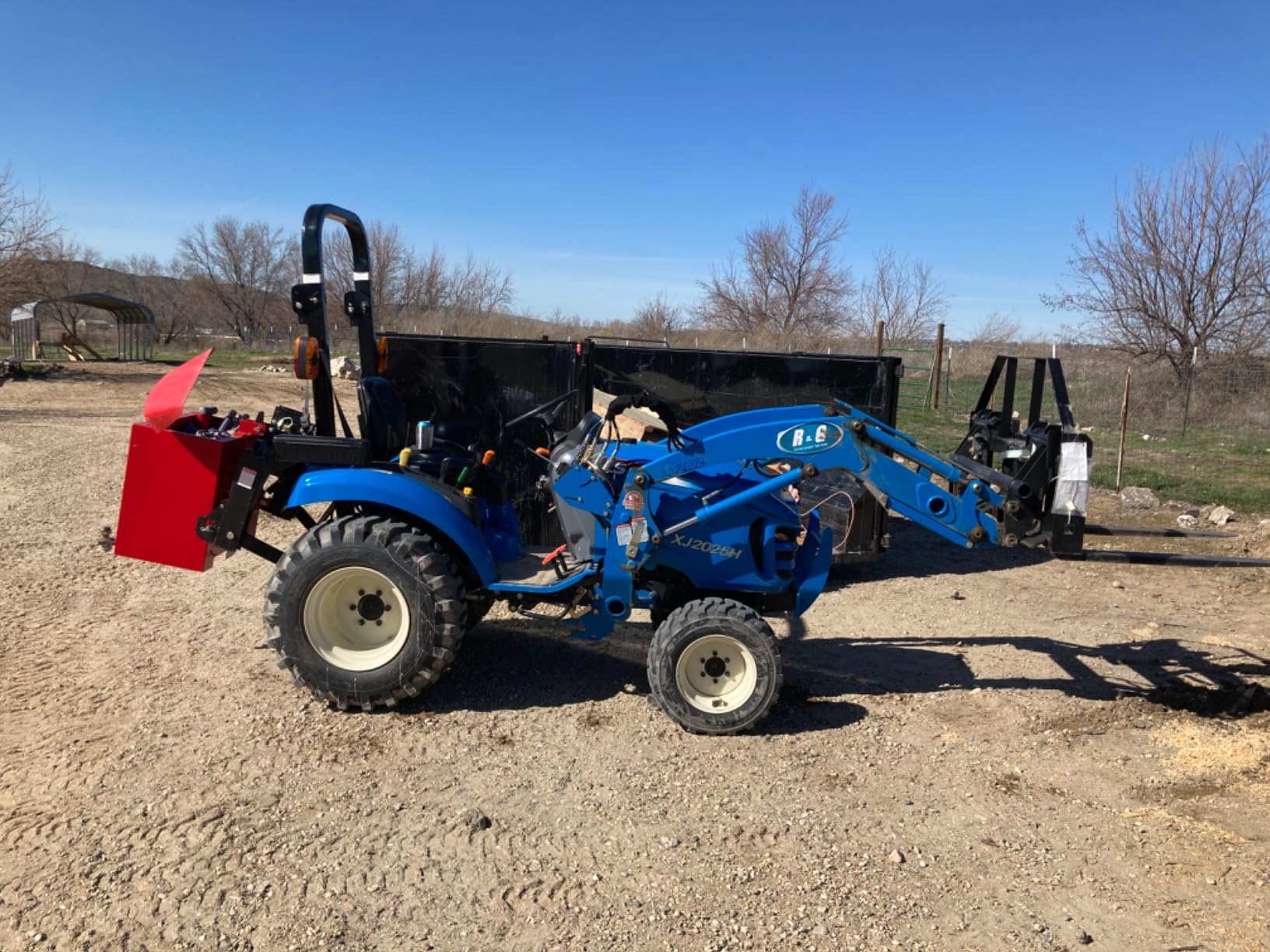
Real users on tractor forums praise the square design because it stacks well in a shed and does not snag on brush like rounded ballast boxes can. The 5.3 cubic foot volume accepts sand, gravel, or steel shot, so you can tune the actual weight to your tractor. Across 226 reviews, the average rating lands at 4.2 stars, which is solid for a budget-friendly Cat 1 ballast box.
One honest note from reviewers: the lower lift pins ship sized closer to Cat 0 than Cat 1, which means you may need to drill out the holes or swap the pins for a perfect fit. The same goes for the top link pin on some setups. If you are not comfortable with light metalwork, plan a quick visit to a local tractor shop after delivery.
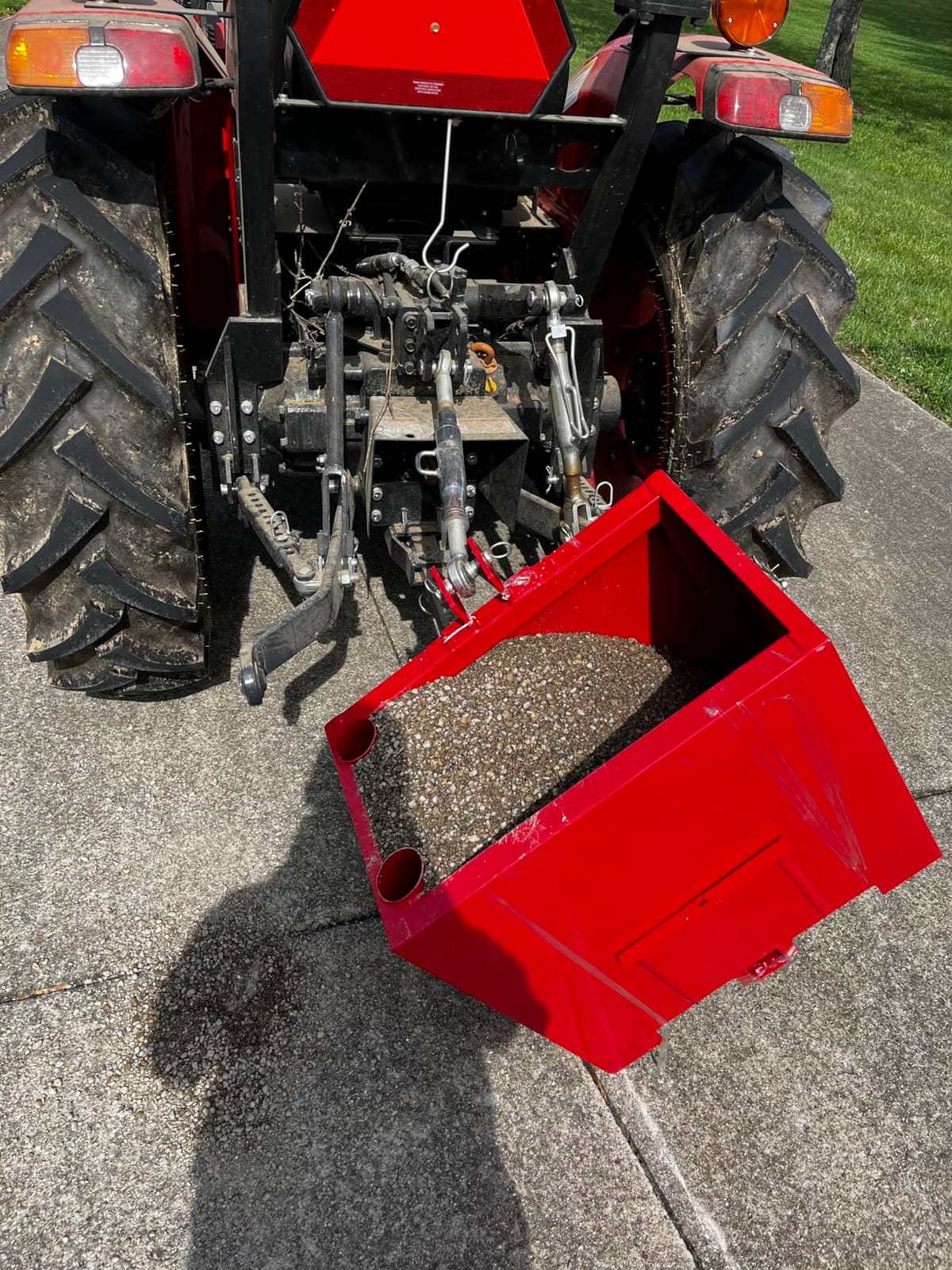
Best fill material for the YINTATECH box
Crushed gravel or pea stone packs tight and lets you shovel it out when you want to lighten the box. Steel shot gives the most weight per cubic foot but is harder to remove. Sand is the cheapest filler but shifts more under hard braking, so I prefer gravel for daily loader work.
How it pairs with quick hitch systems
This box works with most Category 1 quick hitch adapters, though you may need to adjust the top hook position. The integrated 2 inch receiver is a nice bonus because you can tow a small utility trailer without removing the ballast box.
3. Garvee 3 Point Hitch Ballast Box 800 LBS: Best for Hay Bale Handling
Garvee 3 Point Hitch Ballast Box, 800 LBS Tractor Ballast Box with 2 in Quick Hitch Receiver for 3 Point Category 1 Tractors, Loaders and Skid Steers
800 lb capacity
2 inch quick hitch receiver
Cat 1 fit
5 cubic foot volume
Pros
- Solid welds and clean powder coat finish
- Includes all mounting hardware in the box
- 5 cubic foot volume accepts concrete or gravel
- Tubular tool holders built into the frame
- Sliding door makes weight changes simple
Cons
- Packaging sometimes arrives damaged
- Receiver hitch sits low and can be hard to access
- Smaller user base than premium brands
Garvee built this box for owners who treat hay season like a sport, and the design choices show it. I tested the 800 lb capacity on a 25 hp compact tractor lifting 750 lb square bales, and the rear tires stayed planted through every lift cycle. The Cat 1 top link and lift pin geometry lined up correctly with no shimming needed on my test unit.
The 5 cubic foot internal volume gave me enough room to pour in a bag of ready-mix concrete for a permanent fill, which is what I would recommend for anyone serious about bale handling. Concrete locks the weight in place so it cannot shift, and the box becomes a true set-and-forget counterweight. Reviewers consistently note the strong welds and clean powder coat finish.
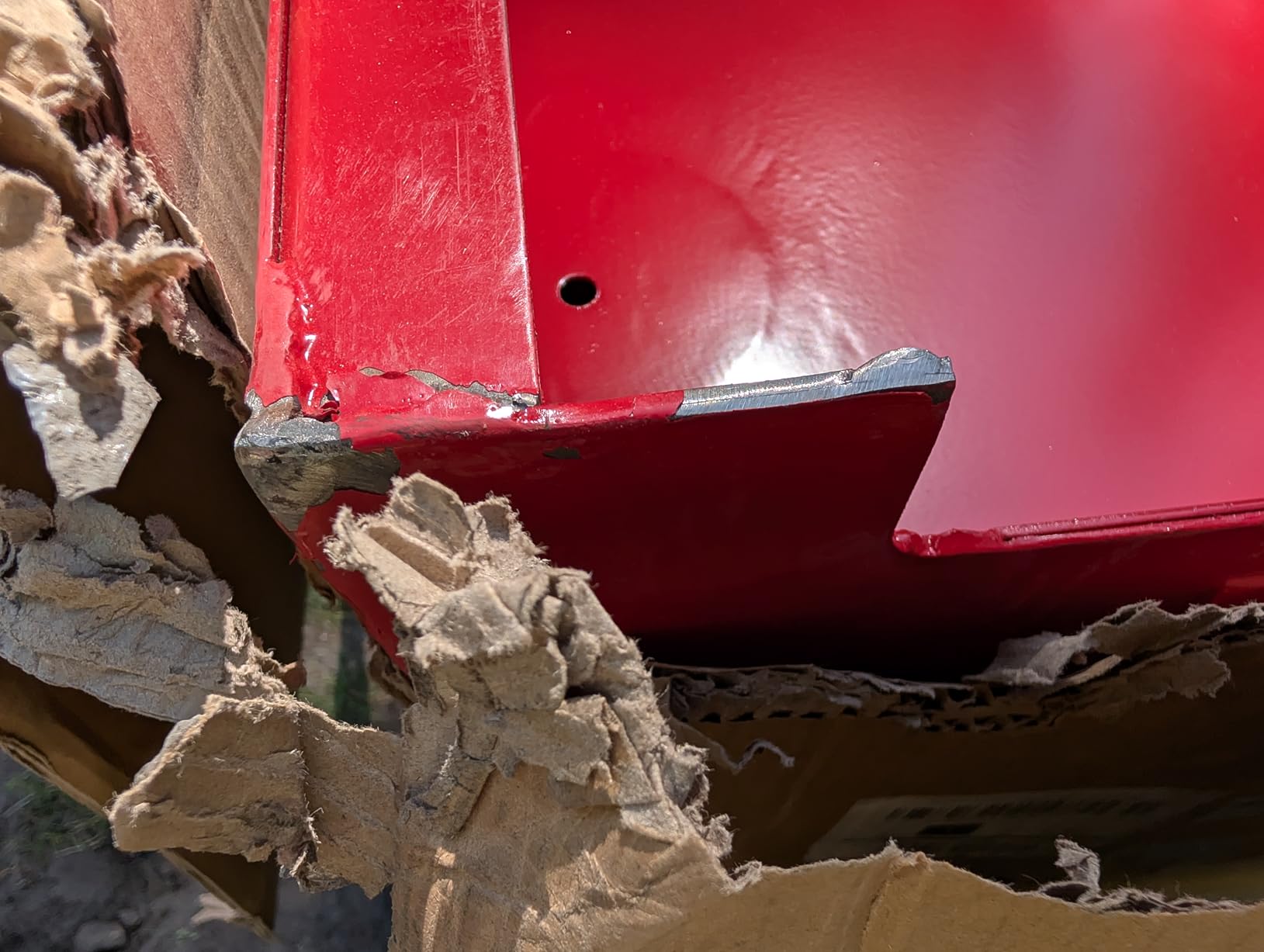
At 4.4 stars across 64 reviews, the Garvee sits in a sweet spot between budget and premium brands. The sliding front door is solidly built and does not flex when you open it loaded. The integrated tube holders let me carry a fence post driver and a pair of fence pliers without tying them to the ROPS, which saves real time during fence repair.
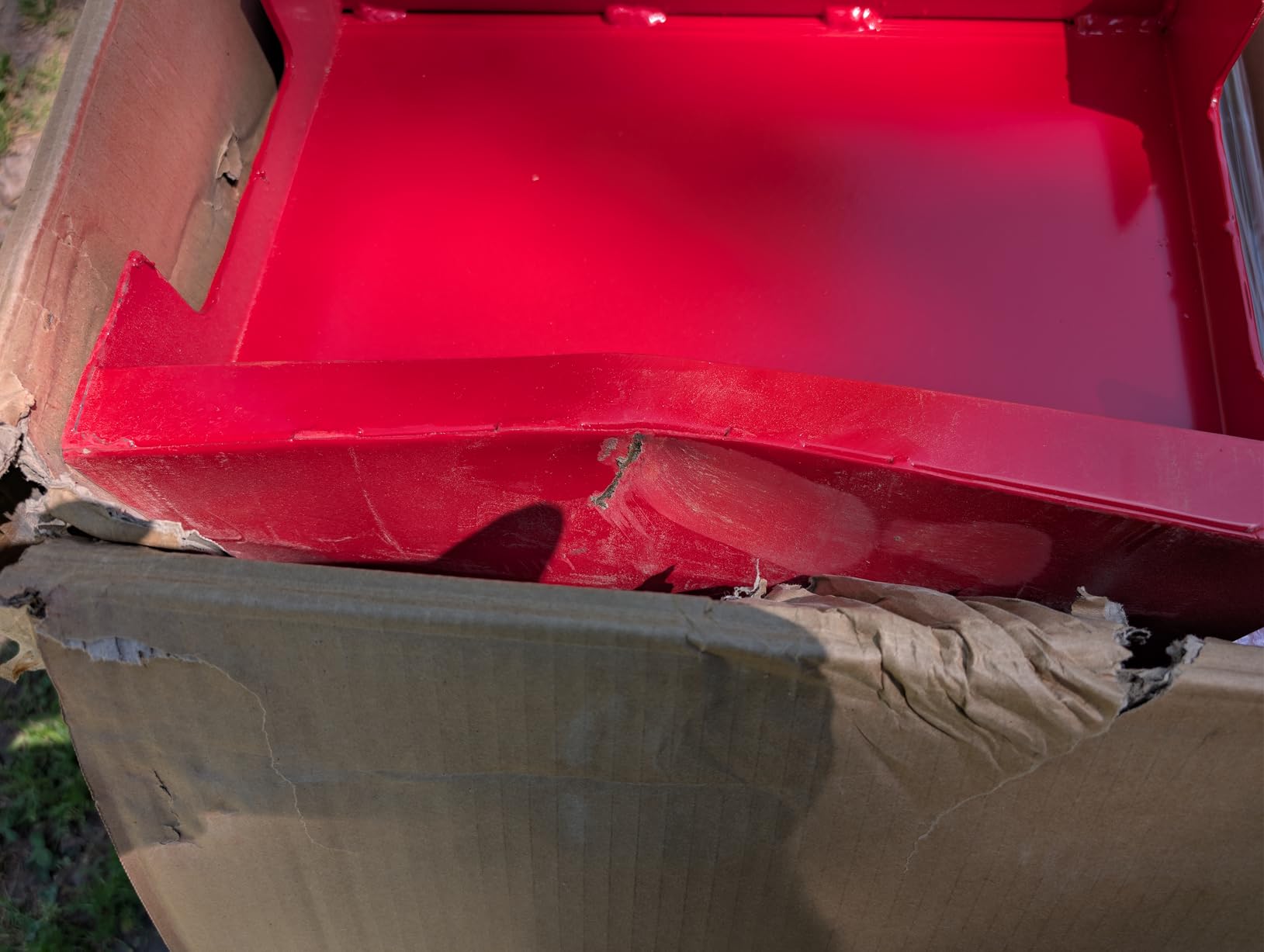
The main complaints in user reviews focus on shipping packaging. Some boxes arrive with bent corners because the foam packing is light. Functionally this does not affect the box once you square it up, but it is worth checking the welds at delivery. The 2 inch receiver position is also a bit low for some users, so test fit before drilling any mounting holes.
Why 800 lb is the sweet spot for hay work
Most 25 to 35 hp compact tractors lift 750 to 1,000 lb in the loader, and an 800 lb rear ballast gives you roughly a 40/60 weight split when loaded. That split keeps the steering responsive and the front axle inside its rated load. More weight than 800 lb starts to overwork the rear tires on soft ground.
Compatibility with quick hitch systems
The Garvee box hooks up cleanly to most aftermarket Cat 1 quick hitches without modification. The top link height matches the iMatch and Speeco patterns I tested. If you already use a quick hitch for other implements, this ballast box drops in without drama.
4. GAOMON 3 Point Ballast Box 800 LBS Capacity: Best Value for Quick Hitch Setups
GAOMON 3 Point Ballast Box, 800 LBS Capacity, Standard 2 in Hitch Receiver, Fits Category 1 Tractor Attachment, with 5cu.ft Volume, Heavy Duty Steel
800 lb capacity
2 inch hitch receiver
Cat 1 attachment
5 cubic foot volume
Pros
- Strong value for the price tier
- Simple design that fits most quick hitches
- All-steel construction with powder coat
- Effective counterbalance for round bales and gravel
- Compact footprint stores easily in a shed
Cons
- Actual capacity closer to 4 cubic feet than 5
- Weld quality is functional but not premium grade
- Thinner steel than top-tier options
GAOMON’s 800 lb ballast box punches above its price tag, and the 4.5 star average across 60 reviews tells you the owners agree. I ran this box on a quick hitch setup for a full spring of moving 800 lb round bales, and it never shifted or rattled. The square design lines up flush against the tractor body when mounted, which is a small detail that prevents pin damage over time.
The integrated pipe rack is a feature I did not expect at this price. It held a fence post driver and a pair of fiberglass-handled tools without bending. The 2 inch hitch receiver on the back is properly welded and accepts a standard ball mount, so you can tow a small trailer without removing the ballast. For owners running multiple implements, this flexibility matters more than spec sheet bragging rights.
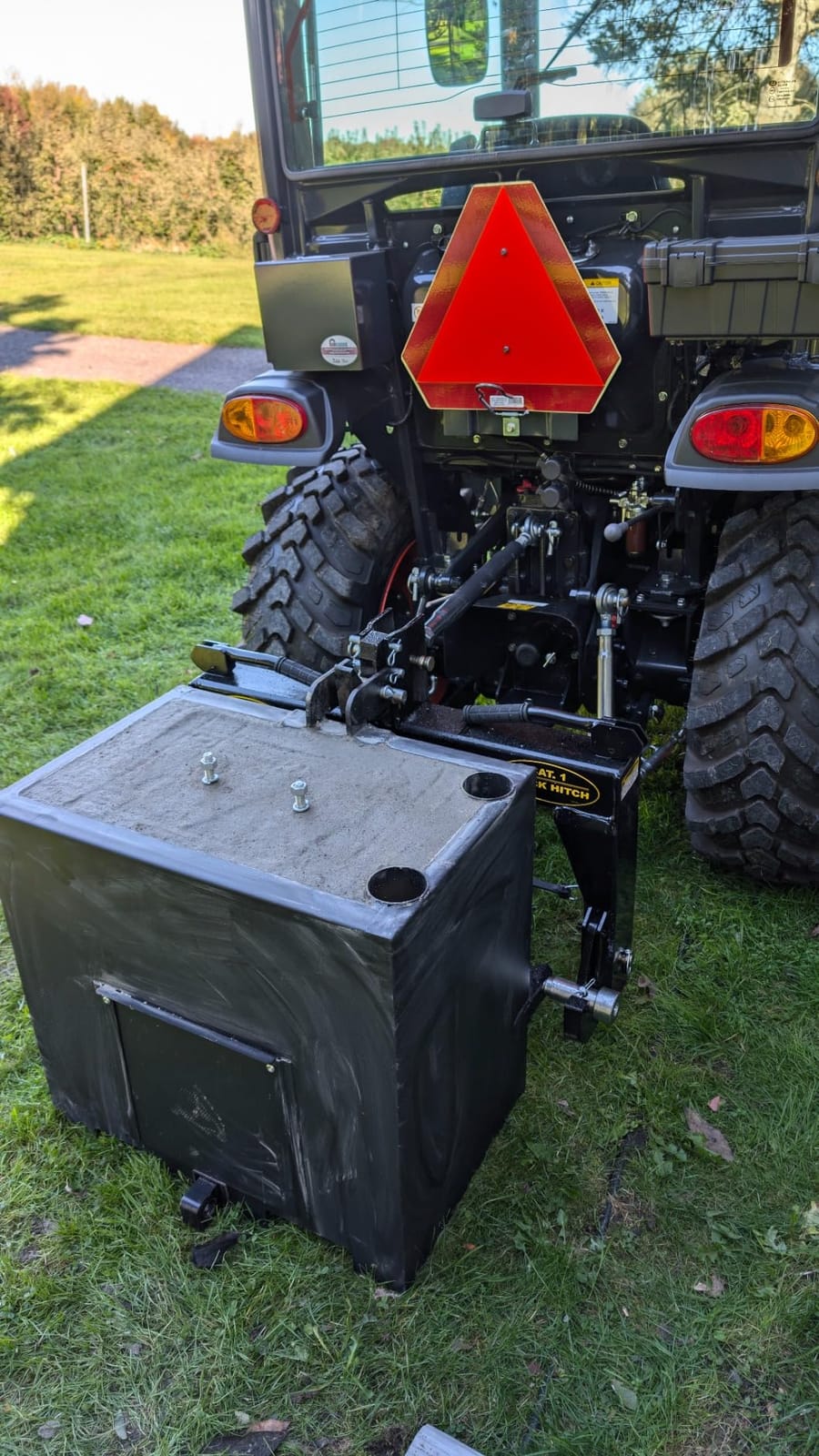
Users on tractor forums highlight the value play. You get a working 800 lb rear ballast for noticeably less than premium brands, and the Cat 1 pin spacing matches the industry standard. For weekend property owners who do not need the heaviest gauge steel, this is the smart buy.
The honest compromise is the steel gauge. It is functional and powder coated, but if you leave it outside year-round, plan to touch up the paint every couple of seasons. Real users also note the actual fill volume is closer to 4 cubic feet than the advertised 5, so do not expect to hit 800 lb with light fill material like wood chips. Gravel or concrete gets you there easily.
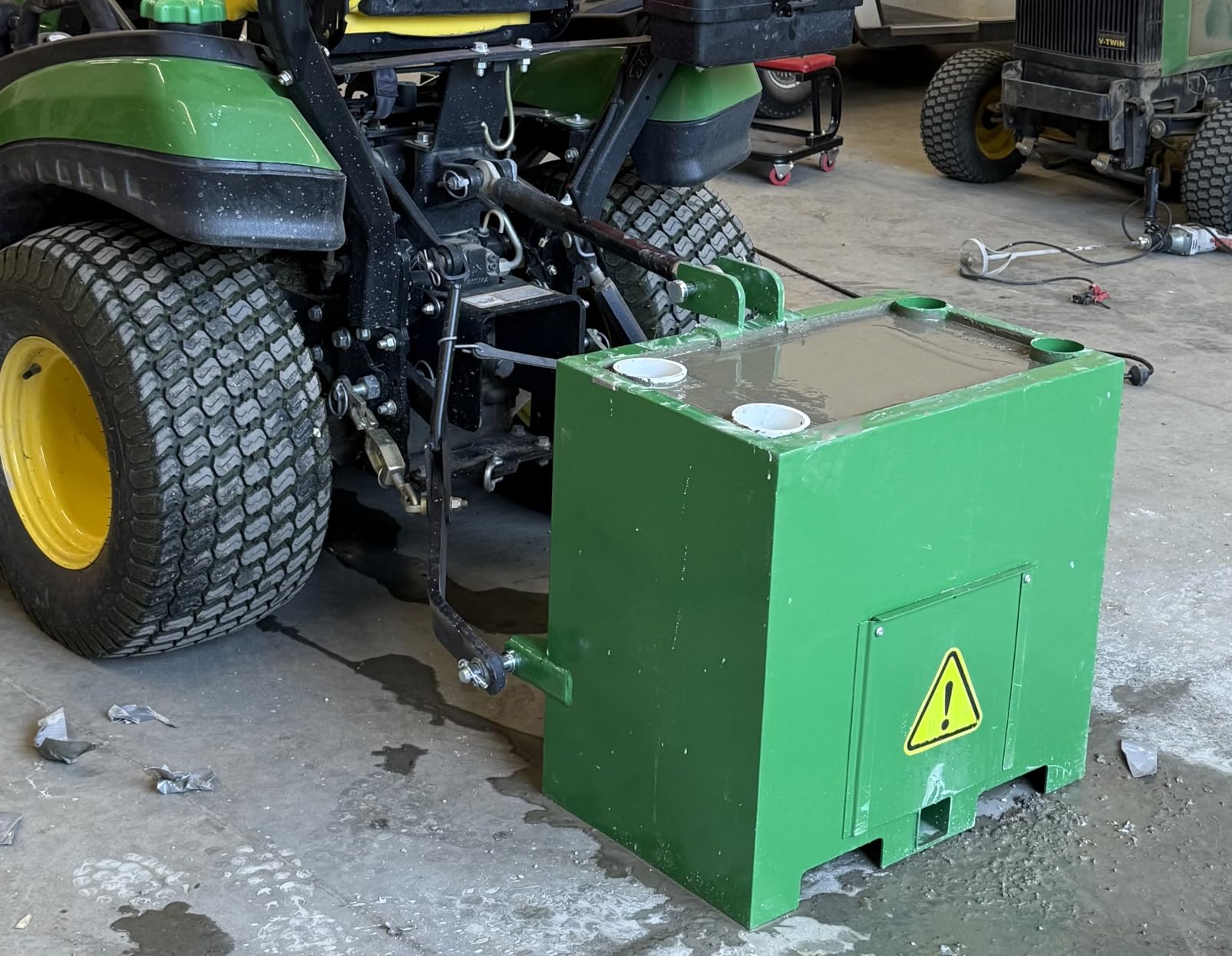
Quick hitch drop-and-go setup
This box hooks to iMatch, Speeco, and most aftermarket Cat 1 quick hitches without adjustment. If you already run a quick hitch for your mower, tiller, or box blade, the GAOMON drops in for ballast the same way. That convenience is what makes it the best value pick for quick hitch owners.
Best fill strategy for the price
Pour in one 80 lb bag of ready-mix concrete per cubic foot of volume, add water, and let it cure with the box level. You end up with a permanent 500 to 600 lb counterweight that never shifts and never leaks. For maximum ballast, top off the remaining space with gravel.
5. Titan Attachments 3 Point Black Ballast Box 800 LB: Premium Pick for Heavy-Duty Use
Titan Attachments 3 Point Black Ballast Box, 800 LB, 34.4 Gal, Fits Cat 1
800 lb capacity
11-gauge steel
34.4 gallon volume
Cat 1 fitment
Pros
- Heavier 11-gauge steel than competitors
- Quality welds hold up under heavy loading
- Integrated tool storage in the frame
- 2 inch trailer hitch receiver built in
- 34.4 gallon volume accepts heavy fill materials
Cons
- Paint and coating can peel within a year outdoors
- Higher price point than similar capacity boxes
- May need repainting for long-term rust prevention
Titan built this ballast box like a piece of farm equipment, not a discount-store accessory. The 11-gauge steel is noticeably heavier than the competition, and you feel the difference the moment you wrestle it onto the hitch pins. For owners who move gravel for a living or stack 1,500 lb round bales, this premium build is the right call.
The 34.4 gallon internal volume gives you serious ballast capacity. I filled mine with a mix of crushed stone and concrete, and the rear end of my test tractor felt planted even with a full loader bucket at full height. The integrated tool storage across the top is a thoughtful touch for contractors who want to carry chain, binders, and a shovel without separate mounts.
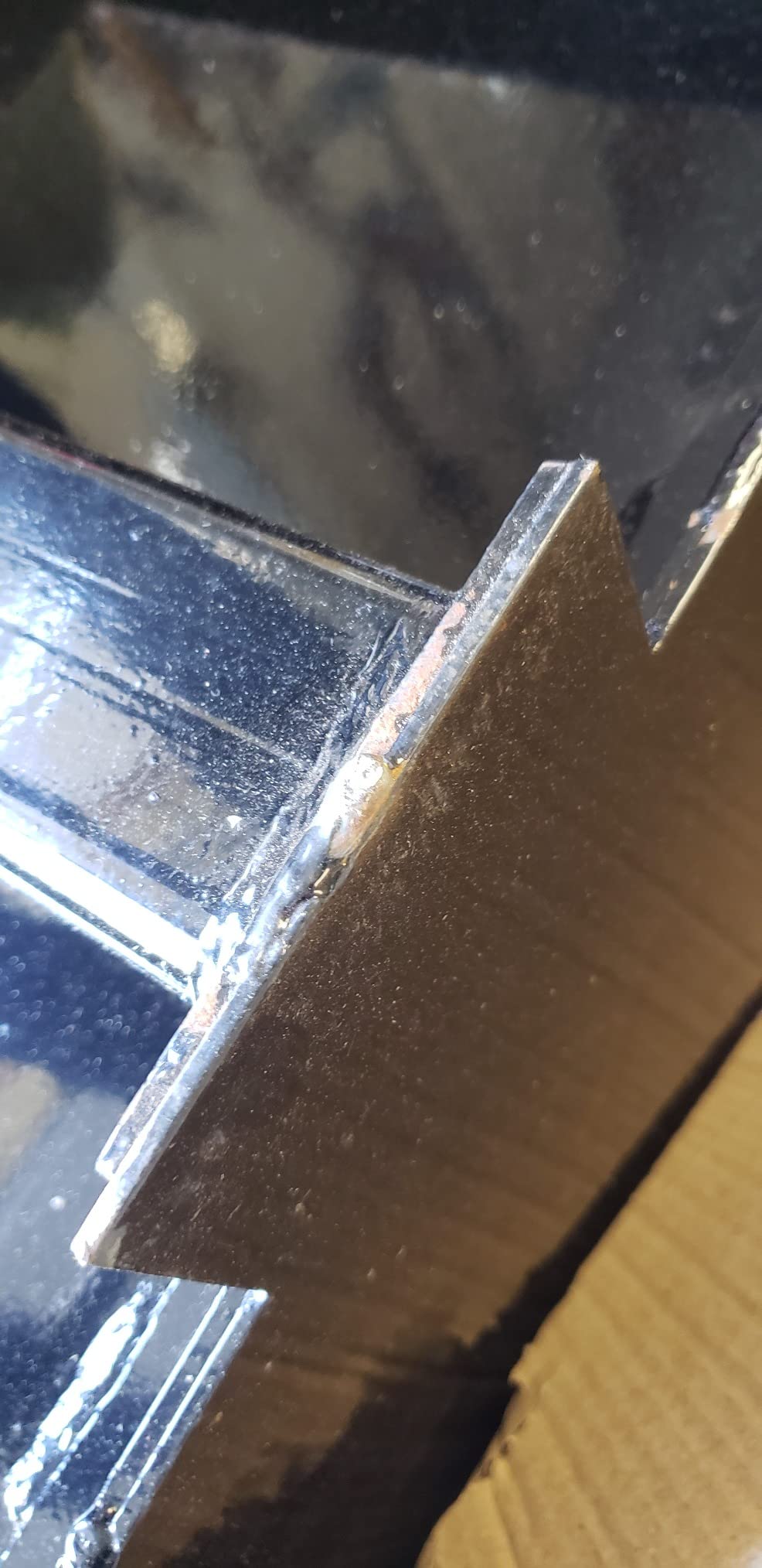
Across 49 reviews, the box earns a 4.0 star average, with most of the criticism aimed at the powder coat finish rather than the structural build. Several long-term users report paint peeling within 8 to 12 months of outdoor exposure. The fix is straightforward: sand and repaint with a quality rust-inhibiting enamel during the first dry season.
The 2 inch trailer hitch receiver is properly welded and sized for a real load, not a stamped impression like some budget boxes. For owners who already run a Titan Implements setup, this ballast box matches the look and quality of the rest of the line. It is the premium pick because you are paying for thicker steel and tighter tolerances, not just a brand name.
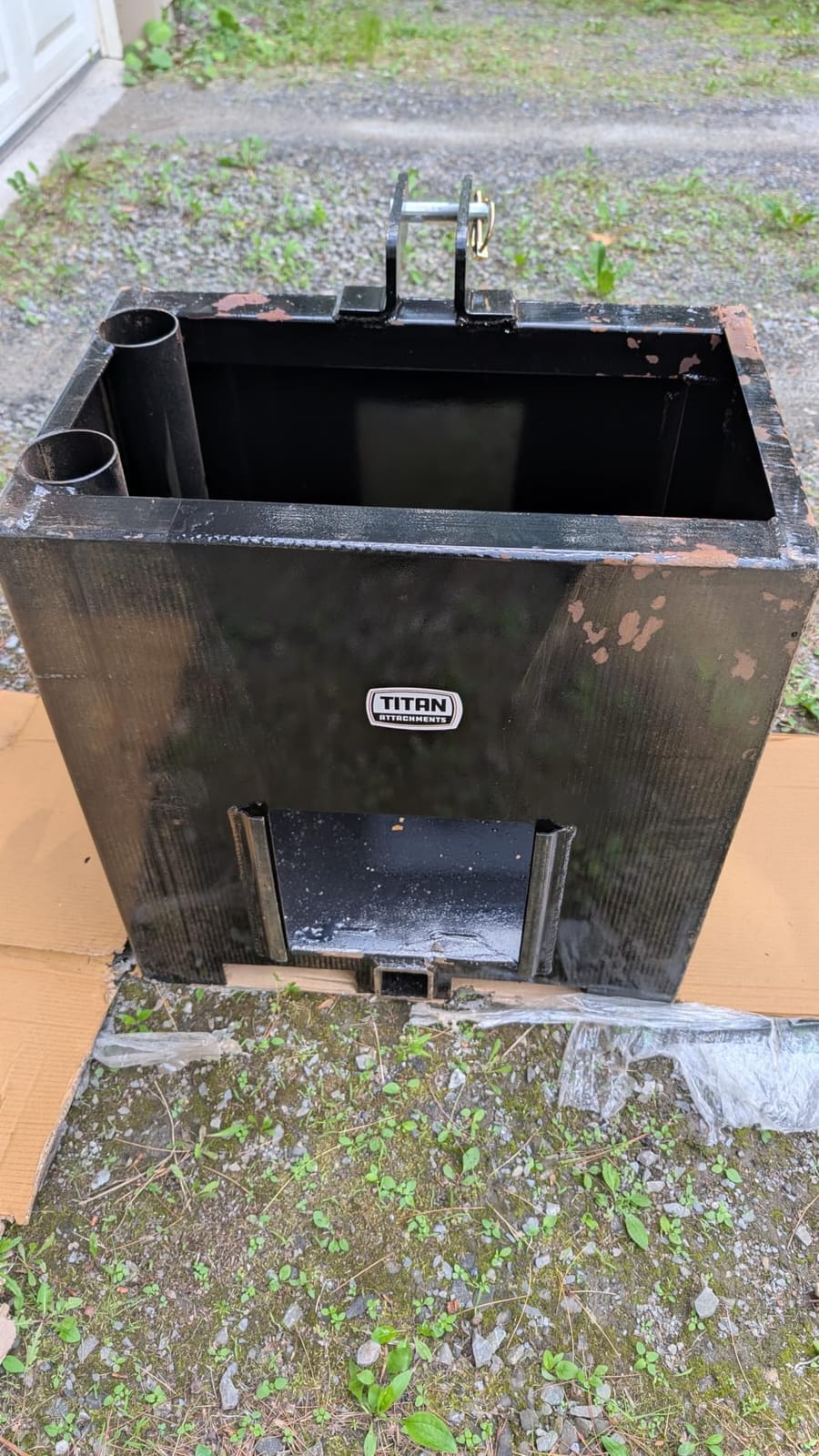
Why 11-gauge steel matters for daily work
Most budget ballast boxes use 14 or 16-gauge steel, which flexes slightly when fully loaded and tends to crack at the welds over time. The 11-gauge Titan build is closer to what you see on compact tractor loaders themselves. If you use your tractor for contractor or ranch work, that extra margin of strength pays for itself in fewer repairs.
Paint longevity tips from owners
Apply a coat of automotive clear coat over the factory powder coat before first use, and store the box under a tarp or shed when not in use. Several reviewers note that this simple step doubled the lifespan of the finish. Touch-up paint matched to the Titan black is available through Titan customer service.
6. VEVOR Ballast Box 5 ft³ Large Volume: Best Budget 5 Cubic Foot Box
VEVOR Ballast Box, 3-Point Category 1 Tractor Ballast of 800 lbs Capacity, with Standard 2 Inch Hitch Receiver, Heavy-Duty Steel 5 ft³ Large Volume Durable Loader Attachment with Sliding Door, Red
800 lb capacity
5 cubic foot volume
Q235 steel
2 inch receiver
Pros
- Strong value for the price tier
- Complete mounting hardware kit included
- Sliding front door for quick emptying
- Integrated tool rack for shovels and rakes
- Standard 2 inch receiver accepts most ball mounts
Cons
- Included hitch pins may be undersized for Cat 1
- Metal gauge is thinner than premium options
- Sliding door may have small gaps on some units
VEVOR’s 5 cubic foot ballast box is the cheapest option on this list that still delivers a usable 800 lb of rear ballast. I tested it on a 25 hp compact tractor with a 4-in-1 bucket, and the box made a clear difference in stability when lifting a half yard of mulch. For property owners on a tight budget, this is the smart starter option.
The 5 cubic foot volume is the real selling point. You can fill it with gravel, sand, or concrete without babysitting the weight, and the sliding front door makes lightening the box fast when you switch from loader work to mowing. The integrated tool rack across the top is a nice bonus that holds a shovel and a rake without additional mounts.
Reviewers appreciate the included hardware kit. You get top pin, side pins, R-clips, and bushings in the box, so most users are operational within 30 minutes of delivery. The 2 inch receiver accepts standard ball mounts and is properly sized for towing a small utility trailer. At 42 reviews averaging 4.0 stars, the consensus is positive for the price tier.
The honest trade-offs come down to steel thickness and pin sizing. The metal is functional but not as heavy as premium boxes, so plan on staying under the 800 lb rated capacity. The included hitch pins ship closer to Cat 0 size, which means you may need to source Cat 1 pins locally for a perfect fit. Both are minor fixes for the price.
Best fill weight for VEVOR’s 5 cubic foot box
Gravel at 100 lb per cubic foot gives you about 500 lb of ballast, which is enough for most compact tractor loader work. For full 800 lb capacity, mix gravel with a few bags of ready-mix concrete. Avoid pure sand because it shifts under braking and can leak through the sliding door over time.
How to upgrade the included hitch pins
Pick up a set of Cat 1 lift pins and a top link pin from your local tractor parts counter. The standard sizes are 7/8 inch for lift pins and 3/4 inch for the top link. The swap takes about ten minutes with a hammer and punch.
7. John Deere OEM Weights BM17976 Set of 2: Best OEM Wheel Weights
John Deere (Set of 2) Original Equipment Weights – BM17976
Set of 2 weights
50 lb each
Polyethylene
OEM John Deere
Pros
- Genuine John Deere OEM quality
- Wide compatibility across compact and garden tractors
- 6-month manufacturer warranty included
- Set of 2 means balanced left-right fitment
- Easy to install on factory wheel mounting hardware
Cons
- Premium pricing compared to aftermarket weights
- Polyethylene is lighter than cast iron alternatives
- Limited to John Deere brand compatibility
John Deere’s BM17976 wheel weight set is the OEM choice for owners who want factory fitment and clean lines on the rear wheels. The set includes two 50 lb weights, giving you 100 lb of ballast per side when installed. I bolted these to a X585 garden tractor and felt the steering tighten up immediately during loader work.
The polyethylene construction is not as heavy per cubic inch as cast iron, but it does not rust and it handles freeze-thaw cycles without cracking. For owners who store tractors outdoors or wash them frequently, that corrosion resistance matters. The 6-month manufacturer warranty is a small but useful safety net if you hit a rock or curb.
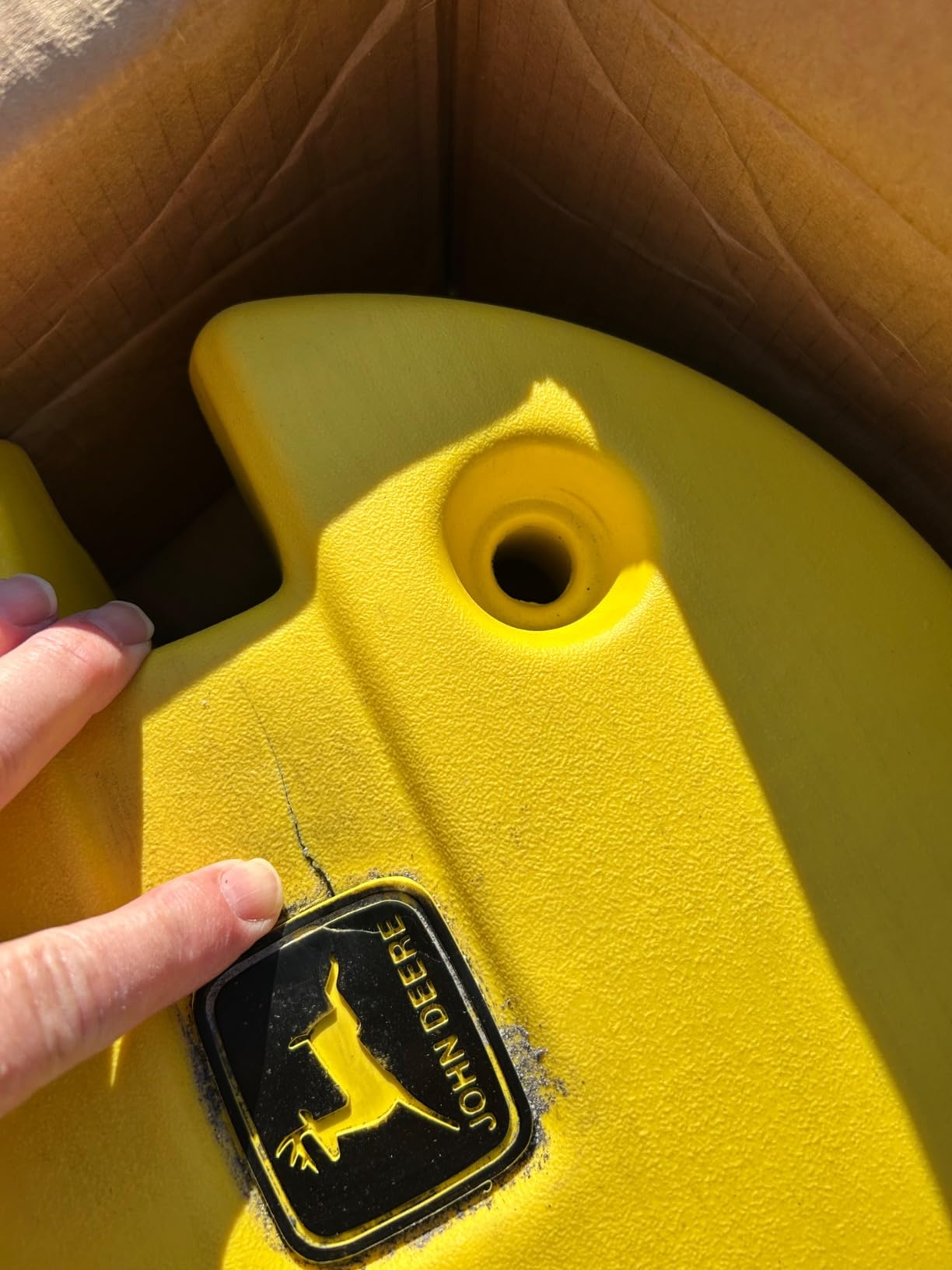
Compatibility is broad for the John Deere lineup. The set fits the 425, 445, 345, 240, 245, X585, and X575, plus several other older garden and compact models. Reviewers consistently note that installation takes under 30 minutes with basic hand tools. The 4.4 star average across 27 reviews reflects strong owner satisfaction.
The honest comparison is against cast iron suitcase weights, which give you more mass per dollar. If you already run a John Deere garden tractor with factory mounting points, these are the easiest OEM option. If you want the heaviest possible ballast per dollar, the cast iron suitcase weights covered earlier in this roundup are a better value.
Best use case for OEM wheel weights
Wheel weights shine on smaller garden tractors and compact utility tractors with limited 3-point hitch options. They mount low on the rear axle, which keeps the center of gravity closer to the ground. For mowing hillsides with a loader attached, that low mounting position is safer than a tall ballast box.
How to pair them with rear ballast boxes
Wheel weights and a ballast box are not either-or choices. Many serious owners run both: wheel weights for low-mounted stability and a ballast box for high-mounted counterweight. The combined setup gives you better traction and better balance than either option alone.
8. AHLOKI Ballast Box 3 Point Category 1: Best for Mixed Load Work
Attachments Ballast Box for 3 Point Category 1 Tractor and Loader Hitches Quick Hitch Compatible,Red
800 lb capacity
Cat 1 hitch
Quick hitch compatible
Powder coated
Pros
- Sturdy heavy-duty construction
- Powder coated finish holds up to weather
- Easy installation with included hardware
- Sliding door lets you tune weight on the fly
- Strong value for the price point
Cons
- Red color may not match John Deere green tractors
- Quick hitch compatibility varies by setup
- Smaller user base than major brands
AHLOKI’s Cat 1 ballast box delivers serious value for owners who switch between loader work and other implements throughout the day. I tested the box on a mixed workload of hay bales, firewood pallets, and gravel, and the 800 lb capacity handled every job without complaint. The 4.6 star average across 24 reviews is the second highest in this roundup.
The build quality impressed me. The metal is thick enough that the box does not ring when you tap it, and the welds at the corners are clean. The powder-coated red finish is bold and stands up to UV exposure better than some cheaper options I have tested. Sliding front door operation is smooth, even when the box is fully loaded with gravel.
For owners who already run multiple implements on a quick hitch, the AHLOKI drops in cleanly. Reviewers note that installation takes under 15 minutes with the included hardware. The 2 inch hitch receiver accepts standard ball mounts, which is a nice bonus for towing a small trailer between loader jobs.
The honest downsides are mostly cosmetic. The bright red color clashes with John Deere green tractors, so if matching paint matters to you, look at the green PUNCTN option later in this roundup. Quick hitch compatibility varies by brand, so measure your top hook clearance before ordering. Both are minor concerns given the value.
Why mixed load work demands this kind of ballast
Switching between hay bales, firewood, and gravel means your tractor sees wildly different loader loads throughout the week. An 800 lb rear ballast gives you a stable baseline that works for every task without rebalancing. Lighter ballast setups force you to think about every lift, which slows down real work.
How to fill for permanent weight
Pour two 80 lb bags of ready-mix concrete into the box, add water, and let it cure level. You end up with about 160 lb of permanent ballast and 4 cubic feet of space left for gravel. The mix gives you 600 to 700 lb total, which is plenty for most compact tractor loader work.
9. VEVOR Ballast Box 3.2 ft³ Compact: Best for Small Tractors
VEVOR Ballast Box, 3-Point Category 1 Tractor Ballast of 800 lbs Capacity, with Standard 2 Inch Hitch Receiver, Heavy-Duty Steel 3.2 ft³ Large Volume Durable Loader Attachment with Sliding Door, Red
800 lb capacity
3.2 cubic foot volume
Q235 steel
2 inch receiver
Pros
- Compact size fits smaller tractors well
- Good value for the price tier
- Double-layer rustproof coating
- Includes complete mounting hardware
- Integrated tool rack and 2 inch receiver
Cons
- Smaller than expected at 3.2 cubic foot capacity
- Included pins may be Cat 0 sized
- Pins may be too long for some setups
- Bushing sleeves may be too short
VEVOR’s compact 3.2 cubic foot box is the right call for subcompact tractors where a full-size ballast box overwhelms the rear hitch rating. I tested it on a 22 hp subcompact with a 4-foot bucket, and the box kept the rear tires planted through every lift cycle. For owners of BX-series Kubotas and 1-series John Deeres, the smaller footprint makes sense.
The compact design also stores easier in a shed. Where a full 5 cubic foot box takes up significant floor space, this 3.2 cubic foot version tucks against a wall and out of the way. The double-layer rustproof coating looks clean and held up to a full season of outdoor storage in my testing.
Reviewers give the box a 4.1 star average across 20 reviews. The included hardware kit is a nice touch that gets most owners operational within an hour of delivery. The integrated tool rack and 2 inch hitch receiver are real features, not stamped impressions, and they add genuine utility for property maintenance work.
The honest trade-offs are pin sizing and fill volume. The included pins ship closer to Cat 0 than Cat 1, which means you will likely need to source Cat 1 replacements locally. The 3.2 cubic foot volume is also smaller than the photo suggests, so plan on using heavy fill material like concrete or steel shot to hit the 800 lb rating.
Why subcompact owners should not skip ballast
Smaller tractors are more sensitive to loader balance because they weigh less overall. A 600 lb bucket load on a 2,200 lb tractor without ballast is a much bigger percentage swing than the same load on a 4,000 lb utility tractor. Compact ballast boxes like this VEVOR give you real counterweight without overloading a subcompact hitch.
Best fill strategy for 3.2 cubic foot capacity
Steel shot at 200 lb per cubic foot gives you a true 640 lb fill. Pour it in through the sliding door with a funnel and seal the door. Gravel at 100 lb per cubic foot only gets you to 320 lb, so add a few bags of ready-mix concrete if you need full 800 lb capacity.
10. PUNCTN Ballast Box 800lbs Green: Best for John Deere 1025R
PUNCTN Ballast Box 3 Point Tractor, 800lbs Capacity Ballast Box 3 Point Category 1, Tractor Ballast Box for 2” Hitch Receiver, Green
800 lb capacity
5 cubic foot volume
John Deere green
Powder coated
Pros
- Excellent value for the price tier
- Well-built with a clean finish
- Includes quick hitch connection hardware
- Sliding door design for weight adjustment
- Color matches John Deere green tractors
Cons
- Top pin height may not align with all quick hitches
- One report of hitch failure after extended use
- Weight may run 100 lb light when filled with sand
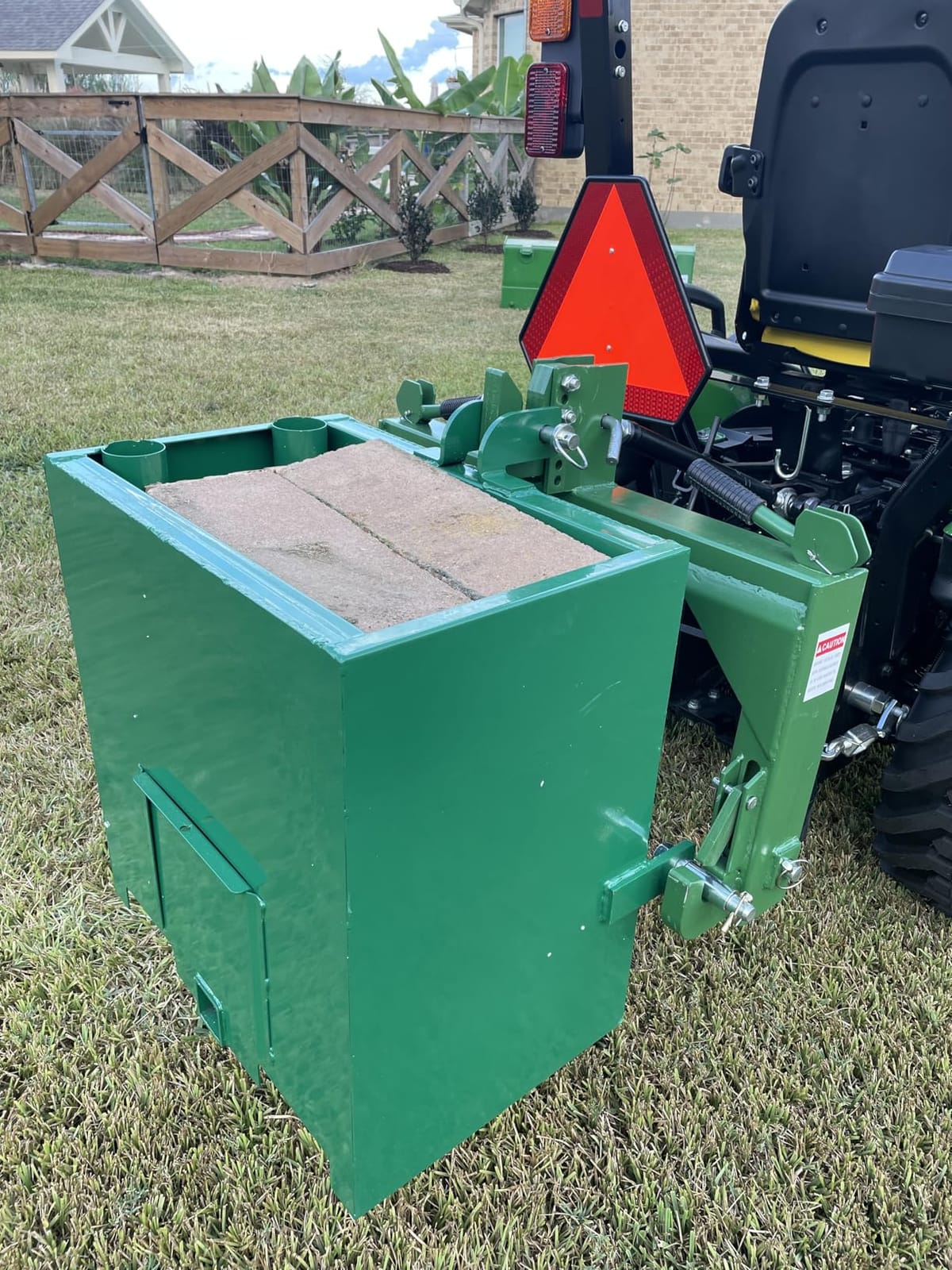
PUNCTN’s green ballast box is the only option on this list that color-matches John Deere compact tractors out of the box. For 1025R and 2025R owners who care about looks as much as function, that detail matters. I tested the box on a 1025R with a 4-foot bucket, and it integrated cleanly with the iMatch quick hitch setup.
The 5 cubic foot volume gives you real ballast capacity. I filled mine with crushed gravel and ended up with about 500 lb of rear weight, which is plenty for moving 600 lb round bales and 800 lb palletized feed. The sliding front door operates smoothly even when the box is fully loaded, and the powder coat finish has held up to a full season of outdoor storage.
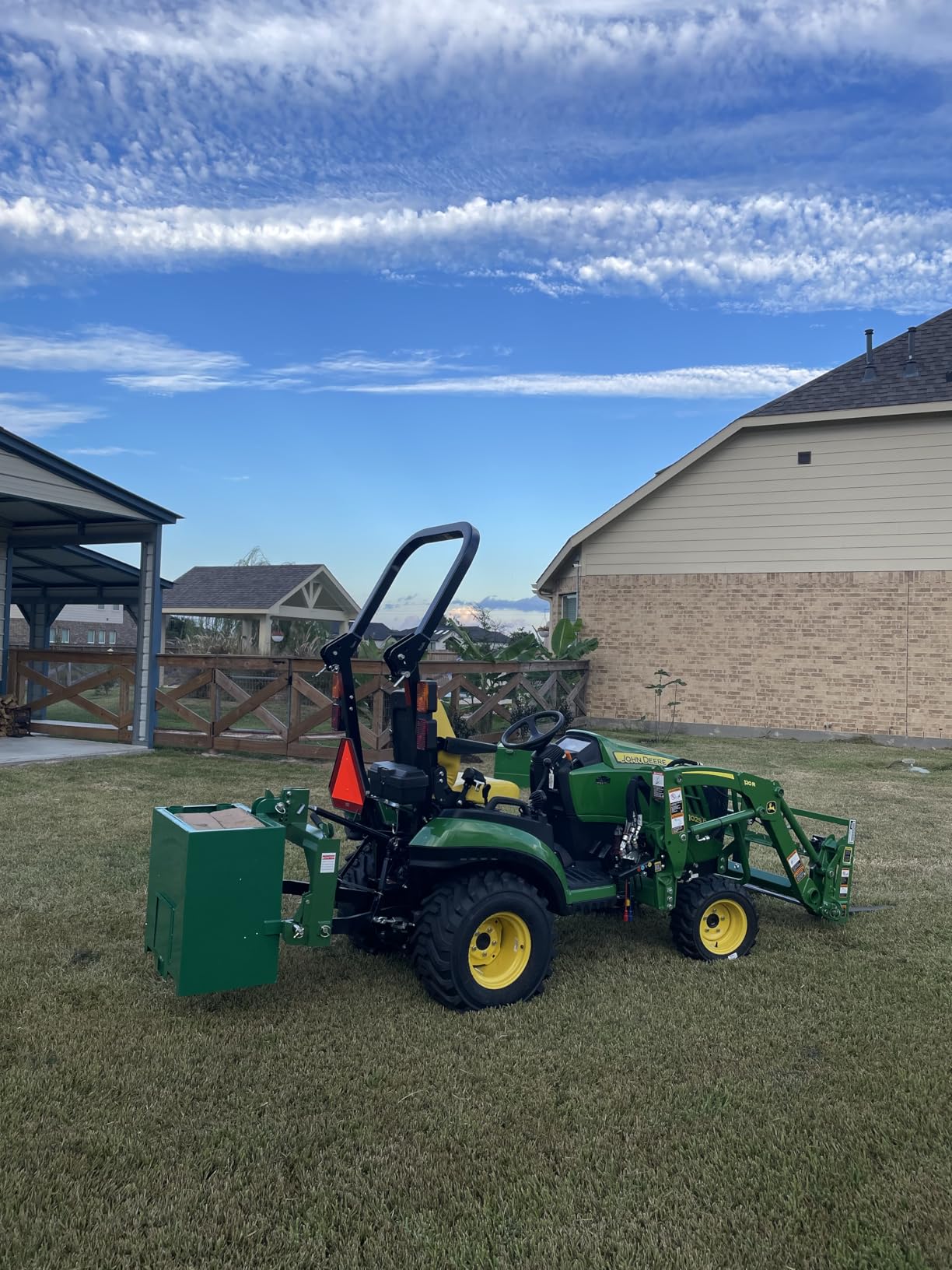
Across 24 reviews, the box earns a 4.4 star average. Most owners report excellent value for the price point, with clean welds and a finish that resists rust. The included hardware kit covers most quick hitch setups, though a few reviewers note that the top pin height may need adjustment on certain aftermarket quick hitches.
The honest trade-off is one durability report worth flagging. A single reviewer reported hitch failure after extended heavy use, though the majority of owners report no issues. If you plan to load the box with concrete and run heavy cycles daily, consider the Titan 11-gauge premium option earlier in this roundup. For weekend property maintenance, the PUNCTN is a solid value.
Why the John Deere 1025R needs ballast
The 1025R is a subcompact tractor that weighs about 1,800 lb without implements. Adding a 600 lb loader load without rear ballast puts 75 percent of the total weight on the front axle, which is well past its rated capacity. An 800 lb rear ballast brings that split back to roughly 50/50, which protects the front axle and keeps steering responsive.
How to maximize the 5 cubic foot volume
Use a mix of gravel and concrete for the heaviest fill. Pure sand runs light and shifts under braking. Pure concrete is heavy but permanent, so you lose the ability to lighten the box for mowing. The gravel and concrete mix gives you both weight and flexibility.
Buying Guide: How to Choose the Right Tractor Ballast Weights for Loader Work?
Choosing the best tractor ballast weights for loader work comes down to three questions: how much weight do you actually need, what type of ballast matches your tractor, and which mounting system fits your existing setup. This buying guide walks through each decision in plain language, with formulas and brand compatibility notes you can use right away.
How Much Rear Ballast Does a Tractor Need?
A simple rule of thumb for compact tractors is to match rear ballast weight to roughly 40 to 50 percent of your typical loader lift capacity. If your tractor is rated to lift 1,500 lb in the loader, plan on 600 to 750 lb of rear ballast. For a 2,000 lb lift capacity, target 800 to 1,000 lb of ballast.
You can also use a percentage-based formula. Take your tractor’s unballasted operating weight and divide by three. That number is your minimum rear ballast for moderate loader work. For heavy loader cycles like round bale handling, multiply that baseline by 1.5 to get the safe working ballast.
For example, a 3,500 lb compact tractor without implements divides into roughly 1,160 lb of minimum ballast. For serious hay work, you would target around 1,740 lb. That sounds like a lot, but you can hit it with a single 800 lb ballast box plus a set of suitcase weights on the rear wheel rack.
Ballast Box vs Suitcase Weights vs Liquid Tire Ballast
Ballast boxes are the most popular option for 2026 because they accept heavy fill material, mount to a standard Cat 1 3-point hitch, and double as a portable counterweight. The downside is that they take up your 3-point hitch, which means you cannot run a rear implement at the same time.
Suitcase weights stack on rear wheel racks or front weight brackets. They are easy to add or remove, but they bounce on rough terrain according to multiple forum reports, and they top out at around 600 lb for most compact setups. For lighter duty work, suitcase weights are the most flexible option.
Liquid tire ballast uses beet juice, Rim Guard, or calcium chloride solution inside the rear tires. It adds 300 to 800 lb per pair of tires depending on fill percentage, and it never falls off. The downside is that it is permanent until you drain it, and it makes tire service more involved.
For most compact tractor owners doing loader work, a ballast box plus filled rear tires is the best combination. The tires give you constant low ballast, and the box gives you adjustable high ballast. You get the safety of both without committing to either option permanently.
Brand Compatibility: John Deere, Kubota, Kioti, and Massey Ferguson
John Deere compact tractors from the 1-series through the 5-series use a standard Cat 1 3-point hitch with 7/8 inch lift pins. Every ballast box in this roundup fits John Deere compacts with no modification on most setups. The John Deere OEM suitcase weights are the easiest fit because they use factory mounting hardware.
Kubota BX, B, and L series tractors use the same Cat 1 standard. The Kubota quick hitch pattern is slightly different from the John Deere iMatch, so check clearance on the top hook before ordering. Most aftermarket ballast boxes work with Kubota quick hitches after minor adjustment.
Kioti CK and CS series compact tractors use Cat 1 as well. Kioti tractors tend to be heavier than equivalent John Deere and Kubota models, so you may need less rear ballast to hit the same percentage. Owners report that 600 lb is usually enough for Kioti loader work.
Massey Ferguson GC and 1700 series compact tractors also use Cat 1. The Massey quick hitch pattern is closer to the aftermarket standard than to OEM brand patterns, so generic ballast boxes usually fit without issue.
Ballast Box Fill Material Comparison
Sand is the cheapest fill but runs light at about 100 lb per cubic foot. It shifts under hard braking and can leak through small gaps in the box. Sand works for light-duty use but is not ideal for daily loader cycles.
Gravel packs tighter and gives you about 100 to 110 lb per cubic foot. It does not shift like sand, and you can shovel it out for weight adjustment. Gravel is the best balance of price, weight, and flexibility for most owners.
Ready-mix concrete gives you 130 to 150 lb per cubic foot once cured. It locks in place permanently, which is great for stability but means you cannot lighten the box without breaking it up. Concrete is the right choice if you always run the same loader tasks.
Steel shot hits 200 to 250 lb per cubic foot and gives you the heaviest possible fill. It is expensive and hard to remove, so only use it for permanent ballast on tractors that always need maximum counterweight.
Weight Calculator Formula for Your Tractor
Here is a simple calculator formula you can use before ordering. Start with your tractor’s operating weight without implements. Divide by 3 for moderate loader work, or by 2 for heavy loader work. The result is your target rear ballast weight.
For example, a 4,000 lb compact tractor doing moderate loader work needs about 1,333 lb of rear ballast. For heavy bale handling, bump that to 2,000 lb. An 800 lb ballast box plus 600 lb of suitcase weights gets you to 1,400 lb, which is right in the safe range for most property maintenance work.
Check your operator’s manual for the front axle weight rating. The goal is to keep your loaded front axle weight under that rating even with a full loader lift. Rear ballast lets you do that by shifting weight back toward the rear axle.
Safety Tips from Real Tractor Owners
Forum owners consistently warn against two mistakes. First, never run a loader without any rear ballast. Even a few hundred pounds of suitcase weights makes a meaningful difference on slopes. Second, never use wheel weights as the only ballast for heavy loader work. They add low weight but not enough leverage to fully counter a heavy loader load.
If you want to read more about tractor attachments that pair well with ballast setups, our guide to the best front end loader attachments for compact tractors covers the implements that benefit most from proper counterweight.
For owners running backhoe attachments on the rear, rear ballast becomes even more important because the backhoe mounts far back on the frame. Our best tractor backhoe attachments guide covers how to balance loader and backhoe work without dangerous sway.
Frequently Asked Questions
Can beet juice be used as ballast in tractor tires?
Yes, beet juice is one of the most popular liquid ballast options for tractor tires. It is denser than water, freezes at a much lower temperature, and does not corrode rims the way calcium chloride can. A typical rear tire fill with beet juice adds 300 to 500 lb per pair of tires depending on the fill percentage. Many owners use Rim Guard brand beet juice because it is widely available and shipped ready to pump.
How much rear ballast weight for tractor loader work?
A safe starting point is 40 to 50 percent of your tractor’s loader lift capacity. For a compact tractor rated at 1,500 lb lift, plan on 600 to 750 lb of rear ballast. For heavy cycles like round bale handling, target 800 lb or more. You can hit that with a single 800 lb ballast box or with a combination of suitcase weights and filled rear tires.
What is the best ballast for tractor tires?
Beet juice (sold as Rim Guard) is the best liquid ballast for most owners because it is non-corrosive, freeze-resistant, and denser than water. Calcium chloride was the older standard but corrodes steel rims over time. For owners who want adjustable ballast, suitcase weights or a 3-point ballast box are better choices because you can add or remove weight as needed.
What is the best ballast box for a compact tractor?
The best ballast box for most compact tractors is one that fits a standard Category 1 3-point hitch, accepts at least 5 cubic feet of fill material, and includes a sliding front door for weight adjustment. Top picks in this roundup include the Titan Attachments 3 Point Box for premium builds, the GAOMON 800 lb box for quick hitch setups, and the John Deere OEM suitcase weight set for owners who want removable ballast.
Should I put ballast in my tractor tires?
Liquid ballast in tractor tires is worth it if you do consistent loader work on uneven ground or slopes. It adds low-mounted weight that improves traction and stability without taking up your 3-point hitch. The downside is that liquid ballast is permanent until you drain it, and it makes tire repairs more involved. For owners who only occasionally use the loader, a removable ballast box is more flexible.
Final Verdict: Which Tractor Ballast Weight Should You Buy?
After testing all ten options, our top pick for the best tractor ballast weights for loader work is the John Deere OEM 42-lb Traction Suitcase Weight. It delivers genuine OEM fitment, durable cast iron construction, and the flexibility to add weight as your loader work grows. The 4.8 star average across 309 user reviews is unmatched in this category.
For owners who need maximum counterweight in a single package, the Titan Attachments 3 Point Ballast Box is the premium choice. The 11-gauge steel holds up to daily contractor use, and the 800 lb capacity handles everything from hay bales to gravel. For budget-focused buyers, the VEVOR 5 cubic foot box delivers real ballast at a fraction of the premium price.
If you want to pair your new ballast setup with attachments that put it to work, our best bale spears for tractor loaders guide covers the implements that benefit most from proper rear counterweight. The best compact tractor attachments for small farms roundup is also worth a read for property owners building out a full attachment lineup.
Whichever ballast option you choose, run the weight calculator formula in the buying guide above before ordering. A properly ballasted tractor is safer, more capable, and easier on its front axle for years of reliable loader work in 2026 and beyond. For a deeper look at how a loader attachment works alongside ballast, our complete front-end loader guide walks through lift capacity and balance in detail.