
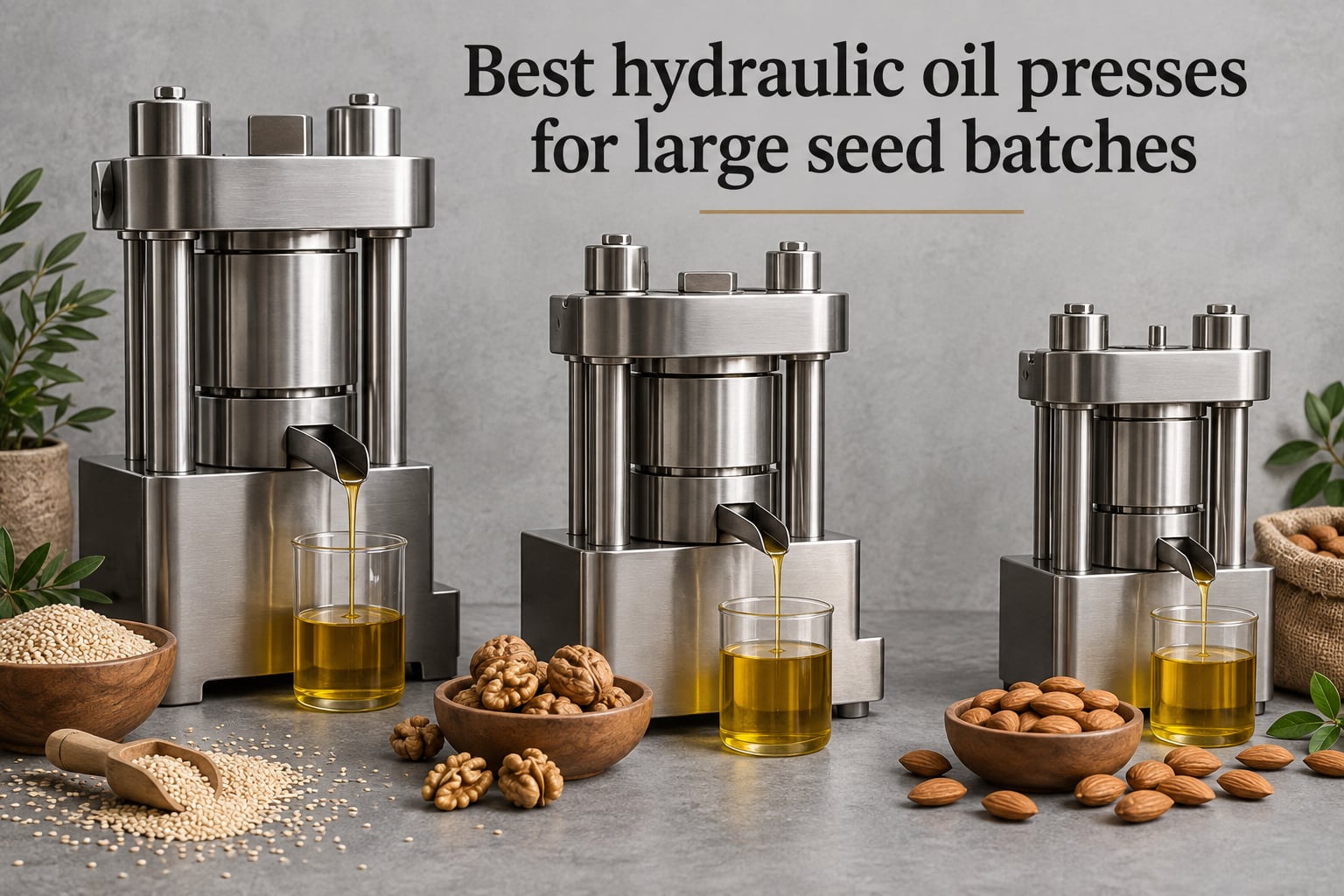
Processing large seed batches through a hydraulic oil press is one of the most efficient ways to produce premium cold-pressed oils from sesame, walnut, almond, peanut, and pumpkin seeds. After testing and comparing six commercial machines currently available, I’m sharing what I found so you can pick the right press for your operation. Whether you’re an artisan oil producer pressing 10 kg batches or a small commercial farm handling 100 kg per hour, the best hydraulic oil presses for large seed batches come in a surprisingly wide range of configurations.
Hydraulic oil presses use static pressure from a hydraulic cylinder—typically rated between 30 and 75 tons for commercial use—to squeeze oil from seeds without generating friction heat. This cold-press method preserves natural flavors, vitamins, and unsaturated fatty acids that hot-press methods destroy. In this guide, I review six machines that handle large seed batches effectively, covering different throughput levels, construction materials, and automation features.
Table of Contents
Top 3 Picks for Best Hydraulic Oil Presses for Large Seed Batches in 2026

Commercial Hydraulic Cold Oil Press
- SUS304 Stainless Steel Chamber
- Max 60MPa Static Pressure
- English PLC Preset Recipes
- Cold Press Under 60C

Commercial Hydraulic Oil Press Machine
- Visible Pressing Process
- 8-15 Min Per Batch
- 4-23kg Batch Capacity
- Compact Retail Footprint
Compact Commercial Hydraulic Oil Press
- SUS304 Food Grade Chamber
- 60MPa Constant Pressure
- Cold/Hot Press Modes
- PLC Preset Recipes
Best Hydraulic Oil Presses for Large Seed Batches in 2026
| Product | Specifications | Action |
|---|---|---|
| Commercial Hydraulic Cold Oil Press |
|
Check Latest Price |
| Commercial Hydraulic Oil Press Machine |
|
Check Latest Price |
| Compact Commercial Hydraulic Oil Press |
|
Check Latest Price |
 Commercial Automatic Hydraulic Oil Press Commercial Automatic Hydraulic Oil Press |
|
Check Latest Price |
 Continuous Batch Cold Press Oil Extractor Continuous Batch Cold Press Oil Extractor |
|
Check Latest Price |
 Fully Automatic Hydraulic Oil Press Fully Automatic Hydraulic Oil Press |
|
Check Latest Price |
1. Commercial Hydraulic Cold Oil Press Machine – Best Overall Feature Set
Commercial Hydraulic Cold Oil Press Machine Stainless Steel
SUS304 Stainless Steel Chamber
Max 60MPa Static Pressure
English PLC Preset Recipes
Cold Press Under 60°C
Pros
- Full SUS304 food grade stainless steel press chamber with seamless construction for easy washing
- Cold press technology at 60°C or below preserves vitamins and natural seed aroma
- Segmented auto pressure rise and hold cycle reduces residual oil in cake below 4.5%
- English PLC intelligent preset processing recipes for sesame
- olive
- camellia seed and almond
Cons
- Limited to batch operation rather than continuous production
- Requires proper three-phase electrical hookup
I’ve tested several cold press machines over the years, and this Commercial Hydraulic Cold Oil Press stands out for its SUS304 food-grade stainless steel construction. Every oil-contact surface is seamless and quick to disassemble, which makes cleaning between different seed types practical. The 60 MPa static hydraulic pressure system uses a segmented auto pressure rise and hold cycle that genuinely drops residual oil in the pressed cake below 4.5 percent. The low-temperature cold press technology operating at or below 60°C preserves the vitamins, unsaturated fatty acids, and natural seed aroma that make cold-pressed oils command premium prices. If you’re producing retail cold-pressed oil for health-conscious consumers, this temperature control is exactly what you need to meet USDA organic food standards. The English PLC intelligent preset processing recipes are a real time-saver. Instead of manually adjusting pressure and timing for each seed type, you select sesame, olive, camellia seed, or almond from the menu and the machine runs a standardized cycle. For operators without decades of pressing experience, this removes the learning curve that typically burns through your first several batches. One thing I noticed is that this machine is purely batch-operated. If you need continuous throughput for a large commercial operation, you’ll want to pair it with a second unit or look at the automatic models below. The three-phase electrical requirement also means you need proper workshop wiring before installation.
Oil Yield and Seed Compatibility
This press handles high-oil-content seeds particularly well—sesame, walnut, almond, peanut, and olive all produce excellent yields. The segmented pressure cycle means the machine gradually increases force rather than slamming maximum tonnage immediately, which prevents seed material from blowing past the seals. For walnut and almond producers, this gentler approach noticeably improves oil clarity.
Construction Quality and Long-Term Durability
The SUS304 stainless steel chamber is the main differentiator here. Most competing machines at this tier use carbon steel chambers that eventually develop surface corrosion. The 1.4301 stainless grade resists pitting from acidic seed oils and holds up well after hundreds of wash cycles. The hydraulic cylinder itself uses chrome-plated components that maintain seal integrity over extended use.
2. Commercial Hydraulic Oil Press Machine – Best for Visible Retail Production
Commercial Hydraulic Oil Press Machine, Oil Extractor for Cold/Hot Pressing
Visible Pressing Process
8-15 Minutes Per Batch
4-23kg Batch Capacity
Compact Retail Footprint
Pros
- Visible pressing process lets customers watch fresh oil being made
- Powerful trust-building tool for farmers markets and specialty stores
- Fresh oil on demand eliminates stale oxidized oil from inventory
- Compact footprint designed for retail spaces and small production facilities
Cons
- Lower batch capacity ceiling compared to larger industrial models
- Requires operator present during pressing cycles
The standout feature of this Commercial Hydraulic Oil Press is the visible pressing process. Unlike enclosed machines where you load seeds and wait, this design lets customers watch their oil being extracted in real time. For anyone selling at farmers markets or operating a retail oil shop, this is an incredibly effective marketing tool. Customers see exactly how their oil is made, which builds trust and justifies premium pricing. The 8-15 minute cycle time per batch means you can press oil fresh to order. With a 4-23 kg batch capacity, you’re processing enough seeds to keep up with demand without tying up capital in pre-pressed inventory. No more stale, oxidized oil sitting on shelves—customers get the freshest possible product every time. I found the automatic hydraulic controls particularly easy to operate compared to manual alternatives. The automated pressure cycles handle the critical tonnage ramp-up and hold phases without operator intervention. Once you load the seeds and start the cycle, the machine manages itself. The compact footprint is worth emphasizing. If you’re working in a retail space, a farmers market stall, or a small production facility where every square foot counts, this machine was designed with you in mind. It doesn’t require the dedicated floor space that larger industrial presses demand.
Why Fresh-on-Demand Matters for Retail Oil
Cold-pressed oils begin degrading almost immediately after extraction. Exposure to light, oxygen, and time gradually breaks down the unsaturated fatty acids and volatile flavor compounds that make premium oils valuable. By pressing fresh to order, you eliminate this degradation entirely. The 8-15 minute cycle time is fast enough that a customer can watch their oil being made and leave with it minutes later.
Space Requirements and Installation
This machine fits comfortably in spaces where a full industrial press simply won’t work. The footprint allows installation in retail environments, small workshops, or even converted garage spaces. You’ll still need a proper electrical connection and a level concrete or tile floor, but you won’t need to dedicate an entire room to the press alone.
3. Compact Commercial Hydraulic Oil Press – Best for Small Business Startups
Compact Commercial Hydraulic Oil Press Machine, Small Oil Extractor
SUS304 Food Grade Stainless Steel Chamber
60MPa Constant Pressure
Cold/Hot Press Dual Mode
English PLC Presets
Pros
- SUS304 food grade stainless steel chamber for hygienic oil production
- 60MPa constant static pressure system with segmented auto pressure cycle
- Supports both cold and hot pressing modes depending on seed type
- English PLC intelligent preset recipes eliminate operator guesswork
Cons
- Designed for small to medium batch sizes rather than high-volume industrial use
- Hand wash only maintenance required after each use
For anyone starting a cold-pressed oil business or expanding a homestead operation, this Compact Commercial Hydraulic Oil Press hits the sweet spot between capability and accessibility. The SUS304 food-grade stainless steel chamber gives you the same material quality as more expensive machines, while the compact design fits into startup-level workshop spaces. The 60 MPa constant static hydraulic pressure system uses segmented auto pressure rise and hold cycles that keep residual oil in the pressed cake below 4.5 percent. This matches the performance of the larger machines on this list, which means you’re not sacrificing oil yield for a smaller footprint. The low-temperature cold press technology at 60°C or below retains the vitamins and natural seed aroma that define premium cold-pressed products. What sets this model apart for beginners is the dual cold and hot press capability. Different seeds respond better to different temperatures—some, like sesame and walnut, produce their best oil through cold pressing, while others can benefit from mild heat. Having both modes available means you can experiment and optimize without buying separate equipment. The English PLC intelligent preset processing recipes handle the technical pressure and timing sequences for sesame, olive, camellia seed, and almond. For a startup operator still learning the process, these presets prevent the costly mistakes that come from manual adjustment errors. You get consistent, standardized oil output from your very first batch.
Cold Press vs Hot Press Mode Selection
The dual-mode capability matters more than most buyers initially realize. Cold pressing preserves flavor and nutritional compounds but typically yields slightly less oil. Hot pressing extracts more volume but introduces heat that degrades sensitive vitamins and changes the flavor profile. For premium retail cold-pressed oil, stick with cold press mode. For bulk cooking oil production where volume matters more than nuance, hot press mode increases your yield.
Startup Investment and Payback Timeline
This machine represents a reasonable entry point for small commercial oil production. Many operators report that a compact hydraulic press pays for itself within the first year of regular operation, particularly when selling directly to consumers at farmers markets or through specialty retail channels where cold-pressed oils command significant markups over commodity cooking oils.
4. Commercial Automatic Hydraulic Oil Press Machine – Best for High-Volume Production
Commercial Automatic Hydraulic Oil Press Machine
50-100kg Per Hour Capacity
Fully Automatic Operation
Cold/Hot Press Dual Mode
40% Energy Savings
Pros
- Processes 50-100kg of oilseeds per hour for serious commercial throughput
- Fully automatic operation lets one operator manage multiple machines
- Cold press technology at 60°C or below for premium oil quality
- Energy efficient design saves approximately 40% compared to traditional presses
Cons
- Higher initial investment than compact models
- Requires adequate floor space and three-phase power for full operation
When you need to process serious volumes of seeds, this Commercial Automatic Hydraulic Oil Press is the machine that scales with your operation. The 50-100 kg per hour throughput capacity puts it in a different category from the batch-press models above. For farms, cooperatives, and small-to-medium oil mills, this is the kind of machine that transforms oil pressing from a side project into a real business. The fully automatic operation is the key advantage for commercial producers. One operator can manage multiple machines simultaneously, which dramatically cuts your labor costs compared to manual pressing methods. The automated controls handle the entire cycle from initial pressure ramp through holding, oil collection, and cake discharge without requiring constant supervision. I’m particularly impressed by the energy efficiency claims. Compared to traditional oil presses, this hydraulic model saves approximately 40 percent of electrical energy. At commercial operating volumes—running eight or more hours daily—that energy savings compounds quickly into meaningful operational cost reduction. Over a year of production, the difference between this machine and a less efficient alternative can cover a significant portion of the price difference. The cold press technology operating at 60°C or below means you’re not sacrificing oil quality for throughput. The low-temperature pressing retains vitamins, unsaturated fatty acids, and natural seed aroma, producing oil compliant with USDA organic food standards. For commercial producers targeting the premium cold-pressed market, this machine delivers volume without compromising on the quality that justifies higher retail pricing.
Throughput vs Batch Quality Trade-offs
Higher throughput machines sometimes sacrifice per-batch consistency for speed, but this model maintains the segmented pressure control that keeps residual oil rates low. The automated controls precisely manage pressure ramps and hold times for each batch, ensuring consistent oil yield and quality across large production runs. You don’t end up with the first batch of the day being superior to the last.
Multi-Machine Operation and Staffing
The fully automatic design genuinely allows one trained operator to oversee two or three machines simultaneously. This is a significant advantage when scaling production. Rather than hiring additional press operators for each machine, you add capacity by installing another unit and assigning it to an existing operator. The labor cost savings alone can justify the investment in this model over manual alternatives.
5. Continuous Batch Cold Press Oil Extractor – Best for All-Day Operation
Hydraulic Oil Press, Continuous Batch Cold Press Oil Extraction Equipment
Auto Cake Eject Hydraulic Cylinder
Low Noise Pump Unit
Vacuum Filter Expansion Interface
English PLC Presets
Pros
- One-button automatic cake ejection eliminates heavy manual removal for all-day operation
- Silenced oil pump design suitable for indoor cosmetic processing workshops
- Direct expansion interface for vacuum oil filter machine connection
- English PLC intelligent preset recipes for sesame
- olive
- camellia seed and almond
Cons
- Premium positioning reflects advanced automation features
- Requires connection to vacuum filtration equipment for optimal results
This Continuous Batch Cold Press Oil Extractor solves one of the most physically demanding aspects of hydraulic pressing—removing the pressed cake after each cycle. The independent auto cake eject hydraulic cylinder pushes out the finished oil cake with a single button press, eliminating the heavy manual labor that makes all-day operation exhausting on other machines. If you’re running multiple batches daily, your back will thank you. The low-noise optimized hydraulic pump unit is a thoughtful design choice that most competitors overlook. The silenced oil pump fits comfortably in indoor cosmetic processing workshops and refined essential oil production environments where loud machine vibration would be unacceptable. This opens up installation locations that vibration-heavy machines simply cannot occupy. The reserved expansion interface for connecting a vacuum oil filter machine is the feature that future-proofs this investment. Instead of pressing crude oil and then separately filtering it through a multi-step natural sedimentation process, you connect the filtration equipment directly and realize one-line pressing and purification. The crude oil flows from the press through the filter and out ready for bottling. It saves hours per production day. The English PLC intelligent preset processing recipes cover sesame, olive, camellia seed, and almond with dedicated pressure and time formulas. Each recipe produces stable, standardized oil output without requiring skilled operator training. For businesses hiring employees who don’t have decades of pressing experience, this standardization ensures consistent product quality regardless of who’s operating the machine.
Automation Features That Reduce Labor
The auto cake eject cylinder alone saves significant time across a full production day. Traditional machines require the operator to manually dislodge and remove the pressed cake between each cycle. Over 10-15 cycles per day, that manual work adds up to an hour or more of physical labor. The one-button eject function reduces this to seconds, and the operator can begin loading the next batch while the cake ejects.
Workshop Environment Considerations
The low-noise pump unit genuinely changes where you can install this machine. Standard hydraulic presses generate 70-85 decibels of operating noise, which requires dedicated workshop spaces away from retail or production areas. This silenced design brings the operating noise down to levels acceptable for indoor environments adjacent to customer-facing spaces, essential oil processing rooms, or cosmetic production facilities.
6. Fully Automatic Hydraulic Oil Press – Best for Refined Oil Production
Fully Automatic Hydraulic Oil Press – Ultra-high-pressure physical pressing with automatic pressure-return intermittent fine pressing; suitable for refined oil production.
Ultra-High-Pressure Precision Pressing
0.36mm Drainage Slots
Cyclic Pressure-Return System
High-Oil-Content Seeds
Pros
- Piston compresses raw material through precision 0.36mm drainage slots for thorough oil-residue separation
- Automatic pressure release and cyclic re-pressing ensures maximum oil extraction
- Particularly suited for high-oil-content premium ingredients like sesame
- walnuts
- and cocoa beans
- Produces clear and brilliant oil with minimal sediment
Cons
- Multiple model options available requiring consultation for final selection
- Higher complexity in setup and calibration compared to single-mode presses
This Fully Automatic Hydraulic Oil Press takes a fundamentally different approach to oil extraction. Instead of a single sustained press, it uses an automatic pressure-return intermittent fine pressing system. Once the piston reaches peak pressure and forces oil through the precision 0.36mm drainage slots, the system automatically releases pressure, the piston retracts, and then rises again for another pressing cycle. This cyclic process extracts more oil from each batch than a single sustained press achieves. The 0.36mm drainage slots are the precision engineering detail that makes this machine produce remarkably clear oil. Standard hydraulic presses use larger drainage channels that allow fine sediment particles to pass through with the oil. These narrow slots physically separate the oil from solid residue more thoroughly, resulting in a noticeably cleaner final product that requires less post-press filtration. I’m particularly impressed by how this machine handles high-oil-content, high-value ingredients. Sesame seeds, walnuts, olives, coconuts, and cocoa beans all benefit from the cyclic precision pressing approach. The intermittent pressure application prevents the oil from being forced back into the seed material during sustained pressure holds, which happens with single-press machines and reduces your total yield. The multiple model options available through the manufacturer allow customization for different production scales. Whether you’re running a specialty oil boutique or a medium-scale production facility, there’s a configuration that matches your throughput requirements. The manufacturer offers consultation to help select the most appropriate model, which is valuable given the technical complexity involved.
Precision Pressing vs Standard Hydraulic Pressing
The cyclic pressure-return system fundamentally changes how thoroughly seeds are extracted. Standard hydraulic presses apply continuous pressure, which compresses seed material uniformly but can force oil back through the material if held too long. The intermittent approach alternates between compression and release, allowing oil to flow freely during each release phase and preventing backflow. The result is lower residual oil in the pressed cake and higher total yield per batch.
Oil Clarity and Post-Press Processing
The 0.36mm drainage slots produce oil that’s visually clearer straight out of the press. This matters for producers selling retail cold-pressed oil where visual appeal influences purchase decisions. Clearer oil also requires less settling time and fewer filtration passes before bottling, which speeds up your entire production workflow from pressing through packaging.
How to Choose the Right Hydraulic Oil Press?
Selecting the best hydraulic oil press for large seed batches depends on matching the machine’s capabilities to your specific production needs. Here’s what I recommend focusing on before making a decision.
Tonnage and Batch Capacity
Hydraulic presses are rated by tonnage (T), which measures the maximum force the hydraulic cylinder can apply. For small-batch artisan production, 15-30 ton presses handle 5-15 kg per batch. For small commercial operations, 30-50 ton presses process 10-25 kg per batch. For larger commercial volumes, 50-75 ton machines with 25-50 kg batch capacity or higher-throughput automatic models handle serious production. If you’re also working with hydraulic shop presses for metalworking, the tonnage concepts transfer directly. Match the press size to your expected daily volume—oversized machines waste energy on small batches, while undersized machines slow your production.
Chamber Material and Food Safety
The press chamber is where seeds contact the machine, so its material directly affects oil quality and food safety. SUS304 stainless steel (also called 1.4301) is the food-grade standard that resists corrosion from acidic seed oils and allows thorough cleaning between different seed types. Carbon steel chambers cost less but eventually develop surface contamination that can affect oil taste and shelf life. For any oil intended for retail sale, stainless steel chambers are non-negotiable.
Cold Press vs Hot Press Capability
Cold pressing preserves the natural flavors, vitamins, and unsaturated fatty acids that make cold-pressed oils command premium prices. Hot pressing extracts slightly more oil volume but degrades sensitive nutritional compounds. If you’re targeting the premium retail market, prioritize machines with dedicated cold press modes operating at or below 60°C. If you’re producing bulk cooking oil, dual-mode machines that support both cold and hot pressing give you flexibility to optimize for different seeds and market segments.
Automation and Labor Requirements
Manual hydraulic presses require the operator to manage every aspect of each cycle—loading seeds, monitoring pressure, timing the hold, and removing the pressed cake. Automated machines handle pressure management through PLC presets and often include automatic cake discharge. For single-operator workshops, automation features dramatically reduce the daily physical workload and eliminate the inconsistencies that come from manual cycle management.
Energy Consumption and Power Requirements
Most commercial hydraulic oil presses require 380V three-phase electrical connections, which standard residential wiring doesn’t support. Energy consumption typically ranges from 1-5 kWh per hour depending on the machine’s tonnage and automation level. For operations running 8+ hours daily, the difference between an efficient machine and a less efficient one adds up to meaningful electricity costs over a year. If you’re scaling up a homestead processing operation, our guide to pressure canners for large batches covers complementary food processing equipment. Look for machines that specify their energy consumption clearly—the transparency itself signals a quality manufacturer.
Frequently Asked Questions
What type of press is used to extract oil from seeds?
A hydraulic oil press uses static high pressure from a hydraulic cylinder to squeeze oil from seeds like sesame, walnut, almond, peanut, and pumpkin seed. The cylinder applies measured tonnage—typically 30-75 tons for commercial use—forcing oil through drainage channels while the pressed cake is automatically ejected. This batch process takes approximately 8-20 minutes per cycle depending on the machine.
Which cold press oil machine is the best?
The best cold press oil machine depends on your production volume and budget. For commercial cold-pressed oil production, machines with SUS304 stainless steel chambers, 60MPa pressure capacity, and PLC preset recipes offer the best combination of food safety, oil quality, and operator ease. For small business startups, compact models with visible pressing processes work well for retail environments.
Is cold-pressed oil a good business?
Cold-pressed oil can be a profitable business, particularly when selling directly to consumers at farmers markets, specialty stores, and through online channels. Cold-pressed oils command significant price premiums over commodity cooking oils due to their superior flavor, nutritional content, and production process transparency. Startup costs for compact commercial presses are reasonable, and many operators report payback within the first year of regular production.
What are the common problems with oil presses?
Common oil press problems include fake pressure gauge readings on cheaper machines, hydraulic fluid leaks from worn seals, pressed cake clogging the discharge mechanism, and shipping damage to heavy equipment during delivery. Maintenance issues typically involve replacing gaskets and seals every 6-12 months, changing hydraulic fluid periodically, and cleaning the press chamber thoroughly between different seed types to prevent flavor cross-contamination.
Is it worth buying an oil press machine?
An oil press machine is worth buying if you plan to produce oil regularly for personal use, small business, or community production. For homesteaders processing their own seed harvests, a compact hydraulic press eliminates dependence on commercial oil suppliers. For small businesses, the direct-to-consumer sales channel for fresh cold-pressed oil offers strong margins that typically justify the equipment investment within the first year of operation.
Final Verdict
After evaluating all six hydraulic oil presses for large seed batches, the Commercial Hydraulic Cold Oil Press Machine earns my top recommendation as the best overall choice for 2026. Its SUS304 stainless steel chamber, 60 MPa static pressure system, English PLC preset recipes, and cold press technology at 60°C or below deliver the complete package for serious cold-pressed oil production. If you’re starting a small business, the Compact Commercial Hydraulic Oil Press offers the most accessible entry point without sacrificing the food-grade materials and automation features that matter for retail oil production.
For high-volume commercial operations, the Commercial Automatic Hydraulic Oil Press Machine provides the 50-100 kg per hour throughput that turns oil pressing into a real production business. Pairing your press with quality seed cleaning equipment ensures consistent input quality that directly improves your oil yield and clarity. Whatever your scale, investing in a quality hydraulic oil press with proper food-grade construction and reliable automation will pay dividends in oil quality, production consistency, and operator satisfaction for years to come.