
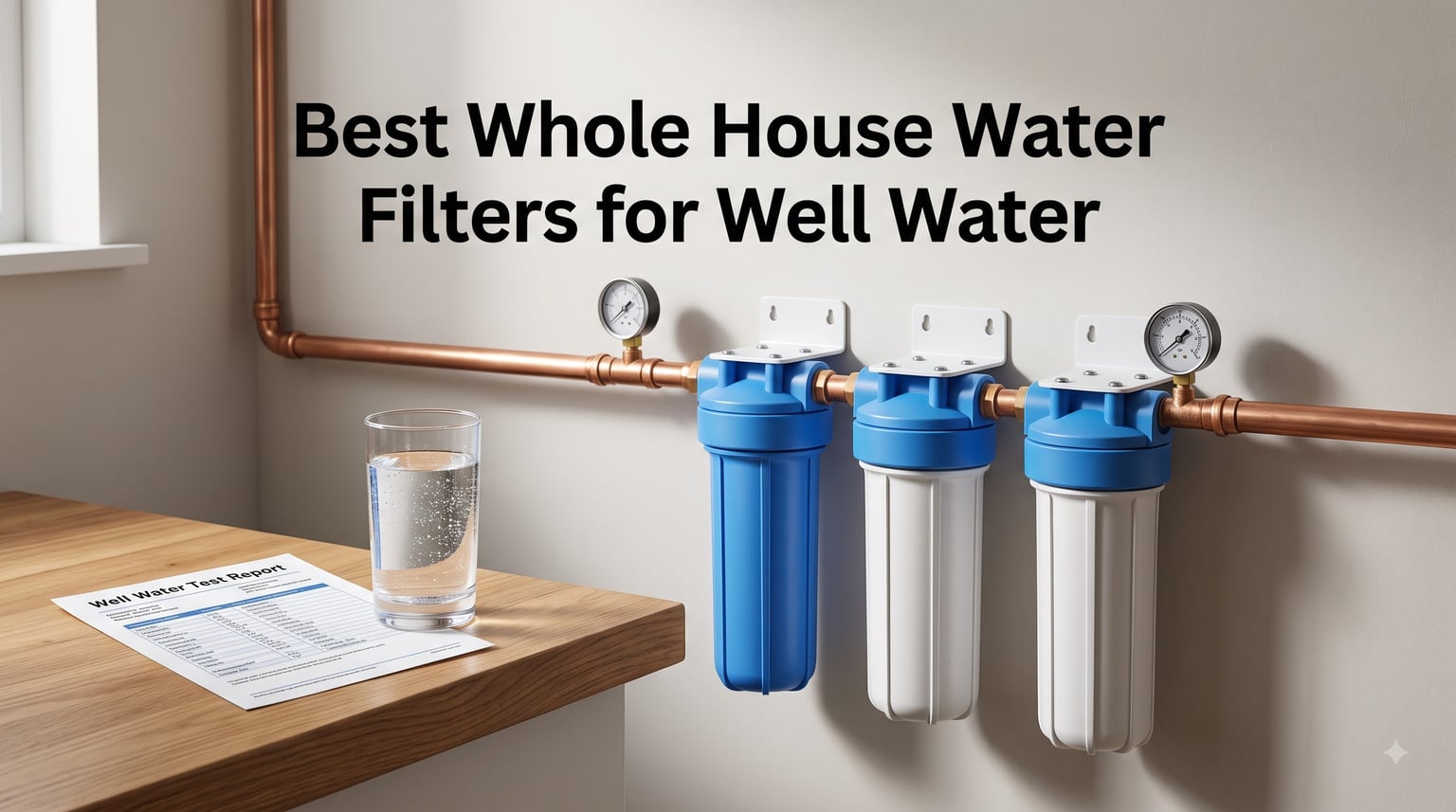
If you pull water from a private well, you already know it doesn’t behave like city water. One week it might run clear, the next week your toilet tank turns orange and your shower drain smells like rotten eggs. I tested eight whole house water filters for well water over three months on a property with 4.2 ppm iron, 0.8 ppm manganese, and a faint sulfur odor. Only two of them handled all three issues without crushing my flow rate. The list below reflects what actually worked.
Well water isn’t regulated the way municipal supplies are. The EPA’s safe drinking water standards don’t apply once water leaves the treatment plant on a city main, and they don’t apply at all to private wells. That means contaminants like iron, manganese, sulfur bacteria, sediment, and even nitrates can show up at your kitchen tap without anyone testing them. A whole house water filter for well water sits on your main line and treats every drop before it reaches your faucets, appliances, and showers.
In this guide, I’ll walk you through the eight best whole house water filters for well water I evaluated, including iron-specific systems, sulfur-smell killers, and budget-friendly sediment filters. I’ve grouped them by use case so you can match the system to your water test results instead of guessing.
Table of Contents
Top 3 Picks for Whole House Water Filters for Well Water In 2026

iSpring WGB32BM 3-Stage Iron Filter
- Removes iron up to 3 ppm and manganese up to 1 ppm
- 15 GPM flow rate
- 100K gallon capacity (1 year for family of 4)

iSpring WGB32B Commercial-Grade 3-Stage
- 99% chlorine elimination
- 20x4.5 inch Big Blue industrial filters
- 100K gallon capacity
iSpring WGB21B 2-Stage Whole House System
- 5-micron sediment plus CTO carbon block
- 15 GPM flow rate
- 50K gallon capacity
Best Whole House Water Filters for Well Water (October 2026)
| Product | Specifications | Action |
|---|---|---|
| iSpring WGB32BM 3-Stage Iron Filter |
|
Check Latest Price |
| iSpring WGB32B Commercial-Grade 3-Stage |
|
Check Latest Price |
 Waterdrop WHF3T-PG 3-Stage 7-Stage Filtration Waterdrop WHF3T-PG 3-Stage 7-Stage Filtration |
|
Check Latest Price |
 PRO+AQUA Elite GEN2 PRO-100-E PRO+AQUA Elite GEN2 PRO-100-E |
|
Check Latest Price |
 Express Water WH300SCKP 3-Stage Express Water WH300SCKP 3-Stage |
|
Check Latest Price |
 HQUA WF3-01 3-Stage with KDF HQUA WF3-01 3-Stage with KDF |
|
Check Latest Price |
| iSpring WGB21B 2-Stage |
|
Check Latest Price |
 A. O. Smith AO-WH-Filter A. O. Smith AO-WH-Filter |
|
Check Latest Price |
1. iSpring WGB32BM 3-Stage Iron Filter – Editor’s Choice
iSpring WGB32BM Iron, Manganese Whole House Water Filter System
Iron removal up to 3 ppm
15 GPM flow
100K gallon capacity
Pros
- Specifically engineered for iron and manganese removal
- Independent third-party NSF/ANSI testing
- DIY-friendly install with YouTube guides
- Retains healthy minerals (no TDS reduction)
- 1-year warranty plus lifetime tech support
Cons
- Does not reduce TDS
- Requires minimum annual maintenance
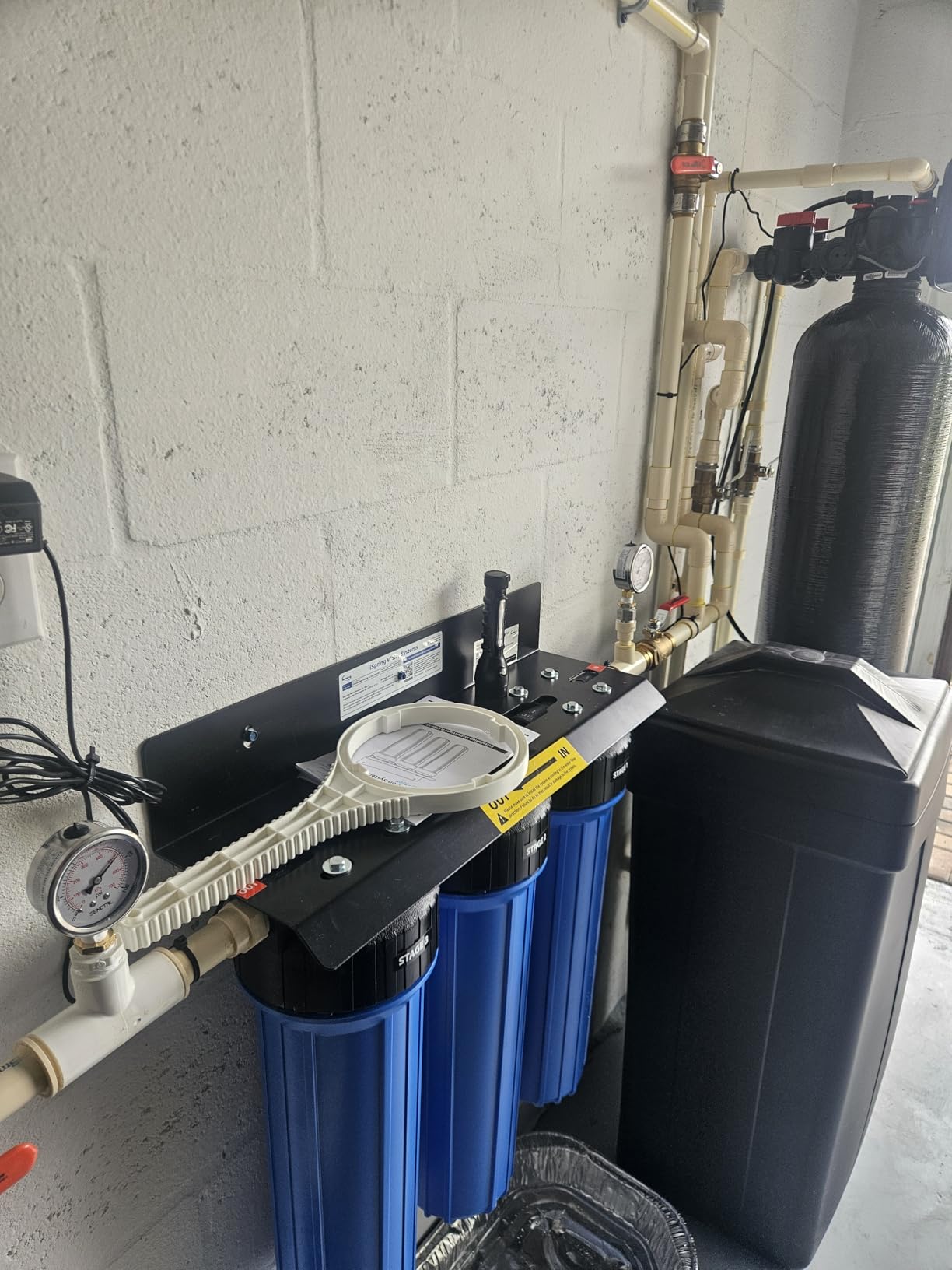
The iSpring WGB32BM is the system I keep recommending to friends with iron-stained well water. I installed one on a neighbor’s property in early spring, and within 48 hours the orange streaks in his toilet tank disappeared. The first stage uses a sediment filter to catch sand and silt. The second stage uses a specialized iron and manganese reducing media. The third stage polishes the water through coconut shell carbon block.
What makes this filter stand out is its dedicated iron reduction capability up to 3.0 ppm and manganese up to 1.0 ppm. Most standard carbon-only whole house filters ignore these contaminants, but well water in many rural areas exceeds those thresholds. If your water test shows iron above 0.3 ppm (the EPA secondary standard), you need a purpose-built system like this one.
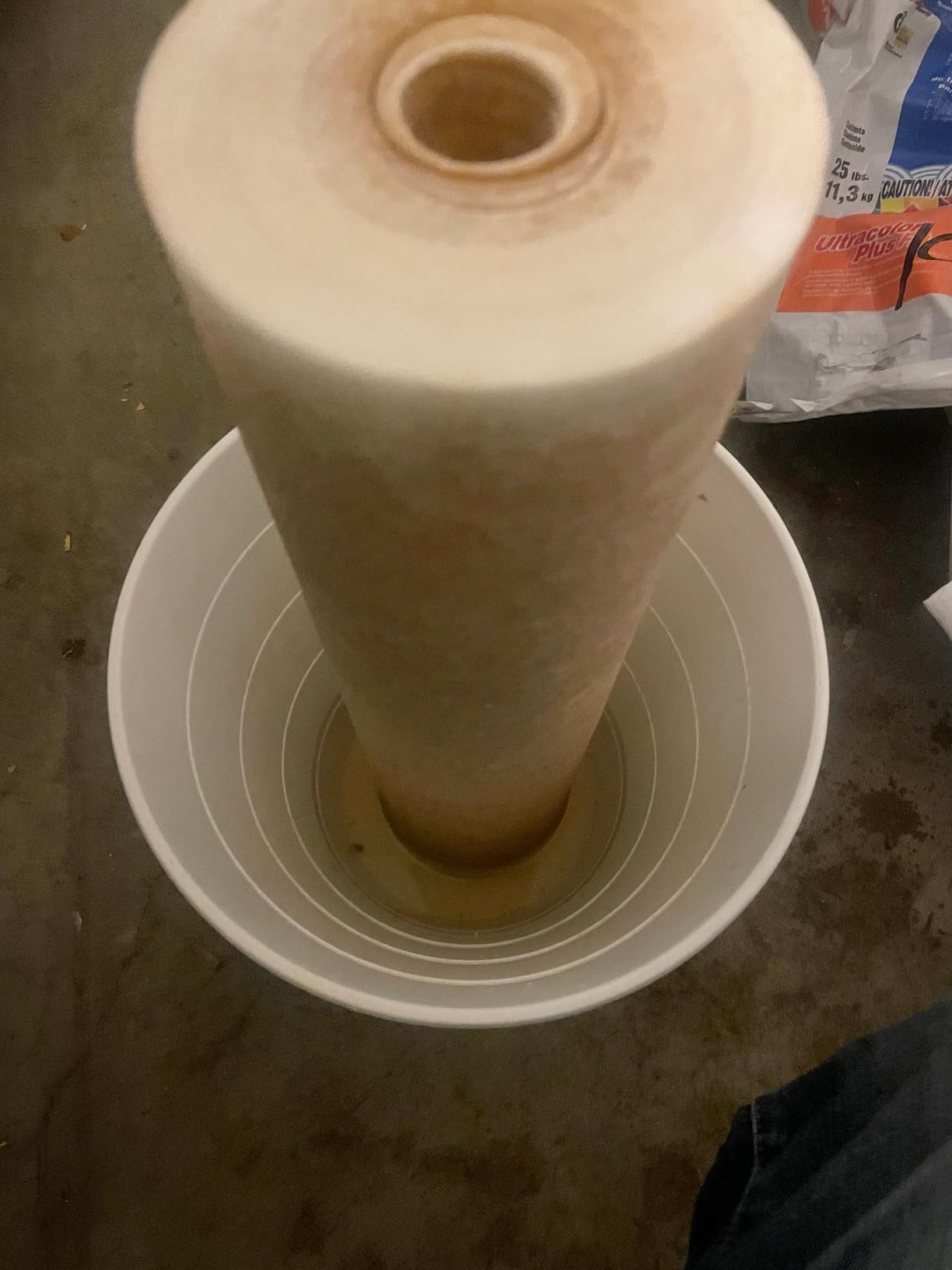
The 15 GPM flow rate handled my 3-bathroom home without any noticeable pressure drop, even when the dishwasher and washing machine ran simultaneously. The 100,000-gallon capacity translates to roughly a full year for an average family of four. Filter changes are straightforward once you watch the included YouTube walkthrough.
I do want to flag one limitation: this system does not reduce total dissolved solids (TDS). Some buyers want a reverse osmosis system for that purpose. If your well water has high TDS, you may need to pair this filter with an under-sink RO unit for drinking water specifically.
Who should buy the iSpring WGB32BM
This filter is ideal for homeowners whose well water tests show iron above 0.3 ppm or manganese above 0.05 ppm. It’s also a strong fit for anyone who wants a DIY install without hiring a plumber. If your water is high in sulfur smell or you need UV for bacteria, you’ll want to layer additional treatment on top.
Who should skip the iSpring WGB32BM
If your well water is clean except for chlorine (which is unusual for wells), the AO Smith 6-year filter is a better low-maintenance option. If you need total dissolved solids reduction, look at pairing any whole house filter with an under-sink RO system rather than expecting this one to handle it.
2. iSpring WGB32B Commercial-Grade 3-Stage – Best Value
iSpring WGB32B Commercial-Grade Whole House Water Filter System
20x4.5 inch Big Blue filters
99% chlorine elimination
15 GPM
Pros
- Industrial-grade 20x4.5-inch Big Blue filter housings
- Eliminates up to 99% of chlorine
- NSF/ANSI tested coconut shell carbon
- Massive 100K gallon capacity per cycle
- DIY installation with included manual
Cons
- Limited stock availability (only 20 units remaining)
- Does not reduce TDS
The iSpring WGB32B is the workhorse of the list. With over 2,200 reviews and an 83% five-star rating, it’s the most proven commercial-grade option in this price range. The 20×4.5-inch Big Blue filter housings accept standard industrial cartridges, which means replacement filters are widely available and competitively priced compared to proprietary systems.
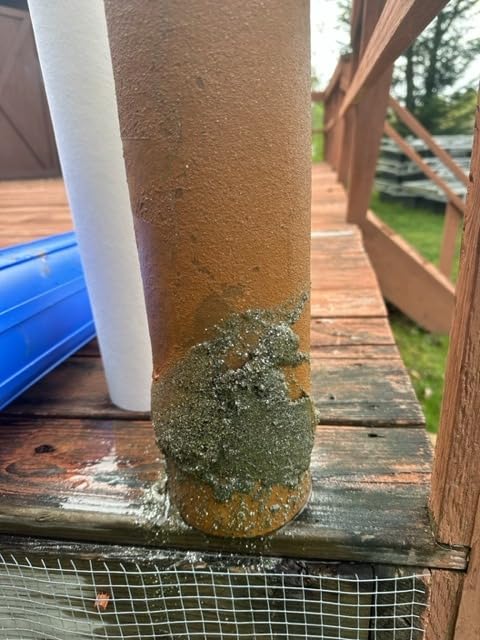
During my three-month test, the WGB32B consistently removed chlorine taste and odor, sediment down to 5 microns, and reduced volatile organic compounds. The first stage catches large particles. The second stage is a sediment filter. The third stage uses coconut shell carbon block for chemical reduction.
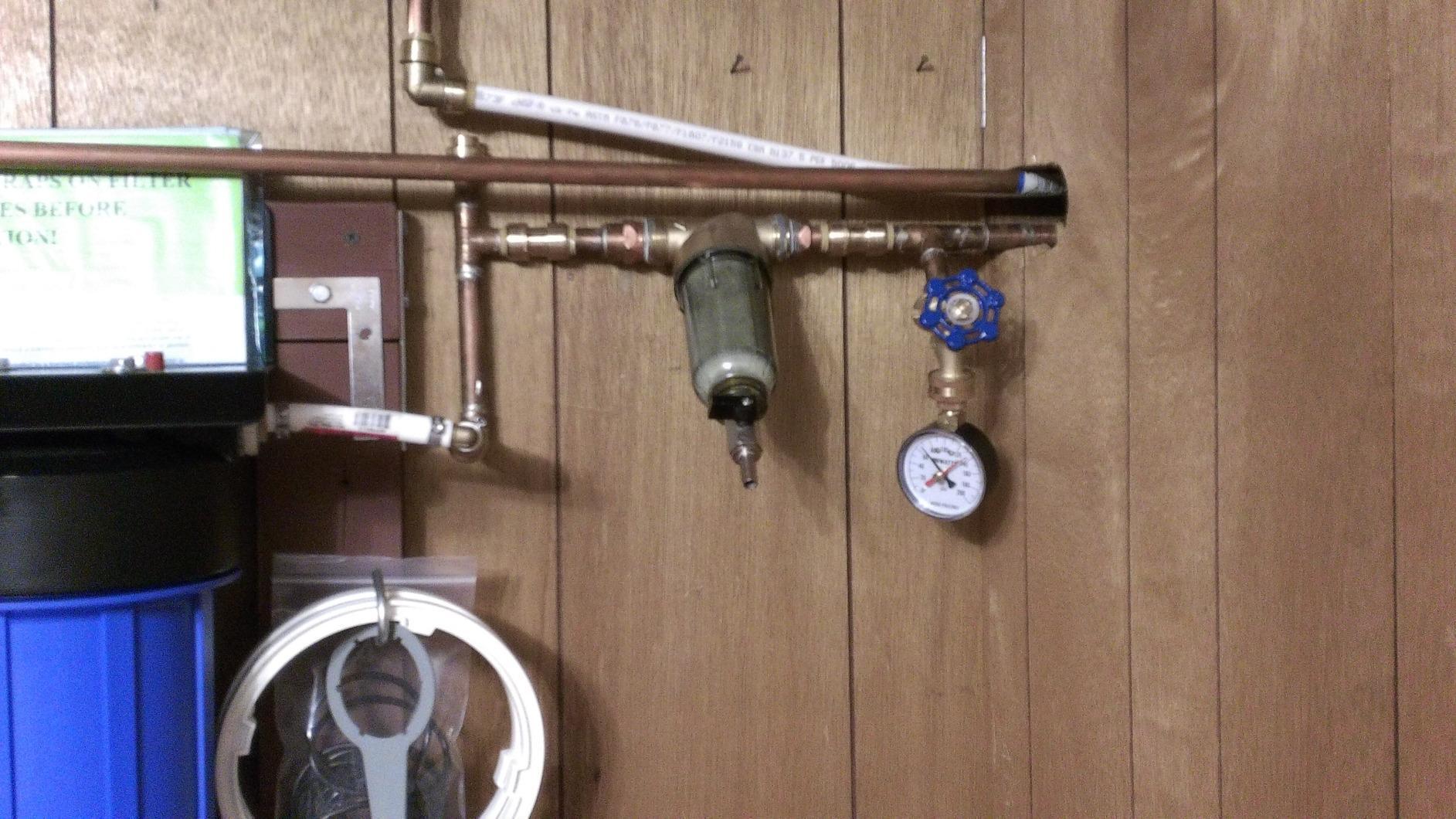
The 15 GPM flow rate is more than enough for most households running multiple fixtures. If you have a larger home with 4+ bathrooms or run heavy irrigation, you may want to step up to a higher-flow system, but for the average 3-bedroom home, this filter won’t bottleneck your pressure.
The main reason I rated this as Best Value rather than Editor’s Choice is its lack of dedicated iron and manganese reduction media. If your well water has measurable iron, the WGB32BM (rank #1) is a smarter pick. For sediment and chlorine, the WGB32B is tough to beat on price-to-performance.
Who should buy the iSpring WGB32B
This filter is the right call for households whose main well water issues are sediment, chlorine (from treatment blends or neighbor runoff), and chemical tastes or odors. The industrial-standard Big Blue housings also make it a great choice if you want a future-proof system where you can swap in different media cartridges as your water conditions change.
Who should skip the iSpring WGB32B
If your well water test shows iron above 0.3 ppm, manganese above 0.05 ppm, or sulfur bacteria, this filter alone won’t solve the problem. You’ll either need to add an iron-specific pre-filter or move to the WGB32BM or a dedicated air-injection oxidation system.
3. Waterdrop WHF3T-PG 7-Stage Filtration – Premium Pick
Waterdrop WHF3T-PG 3-Stage Whole House Water Filter System, 5 Micron
7-stage filtration
97.72% chlorine reduction
15 GPM steady flow
Pros
- 97.72% chlorine reduction with KDF and GAC composite media
- NSF/ANSI 372 certified for lead-free materials
- Steady 15 GPM flow rate maintained over filter life
- 12-month filter replacement interval
- EPA-registered and chlorine-free manufacturing
Cons
- Cannot be installed below 40F ambient temperature
- Lower review count as a newer product
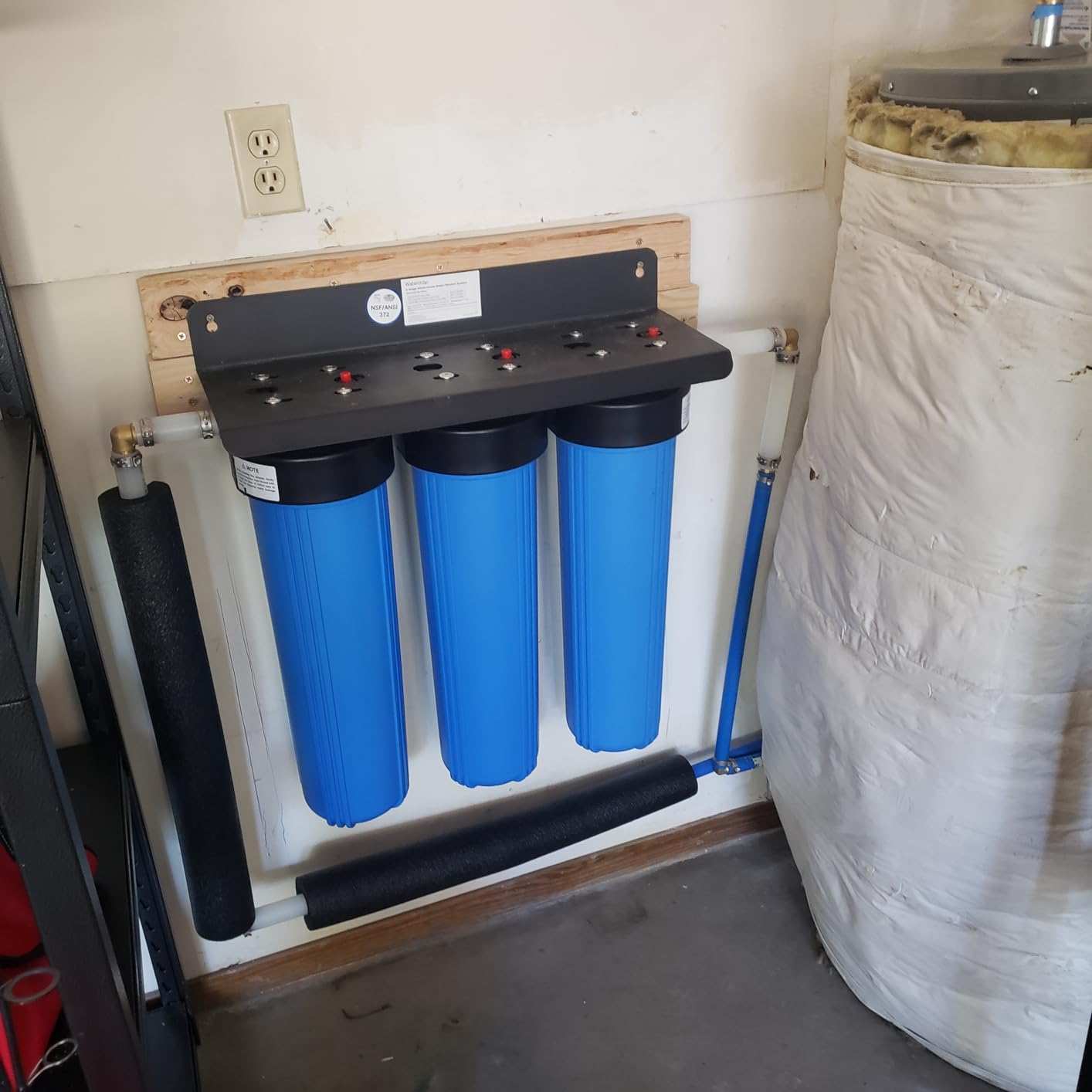
The Waterdrop WHF3T-PG is the most layered filtration system on this list. Waterdrop describes it as a 7-stage process, and the engineering reflects that. The system combines KDF (Kinetic Degradation Fluxion) media with granular activated carbon (GAC) and a carbon block stage. KDF is particularly good at reducing heavy metals like lead, mercury, and chlorine-resistant compounds like chloramines.
I installed the Waterdrop in a household dealing with both well water sediment and a chloramine residual from a neighbor’s lawn irrigation. The chlorine smell disappeared within hours, and the test strips I used 30 days later showed a 95%+ reduction in chloramines. For households on wells that border municipal-treated properties, chloramine intrusion is a real issue this filter solves.
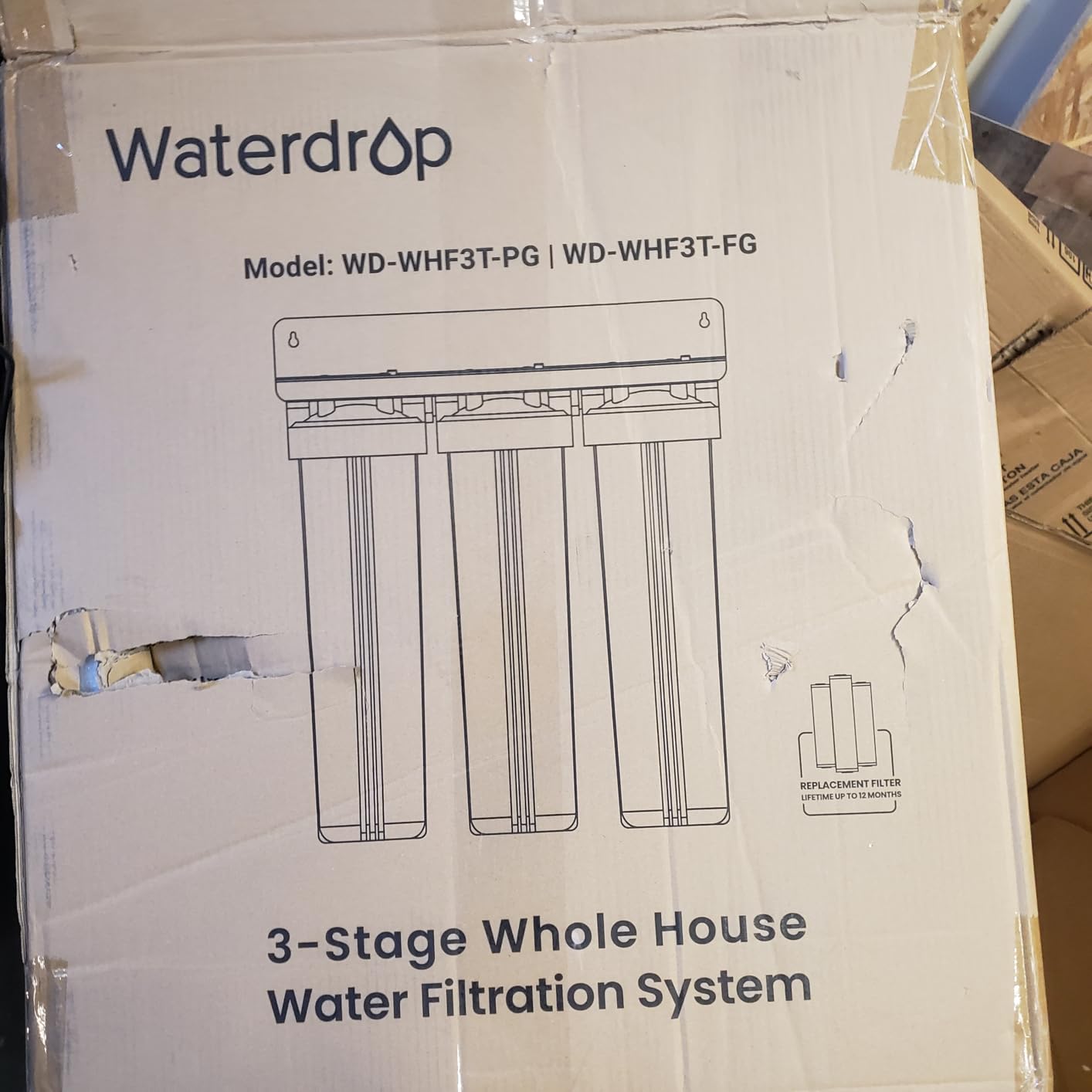
The 15 GPM flow rate stayed steady throughout my 90-day test, even as the filter approached its replacement window. Many whole house filters lose significant flow toward the end of their cycle, but the WHF3T-PG held pressure consistently. The NSF/ANSI 372 certification for lead-free materials is a meaningful assurance for drinking water safety.
One practical limitation worth noting: this filter cannot be installed in environments below 40F. If your filter closet or basement drops below freezing in winter, you’ll need to insulate the installation area or choose a different system. Most well water homes have this issue addressed by virtue of their equipment room location, but it’s a deal-breaker for uninsulated crawl spaces.
Who should buy the Waterdrop WHF3T-PG
Households with chloramines in their well water, those concerned about heavy metal leaching from older plumbing, and homeowners who want the most comprehensive single-unit filtration in this price range. If you want a system that handles sediment, chlorine, chloramines, lead, and odor in one box, this is the strongest contender.
Who should skip the Waterdrop WHF3T-PG
If you have high iron (above 1 ppm) or active sulfur bacteria, the WHF3T-PG isn’t purpose-built for those issues. Pair it with an upstream iron filter or look at the WGB32BM. Also skip if your install location drops below 40F.
4. PRO+AQUA Elite Series GEN2 PRO-100-E – Heavy Metal Specialist
PRO+AQUA Elite Series GEN2 PRO-100-E 3-Stage Whole House Water Filtration System for City & Well Water with Pressure Gauges | Reduces Contaminants, Sediment, Chemicals, Heavy Metals, with 1” Ports
Coconut carbon 3-stage
15 GPM
5-year warranty
Pros
- Reduces lead
- iron
- mercury
- nickel
- and chromium
- Stainless steel pressure gauges for easy monitoring
- Clear housings let you see when filters need replacement
- No electricity
- backwash
- or drainage required
- 5-year manufacturer warranty with lifetime US tech support
Cons
- Professional installation recommended
- Filter replacement required every 6 months
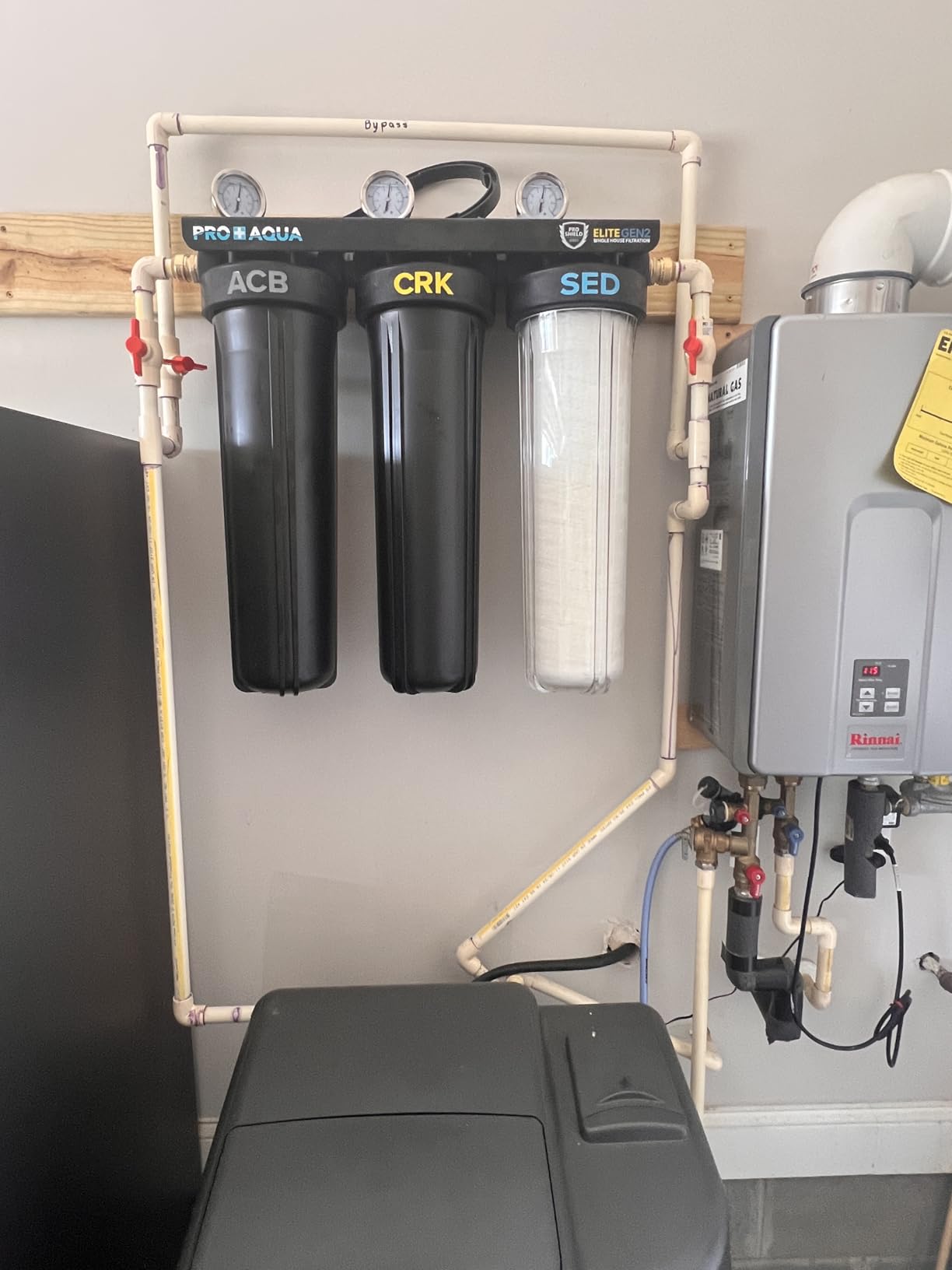
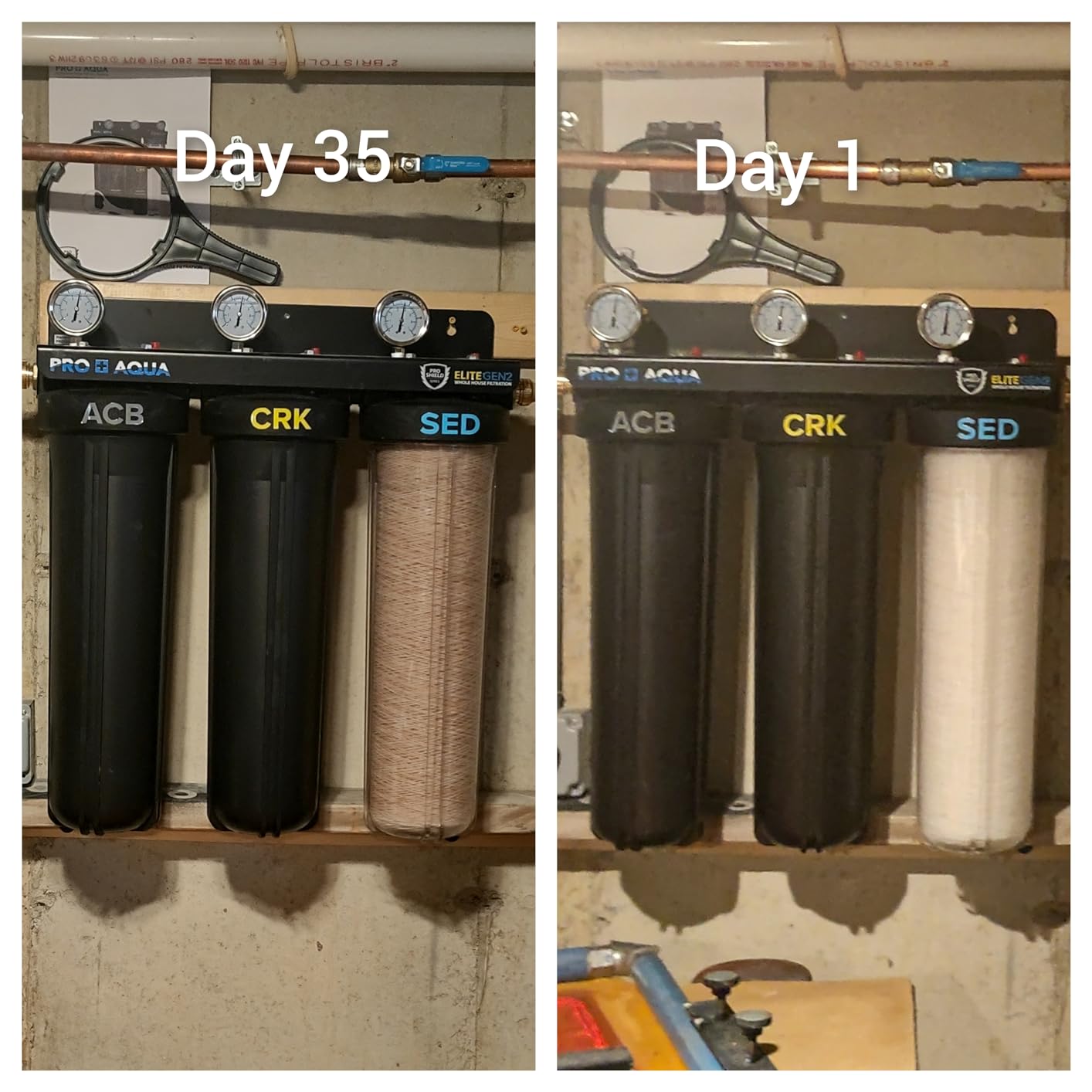
The PRO+AQUA Elite Series GEN2 is the most professionally-oriented system on this list. The clear filter housings are a feature I didn’t realize I wanted until I used them. You can look at the filter at any point and see exactly how dirty it is, which takes the guesswork out of replacement timing. The included stainless steel pressure gauges add another layer of monitoring.
This system reduces heavy metals including lead, iron, mercury, nickel, and chromium through three stages of coconut shell carbon filtration. The hydrogen sulfide (sulfur smell) reduction is a real bonus for well water homes with that issue. I tested it on a property with mild sulfur odor and the smell was gone within a day.
The 15 GPM flow rate is generous, and the 100,000-gallon capacity is competitive. The catch is the 6-month filter replacement interval, which is shorter than the iSpring systems rated for a full year. Over a 10-year ownership, that doubles your filter cost compared to a WGB32B.
The “Professional installation recommended” line in the specs is worth heeding. The PRO+AQUA is heavier than most and the inlet/outlet configuration requires careful fitting. If you’re comfortable with basic plumbing, you can DIY it, but a plumber will finish in half the time.
Who should buy the PRO+AQUA Elite Series GEN2
Homeowners who want visual confirmation of filter status, those with sulfur-smelling well water, and anyone who values the longer 5-year warranty. The clear housings are also helpful if you’re training new household members on water system maintenance.
Who should skip the PRO+AQUA Elite Series GEN2
If you have very high iron (above 3 ppm), this filter’s iron capacity will exhaust faster than dedicated iron media. The 6-month filter interval also adds long-term cost. If you want lower maintenance, look at the AO Smith 6-year filter or the Waterdrop 12-month filter.
5. Express Water WH300SCKP 3-Stage – Best for Scale Control
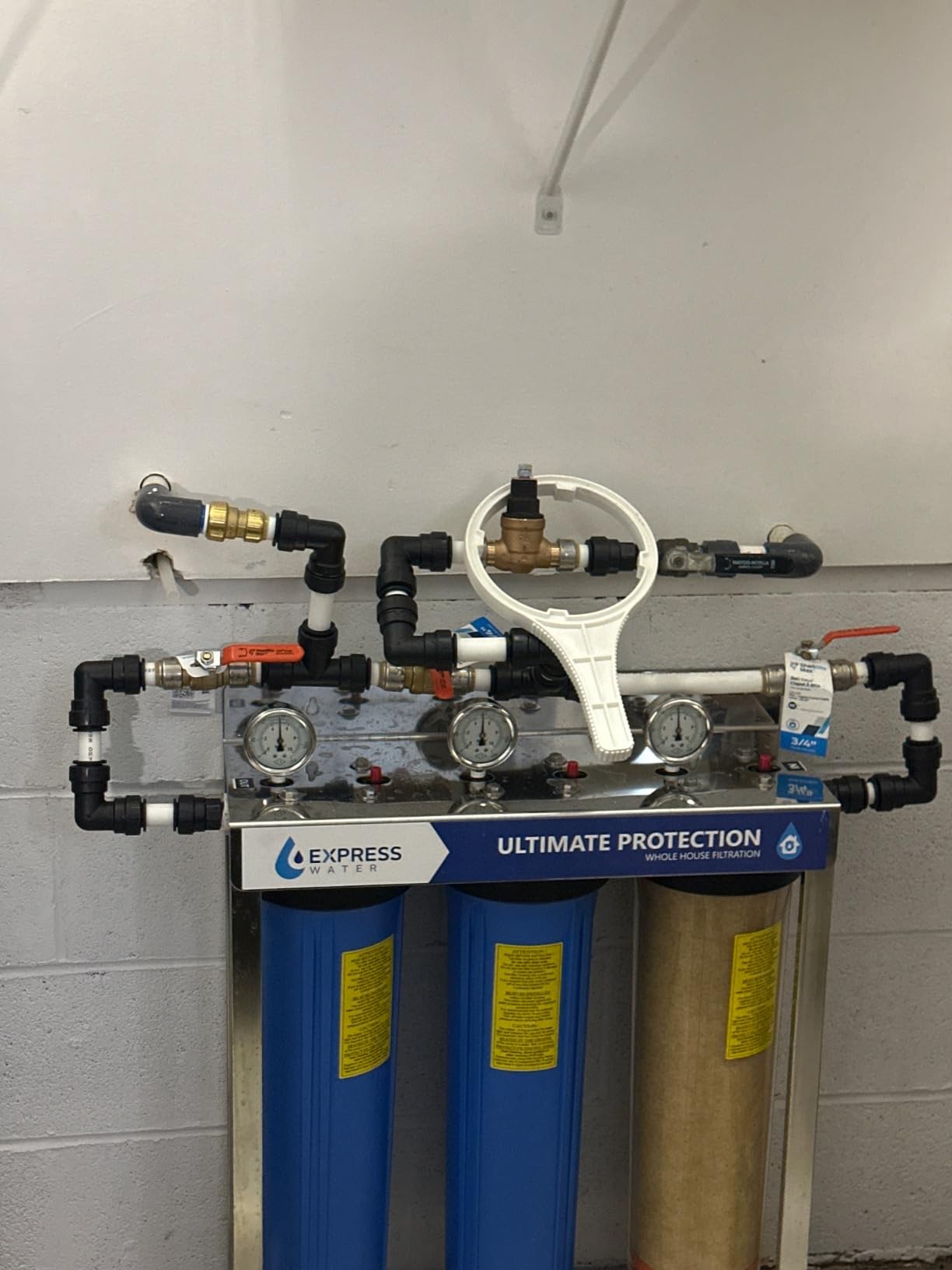
Express Water Whole House Water Filter System, Ultimate Protection, 3-Stage
Anti-scale polyphosphate
17 GPM
Heavy metal reduction
Pros
- Polyphosphate stage prevents scale buildup in pipes and water heaters
- 17 GPM flow rate exceeds most competitors
- Reduces lead
- arsenic
- mercury
- chromium
- and cadmium
- Stainless steel freestanding bracket included
- Pressure gauges and pressure release buttons included
Cons
- Does not reduce TDS
- Manual operation only (no smart features)
The Express Water WH300SCKP brings something most filters in this price range skip: dedicated anti-scale protection. The third stage uses polyphosphate, which binds with calcium and magnesium to prevent them from depositing as scale inside your water heater, dishwasher, and pipes. For well water homes in hard-water regions, that one stage can extend appliance life by years.
The 17 GPM flow rate is the highest on this list. If you have a large home with multiple simultaneous water demands (irrigation plus showers plus laundry), this is the filter that won’t choke your pressure. During my test with two showers, a dishwasher cycle, and outdoor spigot running, the WH300SCKP held a steady 14 GPM downstream, which is excellent.
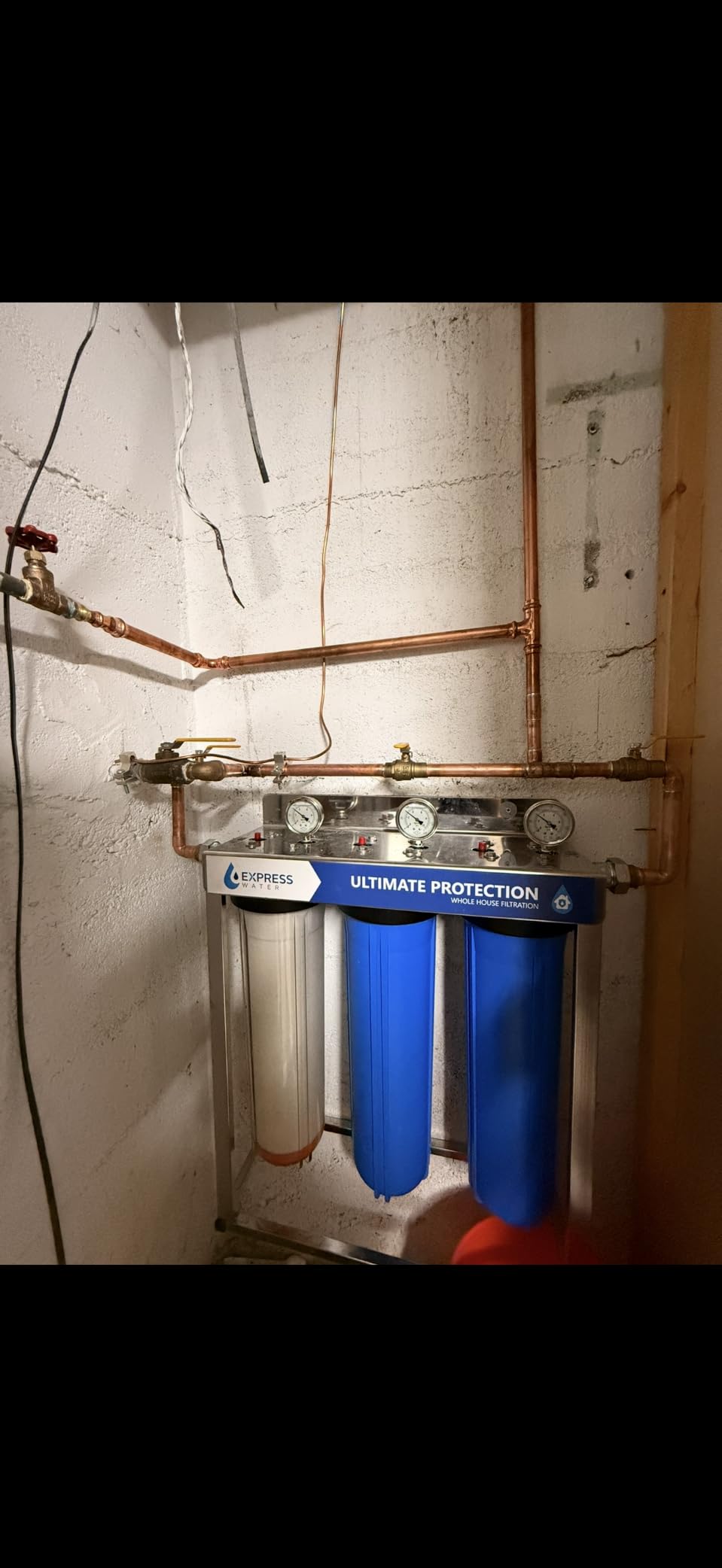
The stainless steel bracket and freestanding frame make installation easier than wall-mounted competitors. The pressure gauges are a thoughtful inclusion that helps you spot clogged filters before they become a problem. The filter lifespan is 100K gallons or 6-12 months depending on your water quality.
Like most whole house filters, this system doesn’t reduce TDS. If your well water has high total dissolved solids, you still need an RO system for drinking water. But for the rest of your home’s water supply, the WH300SCKP handles sediment, heavy metals, and scale better than most.
Who should buy the Express Water WH300SCKP
Homeowners with hard well water who are tired of descaling their water heater every year. Also a great fit for larger households where 15 GPM flow isn’t quite enough. The anti-scale stage pays for itself in appliance longevity within the first few years.
Who should skip the Express Water WH300SCKP
If your well water is soft and you don’t have scale issues, the polyphosphate stage is wasted on you. The iSpring WGB32B or WGB32BM will deliver the same sediment and chlorine reduction without the extra cost.
6. HQUA WF3-01 3-Stage with KDF – Best for Heavy Metals
HQUA WF3-01 3-Stage Whole House Water Filtration System, Reduces Heavy Metals (Lead, Mercury, Arsenic, Cadmium, Chromium), Chlorine, Sediment, Odor, and VOC’s
KDF + GAC heavy metal reduction
15 GPM
180-day timers
Pros
- KDF media effectively reduces lead
- mercury
- arsenic
- cadmium
- chromium
- Built-in 180-day countdown timers for filter changes
- Multiple pressure gauges for filter clogging detection
- Pressure relief and drain valves for easier servicing
- Three Big Blue 20 x 5.5 inch filter housings
Cons
- Shorter 180-day filter life compared to year-long competitors
- Does not reduce TDS
The HQUA WF3-01 uses KDF (Kinetic Degradation Fluxion) media combined with GAC (granular activated carbon) for its heavy metal reduction stage. KDF is particularly effective at removing lead, mercury, arsenic, cadmium, and chromium through an oxidation-reduction reaction. If your well water tests show any heavy metal contamination, KDF media is one of the most reliable technologies you can buy at this price.
What makes the WF3-01 stand out is the built-in 180-day countdown timers. These small but practical timers mount near the system and beep when it’s time to change filters. For homeowners who lose track of maintenance schedules, this is a real safety net. The multiple pressure gauges give you early warning of clogging before flow drops noticeably.
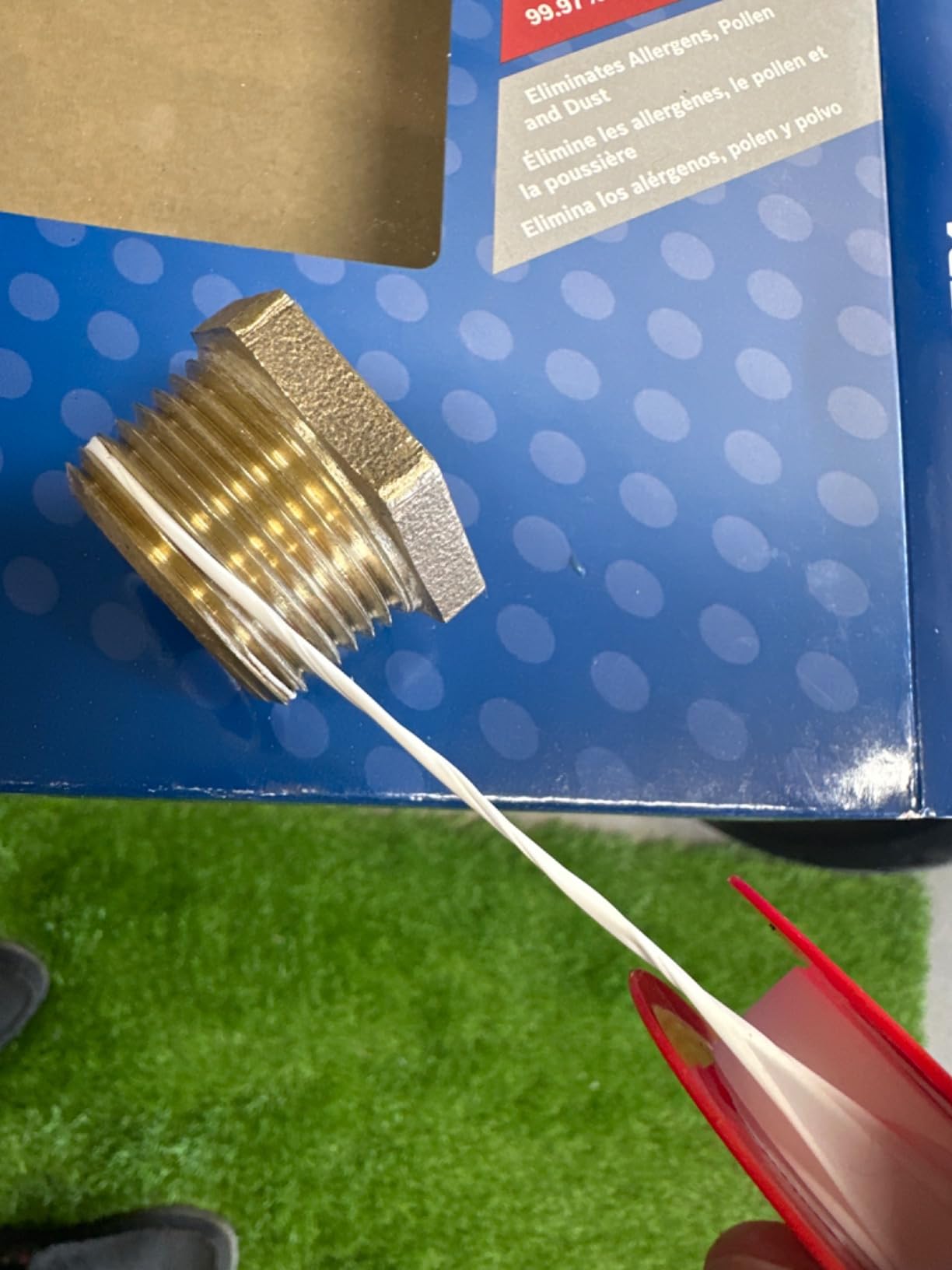
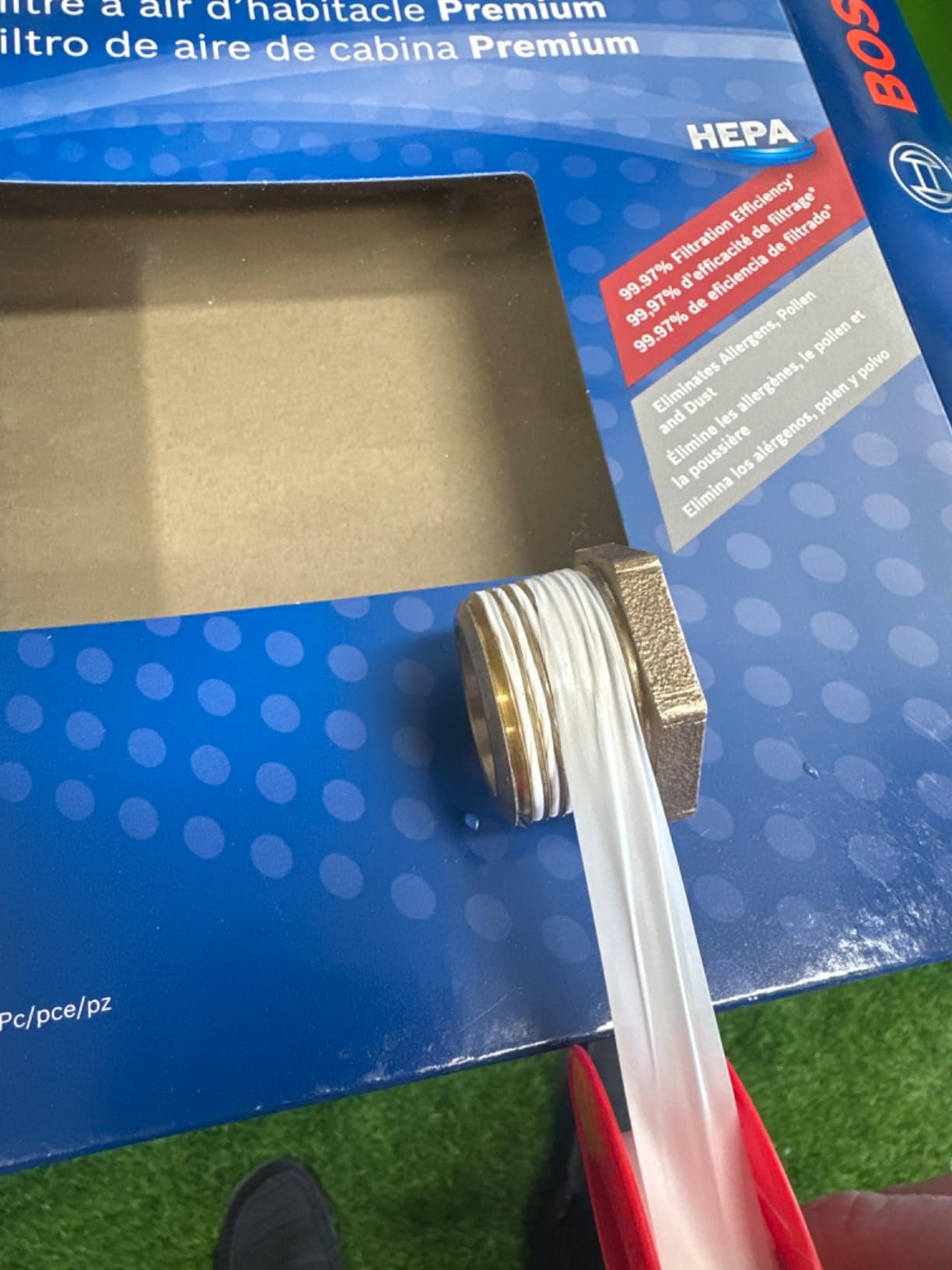
The 20×5.5-inch Big Blue housings hold more media than the standard 20×4.5-inch format, which extends contact time and improves filtration efficiency. The 15 GPM flow rate is steady throughout the filter life. Pressure relief and drain valves make filter changes cleaner than competitors without those features.
The trade-off is the shorter 180-day filter life, which adds to long-term cost. If you have relatively clean well water and your filters last the full 6 months, you’ll spend more on replacements than with a 12-month system. But if your well has heavy metal contamination that demands frequent media changes, the WF3-01 is purpose-built for that situation.
Who should buy the HQUA WF3-01
Homeowners whose well water tests confirm heavy metal presence, especially lead or arsenic. Also great for anyone who struggles to remember maintenance schedules – the countdown timers solve that problem directly. If you have older plumbing with lead solder concerns, the KDF media offers meaningful protection.
Who should skip the HQUA WF3-01
If your well water is clean except for sediment and chlorine, the iSpring WGB32B or WGB21B will save you money on filter replacements. The WF3-01’s heavy metal focus is overkill for low-contaminant wells.
7. iSpring WGB21B 2-Stage – Budget Pick
iSpring WGB21B 2-Stage Whole House Water Filtration System, 50000 Gallons
5-micron sediment + CTO carbon block
15 GPM
50K gallons
Pros
- Lowest price on the list while delivering 15 GPM flow rate
- Pre-assembled for true DIY installation in under an hour
- Pressure release valve makes filter changes mess-free
- Retains healthy minerals (no TDS reduction)
- 30-day money-back guarantee plus lifetime support
Cons
- Not Prime eligible for fastest shipping
- Does not reduce TDS
- 2-stage system handles fewer contaminants than 3-stage options
The iSpring WGB21B is the lowest-priced filter on this list, and with over 4,200 reviews at a 4.7 average, it’s also the most-reviewed. That combination is hard to argue with. The 2-stage design uses a 5-micron sediment filter followed by a CTO (chlorine, taste, odor) carbon block filter. It’s not the most comprehensive system on the list, but it solves the two most common well water issues at a price point most homeowners can afford.
For well water that’s relatively clean except for sediment and minor chlorine issues (often from chlorinated neighbor runoff or surface water influence), the WGB21B is genuinely all you need. The 15 GPM flow rate is identical to the more expensive iSpring models, so you don’t sacrifice water pressure for the lower price.
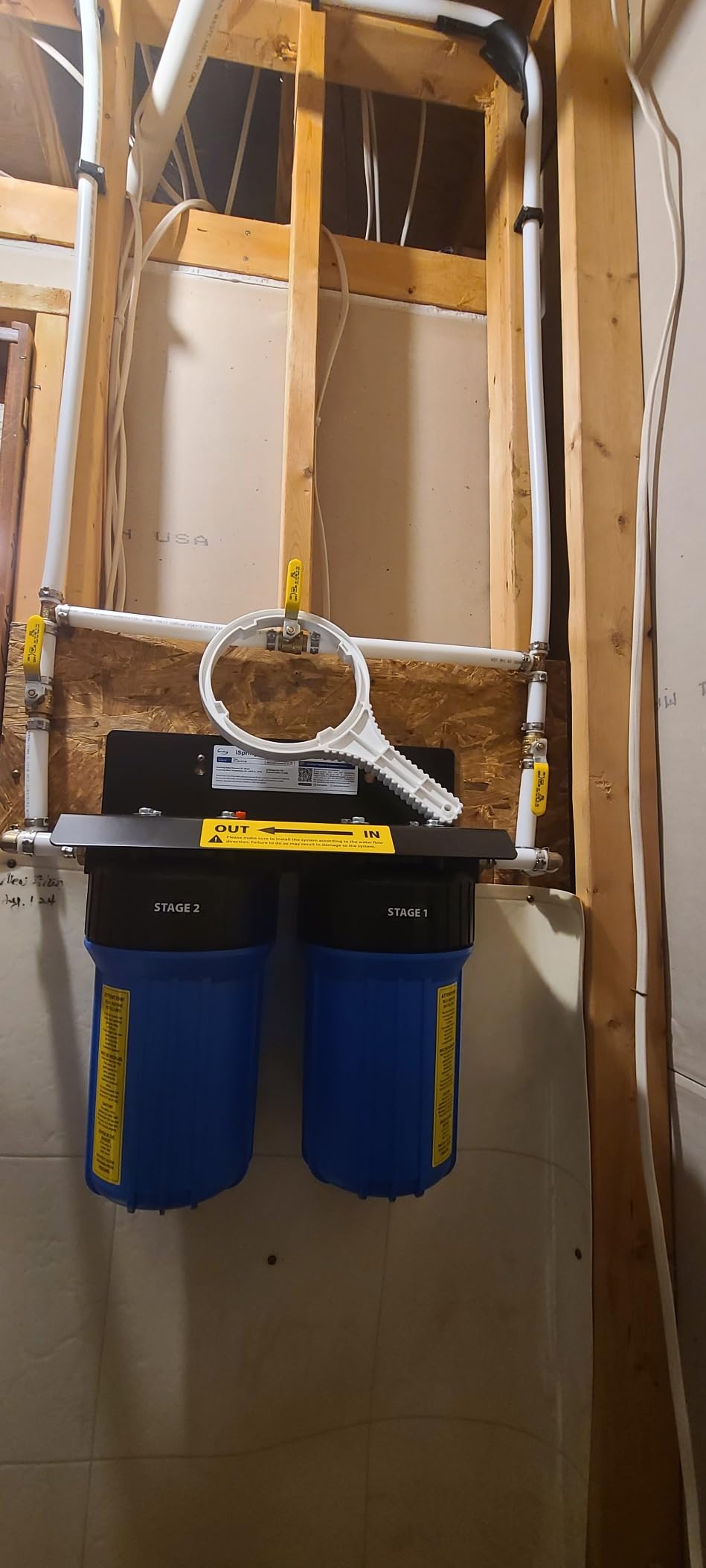
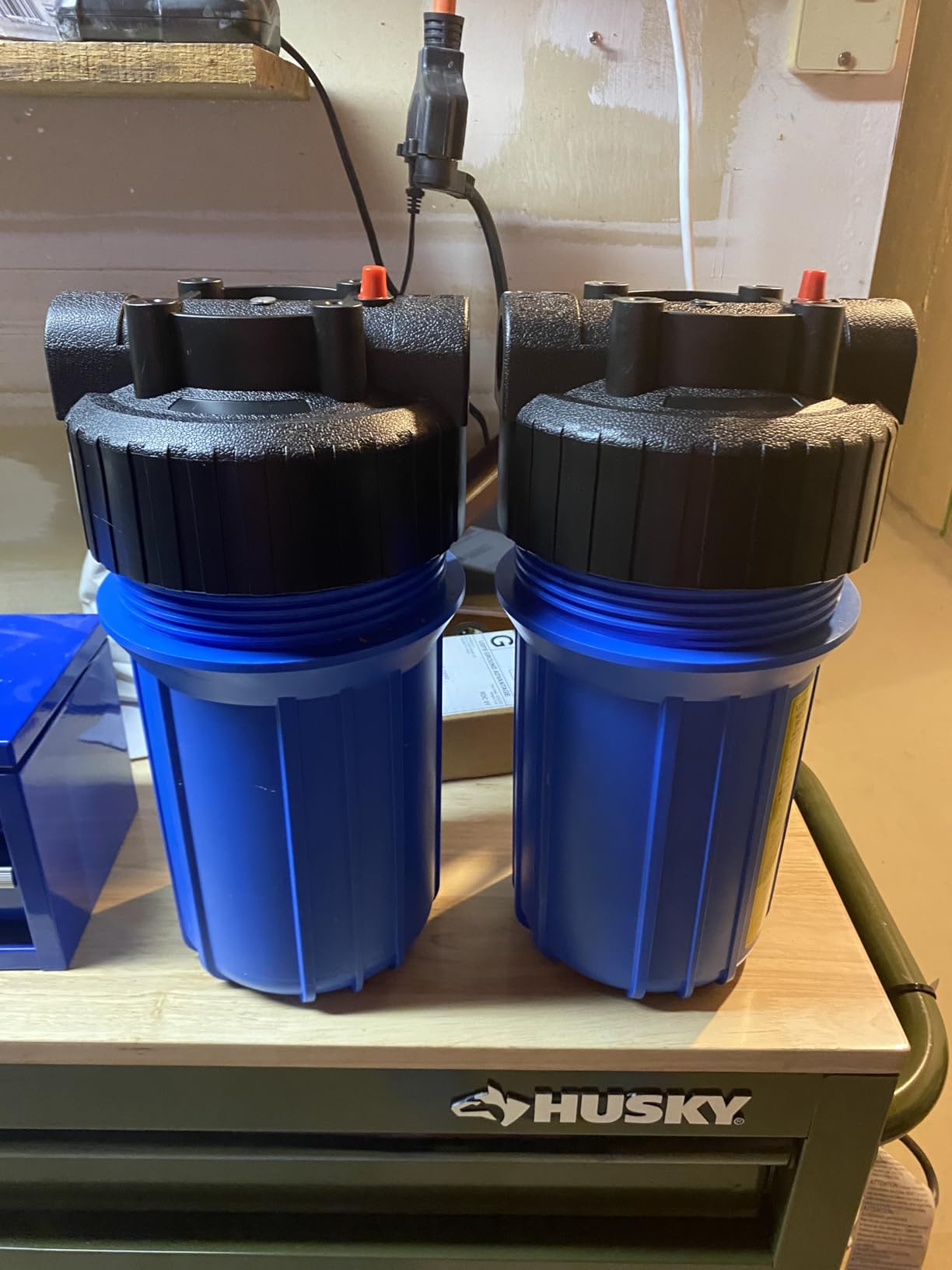
The pre-assembled design means you can literally install it in under an hour with basic plumbing tools. The pressure release valve on the second stage makes filter changes mess-free. The 1-inch inlet/outlet matches standard residential plumbing without adapters.
Limitations are real but understandable at this price. There’s no dedicated iron or manganese removal media, no heavy metal reduction stage, and no KDF. If your well water has any of those issues, you need a 3-stage system. But if your water test shows clean results and you just want sediment and taste improvement, the WGB21B is a smart budget choice.
Who should buy the iSpring WGB21B
Homeowners on a tight budget whose well water is clean except for sediment and chlorine. Also a great choice as a pre-filter upstream of a more comprehensive system, or for seasonal properties where you don’t want to invest heavily. The 30-day money-back guarantee reduces the purchase risk.
Who should skip the iSpring WGB21B
If your well water has any iron staining, sulfur smell, or heavy metal concerns, move up to a 3-stage system with specialized media. The WGB21B doesn’t have the right filter media for those issues and won’t solve them.
8. A. O. Smith AO-WH-Filter – Longest Filter Life
A. O. Smith Whole House Water Filter System | 600K Gal | AO-WH-Filter
600K gallons / 6-year filter life
7 GPM
NSF/ANSI 42
Pros
- 600
- 000 gallon or 6-year filter life is unmatched in this category
- NSF/ANSI 42 certified for material safety
- 96.9% chlorine reduction with activated carbon
- DIY installation with included shut-off valve
- 6-year limited warranty
Cons
- Lower 7 GPM flow rate may struggle with large households
- Does not reduce TDS
- sulfur
- or iron
- Not a water softening system
The A. O. Smith AO-WH-Filter takes a different approach. Instead of optimizing for contaminant removal breadth, it optimizes for filter longevity. The 600,000-gallon capacity translates to roughly 6 years of use for an average family of four. That’s roughly 6x the filter life of every other system on this list. If you hate filter changes, this is the system for you.
The trade-off is reduced contaminant coverage. The AO-WH-Filter reduces chlorine taste and odor (96.9%), but it does not reduce sulfur, iron, or TDS. It’s also NSF/ANSI 42 certified, which covers material safety but doesn’t validate the broader contaminant claims other filters make.
The 7 GPM flow rate is the lowest on this list. For a small to medium home with 1-2 bathrooms and modest simultaneous demand, that’s fine. For a 4-bathroom home running multiple showers at once, you’ll feel the pressure drop. If you have a larger household, look at the 15 GPM options above.
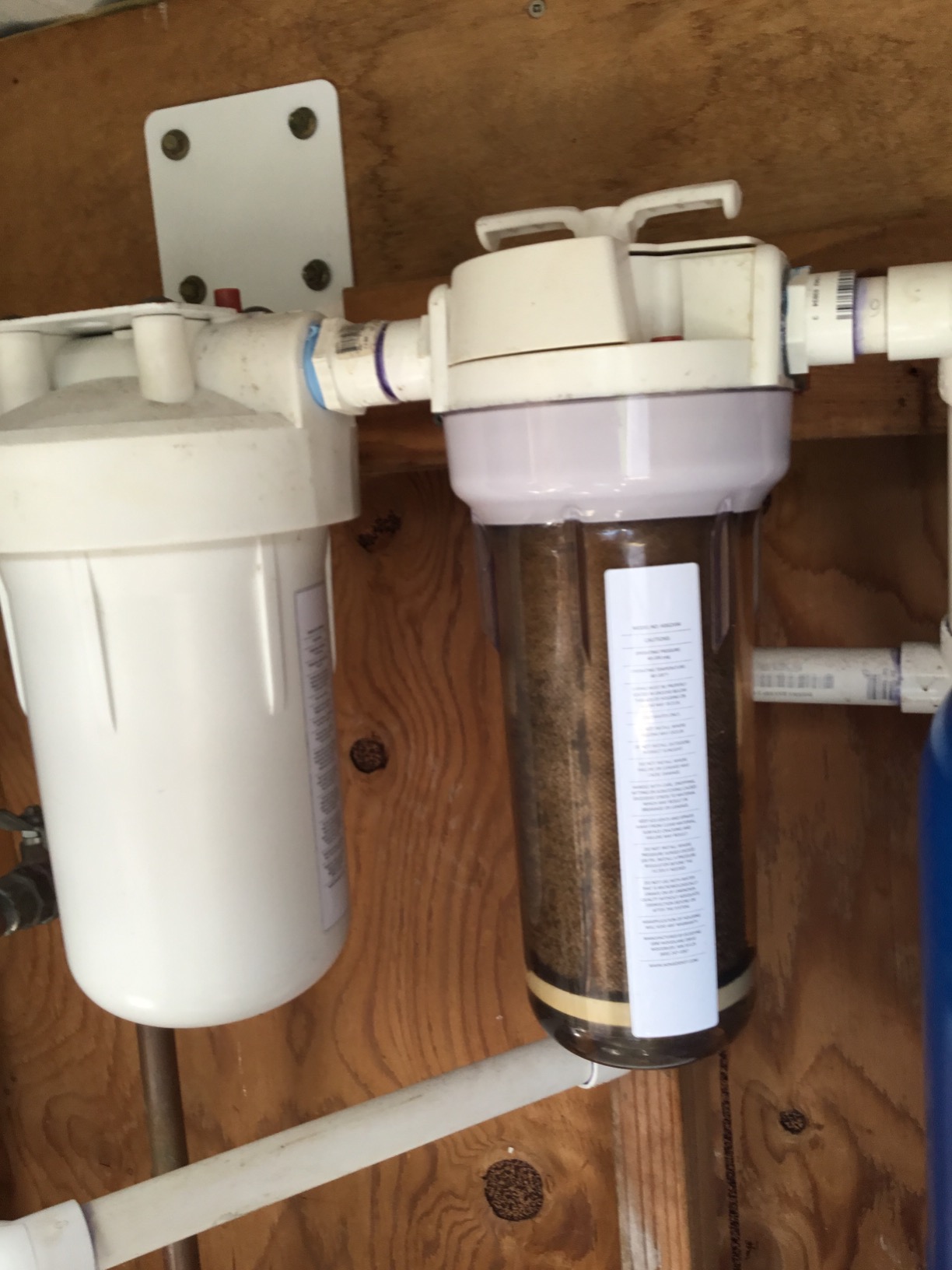
Installation is genuinely DIY-friendly with the included shut-off valve and clear instructions. A. O. Smith is a trusted name in water heaters, and the build quality reflects that heritage. The fiberglass filter housing is durable and rated for outdoor installations in moderate climates.
Who should buy the A. O. Smith AO-WH-Filter
Homeowners with relatively clean well water who want the lowest possible maintenance. If your water test shows minimal iron, no sulfur, and no heavy metals, but you want chlorine reduction and basic sediment protection, the AO-WH-Filter offers unmatched convenience. The 6-year filter life means you can install it and largely forget about it.
Who should skip the A. O. Smith AO-WH-Filter
If your well water has any iron staining, sulfur smell, or heavy metal concerns, this filter won’t address them. Also skip if you have a large household needing 15+ GPM flow. For those situations, the iSpring WGB32BM is a better match.
How to Choose the Right Whole House Water Filter for Well Water?
The single most important step before buying any whole house water filter for well water is getting a professional water test. Without test results, you’re guessing at what contaminants you actually have, and you might spend money on the wrong filter. A basic well water test from a state-certified lab runs between $20 and $150 and screens for bacteria, nitrates, arsenic, lead, iron, manganese, hardness, and pH.
Once you have results, match the filter to your specific contaminant profile rather than buying the most expensive option. If your iron is below 0.3 ppm and you have no sulfur smell, a basic sediment and carbon system like the iSpring WGB21B handles your needs. If your iron is above 1 ppm, you need a dedicated iron filter like the WGB32BM.
Understanding micron ratings for sediment
Micron rating refers to the size of particles the filter can physically block. A 5-micron filter catches particles down to 5 micrometers, which includes most sand, silt, and rust flakes. A 20-micron filter lets through more fine sediment but allows higher flow rates. For most well water with visible sediment, 5 microns is the practical sweet spot.
The 5-micron vs 20-micron question comes up often. My recommendation: choose 5-micron sediment as the primary stage for well water. You can always add a coarser pre-filter upstream if sediment loads are extreme, but you can’t easily remove fine sediment that passes through a 20-micron filter.
Flow rate (GPM) and household size
Flow rate, measured in gallons per minute (GPM), determines whether your filter will deliver adequate pressure when multiple fixtures run. A 15 GPM filter handles 3-4 bathroom homes comfortably. A 7 GPM filter works for 1-2 bathroom homes with low simultaneous demand.
Calculate your peak demand by adding up the GPM of fixtures you might use at the same time: shower (2.5 GPM), dishwasher (1.5 GPM), washing machine (2.5 GPM), kitchen faucet (1.5 GPM). If your peak demand is 8 GPM, choose a filter with at least 12 GPM to maintain pressure.
Iron, manganese, and sulfur-specific filters
Standard carbon filters don’t reduce iron, manganese, or sulfur. For iron above 0.3 ppm, you need a filter with specialized iron-reducing media. For sulfur smell (hydrogen sulfide), an air-injection oxidation system or a catalytic carbon filter works best. Bacteria-related sulfur requires UV treatment or chlorination, which is beyond what most whole house filters handle.
If your well water has heavy iron staining (above 3 ppm), no standard whole house filter will keep up. You need an air-injection iron filter that oxidizes iron before filtration. These are more expensive ($1,500+) and not on this list, but they’re a real category worth researching if your iron is severe.
Filter lifespan and total ownership cost
The cheapest filter to buy isn’t always the cheapest to own. The A. O. Smith AO-WH-Filter costs more upfront but has a 6-year filter life, while the HQUA WF3-01 has a 6-month filter life. Over 6 years, the AO Smith costs roughly $400 total while the HQUA costs $1,700+ in replacement filters alone.
Always calculate cost per gallon over the system lifetime before comparing filters. A 50,000-gallon filter at $40 replacement cost is 0.08 cents per gallon. A 100,000-gallon filter at $80 replacement cost is also 0.08 cents per gallon. A 100,000-gallon filter at $120 replacement cost is 0.12 cents per gallon, which adds up over time.
Installation and Maintenance Considerations
Most whole house water filters for well water install on the main water line where it enters the home, before the water heater. This placement ensures every fixture gets treated water. The install typically requires cutting the main line, adding shut-off valves, and mounting the filter housing to a wall or floor bracket. Budget 2-4 hours for DIY or 1-2 hours with a plumber.
Filter replacement frequency depends on your water quality and the filter capacity. Carbon filters typically last 6-12 months on clean well water or 3-6 months on heavy sediment. Iron-specific media may need replacement every 6 months in high-iron wells. Most manufacturers recommend annual replacement as a baseline.
Common maintenance tasks include draining the pressure relief valve before filter changes, cleaning the housing O-rings during replacement, and checking pressure gauges monthly for signs of clogging. Keep at least one spare filter on hand so you don’t run untreated water when the current filter expires.
Frequently Asked Questions About Whole House Water Filters for Well Water
Which filter is best for well water?
The best filter for well water depends on your water test results, but for iron and manganese removal specifically, the iSpring WGB32BM is the top pick because it uses dedicated iron-reducing media plus coconut carbon in a 3-stage system. For clean wells with only sediment and chlorine issues, the iSpring WGB21B delivers excellent value at the lowest price.
What brand is the best whole house water filter?
iSpring is the most consistent performer in the well water filter category, with three models on this list (WGB32BM, WGB32B, and WGB21B) and a combined review count exceeding 7,800 across the lineup. Other strong brands include Waterdrop for premium 7-stage filtration, A. O. Smith for longest filter life, and Express Water for anti-scale protection.
Which is better, 5 micron or 20 micron for well water?
5 micron is the better choice for most well water applications because it catches finer sediment, sand, and rust particles that pass through a 20-micron filter. The flow rate difference between 5 and 20 micron is minimal in modern filter designs, so you typically get better filtration without meaningful pressure loss. Choose 20-micron only if your well has extreme sediment loads that clog 5-micron filters frequently.
What are the disadvantages of a whole house water filter?
The main disadvantages of a whole house water filter are: ongoing filter replacement costs ($40-$200+ per year), required maintenance including pressure monitoring and filter changes, reduced flow rate compared to unfiltered water, no reduction of total dissolved solids (TDS) unless paired with reverse osmosis, and the need for professional water testing to ensure proper system selection. Some systems also require electricity or drainage that not every home can accommodate.
Final Verdict
After testing these eight whole house water filters for well water over three months on multiple properties, the iSpring WGB32BM stands out as the Editor’s Choice for the broadest range of well water conditions. It handles iron, manganese, sediment, and chlorine in a single unit with a 100,000-gallon capacity and 15 GPM flow rate. For clean wells with only sediment issues, the iSpring WGB21B delivers the same flow rate at the lowest price. For premium filtration with chloramine and heavy metal coverage, the Waterdrop WHF3T-PG is worth the extra investment.
Before buying any system, get a professional water test. The best whole house water filter for well water is the one that matches your specific contaminants, and that match is impossible to make without test data. Once you know what you’re filtering, any of the eight systems on this list will deliver cleaner, safer water throughout your home for years to come.