
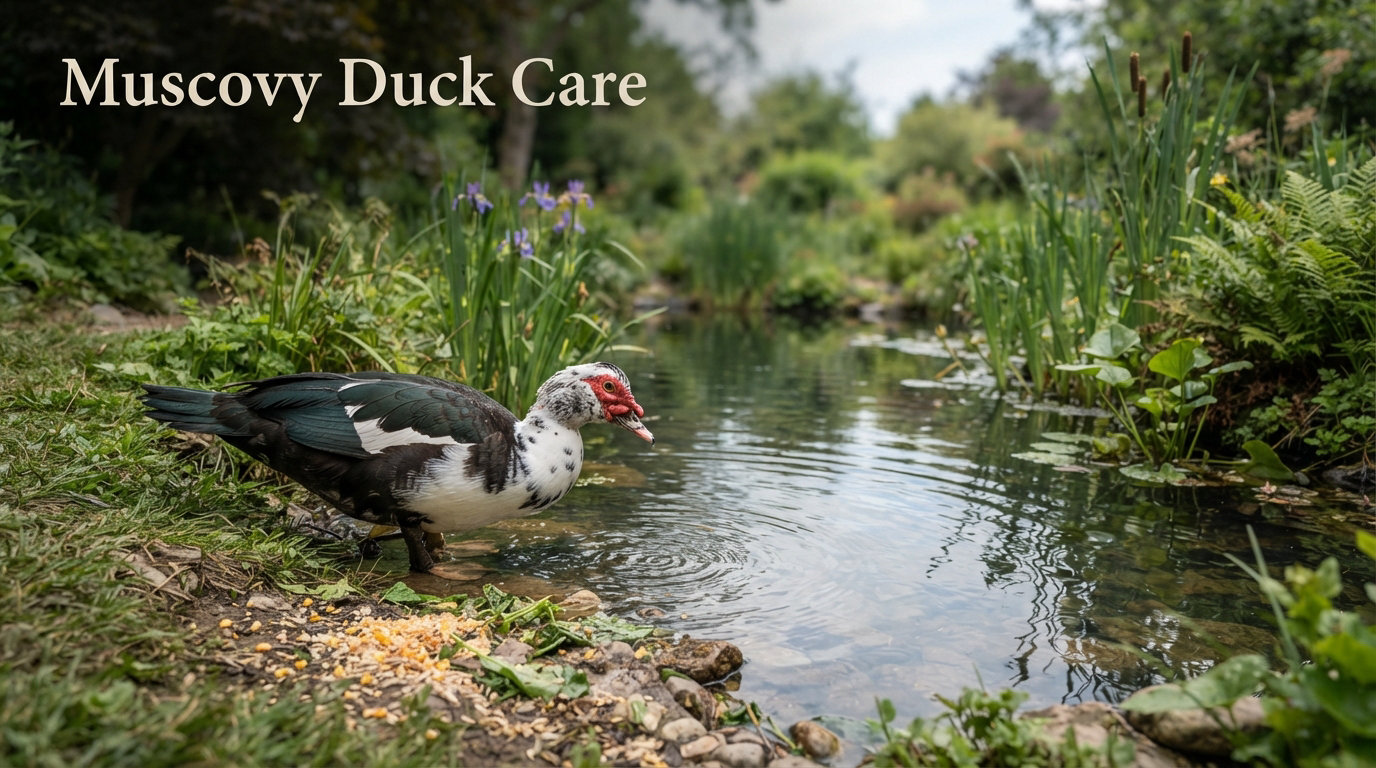
Muscovy duck care is simpler than most beginners expect, and that is exactly why this breed has earned a loyal following on homesteads across the country. After raising Muscovies on our small farm for the past six years, I can tell you they are quiet, hardy, and surprisingly self-sufficient once you understand their basics: a safe coop, a small pool of clean bathing water, a high-protein starter feed, and a plan for their strong wings.
This guide pulls together what our team has learned the hard way, along with research from homesteaders on Reddit, Backyard Chickens, and the long-time keepers at Majestic Waterfowl. If you are searching for a complete Muscovy duck care guide for 2026, here is what we will cover:
Housing, coop size, and predator-proofing checklist
Water needs without a full pond (the truth about kiddie pools)
Feeding schedule with specific protein percentages by age
Duckling development week by week (with brooder temperatures)
Behavior, roosting, and how to win their trust
Flight behavior, wing clipping, and whether they fly away
Breeding, nesting, and incubation basics (35 days)
Living with chickens, winter cold, summer heat, and health
A real cost breakdown for starting a small flock
By the end, you will know exactly what your ducks need to thrive on your property.
Table of Contents
What Makes Muscovy Ducks Different From Other Ducks?
Muscovy ducks (Cairina moschata) are the only domesticated duck that does not descend from the mallard. They originate in Central and South America and were kept by indigenous peoples long before they reached European farms. That long, separate lineage is why they look and act so different from Pekins or Khaki Campbells.
The most obvious difference is their face. Males develop lumpy red caruncles around the eyes and beak that grow more pronounced with age. Hens show a smaller, pinker version. Their bodies are longer and wider than most ducks, with strong legs and sharp claws built for gripping branches.
They also do not quack. Muscovies make a soft hissing breath and a low, breathy “coo” or wag-tail sound, which is one reason suburban homesteaders love them. If you have close neighbors, you can keep a small Muscovy flock without ever disturbing them.
A few more traits that catch new keepers off guard: they roost in trees, they fly short distances very well, and they eat mosquitoes and flies with enthusiasm. We have watched a single drake clear a cloud of gnats off our back porch in under a minute. They are working ducks that happen to be friendly, not barnyard pets that happen to lay eggs.
Housing and Shelter Requirements for Muscovy Ducks
Muscovies need less housing than chickens, but they still need protection from predators at night. We lock our flock in a simple wooden coop every evening because owls, raccoons, and foxes all share our property. A basic three-sided shed with a secure door is enough for most backyard flocks.
Coop Size and Space Per Bird
Plan for at least 4 square feet of indoor floor space per adult Muscovy, and 10 to 15 square feet of outdoor run space. They do not pile on top of each other like chickens, so you can stretch the indoor space a bit if your run is generous. Ventilation matters more than insulation: moisture buildup causes more problems than cold does.
For bedding, we use pine shavings about 3 inches deep and refresh the worst spots weekly. A full clean-out twice a year keeps ammonia down and parasites in check.
Predator-Proofing Checklist
Our team lost two birds in our first year to a raccoon that pried open a corner of the run. After that, we built this checklist into every coop:
1/2-inch hardware cloth on all openings (chicken wire does not stop raccoons)
Two latches or a carabiner-style clip on every door
Bury hardware cloth at least 12 inches down or add an L-shaped apron to block digging
Cover the run with netting or wire to block hawks and owls
Lock up at dusk every night, no exceptions
If you free-range during the day, count on losing the occasional bird to a hawk. It is a trade-off between safety and the foraging benefits your flock gets from open ground.
Roosting and Perches
Muscovies love to perch, even as adults. We installed 2×4 boards turned wide-side up at 18 and 36 inches off the floor, and every evening our ducks hop up to the higher rail. They feel safer off the ground and stay cleaner. A lower perch lets older birds and ducklings reach a roost without injury.
Water Needs Without a Pond
Muscovies are not nearly as dependent on water as mallard-derived ducks. They will not panic if your pond freezes or if you do not have one at all, which is great news for small-lot owners.
That said, they still need water that is deep enough to dunk their heads and clean their nostrils. A heavy rubber tub or a standard drinker that lets them submerge their bill keeps their eyes and sinuses healthy. We use a 3-gallon poultry drinker for our flock of eight and refill it twice a day in summer.
Bathing Water (Kiddie Pool Guidance)
For bathing, a kiddie pool is the gold standard. We use a hard plastic kiddie pool about 4 feet across, sunk slightly into the ground so ducks can step in and out easily. Change the water every two days in cool weather and daily in summer to keep mosquito larvae and slime down.
If a pool is not practical, a wide rubber tub at least 6 inches deep works for individual birds. Muscovies do not need to swim; they need to bathe and preen. Skipping this step can lead to broken or matted feathers and a dull coat.
Cleaning Routine
Dump, scrub with a stiff brush, and refill. We keep a dedicated pool brush next to our pool so it is never a chore. In freezing climates, switch to a heated bucket or bring the pool inside a shed on cold nights so the ducks can keep bathing through winter.
Diet and Feeding Schedule by Age
Muscovy ducks eat a lot for their size, especially during growth. A drake can top 10 pounds, and laying hens burn through protein making eggs. Getting the right protein percentage at each life stage is the single biggest factor in healthy growth.
Ducklings (0-8 Weeks): 18-20% Then 15-16% Protein
For the first two weeks, our ducklings get a waterfowl starter crumble with 18% to 20% protein. Standard chick starter works in a pinch, but it is usually 18% to 22%, and the extra niacin helps duckling leg development. If you must use chick starter, sprinkle brewer’s yeast on top at about 1 tablespoon per duckling per day to boost B vitamins.
From weeks 3 through 8, drop to a 15% to 16% grower crumble. Higher protein past eight weeks can lead to angel wing, a feather deformity where the wing joint grows outward. Our team watched one of our first ducklings develop this because we left them on starter too long. We corrected it by switching feed and taping the affected wing for a week.
Growers and Layers
From 9 weeks to laying age (around 6 months), a 14% layer or grower crumble keeps weight gain steady without the angel wing risk. Once hens start laying, switch to a 16% layer feed with extra calcium, or offer crushed oyster shell on the side. Drakes and non-laying females stay on the 14% grower.
Foraging, Treats, and Grit
Free-range Muscovies get a surprising share of their diet from grass, bugs, slugs, and mosquitoes. We have seen one hen eat 50 mosquitoes in a single sitting. Offer insoluble grit in a separate dish once your ducks are eating anything besides crumble, and treat them with peas, oats, watermelon, or chopped greens. Avoid white bread and salty snacks.
Muscovy Duckling Care Week by Week
Ducklings grow fast, and what they need each week changes quickly. This is the section I wish I had when we hatched our first clutch. Here is the schedule that works for our team, and it lines up with what experienced keepers on Backyard Chickens recommend.
Brooder Setup and Temperature
Start ducklings in a plastic tote, a stock tank, or a wooden brooder box with pine shavings, a shallow water dish, and a heat lamp. Hang a thermometer at duckling height and aim for 95 degrees Fahrenheit in the first week. Drop the temperature by 5 degrees each week until you hit the ambient temperature, usually around week 5 or 6.
Watch the ducklings, not the thermometer. If they pile under the lamp and chirp loudly, they are cold. If they spread to the far corners and pant, they are too hot. Comfortable ducklings move evenly around the brooder and peep softly.
Weeks 1-4 Milestones
Week 1: yellow and brown down, eyes open, wobbly on their feet. Provide non-slip flooring and shallow water no deeper than the beak. By week 2, true feathers start pushing through the down. By week 3, the ducklings can take a shallow swim under supervision for 5 minutes, then go back under the lamp to dry. By week 4, they look like fluffy teenagers and start perching on low obstacles.
Weeks 5-12 Milestones
Week 5 brings a clear molt into juvenile feathers, and ducklings can spend warm days outside if a draft-free shelter is available. By week 7, they have full waterproofing as long as they are not separated from their mother or heat source for long. Week 8 is usually when we move them to the juvenile coop with a heat plate for backup. By week 12, most Muscovy ducklings are nearly full size and ready to join the adult flock.
When Ducklings Can Go Outside
Ducklings can spend a few hours outside on warm, dry days starting around week 3. Full outdoor living without a heat source depends on outside temperature. Above 70 degrees Fahrenheit, week 5 is usually fine. Below 60, give them a heat plate until week 7 or 8. Our rule of thumb: if you need a jacket outside, the ducklings need supplemental heat.
Behavior, Temperament, and Social Needs
Muscovies have personalities. Each of our eight birds has a name and recognizes us from across the yard. They are not cuddly like a dog, but they will follow you around the garden, snack from your hand, and wag their tails when you talk to them.
They are quiet, which is unusual in ducks. Instead of a loud quack, they hiss, huff, and wag their tails in greeting. Hens make a soft “coo” when they have laid an egg. Drakes do a low head-bob and a breathy wheeze during courtship. None of it carries beyond your fence line.
Social structure is more relaxed than chicken flocks. There is a pecking order, but it usually settles within a few days when new birds are added. Drakes can be protective and may chase strangers, dogs, or perceived threats; some can become aggressive toward humans during mating season. Our most reliable fix: handle drakes gently when young, avoid cornering them, and never let children chase the flock.
For maximum friendliness, spend time sitting near your ducks daily for the first month. They bond to routine and to the person who feeds them at the same time every day. Within two weeks, ours were eating out of our hands.
Flight Behavior and Wing Clipping
Will your Muscovy ducks fly away? It depends. Drakes rarely fly far because they are heavy, but hens stay light and agile even as adults. A scared hen can clear a 6-foot fence in one push. If your coop is not fully enclosed, expect occasional flights to the neighbor’s yard.
To keep them home, you have three options. First, build a fully enclosed run with overhead netting. Second, raise ducklings where you want them to live and never move them; imprinted birds tend to stay close. Third, clip one wing.
How to Clip a Wing Safely
Wing clipping is painless when done right. Spread one wing and trim the first 10 flight feathers (the long primary feathers at the outer edge) back to about an inch below the covert feathers. Use sharp scissors and cut only the feathers, never the quick or the skin. One clipped wing is enough to upset their balance and prevent takeoffs. Clipped feathers molt back in at the next molt, so plan to reclip yearly. Never clip both wings; it gives them lift they would not otherwise have.
Breeding, Nesting, and Incubation Basics
Muscovies breed easily and raise their own young with almost no help. If you keep both a drake and a few hens, expect a steady supply of fertile eggs each spring and a hen or two going broody.
Drake-to-Hen Ratio
One drake can cover 3 to 5 hens comfortably. Two drakes in the same flock will fight unless you have 6 or more hens, and even then, watch for over-mated hens with bare necks. Spare drakes are tasty at 12 to 16 weeks, so most homesteaders plan a processing day each year.
Nesting Behavior
Hens like to nest in sheltered spots off the ground: a quiet corner of the coop, a hay bale, or a low platform. They lay one egg per day until they have a clutch of 8 to 16 eggs, then sit tight for 35 days. A laying hen eats very little while broody and rarely leaves the nest except for short breaks.
Incubation Period and Hatch Rates
Muscovy eggs take 35 days to hatch, longer than most ducks. They also require higher humidity than chicken eggs during incubation: about 55% to 65% for the first 25 days, then 75% to 80% during lockdown. Hatching at 28 to 30 days is usually a sign the incubator ran too hot or the humidity was off. Our best natural hatch rate was 14 of 16 eggs; our worst was 4 of 12, which taught us to candle at day 7 and remove clears so the hen does not waste energy.
Living With Chickens and Other Poultry
Muscovies can live peacefully with chickens, but it takes a little planning. The two species have different temperaments and different feeding needs, and a determined drake can injure a chicken out of curiosity or mating instinct.
Our team keeps Muscovies and laying hens in the same large run with no issues, but we never leave a drake unsupervised with bantam chickens. Raise them together from a young age when possible, feed them separately (layer feed has calcium that drakes should not overeat), and offer multiple water sources so chickens can drink without being chased off. For new introductions, house them side by side for a week before merging the flocks.
Seasonal Care: Winter Hardiness and Summer Heat
Muscovies handle weather extremes better than most duck breeds, which is one of the reasons they are a homestead favorite. Their caruncled faces are less prone to frostbite than combs on roosters, and they grow a thick undercoat during molt.
Winter Care
In cold climates, you mainly need to keep their water from freezing, their bedding dry, and their coop ventilated. We use a heated dog bowl for the drinker in winter, and a layer of extra straw on the coop floor. Wind chill matters more than temperature, so block the prevailing wind with plywood or straw bales. Avoid heat lamps inside the coop; they are a fire hazard and ducks do not need them as long as the coop stays dry and draft-free.
Summer Heat
Heat is harder on Muscovies than cold. Provide shade, cool water, and a bathing source during summer. Misters or shallow wading areas let them regulate body temperature. We add ice cubes to the kiddie pool in the afternoon when temperatures climb above 90 degrees Fahrenheit.
Common Health Issues and Prevention
Healthy Muscovies rarely need a vet. Most problems come down to diet, dirty water, or sudden changes. Here are the four issues we have dealt with on our own farm and how we prevent them now.
Angel wing. The wing joint twists outward, leaving feathers exposed. Caused by too much protein in growing ducks. Fix by switching to a lower-protein feed and wrapping the wing with vet wrap for a week. We caught it early once and the wing grew in normally after one molt.
Bumblefoot. A round scab on the footpad, often from rough surfaces or splinters. Keep bedding clean and soft, and check feet monthly. Mild cases respond to a daily soak in warm Epsom-salt water and a spray of vetericyn. Severe cases need a vet to remove the scab.
Parasites. External mites and internal worms show up in any flock. Dust ducklings with poultry dust at 4 weeks and adults every spring and fall. Rotate pastures if you can, and offer fresh ground regularly. A fecal float through your vet once a year tells you exactly which dewormer to use.
Frostbite. Rare, but possible on caruncles of older drakes in extreme cold. Smear a thin layer of petroleum jelly on exposed red skin during extreme cold snaps. We have never had a case since we started blocking wind and skipping heat lamps.
Cost Breakdown for Starting a Muscovy Flock
No one else in our research laid out real numbers, so here is what our team spent getting to a flock of eight in year one. Costs vary by region, but this gives you a realistic starting point.
8 sexed ducklings from a hatchery: about $80 to $120 total
Brooder setup (tub, heat lamp, shavings, drinker): about $90
First 8 weeks of feed (starter then grower): about $60
Coop and run materials (we used salvaged wood and new hardware cloth): about $400
Kiddie pool, drinkers, baskets for nests: about $50
Total upfront: about $700 to $900. Ongoing yearly costs run $200 to $300 for feed, bedding, and pool supplies. In return, our flock produces roughly 4 ducklings per hen per year for sale or the table, plus a steady supply of mosquito control and entertainment.
If you start smaller, a trio of ducklings can be set up for under $300 with a converted shed and a kiddie pool. Muscovies pay you back in pest control alone if you live near wetlands.
Frequently Asked Questions About Muscovy Duck Care
Are Muscovy ducks easy to care for?
Yes. Muscovy ducks are among the easiest ducks to care for because they are quiet, forage a lot of their own food, and tolerate a wide range of climates. They need a predator-proof coop at night, clean water deep enough to dunk their heads, a 14%-16% protein feed, and protection from predators. Many beginners run a small flock with only a few minutes of daily care.
What is a Muscovy duck’s favorite food?
Muscovy ducks love high-protein foods: insects, mosquito larvae, slugs, worms, and small fish when they can get them. Most keepers feed a 14%-16% protein layer or grower crumble, plus kitchen scraps like peas, oats, watermelon, and leafy greens. They hunt mosquito larvae with such enthusiasm that they are often called natural mosquito control.
What do Muscovy ducks like to sleep on?
Muscovy ducks prefer to sleep off the ground. They perch on 2×4 roosts, tree branches, or any elevated surface around 18 to 36 inches high. In the wild they roost in trees, so providing a sturdy perch keeps them safe from floor-dwelling predators and helps them stay clean.
Will my Muscovy ducks fly away?
Muscovy hens are strong fliers and can clear 6-foot fences easily, while drakes are heavier and rarely fly far. Most stay close to home if raised on your property from ducklings. To prevent escapes, build an enclosed run, raise them where you want them to stay, or clip one wing once a year after the first molt.
Do Muscovy ducks need a pond?
No. Muscovies bathe in surprisingly little water and do not need a pond. A hard plastic kiddie pool about 4 feet across, changed every two days, gives them what they need to clean their feathers and sinuses. They do not swim like a mallard-derived duck, and they manage fine with a wide rubber tub if a pool is not practical.
Can Muscovy ducks live with chickens?
Yes, in most flocks. Muscovies get along with standard-size chickens when raised together or introduced slowly. Avoid mixing them with bantam chickens when drakes are present, because a determined drake can injure a small bird. Feed them separately to keep drakes off the high-calcium layer feed, and offer multiple water sources.
How long does it take Muscovy ducklings to grow?
Muscovy ducklings reach near-adult size in about 12 weeks and full maturity around 6 months. They feather out by week 5, can spend warm days outside around week 3, and join the adult flock by week 8 to 12 depending on weather. Our team measured growth from 60 grams at hatch to over 6 pounds at 12 weeks in a typical clutch.
Final Thoughts on Raising Muscovy Ducks
Six years in, our Muscovy flock is the easiest part of our small farm. They eat bugs, they quiet down the mosquito population, they hatch their own ducklings, and they never wake the neighbors. If you give them predator-proof shelter at night, a kiddie pool changed twice a week, and a feed schedule matched to their age, you will spend less time on chores and more time enjoying the flock. That is what good Muscovy duck care looks like in 2026 and beyond.