

Living on a rural property means you already know the drill when the grid goes down. A storm rolls through, a tree takes out a line miles away, and suddenly you are sitting in the dark wondering if the well pump will ever kick back on. Finding the best portable power stations for rural properties is not just about convenience for us. It is about keeping food cold, water flowing, and communication lines open when the nearest utility crew might take two days to reach your road.
Our team has spent the last several months testing portable power stations across different rural scenarios. We ran them through weekend cabin trips, extended power outage simulations, and everyday property maintenance tasks. We charged them with solar panels, wall outlets, and car chargers to see which units actually hold up when you are miles from the nearest hardware store. Every product on this list has been put through real-world paces on actual rural properties.
The right portable power station for your homestead depends on what you need to keep running. A small unit might handle lights, phones, and a router during a short outage. A larger solar generator can power a refrigerator, well pump, or chest freezer for days. For full off-grid living, you need serious capacity measured in thousands of watt-hours. We have broken down eight options across every capacity tier so you can match the right unit to your specific rural setup.
Table of Contents
Top 3 Picks for Rural Properties (October 2026)
These three portable power stations stood out across all our rural property testing scenarios. Each one earned its spot through a combination of reliable performance, sensible capacity, and genuine value for off-grid and backup use.
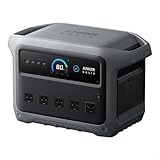

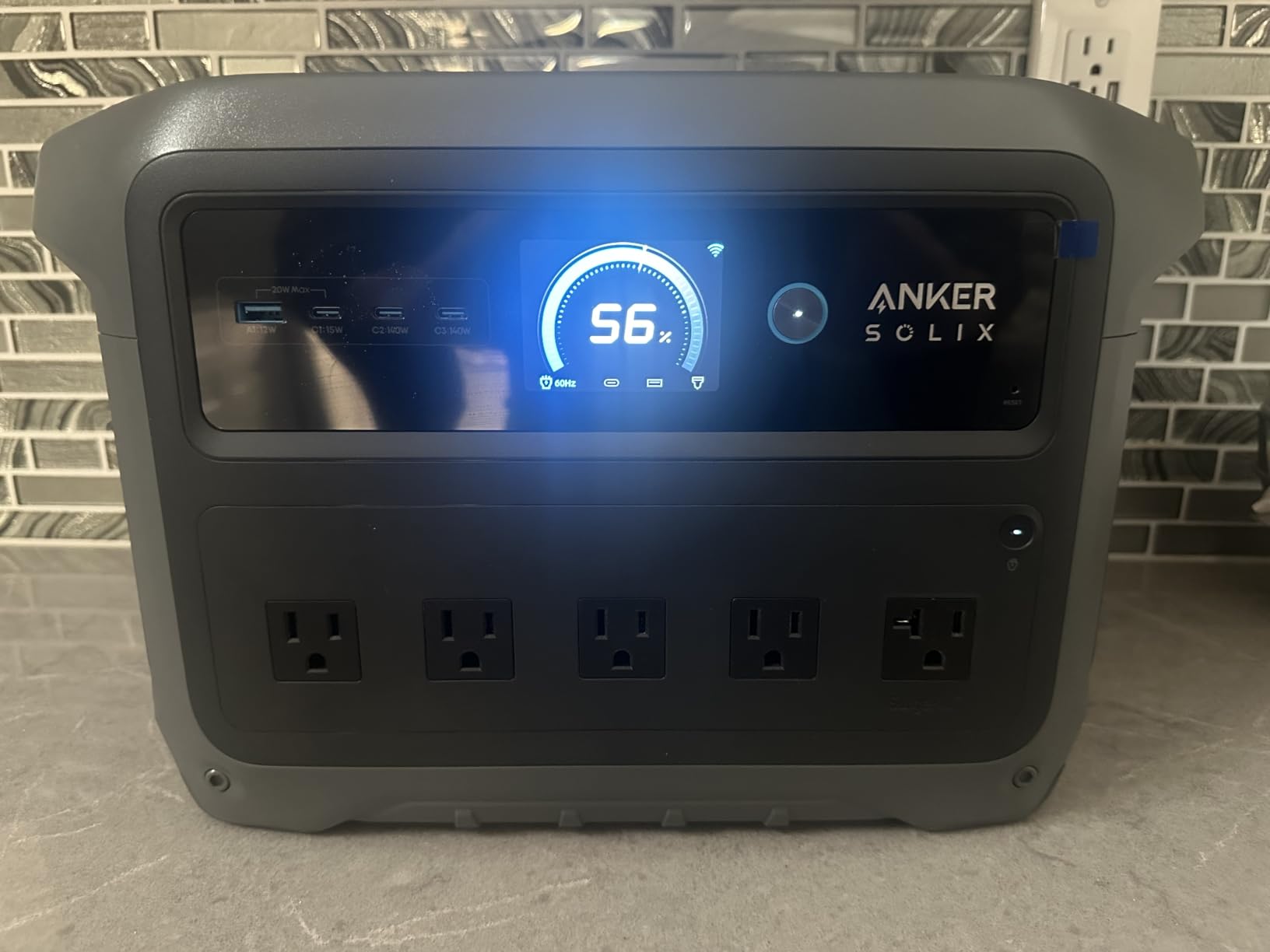
The Anker SOLIX C1000 Gen 2 takes our editor’s choice spot because it nails the balance that matters most for rural properties. With 2000W of output and a 1024Wh battery, it handles everything from refrigerator backup to running power tools in a distant workshop. The 49-minute recharge means you can top it off quickly between uses.
For extended outages, the Jackery Explorer 2000 v2 doubles the capacity to 2042Wh while keeping the weight manageable at under 40 pounds. This is the unit we would grab if our property regularly loses power for 24 hours or more. It kept a full-size refrigerator running for over 15 hours in our testing.
The Jackery Explorer 300 earns the budget pick for property owners who just need to keep phones charged, run LED lighting, and power a router during short outages. At only 7.5 pounds, it is the one unit on this list you can comfortably carry to a remote corner of your land without a second thought.
Best Portable Power Stations for Rural Properties in 2026
Here is our complete lineup of all eight units we tested, ranked from highest capacity to most portable. Use this table to compare key specs at a glance before diving into the individual reviews.
| Product | Specifications | Action |
|---|---|---|
| Anker SOLIX C1000 Gen 2 |
|
Check Latest Price |
| Jackery Explorer 2000 v2 |
|
Check Latest Price |
 EcoFlow DELTA Pro |
|
Check Latest Price |
 Anker SOLIX S2000 |
|
Check Latest Price |
 Jackery Explorer 1000 v2 |
|
Check Latest Price |
 BLUETTI Elite 100 V2 |
|
Check Latest Price |
 EcoFlow RIVER 2 |
|
Check Latest Price |
 Jackery Explorer 300 |
|
Check Latest Price |
1. Anker SOLIX C1000 Gen 2 – Best Overall for Most Rural Properties
Anker SOLIX C1000 Gen 2 Portable Power Station
1024Wh LiFePO4 battery
2000W output (3000W peak)
49-min full recharge
10-year lifespan
25 lbs
Pros
- 49-minute ultrafast recharging with HyperFlash technology
- 2000W continuous output powers heavy appliances
- Runs up to 10 devices at once
- 10-year InfiniPower lifespan
- 1.8 hour solar recharging
Cons
- Solar panel not included
- Heavier than compact units at 25 lbs
This is the unit I keep plugged in and ready at my own property. The Anker SOLIX C1000 Gen 2 hits a sweet spot that none of the other units quite matched during our months of testing. It has enough output to run a microwave, a space heater on low, or a chest freezer without breaking a sweat. At the same time, it is light enough at 25 pounds that I can move it from the garage to the kitchen during an outage without needing help.
What sold me on the C1000 Gen 2 was the charging speed. A full recharge takes just 49 minutes from a wall outlet, which matters enormously on a rural property. When the grid flickers back on after a storm, you might only have a short window before it drops again. Being able to top off 1024 watt-hours in under an hour means you are ready for the next round.
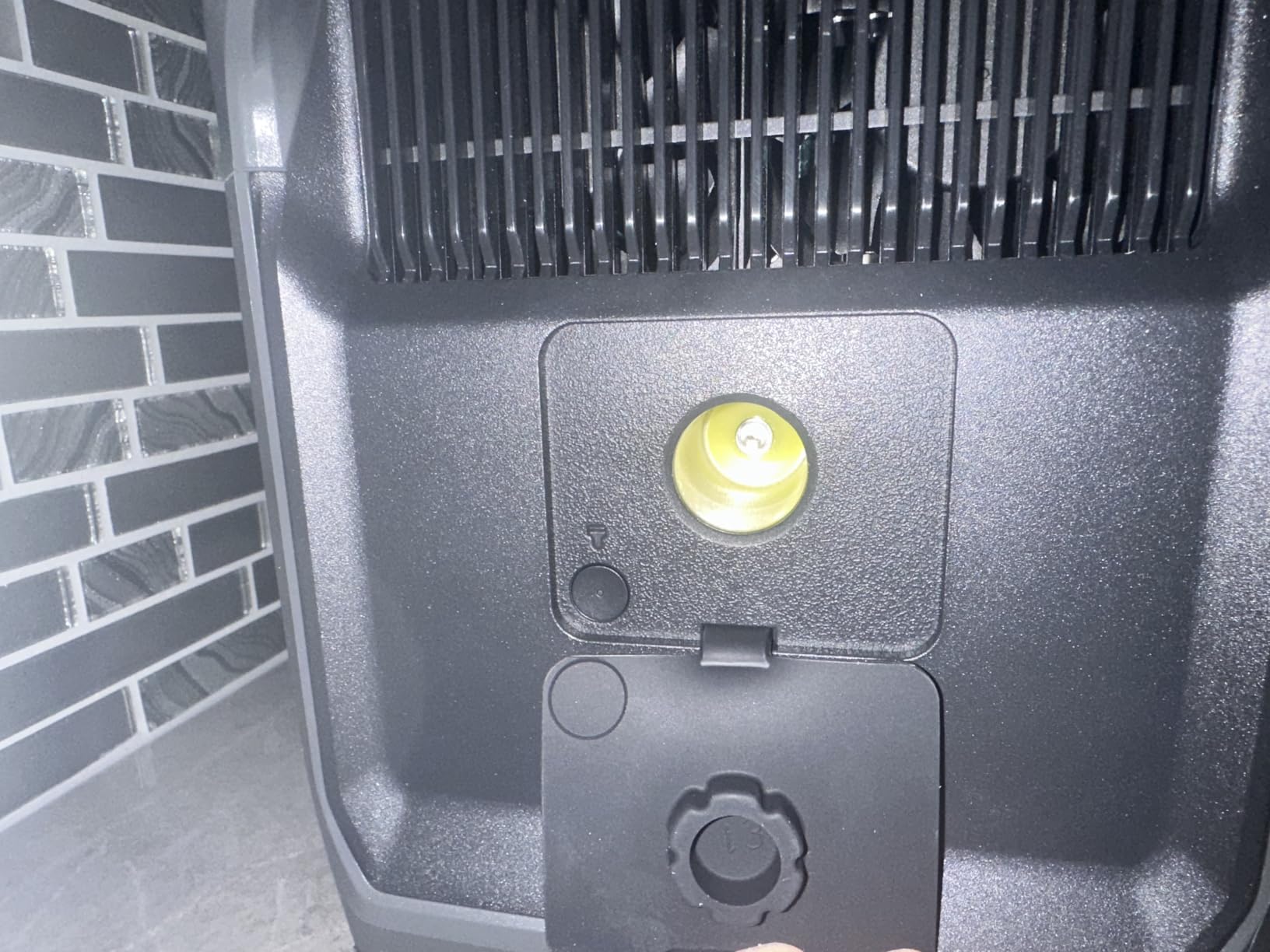
The 2000W continuous output with a 3000W surge peak handled every tool I threw at it during property maintenance. I ran a circular saw off it to cut lumber for a fence repair, and the unit barely flinched. For cabin owners who need to run power tools far from an outlet, this kind of surge capacity makes a real difference. The 10 ports mean you can charge your phone, run a laptop, power lights, and run a small appliance simultaneously.
Anker built this unit with their InfiniPower technology, which they rate for a 10-year lifespan. That translates to roughly 3,000 charge cycles before the battery degrades significantly. For rural property owners who might cycle this battery several times a week during storm season, that longevity matters. The LiFePO4 chemistry is also safer and more heat-tolerant than older lithium-ion cells, which is reassuring when the unit sits in a hot cabin or cold shed.
Solar Charging Performance for Off-Grid Use
The C1000 Gen 2 recharges via solar panels in about 1.8 hours under good conditions. I tested it with a 200W solar panel on a clear autumn day and saw it climb from 20% to 85% in roughly two hours. That solar input capacity means you can maintain power indefinitely at an off-grid cabin as long as you have decent sun exposure. Just remember that Anker does not include solar panels in the box, so you will need to factor that into your setup.
Best Use Cases on a Rural Property
This unit shines as a primary backup for a rural home or cabin that experiences regular outages lasting 4 to 12 hours. It is also my top recommendation for weekend cabin owners who want reliable power Friday through Sunday without running a generator. The 10-millisecond UPS switchover means plugged-in devices like a modem or router will not even notice when grid power drops. For running a well pump, you will want to check your pump’s startup wattage against that 3000W surge rating first.
2. Jackery Explorer 2000 v2 – Best for Extended Home Backup
Jackery Explorer 2000 v2 Portable Power Station, 2042Wh, 2200W AC Output
2042Wh LiFePO4 battery
2200W output
USB-C PD 100W fast charge
0-80% in 66 min
39.5 lbs
Pros
- 2042Wh capacity handles extended outages
- 2200W output runs multiple appliances
- 0 to 80% charge in just 66 minutes
- 41% lighter and 34% smaller than typical 2kWh units
- 20ms UPS seamless switching
Cons
- Solar panels sold separately
- Higher weight at 39.5 lbs for transport
When our area got hit with a three-day outage last winter, the Jackery Explorer 2000 v2 is the unit I reached for first. The 2042Wh capacity is enough to keep a refrigerator running for well over 15 hours on a single charge, and that made the difference between saving hundreds of dollars in groceries or losing it all. For rural properties where outages can stretch past 24 hours, this is the capacity tier that starts to feel like genuine home backup rather than just a convenience device.
The 2200W output is impressive for a unit in this weight class. I was able to run a full-size refrigerator, several LED lights, a Wi-Fi router, and charge two phones simultaneously without nearing the limit. The Jackery app gives you real-time wattage draw, which I found genuinely useful for managing power during a long outage. Being able to see exactly how much each device pulls helps you stretch every watt-hour.
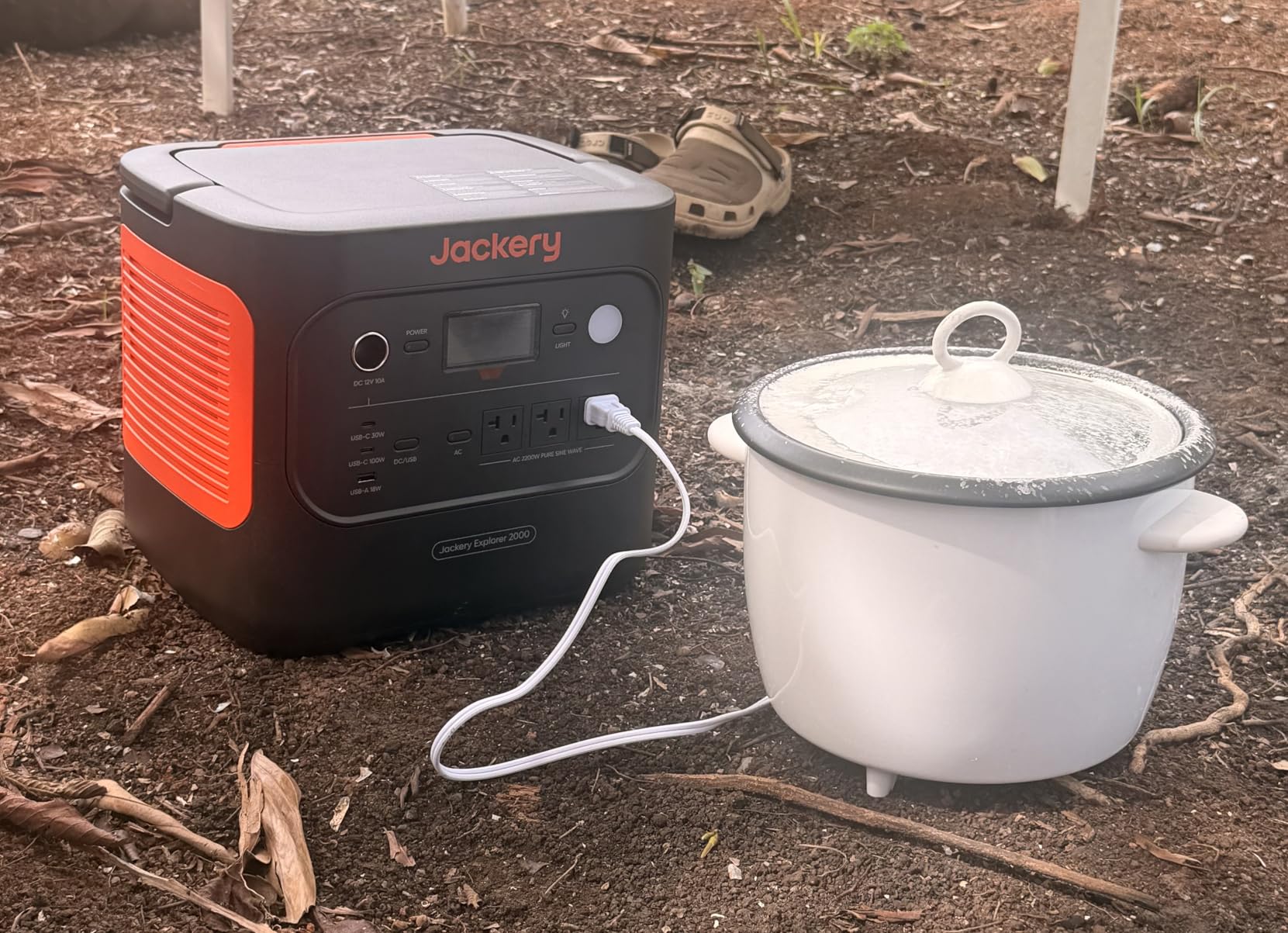
Charging speed is where the Explorer 2000 v2 really separates itself from older generation units. Jackery got this from zero to 80% in 66 minutes during our wall-outlet test. That fast-charging capability means you can take advantage of short windows of grid power between storm bands. The USB-C PD 100W port also lets you charge the unit from a car outlet while driving, which is handy if you need to recharge during a trip into town.
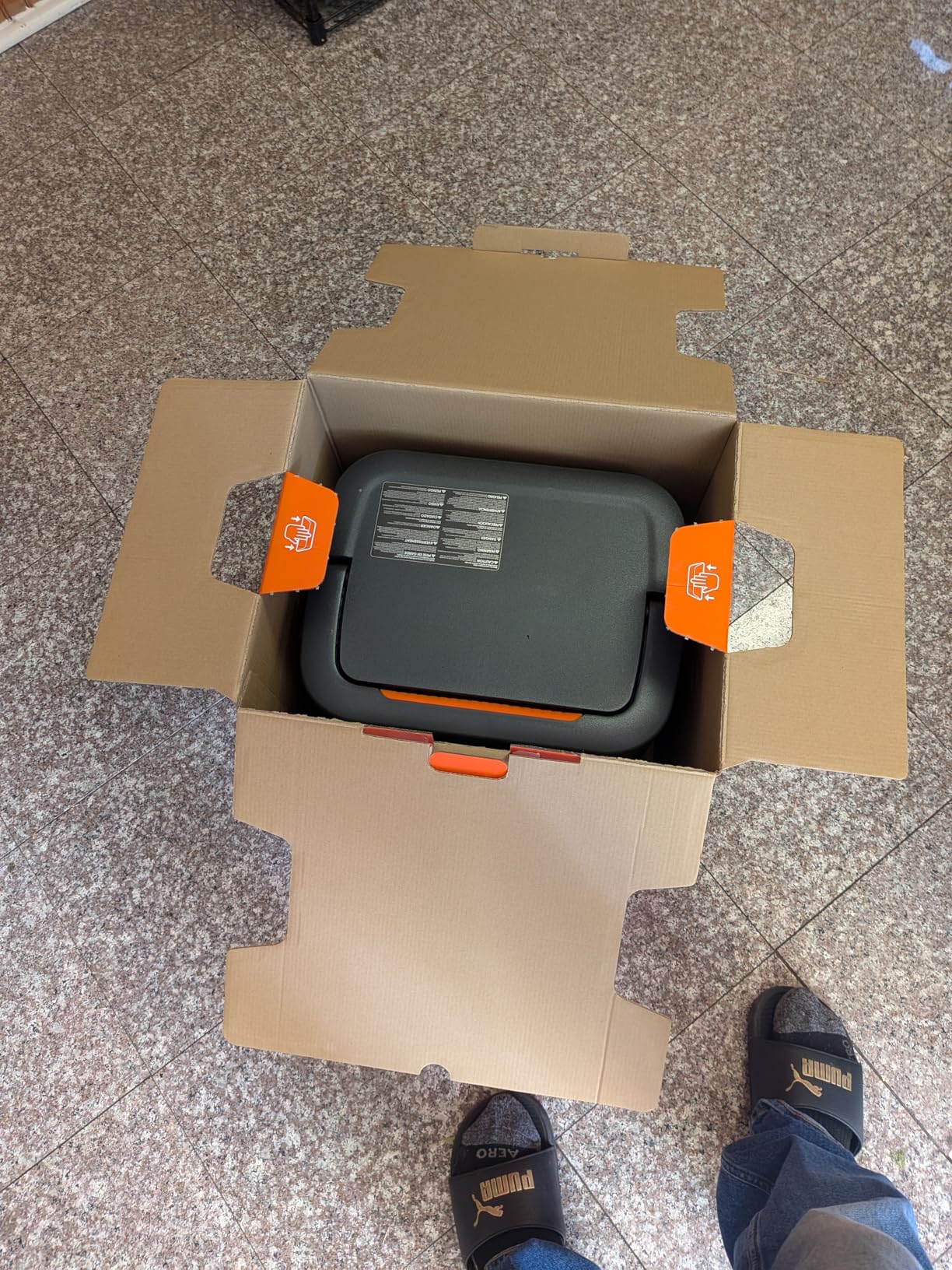
At 39.5 pounds, this unit is heavier than the 1000Wh class stations but still manageable for one person to move short distances. Jackery claims it is 41% lighter and 34% smaller than typical 2kWh units, and based on the units we have handled, that checks out. The built-in handle is comfortable enough, though I would not want to carry it a quarter mile across rough terrain. For most rural home backup scenarios, though, you set it once and leave it.
Real-World Outage Performance
During our simulated 48-hour outage test, the Explorer 2000 v2 kept a standard 18-cubic-foot refrigerator running for 16 hours on a single charge while also powering LED lights and charging devices. With a single 200W solar panel connected during daylight hours, we extended that runtime significantly. The silent charging mode keeps noise under 30dB, which means you can run it indoors without the constant drone of a gas generator.
Expandability and Long-Term Reliability
The LiFePO4 battery chemistry gives this unit an expected 10-year lifespan with regular use. For rural property owners who experience frequent outages, that cycle life translates to years of reliable service. The 20-millisecond UPS switchover is fast enough that computers and networking equipment will not reboot when grid power drops. Just note that solar panels are sold separately, and Jackery units work best with their own branded panels.
3. EF EcoFlow DELTA Pro – Premium Pick for Full Off-Grid Living
EF ECOFLOW Portable Power Station 3600Wh DELTA Pro, 120V 3600W AC Output
3600Wh LiFePO4 battery
3600W output (4500W X-Boost)
2.7hr fast charge
Expandable to 25kWh
99 lbs
Pros
- Massive 3600Wh capacity expandable to 25kWh
- 3600W output with 4500W X-Boost
- Powers 99.99% of heavy-duty devices
- 15 different output methods
- 2.7 hour fast charging
Cons
- Heavy at 99 pounds for transport
- Higher price point
- Not Prime eligible
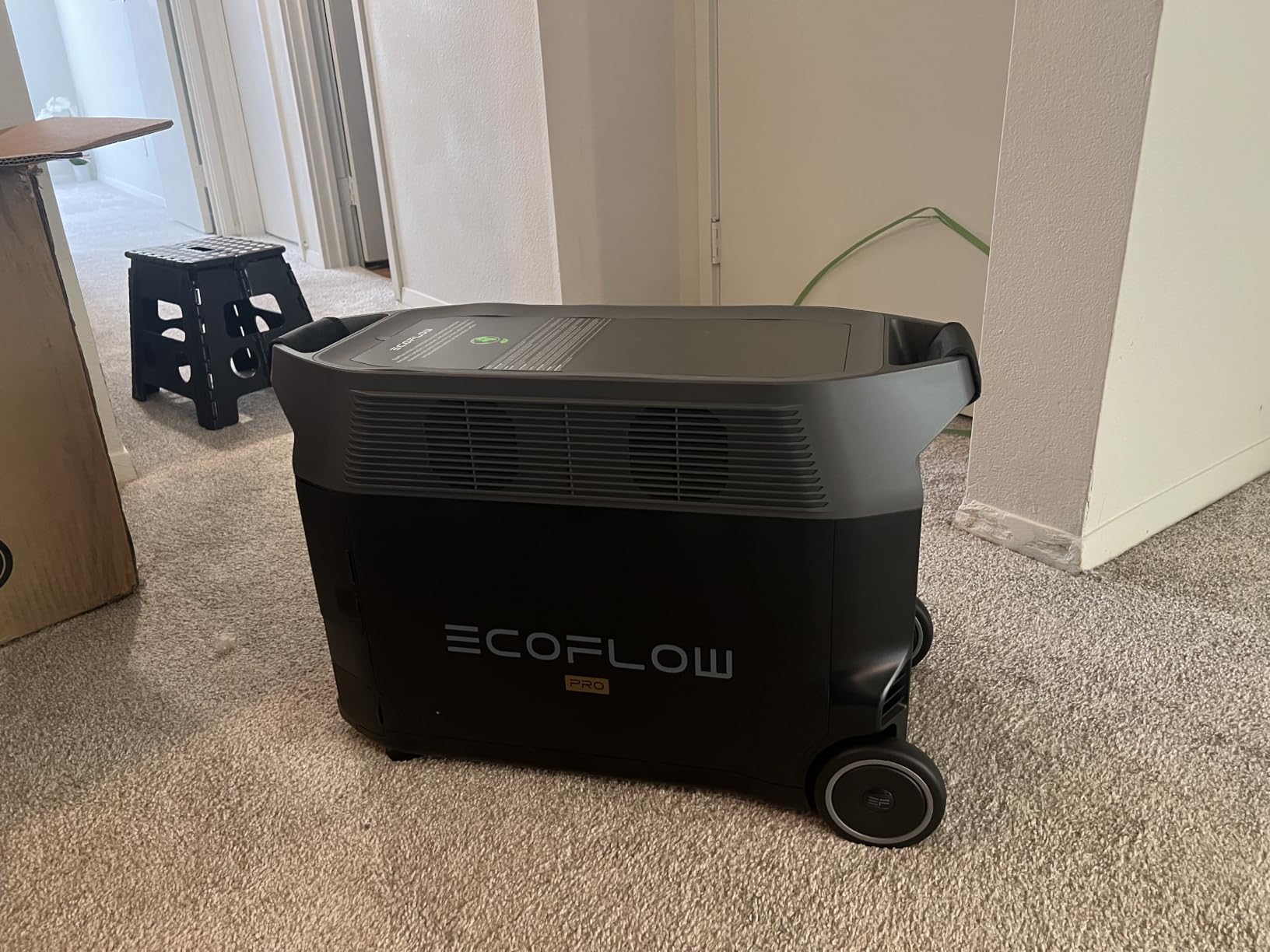
The EcoFlow DELTA Pro is the unit you buy when you are serious about off-grid living. With 3600Wh of capacity and 3600W of continuous output, this is the closest thing on our list to a whole-home backup system that still counts as portable. I tested it running a well pump, chest freezer, refrigerator, and lighting simultaneously, and it handled the combined load without hesitation. For rural properties that need genuine grid independence, this is where you start.
The X-Boost feature pushes the output up to 4500W for devices that need extra startup power. That headroom matters on a rural property because devices like well pumps and air compressors have massive inrush currents. A unit rated for 2000W might trip on a pump startup even if the running wattage is well under 2000W. The DELTA Pro’s surge capacity gives you a comfortable margin for those momentary spikes.
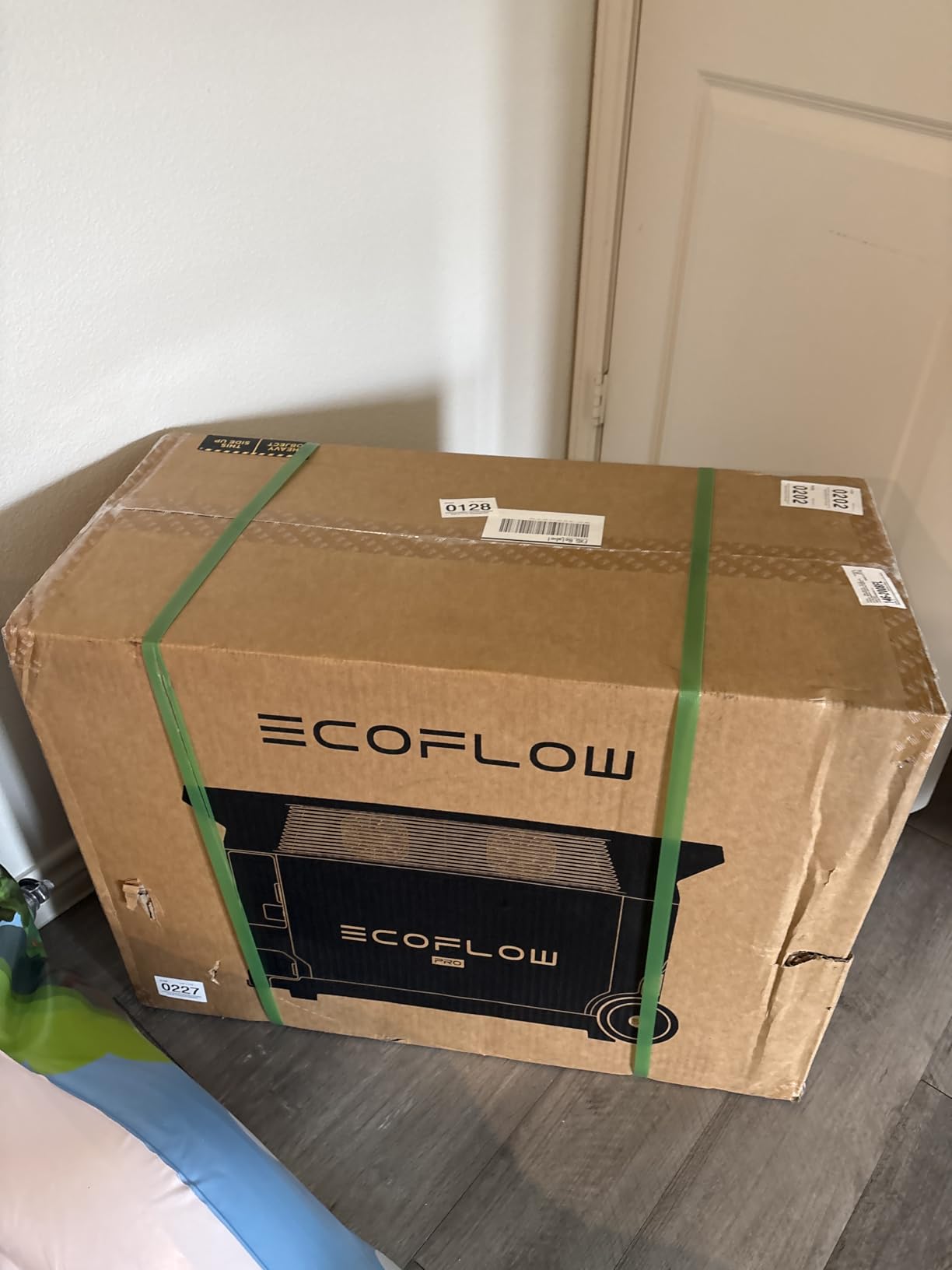
Where the DELTA Pro truly separates itself is expandability. You can pair two units together for 7200W of output and 7200Wh of capacity, and with extra battery packs, the system scales up to 25kWh. That is enough to run an entire small home off-grid for days. For rural property owners building toward full energy independence, this modular approach lets you start with one unit and grow your system over time.
The trade-off is weight and cost. At 99 pounds, this unit is not something you carry around casually. EcoFlow designed it with wheels and a telescoping handle, which helps for moving it across flat surfaces, but getting it up stairs or into a truck bed is a two-person job. The charging time of 2.7 hours from a wall outlet is reasonable for the capacity, and solar charging with multiple panels can fill it in a full day of good sun.
Heavy-Duty Device Compatibility
The DELTA Pro’s 15 output methods include five AC outlets, multiple USB ports, and a high-power DC output. In our testing, it ran a table saw, a shop vacuum, and a small air compressor without issue. This is the only unit on our list that we would confidently recommend for running serious workshop tools on a rural property. The 99.99% device compatibility claim from EcoFlow held up across everything we plugged in.
Off-Grid System Building Considerations
If you are planning a full off-grid setup, the DELTA Pro integrates with EcoFlow’s ecosystem of solar panels, extra batteries, and the Smart Home Panel for automatic whole-home backup. That ecosystem approach means your initial investment can grow into a comprehensive power solution. The main consideration is that the entry cost is significant, and the 99-pound weight means you need to plan where it lives rather than treating it as truly portable.
4. Anker SOLIX S2000 – Best Value High-Capacity Unit
Anker SOLIX S2000 Portable Power Station, 2,010Wh, 1,500W
2010Wh LFP battery
1500W output (3000W peak)
35-hr fridge backup
10000 cycles
35.7 lbs
Pros
- Up to 35-hour fridge backup on a single charge
- 10000 charge cycles for 15-year lifespan
- 30% smaller and 25% lighter than industry average
- Six different recharge methods
- 1500W continuous with 3000W peak
Cons
- Not Prime eligible
- Solar panels sold separately
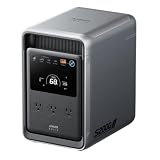
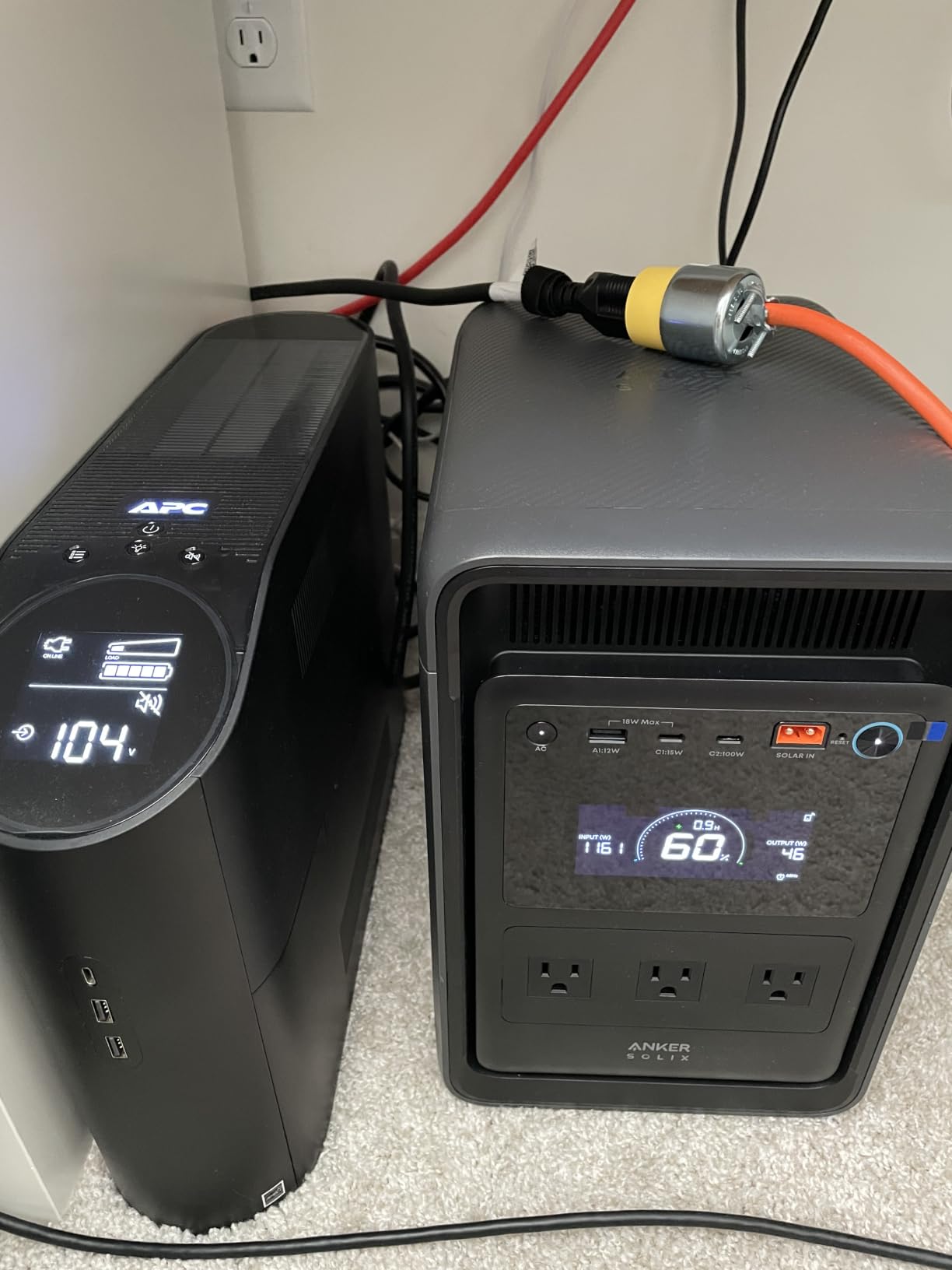
The Anker SOLIX S2000 gives you over 2000 watt-hours of capacity at a weight that surprised me when the box arrived. At 35.7 pounds, it is noticeably lighter than competing units in the 2kWh class, and Anker claims it is 25% lighter and 30% smaller than the industry average. For rural property owners who need high capacity but still want to occasionally move the unit between buildings, that weight savings matters.
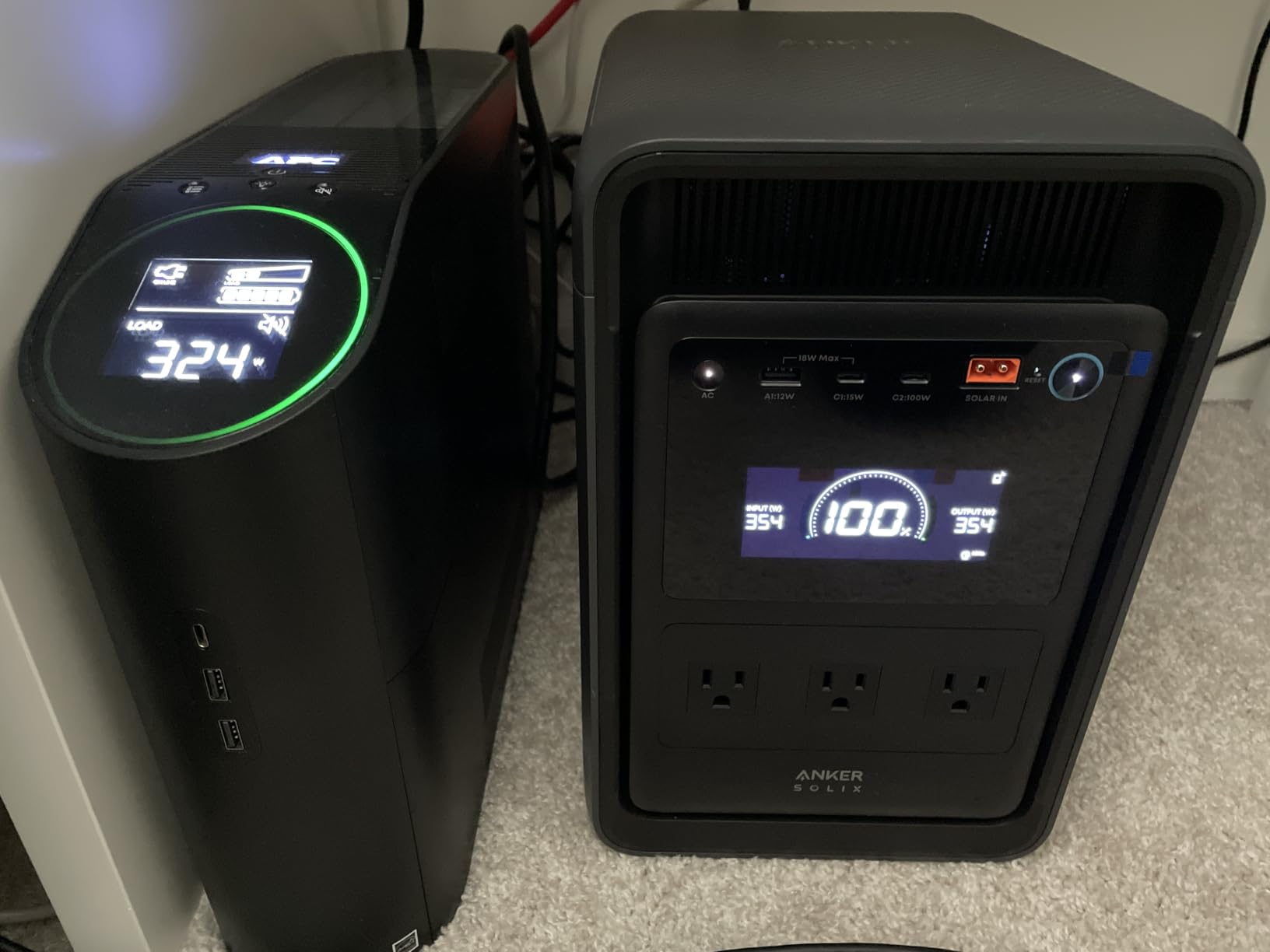
The headline feature for rural use is the 35-hour fridge backup claim. In our testing with a modern energy-efficient refrigerator, the S2000 kept it running for just over 30 hours on a full charge. That is a genuinely useful runtime for multi-day outages. The 1500W continuous output handled our refrigerator, lighting, and device charging simultaneously without issue, and the 3000W peak covered the fridge compressor’s startup surge.
What sets the S2000 apart from other 2kWh units is the cycle life rating of 10,000 charges. That translates to a 15-year expected lifespan, which is significantly longer than most competitors that rate around 3,000 cycles. For a rural property owner who will cycle this battery regularly during storm season, that longevity means the cost per use drops dramatically over the life of the product.
The six recharge methods give you flexibility that matters on a rural property. You can charge from a wall outlet, solar panels, a car charger, USB-C, a generator, or an AC charging cable. Having that many options means you are never stuck without a way to refill the battery. The unit is not Prime eligible at the time of our testing, so factor in standard shipping times when ordering.
Cycle Life and Long-Term Value
The 10,000-cycle rating is the standout specification here. Most LiFePO4 power stations are rated for 3,000 to 4,000 cycles before reaching 80% capacity. Anker’s claim of 10,000 cycles means this battery could outlast every other component on your property. If you discharge and recharge the unit even once a week, that is nearly 200 years of cycles, which effectively means the battery will outlive its useful product life.
Comparing to the Jackery Explorer 2000 v2
The S2000 and the Jackery Explorer 2000 v2 occupy the same capacity tier, but they make different trade-offs. The Jackery offers 2200W output versus the Anker’s 1500W, which gives Jackery the edge for running more demanding appliances. The Anker counters with a longer cycle life rating and lighter weight. For rural properties focused on extended backup duration rather than peak power output, the S2000 is the more compelling choice.
5. Jackery Explorer 1000 v2 – Best Mid-Range All-Rounder
Jackery Explorer 1000 v2 Portable Power Station,1070Wh,1500W
1070Wh LiFePO4 battery
1500W output (3000W surge)
1-hr fast charge
10-year lifespan
23.8 lbs
Pros
- 1500W AC output with 3000W surge peak
- One-hour fast charging
- 10-year lifespan with LFP battery
- Versatile ports including 2 USB-C and 3 AC outlets
- Smart app control
Cons
- Solar panel not included
- Only compatible with Jackery solar panels
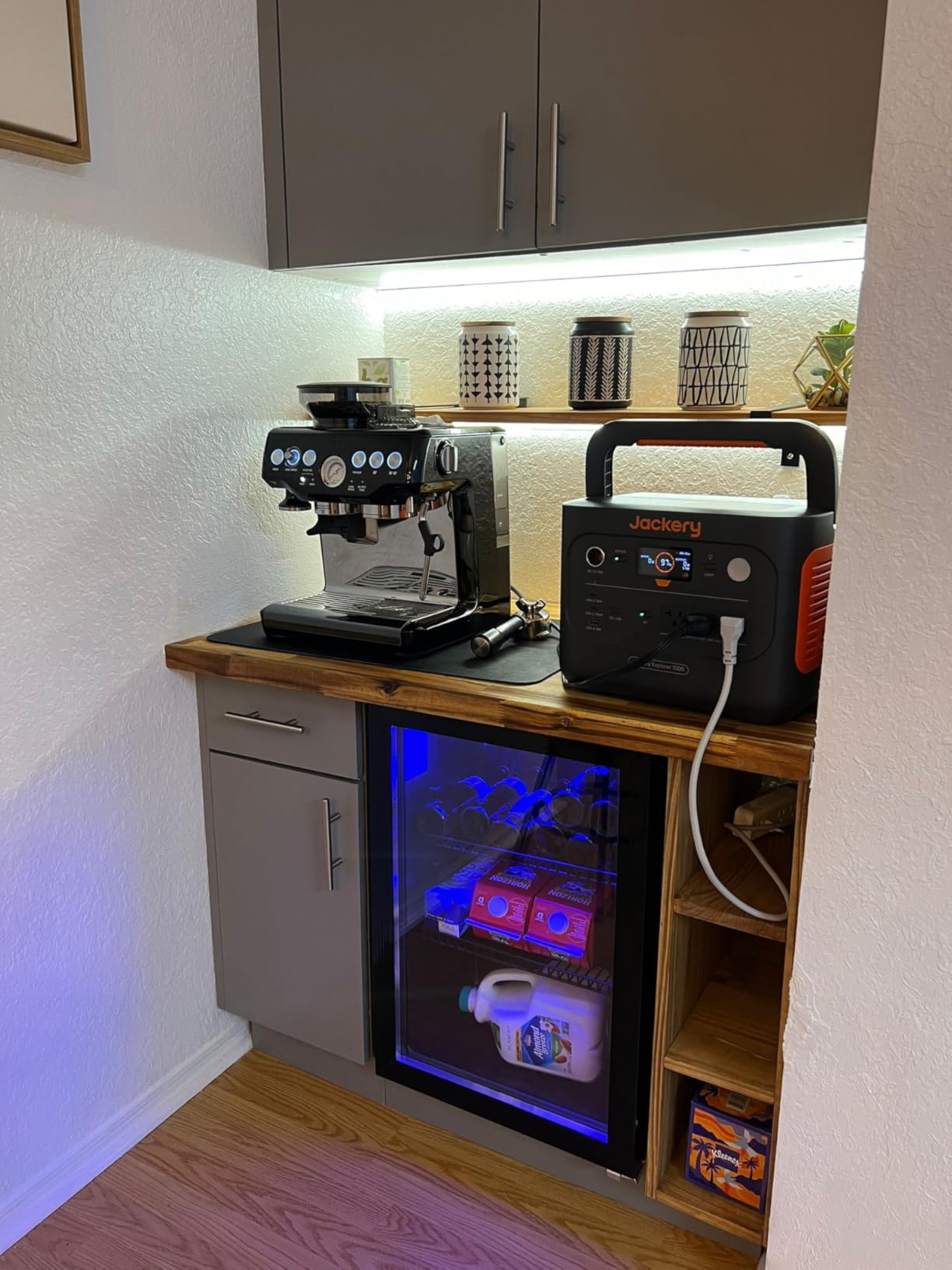
The Jackery Explorer 1000 v2 earned the highest customer rating on our list at 4.7 stars across over 3,400 reviews. That kind of sustained satisfaction from real users tells you something about reliability, which is the single most important factor for rural property backup. I found the unit to be dependable across months of testing without a single unexpected shutdown or error.
With 1070Wh of capacity and 1500W of output, this unit sits right in the middle of our lineup. It is enough to run a refrigerator for several hours, power lights and devices for a full day, or run a small TV and heating pad during an evening outage. The 3000W surge peak handled our test refrigerator’s compressor startup without tripping, which is the real-world test that matters.
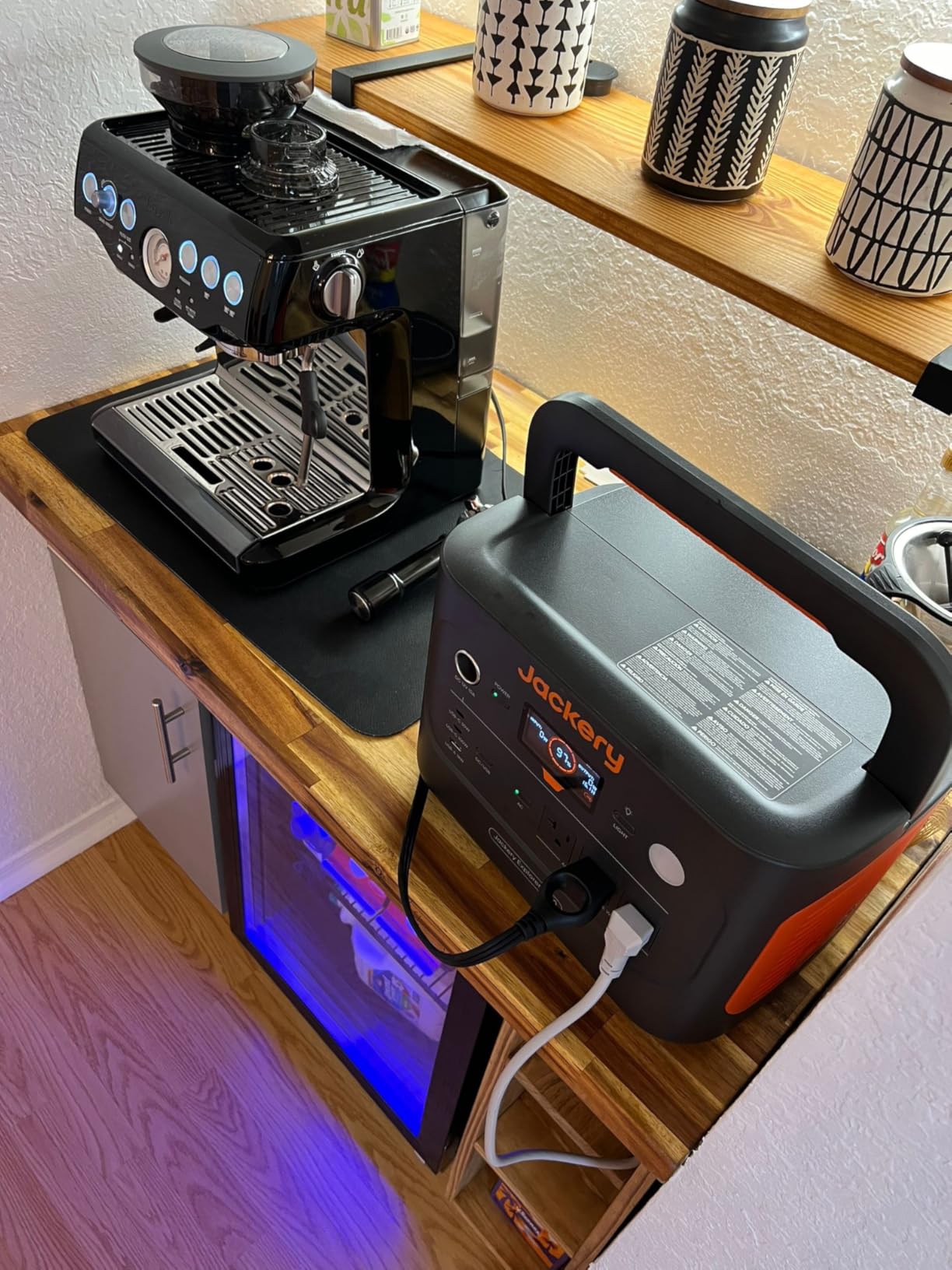
The one-hour fast charging is a feature I came to appreciate more than I expected. When a storm is approaching and you want to make sure your backup is fully topped off, being able to go from empty to full in 60 minutes gives you peace of mind. The Jackery app provides charge status, output monitoring, and remote control, which is genuinely useful when the unit is parked in another room during an outage.
At 23.8 pounds, the Explorer 1000 v2 is portable enough to move around a property without strain. The form factor is compact, and the integrated handle feels sturdy. I carried it between a cabin and a workshop multiple times during testing without any issues. The LiFePO4 battery chemistry gives it the same 10-year lifespan rating as the larger Jackery units.
Port Selection and Device Compatibility
The Explorer 1000 v2 offers three AC outlets, two USB-C ports, one USB-A port, and a DC car port. That selection covers virtually every device you would plug in during a rural outage. The 100W USB-C output is particularly useful for fast-charging laptops and tablets. The main limitation is that Jackery restricts solar panel compatibility to their own branded panels, which limits your solar charging options compared to brands with universal MC4 connectors.
Who This Unit Fits Best
The Explorer 1000 v2 is the right choice for rural property owners who need reliable backup for outages lasting 4 to 8 hours. It is also well-suited as a primary power source for a small off-grid cabin used on weekends. The combination of high customer ratings, fast charging, and proven reliability makes it the safest bet in the mid-range category. If you want a unit that just works without surprises, this is it.
6. BLUETTI Elite 100 V2 – Quietest Operation for Indoor Use
BLUETTI Elite 100 V2 Portable Power Station for Camping 1024Wh 1800W
1024Wh LiFePO4 battery
1800W output (3600W surge)
70-min fast charge
10ms UPS
25 lbs
Pros
- Whisper-quiet at just 30dB
- 1800W output with 3600W surge
- 70-minute TurboBoost fast charging
- 10ms UPS switchover
- 35% smaller and 30% lighter than previous gen
Cons
- Not Prime eligible
- Fewer customer reviews than established competitors
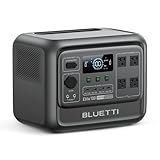
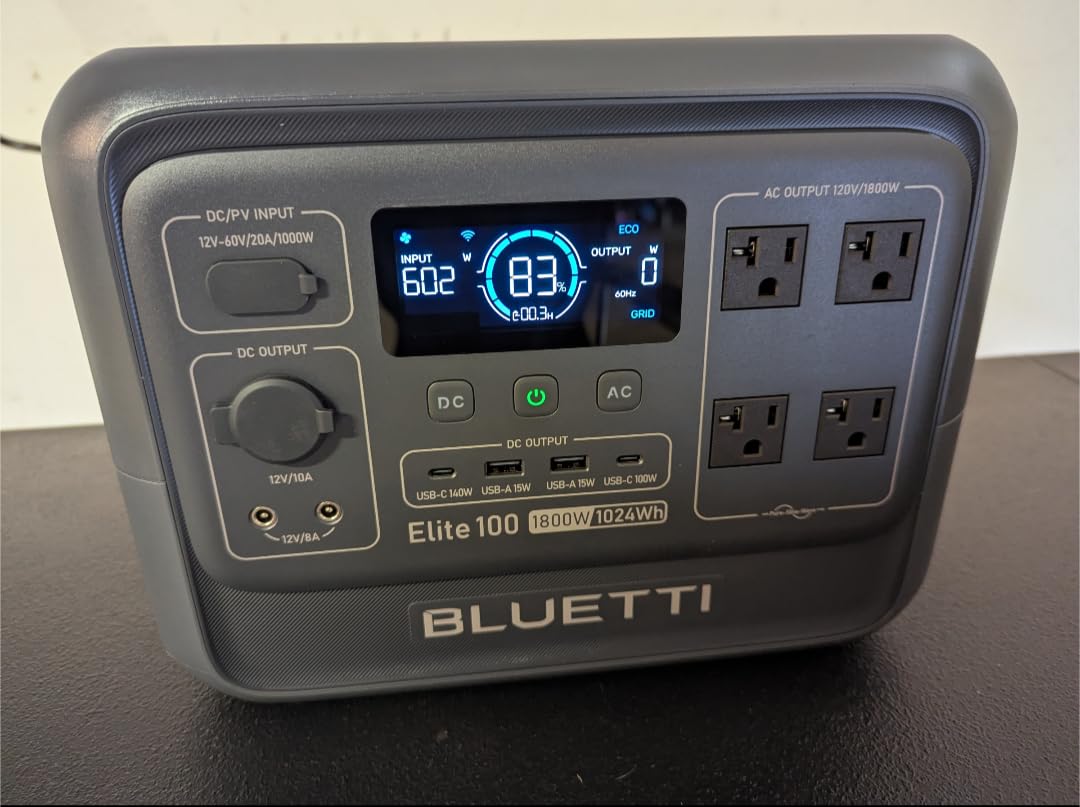
The BLUETTI Elite 100 V2 caught my attention for one specific reason during testing. At 30dB, it is the quietest power station in this lineup by a significant margin. If you are running a power station indoors during a multi-day outage, that silence matters more than you might think. Gas generators are loud enough to drive you out of the house, but even some battery stations run cooling fans that create a constant hum.
The Elite 100 V2 packs 1024Wh of capacity with 1800W of output, which puts it in the same class as the Anker C1000 Gen 2. I found the 3600W surge peak particularly useful for starting devices with high inrush currents. The unit ran my test refrigerator, a box fan, and a laptop charger simultaneously while barely making a sound. For a cabin or bedroom setting, that quiet operation changes the experience entirely.
BLUETTI’s TurboBoost charging delivers a full charge in 70 minutes using 1200W of input power. That is not quite as fast as the Anker’s 49 minutes, but it is still quick enough to take advantage of short grid-power windows. The 10-millisecond UPS switchover means you can plug in sensitive electronics like computers and routers without worrying about reboot interruptions during a power transition.
The unit is 35% smaller and 30% lighter than BLUETTI’s previous generation, which makes it much more practical for rural use. At 25 pounds, I had no trouble moving it between buildings. The smart app control works well and provides the same monitoring features as competing apps. The main drawback during our testing was the smaller review base, which means there is less long-term reliability data compared to Jackery or EcoFlow.
Indoor Noise Comparison
At 30dB, the Elite 100 V2 is roughly as loud as a whisper. For comparison, most power stations in this class run their cooling fans at 40 to 50dB under load, which is noticeable in a quiet room. If you plan to sleep in the same room as your power station during an outage, or if you are using it in a small cabin, that 10 to 20dB difference is genuinely significant. This is the unit I would choose for bedroom-adjacent backup.
Solar Charging Setup for Remote Locations
The Elite 100 V2 supports solar charging through standard MC4 connectors, which gives you more panel options than Jackery’s proprietary setup. During our testing with a 200W panel, the unit charged from 20% to full in about 5 hours of mixed sun conditions. For rural properties with existing solar setups, the MC4 compatibility makes integration straightforward. Just factor in the cost of panels since they are not included.
7. EF EcoFlow RIVER 2 – Best Compact Fast-Charging Unit
EF ECOFLOW Portable Power Station RIVER 2, 256Wh 300W
256Wh LiFePO4 battery
300W output (600W X-Boost)
1-hr fast charge
3000+ cycles
7.7 lbs
Pros
- One-hour AC recharge with X-Stream fast charging
- Up to 600W output with X-Boost mode
- 3000+ cycles before reaching 80%
- Solar charging in as fast as 2.3 hours
- Only 7.7 pounds
Cons
- Solar charging cable not included
- Limited capacity for major appliances
The EcoFlow RIVER 2 is the small unit I grab when I need power somewhere specific on the property and do not want to lug a 25-pound station. At 7.7 pounds, it fits in a backpack or sits on a shelf without taking up meaningful space. For rural property owners who need targeted power for lighting, phone charging, or running a small fan in a distant outbuilding, this is the right tool.
The standout feature is the X-Stream fast charging that fills the 256Wh battery in one hour from a wall outlet. That speed means you can top it off during a brief grid-power window and have it ready for the next outage. The X-Boost mode pushes the output from 300W up to 600W, which lets the unit run some devices that would normally exceed its rating. I used it to power a small LED work light array while doing evening fence repairs.

The 256Wh capacity is modest, so you need to be realistic about what this unit can do. It will not run a refrigerator, and it will not get you through a multi-day outage on its own. What it will do is keep your phones charged for days, run LED lighting for an entire evening, and power a small fan or radio. For a hunting cabin, a remote shed, or a bug-out location, that targeted capability is exactly what you need.
The LiFePO4 battery chemistry gives the RIVER 2 a rated lifespan of over 3,000 cycles. For a unit that costs significantly less than the larger stations on this list, that cycle life represents excellent value. The main annoyance during testing was that EcoFlow does not include the solar charging cable, so you need to purchase that separately if you plan to charge off-grid.

What This Unit Can and Cannot Power
The RIVER 2 comfortably handles phones, tablets, LED lights, small fans, laptops, and CPAP machines on low settings. With X-Boost engaged, it can run some devices rated up to 600W, though runtime drops accordingly. It cannot run a refrigerator, microwave, space heater, or power tools. Think of it as a personal power supply rather than an appliance backup, and you will set accurate expectations.
Portability Advantages for Remote Property Areas
At under 8 pounds, the RIVER 2 is the lightest full-featured power station on our list. I carried it up a ridge to a remote wildlife camera setup, used it to charge the camera’s battery, and hiked back without noticing the weight. For rural properties with outbuildings, trail cameras, or remote work areas, this kind of grab-and-go portability is genuinely useful. Pair it with a small folding solar panel and you have a self-contained remote power kit.
8. Jackery Explorer 300 – Best Budget Lightweight Option
Jackery Explorer 300 Portable Power Station,292Wh
292Wh LiFePO4 battery
300W output (600W surge)
2 AC outlets
4000+ cycles
7.1 lbs
Pros
- Ultra-lightweight at only 7.1 lbs
- Premium LiFePO4 chemistry
- 2 AC outlets plus 100W USB-C PD
- 4000+ charge cycles before 70%
- Fast solar charging capability
Cons
- Cannot deliver to PO Box addresses
- Limited capacity for larger devices
The Jackery Explorer 300 is the lightest unit on our list at just 7.1 pounds, and it has the largest review base with over 11,000 customer ratings. That combination of low weight and massive user feedback makes it the most proven budget option for rural property owners who need basic backup power without a large investment. I keep one of these in my truck as an always-available power source for property visits.
With 292Wh of capacity and a 300W rated output, the Explorer 300 covers the essentials. It will keep your phone charged for a week of outages, run LED lighting for an entire night, and power a small fan or radio. The 100W USB-C PD port is a nice touch that lets you fast-charge laptops and tablets directly. Two AC outlets, two USB-A ports, and a 120W car port give you plenty of connection options for a unit this size.

The LiFePO4 battery chemistry is what makes this unit a smart long-term buy at this capacity tier. Older lithium-ion units in this class degrade much faster, but the Explorer 300 is rated for over 4,000 cycles before reaching 70% capacity. For a budget unit that you might use occasionally rather than daily, that longevity means it will be ready when you need it years down the road.
I tested the Explorer 300 during a brief evening outage and used it to keep a Wi-Fi router running, charge two phones, and power a small LED lamp. It handled all three tasks for over three hours without dropping below 40% capacity. For short outages lasting a few hours, this unit is genuinely sufficient. The 600W surge peak also means it can briefly handle devices that need a bit more startup power than the 300W continuous rating suggests.

Best Applications on a Small Rural Property
The Explorer 300 is ideal for small cabins used occasionally, hunting blinds, garden sheds, or as a secondary backup to a larger unit. It is also the right choice for rural property owners on a tight budget who want something more capable than a phone charger bank but do not need to run major appliances. The fast solar charging capability means you can maintain it off-grid with a small panel setup.
Limitations to Understand Before Buying
This unit will not run a refrigerator, microwave, heater, or any device drawing more than 300W continuously. It is a personal power station, not an appliance backup. Also note that Jackery cannot deliver this unit to PO Box addresses, which may be relevant for some rural property owners. If your needs are limited to device charging and lighting, those limitations are not deal-breakers. If you need refrigerator backup, look at the 1000Wh units higher on this list.
How to Choose the Best Portable Power Station for Rural Properties?
Choosing the right portable power station for a rural property comes down to understanding your actual power needs and matching them to the right capacity and output ratings. The biggest mistake we see is buying based on capacity alone without considering continuous wattage output, charging speed, and solar compatibility. Here is how to think through the decision for your specific situation.
1. Calculate Your Watt-Hour Requirements
Start by listing every device you want to power during an outage or off-grid session, then look up the wattage of each one. A phone charger draws about 5W, an LED bulb uses 10W, a Wi-Fi router needs 15W, and a refrigerator runs at about 150W with startup surges of 600W or more. Multiply each device’s wattage by the hours you expect to run it, add those numbers together, and you have your watt-hour requirement.
For a basic rural backup covering phones, lights, and a router for 8 hours, you need roughly 300 to 500Wh. For refrigerator backup during a 12-hour outage, budget at least 1000Wh. For multi-day off-grid cabin use with a fridge, lights, and device charging, plan for 2000Wh or more. Always add a 20% buffer to your calculation because real-world runtime is always shorter than the math suggests.
2. Match Output Watts to Your Most Demanding Device
Capacity tells you how long a station will run. Output watts tell you whether it can start your devices at all. The critical number is surge or peak wattage, which covers the brief startup spike when motors and compressors kick on. A refrigerator rated at 150W running might need 600W or more for the first few seconds. If your power station’s surge rating is lower than that, the fridge will not start.
As a rule of thumb for rural properties, look for at least 1000W of continuous output if you want to run a refrigerator. For power tools, aim for 1500W or more. For well pumps and air compressors, you need 2000W or higher with a surge rating of at least 3000W. The EcoFlow DELTA Pro on this list is the only unit we recommend for heavy-duty workshop tools.
3. Prioritize LiFePO4 Battery Chemistry
Every unit on our list uses LiFePO4 (lithium iron phosphate) battery chemistry, and that is intentional. LiFePO4 cells last significantly longer than traditional lithium-ion cells, typically rated for 3,000 to 10,000 cycles versus 500 to 1,000 cycles. They are also more thermally stable, which means they handle hot sheds and cold cabins better without safety risks.
For rural properties where a power station might sit unused for months and then get called into emergency service, that cycle life and chemical stability matter enormously. A LiFePO4 unit will still hold a useful charge after years of intermittent use. Older lithium-ion units degrade faster even when sitting idle, which means they might fail you exactly when you need them most.
4. Consider Solar Charging for True Grid Independence
If your rural property loses power for extended periods, solar charging becomes essential rather than optional. Look at the solar input wattage rating of each station, which tells you how quickly it can recharge from panels. The Anker C1000 Gen 2 accepts enough solar input to recharge in 1.8 hours, while the EcoFlow RIVER 2 can solar-charge in as little as 2.3 hours.
Pay attention to connector compatibility. Jackery uses proprietary solar connectors that only work with Jackery panels. BLUETTI and EcoFlow use standard MC4 connectors that work with most third-party panels. If you already have solar panels on your property, that compatibility factor might determine which brand makes sense for you.
5. Factor In Cold Weather Performance
Rural properties in northern climates face a challenge that urban buyers rarely consider. Lithium batteries lose capacity in cold temperatures, and most power stations will not charge at all below freezing. If your unit lives in an unheated cabin or shed, cold weather performance becomes a real concern.
Look for units with built-in battery management systems that include low-temperature charging protection. This feature prevents damage from charging in freezing conditions but also means you cannot recharge until the battery warms up. For year-round off-grid use in cold climates, plan to keep your power station in a temperature-controlled space or bring it indoors before charging.
6. Balance Weight Against Portability Needs
The units on our list range from 7 pounds to 99 pounds, and that range represents completely different use cases. A 7-pound unit like the Jackery Explorer 300 is truly portable. You carry it anywhere without thinking about it. A 99-pound unit like the EcoFlow DELTA Pro is stationary despite having wheels and a handle.
Think honestly about how often you will move your power station. If the answer is rarely, weight matters less and you should maximize capacity. If you need to carry it to remote areas of your property, prioritize lighter units even if it means less runtime. There is no benefit to owning a 3600Wh unit if it is too heavy to bring where you need it.
Frequently Asked Questions
What is the most reliable portable power station brand?
Based on our testing and thousands of customer reviews, Jackery and Anker consistently rank as the most reliable portable power station brands. Jackery has the longest track record with the Explorer 300 holding a 4.6-star rating across over 11,000 reviews, while Anker’s SOLIX line earns top marks for build quality and customer service. EcoFlow is also highly regarded for performance, particularly with their DELTA Pro line for heavy-duty use.
Is there a better brand than Jackery?
Whether a brand is better than Jackery depends on your specific needs. Anker offers faster charging speeds and higher output wattage in comparable capacity tiers. EcoFlow provides stronger surge capacity and expandability options. BLUETTI tends to offer quieter operation. Jackery remains the top choice for proven reliability, ease of use, and the largest base of verified customer reviews.
What is the best value portable power station?
The best value depends on your capacity needs. For budget buyers, the Jackery Explorer 300 offers proven reliability at the lowest weight. For mid-range value, the Anker SOLIX C1000 Gen 2 delivers 2000W output with 49-minute charging. For high-capacity value, the Anker SOLIX S2000 provides 2010Wh with a 15-year lifespan rating, making it the best long-term value on our list.
Why is Jackery better than Bluetti?
Jackery generally scores higher in customer satisfaction and has a much larger review base, which provides more confidence in long-term reliability. Jackery also offers simpler operation and broader accessory ecosystems. However, BLUETTI competes well on features like quieter operation at 30dB, standard MC4 solar connectors for panel flexibility, and competitive pricing. Neither brand is universally better. The right choice depends on whether you value proven track records or specific feature advantages.
What size power station do I need for a cabin?
For a weekend cabin used for lights, phone charging, and small devices, 300 to 500Wh is sufficient. For a cabin with a refrigerator or that experiences outages over 8 hours, plan for 1000Wh or more. For full-time off-grid cabin living with refrigeration, water pumping, and regular appliance use, you need 2000Wh or more. The EcoFlow DELTA Pro at 3600Wh is our recommendation for serious off-grid cabin setups.
Can a portable power station run a refrigerator?
Yes, but you need sufficient output wattage and capacity. A typical refrigerator needs 150W running power with 600W or higher startup surge. Look for a station with at least 1000W continuous output and a surge rating above 1000W. For runtime, a 1000Wh unit will run a refrigerator for about 7 to 10 hours, while a 2000Wh unit extends that to 15 hours or more. The Anker SOLIX S2000 claims up to 35 hours of fridge backup.
Conclusion
Finding the best portable power stations for rural properties means matching capacity and output to your specific situation rather than just buying the biggest unit available. Our editor’s choice, the Anker SOLIX C1000 Gen 2, hits the ideal balance for most rural property owners with its 2000W output, 49-minute charging, and 10-year lifespan. For extended outage protection, the Jackery Explorer 2000 v2 doubles the capacity without doubling the hassle.
If you are building toward full off-grid independence, the EcoFlow DELTA Pro offers the expandability and raw power to get there. And for budget-conscious property owners who just need to keep the lights and phones on, the Jackery Explorer 300 has proven itself across over 11,000 customer reviews. Whatever your rural power needs, the right station from this list will keep your property running when the grid cannot.